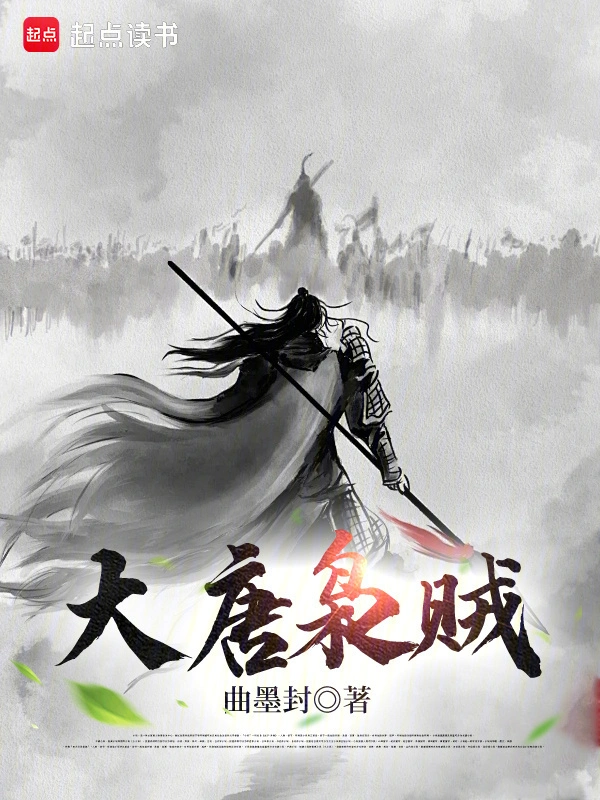
Tang Dynasty Owl
大唐枭贼
- Status
- Ongoing
- Length
- 924k Words
- Genre
- Historical
- Audience
- Male
- Subgenre
- Jin-Sui-Tang Dynasties
- Updated
- 3d ago
- Source
- Qidian
Stats
3Monthly votes
10.3kRecommends
17kFans
327Chapters
Tags
Synopsis
Reader comments
In booklists 1
Readers also read
 Gou Served as Sima Under Dong Zhuo
 After Lying in Bed for Three Years, He Was Forced to Help the Han Dynasty
 Red Mansion: Start Escaping and Farming from the Equipment Bar
 Northern Qi, Sage Khan
 Siheyuan: Start by Picking up Attributes
 Nanming Swordsman
 Handbook of Human Anomalies
 Immortal Who Seizes the Body
 Devouring the Starry Sky: Infinite Opportunities to Hoard Treasures at the Beginning
 Divine Peak
 Gou Cultivates Immortality and Attains Fruition in Two Realms
 Sign in the Nine Sun Magic Skill at the Beginning, I Will Kill All over the World
A well-written historical novel with distinctive characters
Teacher Qu's "The Thieves of the Tang Dynasty" has smooth writing, rigorous structure, and surprising settings. It is a rare work. Blessed are book lovers who are interested in the Huangchao Uprising in the late Tang Dynasty.
Historical text? Let's write a beautiful article about history. Add a tag to the author. There are no conspiracies. There is a river of blood on the battlefield and you can't see it. There are actually martial arts masters on the battlefield. Brother, this is a historical article for men. Who reads this kind of article? Your history skills are very good, but you are in the wrong channel.
It's a bit like the master of the external station comes to the starting point.
I have said before that Zhu Wen's reputation was weakened by Tang fans, Song fans and later literary and artistic creations.
Ju Tang fans can't accept the fact that I'm so big, Ju Tang is trying to kill himself, and they can't accept the fact that Song stretched his hips because Ju Tang narrowed the road. They cannot accept the fact that if the Northern Song Dynasty did not "emphasis on literature and military affairs", then the person who reappears in the world will not be the great Tang Dynasty they imagined, but the "Emperor of Chang'an" at the end of the Tang Dynasty. In the eyes of Ju Tang fans, Zhu Wen was so evil that he destroyed the great Ju Tang. However, the Yuan Dynasty event in the fourth year of Tianyou (907) only issued an official death certificate for the Tang Dynasty, which had long existed in name only. Since the Ganlu Incident (835), the central authority of the Tang Dynasty has continued to decline for 72 years; the Huangchao Rebellion (878-884) even caused the burning of the palaces in the two capitals and the collapse of etiquette and order. Attributing the overthrow of a three-hundred-year-old foundation to a single historical figure is essentially a cognitive avoidance of the systemic collapse of the late Tang Dynasty system, and is a psychological defense mechanism under the fandom mentality. In the Tang Dynasty, because there were enough poets, the most indispensable thing in all dynasties was the rice circle. The operation of my Song Dynasty is also very abstract. He obviously started his career by usurping the throne. He inherited the Bianliang Empire founded by Zhu Wen, but he insisted that he inherited the mantle of the great Tang Dynasty and went to Chang'an to recognize his father. And tried their best to downplay the existence of Zhu Wen, the real founder of Bianliang City (Although Bianliang served as the capital of the Wei State during the Warring States Period, it was already several hundred years BC.) This contradiction is particularly obvious in the compilation of the "Old History of the Five Dynasties" - the characterization of Zhu Liang's regime as "hypocritical" exactly reflects the anxiety of historians in the early Song Dynasty about the legitimacy of the origin of their own regime. ——The glorious history of Kaifeng City in the medieval times began with Zhu Wen. In the first year of Guangming (880), when Zhu Wen was appointed as the military governor of the Xuanwu Army, he immediately began to expand the city walls of Bianzhou; in the first year of Kaiping (907), Bianzhou was promoted to Tokyo, which started the historical process of the eastward shift of China's political center. Such a history that is very profound when studied in detail cannot be explained by inferior marketing slogans with the stereotype of "the giant lay down and became the Xiao Song Dynasty". In addition, it must be said that the image creation of Zhu Wen in later literary and artistic creations basically consisted of repeated and demonized retellings of the syllogism of "beginning as a bandit - betraying his master and seeking glory - killing the king and usurping the throne". This narrative model not only ignores the positive role of Zhu and Wen's group in rebuilding the order of the Central Plains (such as rectifying water transportation and restoring imperial examinations), but also obscures the inheritance value of his regime in the evolution of the system - the official reform of the Privy Council in the Later Liang Dynasty to the Chongzheng Yuan was actually an important source of the two-government system in the Song Dynasty.
Please check in more to help your circle level up
ps: Replying to yourself does not count as contribution points
Thoughts after reading "The Thief of the Tang Dynasty"
I finished reading the latest chapter yesterday, and I will write my thoughts after reading it today. When I first started reading, I thought this book had the potential to be popular, but after reading it, something was wrong! Owls of the Tang Dynasty is not a traditional time-travel or rebirth novel on the Internet, nor is it a historical novel, but more of a martial arts style. This is the first time I have seen such a theme at the starting point. First of all, I am not used to it because I have never seen it before. After reading it, it is not bad. The Tang Dynasty was famous for its Tang poetry, and also for its Tang legends. Once the soil is established, there is room for further exploration. This book can be regarded as a pioneering work. After so many years of development of online literature, readers have read more and the threshold has become higher. It is difficult for ordinary routines to give readers sufficient emotional value. There are too many cookie-cutter works, which leads to aesthetic fatigue and the problem of book shortage. Personally, I think that if an online article has a good grasp of the rhythm, a good word count, and adequate emotional value, readers will be willing to buy it if they are happy with it. Emotional value, such as rebirth, love, making up for regrets, starting a career, etc. Which are common in online articles. Vital works are about writing, character charm, imagination, and even the core spirit. The influence of culture on people is characterized by subtle and profound and lasting effects, and the same is true for online articles. Readers can feel the protagonist's emotions, choices, ideas, thoughts, etc. Readers may be affected in subtle ways without even realizing it. Going back to the topic, the theme and the choice of protagonist of Tang Dynasty Owls are actually not pleasing to the eye. If it were written as a historical novel according to the trend, the results might be much better. Zhu Wen is not rated highly in history books. He killed Zhaozong, forced Emperor Ai to abdicate, destroyed Tang Zuo, established Houliang, and was killed by his son. What is commendable is that he was good to the people. If it is a time-travel novel, Zhu Wen's historical trajectory will of course change, but what about this book? Don't know, it depends on the author. The author has sufficient knowledge and good writing style. The text is relatively concise and the picture is strong. Since it is a martial arts style, it is conducive to the creation of famous scenes. So far, several characters have stood up and have unique charm. It can be said that the writing is vivid. The clothing, weapons, character appearance, and personality are well written and suitable for adaptation into anime. In short, it's okay. On a scale of ten, I give this book an eight. Some novels will describe the background and core values of the time, and show the excellent culture to everyone, such as clothing, tea art, natural scenery, appropriate poetry, spirit, etc. In troubled times, resistance, restoring peace to the world, chivalrous spirit, is this Zhu Wen's path? Not sure, we have to wait and see. Time will give a fair answer to the work. Let's just write it here.
It's very graphic, and the writing style is a dimensionality reduction attack for online novels.
Overestimating readers' cultural level and patience
Let me contribute a true pursuit. The problem is that it is too high-end. I am tired after graduating in 211... Ju Tang has been relatively unpopular in history, which shows that everyone really has no feeling for this era, so it is better to be as simple as possible. Being too high-end will really persuade people to quit. Perhaps it would be better to publish this book directly as a physical book, but it is not very suitable for the circle of online articles. It is too overestimating the readership of online articles. Even if Jia Pingwa and Yu Hua came to the Internet literary circle, they would not be able to make it. Your writing is quite strong, but you are just on the wrong track, Tietie🙏
This book is quite selective for readers.
The author's historical level is about as high as a six or seven-storey building, and the visual sense of the text can directly be imagined as a comic in the style of "The Bodyguard". If you are a reader who is used to reading ten lines at a time, this kind of writing is very unfriendly. But for readers with certain "graphics card" configuration, there will be a feeling of "graphics card" being fully burned. For readers with a certain amount of history, there will be a sense of joy in having their "memory" fully mobilized. On free platforms, it is extremely difficult for historical literature to get ahead, including most traditional fantasy genres. Only those themes and writing methods with the highest traffic will have room to survive. We should be thankful that we still have Qidian, a huge daily paid platform, which can support many authors who aspire to become masters of a certain subject, or who want to work intensively on a certain track.
I was attracted by the big boss's Silver Alliance.
We have a very good introduction to the author. Everyone still has a special feeling for Iron Armor in their hearts, so let him cultivate it for a while, and hope that the author's content will be as unprecedented as he said. After Jiuzhou Piaomiaolu and the writer Jiang Nan transformed into a businessman Yang Zhi, it has been a long time since a novel of this type or style has touched my heart. I hope the author can give me a surprise.
Maybe if this book is successful, Qidian might have many works similar to "Father Zhu Quanzhong". As for Li Cunxu, just open the plug-in! As for Daliang, what Daliang? Just change it to Ming Dynasty. In fact, "My Father Zhu Quanzhong" is also very exciting and more valuable than "My Father Zhu Yuanzhang". At least the time traveler has traveled through time and can be regarded as exerting his subjective initiative instead of directly gnawing at his old age. In fact, it is quite interesting to watch the time traveler fight against the destined son Li Cunxu who has lost the aura of the protagonist.
Not only does it have the rigor of a historical novel, but it also has the smoothness of a martial arts novel. It's a fairy tale!
If we say that the best novels written in the late Tang and Five Dynasties are undoubtedly Late Tang Fusheng and Shangming Zhaotang are also good. They have a deeper understanding of politics. There is no black or white middle-level operation. They are used by nobles and powerful people. Even ordinary scholars use it. This is how to promote talents in an eclectic way. There is no artificial classification of talents into good guys or villains. Human nature is complex and there is no black and white. This is a manifestation of political maturity. I haven't read this book yet, but the beginning is pretty good. However, from the introduction, it seems that there is a deep hostility towards the gentry. The gentry in the late Tang Dynasty has declined. There is no need to target it. As long as the imperial examination system is reformed, the so-called gentry will definitely be eliminated. However, I still hope that the author can write a politically mature work.
Unpleasant Zhu Wen
After reading for a few days, I finally finished this book. Well, after seeing the latest chapter, I can only say that adding history to martial arts may be a good idea. But not quite to my liking. The romantic elements of martial arts reduce the cruelty of history. On one side is the endangered grass army. A battlefield filled with ferocity and might. On the other side, Zhu Wen was having sex with several women. The sense of separation between us is too strong, and I really can't adapt to it. What kept me watching were the four handsome men of the Tang Dynasty, with their different styles and extraordinary charm. From time to time, celebrities from the Tang Dynasty and various historical knowledge pop-ups appear, and these are much more interesting than the protagonist.
This Daxia Longque treasure book is a pity at the beginning, the quality is too high.
Regarding the Tang Dynasty's control of feudal towns
It was found that many people had a stereotype of the vassal town. Various reforms and efforts were made in the middle and late Tang Dynasty. To sum up, Dezong's reforms, the establishment of a powerful Shence Army, and the establishment of a new tax system provided the material and military foundation for the success of Xianzong's "Yuanhe Zhongxing" in cutting down the vassal. However, Yuanhe's reduction of vassal status was short-lived, and the emperor was killed by eunuchs. Mu Zongchangqing abolished the army and reformed, and the authorities behaved in a bad way, which was a failed reform. After Jingzong, from Wenzong to Wuzong, from Li Deyu's political achievements in Huichang (Huichang is the reign name of Wuzong) to Xuanzong's "Dazhong rule" named "Little Taizong" (Dazhong is the reign name of Xuanzong), it is not that he has not done anything, nor that he does not want to do anything. It's not that we don't want to reform the bad government, but we find that all efforts to reform the bad government have failed due to various reasons, or there is no fundamental success. Only the control of the feudal towns has succeeded to a certain extent. Specifically, the Tang Dynasty achieved effective control over the vassal towns outside Heshuo through measures such as militarily weakening the vassal towns, economically restricting the vassal towns, and controlling the appointment and dismissal of vassal commanders in terms of personnel. In particular, the vassal towns in the Central Plains region that used to rebel often never again directly resisted the central government like the rebellions in Huaixi and Ziqing in the early years of Dezong and Xianzong. A very obvious feature after Yuanhe is that the rebellion of the vassal towns against the central government has been greatly reduced. Except for the Zelu rebellion in Huichang period, which was put down, the turmoil in the vassal towns was more manifested in the mutiny of internal sergeants. During this period, the governors of the feudal towns no longer sought political independence. As local legal bureaucrats in the Tang Dynasty, they were committed to the accumulation of personal wealth and smooth official career. As a result, corruption and harsh governance arose along with the changes in political objectives. Military expenditures were withheld, and the people were exploited. Harsh governance was fiercer than tigers, and it became more and more intense. The "anti-violent", "profit-loving" and "superior" nature of the turmoil in the feudal lords and towns that I mentioned prominently appeared during this period. The imperial court tried not to control Heshuo Fan Town with the "Heshuo Story", and Heshuo Fan Town declined. Fan towns in other inland areas (Central Plains, Frontier, and Southeast) were effectively controlled, and the Shence Army, which served as a counterweight to them, also declined because it lost its military objectives and became corrupted. The Guilin garrison rebellion led by Qiu Fu in the ninth year of Xiantong (868) not only clearly reflected the corruption of local military and political affairs, but also highlighted the reality of corruption in the central government.
This is my first time reading a historical text, and I have just read ten chapters. I really feel that the author has a rich historical background, but because of the science popularization in this article, it is not a bonus for non-historical readers like me, so it depends on the opinion. But at the beginning, Wang Xianzhi wanted to recruit An and was woken up by Huang Chao's slap... It felt similar to the conceptual magic fist of the Forbidden Cult Master's personality modification fist. It lacked the sense of plot design and even seemed a little abrupt. Looking at the author, there is even a paragraph at the end like "a gentle girl is gentle to everyone" and so on. It also makes people guess that the author may have watched a lot of anime. As for the writing style, it can be seen that the ancient dragon flavor is strong. The plot of Zhu Wen and Duan making tea with red smoke is quite interesting, and the wording and sentences are also extremely ancient. However, sometimes when the characters are talking, the ancient white is mixed with the improper distribution, which makes the dialogue not appear to be dialogue. In addition, there is really no need to emphasize that he is a beautiful boy even if there is no heavyweight character. All in all, it's worth looking forward to. After all, it has a natural advantage to be backed by the main line of history. Read on.
Teacher Qu, after reading your latest answer on Facebook, you said that your favorite novels are He Liuhun's "The Vast World" and "The City of Gods" by Buddha University. I would like to ask Teacher Qu, where can I read these two books?
Very nice
I was recommended to read "Jin Ting Han Yi" before, and I think the author's writing is much better than his.
It's rare to find a historical article about Zhu Wen and Huang Chao. The author's writing style is very good. Come on.
Who is the great disciple of Huang Chao? Does anyone know? Ask for return
This update is really unflattering and cannot even maintain the minimum stable update.
I haven't shown up for a long time, so I'm here to recommend a book. In the vast history, the late Tang Dynasty and the Five Dynasties period are undoubtedly one of the most turbulent and dramatic eras. Romance novels written by ancients, such as Wang Yanzhang, The Gun King, and Overlord Li Cunxiao. But the character Zhu Wen is indeed a rebellious person. This legendary figure who rose from the grass, eventually overthrew the Tang Dynasty and created the hegemony of the Later Liang Dynasty, had a life of ups and downs and was complex and multi-faceted, but the authors of classical novels mainly "denigrate" his image when recreating it. Mr. Qu Mofeng, a Zhihu history blogger and "mathematics teacher", based on his profound knowledge of ancient Chinese literature, carefully crafted "Heroes of the Tang Dynasty" with Zhu Wen as the protagonist, and the story of Zhu Xiaojiang, a ranger from Mangdang Mountain, competing in the Central Plains and striving to dominate the world. The author has a foundation in ancient Chinese prose, but there is no sense of accumulation. For example, "There is no father, no king, no discipline." In just a few words, he outlines the background of the late Tang Dynasty when the monarchy no longer had power and the court was powerless, and placed himself in that turbulent time. Because the author is a history blogger and a military fan. The descriptions of war and fighting scenes are profound and do not have the sense of "street fighting". For example, "The Romance of the Three Kingdoms" and "Shuo Tang" have no fighting process and are repeated over and over again. In this regard, "The Thief of the Tang Dynasty" undoubtedly surpasses ancient books. I recommend reading the chapter "The Death of Yan Shuai".
It's good to read Guan Zhong's book on the post bar. Let's take a look.
To be honest, I am curious about the Battle of Huainan
How about using Ge Congzhou as the commander in the battle of Huainan, or can Zhu Wen personally conquer Yang Xingmi?
In history, two people named Zhu, Zhu Wen and Zhu Yuanzhang, were both peerless killers. The Tang Dynasty gangster Zhu Wen in this book is more chivalrous. I feel that the author really likes historical and traditional martial arts novels. The writing style is very ancient and makes people feel very happy when reading it.
More updates? It will be removed from the shelves soon!
I'll take a breath
I just found out you wrote a book, and I forgot about it when I joined the group 😃
Why is the server deserting?
To be honest, I'm more curious
Is there any chance that the Zhong family in Jiangxi can push back the Yang family in Huainan?