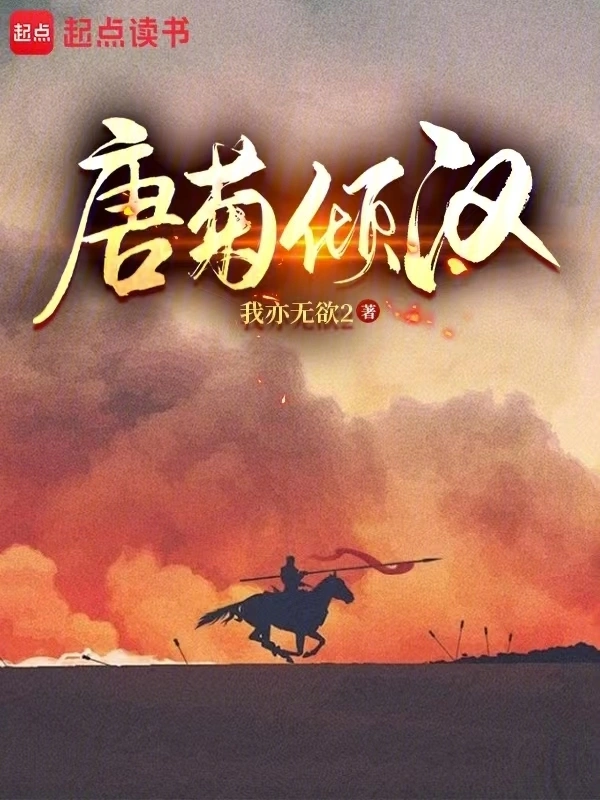
Tang Ju Falls in Love with Han
唐菊倾汉
- Status
- Completed
- Length
- 438k Words
- Genre
- Historical
- Audience
- Male
- Subgenre
- Qin-Han & Three Kingdoms
- Updated
- 1y ago
- Source
- Qidian
Stats
0Monthly votes
2kRecommends
4.3kFans
184Chapters
Tags
Synopsis
Reader comments
Readers also read
 Please Call Me Your Majesty the Tsar
 1914 Begins with the Rejection of the Schlieffen Plan
 Talker in the Song Dynasty
 In the Red Mansion: Escort Daiyu to Beijing at the Beginning
 Never Walk Alone!
 I Am a Rebel in Montenegro
 Three Kingdoms: Crossing the River by Touching the Sima Family
 Daming: Have I Become Wanli's Portable Grandfather?
 I Am Drawing a Hot-Blooded Episode in the Zhiyu Episode!
 The Three Kingdoms: Starting from the Military Admonishment of the Biological Father and the Refusal to Give Way to Jizhou
 Late Han Dynasty: Born in Bingzhou, Expected to Be a Hero
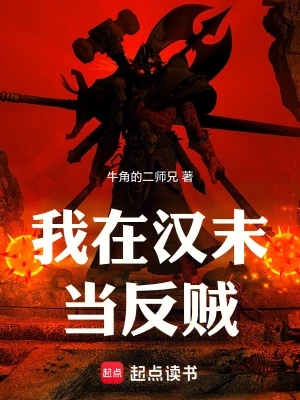 I Was a Rebel in the Late Han Dynasty!
I don't understand why the data on good books is so bleak.
I have been reading history books for more than ten years, and I have read countless good and bad books. It's rare to see a good book that is quite suitable for my current appetite, but I didn't expect that the results were so dismal. What happened to the starting point? I have read dozens of time-travel novels about the late Han Dynasty and the Three Kingdoms. To be honest, I am not particularly satisfied with them. No matter the early ones or the current ones, they recruit famous ministers and powerful generals, change the Five Husty China, and cut down the family members. They are all superficial, without going into the root cause, and treating the symptoms but not the root cause. Not to mention that there are a lot of golden fingers on it, which is even more difficult to swallow. So far, this book is still very good. It suits my taste very much. It follows a historical route and the characters are in line with what I think. It does not deliberately slander Liu Zhaolie or overly praise it. Gongsun Zan's temperament is also just right. It's just that the image of Guan Yu holding a sword is too deeply rooted in people's hearts and it is difficult to change, so he still uses swords as weapons. The official history should be a spear or a spear. I will read other character descriptions later. I am looking forward to how the author understands Cao Cao and Yuan Shao. Don't force your wits! Yuan Shen is actually not that good. There is currently no clue about the treatment of the aristocratic family. I don't know where to start, but since Huang Chao is the protagonist, there is a high probability that I will not be disappointed. Author, you should be more careful and don't ruin my reputation as a general soaring to the sky! Come on, as long as this book does not collapse, I will definitely support it by ordering it all. If it is amazing, I will give you a red envelope to support it!
Tell me your name
The word "adult" did exist in the Han Dynasty. Its origin was earlier than that of the Han Dynasty, but it was only used in written records and was basically not used in spoken language to show that people were highly virtuous and respected. Of course, there are examples of colloquial speech, but they all refer to the elders who are directly related to the family, and do not address outsiders as adults. Over time, adults are basically used to address oneself in spoken language, such as father, which was a relatively disgusting word in the social environment at that time. For example, when Zhang San laughed, he actually made a hahaha sound. However, the written record should not write Zhang San hahaha, but should write Zhang San laughing. The word "adult" is also somewhat similar. Taking the Han Dynasty as an example, if you want to mention a person in written records, for example, if this person is a governor, you can call him so-and-so; if you are a county guard, you can also call him so-and-so; The governor and county governor here are the spoken laughter of "ha ha ha", and the recorded adults are the written "laugh". The word "adult" can indeed be used in written language, but it is rarely used. After the Han Dynasty, as the political environment changed, the word "adult" was slowly liberalized in written records in officialdom, but no one still used it in spoken language, because "adult" was a particularly disgusting word in the social environment at that time. Calling someone "adult" in spoken language is like flattering, kneeling and flattering, which is almost the same as recognizing a godfather, not to mention the records. If you use the word "adult" in written records, either the person is crazy about progress and is using "adult" to win favor, or the person being recorded is a deceased or currently recognized world famous person or high-ranking official. You can reluctantly use the word "adult", but in fact, this word is basically used in private to please one's immediate elders and to act coquettishly. If you call someone "adult" in the officialdom of the late Han Dynasty, I can't imagine how shocked that person would be if called "adult". I have studied this professionally, and I have said a lot. Let me summarize it for those who don't understand: Any language is divided into spoken language and written language. Before the Ming and Qing Dynasties, the word "adult" was mostly used in written language to address people with high moral prestige and high character. It can also be It is used to address high-ranking officials in the officialdom, and this title does not refer to names. For example, Liu Biao served as the governor of Jingzhou in the first year of Chuping, so he can be called Master Jingzhou, not Mr. Liu as some people say half-heartedly. This kind of title is completely nonsense. Adults are occasionally used in spoken language, but they are always used to address one's direct elders in specific situations, and not to address outsiders. Some people are half-empty. When they see adults recorded in a book somewhere, they feel that they can also call others adults in reality, and they also call others by name. Master Zhang, Master Liu, you are shameless and others still ask for it. This is completely wrong. Written language and spoken language are two different concepts. I'm just talking about it in a simple way. For more details, you can read the relevant papers. The one is more rigorous. Chinese culture is broad and profound. If I really want to explain the ins and outs of the word "adult" clearly, I might be able to write a book.
Found a naming problem
In the Han Dynasty, "adult" was used as a title for parents. In the officialdom, people in the officialdom always added the official title after their surname without the word "adult". For example, the author wrote "Master Gongsun", but he was actually the county magistrate Gongsun. There are also some paragraphs and sentences that are a bit unclear.
I think it would be nice to write about Huang Chao's rebirth directly. He is also a character with both civil and military skills.
I have a dream
One day this post will be sunk by book friends, the deeper the better.
It doesn't matter if Huang Chao kills the nobles. The key is that his fundamentals are unstable. In that kind of people's hearts are in chaos. The age of martial arts. There is no solid foundation. Even if you don't get attacked, you won't be able to survive for long.
There are so few updates every day, maybe this is the main factor that affects the performance.
One thing to say is that although the idea is very novel, the gentry manor economy is an inevitable stage in the development of productive forces. If the next stage of production relations is advanced in advance, the productive forces cannot keep up. People who are quick to become martyrs in ten steps will instead make wedding clothes for barbarian aliens. Showing off their power for a while can stop the evil once, but this lagging productivity cannot prevent thieves for a thousand days. It is just a conqueror for the grassland. From Shiqing Shilu in the Spring and Autumn Period and the Warring States Period, to the aristocratic families in the Han, Wei and Six Dynasties, to the disintegration of the land equalization system in the Sui and Tang Dynasties, to the rise of poor families, to the scholar-bureaucrats and small landowners in the Song Dynasty, to the local tyrants and gentry in the Ming and Qing Dynasties, you can see We can see a very obvious development trend. The land owned by lords has changed from large to small, the use of manpower has changed from small to large, and local governance has changed from coarse to fine. All of this requires a process, and what leads all of this is the development of productivity and agricultural technology. Grain production increased with technological level. In the Wei and Jin Dynasties, it was the aristocratic families who mastered advanced production materials and technologies, and it was the aristocratic families who had an inextricable influence on all aspects of society. It was the aristocratic families who could organize, dispatch and protect the common people. We cannot only look at the negatives instead of the positives. If this basic organizational structure is completely destroyed, the level of knowledge and organization cannot establish a new replacement, it will just become another Rome that was destroyed by the constant attacks of the barbarians.
Collected
The road is long and long, I will search up and down, and encourage each other😁
Write more
A rare good book, the writing is smooth, the plot is not awkward, well written, don't be a eunuch
Huang Chao is also very powerful in battle, and he gained his reputation by fighting against Lu Bu.
What a good book
What a good book. I read the latest chapter in one go.
…Can the author ask Huang Chao to read a few of his poems? It feels very touching 🙂🙂
Even
Update, what about explosive updates? It's on the shelves, please update more.
Boss, will you accept Dian Wei later? Hope to accept it
The writing is pretty good. I've been following it. Why do I want to be a eunuch?