
Wait, Please Don't Call Me Emperor Zhaolie
慢着,请别叫我昭烈帝
- Status
- Completed
- Length
- 1.0M Words
- Genre
- Historical
- Audience
- Male
- Subgenre
- Qin-Han & Three Kingdoms
- Updated
- 2mo ago
- Source
- Qidian
Stats
Tags
Synopsis
Reader comments
In booklists 14
Collection of Old Bookworms, Updated from Time to Time
I have been writing online novels for more than ten years, and the earliest one was "Kunlun" that I read in martial arts magazines. This book only recommends various types of novels, and there will be short reviews.
Tai Shi Gong Ji
When heaven and man are poor, we can understand the changes in ancient and modern times and become a family!

Mo Yuanke's Little House (Talk About Logic, and You Can Kill the Fat Ones)
I hope you all like it and add it to your collection. The owner wants to open a column to better serve book lovers. Because I was often tricked by unscrupulous bookmakers, I was blown away by the hype, and as a result, my words were useless and my words were useless. A long-term illness leads to a cure I do not include books written by old pigeons (those who have been sanctioned are not included) and books written by people with low moral character. Hay has a strong style and is niche, but barel
A Book That Can Be Read
I just recommend some books that I can read.

Good Book Sharing, Read the Whole Book
Personal collection This book list is mainly for personal use. If you don't like it, don't read it.
Traveling Through History, Exquisite Products Dominate China and Foreign Countries
Travel to ancient times and achieve hegemony
Books That Huimeng Has Recently Read
This book list is a list of books that I have been reading recently. The types are different and it all depends on personal preference. But most of them are seedlings. If you don't like them, don't criticize them. (If you have any good books, please recommend them to me.) I have been working recently, so I may have less time to read novels, so the frequency of updating the book list may be random.
History of the Three Kingdoms
The Three Kingdoms was a fascinating era when heroes emerged in large numbers. This book only contains the Three Kingdoms novels that I think are quite good (the protagonists are more resourceful and not subdued). Let us experience that era of fighting and iron horses together.

My Favorite Books
These are all books I like to read.
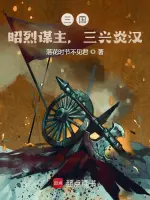
Ji Han Spirit
As the saying goes: Ji Han has the spirit of Ji Han, Cao Wei has the character of Cao Wei, and Jiangdong has the rats of Jiangdong. Different ideas can make up for Ji Han's regrets. Here are the second masters, Zilong, and all the different Ji Han people.

Poison Test Menu 1
The books I have read are basically complete.

Book List
Read when I'm short of books

OK
There are all kinds
Readable Historical Text
Personal use
Readers also read
 Please Call Me Your Majesty the Tsar
 Talker in the Song Dynasty
 1914 Begins with the Rejection of the Schlieffen Plan
 In the Red Mansion: Escort Daiyu to Beijing at the Beginning
 Never Walk Alone!
 Has the Han Dynasty Been Revived Today?
 Three Kingdoms: My Father Xuande, the King of Guanzhong Is Here
 Daming: Have I Become Wanli's Portable Grandfather?
 I Am Drawing a Hot-Blooded Episode in the Zhiyu Episode!
 Zhao Lie Xing at the End of Han Dynasty
 Three Kingdoms, Me? a Perfect Strategy?
 Passing Through Liu Bei, Helping Han Through Curves
 Lin'an Incident
 Life in the Qin Dynasty
Personal impression
As of now, this book is set in official history, and its content can be considered a masterpiece in the new history book category, at least it can be read. There is no Taoyuan sworn knot in history, so the author arranged a sworn knot to solve the differences between readers of novels and official history. By the way, remember to follow the official history when writing about Zhou Yu later on. As a novel that has left my bookshelf and come back several times, it must be attractive to me, but I am a good teacher and like to find faults. I can't tell you the advantages (there are advantages, but I haven't compiled them into a document. The value of deleting and adding them back is still very high), so let's talk about the disadvantages. The sentences do not make sense, random sentences and paragraphs are broken, plot jumps, punctuation marks and other problems caused headaches in reading dozens of chapters in the early stage. I deleted and added them back several times. The unintelligible sentences are mainly reflected in some paragraphs that are half-literate (modern white, not ancient). Personally, I think historical novels can use more mature words, not be too frivolous, and choose a more appropriate writing style, but it can be embarrassing to read half-written. Cut sentences into paragraphs at will. I guess the author didn't expect that he would be on the new book ranking list at the beginning. The paragraphs, sentence breaks, and punctuation marks in the early stage were very strange. In some places, the words were broken into sections before they were finished. One chapter is about 8 pages long and contains more than a dozen paragraphs. When I was in elementary school, my teacher complained about my use of commas, and now it's finally my turn to complain about this author's misuse of paragraphing. The jump plot is to say a sentence suddenly, with neither the person asking the question nor the person listening to the answer. It is the kind of self-imagined sentence. The final analysis is that the preparation is not in place. For example: Guan Hai was stunned: "Didn't your Majesty want to kill and surrender?" Liu Bei asked: "Why should I kill?" Guan Hai was speechless and said: "We have killed many wealthy families, and also massacred the common people..." Liu Bei said with a smile but not a smile: "Are the wealthy families who violate laws and disciplines not guilty?" "As for those who kill the common people, they will be screened out. Regardless of whether they serve in corvee all day long or are killed in public, I will not let go of those who deserve to be killed." Liu Bei had no intention of hiding his thoughts from Guan Hai. After enduring it for a long time, it finally broke out. Referring to him, he angrily said: "If you surrender to me early, why bother to use force to stop the war? First, kill and bleed, and then I can tie you to talk about people's livelihood here!" When I first read this paragraph, I personally felt rather embarrassed, because I felt that the foreshadowing was not in place, and it was possible that the sentence break led to unobjective thoughts. There are still many questions like this. If the author can refine the paragraphs and dialogues, and maintain the current upward development of the plot, he should be able to achieve good results. I read that the author said that reading is slow. I personally think it may be that the author's recent chapters are not in line with the readers of this book. I want to watch farming and development, and I don't want to watch a plot that stands still, so if the plot is stagnant or the protagonist doesn't show up, I might not want to watch it. Another point is the issue of the amount of updates. Many authors say that they cannot update too many words in the new book issue, but they did not update more after it was put on the shelves! The volume is small and the plot is not attractive, so I stopped reading it. Overall, this book is worth reading. Readers who like to read steady, steady, farming and caring for the common people can give this book a try. The current history new book list is second, and the first one is a system simulation text, which is very difficult to test the author and is easy to collapse. 3-4 Seem to be old authors. I don't like the Northern Qi book and I won't say much about it. 5-8 Has a ridiculous name, 9-10... So if you look at it this way, this book still has potential. Come on, author.
A bit interesting
He feels more heroic, his actions are relatively stable, and his actions are quite in line with his personality.
Zhao Yun and I went in and out seven times
Use Bowang as the furnace to ignite the fire of the enemy
Even though I'm stuck in a rut, I'm still leaping forward, with this heart slashing Mi Luo toward the sky!
Xuande Gong
🤓🤓🤓
Be prepared
Xuande Gong
🤓🤓🤓
Expansion
Expansion
Wherever there are so-called rational considerations, they are all high-level gangsters. Do you really think that after the Sanxing Han, China will be the next India? From ancient times to the present, kings in China have constantly strengthened their control over divine power and killed those who disobeyed. And we never blindly believe in God. From the bottom of our hearts, we Chinese people are self-reliant and self-reliant. Princes, generals and prime ministers would rather have the seed! In the past five thousand years, people have been overthrowing the dynasty. After three times of prosperity, the Han Dynasty will be restored. There will definitely be people in later generations who will use the Han Dynasty to pursue orthodoxy, but there will definitely be no eternal dynasty.
When you update, subtle flaws will be magnified, and the greenness of the writing will be criticized. When you update twice, a little patience is born, and the progress of the plot is paid more attention to. When you are on the third watch, the little praise starts to sound, and the number of dead harvests starts to decrease. When you update the fifth update, readers' support will spontaneously form, and the voices of praise will become louder and louder. When you are at the tenth watch, the Confucian debates are deafening, and the tolerant attitude is implemented both internally and externally. When you are twenty, you will have a place in the bookworm's memories. Even in your long life, your name will leave a dazzling trace. Updates may not solve all problems, but more than 90% of problems come from insufficient updates...
Let's discuss rationally. If Liu Bei in history really prospered the Han Dynasty, will the Han Dynasty never be destroyed again? I think even if the Shu Han Dynasty collapses later, the emperor of the next dynasty will still say that he inherited the foundation of the Han Dynasty and rebuilt the Han Dynasty.
Throughout the ages, you can count how many emperors have lasted for thirty years on one hand. Adou is obviously very wise, okay? Adou used Sichuan to survive for 30 years in troubled times. This ability is really strong. Most of them sit in Adou's position, and they will burp in 3 years.
After becoming the founding emperor at the end of the Eastern Han Dynasty, he measured the world's acres of land, rivers, seas, mines, and forestry resources, and cracked down on the powerful, how to develop productivity and improve the social system? According to the conditions at that time
In the context of the late Eastern Han Dynasty, as the founding emperor of a new dynasty, after completing the integration of land resources and fighting against powerful powers, he needed to promote the development of productivity and the reform of social systems from multiple levels such as economic, political, social, and military. The following is a systematic strategy that combines the technical conditions and social structure of the time: --- ### **1. Restoration and development of productivity** #### 1. **Basic agricultural reform** - **Promote iron tools and ox farming**: Establish government-run iron smelting workshops to concentrate on the production of agricultural tools (such as curved plows and columbians), which can be rented or sold to farmers at low prices through local government agencies to improve farming efficiency. - **Upgrading of the farming system**: Organize powerful private soldiers and refugees into "military villages" and "civilian villages", distribute the harvest according to "37 points" or "55 points" (such as the Cao Wei farming system), and exempt farming households from initial taxes to attract labor. - **Water Conservancy System Reconstruction**: Repair the old Qin and Han canals (such as Zheng Guo Canal) on a county-by-county basis, promote the "well canal method" to fight drought, set up "Shuicao" officials to specialize in water conservancy, and distribute rations according to "work-for-relief" when requisitioning labor. #### 2. **Handicraft Industry and Resource Development** - **Institutionalization of Salt and Iron Official Operations**: Iron officials were set up in Bingzhou (Shanxi) and Yizhou (Sichuan), salt officials were set up along the Qingxu coast, private mining was strictly controlled, and profits were transferred directly to the central government. - **Forestry and Mining Coordination**: Implement a "rotational felling system" (one harvest every ten years) for Qinling and Bashu timber, and establish official kilns in Yuzhou and Jingzhou to burn bricks for the reinforcement of city walls and residential buildings. - **Textile Industry Incentives**: Promote Sichuan brocade and Yue cloth technologies, "exempt business tax" (commercial tax reduction) for private weavers, and require powerful families to use textiles in lieu of grain to pay taxes. #### 3. **Business and Transportation Network** - **Unified Weights and Measures**: Recast the five-baht coin, severely punish private coinage, and set up "Standardization Bureau" in Luoyang, Chang'an, and Chengdu to control prices. - **Repair Chidao and Canal**: Prioritize the reconstruction of the routes from Luoyang to Yecheng and Chang'an to Hanzhong, and dredge the Honggou water system to facilitate water transportation. - **Border market opening**: Set up "mutual market supervisors" in Youzhou and Liangzhou to exchange silk for Hun horses and Qiang furs, and monitor border trade at the same time. --- ### **2. Restructuring of the social system** #### 1. **Land and household registration management** - **The combination of "land restriction system" and "land occupation system"**: civilians are limited to a hundred acres of land per household, and officials occupy land according to grade (50 hectares for the first grade, 10 hectares for the ninth grade), and the excess is taken back to official land and leased to the landless. - **Separation of "Yellow Citizenship" and "White Citizenship"**: Aboriginal people become Yellow Citizenship (taxes are fully paid), refugees become White Citizenship (taxes are reduced by half within five years), and they can transfer to Yellow Citizenship after ten years. #### 2. **Bureaucratic System Reform** - **Inspection and Examination System Improvement**: Set up two subjects: "filial piety and honesty" and "virtue", requiring the county governor to recommend 1-2 people every year, and the recommended candidates must pass the policy examination before they can serve. - **Establish the "School Affairs Officer"**: a supervisory system directly under the emperor to investigate local corruption and collusion with powerful people (similar to Cao Wei's school affairs system). #### 3. **Law and Grassroots Control** - **Revised "Nine Chapter Laws"**: Added "Household Laws" and "Xing Laws" to clarify land, taxes, and engineering regulations, and the death penalty must be reported to the central government for review. - **Separation of powers between the "Three Elders" and the "Chefu"**: There are three rural elders (education), Chefu (tax collection), and Youyou (public security). The three are not subordinate to each other and are directly responsible to the county. --- ### **3. Strategies to deal with realistic constraints** 1. **Compromise under technical limitations**: - The promotion of agricultural tools is mainly based on wood-iron composite structures (to save pig iron), and water conservancy projects adopt "section contracting" (a "canal director" is responsible for each mile). - Use beacon and post systems to transmit government orders (travel 200 miles per day), and important documents need to be "compliance" verified. 2. **Balance the powerful rebound**: - The children of powerful people are allowed to enter the officialdom through the "Ren Zi System", but they need to move to Luoyang as a pledge. - Limit the attack targets to giant clans that "resist taxes and have more than a thousand private soldiers". Small and medium-sized tycoons can retain part of their land. 3. **Population recovery methods**: - Issued the "Prenatal Care Order": maternal exemption from service for one year, and families with more than three children were rewarded with cloth and silk. - Forced "widow remarriage": a widowed woman must remarry within two years, and her clan will be punished if she violates it. --- ### **4. Phased implementation** - **The first year (consolidation period)**: Complete the land clearing, pilot farming in Sili and Yanzhou, and kill 3-5 powerful families who resist the clearing. - **Third year (promotion period)**: The land restriction system will be rolled out across the country, a salt and iron monopoly system will be established, and the first batch of "school officials" will be selected to go to each state. - **Fifth year (deepening period)**: Revise the laws and regulations, start the police examination, and dig the "Bian Canal" connecting the Yellow River and the Huaihe River. --- ### **5. Potential Risks and Plans** - **Powerful Rebellion**: Deploy the "Five Schools of the Northern Army" in Jizhou and Jingzhou in advance. During the rebellion, the "Yi Tribe" will be used to intimidate them, and at the same time, the coercers will be pardoned. - **Natural Disaster Impact**: Reserve grain for three years in Aocang and Ganquancang, and organize "work relief" to build cities to avoid hunger in disaster years. - **Gentleman Resistance**: Winning over the Xun family of Yingchuan, Yang family of Hongnong and other large families, forming a marriage alliance and promising the high position of Jiuqing. --- Through the above measures, we can gradually dismantle the strong economic foundation and rebuild the small peasant society without surpassing the technical conditions of the Eastern Han Dynasty, while laying the prototype for the land equalization system and the imperial examination system in later generations. The key is to use "gradual reform" to balance the old and new forces, and to use the window period of high legitimacy in the early stages of imperial power to quickly promote change. SecondOptimization Strengthening Under the technological and social conditions of the late Eastern Han Dynasty, if we want to further improve the efficiency of national governance, promote productivity development and social system innovation, we need to carry out more refined system design, technological innovation and resource integration based on the original strategy. The following is an optimization plan based on the actual conditions at the time: --- ### **1. Deepening strategy for productivity development** #### **1. Breakthrough improvements in agricultural technology** - **Promote the "Daily Field Method" and "District Field Method"**: - The farm substitution method (ridge-furrow rotation) was enforced in the Guanzhong Plain. The government provided special iron plows and trained agricultural officials, which increased the yield per mu by 20% (refer to Zhao Guo's reforms in the Western Han Dynasty). - In the pilot area field method (deep digging of planting pits) in mountainous areas, each household can offset the tax of three acres of permanent land by reclaiming one acre of area field. - **Establish the "Agricultural Bachelor" system**: - Select people who are proficient in farming from each county, and after being trained by Taixue, they will be awarded the position of "Agricultural Envoy", responsible for promoting ecological technologies such as manure composting and mulberry fish ponds. - Compile the official revised version of the "Four People's Monthly Orders", which stipulates monthly farming operations and publicizes them through the "wall book" in the township pavilion. #### **2. Refined division of labor in the handicraft industry** - **Implement "craftsmanship" classified management**: - Craftsmen are divided into three categories: "official craftsmen" (weapons, ritual vessels), "city craftsmen" (civilian appliances), and "border craftsmen" (border defense and city repairs). Official craftsmen's sons inherit their father's business but can be promoted to titles based on inventions. - The "Baigong Administration" was established to coordinate technical standards, such as stipulating that a plowshare must be "one foot, two inches long, and weigh three kilograms" (refer to the "Kao Gong Ji" system). - **Develop hydraulic machinery**: - Build water drainage (hydraulic blowers) along the rivers in Yizhou (Sichuan) to increase the efficiency of iron smelting five times (200 years before Du Shi's invention). - Promote the "roller" (keel waterwheel) in the Nanyang Basin to realize lowland drainage with pedal power and expand arable land by 10%. #### **3. Sustainable mechanism for resource development** - **Mining "Separation of Exploration and Mining" System**: - Set up a "Mining Exploration Camp" to specialize in exploration. After the veins are discovered, they will be mined by criminals (to avoid the abuse of civilian power), and the ore will be rewarded to the prospectors in proportion. - The "Three Ones Law" is implemented for silver and copper mines: 30% goes to the miners, 30% goes to the government, and 40% is reserved in strategic warehouses. - **Forestry Circular Economy**: - Implement the policy of "one felling and three replenishing". Every time an adult tree is cut down, three seedlings must be replanted, and the implementation is supervised by Li Zheng. - Reeds are planted in Jingzhou swamp areas and harvested in five-year cycles for papermaking, replacing slippers and reducing costs. --- ### **2. Advanced reform of the social system** #### **1. Dynamic balance of the land system** - **The "three-field system" land transfer system**: - Land is divided into "oral land" (used for life and returned after death), "Yongye land" (inheritable, limited to 20 acres), and "meritorious land" (given to those who have made meritorious services and can be bought and sold). - Establish a "field securities exchange" to allow Yongye fields to be mortgaged and borrowed in disaster years, with the annual interest rate not exceeding 20% (to avoid loan sharking). - **"Household class-tax class" linkage mechanism**: - Households are divided into nine classes according to their assets. The upper third class pays currency tax, the middle third class pays grain, and the lower third class performs labor service. The household class is re-assessed every three years. - A "progressive land tax" will be levied on those who own more than 100 acres of land, and an additional 1% of corn will be levied for every ten acres of land in excess. #### **2. Efficiency revolution in the bureaucracy** - **"Three Ways to Advance" Official Selection Method**: - Retain the inspection system (annual examination 20%), add an examination system (written examination "Spring and Autumn" and "Arithmetic" 30%), implement the "official performance appraisal and promotion system" (50%), break the monopoly of the gentry. - Set up a "Political Affairs Hall" in Luoyang. Officials in the new department need to intern for three years and will be released after passing the examination at the Shangshutai. - **"Double Track Supervision" System**: - Overt line: Yushitai inspects counties and counties, focusing on auditing granaries and projects; - Hidden line: Training "White Sparrow Envoys" to disguise themselves as merchants and spy on local officials' banquet dealings with powerful people. #### **3. Innovation in law and grassroots governance** - **Judicial reform of the "Criminal and Civil Code"**: - The "Civil Code" (land and house, marriage, debt) and the "Criminal Code" (robbers, fights and killings) are separated, and the rural mistress can only hear civil disputes. - Death penalty cases must be reviewed by the governor, and "autumn and winter executions" should be implemented to avoid miscarriage of justice. - **"Five Households Joint Guarantee" Autonomous Unit**: - Five households form a "wu", farm a piece of land together, and collectively bear taxes; if one household flees, the remaining four households will pay the tax but can obtain the right to use their land and house. - Each corps elects a "Wu Lao" who is responsible for mediating disputes and organizing night patrols. --- ### **3. Extraordinary means to break through technical bottlenecks** #### **1. Concentrate on key areas** - **Establish "Tiangong Institute"**: - Recruit Mohist descendants and pragmatic alchemists to specialize in four technologies: - Improved papermaking: used bark and hemp heads instead of silk wadding to create the prototype of "Caihou Paper"; - Developed "Fierce Oil Tank": a city defense spray weapon made of a mixture of petroleum and sulfur; - Improved war horse saddlery: designed double stirrups and a high bridge saddle (50 years earlier than history); - Developed a water conservancy clock: used the principle of water leakage to create an alarm for irrigation periods. - **"Military Technology Transferred to Civilian Use" Mechanism**: - Apply crossbow machine manufacturing technology to textile looms and invent a pedal-operated three-spindle spinning wheel, which triples the weaving efficiency; - Use rammed earth building methods to improve private houses, promote "plywood rammed earth walls", and reduce 80% of building costs. #### **2. Build a knowledge dissemination network** - **"Simple Book to the Countryside" project**: - Carve the summary of "The Book of Pan Sheng" on 1000 bamboo slips, and distribute one set to each county, and the villagers will preach it during their leisure time. - Set up an "Edict Monument" on a traffic thoroughfare, with the new policy provisions engraved on the negative side and illustrated explanations (such as a diagram of the farming process) on the positive side. - **Establishment of "Craftsmanship" Official School**: - The children of official craftsmen can enter Chang'an Craftsmanship School, which lasts for three years and majors in "Construction Methods" and "Illustrations of Smelting and Casting". Top students are awarded the title of "Engineer". --- ### **4. Strengthened plan to deal with systemic risks** #### **1. Economic disaster resistance system** - **"Four Warehouse Fed" System**: - There is a "Changpingcang" in the county (to regulate grain prices), a "Yi warehouse" in the county (disaster relief), a "military warehouse" in the state (preparation for war), and a "Taicang" in the central government (strategic reserves). The storage ratio is set at 3:3:2:2. - Implement a "grain coupon" pre-purchase system: farmers can exchange for ironware and salt based on their expected harvest in the next three years, and the government will bear the risk of price fluctuations. #### **2. Buffering mechanism for social conflicts** - **"Transfer Order of Convicted Slaves"**: - Prisoners who have committed non-treason crimes can be pardoned by completing major projects (such as building Qianli Canal) and be granted border reclamation rights. - Set up a "disease center" to focus on the treatment of plague patients, and those who were cured were exempted from taxes for three years as a sign of appeasement. #### **3. Ideology Reshaping** - **Reconstructing the "Destiny-People's Livelihood" Narrative**: - Simplify the classics results of the White Tiger Temple Conference into the "New Classic of Filial Piety", emphasizing that "the emperor raises the people like parents raising children", and requires the three elders to preach every month. - The "Fengchan Ceremony" was held in Mount Tai, displaying the newly measured atlas of the world's acres of land, symbolizing the emperor's absolute control over resources. --- ### **5. Unconventional development path** #### **1. Be the first to open up the Maritime Silk Road** - Build the "Lou Chuan Army" in Kuaiji (now Zhejiang) and explore routes to Yizhou (Taiwan) and Dan'er (Hainan); - Rice seeds were exchanged between Shujin and Jiaozhi (northern Vietnam), and early varieties of Champa rice were introduced and planted in the Yangzhou wetland on a trial basis. #### **2. Build a "military merit-land" cycle** - Promulgate the "Law of Land Granting by Beheading": Every time a soldier kills an enemy, he will be granted five acres of land (can be accumulated), but the land granted is located in the newly conquered frontier; - The acres of land awarded to those killed in battle will be inherited by their children, and they will be exempted from paying taxes for twenty years, ensuring the continued expansion of the army. #### **3. Institutional integration of religious forces** - Recognize Taiping Taoism as the "Huang-Lao Orthodox Church", but require all Taoist priests to pass the official examination of "Tao Te Ching", and those who pass the exam will be included in the management of the "Ancestral Ceremony Department"; - Set up "medical witch clinics" in disaster areas, where government-trained doctors and transformed alchemists will jointly apply medicine to put an end to folk obscene worship. --- ### **Effectiveness evaluation and adjustment** - **Establish a dual-track assessment of "upper accounting book-black book"**: - The county guard reports regular performance every year (household registration and number of cultivated fields are "white book"); - School officials secretly report the actual local situation (powerful trends and hidden disasters are "black book"). If the difference between the two exceeds 10%, an investigation will be initiated. - **The "Chaoyi Debate" is held every five years**: - Presided over by the emperor, Jiuqing and the representatives of the state pastors debate the pros and cons of policies, adopt feasible suggestions and engrave the "admonishment pillar" on the palace gate for public notice. --- Through the above strategies, the following leaps can be achieved under the technical conditions of the late Eastern Han Dynasty: 1. **Agricultural output**: Through the farmland method and water conservancy innovation, the total grain output increased by 40% within ten years; 2. **Bureaucratic efficiency**: The examination system and supervision reform reduced administrative costs by 25% and shortened the time for issuing government orders by 1/3; 3. **Social Stability**: The five-household joint guarantee and four-warehouse system can suppress the risk of peasant uprisings to an average annual incidence rate of less than 0.5; 4. **Technical Reserve**: The Tiangongyuan project can make metallurgical efficiency and military technology one generation ahead of surrounding forces. The key breakthrough point is: **prototype experiments were carried out in advance for the germination of systems that did not appear until the Sui and Tang Dynasties in the Northern and Southern Dynasties (equal land system, imperial examination system, three provinces and six ministries), and at the same time, new resource channels were opened up through unconventional means (such as naval exploration, religious control)**. Although this kind of reform was radical, it was highly feasible in the early days of the new dynasty when its authority was not challenged.
I haven't read the article, but the title and introduction still match well.
Zhaolie is indeed not a good posthumous title. Historically, these two words were mostly used for emperors who died within a few years of taking the throne or who died in battle. If Liu Bei could really unify the world quickly, he would have to have a posthumous title with the character Wu. "Emperor Han Liezu Wulie" or "Emperor Han Gaozu Zhaowu" are more suitable.
"Ji Hanshu·Zhongzu Benji"
Zhongzu used 4,000 fine armor to defeat Yuan Shao's 50,000 Huns in Wei County. Although the captives were not killed, their thumbs were cut off so that they could not bend the bow, and they were tattooed as herding slaves. At that time, more than a hundred women emerged from the tents of noble Xiongnu chiefs. They were all daughters of good families from Taiyuan, Shangdang, Hedong, and Hanoi. They were captured for a few months or several years. Every time they were given to the Xiongnu, all their relatives, husbands and children were killed by Hu Qi. The Holy Ancestor heard his statement and was silent for a long time. He suddenly summoned the military officials and said: "Behead all the prisoners and surrender them outside the camp." He promised to go out. A courageous woman among the women asked: "The general wants to marry his concubine and wait for shame?" Zhongzu sighed: "I originally wanted to stay with the captives to raise six livestock, but now that I heard what happened to Ru Cao, I still want to be a stranger even though I am a stranger. How about preparing to be a Han?" The women cried and told each other: In the past, officials came to the captives' court and saw their miserable condition and ignored them. Some people might have tipped off officials, but they were betrayed, and several women were flogged to death. More senior officials advised him to use the "big plan to harmonize the army" and ordered him to commit himself to serving the captives. Today, the general has not seen the real situation, but after hearing the mournful cry, he killed the captives and abandoned the profit, which was an unprecedented righteous act. The sound of mourning moved the wild, and it took a long time to stop. The women looked up and said: "Although I am a daughter, I have been practicing animal husbandry for a long time, and I would like to repay it by serving as the general's shepherd." Zhongzu helped her, and ordered Yi Nan to install the central army. Before leaving, he looked at the army, but he was so sad that he suddenly shouted loudly: "You guys! Wait for someone to take over Hebei and merge two states. Anyone who flatters the captives and betrays the people will be punished no matter how far away!" The sound shook the trees, and the three armies screamed. It was a white moonlit night with a clear breeze, and intermittent weeping could still be heard in the camp, like the sound of a broken string. ...... In autumn, the Xiongnu Chan Yu Fu Luo attacked Hanoi with ten thousand horses. When Zhongzu was stationed on the north bank of the Dahe River, he heard the news from the sentries and called Xun You, Guo Jia and Zhang Fan to discuss. Seeing that the reeds on the north bank covered the wild land, which stretched for several miles, he put his palms in his hands and smiled and said: "This is the land given by God to capture the Hu." Sun Qian was ordered to lead the boatmen down the river and seize all the Qinshui canoes, showing that the Huns were short of food and equipment. Taishi Ci ordered Tai Shici to place the tiger's horse with its hooves wrapped in its hooves, and lay down on the west side of the reeds, about to raise a fire at dusk as a signal. He led his infantry to form a formation with his back against the water, lined up four hundred Wugang chariots as a wall, and tied the carriages and horses to the river bank. When the three armies heard that the thieves had been defeated, they were all given silk fields, and the shouts shook the field. You Jin said: "In the past, Huaiyin carried water and narrowly defeated Gaixia. If we follow his method now, if the Huns burn reeds and startle their riders, or the chariot array collapses, what can be done?" Zhongzu laughed and said, "You don't see the south wind hunting? If Hu'er lifts the firewood, he is self-immolated. And he came with Bai Deng's hatred. When he saw me standing in the meander of the river, how could he abandon it?" Then he planted a red flag on the high platform, and the golden drum shook the sky. At sunset, the Xiongnu fruit arrives. In Fuluo Wangzhong, his ancestors built Linhe and drove all their cavalry into the formation. The Han army fired all their bows and crossbows, and their chariots and shafts were connected like an iron wall. A sudden wind blew up from the south, Ci led his ambush cavalry to protrude from the reeds, and smoke and dust rose into the sky. The Xiongnu were attacked in front and behind, with men and horses borrowing from each other, and the Qinshui River turned red. The single man bowed his head, and the rest surrendered. This battle beheaded 7,000 people and won 10,000 horses. A Heluo nursery rhyme says: "The red flags are swept by the south wind, and the tiger rides out of the reeds. The emperor of Han stands near the water, and the horse weeps blood red." Shi Chen praised: Zhongzu's use of troops coincided with yin and yang. Observe the stars and identify the qi, and you will be better than before the battle. It is almost a gift from heaven! ...... In the spring, Zhongzu entered Luoyang. Seeing the ruins of the palaces, hills and ruins, and the devastation of the people, he sighed and said: "Dong Zhuo's rebellion has brought disaster to this!" At that time, Xun You walked along and stared at the city gates, as if he had deep thoughts. Zhongzu asked: "Since Gongda entered Luo, he looked depressed. How can he think about it?" You paused and said: "In the past, I conspired with Zheng Tai, He Yong and others to kill Zhuo, but failed and was imprisoned. Originally it was said that the gully should be filled, and fortunately God would punish the rebels. I can see the Han family's castle again. Now that my old man's house is in ruins and the ancestral temple is in ruins, I think we should repair the temple first, then repair the city wall, and then delay the construction of the palace. I hope the Ming Dynasty will think deeply about it. At that time, Guo Jia was standing by and said: "Now Yuan Shao is in Hebei, and Lu Bu is peeking at Yanyu. If he suddenly builds construction projects and spends huge billions, he may lose the popularity of the people. It is better to wipe out the heroes before building palaces to show his power and virtue." Zhongzu raised his palm and smiled. He said: "The words of the two monarchs resonate deeply with my heart. In the past, when Emperor Gaozu and Xiang Yu fought against each other, Xiao He ruled Weiyang, but he was still questioned. Now that all the heroes are still alive, how can we follow the Qin Emperor's example?" So he ordered the ancestral temple to be repaired, the state government to be established, punishments to be reduced, and taxes to be reduced. When the people heard about it, they ate the juice from the pot to welcome the king's master. ... Shi Yujin said: "The Western Qin is also a land of barbarians. If we go overseas, we will inevitably lead to militarism and extravagance. The people will be exhausted and all the people will be exhausted! Ming Gong wants to follow the example of Wen Jing and keep a low profile and practice filial piety. Wu expanded the territory, but Wenjing has been accumulating grain and silk for seventy years, and now there is no foundation. I would like to ask you to check it out! " Zhongzu smiled and touched his arm and said, "Don't worry, Gong Jin is starting to weave mats. Don't you know the sufferings of Guizhou? ? Conquer according to the strength, and inherit it from generation to generation. In the past, the emperor of Qin built the Great Wall to protect the barbarians, built the Ling Canal to connect the mountains, and built Chi Road to connect the four directions. Although it was beneficial to future generations, he was too impatient and said: "Wei Hanwei." For example, when Xun Qing said, "The king is a boat, and the water is the water. The water will carry the boat, and the water will overturn the boat." " The candlelight flickered in the tent, and Zhongzu looked at the map of Xuzhou in silence for a while. Suddenly he threw his pen and sighed and said: "Hao You still wants to tie a prison sentence around a person's neck! His fields are irrigated first, and the land is the most fertile, but he still wants to drain the ditches to keep the barren soil from being wet. If not, why did the yellow scarf come from?" All those sitting there held their breath. At that time, Lu Su praised: "The benevolence of the emperor will surely lead to a lasting legacy." Zhongzu Que pointed his halberd at the sky and said: "I want a great man to be like a man from heaven, galloping thousands of miles, swallowing up eight wastes. This man has a bright future. Even with the rise, there is also the mourning of Huan's decline. Even though I am mortal, I dare not expect for eternity. I only hope that future generations will see the splendor and think of the Han Dynasty. Even if it declines, I can still stand on the sky and walk on the earth! ...... In the winter of the first year of Jian'an, in the tenth month of Guisi, Yuan Shao gathered a hundred thousand cavalry on foot, with flags, drums, and rivets, like a torrent. Zhongzu suddenly sent an envoy to issue a letter of war, setting an appointment to hunt the north of Xun City, and defeated the 100,000 elk in Hebei with 7,000 sharp soldiers. The generals in Jizhou became frightened when they heard the news and retreated to defend themselves, looking like chickens and tiled dogs. The envoy even wore a woman's robe and made insinuations. Yuan Benchu read the book and became furious. It was Mengdong, and the black clouds were all around. Zhongzu ordered Wu Gang to form a screen with thousands of chariots, the infantry advanced with shields, and the cavalry divided their wings to respond. The eleven characters of "Han Qing Yanxu Jizhou Muzuo General Liu" are written on the red flag banner, which is in the hunting wind. The sound of drums shook the sky, and they were arrayed two miles away from the camp. Yuan Jun was unpredictable. Yuan Shao divided his cavalry into four groups, and Wuhuan and Hu cavalry traveled to Tianmo. Zhongzu went up to the stage to observe the formation, put his palms in his hands and smiled and said: "The insurgents came at the beginning, and the cavalry formation was scattered and lost momentum. What's the use of a large number of people?" Guo Jia saw Yuan Jun's armored cavalry, and admonished him: "If you take off your armor with light cavalry, I'm afraid it will be difficult for you to charge like an iron cavalry." In the formation, it is better to get the horse armor quickly. "Zhongzu said to me: "The armored cavalry can defeat the infantry's ears. I have to climb up the camp first and cut off the horse. What's more, the horse has no stirrups and will fall when it rushes into the formation." Then he ordered the crossbow to hide behind and personally led the tiger and Ben cavalry to wait. ...... For a moment, the drums and horns sounded, and Yuan Qi burst into the rear. Zhongzu personally made armor and divided the horse into three groups: Xu Zhu held the spear as the front, Zhongzu held the sword for the middle, and Dian Wei wielded the hammer at the rear. Chunyu Qiong led 1,600 cavalry to fight against the enemy, but when he tried to shoot at them, the sharp tigers were like sharp cones piercing leather. The sharp edge broke the armor, the sword cut off the horse, the heavy hammer shattered the head, and the sky was filled with blood. Yuan Qi was defeated and lost all his troops. Chunyu Qiong's head was unknown, so he commanded the flag and entrusted the territory. Zhongzu was wrapped in four wounds, his armor was steaming like mist with sweat, and he still pointed at Yuan Shao's army and said: "Shao said that I am exhausted, you guys dare to capture me!"
Well written. It's just that not doing scientific research is a failure. Paper was not popular during the Eastern Han Dynasty because the quality was not good. Isn't it nonsense that you don't have paper in education? There are also sun salt, blast furnace steelmaking, steel knives, urine quenching, earth-covered burning, trebuchets, and horseshoes. These are all simple things that cannot be broken easily. If you do it, you will be superior to others and win it directly in the decisive battle.
Good grass of the Two Han and Three Kingdoms
1. It has a sense of historical glory and momentum, which made me see the romance of the Three Great Han Dynasties 2. The characters speak with ancient characteristics, and the characters are well-shaped and in line with the characters 3. Liu Bei is very charming. He is worthy of being the succubus of the Han Dynasty, wise, powerful, capable of conquering and fighting. The ability of martial arts, caring for the people, paying attention to farming and mulberry, and loving the people like a son to Emperor Wen. His early grassroots experience, mixing in the market, and having the chivalrous spirit of the great ancestor. Promoting national integration also made me see the shadow of Emperor Taizong of the Tang Dynasty. The portrayal is very good 4. There are currently no poisonous points or flaws, you can watch it with confidence.
Can you write two extras about Liu Bei's death and the crown prince's succession?😭😭😭😭
Liu Bei was a great man, what temple title and posthumous title would be more appropriate?
It's not too much to give the title of Ancestor to the Han Temple, and it's also reasonable to give the title of Wu to the posthumous title. Liu Xiu is Emperor Guangwu, the ancestor of the Han Dynasty. Only one of the four top temple names, Taikoo Shishi, is selected. Liu Bei's temple name is Han Zhongzu, which is more appropriate.
After reading this book, I felt a lot of emotion and felt very reluctant to leave it. There are feelings of brotherhood, love between monarchs and ministers, joys and sorrows, and I hope the author of this book will continue to work hard.
Bestseller
The writing is really good. I stayed up all night to read it. Apart from the ending being a bit rushed, I also felt it was a pity that there were no extra chapters in which modern people could comment on the protagonist.
The New Year is here, I'll give it to you
Give it to youGive it to you
Can the author pay careful attention to the wording of the text? It's really uncomfortable. There are a lot of missing words and words everywhere.
It's all for you, (。ӧ◡ӧ。)
Happy New Year
I finished the review. It's very well written. Please update it soon. It's not satisfying to read. I'm afraid I'll put it on the bookshelf and let it die 😁
Recommend a book of Three Kingdoms
Not a novice, not hydrophobic, not afraid of spraying.
Give me a mirror
38 Monthly tickets, boss remember to leave me the title of fan
Almost 20 last month, double this month, boss, hurry up and create a group