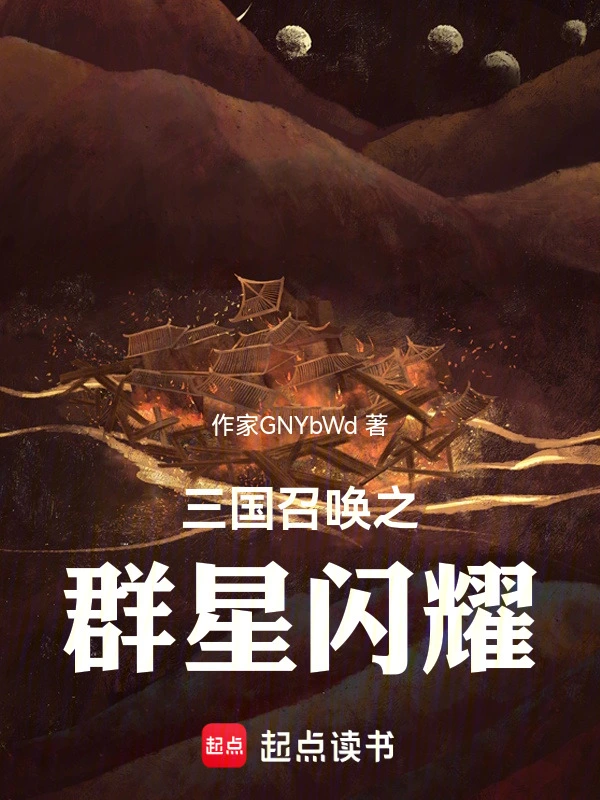
Three Kingdoms Summons Stars Shine
三国召唤之群星闪耀
- Status
- Ongoing
- Length
- 183k Words
- Genre
- Historical
- Audience
- Male
- Subgenre
- Qin-Han & Three Kingdoms
- Updated
- 2y ago
- Source
- Qidian
Stats
0Monthly votes
929Recommends
10Fans
91Chapters
Tags
Synopsis
Reader comments
Readers also read
 Red Mansion: Start Escaping and Farming from the Equipment Bar
 Northern Qi, Sage Khan
 After Lying in Bed for Three Years, He Was Forced to Help the Han Dynasty
 Fu Ming 1627
 Siheyuan: Start by Picking up Attributes
 The Summoning of the Divine Martial Arts in the Other World Struggle
 The Restart of Yanhuang Summons from Another World
 Beastmaster: I Can See the Evolutionary Path
 Immortal Who Seizes the Body
 I Summon All the Famous Generals in History from Another World
 Extraordinary Hegemony: the Ultimate Summoning
 Summoning the Heroes of the Chaotic War in Another World
I won't talk about the force of the Sui and Tang Dynasties. The force of the Water Margin is so high. There are also some other characters who don't move and have more than 100 weapons. What are their highlights? One of the characters from the Three Kingdoms period, Yan Liang, has more than 100 weapons. Those who are not famous have more than 90. There is no comparison. There are so many characters at once.
Comments on this book
I read eight chapters. The author, let's not talk about the setting, just the plot: The protagonist is the son of an ordinary official. Both his parents are dead. According to the regulations of the Han Dynasty, he needs to observe filial piety for twenty-seven months (which is often said to be three years of filial piety. Yuan Shao even observed filial piety for six years to gain great fame for himself and lay the foundation for himself to become a high-ranking official). How can he become an official not long after his parents died. In addition, Cai Yong asked the protagonist to find an official. He asked him to be the prefect, and he chose a county at will. Did you know that the prefect was a high-ranking official with two thousand shi? Each state followed the Western Han Dynasty's imperial system and established a state pastor with a rank of two thousand stones. In the eighteenth year of Jianwu (AD 42), he was changed to the provincial governor, with a rank of six hundred stones. In the fifth year of Emperor Zhongping's reign (AD 188), Emperor Ling of the Han Dynasty changed the state to Mu, with a rank of two thousand stones. The governors of the Eastern Han Dynasty had fixed residences and official offices. The prefects and magistrates who impeached them did not need to be tested by the three public officials in the Western Han Dynasty system, and could be dismissed directly. After being transformed into a state pastor, he also led the military and political affairs, with a high and powerful position, somewhat similar to the Jiedushi of the Tang Dynasty, but the vast area under his jurisdiction was not comparable to that of the Jiedushi. Many celebrities in the Eastern Han Dynasty who wanted to become officials basically started from Yilang (600 shi) after the conquest, and then after a period of time, they became prefects with 2,000 shi. For example, Lu Zhi, the teacher of Liu Bei and Gongsun Zan, was one of the most famous celebrities in the late Eastern Han Dynasty and a pioneer in eliminating eunuchs. However, he was dismissed from office and imprisoned many times because of this. Every time he was re-activated, he started from Yilang (even if he was the main force in quelling the Yellow Turban Uprising), and then he was appointed as Shangshu in the internal dynasty, and as the prefect of Jiujiang County and Lujiang County in the external affairs. This regulation in the Eastern Han Dynasty was to prevent powerful officials from taking over the government like Huo Guang and Wang Mang, or even usurping the throne. Therefore, even if you are an official until San Gong (Wan Shi), once you are dismissed, if you want to be an official again, you must start from the bottom Yi Lang. Cai Yong was conquered by Dong Zhuo on the eve of the war against Dong. Dong Zhuo also valued Cai Yong's reputation, so he promoted Cai Yong three times in a short period of time. Cai Yong was only paid two thousand shi. Cai Yong is like this, not to mention the protagonist who wants fame but not reputation, merit but not merit, and ability but not ability! Cai Yong used this ability. The three princes, nine ministers and the emperor were not fools. Can a high-ranking official like Liang Qianshi be obtained by a loser like the protagonist? ! And after the protagonist arrives in Nanjun, Nanjun has 10,000 soldiers. The protagonist is too few and wants to expand the army to 30,000. Does the author not know the military system of the Eastern Han Dynasty? The Eastern Han Dynasty was not as martial-minded as the Western Han Dynasty, so much so that it maintained five or six hundred thousand state and county soldiers all year round. After Emperor Guangwu unified the country, because Emperor Guangwu was pushed out by powerful families, Emperor Guangwu tolerated powerful people and relaxed control over state-supervised monopoly departments such as salt, iron and wine. These monopoly revenues fell into the hands of local powerful families, and the national income dropped sharply. Emperor Guangwu could only disarm. In addition, for public security reasons, it was completely wasteful for the country to maintain 500,000 to 600,000 state and county soldiers all year round, so Emperor Guangwu conveniently abolished the state and county soldiers and expanded the northern and southern imperial guards. In cooperating with Du Tianfa to suppress powerful families, although Du Tianfa was stillborn due to too much resistance, it also played a role in saving money. The reason why Emperor Ling of the Han Dynasty sold his official position and title was because the emperor's private property was not enough to spend and he could not get taxes from powerful families, so he wasted it. During the Eastern Han Dynasty, the military strength was divided between the North and South Forbidden Army, the Three Rivers Knights and the three-sided border army. Liangjiazi was drafted with the hope of joining the Forbidden Army, including Dong Zhuo, who also took this route to become an officer when he was young. As for the state and county soldiers, except for the special type of Danyang soldiers, compared to the forbidden army, they are all the fifth scum! Before the Yellow Turban Uprising, there were only more than 100,000 state and county soldiers in the Eastern Han Dynasty, and they were distributed in more than 100 states and counties across the country. The corresponding county soldiers were recruited according to the population and economy of the county. The large county soldiers could reach more than 10,000, and the small ones may be less than 5,000. Yinan County has a population of more than 600,000. Recruiting 30,000 troops would be an act of military aggression. I think it is an exaggeration to say there are 10,000 county soldiers! The other thing is to suppress a bandit. These county soldiers are enough. The bandits have no armor. The county soldiers have very few iron armor, but most of them have leather armor. Even the defensive power of leather armor is not like in the TV series: it can be broken by a cut or penetrated by a poke. The Yellow Turban Army's million-strong army was crushed and pacified within half a year when it encountered the well-trained Northern Army and the Three Rivers Knights (the Southern Army guarding the capital), mostly relying on the advanced equipment of the Han Army. Note: "One armor carries three crossbows, and three armors go to the underworld", which is talking about iron armor! Before the Yellow Turban Uprising, the Han court had not lifted the policy of prohibiting direct recruitment of troops by aristocratic families except prefectures and counties, so the Han court still had strong control over the local areas. The protagonist proposed recruiting troops, and the governor reported the situation to Luoyang within five days. When the emperor sends envoys to arrest the protagonist and imprison him, the protagonist will either go into exile, resist and be killed, or be captured without any other choice. If you want to recruit troops, you have to wait until the policies are relaxed after the Yellow Turban Uprising. Isn't that legal? ! The last point is the protagonist's address to Cai Yong. Although "taboo for the honorable" was not as perverse as in later generations in the Han Dynasty, it was still very important. The protagonist, a junior, wants to call Cai Yong "Bojie Gong", which is in line with the title of the Han Dynasty! The above is my point of view.
It has been recommended in the discussion circle of summoning novels that I have read. I hope someone will read it.
Already invested, wishing you an early signing.
I just discovered another summoning novel, which should be Dragon's Blood in the Emperor (Chaos and Different Worlds: Summoning the Heroes of the Ages) by the famous author Luan Yi.
I just discovered another summoning novel, which should be Dragon's Blood in the Emperor (Chaos and Different Worlds: Summoning the Heroes of the Ages) by the famous author Luan Yi.
We just have one request, stick to it and stop being a father-in-law.
A poisonous batch, history is history, fantasy is added, and mythology is added in the end. How many times are you writing?
Let's take a good look at what history is being written about.
Read what you wrote yourself and see if you can continue to read it.
I just found a new book of summoning novels (Struggle for Hegemony in Different Worlds: The Melee of Nations)
I just discovered that the little white cat who was sleeping with the author exploded to death and published a new book: Rebirth of the Three Summits: A Gathering of Heroes
New book: Summoning from another world: Fighting for supremacy over Kyushu
New book: Conquest of the Gods: Summoning of Gods and Demons
I just discovered that this book has been serialized for some time, Summons from Another World: All Nations Come to Korea