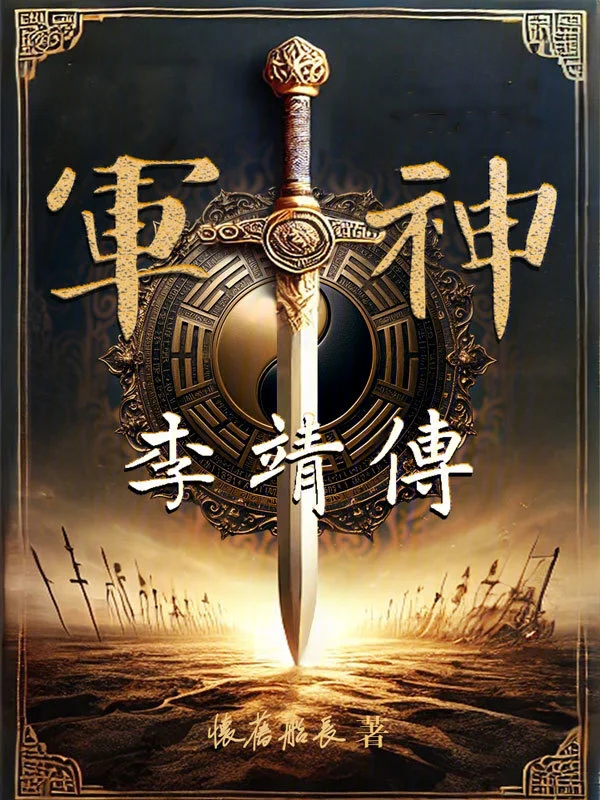
Legend of Military God Li Jing
军神李靖传
- Status
- Completed
- Length
- 711k Words
- Genre
- Historical
- Audience
- Male
- Subgenre
- Historical Biography
- Updated
- 1y ago
- Source
- Qidian
Stats
0Monthly votes
431Recommends
0Fans
305Chapters
Synopsis
Reader comments
Readers also read
 Please Call Me Your Majesty the Tsar
 Talker in the Song Dynasty
 In the Red Mansion: Escort Daiyu to Beijing at the Beginning
 1914 Begins with the Rejection of the Schlieffen Plan
 Never Walk Alone!
 Overturning the Jin Dynasty: a Comeback
 Song Dynasty
 Daming: Have I Become Wanli's Portable Grandfather?
 I Am Drawing a Hot-Blooded Episode in the Zhiyu Episode!
 The Sword Rises from Emei
 Late Han Dynasty, Different Operations
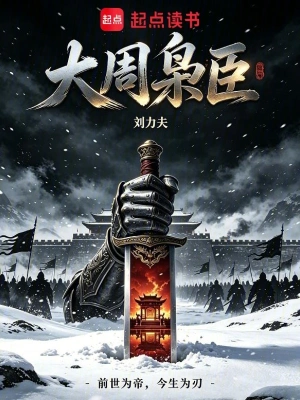 The Ministers of the Great Zhou Dynasty
Brother Chuan: Are the geographical locations involved in your "The Legend of Li Jingjun" made up?
When I learn geography, I learn it with my feet. I don't show off or brag. When I was writing the reportage "The Sick Yangtze River" when I was young, I started from the Jinsha River and spent more than a month inspecting Shanghai. So I know a lot about the areas along the Yangtze River. At that time, work required it, and there was no public funding. It was impossible. In 2000, this line cost tens of thousands at the time, and some of it was hosted by local people. The three eastern provinces, around the Bohai Sea, Mongolia and Xinjiang, were divided into three times. It took one and a half months, and the farthest was the Philippines offshore. That time it started from Sanya, with a fleet of fishermen. It was too far there, and the South China Sea was too big, with an area of three million square kilometers. It was very hard. In the deep forests of the Daxingan Mountains, there was no food. At sea, it was even more difficult. In the end, there was no water. The European region is actually about the same size as China. I have been to several large sea areas. The ones written in "Deep Awakening" are all correctly proportioned and not made up by blind people. The "God of War" currently written covers most of China, even the Lake Baikal region, the north and south of the Tianshan Mountains, and the Qinghai-Tibet Plateau. It is written in a one-to-one scale, not randomly compiled, such as how many days a person can walk, how many horses can travel, and how many different horse types can travel. Some TV series I watched, there was a "Five Thousand Miles Expedited" that made me laugh so hard that I didn't even dare to say that. The ancients had inconvenient transportation and the journey was extremely slow. In addition, many places were not suitable for walking, so it was very slow. To fight, eight peasants are required to provide one soldier. Therefore, although Emperor Wu of the Han Dynasty defeated the Xiongnu, his family's wealth was completely exhausted. Ancient geography and modern geography are two different things. For example, the Yangtze River estuary was originally very small, and large areas were covered by sediment. The flow and sediment of the Yellow River and Yangtze River changed the geography. In ancient times, Sidu was bounded by the Yangtze River in the east, the Yellow River in the west, the Huai River in the south, and the Jishui River in the north. The Han Dynasty was in chaos, and Li Jing of the Tang Dynasty attacked and destroyed the Turks and established four major military governors. Except for opening up the Hexi Corridor, the Han Dynasty failed to defend anything else. The Jishui River is originally very large. It originates from Wangwu Mountain and flows into the Yellow River three times without being contaminated. Jining and Jinan are big cities. I'm not afraid now, but no one pays attention. If you are from Hebei, you should know that the so-called Henan and Hebei are not the Yellow River, but the Zhang River, Shandong, Shanxi, and Taihang. Those are the big mountains, and Taishan is just a bird mountain. I have been to Taihang and I was scared. I couldn't get out 😄 Those who read regularly will surely find that many place names in ancient times were named after rivers and mountains. Counting from the northeast, it is like that, Heilongjiang, the north is water, the water is black, so it is called Heilong, Jilin is also water, which means "city by the Songhua River" in Manchu, and the Liaohe River is the origin of Liaoning. Beijing was originally Zhuojun and Tianjin. First, Qu Yuan Li Sao Li proposed that Tianjin was the ferry; second, Zhu Di sent troops to cross the Haihe River, hence the name "Emperor's Ferry". Paleogeography is related to four types: rivers, mountains, yin and yang. Luoshui and Luoshui are the same. They are named because of water. The north of the water is yang and the south of the water is yin. So if you understand this, you will know how it is called yin. Place names like Baoji are derived from the myths and legends of Chen Bao. The south of the mountain is yang and the north of the mountain is yin. It is mainly due to the phenomenon of light.
Update Note: A must-read for investment groups
Yesterday I saw that a reader invested in this book specifically to improve his experience. I was very encouraged. It's just that this book is not intended to be signed here, and I'm afraid it won't bring the best interests to investors. I'm sorry for that. 🙏 It seems that the author has been updating for 30 days, and investors can get a share. Combined with the overall update progress, in the next month, that is, before May 30, the book will be updated 4,000+ times a day, and thereafter it will be updated three times a week or twice a week. This book will definitely be finished, and there are already 400 chapters in the manuscript. However, because there are other things to be busy with, proofreading and illustrations also take time. Moreover, what I want to present to my readers is a work of sincerity, and I don't dare to cut corners or do things hastily, so thank you for your support and understanding. 🙏🌹
AI blockbuster, what do you think?
The pictures are all generated by AI, and the grand scenes are really awesome. Water battles, horse battles, cave battles, and jungle battles are all well understood The only drawback is that there are too many Japanese elements
I write about Li Jing and mainly write about foreign wars. There is no way around civil war. Try your best to kill as little as possible. This is my military thought. A country built out of bones is not worthy of praise So Li Jing employed the fewest people, made the smallest sacrifices, expanded the largest territory, killed the fewest people, and solved the biggest problems. Marshal Bocheng kept silent about military affairs in his later years The children asked him: Father, tell us about the Battle of Huaihai Liu said: What should I talk about? In the dream, the widow asked me for a husband, the mother asked me for a monkey, the child asked me for a father... What did I say? This is the God of War The warrior stops the fight. It means that the swords and guns are stored in the warehouse and the horses are released in Nanshan. The joy of the emperor, the tears of the people, and the war only when there is no other way? Real soldiers are not willing to fight, and they will fight if they have no choice. Maybe only keyboard warriors are belligerent.
I received the fifth volume, the sixth volume, and the seventh volume soon.
Historical novels, output is about one-twentieth of intake
When writing historical novels, of course you rely on your imagination to fill in the blanks about small characters and events, but the big events and big characters must all be consistent with history. The officials, characters, and main events of the same period must all be consistent, which requires research on a lot of things. Some things are just one sentence in the history books. For example, hundreds of thousands of horses raised in Longxi during the Sui Dynasty disappeared. How it was raised, who provided the money, where the horse was bred, and the equipment such as shoes, saddles, grain, etc. Were not mentioned. Trouble. It took a lot of time, and sometimes I had to find some ancient books to check ancient events, which made me furious. There is no limit to overhead, which means there is no history or dynasty. For example, "what to say", "what" and "problem", in this case, people in history would not say it. Because the word "what" did not exist in ancient times, nor did the word "problem". And you, these words did not appear before that era, so they cannot be used. The description of fantasy time travel can be explained clearly, and you can do whatever you want, but historical dramas cannot be made blindly. No matter how vernacular it is, it is impossible to speak like it is now: What are you talking about? You have a lot of problems. You don't even have common sense. Your views are quite cutting-edge. Your family is unhygienic. General, please do the statistics... And write in the contemporary Japanese language of the former Soviet Union... So writing historical novels is tiring and has too many restrictions. The costumes in many period films on TV are all wrong, but many people don't pay much attention to them. The dynasty, costumes, architecture, and meals are all wrong. For example, tea was brewed in the Qin Dynasty. In the Sui and Tang Dynasties, tea was mashed, boiled in water, and swallowed with foam. After Lu Yu wrote the "Tea Classic", the tea ceremony gradually began to develop, but it could not go beyond the early Tang Dynasty at the earliest. You must be wrong to have fragrant tea in the Qin Dynasty. A lot of Chinese food comes from outside. Apples were first introduced to China during the reign of Daoguang. There are actually apples in the movies of the Tang Dynasty. We might as well put Newton in them. Chili peppers are from the Ming Dynasty, so you can't just pre-Qin Dynasty and have a plot: There are too many chili peppers in this dish... It probably has to be a little bit similar to whatever era it was in. In the past, the emperor was not called the Emperor. He was called Your Majesty in front of his face and His Majesty behind his back. The imperial edict "Follow Heaven to carry out the emperor's edict" was issued after Zhu Yuanzhang. These TV dramas are so messed up. After forming a fixed impression, the right people will point out the wrong things, that's it. In addition, a text with quality and exquisiteness cannot be just a pile of words. At least close your eyes and put yourself in your shoes. For example, sorrow, joy, good and evil, and role substitution, we must do our best; The creation of the environment, climate, geography, form, clothing, diet, habits, cultural differences, and regional differences must be clarified; Kilometers, the Sui and Tang Dynasties need to be converted, how many days a horse can walk, how many hours a walk, how high the city is, how wide and deep the water is... Only if you can draw a picture can you dare to write. The overall output is about one-twentieth of the intake. Don't write long stories if you are not in good health, it is too tiring. The God of War is my accumulation of fifty years. Writing it is tiring, but also satisfying. I really don't dare to write anymore. If you are interested, please provide your valuable comments. 🌹
How did you overcome difficulties and setbacks on the road to pursuing your dreams?
It's a bit luxurious to talk about dreams now, but if you don't have any dreams, where is the traction in life? Dreams and persistence are yin and yang to each other, and they are also a closed loop. Social development and changes are beyond the control of individuals and they often follow the trend, but they can persist in their inner pursuits. Since I read my first book on the street as a child, I have wanted to be a writer. Later, I worked as a miner, moved real bricks, worked in a shoe factory, and went to Shaolin. At that time, it took me three years of savings to buy a set of "The Complete Works of Lu Xun." Later he joined the army, published works in "People's Liberation Army Literature and Art", and was transferred to the government agency to engage in news writing. He published more than 300 articles every year. He later engaged in navigation, media editor-in-chief, business management, etc., But he never stopped writing. So far, more than 6 million words have been completed. In 2007, I worked as a moderator in the Tianya Literature section. I also published several novels and began to construct a long historical legend "Military God: The Biography of Li Jing". During this period, my work changed many times, but in the first 16 years I remained committed and consulted tens of millions of materials. Finally, I completed the preliminary ten volumes and serialized them on the public account. It is expected to be 12 volumes. Among my readers and friends, no matter which industry they are most successful in, they all persist silently, endure loneliness, and are self-driven for a long time. If a mortal does not have this skill, it will be difficult for him to achieve anything in his life.
This is a breath of fresh air in the novel 🎁, good wine, good wine
Character dialogue.
The old lady Cixi of the Qing Dynasty summoned Mr. Zeng and asked: When Mr. Zeng comes, are you tired from the journey? How was your stay? How was your meal? Are you used to it in the north? Zeng Gong returned to the residence, shook his head and said: The Queen Mother does not care about military and state affairs, but only talks about eating, drinking and defecating. The Qing Dynasty is in danger! It can be seen that writing novels and character dialogue are very challenging for the author. In my humble work "Military God Li Jing's Biography", Yang Jian went to Sun Simiao for treatment, and he wrote for a long time. ------- Yang Jian tried his best to squeeze out a smile: "When I saw your husband, his illness was already half cured. The imperial physician once advised me that I would diagnose the disease according to the ancient rules and tie the curtain with silk. There are a lot of rules that prohibit needles and stones. I have rejected them all. Years ago, Cao Cao suffered from a head infection similar to mine. The miracle doctor Hua Tuo recommended that he beheaded. It was because Mr. Sun was too suspicious that he studied mathematics. As a man of learning, even if the swords and axes are thrown at me, I should still learn from Guan Gong and talk and laugh calmly. In ancient times, life and death were determined by fate. Emperors, generals, traffickers and pawns, what are the similarities and differences in the face of life and death? Sir, just let go of diagnosis and treatment, no matter what. It must be taboo. Yong'er is here to prove it: If your father is not cured, you must not blame Mr. Sun. "Yong'er, go and get the iron certificate." Yang Yong agreed, entered the back hall, and took out an iron plate. Sun Simiao thanked him, took it, and handed it to Li Jing. Li Jing took a look and saw that the iron plate was about the size of a palm and shaped like a tile. It had the words "Imperial Exemption" in gold on it, the words "Fourth Year of the Founding of the Emperor" on the left side, and the finely carved seal "Pu Liu Ru Jian". It turns out that this is another name of Yang Jian. Pu Liuru is the surname of Xianbei. It was given by the Emperor of the Northern Zhou Dynasty. It was a great grace at that time. Although Yang Jian changed his name to emperor, he still used this square seal as a letter seal. Sun Simiao said: "Your Majesty has the world in mind and cares about his people. He soaks in the rain and wind, and becomes sick from worry. However, in the ancient Tang Dynasty, although his skin was as waxy, Yao suffered greatly, but the people were happy. Your Majesty is gifted with talents and achievements in the world. Your saintly virtue has God's help. If you don't have calluses, you must be too worried. Although I am a fool, my medical skills are shallow. Bo, we will never dare to attack the holy body. We should discuss it based on the facts and diagnose the disease. Please sit still and wait for your Majesty to examine it carefully before submitting it to your Majesty." ------ This paragraph contains the content of Jiucheng Palace, such as La-Xiyin, and the content of "Shisi Shu". In the eyes of Westerners, Yang Jian is among the one hundred great men in world history. Of course, a powerful emperor cannot speak like Cixi. Embroidering curtains with silk threads, Guan Gong scraping poison, and Yang Jian's original name are all integrated in it, so it is written slowly and not in a casual way. Sun Simiao is an expert outside the world, so naturally he can't be confused just because his leader gives him some fans. "The rain brings the wind, and the worry makes you sick... Tang Yao's skin was as waxy, and Xia Yu had calluses." They are all stories that praise Yang Jian for not shying away from hard work, for the sake of the people, and as a reference to the Five Emperors.
[Talking about words] Chapter 77 Readers ask
1. What is the difference between taking a seat and taking a seat? This is a situational word. Seating means a larger area. You can see the seat or not. "Just go in and sit." And to sit down, you must look at the seats. With clearly designated and sorted seats, "sit in the position" 2. "Draw plan" and "plan plan" Generally, when used as a separate word, "make plans" is used, and when used as an idiom, "make plans" is used. Under specific historical conditions, drawing plans, sitting down, etc. Are more ancient and originate. Because "painting" and "sitting" both represent the image movements of the ancients when they had relatively few tools. Before the Song Dynasty, there were no chairs, so people generally sat on mats on the ground, which were made of bamboo or cloth or sheepskin. After the Song Dynasty, if there were physical chairs, they had to use "seats". It is called "seat". What is missing is "sitting". Therefore, monks and Taoists are called "meditating" and cannot be called "meditating" 3. "All-round talents in civil and military affairs", why not all-round talents? Materials. ② Talents who are good at all aspects within a certain range. Li Jing's "Begging for Dismissal of Jobs": I heard that the minister Cheng Cai is not useful as a pillar; if he molds it into a tool, there is a risk of overturning it. So the material is more of a tool, but it is not an ordinary person. And talent can be called "talent" in the countryside.
In ancient China, "being a general and becoming a prime minister" was regarded as the highest standard for scholar-bureaucrats
In the past, people didn't talk much about culture, but now they talk about it especially. Only with good health, good culture and good thinking is possible. It's good to get some exercise and work for a few more years. Military training is beneficial for life. Soldiers have the idea of serving the country, and there are still many outstanding people. In ancient China, the highest standard for a scholar-bureaucrat was "to be a general and to be a prime minister." In Chinese history, to be a general or a prime minister, just to name them: Zhou Bo, Zhou Yafu, Tao Kan, Cao Cao, Zhuge Liang, Wang Meng, Yang Su, Li Jing, Guo Ziyi, Wei Qing, Fan Zhongyan, Xu Da, Yu Qian, Zeng Guofan, Li Hongzhang... Money is naturally important. The Song Dynasty was the richest. The Southern Song Dynasty accounted for 75% of the world's GDP. They were destroyed in one battle. China was number one in the world during the Jiaqing period. It's not about money, but whether the nation has the spirit. There must also be a group of people who ideally serve the country. Ordinary people, just work harder and pay more taxes, and that will do the trick. The prosperity of a country is the hard work of several generations. When it becomes strong, it benefits everyone, including those overseas, as it also has confidence and resources.
Looking at this short paragraph, few writers of historical novels can understand it clearly. The grassroots level in ancient times is basically not recorded in the annals of history. Just look at Li Jing who was soldering iron when he first joined the company. From the Spring and Autumn Period to the Sui Dynasty, China had a recommendation system, which worked well. Have you heard of it? That is, you can serve as an official if you go to mourn the emperor, empress, or prince. Called Manlang. Li Jing's younger brother, Li Keshi, was the official who carried out the funeral. This knowledge point needs to be tested, but many students don't know it. The emperor usually has 60 young men to carry him, and the queen has 50. After carrying them back, they will become civil servants, starting from the ninth rank. However, the Ministry of Rites, the Ministry of Personnel, and the Prime Minister have the final say as to who lifts them up. They must be the princes and nobles. Ordinary people will be beaten away if they raise their heads. Even if the prince dies, he has nothing to do with the common people. The civilian examination really started with Li Shimin. It was all a formality in the Sui Dynasty. Li Jing failed the examination for the first time, and it was not until the emperor reviewed it that he saw it.
Unofficial history shows too much faith. The official history is too trusting. Everything depends on logic and reasoning, which is more reliable. The history of Xuanwumen cannot be ignored, but what has been "rectified" is to be described as, Li Er was forced. If Li Er doesn't launch the Xuanwu Gate, he won't be an opponent if he builds it. At that time, Li Yuan asked Erlang to go to Luoyang, and he pretended to pack his things and go. In fact, it was all a careful planning. At that time, Li Er wrote to Li Jing. At that time, Li Jing was the governor of Lingzhou and controlled the troops in the north. Li Er asked Li Jing to send troops back to Chang'an to help him. Li Jing wrote directly back: I dare not set this precedent! Li Jing said at the time that since ancient times, generals who commanded foreign troops have never been involved in government affairs and party disputes. If I start this way, future generations will inevitably follow the example and the world will be even more uneasy. Li Er had no choice but to decide to do it himself. So Li Er felt unhappy. At Lingyan Pavilion, he really couldn't avoid it, so he ranked Li Jing eighth. The first seven were all his closest people. Some people say that the image of Li Yuan in the official history is very incompetent, and it was all revised to highlight Li Shimin. Li Yuan is not incompetent, but his heart is not evil. Can you build a country if you are incompetent? When the army was raised, the strength of the eldest and second eldest brother was about the same, and the King of Qi was slightly less powerful.
Why not sign a contract? This writing can definitely be signed
Growing up is making a lot of stupid things
To grow up is to carry the bag first, or to be beaten. Whoever has never stepped into a trap in his life does not exist. Li Jing became a military god after decades of being in trouble. Let go of gains and losses. Live once, just play once. You really can't take anything with you when you die. When I was young, I thought this was bragging, but I didn't understand it until I gained experience in my forties. If you don't understand, you're just waiting to deal with a lot of trouble. 😄
There were no banks during the Sui and Tang Dynasties. How did merchants exchange money?
In my "Military God·Li Jing's Biography", I used two story interpretations to tell the story: "turning shells into white water" and "golden sword hanging needle". Hua Jitang finished baking it, cut it into half-foot squares with a knife, and handed it to Li Jing: "You give this certificate to Captain Xie, and he can send someone to find me at Yongchang Store at any time. In order to prevent it from accidentally falling into the hands of others, we still use 'Hua Beishui' as the secret code. The treasure can be taken away in full or in batches. I will arrange for the manpower to be smooth. "Leave the city." Li Jing took the hidden robe and asked, "I still don't know what the words 'Hua Bei Bai Shui' and 'Golden Knife Hanging Needle' mean?" In the Western Han Dynasty, the coin was called "Golden Knife Hanging Needle". After Wang Mang usurped power, he was extremely disgusted with the surname Liu, and the word "" was composed of Mao, Jin, and Dao, which violated his taboo. Any such words were banned, so the five-baht coin was abolished. The word "Huo" was split into "Hua Bei", and the word "Quan" was split into "Baishui". Money', called 'Hua Bei Baishui'. Because of the long history, ordinary people don't know, it's just a little trick we did to make sure that the property is exchanged correctly, Mr. Li should not laugh at it." This paragraph is extremely important. The reason why the Sui and Tang Dynasties were the peak of Chinese history was because of the decentralization of salt and iron policies. There was no prohibition and no tax. From the third year of Emperor Kaihuang's reign to the late An-Shi Rebellion, Emperor Suzong Li Heng of the Tang Dynasty banned salt and iron again to concentrate the wealth, and the country's national power declined. In other words, China has a history of several thousand years, and the time when it really ignored salt and iron was only about a hundred years. It is impossible to compete with the people for profit. Free trade is the way forward. In the Tang Dynasty, free trade was so awesome. Those who study history may not know which eras, Cheng Yaojin's private opinion is pure nonsense. Because that doesn't matter. After the Anshi Rebellion, the imperial court ran out of money and opened up government offices to take charge, mainly taxing, but it was not strict enough.
Post an interesting picture
Zhaoling Li Jing Monument Xu Jingzong was also the prime minister later, and he was a bachelor in the palace. Let me talk about the official positions here. Shang Shu Youpu She, from the second rank, the peak of civil servants is gone, Di Renjie is from the third rank, and he can be the prime minister; Te Jin, not a ministerial official, but the second rank; Wei Guogong, from the first rank; Situ, one of the three princes, from the first rank; Prince, from the first rank. Many people are interested in these games. If you look at the classics this way, even the Three Kingdoms, the whole world will not understand. Almost every history book has a record of hundreds of officials, and there are changes in every dynasty. The Kaifu Yi is the same as the three divisions, but the history is different. Some are in the fourth rank and in the early Tang Dynasty, they are in the first rank. The governor of Bingzhou, the governor of a large state, is a military attache of the first rank, and he is a general. The governor of the four states of Bingyang and Jingyi is a general. So these few lines of words are all about officials, who are at the top of their civil and military affairs. Xu Jingzong was also the prime minister later, and he was not a member of the second class who knew how to write monuments.
New cover made by book friends, awesome
Shared reward😁
If you can't get signed for your online article, why not submit it to a magazine?
Come on, I feel like this book is very suitable for publishing books.
Princess, the origin of the name
Xueyun smiled brightly and said: Why do you Han people call the king's daughter princess? I don't know Chinese well. The characters for 'gong' and 'lord' are supposed to be for men. Why are they used to address the king's daughter? " Li Jing said: "The meaning of the words you mentioned is correct. We Han people have a long history. In ancient times, when the daughter of a monarch was to get married, the monarch could not solemnize the wedding himself, so he had to let the first-class "gong" of the fifth-class title to preside over the wedding. This duke was usually a prince. Therefore, the 'prince presided over the marriage', which was referred to as 'princess'. Later, this noble standard was fixed and she was called the king's daughter. "
Alas, is it an illusion? It feels like it's almost burning.
Saburo, a disaster is coming!
I have to say, it's pretty good-looking😄
Which novels by Jin Yong, Gu Long, and Liang Yusheng are the most worth reading?
Gu Long has many Western writing methods, and most of them are ghostwriters who earn money by writing manuscripts. His literary quality is not as good as that of Jin Yong, but the ingenuity of his story is worth learning from. The best ones are Xiao Li's flying knife series "Sentimental Swordsman's Ruthless Sword", "End of the World Moonlight Knife", "Border Town Prodigal", "September Eagle Flight", "Flying Knife, Flying Knife Again" and "The Sound of Knives in the Wind Chimes" are worse. You don't have to read Mr. Jin Yong's two books, "Blue Blood Sword", "Book of Swords and Enmities", and "White Horse Roaring in the West Wind". I solved all Jin Lianggu's novels before I was 15 years old. Liang Yusheng's "Yunhai Jade Gong Yuan" is worth watching, "Three Heroines of Jianghu" and "The Legend of Strange Heroes Beyond the Great Wall" are okay Liang's characters are relatively rigid, that is, Jin Shiyi still has personality. The other characters have almost the same face, they are descendants of aristocratic families, influenced by Confucianism, all dressed neatly, and responsible for righteousness. But among the three, Liang's poetry is the best. We are familiar with asking what love is in the world... All of them are written in Yuan Dynasty. For example: I have become accustomed to wandering around in rivers and lakes, and I want to start my grudges from the beginning. The tide of love and hate never stops. The vast sea is filled with clouds and smoke, and the sword energy of Tianshan Mountain is filled with cold autumn. Emei is completely blocked and some people are worried. Laughing, wandering around the rivers and lakes for ten years, but in vain. Facing the alleys of Tongtuo, my feelings are vague and my thoughts are long. When I wake up from wine, my poems and dreams are broken, and it is the clear autumn in the southern country. Looking at the sword sadly, there is nowhere to draw back to the boat. Tomorrow is a long way to the end of the world, who will leave Chupei behind and shadow Zhongzhou? Counting heroic sons and daughters, admiring the past and present are sorrowful. It's hard to endure the dim lights and the tents, and it's hard to let go of the regrets and regrets. I'm used to wandering, and I'm buried in a barren hill with an iron horse and a golden sword. This song "Eight Sounds of Ganzhou" is quite awesome, almost as good as the Song Dynasty people. I was about twelve years old and could write it down silently. Bronze camels: Lu Ji: There is a Bronze Camel Street in Luoyang. There are two bronze camels made in the Han Dynasty, opposite Sihui Road in the south of the palace. The alleys of the bronze camel here are about the ever-changing world There was a suo Jing man, pointing at the bronze camel and saying: Don't look at it as awesome, it will also be in the thorns in the future, so it became an allusion (The shipmate asked: Brother ship, can we not watch the flying fox?) The transformation of the work, the Condor Shooting has truly taken shape. Shooting the Condor uses the Five Elements. East evil and west poison, the east belongs to wood, color is green, so Huang Yaoshi's green robe; The west belongs to gold, color is white, so Baituoshan, Ouyang Feng, Ouyang Ke, white clothes; South Emperor, south fire, red, so Duan Zhixing's cassock is red, Wang Chongyang is dead; It's not a mystery, it's just about how the five elements complement each other. Fire defeats metal, Duan Huangye's Yang Finger defeats Ouyang Feng, so his Toad Kung Fu is abolished Gold defeats wood, Ouyang and Huang Yaoshi, the battle is a draw The Condor Shooting is the most universal version, with global circulation Hundreds of millions of copies Jin Yong used numerical theories such as heaven and earth (Nine Yang and Nine Yin), Five Elements (Five Jue), Three Kingdoms (Song, Jin and Meng), Qixing (Seven Sons of Quanzhen), Liuding (Six Weirds of Jiangnan), etc. To construct the character system of the novel. This is what I realized after I turned 40. Huang Yaoshi, Guo Jing, is Mr. Jin's tribute to Li Jing. Li Jing, courtesy name Pharmacist, Jin Yong was created by traditional culture The digital structure logic of The Legend of the Condor Heroes: a classic book "Nine Yin Manual", two teenagers (the growth of Guo Jing and Yang Kang), the conflict of the Three Kingdoms (Song Jinmeng), the fate of four women (the emotions of Bao Xiruo, Huang Rong, Mu Nianci and Ying Gu) , five masters (Eastern Evil, Western Poison, Southern Emperor, Northern Beggar with magical powers), six supporting characters (Six Monsters of Jiangnan), Seven-Star Beidou (the Big Dipper refers to the dead King Chongyang, the seven stars are the seven disciples), and eight major forces (Quanzhen Sect, Beggar Clan, Iron Palm Clan, Peach Blossom Island, White Camel Mountain, Duan Family, Jin King's Palace Forces, and Mongolian masters), which constitute the plot conflict and character confrontation.
Captain, when I write about Li Jing, please pay attention. I haven't written about it now. Thank you
Come on, author
Come on, this book can rush into reality