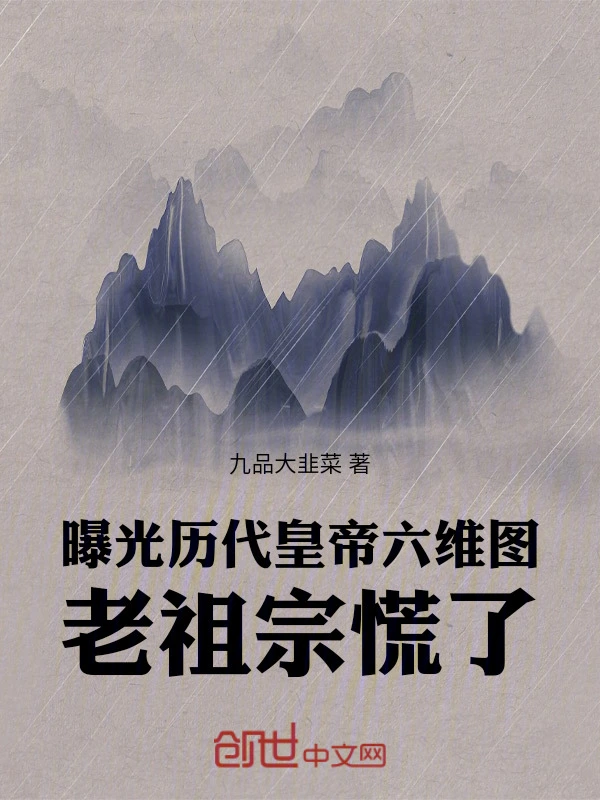
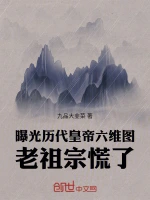
The Six-Dimensional Pictures of Emperors of All Dynasties Were Exposed, and the Ancestors Panicked
曝光历代皇帝六维图,老祖宗慌了
- Status
- Completed
- Length
- 2.6M Words
- Genre
- Historical
- Audience
- Male
- Subgenre
- Alternate History
- Updated
- 1y ago
- Source
- Qidian
Stats
Tags
Synopsis
Reader comments
In booklists 7

Creative Curiosity Book List
This is a personal preference book list for those who have read this work and are looking for creative novelties. It mainly recommends some works that are very imaginative and have no or very few similar genres. At least they can be read through. Updated from time to time. In addition, I also have another book list called "The top 100 books I have read", which contains some subjective evaluations of the works I have read. I hope these two book lists can alleviate your book shortage.

Books That Attract Me to Read
After not reading for a while, when you see the title of the book, you want to pick it up and continue reading. Some of the books that did not inspire the desire to continue reading have been deleted. The current books I am mainly reading are "When Pride Still Matters" and "Unemployed at the Beginning, I Let the Great Singing Devil Return"
Boutique Pavilion (Hilarious, Terrifying, Survival History, Daily Fairy Tales, Fantasy and Unlimited Fan Fiction)
I read all kinds of genres, but I'm not interested in pure upgrading novice routines. IQ is online and logical, and the protagonist can be either crazy or normal, but the character is both serious and upright, the words and deeds conflict too much with the setting, and the three views are incompatible with the protagonist (generally refers to the protagonist whose character is selfish, cold-blooded and cannot be reasonably explained) Do not watch it

Various Types of Book Lists for the Test Account (Light Novels, Fantasy Novels, Fan Fiction)
It is recommended to update and complete the articles that the test account is following. If the update is discontinued for more than 30 days, it will be cleared.
Thirty Years of Searching for a Sword
The taste is very broad and the taste is very picky: creativity, writing, plot, and world view are all indispensable.
Record Sheet - I Have Read Some Good Ones and Want to Collect Them to Leave Traces.
Keep a record of the books you've read that you like.
Personal Recommendation
To be honest, from my sharp words, you should be able to tell that I am one of the three legendary people who can save the world - *****! Ahem, just kidding. Closer to home, I made this book list to recommend some of my favorite works and some personal opinions, not for some veteran label, I have no idea what that is! Regularly (kan) regularly (xin) update (qing) new (ba). PS1: If you don't like it, don't scold me, and don't scold me if you have sex, because I am also a victim. PS2: I am not pus
Readers also read
 Fu Ming 1627
 Red Mansion: Start Escaping and Farming from the Equipment Bar
 Northern Qi, Sage Khan
 After Lying in Bed for Three Years, He Was Forced to Help the Han Dynasty
 Only I Can See Romance Game Announcements
 Modern History Class Was Observed by Emperors
 The Ming Dynasty Started with Taking Zhu Yuanzhang to Visit the Forbidden City.
 Starting from the Second Generation of Immortals
 After Being Made Angry by the Anti-Fans and Crying, Tianxian Found Out That the Real Murderer Was at the Bedside
 The World of Emperors
 Sky Screen: the Overlord Rushed into Battle, and Emperors of All Dynasties Were Shocked
 Northern Song Dynasty: Spoiler of the Future, Zhao Kuangyin Collapsed
 I Made a Video, and My Ancestors Took the Opportunity to Change History.
The writing is so messed up. Should the author go and study Chinese in primary school?
It is a historical subject that has a broad audience, is not demanding, and is easy to read.
Personally, the characteristics are as follows: 1. [Although the content is watery, but the framework is exquisite] The type of this article is [systematic article]. Compared with the [special systematic writing method] conceived by the author, the [system] set in the book is far less important than the writing system of this book. Based on this writing system, you can basically only worry about incomplete writing, incomplete writing, and insufficient writing, and you don't have to worry about not writing at all. 2. As long as there is no requirement for professionalism or bookworms, and there is no need for too much in-depth research, if you can do it [both simple and novice, but also with its own emotional pull], you will definitely be excited and admired for the wise king, you will definitely scold and belittle the foolish king, you will definitely sigh with regret for the unlucky monarch, and you will definitely laugh at the mediocre but conceited monarch. Not to mention the dramatic reactions and surprises of people in front of the world line after knowing what happened later, and the nostalgia and praise and criticism of people behind the world line. After adding [loading barrages and reading comments], you can experience rich emotional ups and downs from different world-line angles, and enjoy fast-food-style content. 3. [Load barrage, read comments] [Reactions of characters in various world lines] can be obtained from Li Yue's version of "The Reign of Zhenguan" and "Da Ming Dynasty 1566" TV series lines, novel content, Zhihu, post forum questions and comments, etc., To organize, edit and enrich them, greatly reducing the cost of your own research and greatly increasing your own inspiration materials. Although some well-informed history fans may have objections, most readers with general knowledge can maintain a long-term happy attitude of watching the excitement and waiting for things to happen, and the emotional value will be better. After all, among the above material sources, there are "many jokes that can be integrated, many things that can be corrected, many words that can be skinned, many faces that can be slapped later, and many baggage that can be shaken later." 4. [Greatly increase the readership scope] The general history-like structure can capture most of the interests and fans of various historical periods or specific mainstream historical figures from the beginning, ensuring the basis for attracting reading volume. 5. [Different rewards after the introduction of the light curtain and the deduction of each world line] will generate new perspectives and actions of various characters in the corresponding world line, countless similar simulation deductions, and fictional life-changing plots that history lovers like to see, such as Guanhai, will also create a sense of expectation and reverie for the monarchs and ministers involved and readers to change history, but without too much subsequent elaboration. This is actually another proof of the charm of cultivating or collecting [numerical attributes] for characters, military commanders, etc. In many computer games (such as Three Kingdoms, Fire Emblem, Water Margin, Battle Brothers, etc.). People who are familiar with history have a basic judgment on each emperor. Except for those who can't stand it, a series of articles such as charts, inventories, lists, and ratings can always attract some readers. From the lipstick brand ranking to the graphics card ladder list; From the chart statistics of the number of Italian and German cruisers and frigates to the calorie and sugar ranking table of different mainstream vegetables; From the heroes of the three races of Might and Magic From the male rating to the top ten touching moments of the year; Both men and women love to see the data, numerical charts and inventory of content with similar themes. From a business perspective, the author's framework concept is quite like "strengthening, lack of strength, and skill to make up".
Chen Sheng and Wu Guang dared to deny the justice of the uprising, but Qin Chui seemed to be a little too outrageous.
Qin Chui is the most annoying
Qin Shihuang is a charming ancestor at every turn. His personal ability can be said to be mediocre among all the emperors in China. Can you please stop blowing up myths about him! ! He was created by the heritage of six generations, and when Qin Chui came to say that it was all the credit of Qin Shihuang. Is it difficult to destroy the six kingdoms with the foundation of the Sixth Generation? So is Zhao Kuangyin far superior to Qin Shihuang? People were killed from the Five Dynasties and Ten Kingdoms. At that time, China was not divided into more countries than the Six Kingdoms?
I can't stand it when I see the prosperous age of Han Wu. Emperor Wu of the Han Dynasty was awesome, and Emperor Wu of the Han Dynasty was also awesome. But you are really making an international joke when you come to the Han Dynasty. I really can't stand it.
Even the Qing Dynasty had people who wanted to restore it, but absolutely no one in the Qin Dynasty proposed its restoration. When Liu Bang entered Guanzhong, the old Qin people greeted him in a crowded way. Their base all hoped that Qin would perish soon.
He was the one who was overthrown by the rebels more than ten years after Qin Shihuang died. The system of Qin was completely destroyed by Qin Shihuang, and Qin II could be said to have been tricked to death by him.
This kind of ranking would have no credibility if it wasn't Liu Bang who ranked first. Ying Zheng's system was not suitable for the unification, which led to the death of the second generation. It was Liu Bang who used prefectures and states to make parallel transitions that allowed the unification system to continue. , Until Liu Che made the unification deeply rooted in the hearts of the people, To put it bluntly, the system of Yingzheng relied on the Han people to wipe their ass and improve it, so that it could be passed down through the ages. The Han Dynasty gave them the confidence to unify, Ying Zheng's reputation began to change in the late Ming Dynasty, and it only began to change in the past ten years in modern times. Also, the emperors who are higher up have their own bonus points, because they are good at There is no reference answer to the matter. It should be Henkel, Tang Zong, Hanwen, Hanwu, and Shihuang. Those who are not ranked among the top three are basically just history buffs. They can only listen to marketing accounts and have never understood the official history.
Can Qin Shihuang's system construction also achieve S-level full marks? If it was full marks, why did Chen Sheng and Wu Guang revolt a year after Qin Shihuang's death? Why is it that everyone in the world has rebelled against such a good system? Don't say that it was all the fault of Qin II. After all, rebellions broke out one year after Qin Shihuang's death. Qin Shihuang died a few years later and was the king of subjugation. It was a big mistake for Qin Shihuang to fully implement the system of prefectures and counties. Like Liu Bang, we should first implement the prefectures and states as a transition, and then cut down the vassal vassalage after decades of popular support in the world.
There are a lot of comments about Qin Shihuang in the comment area
Some say that Qin Shihuang's incompetence is all due to his ancestors, and some say that Qin Shihuang is all due to his boasting. Then Qin Shihuang's achievements and faults can be summarized, 1. Unify the six kingdoms and end the more than 400 years of division in the Spring and Autumn and Warring States periods. The Spring and Autumn and Warring States periods that have been divided for six hundred years can be said to be independent kingdoms. They were defeated one by one through diplomatic means, distant contacts and close attacks. After unification, they defeated Baiyue in the south, defeated the Huns in the north for more than 800 miles, and captured the land of Hetao. The importance of the Loop is self-evident. It can be said that Ying Zheng's martial arts is also among the best among the two thousand years of feudal monarchs. As for some people saying that it was because of the remaining heroes of Fen VI and the decline of the Six Kingdoms that Ying Zheng missed the mark, that is arbitrary. 2. The idea of great unification is dictated by heaven, and you will live a long and prosperous life. In eight words, the idea of feudal unification began to spread for more than two thousand years. Some people say that it was implemented during the Western Zhou Dynasty, so the cultures of the Six Kingdoms were different when the Western Zhou Dynasty was implemented? The county system is vertically managed by the emperor. The Qin Dynasty was a typical example of classical military imperialism. It was also the only two dynasties in which imperial power was sent to the countryside. The other was the Western Han Dynasty, which received the legacy of the Qin Dynasty. The above two points are the most typical functions The second is the wonders, the Great Wall, Epang Palace, the Eastern Tour of Qin Shihuang's Mausoleum, Feng Chan, etc. 1. As an offensive and defensive fortification, the Great Wall is an important support for both defense and offense. It has functions such as food transit and warning. For the empire that can attack, the Great Wall is an offensive transit base, and for the empire that cannot attack, the Great Wall is a defensive base. Some people say that building the Great Wall is exploiting the people. It did have an impact on the people, but the corvee system of the Qin Dynasty was paid, although it was not much, and there were unearthed records before. If you are interested, you can search it yourself. The rest of the Epang Palace and the imperial mausoleums' eastward tours all caused corvee, but they were not the root cause of the empire's collapse. 2. Burning books to trap Confucians has always been a criticism of Confucianism, but it turned out that they were trapping deceitful alchemists, and what they destroyed were poems, books, and quotations from hundreds of schools of thought, and the official archives were also kept. It became the burning of books and the entrapment of Confucians because the descendants of Confucius wrote about the burning of books and entrapment of Confucians in the Shang Dynasty. Imprisoning thoughts and ignorant people. 3. The reason for the heir directly became the trigger for the death of the second generation. However, many scholars speculate that Fusu was decentralized in preparation for the handover of military power, and was assisted by his confidant Meng Tian. However, Ying Zheng died early and there was no heir. 4. The fundamental reason for the demise of the Qin Dynasty was the collapse of the military merit system. After unifying the six kingdoms, the empire could not provide the rewards that should be distributed, which meant that the subjective initiative was gone. The reason why there was no direct collapse was that Ying Zheng's personal prestige was too high, so attacking the Huns in the north and pacifying Baiyue in the south was probably another way out. If the uprising in Dazexiang fails, all law enforcement officials will be killed. It is clearly recorded in the unearthed documents that if there is force majeure, there will be no too serious punishment. And even if you miss the deadline, it is not a capital crime. Of course, this was during the period when Ying Zheng was in power, and you could get paid for your work, but the laws of the Qin Dynasty were strict, and they became even stricter in the second generation. There are both merits and demerits. In the eyes of today's people, if a godly man cheats on his husband, he can be killed directly without any guilt. Human traffickers who were caught were immediately punished with death and those who drowned baby girls were severely punished. The laws of the Qin Dynasty are still in use today and have high universality. The strong promotion of unification also laid the foundation for those who came after, and together with Liu Bang, the founder of the Han Dynasty, they directly laid a solid foundation. A unified dynasty was established for two thousand years. The emperors of later generations could not escape from this circle. By the way, one of the Mongolian, Liao, Jin, and Song states was not orthodox. Guess who it is 🙂
Average
The first problem is to deny the legality and legitimacy of the people's uprising. For example, Chen Sheng and Wu Guang were called rebels. For example, calling the Yellow Turban Uprising "Yellow Turban Rebellion" "Rebellion" and "thief" are very subjective words, which should not be the case from a neutral and objective perspective. The second problem is that the score limit is too easy to reach, and the various types are lumped together, resulting in no distinction. For example, the influence on future generations is also divided into five points. Some emperors rely on the system to achieve it, some emperors rely on the inventions and creations of the dynasty, and some emperors rely on literature and art. But are these the same level of influence as Ying Zheng's unification of the world? Moreover, you are evaluating an emperor, not an inventor, a writer, or an artist. Many of these messy scores have nothing to do with the emperor's duties and must be added. What if you add a category of culture and art? Because the author only divided the scores into five grades, and set the perfect score to be relatively easy to achieve, this caused some partial contestants to be suppressed in disguise. ——It's about Emperor Qin and Emperor Wu of Han. Especially Qin Huang, who scored twenty-three points out of 30. As a result, nearly ten people higher than him emerged from the two Han Dynasties alone. I was so angry that I laughed. What the author meant was that as an emperor, Emperor Qin was just barely good enough to be considered a wise king? What if you add a single item [Exception] to a unique evaluation? Or change the five-point system to a ten-point system or even a hundred-point system? The third one is the confusion and arbitrariness of the evaluation criteria. In the first two Han Dynasties, there was an Empress Dowager Deng who did the fighting. You attribute the achievements of Empress Dowager Deng to the tyrant. Next is Cao Wei or Jin. You also attribute the achievements of the ministers to the emperor. When it comes to Liu Chan, why don't you include Zhuge Liang's achievements? Why don't Zhuge Liang and Jiang Wei's influence be attributed to him? Let's put it this way, Hu Hai is currently the lowest, with three points or five points, and other tyrants who are messing around have 9---13 points. And Liu Chan, 8 points. The fourth one is the rigidity and inflexibility of the evaluation standards. It is also mechanical materialism, applied mechanically. This is also reflected in the evaluation of Liu Chan. To evaluate a person, we should not look at it one-sidedly and in isolation, but in a dialectical and connected way. What was the situation like when he took over this stall? How many natural and man-made disasters have there been? How many difficulties and obstacles are there? What is his goal? What did he do? What changes at the end compared to the beginning? What role did he play in this historical development? [Accelerated destruction, no merit, no merit, defying the will of heaven and continuing the country] Compared with Liu Chan, if he defeated eight states with one state, the normal situation would be failure. He did fail, but he had slight negatives/no negatives. 3 Points is an average score, so 2-3 points are normal. Knowing people and employing them, Liu Chan took out his mentors one by one, and did not engage in any unnatural operations that killed meritorious deeds and loyalties. He did not discover any talents, but he was not a guy who could not tolerate others, and he was not worried about his great achievements that could shake the master. So a score of 3 is normal, a score of 2 is discrepant but acceptable. What other diplomatic strategies are there? If there is no diplomacy, you will get a basic score of 2 points. I won't list the others one by one. 5X6=30 points. Liu Chan, as a mediocre person who doesn't mess around, 12-15 is the normal range. As a result, the author gave a Jie Zhou level of 8 points. I really couldn't stand it. On review, I discovered that the author is a mechanical materialist who only looks at the results, not the beginning and the process.
Does the Qin Dynasty point its sword at Europe? Did Qin Shihuang not know about the Xiongnu? Didn't even defeat the Huns and returned to Europe? Just attack the Xiongnu from the north and expand the Zhuyue to the south, the Great Wall of Qin, the imperial mausoleum of the Qin Dynasty, and the people of Afang Palace have become shit, and return to Europe? The First Emperor wanted to be hanged during his reign, right?
The best in Tianmu literature
It can be regarded as a very correct view of history. I think Tomato basically still sticks to the short video view of history. It starts with charming ancestors and wishful thinking that nationalism can move ancient emperors. Desperately creating and playing tricks, distorting history and distorting people.
Let's take a picture
In the Qing Dynasty, he was not stupid, he was simply bad.
It's so outrageous. Chen Sheng and Wu Guang have no justice at all. Yes, there are Qin bamboo slips unearthed, saying that there is no need to behead someone who is late, but is the problem about beheading someone who is late? Their justice lies in resisting the oppressors rather than beheading someone who is late. There are even more outrageous people saying that Qin's laws are lax? How come you know better than the common people of the Qin Dynasty? People have to live so well, and the common people rise up and rebel?
The first five emperors, dragons, phoenixes, pigs, beggars and hooligans 😏, emperors of Qin, Han, Wu, Tang, Ming and Han Dynasties
In one sentence, this post exposed all of Qin Chui. There are achievements, but all of them are myths. People in China's feudal society for more than two thousand years have reviled them, and people in the new era are still touting them?
The most annoying sentence is that Mingshi perished in Wanli To say this is to clear the ground for Chongzhen If this statement is true, then we will not have to work hard in the future. If I fail, I will go bankrupt because my grandfather is not a trillionaire, he is a tens of billions of rich people. If my grandfather were a trillionaire, I would not be so wasteful that I would go bankrupt!
A second-rate emperor like Lu Zheng who couldn't even enter the Emperor's Temple was promoted by modern marketing accounts and various film and television dramas. His reputation far outweighed his strength and he deserved to be the number one emperor in the Internet Temple. None of the things like governing by the people, governing by officials, judging people, selecting successors, and military capabilities are qualified.
Qin Shihuang scored 23 points and Liu Bang scored 28 points. If you think you can still watch it, just watch it.
Qin Shihuang scored 23 points and Liu Bang scored 28 points. If you think you can still watch it, just watch it.
Where would China come from without Qin Shihuang? Who could annex 10 times the territory by oneself, and in this territory there is a country with its own culture and proud history? Who created an unprecedented system that made all the ambitious people in the world move closer to the word emperor? Who unified weights and measures, currency, and writing? Although it died in the second generation, it withstood all the resentment of the six countries. Otherwise, how could Liu Bang's Han Dynasty be established? He may have relied on his ancestors, or he may have poor abilities, but no one can do greater things than him from his perspective. Ying Zheng and Liu Bang are standing at the corner of history. He established and he took over, which made every subsequent dynasty reluctant to break up the earth and seal the king. They all wanted to unify the world and create their own dynasty instead of a kingdom.
Regardless of the so-called emperors on the Internet, in terms of ability alone, the top five emperors can only be Emperor Taizong of the Tang Dynasty, Emperor Guangwu, Emperor Wenwen of the Han Dynasty, Yongzheng, and Qianlong. They are extremely capable, know how to balance officials, treat the people well, and did not create any big troubles during their reign, which led to the rapid growth of national power In the eyes of those online, only wars are considered achievements. , No matter how good my other achievements are, they are not as great as the achievement of conquering a piece of land. I only pursue a grand territory, but ignore the poor and hungry people under the huge empire. As long as the territory I conquer is large, it is an achievement that will last forever. When I see the people who exchange their sons for cannibalism, I will say that it is just a sin in the contemporary era, and they should be proud of it.
Thunder rolling
I gave up after reading less than ten chapters. First of all, this setting is very shocking. All emperors have a parallel universe, right? Each emperor can read other people's stories from beginning to end, right? After watching it, you change the operation and form a parallel universe, right? Secondly, the book copied a lot of historical evaluations (including those from unofficial historians) to rate the emperor, and then what? What exactly is your story? This "book" felt to me like a person was developing a game, in which all emperors had to appear, and then six-dimensional values were set for each person, so I wrote down the developer's thoughts. I just don't understand what kind of story the author wants to tell. Just copy the various comments from some forum netizens and want to sell the book to make money? Then I also want to complain about the reward system. Is this system really acting like a fairy for no reason? Reward Qin Shihuang with decades of life? If this is really possible, then Qin Shihuang is absolutely right to send people to search for immortals! Why is it said that Qin Shihuang's trust in Xu Fu's search for immortals is a deduction? Your book itself is not logically consistent. Although I know you can't read online articles with your brain in mind, is your childishness too much?
Who came up with the phrase "charming ancestor"? Don't you think you're middle-class when you say it? As disgusting as those who call characters babies
Comments are interesting
To sum up, it is believed that the main achievements of Ying Zheng's corruption 1: Unification, 2 unification of weights, measures and writing, 3 county system The opposition's argument is. 1: The unification of weights, measures and writing has already appeared in the Zhou Dynasty, and points will be deducted in practice 2: The county system is the same as 1. This issue has already arisen during the Warring States Period due to land annexation, and points will be deducted 3: The great unification has taken advantage of the dividends and heritage of the times (in fact, it is true that Guizhou has been fighting for hundreds of years. It can only depend on personal opinions) To talk about my personal opinion, some people may also think it is a black hole. The first point: The idea of creating a great unification is just a fart. The Spring and Autumn Period and the Warring States Period have been fought for hundreds of years. It is difficult to play house. The ultimate goal is not to kill other countries and replace the Zhou royal family. The king surnamed Liu shows that Ying Zheng's so-called great unification thought had collapsed in the early Han Dynasty, and there was Xiang Yu before it. The feudal system did not begin to collapse until Emperor Wu of the Han Dynasty took out the bottom of the cauldron in order to gain power and use scheming to push favors. In addition, the idea of concentrating only on Confucianism brought the imperial power to a very high point, and those who benefited began to promote great unification again. Otherwise, why did the Eastern Han Dynasty disappear when there were princes in the Western Han Dynasty. So what kind of unified thought did Ying Zheng create? But it should be said that he is a promoter and practitioner of unification Second point: Unification of weights, measures and writing? Is this called merit? This is not what you should do. When you win, you speak louder. In the past, the United Nations General Assembly even brought translators. Now they can learn Chinese by themselves. In the past, the United States forced you to buy its things. They only accepted US dollars, so you could only give US dollars. How difficult is it for you to give toilet paper to it? As the victor of the Qin State, what system did it use? Shouldn't it be equally rare for the people of the Qin State to use other systems? Have they never been beaten? Moreover, the Qin State still promoted Xiaozhuan and official script together. In an era when reading a novel required a horse-drawn carriage, did this push back the difficulty of unifying the script? The unification of weights and measures, not to mention the 16-year dynasty, is ugly. People in remote areas may not have seen the East and West Qin Dynasty destroyed after the same weights and measures, and the vassal states of the Han Dynasty had the right to mint coins. Third: The prefecture and county system made no sense at all when there was enfeoffment in the Han Dynasty. Fourth point: What did the Han Dynasty inherit from the Qin Dynasty? The Han Dynasty inherited a few states and counties, and California pastoralism. The thinkers Huang Laoxue and Confucianism are fundamentally different from Qin Law. At least the previous generations of the Han Dynasty still lived a few clean days, while the Qin people lived a comfortable life? What if the Han Dynasty inherited these cool methods of beheading those who are overdue and sitting still? It's a shame to call the Han Dynasty a successor to the Qin system. Don't mention the unearthed Qin bamboo slips. There are people who don't follow the laws and regulations in such a modern, civilized and supervising environment. Are you asking for things to be done according to the rules two thousand years ago? The fifth point: The biggest problem is ability. Ying Zheng is definitely a man who has the ambition and courage to employ people, but he is definitely not a hero who can govern the country and secure the people. He can employ people but has no ability to recognize them. The generals in Ying Zheng's team, Wang Jian and Mengtian, are all from the old Qin Dynasty. Li Si, the civil servant and prime minister, was a disciple of a famous scholar, Lu Buwei, and a disciple of Lu Buwei. The other was also a member of a wealthy family. The vast land had not discovered talents for 16 years. This level of political ability was placed at the bottom of the founding king. If he had not died early, he would have been the first to start. The emperor of the bureau, don't mention any nonsense about who would not dare to die if Yingzheng is not killed. The fact is that Zhang Liang's assassination on the eastward patrol could have accurately targeted the carriage. If he hadn't temporarily changed the carriage and died, is it possible that this level of intelligence was not intercepted? A wanted order was issued. As a result, people wander around. The political ability of people who are surrounded by sieves and whose decrees are not implemented is really high. The attitude of the people of Lao Qin, where the winner made his fortune, towards Liu Bang after his death was to welcome Pei Gong, which shows the difference in his ability to govern the country. As for a son like Fusu who doesn't resemble his father, let's not talk about it After talking about the bad things, let's talk about the good ones 1: The specific details of implementing the idea of unification will be mined for those who follow 2: Clarify the importance of the heir to the dynasty 3: Explore the path of governing the country according to law 4: Solve the bad habit of sacrificial burials
Let you build the Great Wall to see if you are charming or not
The ancestor of humor is just short of pictures
I have read more than half of it, and I think it is suitable for children. The author understands history, but not much, so the things he writes about each dynasty and generation are not in-depth, so he only uses "comments" to comment on the perspective of other emperors.
A brief insight into the Qin Empire
The rise and demise of Qin: The rise of Qin originated from Shang Yang's reforms, and the fundamental logic of the reforms was the military merit system (you can learn about it yourself). In layman's terms, it means that if you go to the battlefield and fight hard, you will have money, status and power. Otherwise, you will be a farmer all your life, paying taxes and doing hard labor, and then because the fields produce little, you will live hungry, and you may die on the way to labor. For the people at that time, being a soldier was the only way out, and the consequences of not having a strict system for the army are self-evident. It can be said that the entire country at that time was serving the army, and it would not be an exaggeration to say it was a military empire. If Qin was defeated, where would the rewards of land and food for the soldiers come from? If things go on like this, the Qin State will not attack and destroy itself, so the military meritorious officials at that time can be said to have kidnapped the Qin State and never returned on the road to war, and they could not stop. War consumes the most people's power. Before the six kingdoms are destroyed, military merit can unite the whole country of Qin and naturally strengthen Qin. After destroying the six kingdoms, Qin can say that every household has a white silk curtain. With no battles to fight, no promotion channels, the military merit system collapsed. Conflict broke out and Qin was destroyed. So, when the entire country is built around military merit and power, it becomes the underlying logic of the country. When the underlying logic collapses, the country will also perish. When Qin destroyed the six kingdoms, it was already doomed that Qin would be destroyed, but it was just a few years earlier and a few years later. Of course, there must be other reasons for Qin's destruction, such as Qin's laws, abuse of people's power, etc., But in my opinion, the military merit system definitely accounts for the majority. It allowed Qin to sow the seeds of destruction from the moment it began to become strong. The whole country revolves around it like a road with no turning back, you can only keep going forward until you hit your head and bleed.
The evaluation of Shangguan Wan'er is not objective. According to the archaeological epitaphs, Shangguan Wan'er most likely helped Li Longji. However, Li Longji obviously considered the relationship between Princess Taiping and Shangguan Wan'er and killed Shangguan Wan'er. Princess Taiping wrote an epitaph for her and even gave her own tomb to Shangguan Wan'er. Shangguan Waner, and during the archeology, Shangguan Waner's tomb was severely damaged. It was most likely an official act of destroying the tomb. In other words, after Li Longji completely won the victory, he crushed Shangguan Waner's bones and scattered them into ashes. Li Longji's affair with Wu Sansi was probably also a means of stigmatizing Li Longji. After all, Shangguan Waner was not young at the time.
I can't understand how to complain about the Qing Dynasty.
I can't understand how to complain about the Qing Dynasty.