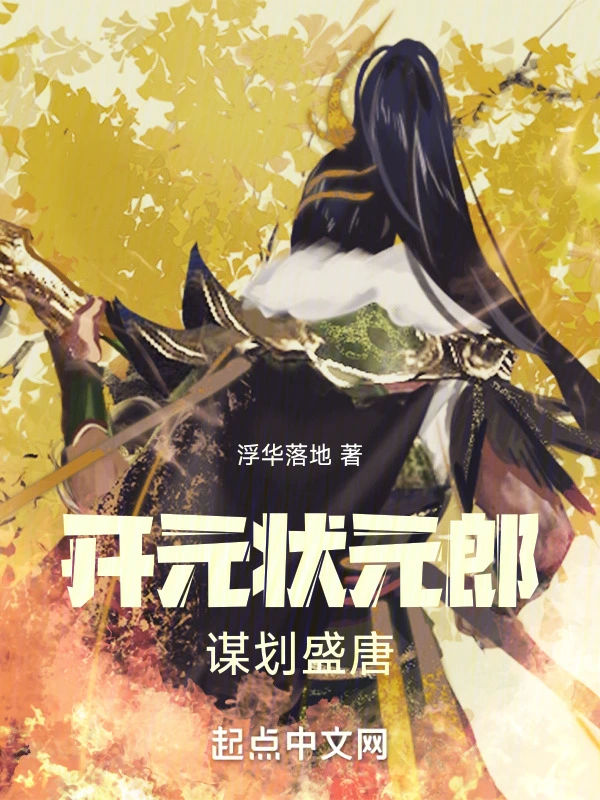
The Number One Scholar in Kaiyuan Dynasty Planned the Prosperous Tang Dynasty
开元状元郎,谋划盛唐
- Status
- Ongoing
- Length
- 489k Words
- Genre
- Historical
- Audience
- Male
- Subgenre
- Jin-Sui-Tang Dynasties
- Updated
- 2y ago
- Source
- Qidian
Stats
0Monthly votes
3.2kRecommends
5.2kFans
176Chapters
Tags
Synopsis
Reader comments
Readers also read
 Northern Qi, Sage Khan
 Fu Ming 1627
 Red Mansion: Start Escaping and Farming from the Equipment Bar
 After Lying in Bed for Three Years, He Was Forced to Help the Han Dynasty
 I Originally Wanted to Vote for the Wei Dynasty, but Why Did I Return to the Han Dynasty?
 Daming: Emperor Chenghua Is Here to Ascend the Throne First!
 When I Was in Hongwu, I Started by Rebelling Against the Party.
 Late Tang Dynasty: Father-In-Law Strategy Guide
 Daming: Attack, Emperor Yongle!
 Datang: Starting from Preventing the Prince from Committing Suicide
 I Am Li Chengqian, the Emperor of the Tang Dynasty
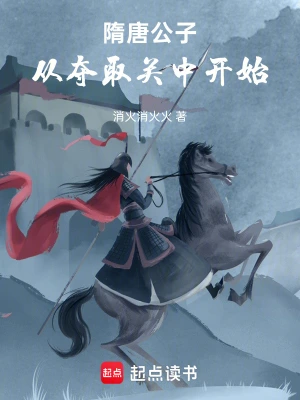 The Princes of the Sui and Tang Dynasties, Starting from the Capture of Guanzhong
In the early period, Li Longji was really the little king of Wu, who was brave enough to outmaneuver others and defeat the enemy with one blow; in the middle period, the little Taizong was open-minded and accepted advice, and he followed the good deeds; in the late period, Emperor Dayang was arrogant, extravagant, lewd, and willful. Li Longji is so lucky. During the Kaiyuan period, there were capable and wise prime ministers one after another.
We have traveled to Kaiyuan, and it just so happens that Concubine Yang is not married yet. Why don't you go and get your beard cut off? If it's me, I'll cut it off
Naming sticker
The characters who can go down in history are basically familiar names, but many historical minor figures cannot be verified at all. Considering the story, many small characters of all kinds must appear. Here, I invite all book friends to write down your favorite names, you can also describe your personality, or even your official position. The author will consider the selection on a case-by-case basis. Thank you all! ! ! 😁😁😁
How should I put it? The imperial examinations in the Tang Dynasty were different from those in the Ming and Qing dynasties. The imperial examinations of the Tang Dynasty were not anonymous before Wu Zetian, and there was no copying. This is not the most important thing. The most important thing is that the officials who grade the exams are all people from big families, and whoever gets selected is discussed. The imperial examinations in the Sui and Tang Dynasties were actually used to screen out the trash from the big families, and just brush off the trash that didn't understand anything. It was impossible for the people at the bottom to participate in the imperial examination. It was not until Zhang Yuan of the Song Dynasty reformed the imperial examination that the people at the bottom had the slightest chance of passing the examination. In the Song Dynasty, there were very few people at the bottom who served as officials. Let's not talk about the Yuan Dynasty. I don't think the number of imperial examinations in the Yuan Dynasty was more than five. The biggest change in the imperial examination was during the period of Zhu Yuanzhang in the early Ming Dynasty. First of all, I said that I was not bragging, I only told the truth, but I was innocent. If you hate the Qing Dynasty, it is fine. Zhu Yuanzhang stipulated that the content should only be published in the Four Books and Five Classics. This was the policy of allowing a large number of lower-class people to become officials. Why do you say that? It's very simple. Do those people have the money to buy more books? If policies, practical matters, arithmetic, etc. Are tested, will the people at the bottom have money? Who else knew the most about current affairs in ancient times besides those low-level officials such as bookkeepers? Do the common people have money to study for those officials like chief bookkeepers? No, so Zhu Yuanzhang was right to stipulate that only the Four Books and the Five Classics should be tested, because he was fair. Man, how many books are there in the Four Books and the Five Classics? Ordinary families can afford it even if they grit their teeth and save for ten or eight years. Is the country now shutting down those extracurricular tutoring classes in pursuit of fairness? All because of fairness. The most important thing for a country is fairness, and the most important thing is the fairness of the upward channels. Especially in ancient times. The most important thing is that in ancient times, being a county magistrate required you to understand current affairs? To be honest it's not needed. A county actually has six ministries. Even if the county magistrate does nothing, the Ministry of War and Punishment is equal to the county captain, the Ministry of Household and Work is equal to the county magistrate, and the Ministry of Rites is equal to the teaching edict. Do you understand that a county magistrate is needed in this case? No, as long as you become the county magistrate, you can go to those landlords and gentry to drink wine, or if you are bored, just recite poems and complain about nothing. If you are ambitious and want to be a high-ranking official such as the Six Ministers, then you can just study with the chief secretary of the county, the county magistrate, and the county prime minister. The inspection every few years is a good time. You should study with the chief secretary for a few years first, and then govern your county through your own understanding. Once you have managed it well, you can be promoted. If governance gets worse and worse, just give up. You can just be your county magistrate with peace of mind. As for national policy? What is that? In ancient times, there was no national policy for several years. As for political sides? What is that? Does national politics require you to take sides as a county magistrate? Just do whatever the governor above tells you. As long as the governor doesn't rebel, just follow him and you'll be fine for the rest of your life. Therefore, Jinshi is actually a piece of cake drawn for the people at the bottom, so that those people at the bottom can change their destiny through reading and achieve a leap in status. It can enable them to transform from civilians to officials. If you are ambitious, just study under your auxiliary officer. If you are not ambitious, just settle down and be your county magistrate. It doesn't matter if you can be greedy a little bit. As long as you don't cause big trouble in your county, you will be fine. The imperial examination was only something we saw in TV dramas during the Ming and Qing Dynasties. During the Sui and Tang Dynasties, it was only something played by aristocratic families.
They are all sailors invited by the author. He is also a son. In the Tang Dynasty, he was called Lang Jun. Please read more official history before writing.
The imperial examinations in the Tang Dynasty were still mainly based on recommendation. There was no theory of the big three yuan and the small three yuan as the author calls them. The big and small three yuan did not exist until the Ming Dynasty.
The protagonist is frivolous and has too much inner drama, and the author needs to clarify the relationship and image of the supporting characters.
I'm really speechless. When I see someone wearing Kaiyuan, I want to step on Li Longji and marry Yang Yuhuan. Pull him down. Although Li Longji made 250 moves later, in the early stage he was at the ceiling level of a political emperor. He succeeded in two coups, expelling the Wu clan and defeating Princess Taiping. His feelings were all about his opponents being stupid and not being prepared at all? What else is said about talents being left behind by previous generations? What's funny is that Wu Zetian engaged in spy rule and treated the courtiers like wheat. At the time of Li Longji, all talents were promoted from the middle and lower levels by himself. Apart from the fact that she was a woman, what else could the Queen have to boast about her political achievements? Li Longji's only problem is that he has lived for too long. He is too old and energetic to manage. The prime minister has taken power and the government and the public are in stagnant water. An Lushan will rebel. In the situation in the mid-Tang Dynasty, there was not An Lushan but Zhang Lushan, although he was the biggest contributor. But his early achievements cannot be denied because of his late mistakes.
Personally feel
He was expelled from his home as soon as he won the first prize, and he somewhat looked down upon the emperor.
The palace examination begins at the beginning I could have written about the grandeur of the palace examination, the protagonist's shock and curiosity about ancient times. I can write it in any way, at least to create a feeling of the beginning It starts with nonsense and focuses the reader's perspective on the protagonist's 2b fuck. As a writer, even if you describe more of the environment, you are so anxious to introduce the plot And this originally left a bad impression on the readers, and then the language was also very frivolous. Speaking like this in the Tang Dynasty, to put it bluntly, he was like a gangster, as if he could pass the imperial examination?
There are more three-yuan winners in Qidian than orphans.
Did Datang have a top-three system?
The Sanjia system began in the Song Dynasty. It's too inconsistent to write the top three here.
Friends who love history come and join in the fun!
Good reviews and bad reviews are all enthusiastic! ! 😁 Accept advice with an open mind! ! !
Go, go, go!
It has been recommended online. Friends who pass by should read it. If the data is good, I will work hard to update it. Thank you guys! ! ! 😁😁😁
Looking at the comment section, the author should be the kind of person who first writes something exciting like in TV dramas, and then gets refuted and then finds information to justify his unreasonable points 🙂
Did the Tang Dynasty have the Three Yuan Dynasty? At that time, the imperial examination was for scholars, and tribute scholars participated. This scholar was not the scholar in the Ming and Qing Dynasties.
The number one scholar is the Jinshi and the first place. How can it be called the number one scholar and the first place?