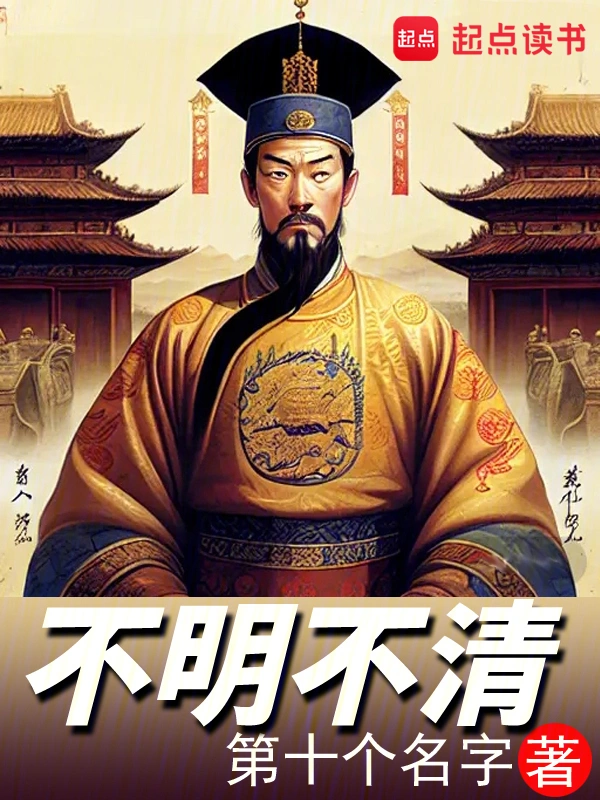
Unclear
不明不清
- Status
- Completed
- Length
- 3.2M Words
- Genre
- Historical
- Audience
- Male
- Subgenre
- Song-Yuan-Ming Dynasties
- Updated
- 11mo ago
- Source
- Qidian
Stats
Tags
Synopsis
Reader comments
In booklists 8


Interesting Historical Novel
I sincerely recommend good books to take you to appreciate the ancient scenery and survey the long history. They are all very interesting historical novels that save the country from danger, change history, and achieve different careers. Parallel time and space, ancient China, ancient Europe, different social backgrounds. Book lovers, this is a list of historical topics, please do not recommend other genres.
Excellent Books for Future Readers
I have a lot of reading experience. I have read many types of novels over the years, and I have been recommending books for nine years. Most of my book list has been read and understood by myself, and I feel that each book has its own characteristics and is different from ordinary literature. Everyone has their own type of novels that they like to read. If the books I recommend can suit your liking, that would be the best. The content of the books I recommend is very good and interesting. You ar
Kill Decisively
Our Lady's Bypass


What's the Deal with a Hundred and Eight Thousand Copies for a Single Homebody!
I can only recommend one or two novels that suit my personal taste. My tastes are very mixed!

Very Interesting Novel
Follow up on your own or finish reading books that you feel you can read again



Book List for Thirty-Year-Old Bookworms
As a bookworm, I started reading books in 1995. From the paper version of martial arts novels, to Huang Yi's Interstellar Prodigal Son, to Dragon's Sky, to the current starting point, I may not necessarily recommend what you like, but some are still readable. If you like it, just collect it. Updated from time to time.

I Am Not a Rich Second Generation
Wake you up

Best Book
It's beautiful, I'll regret it if I don't watch it
Readers also read
 Fu Ming 1627
 After Lying in Bed for Three Years, He Was Forced to Help the Han Dynasty
 Red Mansion: Start Escaping and Farming from the Equipment Bar
 Northern Qi, Sage Khan
 Siheyuan: Start by Picking up Attributes
 Taipingji
 Daming Under Facebook
 Beastmaster: I Can See the Evolutionary Path
 Immortal Who Seizes the Body
 Long Wanshengshi
 The Wind Rises in North America 1625
 Ming Dynasty Heroes
 Double-Sided Law Cao
 New Era 119
 People from the Market
 No Cough in the Southern Song Dynasty
 Rebirth and Diving into Dreams
 Wake up from Dream Silently
 The Song Dynasty Is Poisonous
The author introduces that the butt of Ming Dynasty is a bit crooked! Dare I ask the author which dynasty didn't have all the birds in the world, brothers fighting against each other, refining elixirs to seek immortality, etc.!
In the past, I only read pirated copies of your books, but starting from this one, I will never read a pirated chapter, and that's the proof. Also, you have an updated science fiction book, which I think is pretty good... Come on. I really enjoyed reading that lost apocalypse book.
I don't know, I don't know, I don't know. In "Unclear", I watch a professional time-travel contestant become the crown prince and play with Wanli.
[Recommendation] Hong Tao, a professional time-travel player, has traveled through time again. This time he has arrived in Zhuming and became the crown prince. However, the crown prince of the Wanli family is not easy to become. Moreover, how to resolve the Dashun of the Little Ice Age in the late Ming Dynasty, break into the king, and suppress the wild boar skin really requires a lot of thinking {"TopicId":"84723528 7436099584","TopicName":"New book trial"} [Book title]: "Unclear" [Author]: The tenth name [Word count]: 37,000 words [Status]: Serialized [Type]: History, time travel [Quality]: Liangcao+ 🦐[Highlights]🦐 🐼The tenth name of the author is a veteran in the Internet literary circle. This book is the ninth time of Hong Tao, and he has read it before, such as the end of the world, the Southern Song Dynasty, etc. His "Rebirth and Diving into Dreams" has been pitted before. The writing style is very comfortable to read, the details and life-like details are also very good, and the quality is guaranteed. Two 🐻Although there are not many words at present, reading the previous chapters can make readers quickly integrate into the times. The author has not written historical texts once or twice. For example, "No Coughing in the Southern Song Dynasty" is actually somewhat similar to the characteristics of the late Wanli period. It should be able to handle it easily without being overwhelmed. The era of three-choice is quite interesting to our readers. In fact, Wanli, as the master of the Ming Dynasty and the resurgence of the Ming Dynasty, has always been criticized by the wild boar skins after entering the customs. There are not many outstanding online articles about the post-Wanli era, so I am looking forward to it.
Let's just say that it's really not possible to use spies. The emperors of the Tang Dynasty used assassins to assassinate Quan Huan (although Jiaqing's 250 was despised), but it works in extraordinary times! What is Jinyi Weidong Factory used for? What if the ministers guessed that it was the emperor who did it? They don't have the ability to break up now, and their death was in vain.
I really want to complain about this name. I'm not sure, so are you writing about the Ming Dynasty or the Qing Dynasty? History is not a mess. Adaptation cannot be random. And this cover is really disturbing. An emperor with the face of a Manchu Manchu and wearing a dragon robe. Wearing a Qing Dynasty hat on his head. You can choose this picture. It's also well-intentioned.
You are just the successor of the prince's dynasty, and your legitimacy comes from your bloodline. No matter how bad my father is, he can't kill his father. Otherwise, your most basic legitimacy will be indifferent, and the courtiers will depose you in the name of the Queen Mother, and it will only take a few words to choose a new emperor.
What the hell are you writing? It's all nonsense you're talking to yourself.
I've read more than 10 chapters, and it's so serious that it contains private information. It's just for the sake of being flat. If you don't like it so much, you can write about the Qing Dynasty as Qianlong 😂
This book wears the skin of the Ming Dynasty and writes about braided drama
Looking back on previous novels, the author should not be Han Chinese
This author is always like this, blindly calling what he thinks is true. I have reviewed the zombie movie before. This time I will talk about what the author thinks is the Ming Dynasty. In his opinion, Zhu Yuanzhang did not resist but only fought among himself. So, let me ask you, why did the Yuan Dynasty waste so much effort and enter the Central Plains, and then it was because of internal strife? Feeling bad and then retreating to the grassland? Then why did the Hu regimes in the Five Dynasties and Ten Kingdoms period of the Qing Dynasty still fight against each other until the emperor no longer had any power? A Central Plains regime that has been stable for ten years would definitely not be able to go back and continue to be nomadic without external pressure. Normally speaking, who would want to go back and rely on the sky to make a living? Unless there is no room for him at the original dining table. Let's talk about Zhu Yuanzhang's killing of heroes. Let's take a closer look at the period when he killed heroes. It was after the death of the prince Zhu Biao. The emperor's grandson Zhu Yunwen whom he supported had an unfair reputation. Zhu Yunwen paved the way, and the reason why he chose Zhu Yunwen was just because Zhu Yunwen could act, and he cried the worst when Zhu Biao died. So at that time, Zhu Yuanzhang was an old man who died first of his wife and then of his son. Needless to say, his mental state at this time, so I said he killed out of desperation, not planned. Then let's talk about the operations of the Ming Dynasty emperor. Isn't this what the struggle for imperial power is like? Then you put it this way, the entire Song Dynasty was a conspiracy theory, the entire Han Dynasty was a dynasty of cultivating immortals, the entire Qing Dynasty was a feast of Buddhism (Qianlong was upright when playing esotericism), and then let alone the Tang Dynasty.
I feel that the author has a mentality of standing on his father's shoulders and looking down on his grandfather. He always looks down on the ancients with the superiority of modern people, but ignores that his own achievements are the accumulated achievements of his ancestors over time. From a vertical perspective, you are indeed better than the ancestors of the Ming Dynasty. From a horizontal perspective, are you really better than the ancestors of the Ming Dynasty? For example, Mingzu's per capita income was one-half that of Europeans at the same time. What is your income today?
The most unacceptable plot of patricide is simply toxic and insane.
I just read a few chapters, and there are a lot of comments in the comments saying that the author has some personal information. I don't know what they are complaining about. The Zhu Yuanzhang written by the author is the Zhu Yuanzhang in the author's own cognition. What's the problem? And to be fair, aren't cruelty, violence, protection against shortcomings, etc. All the labels of Lao Zhu? He killed corrupt officials, so he is righteous? So just ignore his dark side? Compared with the actions of the heroes and corrupt officials and his perverted sons, I really can't tell who harmed the people more. If Lao Zhu really loves the people, shouldn't he control his own family first? But what did he do? How many sons have you killed? Will he take care of it if it doesn't cause anger among humans and gods? How could his perverted sons be so perverted? It's not because of his family education. We modern people all know that the problems a child exhibits are most likely caused by the family of origin. The problems displayed by the child are largely a reflection of the parents themselves, so it is conceivable how Zhu Yuanzhang himself viewed the common people and people whose status was lower than his own. He has been the emperor for so many years, and he has always practiced a principle, which is "I have suffered all the sufferings of my old Zhu family. From then on, my Zhu family has always wanted to be a master. Anyone who hinders my family from being a master, I will chop off anyone." Go read the history books. When did Zhu Yuanzhang deviate from this line?
Zhu Yuanzhang's ability is just like a lucky version of Zhang Shicheng and Chen Youliang, and even his performance in difficult times is not as good as Zhang and Chen When the Yuan army suppressed the Han uprising at its most violent, Zhang Shicheng was killed He passed a prince of the Yuan Dynasty (who was killed in Taizhou in the 13th year of Zhizheng), and in the 16th year of Zhizheng, he wiped out the army of Boluo, the "King of Zhennan" of the Yuan Dynasty, in Yangzhou. He was defeated and became a bare commander. He fell into the water and drowned while escaping north. Chen Youliang helped Ni Wenjun defeat King Weishun, the most tyrannical military force in Central China. King Weishun lost all his troops and the town of Wuchang. His seal was taken away by the Yuan Dynasty, and he went to join thousands of households in Jiangyin penniless. So how did Zhu Yuanzhang behave when the national rebels were in a critical situation? We might as well use original records and some information inadvertently revealed by official history to restore the complete truth: Scholar Li Through comparison and combing through Zhu Yuanzhang's early records, Xinfeng pointed out that after Zhu Yuanzhang surrendered to the army in the 12th year of Zhizheng (1352), for two full years, except for being Guo Zixing's adopted son-in-law, he could not make any achievements and lived in poverty. Because of his position, he only reached Zhenfu, which is slightly lower than Qianhu. In that era when militiamen armed thousands or tens of thousands of households and had marshals everywhere, it was really not helpful. However, a turning point came. In May of that year, Jia Lu, the commander of the Yuan army who besieged Haozhou, died of illness in the camp. The soldiers of the Yuan army dispersed on their own. The Haozhou rebels broke up the siege without a fight and gained momentum. They were the bosses in the surrounding area, so some forts and militia groups in the surrounding area that were watching the wind either surrendered or fled, which was a good way to earn a wave of dividends. However, "Records of Ming Taizu" revealed a miracle: Zhu Yuanzhang subdued 3,000 Zhangzhai rebels almost by relying on his own intelligence. First, he bravely entered Longtan alone, negotiated with the leader of Zhangzhai rebels, and then suddenly tied up the leader. He forced his troops to surrender to Guo Zixing, and then used 3,000 men to break through the Hengjian Mountain camp where the Yuan army's "Zhang Zhiyuan" troops were located. In one fell swoop, they captured 70,000 men and women, including 20,000 strong men - unfortunately, this matter was packaged in official script from beginning to end: In "Ji Meng" written by Zhu Yuanzhang himself in Volume 16 of "The Imperial Collection of Emperor Taizu of the Ming Dynasty", the so-called forced landing of 3,000 people in Zhangzhai was actually the surrender of the people themselves: Zhu Yuanzhang left Haozhou and went south, walking on the road, "Suddenly there were three thousand people returning from a charity trip. He led the troops to train, captured Hengjian Mountain, defeated the Yi Barracks, and gained 20,000 troops." This incident is by no means an isolated fact. In the inscription of "Zhu Yuanzhang's Imperial Mausoleum Stele", "Yuejiang Tower" written by Zhu Yuanzhang himself, and the Imperial Pingxi Shu text, it is mentioned that these 3,000 people came to surrender on their own initiative. (The inscription on the inscription "Traveling to the south, the air is comfortable and refreshing, and I encourage farmers to join the army. Their careers will be prosperous, and they will gather together in less than a month."; "Yuejiang Tower": "A single horse can travel hundreds of miles a day, and three thousand soldiers are obedient to me, so he marches southward." ", "Pingxi Shuwen" "After I took over, I accidentally obtained many soldiers, and they were trained and mobilized for me.") ---It is true that as long as you stand on the wind, even a pig can fly. The self-defeat of the Yuan army was an east wind, triggering a wave of defections from surrounding fortresses. Therefore, as soon as Zhu Yuanzhang went out, he encountered three thousand volunteers from Zhang Zhai who came to join him, thus achieving great success. However, the Ming court later packaged it as a legend that Zhu Yuanzhang showed his bravery and wisdom, kidnapped the leader of Zhang Zhai, and forced the surrender of 3,000 people. Finally, Zhang Zhai was mistakenly placed on the head of Lupai Village, deducing the famous myth of Lupai Village. The so-called victory over Hengjian Mountain Stronghold is also false, because scholar Li Xinfeng's research is: "Among the middle and low-level generals in the early Ming Dynasty, a large number of them belonged to the Jiawu Year (that is, the 14th year of Zhizheng 1354 AD) Dingyuan "Submitted to Hengshan", that is, he submitted to Lao Zhang's camp in Hengjian Mountain" (for example, the biography of Huo Hui in "The Records of the Founding Heroes of the Huangming Dynasty" mentioned that "at the end of the Sino-Japanese War, Hengshan surrendered, defeating Zhangjiabao, Lupai, Chuzhou, and Sanchahe"). Therefore, the attack on a 70,000-strong stronghold by the 3,000 men who had just arrived was more exaggeration than reality. It was more likely that Zhang Zhiyuan, the leader of the Hengshan stronghold, saw that the Yuan army had been defeated and had no intention of confronting the Haozhou rebels. But the father-in-law is the father-in-law. With this merit, Zhu Yuanzhang was immediately promoted to "general manager" (higher than ten thousand households). After Lao Guo's strength increased, he led Zhang Tianyou and these really capable warriors to follow Peng Da, Sun Deya and others to defeat Wuhezhai, Xuyi, and Sizhou, which were all in the direction of the strong Yuan army. But he took good care of Zhu Yuanzhang and asked him to go south with the strong general Zhao Jizu and attack Chuyang and Hezhou where the official army was empty, so that his son-in-law could gain credit. After Zhu Yuanzhang won the country, he attributed the victory of defeating Chu to himself ("Records" said that he "attacked Chuyangxia"). It was also revealed that he was jealous of Guo Zixing and had his military power taken away. "The power of the commander-in-chief of the army was not given by King (Guo)" ("History of Ming Dynasty"). But what about reality? Chuzhou was not conquered by Zhu Yuanzhang. In the 18th year of Hongwu, Zhu Yuanzhang personally wrote the "Baizitan Shenlong Effect Monument" and recalled that "In the seventh month of Jiawu Autumn in the 14th year of Zhengzheng, I led my troops to Chuyang, and the crops and seedlings were flourishing." "The Chronicles of Taizu in the History of the Ming Dynasty" only said that Zhu Yuanzhang led the rebel troops from Zhangzhai, Hengshanzhai and others to "lead the south into Chuyang". "Records of Heroes" mentions that Chuzhou was conquered by Xie Deqing: "In July of the Jiawu Year, Chuzhou was conquered." What's more, Zhao Jizu, a senior general under Guo Zixing, was also involved in Chuzhou, and he was promoted as a result. Generally speaking, there is no historical record of any battle in Chuzhou. At that time, Chuzhou was just an isolated city that had lost the protection of the main force of the Yuan army and had no self-defense. The victory of Chuzhou was mainly based on strength, not strength. The euphemistic name is "conquering", but it is actually "settling in". In any case, Zhu Yuanzhang became more and more powerful, and in August of that year, Guo Zixing went to Chuzhou to "seize military power." The so-called "seizing military power" was later exaggerated to mean that the Guo family was jealous of the wise and capable. What was the reality? Who gave Zhu Yuanzhang the opportunity to fly? Without the Haozhou rebels who persisted until the Yuan army collapsed, how could the surrounding militia take the initiative to surrender? Besides, whether it is the Zhangzhai Rebels or the Hengshan Rebels, they all go for the brand of the Haozhou Rebels, not for Zhu Yuanzhang himself. Since the outlet is created by the organization, it is natural for the organization to collect these dividends. In order to retain his military power, Zhu Yuanzhang repeatedly asked Ying to lead troops to rescue Liuhe besieged by Yuan soldiers, but he was defeated. "The Chronicles of Emperor Taizu of the Ming Dynasty" is a taboo of the venerable people, and only mentions that Zhu Yuanzhang suffered a minor defeat. The father-in-law still took care of his adopted son-in-law and transferred him back to the southern front. At this time, the southern front was developing smoothly and Hezhou was captured again. It's just that even the "Records of Ming Taizu" did not dare to claim that Hezhou was captured by Zhu Yuanzhang. Instead, it was captured by Guo Zixing's senior generals Zhang Tianyou (brother-in-law), Zhao Jizu, Geng Zaicheng and others, pretending to be Yuan Ting volunteers "Tsing Yi Army" in a night attack. But Guo Zixing immediately promoted Zhu Yuanzhang, who had not participated in the war, to the chief military officer of Hezhou, taking charge of all the generals. It was against this background that Zhu Yuanzhang, who relied solely on nepotism to gain power, felt very guilty, and that was why he later took on the abnormal actions that are puzzling to ordinary people. For example, when the army had a meeting, Zhu Yuanzhang did not dare to sit in the commanding seat in the hall. Instead, he was late on purpose and squeezed into the corner where everyone else was sitting ("Records of Taizu" and "History of the Ming Dynasty"). In fact, anyone who knows Zhu Yuanzhang a little bit knows that throughout his life, Zhu Yuanzhang's pursuit of power was naked and desperate, but now he is so "low-key and self-restrained" for no other reason. His military exploits are not his, and it is difficult to convince the public. Relying on the patronage of the father-in-law, even after Guo Zixing's death, the children of the Guo family did not exclude Zhu Chongba. On the contrary, the Longfeng regime (Han family of the Song Dynasty) invited Zhu Yuanzhang to the position of the third leader of the group: Marshal Zuo, the only two people above him were the father-in-law's son Guo Tianxu and his brother-in-law Zhang Tianyou. During this period, Zhu Yuanzhang's ability to lead troops was still inconsistent. According to Liu Chen's "Deeds of the Early Years of the Kingdom", in the 15th year of Zhengzheng (1355), when Zhu Yuanzhang was leading troops to fight, he was captured by an unknown militia group. In the end, Xu Da used himself as a hostage to exchange for Zhu Yuanzhang. However, this humiliating incident was later packaged by official history as saying that Zhu Yuanzhang was captured by Sun Deya to save his father-in-law, and he was praised for his righteousness. Although Zhu Yuanzhang is not good at food, he is very lucky. At that time, the forces of various factions were fighting in the surrounding area, and there was no room left. Jinling, the city in the south of the Yangtze River, was empty and desirable. Zhu Yuanzhang followed the Guo family army all the way to the lower reaches of the Yangtze River. Guo Tianxu and Zhang Tianyou were at the forefront, leaving Zhu Yuanzhang to stay and guard the home. The key to the Jiqing (Jinling) strategy was for them to attack the city and fight the hardest battle, allowing Zhu Yuanzhang to comfortably stay in Taipingfu (Ma'anshan City), the group's headquarters, to guard the temple. However, something strange happened. Chen Yexian (Marshal of the Yuan Army Rebels, who had just been surrendered by Zhu), who was sent by Zhu Yuanzhang to "support" the front line, suddenly betrayed and killed the two leaders Guo and Zhang. Chen Yexian also died inexplicably later, and more than 30,000 of Chen Yexian's remaining troops once again defected to Zhu Yuanzhang's sect. The strange thing is that the Chen tribe committed such a serious crime, but there seemed to be a tacit understanding between them and Zhu Yuanzhang. One really dared to surrender, and the other really dared to accept; one bet that Zhu Yuanzhang would not retaliate, and the other bet that the other party would not rebel again. Not only did Zhu Yuanzhang not account for their crimes of killing leaders Guo and Zhang, but he also gave them abnormal preferential treatment and became a pro-army. Chen Zhaoxian (Ye Xian's nephew) was Zhu Yuanzhang's personal bodyguard until his death. The secrets hidden in this are for you to appreciate for yourself. At present, scholars such as Li Xinfeng and Xia Yurun only believe that Zhu Yuanzhang "killed with a borrowed knife", that is, knowing that Chen Yexian would rebel, he deliberately sent him to assist Guo and Zhang to get rid of these leaders. However, judging from various doubts, Chen Yexian's actions were more like being controlled by others. In this way, Zhu Yuanzhang not only got rid of his boss, but also took advantage of Jinling's "power and isolation... And the lack of savings in the warehouse". He relied entirely on the emptiness of "the people are willing to serve as soldiers to defend themselves" ("Fushou Zhuan" in "Yuan Shi"). He conquered the city in one fell swoop, thus occupying the southeastern strategic location and establishing a foundation. Two years later, Zhu Yuanzhang falsely accused Guo Zixing of treason and killed Guo Zixing's other son, Guo Tianjue. --- Let's say for ourselves, does Guo Zixing treat Zhu Yuanzhang as his reborn parents? But the descendants were killed by Zhu Yuanzhang. The children of the Guo family were by no means jealous and plotting to kill Zhu Yuanzhang as Zhu Ming's official history repeatedly exaggerated. Otherwise, they would not have risked their own lives to charge into the battle and let Zhu Yuanzhang guard his home. Chen Yexian, who was the leader of the Yuan army not long ago, was sent here just because of Zhu Yuanzhang's relationship. They trusted him without any warning and happily went to the drinking bureau set up by the Chen family, even to the death of both of them. The Guo family army was destroyed in Zhu Yuanzhang's plot, but the dividends that Guo Zixing left to Zhu Yuanzhang were far from being used up. That is the old generals of the Guo family represented by Shao Rong and Zhao Jizu, who are particularly good at fighting, and their combat effectiveness is far superior to Zhu Yuanzhang's direct descendants Xu Da and Chang Yuchun. Zhu Yuanzhang used their silence to conquer the east and west for himself, suppressing Zhang Shicheng in the east, defeating Chen Youliang in the west, and suppressing Miao trouble in the south. He often let them capture the city and then sent his direct descendants to defend it. The most capable fighter among Zhu Yuanzhang's direct descendants was actually Li Wenzhong, and Li Wenzhong was brought up under Shao Rong's guidance through his words and deeds for many years. Zhu Yuanzhang used Shao and Zhao while reducing their strength, until he finally killed the donkey. There are not only internal dividends, but also bigger external dividends: For 7 years since the occupation of Jinling, the Dragon and Phoenix regime in the north blocked the main force of the Yuan army for him, so that the Mongolian Yuan Dynasty "matched "The horse wheel cannot approach the left side of the river", and Chen Youliang rose to the upper reaches later. Zhu Yuanzhang had 4 years to attack Zhang Shicheng on the eastern front, and annexed Yuan Dynasty's isolated local strongholds such as Ningguo and Chuzhou to calmly strengthen himself. Especially for Zhang Shicheng, who saved the great cause of the world's anti-Yuan Dynasty, neighboring Zhu Yuanzhang took the initiative to cooperate with the Jiangsu and Zhejiang Yuan troops to attack Zhang Shicheng. The Yuan army came from Jiaxing in the south, Fang Guozhen came from Kunshan in the east, and Zhu Yuanzhang came from the west to encircle and suppress King Zhang on three sides. Because there was a chance of three against one, Zhu Yuanzhang used all his strength to bully his opponent, who was facing enemies from both sides, and captured Changzhou, Jiangyin, Yixing, and Changxing, and then marched into Changshu. He wanted to go straight to Suzhou and kill the newly rising Zhang Shicheng. However, once Liu Futong, the anti-Yuan leader in North China, could not stop the Yuan army, Zhu Yuanzhang did not send troops to support him. Instead, he colluded with Chahan and Yuan Ting (see note 1) and took the initiative to conquer Anfeng, the last stronghold of Liu Futong and King Xiao Ming. He killed Liu Futong and kidnapped King Xiao Ming, and took the initiative to wipe out the last strength of the Red Turban Army for Yuan Ting. (For the incident of helping the Yuan Dynasty to destroy the Song Dynasty and killing Liu Futong, please refer to Zhu Yuanzhang's founding ceremony to worship heaven, as well as Yang Jikun's "Questions on Zhu Yuanzhang's Personal Aid to Anfeng" and Xia Yurun's "Zhu Yuanzhang and the Mystery of the Longfeng Regime", internal high school entrance examination Detailed defense and strong argumentation) The three key steps for Zhu Yuanzhang to conquer the world are not even brilliant To defeat Chen Youliang, Zhu Yuanzhang will always make mistakes as long as he makes his own plans. First, he ignored Liu Ji's urging and insisted on leading the main force to assassinate Liu Futong in the back. As a result, the empty Jinling lair was exposed to the sword of Chen Youliang upstream. Once the Chen family came downstream to take it, Zhu Yuanzhang would be at a loss and could only be finished. This was something he himself later admitted (Liu Chen's "Deeds at the Beginning of the Kingdom"), and even made a review to Liu Ji. This actually reflects that Zhu Yuanzhang has enjoyed a smooth internal and external environment since he started his business, but he has not developed the correct judgment to assess the situation. Once the difficulty of the situation increases slightly and he needs to use his ability to deal with it, he will make a mistake. Such a low-level mistake, if any founder of the country in the past made such a mistake, he will be forever doomed. It's just that history treated Zhu Yuanzhang particularly differently and wiped it clean for him. ---Chen Youliang, given the great opportunity, fainted and went to fight Nanchang on the way. The fight lasted for three months, bringing Zhu Yuanzhang back to life; then Zhu Yuanzhang personally directed the decisive battle of Poyang Lake. This was the only close strategic contest in his life, and it failed again. Even his ship was surrounded, and many of his trusted generals were killed. He had to let his general Han Cheng disguise himself as a scapegoat, and Zhu Yuanzhang had to escape. After repeated defeats, he lost his will and led his army out of Hukou and into the Yangtze River. However, Chen Youliang came to pursue him and his ship was exposed. He was accidentally shot by Liao Yongzhong's men. This was the great comeback. As mentioned above, Zhang Shicheng is already weak, and with Chen Youliang gone, Zhang Shicheng will be alone and in danger, so it will not be difficult to get him. Zhu Yuanzhang is most praised for his Northern Expedition, and it was "the only successful attack from the south to the north" in history. However, people rarely make detailed analysis. The Northern Expedition was carried out with an unprecedented opportunity to score points: Unprecedented fratricide broke out within the Hu Yuan Dynasty, and North China was completely fragmented. A group of Hu and Han warlords fought against each other for six years. Within the Yuan Dynasty, the emperor and the prince plotted against each other. The prince joined forces with Wang Baobao and his father's Polo Timur faction to fight, and then the father and son joined forces with Wang Baobao. To defeat Boluo Timur, Wang Baobao fought with his adoptive father Chahan's old troops, then with Yuan Hui Emperor and his son, and then with Shaanxi warlords Li Siqi and Zhang Liangbi. Li and Zhang themselves also fought behind closed doors in Shaanxi. Before the army's "Northern Expedition", the Central Plains had become like this: After six years of civil war, the elite warlords of the Yuan Dynasty were almost wiped out. The most capable Guanbao, Qi Gao, and Polo Timur all died in internal fighting. When the Ming army arrived at Zhigu (Tianjin) and was within easy reach of Dadu, the Yuan Dynasty issued an edict to cease war with Wang Baobao, who was still in Shanxi. Therefore, most of the Yuan people gave up on their own, and the Ming army's Northern Expedition was not difficult. Later, when Xu Da and Chang Yuchun fought against Wang Baobao in Taiyuan, the morale of Wang Baobao's troops had long been low and the hearts of the people were scattered. General Huanbi Ma actually took the initiative to ask the Ming army to attack at night, willing to respond internally, so that he could win. After Wang Baobao recovered in Hongwu for five years, he defeated Xu Da in the decisive battle at Lingbei. From then on, Zhu Yuanzhang was defeated and retreated. It was not until 12 years after Wang Baobao's death that he went deep into the desert again. Relying on the fact that there were no strong men in the Northern Yuan Dynasty, he achieved the victory of fishing without fighting. This is Zhu Yuanzhang's true founding military exploits. The above-mentioned things are all recorded in history books, and not a single word is belittled out of thin air.
On the beautification of the Ming Dynasty emperors in the "History of the Ming Dynasty" edited by the Manchu and Qing Dynasties Those who one-sidedly say that the "History of the Ming Dynasty" specializes in tampering with and discrediting the Ming Dynasty are mostly motivated by emotion. Basically, they have never really read the "History of the Ming Dynasty" and have ignored the study of the Ming Dynasty by the historians. Except for the "History of the Ming Dynasty" ", as well as a lot of preserved historical materials of the Ming Dynasty, such as "Ming Shilu", "Guoyan", "Huang Ming Tong Ji", "Guo Chao Xian Zheng Lu", "Huang Ming Jing Shi Wen Bian", "Da Ming Code" and so on. That is to say, it is even more impossible for them to compare "Ming History" with these historical materials in detail. There is no shortage of praise for the Ming Dynasty in "History of the Ming Dynasty", and some are even overly exaggerated. If it was specifically for the Ming Dynasty, these words would not need to exist (see below). I have also read these historical materials of the Ming Dynasty. To say that "History of the Ming Dynasty" slandered the Ming Dynasty and made the Ming Dynasty unbearable, in fact, the Ming Dynasty was very unbearable. The Ming Dynasty had a lot of historical materials, so there is no need to slander it in the History of the Ming Dynasty, such as: [Pictures] [Pictures] Also recorded in "Records of Emperor Shizong of the Ming Dynasty", more than 60 Japanese pirates swept through the three provinces of the Ming Dynasty for more than 80 days, leading to An embarrassing war that resulted in 4,000 to 5,000 casualties for the Ming Army (as for the number of Japanese, most people still believe the 53 recorded in "Cao Hai Tu Bian". After all, this is a book compiled under the order of Hu Zongxian, the famous frontline anti-Japanese general): The Japanese plunderers who fled from Gaobu to the west of Hangzhou suffered casualties along the way, and only about 60 of them reached Chun'an County of Yanzhou. The Zhejiang soldiers rushed through the winding mountains of Haoling into Huangyuankou of Shexian County. There were more than 500 officers and militiamen of Huizhou Prefecture guarding the pass. When they saw the thieves, they fled and robbed Jixi. When they arrived at Jingde, Cai Yaozuo, the Dianshi, led more than a thousand troops to defend them, but they were unable to defeat them. The thieves then knocked on the south gate of the county and set fire to and massacred them. After passing Jingxian County, the county magistrate Qiu Shiyong led troops to pursue Yutang and was defeated. The thieves moved toward Nanling. The county magistrate Mo Zhi sent 300 people to guard the boundary mountain. When he saw the thieves, they ran away. The thieves then entered the county town and set fire to the residents' houses. So Miao Yin, the commander of the Jianyang Guards, Cheng Guojiao of Dangtu County, Chen Yiyi, the chief minister of Wuhu County, and Guo Zhang, the governor of Taiping Prefecture, all sent out troops to help. They met the thieves at the east gate of the county. Yin and others drew their bows and shot at them. The troops in one group were all brave and strong from Wuhu, but they advanced alone and were killed by thieves. A righteous man defends the thief's blade with righteousness. Also die. . . . . . The Nanling Japanese invaders arrived in Wuhu, set fire to the south bank, and rushed across the north bank to enter the market. Businessmen and volunteers climbed to their houses and attacked them with tiled lime jars. Many of the thieves were injured, and they fled to the clouds. The merchants went down to their houses, tied up two Japanese pirates, and beheaded them ten times. The thieves went to Taiping Mansion. At that time, Cao Jiangdu's censor praised Shan and was stationed in Taiping. He sent thousands of soldiers from Zeng and other governors to the countryside to righteously kill Hushou and other soldiers. They were defeated in the horse factory. The thieves then invaded Fucheng, and the people in the city cut off river bridges to defend themselves. The thieves led east and invaded Jiangning Town. They ordered Zhu Xiang and Jiang to lead the crowd to meet and resist, but they could not resist. Xiang died in the battle, being wounded and fell from his horse. More than 300 officers and soldiers died, and the thieves headed straight for Nanjing. The chiefs, dressed in red and riding horses with yellow covers, gathered the crowd to attack the Great Ande Gate. Our soldiers attacked them with fire cannons from the city. The thieves went back and forth along the Small Ande Gate, Yang and other gates in the outer city to spy on them. They captured the spies they sent in the city. The thieves led the crowd from Pu Gang to Moling Pass. . . . . . The Japanese arrived at Moling Pass from Nanjing. Luo Jieqing, the Yingtian push official, commanded Xu Chengzong to lead thousands of troops to guard the pass. They were defeated by the wind. The thieves then crossed the pass and arrived at Yanglin Bridge in Lishui County. Lin Wenjing, the Dianshi, led his troops to meet them, but they could not resist them. Zhao Zhuchen, the county magistrate, abandoned the city and left. The thieves entered the city through the small north gate, had a banquet and stayed at a private hotel. . . . . . Su Song patrolled to support Cao Bang, and asked Dong Bangzheng, the chief minister, to attack the Japanese pirates at Huye Pass with sand soldiers and annihilate them. At the beginning, the thieves rushed to Suzhou from Yixing. There were more than 300 thieves in Zhelin, who were driven by the wind, and plundered Taozhai Harbor. The state minister was worried that the two thieves would join forces, and it would be a serious danger, so he personally supervised and deputy envoy Wang Chonggu gathered all the troops, blocked their east road, and surrounded them on all sides. The thieves fled to Wulong Bridge and then to Meiwan Mountain. Our soldiers competed everywhere and achieved quite a lot. Zhang Gang, the commander of the Taicang Guards, was killed, and there were many casualties among the soldiers. Shi Zheng and Yu Du Sha soldiers were guarding Tao Zhai. Bang Fu planned that the Tao Zhai thieves were in danger and could not advance, so he called Bang Zheng and Yu Yi Sha soldiers to help in the battle. They killed the 19th level. The thieves started to fear and ran to Wu House and wanted to sneak away to Taihu Lake. Our soldiers noticed them and chased them to Yanglin Bridge and killed them all. There were only sixty or seventy of these thieves who fled from Gaobu, Shaoxing, and robbed Hang, Yan, Hui, Ning, and Taiping. They traveled thousands of miles to Liudu, killing and wounding four to five thousand people. They killed one censor, one county magistrate, two commanders, and two commanders, and entered two counties. It took more than eighty days to be destroyed. I have probably only selectively watched a small part of "History of the Ming Dynasty". I can't say I can make a comprehensive and objective evaluation. However, the parts I have read have been praised a lot. I feel that "History of the Ming Dynasty" is like "The History of the Ming Dynasty". Therefore, judging from the evaluations of the historians, the evaluation of the History of the Ming Dynasty is still very high, and overall, it is relatively objective: Among the Twenty-Four Histories, the "History of the Ming Dynasty" is praised by historians for its decent compilation, informative materials, solid narrative, and concise writing. It is a high-level history book. This reflects that the editor's ability to examine and use historical materials, understand historical events, and control language has reached a high level History of the Ming Dynasty, the original version is "Manuscript of the History of the Ming Dynasty". The author is Wan Sitong, a veteran of the Ming Dynasty, who studied under Huang Zongxi, and both of them can be said to be nationalists. At that time, the Qing Dynasty initially invited Huang Zongxi to compile the history of the Ming Dynasty. Later, when he refused, Wan Sitong was invited. Vance is also like his teacher Huang Zongxi, who has great national integrity. In the seventeenth year of Kangxi (1678), the Qing court asked Huang Zongxi to compile the "History of the Ming Dynasty", but Huang Zongxi refused. The ministers of the DPRK recommended Wan Sitong as a scholar of Hongci, but Wan Sitong refused to resign. Later, Xu Yuanwen, a bachelor, became the president of the "History of the Ming Dynasty" and recommended him to the history bureau. Huang Zongxi felt that the compilation of "History of the Ming Dynasty" was related to the judgment of loyalties and traitors and the great cause of future generations. With Wan Sitong participating, he could rest assured, so he mobilized Wan Sitong to go to Beijing. Wan Sitong followed Huang Zongxi's instructions and preferred to live in Xu Yuanwen's family after coming to Beijing. Without a title or salary, he entered the history bureau as a commoner and compiled "History of the Ming Dynasty" for 19 years. There are 500 volumes of the original manuscripts of the Ming History. All of these manuscripts were written after reviewing the documents of the Yangming School under the rule of Huang Zongxi. It was extremely difficult and set a model for Chinese historians. Therefore, Wan Sitong's "Manuscript of the History of the Ming Dynasty" will not be negative or negative about the Ming Dynasty. Although it has been revised several times, the "History of the Ming Dynasty" has no shortage of gorgeous words to praise the Ming Dynasty. For example, Zhu Yuanzhang: With his intelligence and martial skills, Taizu had the ambition to help the world and calm the people. The rise of commoners and the dying of Haiyu were unprecedented since the Western Han Dynasty. Punishing the Yuan government for its failure and slackness will lead to severe governance. Those who are able to treat the elders with courtesy, test the etiquette and music, reveal the meaning of the scriptures, respect the correct learning, add favor to the country, clarify the official administration, cultivate the discipline of people, respect the Fengdu, correct the name of the harem, purify the internal governance, prohibit the erecting of eunuchs from intervening in the government, maintain the official positions of the five government and six ministries, set up guards and farmland, and have enough food and troops. Wu Ding was in chaos, but Wen brought peace, and Taizu was both responsible for it. As for Ya Shangzhi Festival, I heard that Cai Ziying returned to the north. In his later years, he worried about the people and tried to spend tens of thousands on river and pond weirs in one year to benefit farmers and mulberry trees and prepare for drought. With these descendants, the business has been carried on for more than two hundred years, and the reputation of the people has been respected, and the families and households have been enriched. To this day, the Miao descendants in Mengze are still like the East Tower and the White Horse. Speaking of Zhu Di: After he came to the throne, he practiced frugality, and floods and droughts came to an end in the morning and evening, without any obstruction. He knows people well and is good at assigning tasks. He is insightful both externally and internally, and his majestic strategy is the same as that of Emperor Gaozu. The Sixth Division came out repeatedly, and the dust in Mobei was clear. By the end of the year, his majesty and virtue were so great that guests from all over the world were convinced, and nearly thirty countries paid tribute according to his orders. The breadth is so vast that it reaches far away from the Han and Tang Dynasties. The evaluation of the overall situation of the Ming Dynasty is: The preface to the biography of officials says: Since Hongwu, it has been more than a hundred years since the official administration was clarified. With such the highest praise, even some scholars in the field of history are so surprised that they doubt life, thinking that the "History of the Ming Dynasty" is simply an exaggerated praise of the Ming Dynasty. How could the Ming Dynasty be so clear and bright: In the "Manuscript of the History of the Ming Dynasty", Wan Sitong described the territory of the Ming Dynasty as: Starting from North Korea in the east and connecting Tubo in the west. After several subsequent revisions, it was changed to: Starting from Korea in the east and occupying Tubo in the west. With this change, this sentence has become a classic quotation describing the territory of the Ming Dynasty today. You must know that according to the original statement, or according to the Ming Dynasty's own records, "Western Pole Quicksand" and "Western Pole Sichuan Songpanwei" are far from the westernmost point of Tubo. The "History of the Ming Dynasty" has many positive aspects in describing the Ming Dynasty. Taking Taizu as an example, the "History of the Ming Dynasty" is extremely thoughtful in terms of Zhu Yuanzhang's benevolence and righteousness. It is not an exaggeration to say that this book is the earliest fan of it: "On the day under the city, do not kill or loot, do not destroy the houses, do not raise the hills and ridges." "The world is settled, etiquette and customs must not be improper. Those who were slaves in chaos will return to the people. Those who are cold and tired will be borrowed from the rich, and those who are orphans, widows and disabled will be raised by officials, and do not lose their homes." "The so-called respect for Heaven is not only strict but also polite, and it should be true. Heaven entrusts the emperor with the responsibilities of the people. If the emperor wants to serve heaven, he must first care for the people. Those who care for the people are the reality of serving heaven. That is, if the country appoints people to obey orders, if they cannot benefit the people, it is abandoning the emperor's order, which is disrespectful. . " "As a ruler, all the people of the Father, Heaven and Earth must fulfill their duties. They do not pray for blessings for themselves, but for the sake of the common people in the world." When it was first created, it was possible to observe the changes and plan them step by step. "Sincerity relies on wealth, friendship relies on strength, and I have nothing to rely on alone. But I am not addicted to murder, show loyalty, practice frugality, and work with the ministers as one heart." Therefore, if the Qing Dynasty really wanted to be black and black, there was no need for him to invite Wan Sitong, the old man of the Ming Dynasty, and there was no need for the above words of praise to be included in the "History of the Ming Dynasty". Just be black. This way, you can tell the world that you are a gangster. Finally, take a look at Mr. Gu Cheng's "History of the Ming Dynasty and Me" and "On the Subtle Meaning of the Imperial Order of "History of the Ming Dynasty" as the "Biography of Traitors" - and Repositioning Yan Song and Others". The Qing Dynasty actually did this kind of thing: The officials responsible for compiling the history of the Ming Dynasty followed Emperor Kangxi's order to keep the emperor's taboo, and recorded as little as possible the dark side of the Ming emperor. In order to cover up some of the tyrannical or fatuous behaviors of the Ming Dynasty emperors, relevant officials put the emperor's mistakes and responsibilities on ministers and eunuchs, and listed them in "History of the Ming Dynasty: Biography of Traitors". The "scapegoats" included Hu Weiyong, Chen Ying, Yan Song, Zhou Yanru, Wen Tiren, Ma Shiying, etc. [Picture] [Picture] Gu Cheng's "The History of the Ming Dynasty and Me"
All feudal dynasties were inferior to each other, whether it was Han, Tang, Song, Ming or Qing, it was the same.
I have been following this author since he started writing books. The first few books were okay, but when I wrote this one, I felt that it was a bit long-winded and clearly meant to discredit the Ming Dynasty. This is my personal feeling. So I read more than ten chapters and couldn't stand it anymore.
This cover is so disgusting, I want to vomit every time I see it
If you look at the author's previous books, he's probably a banner man.
Some historians have never recognized the Ming Dynasty as a unified dynasty, because from Zhu Yuanzhang to Chongzhen, they never really controlled the northeast, northwest, and plateau, and believe that the Ming Dynasty was just an enhanced version of the Song Dynasty. The above three pictures give you a differential diagnosis.
Let's go back to old Beijing. Interesting.
Let the author continue writing historical and urban literature.
Your historical article gave me an illusion after reading it. Except for Hong Tao, the other characters have no real personality. Hong Tao is too personal. The other characters are just Hong Tao's hands and feet, and they are Hong Tao's clones. Or writing chronicle urban reality articles, Hong Tao travels through North America, South America, and Northern Europe. The author's writing skills can control this type of subject matter. Of course, it's best if it's modern or historical, not ancient.
I have read every book written by the author. In fact, what I read is how to dialectically look at human nature. The writing is not a cool article, but the truth is indeed clear. The author changes the scene and changes the role. Isn't life just like this!
The mouse is getting better
The novel is a manifestation of comprehensive quality. From the little person at the beginning to the big person now, the progress is obvious to all. The regret of this book is that it will not be interesting to write anymore. It is a good ending to end like this. I look forward to new ideas in the next book. Many decisions that seem unexpected are actually in line with human nature. Interests are eternal. It is in line with the characteristics of politicians to abandon personal emotional gains and losses for the sake of unity within the organization That's it.
When will the new book start?
When will Lao Shi release a new book? I've been resting for so long, why don't you stop writing? There's been a shortage of books lately. There's nothing good to read. Please write quickly.
What does it mean? Why don't you have a son? ? ? Speechless. This is disgusting. In the 30th year of Wanli's reign, Liaodong was abandoned. . . There are only 200,000 to 300,000 people there. . . Speechless in speechless. The most disgusting thing. I know that many people who code words are a little perverted in their hearts, but this one who has no son is really too perverted.
Write rebirth articles. I like reading your rebirth articles.
Does the author make enough money?
Stop writing about ancient times. I started reading the first novel you wrote. All the modern ones you wrote are very good and I can't read the ancient ones. Don't waste your talents and write about modern times!
I noticed it a long time ago and got fooled by the comment section. 😭
Just read the book and ignore the comment section.