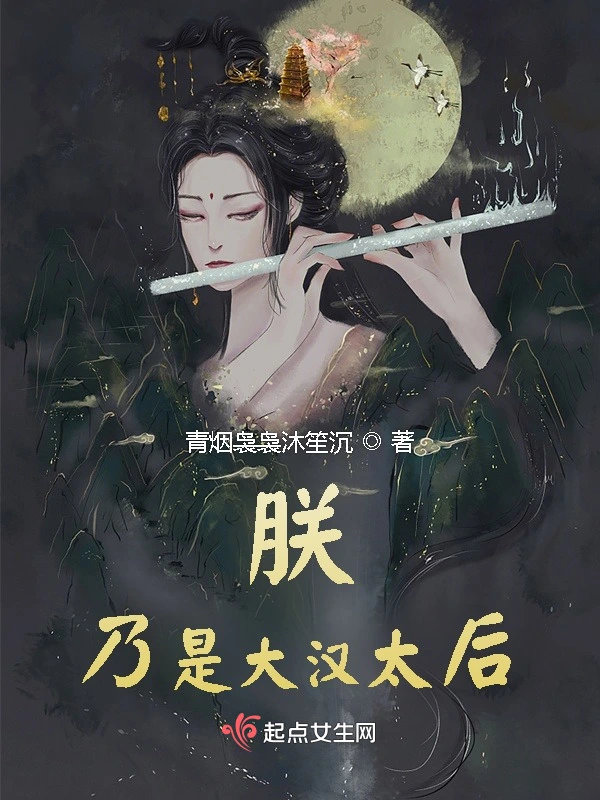
I Am the Queen Mother of the Han Dynasty!
朕,乃是大汉太后!
- Status
- Completed
- Length
- 801k Words
- Genre
- Ancient Romance
- Audience
- Female
- Subgenre
- Matriarchal Dynasty
- Updated
- 2y ago
- Source
- Qidian
Stats
0Monthly votes
376Recommends
69Fans
394Chapters
Tags
Synopsis
Reader comments
Readers also read
 Beautiful Girl Is Coming
 The Villain Wants to Make Peace Every Day
 Travel to Ancient Times and Take the Catering Industry by Storm
 Male Rabbit Eyes Blurred
 America's Fake Daughter
 Secluded Pond
 Cai Wenji's Path to Immortality and Immortality
 The Spring Dawn Fills the Courtyard with Green Poplars and Fragrant Grass
 Concubine Code
 Nanxu Boss
 NPC Self-Rescue Manual
 Rolling Wonderland
 Zhuge Was Reborn and Killed the Old Thief Sima
 Love You and Harm Me, I Don't Like to Be the Emperor!
 Master Touching Gold
I am the Queen Mother of the Han Dynasty!
{"TopicId":"847235287436099584","TopicName":"New book trial reading"} [Recommendation] Enter Deng Sui, the first woman to call me, and take a look at her extremely unlucky and magnificent heroine world history. A rare early Eastern Han Dynasty novel, a rare novel about women, this book is considered a niche among niches. Standing from Deng Sui's perspective, it shows her hardship and power. Deng Sui, another empress dowager of the Han Dynasty, SSR Ka. People who don't understand history will think that this is a novel made up of unofficial history. The eldest heroine Shuang Wen and the heroine Mary Su Wen are the main characters. The heroine of the novel sets the ceiling, and 'I' becomes the first woman to call me after being exclusive to the emperor. The Han Dynasty records: The imperial line in Tokyo has been repeatedly eliminated, and the power belongs to the heroine. There are four emperors who stand outside and six queens who serve as emperors. Empress Dowager Deng, one of the six people who came to the court, was a person who did not dislike the ruler of the court. Deng Sui, known as the "Crown of Queens" by later generations, encountered a period of constant natural disasters and internal and external troubles after the collapse of the tomb of her husband Hanhe Emperor Liu Zhaoshan. "This is the beginning of the story." After sixteen years in power, Haiyanheqing "This is the end of the story". "The process of the story" is all in this book. The article on strong women focuses on women in history and uses novel materials. The heroine is an unsystematic, non-travelling indigenous woman. This historical novel depicts a flesh-and-blood Empress Dowager of Han Dynasty who awakened female consciousness. The plot is smooth, the plot is rich, the logic is reasonable, the characterization is nuanced, the character's IQ is online, and it is consistent with the personality. It is worth watching. Book title: "I am the Queen Mother of the Han Dynasty" Author: Qingyan curls up Mu Shengchen Type of work: Ancient words · Female Dynasty Tags: [Chaotang], [Female], [Government], [Han], [Queen Mother] One sentence introduction: Deng Sui, the Queen Mother of the Eastern Han Dynasty came to power Character: Protagonist: Deng Sui|Supporting role : Others Recommendation index: 8 Intention: The heroine dominates the world | Awakening of female consciousness
There is no foreshadowing. If a woman becomes emperor and everyone in the world attacks her, her subordinates will definitely not accept it. There is no way, the preference for boys over girls was like this in ancient times Wu Zetian had several years of preparation ahead.
It may be better to change the title of the book to "I Am a Manly Woman". Because "Book of the Later Han·Volume 87" states: "He Xi ruled in person with a female monarch." The title "Nvjun" is better.
Author, if you don't write male videos, how can you write female videos?
She is the first woman in history to write history! This talented woman is Ban Zhao, a talented woman from the Eastern Han Dynasty. Ban Zhao was born in a Confucian family. He was extremely intelligent and influenced by his eyes and ears since he was a child, and he laid a profound historical foundation. Father Ban Biao, eldest brother Ban Gu, and second brother Ban Chao often read history and forget to eat and sleep. Her eldest brother Ban Gu was the creator of the historical masterpiece "Book of Han". He later died in prison due to being implicated in court political affairs. Ban Zhao was ordered to continue compiling the "Book of Han" and complete the unfinished manuscript of the long history. Since then, Ban Zhao has been immersed in the Dongguan Library for more than ten years, working diligently and conscientiously, and finally completed the compilation of the "Eight Tables", leaving precious and comprehensive Sinological historical materials for future generations, and honored her as "the first female historian in China". Because there are too many ancient Chinese allusions in "Han Shu", they are profound and difficult to understand. In order to better promote the inheritance of "Han Shu", Ban Zhao also held an explanation class in Dongguan Library. It is said that Ma Rong, a great Confucian at that time, knelt in the library and listened carefully to Ban Zhao's explanation. Emperor He of the Han Dynasty was impressed by Ban Zhao's talent and invited Ban Zhao to serve as a female teacher in the inner palace to teach his concubines to cultivate their minds and virtues. Because of her profound knowledge and skillful teaching, she was respected as "Master". During this period, there was a nobleman named Deng Sui, who was diligent in learning and inquiring, and had a high level of understanding. He soon became well versed in poetry, the Five Classics, and astronomy. Ban Zhao was very close to her. Later, this Deng nobleman won the court struggle and became Queen Mother Deng. During her more than ten years in power, she achieved outstanding results. Ban Zhao was another "brain" of Empress Dowager Deng. He offered advice and suggestions and won her respect. After Ban Zhao passed away, Empress Dowager Deng was very sad. She wore plain clothes as a student to express her condolences, and sent someone to supervise Ban Zhao's funeral affairs. Ban Zhao also wrote the book "Female Commandments", which became the code of conduct for women in ancient China and had a far-reaching influence. Ban Zhao is one of the few outstanding women in Chinese history who is extremely talented and understands politics.
I haven't read it, but I ordered a chapter for you. I still hope you will write about the Three Kingdoms, but this time it will be bigger and cover the whole world. Come on.
A family that a woman can't control at all, even the Han Dynasty's family, which is both overt and underhanded, can't be beaten at all. If you write about the Han Dynasty, you can't avoid the aristocratic families. The aristocratic families in the Han Dynasty are so outstanding that they are the local emperors.
Empress Dowager Deng appointed her elder brother Hu Ben Zhonglang Deng Zhi (pronounced Ruzhi) as the general of chariots and cavalry, and he was in charge of the three divisions. Deng Zhi's younger brother Huangmen Shilang Deng Kui was promoted to Huben Zhonglang General, and Deng Hong and Deng Hao were both Shizhong. These are brothers, and there are various other brothers, nephews, and nephews in Lao Deng's family. There is nothing wrong with them, and they can all hold official positions. The Deng brothers, headed by Deng Zhi, are quite humble and know how to advance and retreat. According to "Book of the Later Han Dynasty: Biography of Eunuchs", from the time of Emperor Ming Liuzhuang until the Yanping period (the reign of Emperor Shang Liu Long, which was 106 AD), the scope of appointment of eunuchs gradually expanded and the number of eunuchs increased. Four people who served under Emperor Ming were often Expanded to ten people, Xiaohuangmen expanded from ten to twenty people, and began to let eunuchs do some work that belonged to foreign officials (by the late Eastern Han Dynasty, eunuchs could already take on super-high-level positions such as generals of chariots and cavalry). In 107 AD, Sikong Zhouzhang attempted a palace coup. His action plan not only included killing the Deng Zhi brothers, placing the Empress Dowager Deng under house arrest, and banishing Han'an Emperor Liu Hu. Another important part was to kill Zheng Zhong of Great Changqiu and Cai Lun, the official of Zhongchang. It can be seen that in the minds of the courtiers, Zheng Zhong and Cai Lun are by no means ordinary small characters. The eunuchs headed by Zheng Zhong and Cai Lun had too much power, and the scholar-officials were unwilling to do so! In 109 AD, the three public officials collectively submitted a letter requesting the sale of official titles by category. Regardless of whether they are officials or ordinary people, as long as they pay a certain amount of money or grain, they can buy the corresponding official position or title. The highest title can reach Guannai Marquis, and the positions include Huben, Yulinlang, Wuguandafu, government officials, Tiqi warriors, five schools of battalion soldiers, etc. This was the first time that the Eastern Han Dynasty government sold its official position and title. The money is still not enough, what can I do? Pay cut. In AD 110, on the 21st of the first lunar month, an edict was issued to reduce the salaries of civil and military officials and officials at all levels of prefectures, counties, and counties, with differences according to grade. It was not until May 25, 112 AD, that the original salaries were restored to officials. One of the characteristics of the Three Dukes of the Eastern Han Dynasty, Taiwei, Situ, and Sikong, was that they changed frequently, and they changed them when nothing happened. Some of them withdrew immediately, but some took turns to be the Three Dukes, and some withdrew for a while and then restored them again. It was quite interesting. I made some rough statistics and found that during the reign of Empress Dowager Deng (AD 105-AD 121), there were six Taiwei and Situ each, and eight Sikong. Why do the three men change frequently? Because they have an important role, which is to "take the blame" for the emperor or the queen mother. In 107 AD, on September 1st, Taiwei Xu Fang was dismissed from his post due to natural disasters, celestial phenomena and civil commotion. He was the first to be dismissed from his post due to disasters. On September 2, Sikong Yinqin was dismissed from his post due to heavy rain. In March of 109 AD, there was a famine in Luoyang, and there was a phenomenon of cannibalism. On March 12, Situ Lugong was dismissed from office. In AD 111, there was a solar eclipse on the first day of the first month; on the seventh day, there were earthquakes in ten counties and countries. On the 10th, Taiwei Zhang Yu was dismissed from his post. In March of 112 AD, ten states were infested with locusts. In April, Sikong Zhang Min was dismissed from office. In 114 AD, there was a solar eclipse on March 2; drought and locust plagues occurred in the capital city of Luoyang and five counties and feudal states. On September 7, Taiwei Li He was dismissed from his post. On November 9, 115 AD, an earthquake occurred in ten counties and feudal states. On the 28th, Situ Xiaqin was dismissed from office.
"Book of the Later Han Dynasty, Queen's Chronicle, Chapter 10" Liang Guiren was the daughter of the Marquis Liang Song. Shao lost his mother and was raised by his aunt, Princess Wuyin. At the age of sixteen, in the second year of Jianchu, he and his middle sister were both elected to Yeting as nobles. Four years later, Emperor He was born. He was later raised as his own son. If you want to be named after a foreigner, avoid the Liang family. In the eighth year, he made a flying book to trap Song, who sat down and executed him, and the noble sister died in fear. Since the palace is resting, the love of the queen is growing day by day. When the emperor died, Emperor He ascended the throne and honored the queen as the empress dowager. When the Empress Dowager came to the court, she honored her mother, Princess Xianyang, as the eldest princess, and benefited three thousand households in Tangmuyi. His brother Xian, his brothers Du and Jing, were both dignitaries and were good at authority. Later, they plotted against each other and were found guilty in the fourth year of Yongyuan. In the ninth year, the Queen Mother died and before she could be buried, Liang Guiren's sister wrote a letter to Chen Guiren that she had died in vain. Taiwei Zhang Ye, Situ Liu Fang, and Sikong Zhang Fen submitted a memorial. According to the story of Guangwu deposing the Empress Dowager Lu, they demoted the title of the Empress Dowager and it was not appropriate to bury the late emperor together. There are many officials who speak up. The emperor's edict said: "Although the Dou family does not follow the law, the Queen Mother often detracts from herself. I have served for ten years, and I have been deeply righteous and courteous. I will never demean my superior. I can't bear to leave my kindness, and I can't bear to lose my righteousness. In the previous life, the Shangguan and the Queen Mother were not deposed, so they are not allowed to reconsider." So they were buried together in the Jingling Mausoleum. Reigned for eighteen years. The emperor thought that the nobleman died in a cruel manner, so he buried the funeral in Chengguang Palace. The emperor named her Queen Gonghuai, followed the mourning system, and all the officials were buried in plain clothes. They were buried in the Xiling Tomb with her elder sister in the Yibi Jingyuan. Liang lost his mother when he was young and was raised by his aunt, Princess Wuyin. Liang was sixteen years old, and in the second year of Jianchu (77), he and his sister were elected to Yeting as nobles. In the fourth year of Jianchu (79), Liang Gui was born as Emperor He of the Han Dynasty. Empress Dou of Emperor Zhang of the Han Dynasty raised her as her own son. He wanted to be named after his mother-in-law and was jealous of the Liang family. In the eighth year, Queen Dou wrote a flying book to trap Liang Song. Liang Song was executed in a sitting position, and the noble sisters died in sorrow. In the ninth year of Yongyuan (97 years), Queen Dou, who had become the Queen Mother, passed away and was not buried yet. Liang Guiren's sister Liang Wei wrote to Chen Guiren that her death was in vain. Taiwei Zhang Ye, Situ Liu Fang, and Sikong Zhang Fen submitted a petition, requesting that in accordance with the example of Emperor Guangwu of the Han Dynasty deposing Empress Lu, the title of Empress Dowager Dou should be demoted and not be buried with Emperor Zhang of the Han Dynasty. Many officials spoke up, and the Empress Dowager and Emperor Zhang of Han were buried together in the Jingling Mausoleum. Because his biological mother, Liang Guiren, died of illness, Emperor He of the Han Dynasty had no funeral arrangements. Instead, he was buried in Chengguang Palace. His posthumous title was Queen Gonghuai. Following the mourning system, all officials were in plain clothes. He was buried in Xiling together with his sister Liang Guiren. The etiquette was the same as that of Song Guiren (whose grandson was Emperor An of Han) who was also a noble of Han Dynasty.
It is rare to see a book describing the early and middle Eastern Han Dynasty. Praise.
Don't understand what you are writing? I read more than 20 chapters and still can't understand it. If it keeps writing about her deeds, it would be better for me to read a history book. If you want to write that the protagonist has traveled through time, then you have more than 20 foreshadowings without stating it. What people see is that he has a big head. I don't understand whether you want to write pure history? Or a novel