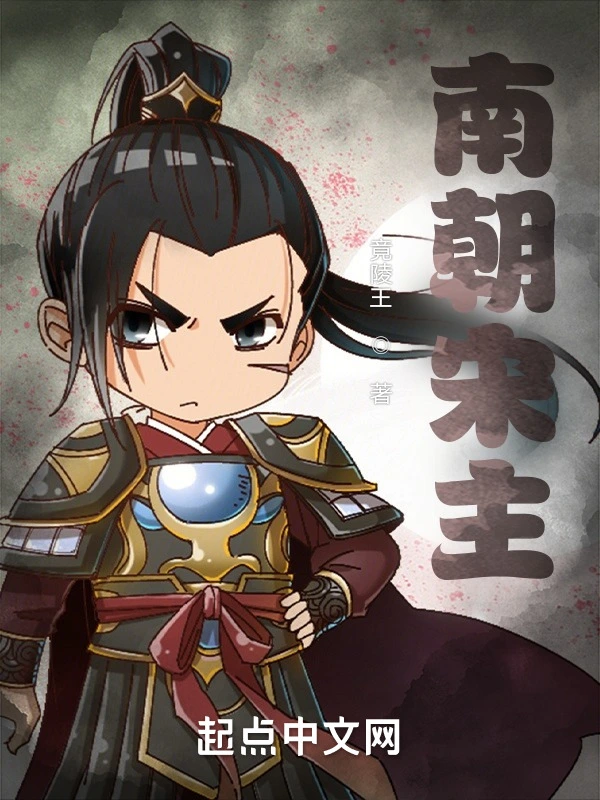
Southern Song Dynasty Lord
南朝宋主
- Status
- Ongoing
- Length
- 160k Words
- Genre
- Historical
- Audience
- Male
- Subgenre
- Jin-Sui-Tang Dynasties
- Updated
- 3y ago
- Source
- Qidian
Stats
0Monthly votes
3.2kRecommends
8kFans
78Chapters
Tags
Synopsis
Reader comments
Readers also read
 Red Mansion: Start Escaping and Farming from the Equipment Bar
 Fu Ming 1627
 After Lying in Bed for Three Years, He Was Forced to Help the Han Dynasty
 Northern Qi, Sage Khan
 Siheyuan: Start by Picking up Attributes
 Ten Kingdoms Week
 Northern Qi: My Father, Emperor Wenxuan
 Beastmaster: I Can See the Evolutionary Path
 Immortal Who Seizes the Body
 Late Tang Dynasty: Last Descendant of the Clan
 Emperor Ning Has the Guts
 Three Kingdoms: Crossing the River by Touching the Sima Family
The Young Emperor Liu Yifu (406-424) of the Song Dynasty was the truly designated successor of Emperor Wu of the Song Dynasty Liu Yu and the undisputed candidate for the orthodox emperor. Unfortunately, he was overthrown due to political failure during his reign and was later killed. Emperor Wen of the Song Dynasty Liu Yilong succeeded to the throne on the recommendation of powerful ministers. Liu Yilong was also the last highlight of the Southern Dynasty. As we all know, Liu Yu's dethroning and killing of Jin Gong Emperor Sima Dewen was a bad start, and the same was true for the Jingping Palace Incident. From then on, the succession of thrones in the Liu Song Dynasty and even the Southern Dynasties never had a smooth transition. It was all completed in conspiracy and killing. A large amount of political resources and talents were consumed in cannibalism and turmoil. The Southern Dynasty has been declining since then, while the Northern Dynasty has been getting stronger. How sad!
I really want to complain about the synopses of these historical novels. They are all about waking up to take over the world and lying drunk on the lap of a beautiful woman. Maybe it's because I'm getting old. I thought it was good before, but now I feel awkward.
There are really not many books about the Northern and Southern Dynasties, and most of them are very childish. Either nine of the ten chapters are about fighting, either fighting or preparing for war, and the remaining chapter is about women, or the writing style is very low-key. It is rare to find such a book that meets the taste. In fact, it is difficult to grasp historical books, especially the Northern and Southern Dynasties and the Five Dynasties and Ten Kingdoms, which test the cultural level. This book is really well written
Asking for two opinions from book friends.
In view of the two issues currently entangled with this book, I would like to ask book friends for their opinions. 1. As for the protagonist asking the heroine to call himself "I" to him, do you think this self-proclaiming is awkward, or does it not matter, or is it acceptable? 2. Historically, the Liu Song and the Northern Wei called each other "Dao Yi" and "Suo Lu", but now everyone is accustomed to calling each other the Liu Song and the Northern Wei. So in the book, should I ask them to call each other Dao Yi and Suo Lu, or Liu Song and the Northern Wei? Or does everyone think it doesn't matter? Book friends, leave your comments and I will make revisions based on your opinions.
I hate protagonists who talk to women about everything, and who write women as omnipotent.
Inexplicably, the protagonist's wife changed her name to herself. Does the author think it fits in with the book? Why don't you call her your wife?
Is the fight for the throne too deliberate? The protagonist's one or two achievements in the early stage can directly overwhelm the other princes. After that, there is no need to write so much in order to compete for the prince. At this time, only the interests are considered. If the protagonist is not the prince, but when he becomes the next emperor, he will be the master of great achievements, which will force flesh and blood to kill each other. This is not in line with Liu Yilong's desire for brothers and sisters to respect each other. On the contrary, the protagonist is the prince and will be the emperor in the future. He has made great achievements and his position is stable. There is a high probability that his brothers will not dare to rebel. Even if he takes back his brothers' military power, the emperor's position is stable, and he is not afraid of his brothers secretly rebelling, and there is no need to kill his brothers. For example, Li Shimin killed his brother because although he had great achievements, he was not in the right position. However, Li Shimin was very good to the clan that had no disputes. As for his son's superior merit and superiority in forcing Lao Tzu, Li Yuan had not considered it before the Xuanwu Gate Incident. Li Yuan's suppression of Li Shimin was actually because he was afraid that Li Jiancheng would become emperor in the future and Li Shimin's superior merit would surpass his superior (Li Jiancheng). And the era where the protagonist lives has not yet seen the Xuanwu Gate changes. . —————————— I saw in the replies that some people thought that Li Yuan was using Li Shimin to check and balance Li Jiancheng. I replied to a long comment and I suspected that the sending failed, so I edited the post and added it. It would not be Li Yuan who checked and balanced Li Jiancheng to support Li Shimin. Support? Compared with Li Shimin's achievements and real power, suppressing Li Shimin is almost the same. Knowing how many troops Li Shimin should have at his disposal? Soldiers and horses across the country. But actually? Only the Prince of Qin's Mansion. During the Xuanwumen Incident, Chang He, who supported Li Shimin, usually had more troops than Li Shimin. Many of Li Shimin's positions are fictitious, including General Tiance and General Twelve Guards. However, in actual structure, each general of the Twelve Guards is directly subordinate to Li Yuan (refer to the Han Dynasty, the Great Sima and the Great General were both marshals of troops and horses in name, but in actual structure, the soldiers and horses were in the hands of the General, and the Great Sima had no soldiers). According to Shangshu Ling, Li Jiancheng and Pei Ji were in charge of government affairs. Yongzhou Mu is in charge of Chang'an, but Li Shimin actually doesn't care about Chang'an city affairs The Xuanwumen incident was so smooth, not because Li Shimin could mobilize many troops because of his position, but because Li Shimin was very capable. The 12 guardsmen all made great achievements under Li Shimin, and they obeyed Li Shimin. Chang He contacted and supported privately. Jing Junhong and Lu Shiheng did not know about the Xuanwu Gate changes in advance. They volunteered to help Li Shimin. (Nowadays, there are also managers in the workplace who have strong abilities, which is obvious to everyone. Later, they seize the power of management and resign in a fit of anger. They can take away a large number of employees in the company. They have no power on the eve of resignation, but it does not prevent them from being convinced.) If you look at the history of Datang's entrepreneurship, you will also find that Datang often led the troops to defeat, and then let Li Shimin lead the troops to win; after a while, so-and-so led the troops to defeat, and then let Li Shimin lead the troops to win. Li Shimin used it well. Were there any other wars during the break? Nothing was done. For example, Li Yuan's Taiyuan was lost by Li Yuanji, and the enemy troops moved all the way south. The nearest large-scale organization was Li Shimin's Daxingtai of Shaanxi Province, so Li Shimin did not send troops.
Starting from the end of the Eastern Han Dynasty, for hundreds of years, from the Jin to the Southern and Northern Dynasties, the Sui Dynasty, and the early Tang Dynasty, all dynasties, big or small, without exception, suffered from serious internal strife among the royal family. There were profound social factors involved. At that time, the imperial family was If the strength of the emperor and the royal family is slightly weaker, it is easy to produce powerful ministers. During the Three Kingdoms period, Sima Yi of Wei, Zhuge Liang of Shu, and Sun Wei of Wu (who killed the emperor Sun Liang) all had powerful ministers. During this period, there were also powerful officials who deposed and established emperors. Huo Guang and Wang Mang appeared. This was by no means an accidental phenomenon. The difference was that some transcended and some were loyal. This did not mean that the rulers were not of high quality, had poor thinking, did not have a deep understanding, or did not take precautions, but that the preventive measures were also a cup of poison. That is to enfeoff the royal kings and vigorously cultivate the royal family. It is also easy for the royal family to have internal strife. To completely eliminate it, it is not something that can happen overnight. It needs to be accompanied by social development and development. Change, everything comes from the economic base determining the superstructure. During the Han Dynasty, with the development of agricultural production levels, the originally difficult-to-cultivate areas in the south of the Yangtze River were developed. With the effective management of the Yellow River, the Hebei area gradually developed. However, the production technology was still unable to compare with the Song, Ming and Qing Dynasties. Single-family households still could not keep cattle, maintain farmland water conservancy and irrigation facilities, or even build and maintain other agricultural production auxiliary facilities. The economy can only continue to be maintained under the manor economy, where people live together in villages, support each other, and produce and work. Contiguous manors are spread all over the country, and there are many manors occupying several counties. The noble families and the powerful royal families who control the manors are the common ruling class of the country. The emperor and the royal family are just the stronger party, and they will not have a high status in the future. Once someone can connect most of the hundreds of gentry families, the royal family's dominance will be lost. When agricultural production developed to a certain stage, the economic basis changed from a manor economy to a small-scale peasant economy, and social atomization gradually deepened. The hundreds of literati families that originally had influence all over the country turned into tens of thousands of large rural households. With economic interests, large families would naturally seek political status, and bureaucracy also emerged. The ruling class that originally consisted of hundreds of families evolved into a huge bureaucratic class of tens of thousands, or even hundreds of thousands of families. When a large bureaucratic class is connected in series, it becomes more and more difficult, almost an impossible task. The soil for the birth of powerful ministers disappears, and the emperor can naturally sit back and relax, superior. The emperors in the Three Kingdoms, Two Jins, Southern and Northern Dynasties had a worse social background than the emperors in the Han Dynasty. The scope of the emperor's power was limited. The farther away from the capital, the weaker the influence of imperial power. In other words, it is the same for any noble family or powerful family. The Western Han Dynasty established Chang'an as its capital and relied on Kai If you add the mature Guanzhong Plain to Shuzhong, you can dominate the world. The Western Han Dynasty continued the struggle to eliminate vassal vassalage between the three generations of emperors Wen, Jingwu, and Jingwu, which proves this. The Eastern Han Dynasty established its capital in Luoyang, with the Hebei Plain at its back, and it had no disadvantages. However, with the development of the times, The Lianghuai Plain, Jianghan Plain, and Jiangnan area were gradually developed, and the situation changed. In the past, one plain could sweep the world, and the matter of overpowering the heroes no longer existed. What followed was an increasing trend of local separatism. It became more and more intense. After the fall of the Han Dynasty, unification gradually became very difficult. Originally, the Jianghan Plain, Jiangnan, and Huaihei areas were not strong enough, had a small population, and were not productive. They were generally just grass on the wall and would fall in that direction when the wind was strong. Now they have become hard-core. They have more people and more money. Why should they surrender to you? If you don't conquer, you won't surrender. This makes rapid unification a very difficult task, and the formation of a stalemate between separatist forces has become a high probability event. Once there is a stalemate, strongman politics will rise. Because the emergence of a strongman can unify most of the internal resources to carry out external resistance and ensure that the community of interests of one side is not eliminated, while other forces without a strongman can easily be treated as soft persimmons. There is no need for internal strife to be serious. The state of dynamic balance between the emperors, eunuchs, relatives, and nobles only maintained in the Han Dynasty. The strongman will not live long. This strongman must be just right. If he is the emperor, then everyone is naturally happy, but if he is not, then the emperor will be very dangerous. In fact, let alone the emperor, even the descendants of strong men are also very dangerous if they do not have the prestige of strong men. Liu Yu swallows thousands of miles like a tiger, Jian He established a new dynasty with great pride, but his son was still killed by the ministers. If it weren't for Liu Yu's consistent practice of getting the territory, even at the risk of losing it, he would rather give it to his underage son than to other subordinates, resulting in vassal kings everywhere. The Liu family may end up just like the Cao family in the Wei Kingdom before. However, those who have done well in restricting the vassal kings, such as the Yuan family in the Northern Wei Dynasty, are called a powerful queen. Powerful ministers are everywhere, and a vast area is full of careerists. On the other hand, the old predecessors in the Qin Dynasty also had serious internal conflicts. Fu Jian, who unified the north, was also the vassal king, and the Yan Kingdom was an inspirational legend. Although the royal family was constantly fighting among themselves, it was still resurrected, cutting off one crop after another. The Gao family of the Northern Qi Dynasty and the Yuwen family of the Northern Zhou Dynasty were naturally in the beginning. Learning from the lessons of the Northern Wei Dynasty, the royal family came to power, but the two families also soon faced serious royal infighting and killed each other. The Northern Qi Dynasty continued until the last emperor, regardless of the declining power of the country, still wanted to destroy Lanling King Gao Changgong, while the Yuwen family of the Northern Zhou Dynasty Then a generation of heroes came out, killed his uncle, brought order to the chaos, and after regaining power, he naturally had to learn a lesson and restrict the rights of the Yuwen vassal kings. After his death, his son was immediately seized by his father-in-law Yang Jian, and the famous Yuwen vassal king was immediately killed. All the direct descendants were also killed, and the Yuwen clan was almost wiped out in the end. Of course, if the status of a strong man can be passed down from father to son, and the father dies, the son will succeed, then naturally he will have peace of mind, but this also involves the power without father and son, how can the world have twenty years? The prince of Zhao State, Shi Hu, only raised one son, but the son wanted to rebel. He killed one and trained the next one, but still rebelled. Liu Yilong also raised a son, but in the end he could not escape the result of father and son killing each other. Even the old man The predecessor, Emperor Wu of the Han Dynasty, also had a situation where father and son could kill each other. In this situation, the emperor wanted to save his life and could only cultivate several sons at the same time to check and balance each other to avoid a dominant family and the sons killing each other. It was better than having his own life crisis. An emperor who knew people but not their hearts and enjoyed glory and wealth naturally did not want to bet on people's hearts. Everything could not escape. The economic base determines the superstructure. Even the wise and powerful Li Shimin, who was at the end of the manor economy, escaped the great unification. Even after his death, Changsun Wuji killed Wu King Li Ke and exiled Jiangxia King Li Daozong. Li Ke could be said to be afraid of Li Zhi, but even Li Daozong did it. It is difficult to say what Changsun Wuji had in mind. What they want to do is to eliminate the royal vassals. How to take the next step? Just follow Yang Jian. It's just that Changsun Wuji failed in the struggle with Wu Zetian and Li Zhi, and Wu Zetian survived Li Zhi, established Wu Zhou, and Li Zhi. All members of the family, except those born to him, were killed. If Wu Zetian had been a man, the Tang Dynasty would have been destroyed long ago. Everything Li Shimin didn't want to see, but he just couldn't prevent it. We can use history as a mirror to know the rise and fall, so what? , Otherwise it can't be solved, but in terms of talent, how inferior is Li Shimin to the Zhao Kuangyin brothers? Why is it that one established dynasty almost died for three generations, while another has strong vitality? The difference is not the people, but the socio-economic foundation.
Fortunately, it was put on the shelves and I didn't click in. Dead Eunuch🐷🐷
I suggest the author not to speak too eloquently in the future. If he says he is not a eunuch, he will end up being a eunuch. Talking like farts, hahaha
Author, the protagonist is a noble, and he wants to do something to safeguard class interests. After all, the protagonist is also a vested interest. Being a selfish protagonist makes you feel immersed in the story. After all, the readers are ordinary people and they are all selfish.
It's just okay and average. The author doesn't consider what the readers would like to see.
Later you can change Liu Yu's temple name to Taizu and give it to Liu Yilong as Taizong. Historically, Liu Yilong was originally the Zhongzong, but Liu Jun raised an army to seize the throne. In order to make himself more orthodox, he changed his name to Taizu.
Another book that is inexplicably about eunuchs
He also said that if you keep it for a while, it will get cold.
Book review: The advantage of this book is that the three golden chapters are well written. The disadvantage is that many people may not understand this period of history and it is relatively niche.