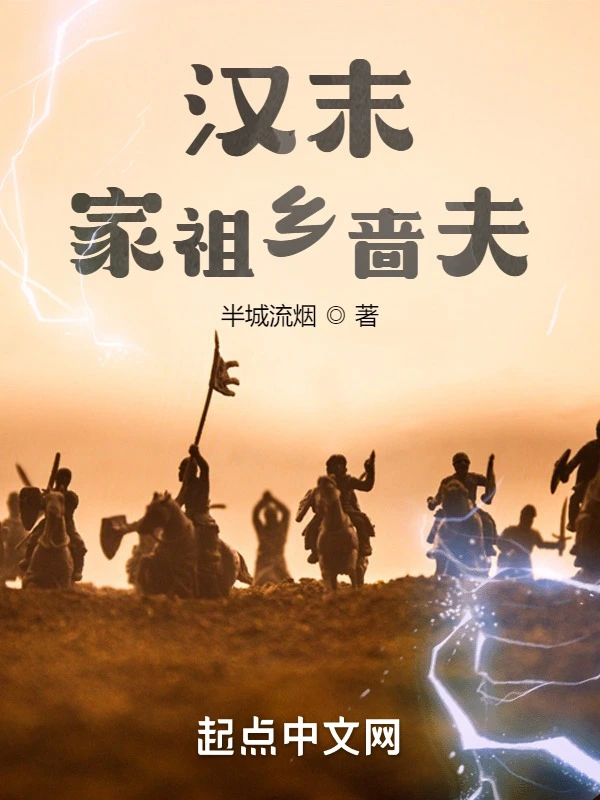
Late Han Dynasty: a Stingy Man in His Hometown
汉末:家祖乡啬夫
- Status
- Completed
- Length
- 1.7M Words
- Genre
- Historical
- Audience
- Male
- Subgenre
- Qin-Han & Three Kingdoms
- Updated
- 1y ago
- Source
- Qidian
Stats
0Monthly votes
15.9kRecommends
55.8kFans
411Chapters
Tags
Synopsis
Reader comments
Readers also read
 Talker in the Song Dynasty
 Please Call Me Your Majesty the Tsar
 1914 Begins with the Rejection of the Schlieffen Plan
 In the Red Mansion: Escort Daiyu to Beijing at the Beginning
 Never Walk Alone!
 Gou Qin
 Ten Kingdoms Week
 Daming: Have I Become Wanli's Portable Grandfather?
 I Am Drawing a Hot-Blooded Episode in the Zhiyu Episode!
 Late Han Dynasty: Born in Bingzhou, Expected to Be a Hero
 The Age of Huangtian
 Emperor Ning Has the Guts
 Martial Saint in the Late Han Dynasty
 Three Kingdoms: the Sims, Liu Chan Is Numb
Not killing Wang Ji's wife and children shows that the protagonist, as a time traveler, still has some humanity. As the saying goes, there are things to do and things not to do. I kill you to avenge the head of the family. It will not bring harm to the wife and children. If your son wants revenge in the future, just do it. I will follow.
When I was studying in the past, I read the author's "Gods of War of the Three Kingdoms". I read the physical book in a bookstore but did not buy it. I feel that it is the best Machiavellian novel about the Three Kingdoms. The only shortcoming is that it lacks historical beauties.
Can Kevin take a break and stop finishing?
The protagonist is a Yangzhou shepherd, which shows that the author seriously lacks geographical and political knowledge. Before the Song Dynasty, China's economic center of gravity was in the Yellow River Basin, and wars were fought for money and food. Therefore, except for Zhu Yuanzhang, the north unified the south. By the Song Dynasty, the Guanzhong Plain was in ruins due to over-exploitation and warlord wars in the late Tang Dynasty. Later, with the rise of Xixia, Guanzhong became the front line and was completely hopeless; the Sanyi River returned to the river, which caused the North China Plain to be abandoned, and it was still wiping the butt of Zhao and Song Dynasty until the Ming Dynasty; during the Song and Jin Dynasties, the Jin Dynasty conquered the Yellow River, causing the Yellow River to seize the Huaihe River and flow into the sea, and the Huaihe River Basin was also abandoned. By this time, the Yangtze River Basin had risen and become China's new economic center. This was the real reason why Zhu Yuanzhang was able to unify China from the south - there was sufficient money and food in the Yangtze River Basin, the Guanzhong Plain became the Loess Plateau, the North China Plain was flooded by the Yellow River, and the Huaihe Plain was also flooded because the Yellow River took the Huai River and entered the sea. The entire North China lacked money and food to support the army's year-round campaigns. This situation lasted until the Republic of China. To sum up, the protagonist can only choose a territory in the Yellow River Basin to have money and food to conquer the world. He can only choose one of the four states: Liangzhou, Yuzhou, Jizhou, and Xuzhou. The best choice is Jizhou. The North China Plain is not only economically prosperous, but can also control the northern resources of strong soldiers and horses, and can also prevent the rise of Yuan Shao. The second option is Xuzhou. Xuzhou is not only rich in money and food, but also adjacent to Yangzhou, which is convenient for the protagonist to annex. The chaos of Qingyan in the north is also convenient for the protagonist to annex. Yuzhou in the west is also rich in money and food. Yuan Shu is easy to fight and can stifle Cao Cao's rise nearby.
Later, when the protagonist's wife gives birth to a child, it is best to be a boy, because boys were considered heirs in ancient times and can reassure their subordinates. If it is a daughter, they cannot reassure their subordinates that they are die-hard loyalists. Of course, if the author insists on having a daughter, then I hope the protagonist will not dote on her daughter and treat her as much as she wants. The daughter slave is really disgusting to see (the protagonist of the online article will not dote on his son 100%, but he likes to dote on his daughter and favor his daughter)
Although I like to read the Romance of the Three Kingdoms, I really can't stand it. I speak of foreigners and so on. I also fantasize about going back in time and wiping out all these foreigners. But have you ever thought about the aliens you call the Xiongnu, Xianbei, Wuhuan, Qiang, Di, Shanyue, barbarians, etc., Even if they are Later, the Tubo Turkic Uighurs, the Khitan Liao, the Jurchen Jin, the Dangxiang Xixia, the Bai Dali, the Mongolian Yuan, and the Manchu Qing. Everyone living on the land of China is now a member of the Chinese nation. China is a multi-ethnic country, not just a Han ethnic group! Hehe, let me say something unpleasant. After thousands of years of ethnic integration, are your Han bloodline pure?
The author likes to over-interpret. Emperor Ling of the Han Dynasty is a foolish emperor. What are you pretending to be?
With the organizational capabilities of the Yellow Turban Army, can it really be possible for 100,000 Yellow Turbans to break out of the camp secretly? That wave of talents will be famous throughout the ages 🤭🤭
The layout is too small, or the writing is too stingy. There are seventy-eight free chapters. It focuses on describing the story of revenge. Running around with no base and no subordinates. The last sentence is to rely on the rich family. If you want to rely on the rich family, it depends on what you write. The Three Kingdoms is enough.
It feels like the protagonist has been assimilated by this era and is trapped in a circle with no way out. It always feels a bit strange when reading it.
Yangzhou is chosen well. The protagonist occupies the Golden Corner very early. With a large number of elite soldiers, he can be more aggressive at the beginning when dealing with big families. After all, if the cavalry in the southern expedition to the north does not have the upper hand, it requires higher mobilization capabilities and organization. First of all, aristocratic families cannot give priority to political power, not even unified political power. What's more, the protagonist is not born high, so the protagonist should open a school and actively cultivate officials from poor families. The governance of a political power is very important. History proves that both Wei and Jin died in aristocratic families.
Why do you see the protagonist acting like a loser in the back, while he was the strategist in the previous battles?
Seeing the inauguration of Yangzhou Mu, I would like to talk about the situation. How many people have been able to cause trouble in Jiangdong since ancient times? In that era, how could we compete in the Central Plains when we lacked troops and horses? How could we fight without cavalry in the Northern Expedition? We were inherently disadvantaged. Needless to say, can the protagonist's tactics be better than that of Sun Quan? Sun Quan is still hampered by the Jiangdong nobles. The only thing I can say about the protagonist's fun with Jiangdong is YY. Zhou Yu and Sun Ce grew up together and were sworn brothers. They watched you become powerful and turned to you? They were just a state pastor. If they were powerful, why not join Yuan Shao? And the main reason for the conflict was not resolved. Even if they won the world, the final outcome would still be the same as in previous dynasties. The noble clan would grow, and then the court would become corrupt, rise up, and change dynasties.
The good guy has taken hypocrisy and extreme selfishness to the extreme. He is simply the representative of a hypocrite! Did the author want to write us a protagonist like this?
There are several paragraphs of personal heroism of the protagonist, risking his own life to gamble. It feels disgusting, and there is not much benefit from success, as if it is just to write about the aura of the immortal protagonist.
It has taken off since the death of Yang Qiu, and it is not that Xiaolian relied on Yuan Shao to become the 18-year-old county magistrate. It's still a family with no foundation, and it's better than Cao Cao.
The book is named after the family ancestor. The family ancestor died within a few chapters, that's it?
If you follow Cao Cao, you will easily die for your whole family. If you follow Sun Quan, you will not only die for your whole family, but also be notorious for thousands of years. If you follow Liu Bei, you will die early.
Everyone has mentioned the advantages. I would like to mention the shortcomings that I personally feel are lacking. There are two main points: the plot is too slow/inappropriately detailed. Whenever a character appears or involves historical background, a long paragraph is introduced. One chapter is just braille, mostly like this. It very separates the plot and affects the smoothness. There are also others like him After Grandpa hit the pillar, the author gave another behavioral interpretation. Everyone can understand it. The protagonist has a long list of inner dramas. Isn't it good to leave blank space and let book friends write chapter chapters by themselves? It can also improve interactivity Similar to this kind of paraphrase and peddling of private goods are not appropriate, but it greatly affects the reading experience.
Using the imperial examination to build aristocratic families only fragments and atomizes local power. Giving the lower class room for advancement is purely a brain supplement, because the people who climbed up through the imperial examination will not consider the lower class people they once stayed at.
Don't choose the Liangzhou frontier for your basic plan. Hu and Han people live there together, and the folk customs are fierce. I'm afraid that if the weather is good and the weather is good, nomads will farm and herd, but natural disasters will destroy homes and plunder places. If you survive in a place like this, your military discipline will not be improved if you recruit it as a soldier. The closer to the Central Plains, the better.
I support Quan Ding, but I think the author didn't write much in his previous books. I hope he can write more in this one. There is a lot to write about in the Three Kingdoms.
Withdrawn, half-written and half-written, the early writing is very good. Before he became the county magistrate, you can completely see a male protagonist who has traveled from modern times to ancient times, is ambitious, decisive in killing, and can sacrifice everything for fame and fortune. After becoming the county magistrate, the author seemed to have been taken away from him. The modern thinking side of the male protagonist quickly disappeared, leaving only a male protagonist with ancient thinking, benevolence, justice, propriety, wisdom and trust! In the early stage, it was said that the protagonist is familiar with history, but later it seems that he will forget it inexplicably. I would like to ask the author a question, is the history that the protagonist has read the entire history of the past five thousand years, or only the Han Dynasty period. This is also the first book I have read in which he does not call his wife by her first name, but instead calls her "Shi". Everyone has their own preferences for vegetables and radishes. I really can't stand this.
General of Fine Science Popularization
There are two types of generals in the late Han Dynasty: generals with heavy titles and generals with miscellaneous titles. Among them, the heavy-numbered generals are in order: general, hussar general, chariot general, guard general (who can open a mansion), front, rear, left and right generals. These generals are permanent and belong to senior generals. Miscellaneous generals, the remaining Xiaoqi, Louchuan, Caiguan, and Fubo generals all belong to miscellaneous generals and are not permanent. The most famous among them is Li Guangli's Second Division General.
This book is really good, purely based on the plot. Each of the characters appears in person, without facial makeup and with distinct personalities, love and hate. The only drawback is that updates are too slow! More updates, old man!
It can be seen that the author arranged for Zhou Ziyi to go from working for others to working alone when he had the qualifications to advance. He had some thoughts and considerations on the plot and character arrangement (from the different attitudes of the Xu family, it can be seen that the details are very detailed.) I think the author has his own ideas. With the foundation of the book, it will be good to finish the story. Even if it starts high and goes low, it will also add a masterpiece to the Book of the Three Kingdoms. The readers are too angry, I hope the author's mentality will not be affected.
The book is a good book, but it's a pity that the number of words is too few. In addition, I hope that the experience and ability of the protagonist who has been an official for more than ten years will not be criticized in the future, and there will be no plots such as [the male protagonist does not know some insider tips or hidden rules of being an official, so he provokes people or makes a fool of himself].
It is about eighty or ninety kilometers from Yinqiang to Changshe. The march is 40 miles every day and it takes about four days to reach Changshe.
Doesn't anyone think of Huang Zhong? At this time, Huang Zhong was at his peak, and he didn't have much fame. Can he be recruited?
It is not recommended to go straight to death. The boss of the Sun family should start in the north like the God of War of the Three Kingdoms. Before there were cavalry in the north and firearms came out, the north unified the south. Unless the author writes about three generations, separatist rule in Soochow and not allowing Cao Cao to destroy the Yuan family, otherwise the unified north will be difficult to fight because there is no source of cavalry.