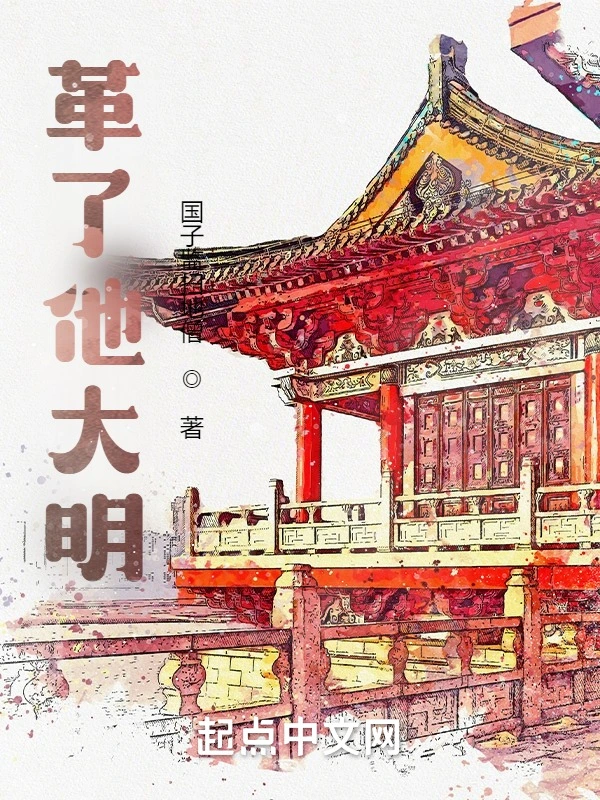
Destroyed the Ming Dynasty
革了他大明
- Status
- Ongoing
- Length
- 335k Words
- Genre
- Historical
- Audience
- Male
- Subgenre
- Song-Yuan-Ming Dynasties
- Updated
- 3y ago
- Source
- Qidian
Stats
0Monthly votes
1.1kRecommends
2.3kFans
153Chapters
Tags
Synopsis
Reader comments
Readers also read
 Red Mansion: Start Escaping and Farming from the Equipment Bar
 After Lying in Bed for Three Years, He Was Forced to Help the Han Dynasty
 Fu Ming 1627
 Northern Qi, Sage Khan
 Siheyuan: Start by Picking up Attributes
 Daming: Emperor Chenghua Is Here to Ascend the Throne First!
 Respect the Art of Ink
 Beastmaster: I Can See the Evolutionary Path
 Immortal Who Seizes the Body
 Tianqi: My Teacher Is a Mechanical Pioneer
 Why Were the Civil Servants in the Northern Song Dynasty so Bad?
 Zhu Di: My Staff Come from the Future?
I just read the introduction and didn't want to read it. In the early dynasty, and it was still the period of Zhu Yuanzhang, what can you say to overturn it? Is the threshold for writing novels so low now? Pretend I didn't say anything about brainless technology.
I was confused after reading this introduction. If you rebelled during the Hongwu period, wouldn't you get killed? At this time, they were all the elites of the founding of the People's Republic of China. What are you going to fight with? Who will die with you?
As a Manchu, my father is Manchu and my mother is Han. Analyze my understanding. ,,, The existence of Confucianism in the main ethnic groups, because of its inherent characteristics, basically prevents the massacre of specific ethnic groups. Even if there is a change of dynasty, as long as there is effective rule, there will be no targeted genocide. At least there will be no prominent racial hatred. And if other ethnic minorities take over the Central Plains, in order to effectively rule and intimidate, there will definitely be large-scale genocide in the early stage. In the running-in period of rule, because of the lack of experience and the small population, the ruler of the stronger side will definitely not be in harmony with you, because he will kill people, and he will kill people on a large scale. Relatively speaking, higher-pressure rule is also inevitable. After all, simple population comparison is easy to understand. High pressure means that innovation in all aspects of society will slow down and become less. Confucianism is all bad, but it can indeed reduce the hatred between races in multi-ethnic countries during the period of the rule of the dominant ethnic group. Without him, it is just arrogant but weak. Although it is still stuck in its ways, unwilling to make progress, and has the most intolerable exclusive characteristics. But it is better than using it to implement more repressive rule by ethnic minorities. I have a negative impression of the dynasties ruled by the Yuan and Qing minorities. Especially for the Yuan Dynasty, it was a truly barbaric and backward rule, and the huge regression of China's overall social civilization was absolute. As for the Qing Dynasty, it was also barbaric and backward in the early stage. Emperor Shunzhi showed absolute political wisdom and laid the solid foundation for the future. In the middle period, it was also a high-pressure rule. In the later period, it was forced by the baptism of foreign forms and time, and it was no different from other feudal dynasties. If we want to say which of the Yuan and Qing dynasties did the most profound damage to China, it must be the Qing Dynasty. Although the rule of the Qing Dynasty was more methodical and logical, the hundreds of years of enslavement of the people affected the character of the Chinese people for thousands of years, or even forever. This is scarier than arrogance. I am a Manchu, and I have no sense of inferiority or arrogance. Although I would not exist without my ancestors, and although my ancestors certainly could not determine the methods of the Qing Dynasty, I still have to apologize for my ancestors. They have implanted the dirtiest and most shameful part into the shaping and inheritance of China's national character. I am not naive and know the world well. The outside, the source of Earth's unrest, is pushing us back into the mud. And the moths and demons from top to bottom inside are also destroying this main body. ,,,, Asking for food from foreigners is not neither humble nor arrogant. Thinking that the scenery is unique is neither humble nor arrogant. Worshiping foreigners and being servile is not neither humble nor arrogant. Neither humble nor arrogant, you have to be strong.
I excitedly wanted to see the rebellion in the early Ming Dynasty, but it turned out that being a dog of the Ming Dynasty was the greatest honor. Jpg. The title is a scam (annoyed)
Looking at destiny from the comparison between Zhu Yuanzhang and Li Zicheng In terms of difficulty, Li Zicheng's start was hellish From the uprising in northern Shaanxi in 1629 to entering Beijing in 1644, Li Zicheng fought bloody battles with the first-class main force of the Ming army for 15 years. The Ming Dynasty's most capable elites from the three sides of Shaanxi, the Guan and Liao Army, the most capable left army from the south, and the Beijing Camp Forbidden Army sent by the capital, all who can come are here. Li Zicheng was precarious most of the time, rushing back and forth without breathing. There is no great god who can let him enjoy the shade of a big tree, block the main force of the Ming army for many years, and let him have a stable foothold in the south. Zhu Yuanzhang was much better. For the whole 16 years since the beginning, there was always a taller man standing in front of him Relying on Zhang Shicheng to attract the main force of the Yuan Empire, and then relying on his brother-in-law's troops, he picked peaches and entered Jinling. By the way, he played with a black gun and killed his brother-in-law and others. The team became his own. Unlike Li Zicheng, Zhu Yuanzhang had a stable and safe base laid by his brother-in-law for him very early on, so that he could gain experience in governance. With the Red Scarf Army in the north, Mao Gui's Northern Expedition, Mr. Guan and Broken Head Panma setting foot on the capital, and Liu Futong blocking the Hu cavalry for him, he could run his own small political power in Jinling comfortably and safely, "build walls high, accumulate grain widely", and recruit handsome men from the south of the Yangtze River. As for the Hu cavalry, "a horse with only wheels cannot approach the left side of the river." What? Is Li Chahan very powerful? It doesn't matter. Before Zhu Yuanzhang could negotiate the terms of recruitment, someone assassinated Li Chahan. Zhu Yuanzhang looked up to the sky and was so happy that "there is no one left in the world"! What? Wang Baobao is also powerful? It doesn't matter, The Hu people began to fight for six years, between Emperor Hui and his son, between Boluo Timur and Yuan Ting, between Wang Baobao and Boluo Timur, between Wang Baobao and Yuan Ting, Wang Baobao and Li Siqi, etc. Among the four warlords, Wang Baobao and Chahan's old corps Guanbao and Tapir Gao, fighting was going on one after another. The sky was dark and the earth was dark. You were fighting to the death, consuming each other. They vowed not to destroy the Yuan Dynasty. Who could care about the Han people in the south? What? Is Xu Song very good at fighting? It doesn't matter, Chen Youliang fought against Ni Wenjun, Zhao Pusheng, and killed Xu Shouhui. The internal instability was so great that Fu Youde and Ding Pulang, known as the four generals of the Xu and Song Dynasties, defected to the enemy one after another. Another strong general, Ming Yuzhen, established himself in Shu. What? Zhang Shicheng is not bad either? It doesn't matter, Miao Commander Yang Wanzhe attacked the south of Zhang Shicheng, Fang Guozhen attacked the east of Zhang Shicheng, the Yuan army cut off the north of Zhang Shicheng, Zhu Yuanzhang participated in the group fight and attacked the west of Zhang Shicheng. Zhang Shicheng's two fists are difficult to defeat with eight hands. Where is Li Zicheng? Is there any tall man who can support him so that he can have a base in the south and give him more than ten years to manage it and learn about political power building? Li Zicheng was "tortured" by the imperial army for many years. He finally obtained a foothold in Xiangcheng in the south with good location and manpower. He also tried to establish political power, recruit refugees, promote agriculture and gain experience. It was already the 16th year of Chongzhen. It was too late! With the elites from the three sides of Shaanxi being annihilated, Li Zicheng could only take advantage of the situation and march directly from Shaanxi to Beijing, causing the Ming Dynasty to collapse like a building. It can be said that Li Zicheng passed all the tests with his perseverance and wisdom and courage, but he only lacked the experience of running a base area. The conditions for governing the world are far from being formed. There is no team, no talent, just like an illiterate person coming to Beijing to take the exam. The Zhu Ming Group that entered Dadu and dominated the world was a well-educated man who had studied hard for more than ten years and had a group of scholars to guide him, but Li Zicheng was still a farmer with a head full of sorghum seeds. This is destiny, not human power
Zhu Yuanzhang is most praised for his Northern Expedition, which was "the only successful attack from the south to the north" in history. However, people rarely make detailed analysis. The Northern Expedition was carried out with an unprecedented opportunity to score points: Unprecedented fratricide broke out within the Hu Yuan Dynasty, and North China was completely fragmented. A group of Hu and Han warlords fought against each other for six years. Within the Yuan Dynasty, the emperor and the prince plotted against each other. The prince joined forces with Wang Baobao and his father's Polo Timur faction to fight, and then the father and son joined forces with Wang Baobao. To defeat Boluo Timur, Wang Baobao fought with his adoptive father Chahan's old troops, then with Yuan Hui Emperor and his son, and then with Shaanxi warlords Li Siqi and Zhang Liangbi. Li and Zhang themselves also fought behind closed doors in Shaanxi. Before the army's "Northern Expedition", the Central Plains had become like this: After six years of civil war, the elite warlords of the Yuan Dynasty were almost wiped out. The most capable ones, Guanbao, Qi Gao, and Polo Timur, all died in internal fighting. When the Ming army arrived at Zhigu (Tianjin) and was within easy reach of Dadu, the Yuan Dynasty issued an edict to cease war with Wang Baobao, who was still in Shanxi. Therefore, most of the Yuan people gave up on their own, and the Ming army's Northern Expedition was not difficult. Later, when Xu Da and Chang Yuchun fought against Wang Baobao in Taiyuan, the morale of Wang Baobao's troops had long been low and the hearts of the people were scattered. General Huanbi Ma actually took the initiative to ask the Ming army to attack at night, willing to respond internally, so that he could win. After Wang Baobao recovered in Hongwu for five years, he defeated Xu Da in the decisive battle at Lingbei. From then on, Zhu Yuanzhang was defeated and retreated. It was not until 12 years after Wang Baobao's death that he went deep into the desert again. Relying on the fact that there were no strong men in the Northern Yuan Dynasty, he achieved the victory of fishing without fighting. This is Zhu Yuanzhang's true founding military exploits. The above-mentioned things are all recorded in history books, and not a single word is belittled out of thin air. In terms of cruelty to heroes and officials and people, Zhu Yuanzhang was the first in history. As for the luck of winning the world, Zhu Yuanzhang is also unique among the founders of China: After surrendering to Haozhou, Haozhou was besieged by the Yuan army for five months and was trapped. As a result, the Yuan army commander Jia Lu died of illness and the Yuan army collapsed; In Haozhou City, the father-in-law Guo Zixing was only one of the four major shareholders, the strongest being Peng Da. Without him, it was difficult for Guo Zixing to get ahead, and as a result Peng Da died of illness; Unable to stop, Guo Zixing and Zhu Yuanzhang were definitely over, and Tuotuo was demoted to death by Yuan Ting; Although Guo Zixing took care of Zhu Yuanzhang, if he were there, it would be difficult for Zhu Yuanzhang to become the top leader by conspiracy, so Guo Zixing died of illness; Zhu Yuanzhang developed in the south, but appeared in the north Chahan Tiemur, a strong man, once the Red Scarf Army was defeated, Zhu Yuanzhang would also be in danger, and Chahan was assassinated by the Red Scarf Army; Although Wang Baobao was a strongman and inherited Chahan's legacy, he fell into a civil war with the Yuan Ting and various Yuan warlords for six years. Zhu Yuanzhang continued to visit Wuyou in the north. Wang Baobao lived a long life. Although Zhu Yuanzhang established the Ming Dynasty, he still faced huge threats. As a result, Wang Baobao died of illness early; The Xu Song regime dominated the upper reaches, and Zhu Yuanzhang was in trouble. As a result, Chen Youliang killed the Prime Minister Ni Wenjun, the navy leader Zhao Pusheng, and the head of state Xu Shouhui. As a result, the group was divided and people were disloyal. He also underestimated the enemy and rushed forward to attack Jinling, which gave Zhu Yuanzhang a chance. Even so, he was still defeated by Chen Youliang in the Battle of Poyang Lake. As a result, Chen Youliang was accidentally shot and killed during the victorious pursuit ----As long as one of the above did not happen, Zhu Yuanzhang would not be able to conquer the world. Is this luck unprecedented for the founding heroes of the past? Not to mention that history has taken care of Zhu Yuanzhang, and even local forces have taken care of it: Ming Yuzhen's separatist regime in Sichuan was quite popular among the people. Due to the dangers of the mountains and rivers, Zhu Yuanzhang could not do it, and Ming Yuzhen died of illness; In the northeastern Liaoyang Province, the local authorities of the Yuan Army and the more than 100,000 troops from Naha were still strong and difficult to win for a while. As a result, Liu Yi, Pingzhang of Liaoyang Province, took the initiative to surrender to the Ming Dynasty and led the Ming army into Liaoyang. Naha missed an arm and was left alone and in danger, and had to surrender soon after. Of course, I am not saying that Zhu Yuanzhang has poor abilities. In fact, to be fair, Zhu Yuanzhang's abilities are better than those in the construction of political power. First, he knows how to recruit Confucian scholars and select talents and use them; second, he implements military reform in an army with complex internal factions and successfully achieves centralization. He also knows how to balance the power of various factions, so that he can use his fingers like a finger; third, he is good at plotting and setting up spies. At critical moments, someone will always tell him secrets. This is his unique expertise. The fourth is to do things strictly and step by step, in an orderly manner. However, Zhu Yuanzhang was indeed lackluster in the use of troops and was definitely not his strong point. On the road to entrepreneurship, I encountered a series of lucky coincidences inside and outside. I was so lucky that I rarely experienced hardships, hardships, and tragic dangers before I achieved success. Therefore, after winning the country, once he encountered difficulties and challenges, Zhu Yuanzhang often wavered and evaded, instead of daring to face the difficulties and fight with wisdom and courage. So, as soon as the Ming Dynasty was established, it was humiliated by Japan, Tamerlane, and the Chagatai Khanate. The result was that the Ming Dynasty envoys were frequently massacred, imprisoned, and humiliated. However, Zhu Yuanzhang could only turn his back and try to please the other party. This is where Zhu Yuanzhang was most lacking compared to the founders of the major dynasties in the past.
The emperor's defense of the country is originally a conjecture of modern people. Those who know history know that Beijing has been a frontline and military center for fighting against nomads since ancient times. Do you think it is possible to move the capital here without guarding it? As for the emperor dying in the country, it is a conjecture that does not understand history. Chongzhen tried to move south many times, but was turned back by the ministers. Is this called dying in the country?
You can rebel at any time. Don't talk about the early Ming Dynasty. This is hindsight theory. If you succeed, the Ming Dynasty will be a replica of the Qin and Sui Dynasties.
They are just called nice. The reason why they are fans is because they are not clear-headed enough. As long as they have been around the society for a few years, they will know that they are all rubbish.
It is best for the author to identify his own ethnic group, otherwise he will definitely scold more than he praises, and many of them will scold without thinking. The main reason why people brag about it is that there is a Yuan in front and a Qing in the back. The Qing is better, so you have to have some face. The protagonist knows all the virtues of the Yuan Dynasty, but he is a Mongolian Yuan survivor. What does this mean?
Brother, you are really stubborn. You were attacking a guy when New China was just founded. You are from the Aixinjueluo family, right?
Another book that treats the ancients as fools🙂
Can you not mention the rebellion?
I was confused, couldn't revolution be reform? How come the word "revolution" sounds so good to people like you and it turns into "rebellion" when it comes to your mouth? At the beginning of the story, I noticed that you all wanted to put the protagonist's head on Zhu Yuanzhang's desk. How much do you want this eunuch in the novel? As for those who said they did not rebel at the beginning, please go back and check the information. There were many peasant uprisings during the Hongwu period. In the 14th year of Hongwu in Guangdong, the pirate Cao Xing joined forces with Su Wenqing, Shan Zhidao, and Li Ziwen to revolt, with tens of thousands of people and 1,800 warships. After the suppression, an uprising broke out, and tens of thousands of people gathered. In the third year of Hongwu in Guangxi, an uprising was triggered by forcibly conscripting people into the army. It was not suppressed until the eighth year of Hongwu. In the 28th year of Hongwu's reign, the Yao and Zhuang ethnic groups jointly revolted. More than 18,360 rebels and more than 8,280 family members were killed. In the third year of Hongwu in Fujian, there was an uprising in Quanzhou, in the fifth year of Hongwu there was an uprising in Tong'an, in the tenth year of Hongwu there was another uprising in Quanzhou, there was an uprising in Zhangzhou in the twelfth year of Hongwu, and there was an uprising in Fu'an in the fourteenth year of Hongwu. Luotian Uprising in the sixth year of Hongwu in Jiangxi Province, and Yuanzhou Uprising in the 20th year of Hongwu. Meixian uprising occurred in the twelfth year of Hongwu in Sichuan and occupied 14 states and counties. In the fourteenth year of Hongwu's reign, Guang'an Prefecture revolted. The uprising of Shaanxi Jingangnu, Gao Fuxing, and Tian Jiucheng was suppressed from the early Hongwu period until the seventh year of Yongle. In the 16th year of Hongwu's reign, King Shuntian of Huguang revolted, in the 22nd year of Hongwu's reign Xia San of Ganzhou revolted, and in the 11th year of Hongwu's eradication king Wu Yier's uprising, they fought until the 18th year of Hongwu's reign, claiming to have an army of 200,000. In the 29th year of Hongwu, Li Faliang revolted in Huguang and Xiangtan. These are just the larger ones. As for whether the protagonist will rebel or not, I'm still weighing it. You can express your opinions and I will adopt them after reading them.
Let's see, he crushed Li Shimin during the late Sui Dynasty, tortured Cao and Liu during the Three Kingdoms period, tortured Liu Bang and Xiang Yu during the Qin Dynasty, defeated the First Emperor during the Warring States period to rule the world, tortured the Great Magister during the New Dynasty, tortured Genghis Khan during the Song Dynasty, and even defeated people during the Republic of China period. Is it unusual to create Zhu Yuanzhang? It is well known that time travelers are omnipotent.
If you want to overthrow it, overthrow it quickly, don't wait and see. This book on overthrowing the Ming Dynasty has been successfully written. In the next book, someone else should follow your path and directly overthrow this dynasty in the early years of other dynasties, and directly let the people stand up and make the decision. Don't talk to me. The Ming Dynasty was not good to the people. Only some people will believe what you say. Aren't the rulers of all dynasties all trying to maintain their own dominance? Just overthrow the mountains on the people.
Good👍🏻, if it weren't for the Manchu and Qing Dynasty's modern crotch pulling, the Ming Dynasty would not be as good as the Qing Dynasty 🤭, which would be a little stronger than the Song and Jin Dynasties. His regular territory is not as good as that of the Han, Tang, Qing and Yuan Dynasties, and it is only a little more than that of the Song Dynasty.
Setting the protagonist to be twelve years old is both ridiculous and distorted. You first go and see what a twelve-year-old child is like. In reality, if a twelve-year-old child comes to talk to you about serious matters, will you pay attention to him?
Those who want to rebel and revolutionize the Ming Dynasty can only wait until Zhu Di attacks Nanjing or Tumubao
In the early years of the dynasty, not enough people died in the troubled times, so China must die to be happy?
I don't have a high opinion of Lao Zhu. Although he started as a commoner, he first took advantage of Guo Zixing. Then it developed behind the scenes, relying entirely on Liu Fu's three-pronged northern expedition to capture Yuan Shangdu. Zhang Shicheng fought against a million-yuan army, and the protagonists of the Yuan Dynasty were almost completely wiped out. Li Chahan was invincible and pacified the world, but was assassinated by Mao Gui's men. Wang Baobao, who lacked prestige and strength, fought with Li Siqi and other northern warlords and watched the Yuan Dynasty fall. The most important thing is that Lao Zhu was a feudal labor insurance man. Although he was not the initiator of conservatism since the Song Dynasty, he played an important role in the development of conservatism.
Zhu Yuanzhang's ability is just like a lucky version of Zhang Shicheng and Chen Youliang, and even his performance in difficult times is not as good as Zhang and Chen When the Yuan army suppressed the Han uprising at its most violent, Zhang Shicheng was killed He passed a prince of the Yuan Dynasty (who was killed in Taizhou in the 13th year of Zhizheng), and in the 16th year of Zhizheng, he wiped out the army of Boluo, the "King of Zhennan" of the Yuan Dynasty, in Yangzhou. He was defeated and became a bare commander. He fell into the water and drowned while escaping north. Chen Youliang helped Ni Wenjun defeat King Weishun, the most tyrannical military force in Central China. King Weishun lost all his troops and the town of Wuchang. His seal was taken away by the Yuan Dynasty, and he went to join thousands of households in Jiangyin penniless. So how did Zhu Yuanzhang behave when the national rebels were in a critical situation? We might as well use original records and some information inadvertently revealed by official history to restore the complete truth: Scholar Li Through comparison and combing through Zhu Yuanzhang's early records, Xinfeng pointed out that after Zhu Yuanzhang surrendered to the army in the 12th year of Zhizheng (1352), for two full years, except for being Guo Zixing's adopted son-in-law, he could not make any achievements and lived in poverty. Because of his position, he only reached Zhenfu, which is slightly lower than Qianhu. In that era when militiamen armed thousands or tens of thousands of households and had marshals everywhere, it was really not helpful. However, a turning point came. In May of that year, Jia Lu, the commander of the Yuan army who besieged Haozhou, died of illness in the camp. The soldiers of the Yuan army dispersed on their own. The Haozhou rebels broke up the siege without a fight and gained momentum. They were the bosses in the surrounding area, so some forts and militia groups in the surrounding area that were watching the wind either surrendered or fled, which was a good way to earn a wave of dividends. However, "Records of Ming Taizu" revealed a miracle: Zhu Yuanzhang subdued 3,000 Zhangzhai rebels almost by relying on his own intelligence. First, he bravely entered Longtan alone, negotiated with the leader of Zhangzhai rebels, and then suddenly tied up the leader. He forced his troops to surrender to Guo Zixing, and then used 3,000 men to break through the Hengjian Mountain camp where the Yuan army's "Zhang Zhiyuan" troops were located. In one fell swoop, they captured 70,000 men and women, including 20,000 strong men - unfortunately, this matter was packaged in official script from beginning to end: In "Ji Meng" written by Zhu Yuanzhang himself in Volume 16 of "The Imperial Collection of Emperor Taizu of the Ming Dynasty", the so-called forced landing of 3,000 people in Zhangzhai was actually the surrender of the people themselves: Zhu Yuanzhang left Haozhou and went south, walking on the road, "Suddenly there were three thousand people returning from a charity trip. He led the troops to train, captured Hengjian Mountain, defeated the Yi Barracks, and gained 20,000 troops." This incident is by no means an isolated fact. In the inscription of "Zhu Yuanzhang's Imperial Mausoleum Stele", "Yuejiang Tower" written by Zhu Yuanzhang himself, and the Imperial Pingxi Shu text, it is mentioned that these 3,000 people came to surrender on their own initiative. (The inscription on the inscription "Traveling to the south, the air is comfortable and refreshing, and I encourage farmers to join the army. Their careers will be prosperous, and they will gather together in less than a month."; "Yuejiang Tower": "A single horse can travel hundreds of miles a day, and three thousand soldiers are obedient to me, so he marches southward." ", "Pingxi Shuwen" "After I took over, I accidentally obtained many soldiers, and they were trained and mobilized for me.") ---It is true that as long as you stand on the wind, even a pig can fly. The self-defeat of the Yuan army was an east wind, triggering a wave of defections from surrounding fortresses. Therefore, as soon as Zhu Yuanzhang went out, he encountered three thousand volunteers from Zhang Zhai who came to join him, thus achieving great success. However, the Ming court later packaged it as a legend that Zhu Yuanzhang showed his bravery and wisdom, kidnapped the leader of Zhang Zhai, and forced the surrender of 3,000 people. Finally, Zhang Zhai was mistakenly placed on the head of Lupai Village, deducing the famous myth of Lupai Village. The so-called victory over Hengjian Mountain Stronghold is also false, because scholar Li Xinfeng's research is: "Among the middle and low-level generals in the early Ming Dynasty, a large number of them belonged to the Jiawu Year (that is, the 14th year of Zhizheng 1354 AD) Dingyuan "Submitted to Hengshan", that is, he submitted to Lao Zhang's camp in Hengjian Mountain" (for example, the biography of Huo Hui in "The Records of the Founding Heroes of the Huangming Dynasty" mentioned that "at the end of the Sino-Japanese War, Hengshan surrendered, defeating Zhangjiabao, Lupai, Chuzhou, and Sanchahe"). Therefore, the attack on a 70,000-strong stronghold by the 3,000 men who had just arrived was more exaggeration than reality. It was more likely that Zhang Zhiyuan, the leader of the Hengshan stronghold, saw that the Yuan army had been defeated and had no intention of confronting the Haozhou rebels. But the father-in-law is the father-in-law. With this merit, Zhu Yuanzhang was immediately promoted to "general manager" (higher than ten thousand households). After Lao Guo's strength increased, he led Zhang Tianyou and these really capable warriors to follow Peng Da, Sun Deya and others to defeat Wuhezhai, Xuyi, and Sizhou, which were all in the direction of the strong Yuan army. But he took good care of Zhu Yuanzhang and asked him to go south with the strong general Zhao Jizu and attack Chuyang and Hezhou where the official army was empty, so that his son-in-law could gain credit. After Zhu Yuanzhang won the country, he attributed the victory of defeating Chu to himself ("Records" said that he "attacked Chuyangxia"). It was also revealed that he was jealous of Guo Zixing and had his military power taken away. "The power of the commander-in-chief of the army was not given by King (Guo)" ("History of Ming Dynasty"). But what about reality? Chuzhou was not conquered by Zhu Yuanzhang. In the 18th year of Hongwu, Zhu Yuanzhang personally wrote the "Baizitan Shenlong Effect Monument" and recalled that "In the seventh month of Jiawu Autumn in the 14th year of Zhengzheng, I led my troops to Chuyang, and the crops and seedlings were flourishing." "The Chronicles of Taizu in the History of the Ming Dynasty" only said that Zhu Yuanzhang led the rebel troops from Zhangzhai, Hengshanzhai and others to "lead the south into Chuyang". "Records of Heroes" mentions that Chuzhou was conquered by Xie Deqing: "In July of the Jiawu Year, Chuzhou was conquered." What's more, Zhao Jizu, a senior general under Guo Zixing, was also involved in Chuzhou, and he was promoted as a result. Generally speaking, there is no historical record of any battle in Chuzhou. At that time, Chuzhou was just an isolated city that had lost the protection of the main force of the Yuan army and had no self-defense. The victory of Chuzhou was mainly based on strength, not strength. The euphemistic name is "conquering", but it is actually "settling in". In any case, Zhu Yuanzhang became more and more powerful, and in August of that year, Guo Zixing went to Chuzhou to "seize military power." The so-called "seizing military power" was later exaggerated to mean that the Guo family was jealous of the wise and capable. What was the reality? Who gave Zhu Yuanzhang the opportunity to fly? Without the Haozhou rebels who persisted until the Yuan army collapsed, how could the surrounding militia take the initiative to surrender? Besides, whether it is the Zhangzhai Rebels or the Hengshan Rebels, they all go for the brand of the Haozhou Rebels, not for Zhu Yuanzhang himself. Since the outlet is created by the organization, it is natural for the organization to collect these dividends. In order to retain his military power, Zhu Yuanzhang repeatedly asked Ying to lead troops to rescue Liuhe besieged by Yuan soldiers, but he was defeated. "The Chronicles of Emperor Taizu of the Ming Dynasty" is a taboo of the venerable people, and only mentions that Zhu Yuanzhang suffered a minor defeat. The father-in-law still took care of his adopted son-in-law and transferred him back to the southern front. At this time, the southern front was developing smoothly and Hezhou was captured again. It's just that even the "Records of Ming Taizu" did not dare to claim that Hezhou was captured by Zhu Yuanzhang. Instead, it was captured by Guo Zixing's senior generals Zhang Tianyou (brother-in-law), Zhao Jizu, Geng Zaicheng and others, pretending to be Yuan Ting volunteers "Tsing Yi Army" in a night attack. But Guo Zixing immediately promoted Zhu Yuanzhang, who had not participated in the war, to the chief military officer of Hezhou, taking charge of all the generals. It was against this background that Zhu Yuanzhang, who relied solely on nepotism to gain power, felt very guilty, and that was why he later took on the abnormal actions that are puzzling to ordinary people. For example, when the army had a meeting, Zhu Yuanzhang did not dare to sit in the commanding seat in the hall. Instead, he was late on purpose and squeezed into the corner where everyone else was sitting ("Records of Taizu" and "History of the Ming Dynasty"). In fact, anyone who knows Zhu Yuanzhang a little bit knows that throughout his life, Zhu Yuanzhang's pursuit of power was naked and desperate, but now he is so "low-key and self-restrained" for no other reason. His military exploits are not his, and it is difficult to convince the public. Relying on the patronage of the father-in-law, even after Guo Zixing's death, the children of the Guo family did not exclude Zhu Chongba. On the contrary, the Longfeng regime (Han family of the Song Dynasty) invited Zhu Yuanzhang to the position of the third leader of the group: Marshal Zuo, the only two people above him were the father-in-law's son Guo Tianxu and his brother-in-law Zhang Tianyou. During this period, Zhu Yuanzhang's ability to lead troops was still inconsistent. According to Liu Chen's "Deeds of the Early Years of the Kingdom", in the 15th year of Zhengzheng (1355), when Zhu Yuanzhang was leading troops to fight, he was captured by an unknown militia group. In the end, Xu Da used himself as a hostage to exchange for Zhu Yuanzhang. However, this humiliating incident was later packaged by official history as saying that Zhu Yuanzhang was captured by Sun Deya to save his father-in-law, and he was praised for his righteousness. Although Zhu Yuanzhang is not good at food, he is very lucky. At that time, the forces of various factions were fighting in the surrounding area, and there was no room left. Jinling, the city in the south of the Yangtze River, was empty and desirable. Zhu Yuanzhang followed the Guo family army all the way to the lower reaches of the Yangtze River. Guo Tianxu and Zhang Tianyou were at the forefront, leaving Zhu Yuanzhang to stay and guard the home. The key to the Jiqing (Jinling) strategy was for them to attack the city and fight the hardest battle, allowing Zhu Yuanzhang to comfortably stay in Taipingfu (Ma'anshan City), the group's headquarters, to guard the temple. However, something strange happened. Chen Yexian (Marshal of the Yuan Army Rebels, who had just been surrendered by Zhu), who was sent by Zhu Yuanzhang to "support" the front line, suddenly betrayed and killed the two leaders Guo and Zhang. Chen Yexian also died inexplicably later, and more than 30,000 of Chen Yexian's remaining troops once again defected to Zhu Yuanzhang's sect. The strange thing is that the Chen tribe committed such a serious crime, but there seemed to be a tacit understanding between them and Zhu Yuanzhang. One really dared to surrender, and the other really dared to accept; one bet that Zhu Yuanzhang would not retaliate, and the other bet that the other party would not rebel again. Not only did Zhu Yuanzhang not account for their crimes of killing leaders Guo and Zhang, but he also gave them abnormal preferential treatment and became a pro-army. Chen Zhaoxian (Ye Xian's nephew) was Zhu Yuanzhang's personal bodyguard until his death. The secrets hidden in this are for you to appreciate for yourself. At present, scholars such as Li Xinfeng and Xia Yurun only believe that Zhu Yuanzhang "killed with a borrowed knife", that is, knowing that Chen Yexian would rebel, he deliberately sent him to assist Guo and Zhang to get rid of these leaders. However, judging from various doubts, Chen Yexian's actions were more like being controlled by others. In this way, Zhu Yuanzhang not only got rid of his boss, but also took advantage of Jinling's "power and isolation... And the lack of savings in the warehouse". He relied entirely on the emptiness of "the people are willing to serve as soldiers to defend themselves" ("Fushou Zhuan" in "Yuan Shi"). He conquered the city in one fell swoop, thus occupying the southeastern strategic location and establishing a foundation. Two years later, Zhu Yuanzhang falsely accused Guo Zixing of treason and killed Guo Zixing's other son, Guo Tianjue. --- Let's say for ourselves, does Guo Zixing treat Zhu Yuanzhang as his reborn parents? But the descendants were killed by Zhu Yuanzhang. The children of the Guo family were by no means jealous and plotting to kill Zhu Yuanzhang as Zhu Ming's official history repeatedly exaggerated. Otherwise, they would not have risked their own lives to charge into the battle and let Zhu Yuanzhang guard his home. Chen Yexian, who was the leader of the Yuan army not long ago, was sent here just because of Zhu Yuanzhang's relationship. They trusted him without any warning and happily went to the drinking bureau set up by the Chen family, even to the death of both of them. The Guo family army was destroyed in Zhu Yuanzhang's plot, but the dividends that Guo Zixing left to Zhu Yuanzhang were far from being used up. That is the old generals of the Guo family represented by Shao Rong and Zhao Jizu, who are particularly good at fighting, and their combat effectiveness is far superior to Zhu Yuanzhang's direct descendants Xu Da and Chang Yuchun. Zhu Yuanzhang used their silence to conquer the east and west for himself, suppressing Zhang Shicheng in the east, defeating Chen Youliang in the west, and suppressing Miao trouble in the south. He often let them capture the city and then sent his direct descendants to defend it. The most capable fighter among Zhu Yuanzhang's direct descendants was actually Li Wenzhong, and Li Wenzhong was brought up under Shao Rong's guidance through his words and deeds for many years. Zhu Yuanzhang used Shao and Zhao while reducing their strength, until he finally killed the donkey. There are not only internal dividends, but also bigger external dividends: For 7 years since the occupation of Jinling, the Dragon and Phoenix regime in the north blocked the main force of the Yuan army for him, so that the Mongolian Yuan Dynasty "matched "The horse wheel cannot approach the left side of the river", and Chen Youliang rose to the upper reaches later. Zhu Yuanzhang had 4 years to attack Zhang Shicheng on the eastern front, and annexed Yuan Dynasty's isolated local strongholds such as Ningguo and Chuzhou to calmly strengthen himself. Especially for Zhang Shicheng, who saved the great cause of the world's anti-Yuan Dynasty, neighboring Zhu Yuanzhang took the initiative to cooperate with the Jiangsu and Zhejiang Yuan troops to attack Zhang Shicheng. The Yuan army came from Jiaxing in the south, Fang Guozhen came from Kunshan in the east, and Zhu Yuanzhang came from the west to encircle and suppress King Zhang on three sides. Because there was a chance of three against one, Zhu Yuanzhang used all his strength to bully his opponent, who was facing enemies from both sides, and captured Changzhou, Jiangyin, Yixing, and Changxing, and then marched into Changshu. He wanted to go straight to Suzhou and kill the newly rising Zhang Shicheng. However, once Liu Futong, the anti-Yuan leader in North China, could not stop the Yuan army, Zhu Yuanzhang did not send troops to support him. Instead, he colluded with Chahan and Yuan Ting (see note 1) and took the initiative to conquer Anfeng, the last stronghold of Liu Futong and King Xiao Ming. He killed Liu Futong and kidnapped King Xiao Ming, and took the initiative to wipe out the last strength of the Red Turban Army for Yuan Ting. (For the incident of helping the Yuan Dynasty to destroy the Song Dynasty and killing Liu Futong, please refer to Zhu Yuanzhang's founding ceremony to worship heaven, as well as Yang Jikun's "Questions on Zhu Yuanzhang's Personal Aid to Anfeng" and Xia Yurun's "Zhu Yuanzhang and the Mystery of the Longfeng Regime", internal high school entrance examination Detailed defense and strong argumentation) The three key steps for Zhu Yuanzhang to conquer the world are not even brilliant To defeat Chen Youliang, Zhu Yuanzhang will always make mistakes as long as he makes his own plans. First, he ignored Liu Ji's urging and insisted on leading the main force to assassinate Liu Futong in the back. As a result, the empty Jinling lair was exposed to the sword of Chen Youliang upstream. Once the Chen family came downstream to take it, Zhu Yuanzhang would be at a loss and could only be finished. This was something he himself later admitted (Liu Chen's "Deeds at the Beginning of the Kingdom"), and even made a review to Liu Ji. This actually reflects that Zhu Yuanzhang has enjoyed a smooth internal and external environment since he started his business, but he has not developed the correct judgment to assess the situation. Once the difficulty of the situation increases slightly and he needs to use his ability to deal with it, he will make a mistake. Such a low-level mistake, if any founder of the country in the past made such a mistake, he will be forever doomed. It's just that history treated Zhu Yuanzhang particularly differently and wiped it clean for him. ---Chen Youliang, given the great opportunity, fainted and went to fight Nanchang on the way. The fight lasted for three months, bringing Zhu Yuanzhang back to life; then Zhu Yuanzhang personally directed the decisive battle of Poyang Lake. This was the only close strategic contest in his life, and it failed again. Even his ship was surrounded, and many of his trusted generals were killed. He had to let his general Han Cheng disguise himself as a scapegoat, and Zhu Yuanzhang had to escape. After repeated defeats, he lost his will and led his army out of Hukou and into the Yangtze River. However, Chen Youliang came to pursue him and his ship was exposed. He was accidentally shot by Liao Yongzhong's men. This was the great comeback. (See Note 2) As mentioned above, Zhang Shicheng was already weak, and with Chen Youliang gone, Zhang Shicheng was alone and in danger, so it was not difficult to get him. Zhu Yuanzhang is most praised for his Northern Expedition, and it was "the only successful attack from the south to the north" in history. However, people rarely make detailed analysis. The Northern Expedition was carried out with an unprecedented opportunity to score points: Unprecedented fratricide broke out within the Hu Yuan Dynasty, and North China was completely fragmented. A group of Hu and Han warlords fought against each other for six years. Within the Yuan Dynasty, the emperor and the prince plotted against each other. The prince joined forces with Wang Baobao and his father's Polo Timur faction to fight, and then the father and son joined forces with Wang Baobao. To defeat Boluo Timur, Wang Baobao fought with his adoptive father Chahan's old troops, then with Yuan Hui Emperor and his son, and then with Shaanxi warlords Li Siqi and Zhang Liangbi. Li and Zhang themselves also fought behind closed doors in Shaanxi. Before the army's "Northern Expedition", the Central Plains had become like this: After six years of civil war, the elite warlords of the Yuan Dynasty were almost wiped out. The most capable ones, Guanbao, Qi Gao, and Polo Timur, all died in internal fighting. When the Ming army arrived at Zhigu (Tianjin) and was within easy reach of Dadu, the Yuan Dynasty issued an edict to cease war with Wang Baobao, who was still in Shanxi. Therefore, most of the Yuan people gave up on their own, and the Ming army's Northern Expedition was not difficult. Later, when Xu Da and Chang Yuchun fought against Wang Baobao in Taiyuan, the morale of Wang Baobao's troops had long been low and the hearts of the people were scattered. General Huanbi Ma actually took the initiative to ask the Ming army to attack at night, willing to respond internally, so that he could win. After Wang Baobao recovered in Hongwu for five years, he defeated Xu Da in the decisive battle at Lingbei. From then on, Zhu Yuanzhang was defeated and retreated. It was not until 12 years after Wang Baobao's death that he went deep into the desert again. Relying on the fact that there were no strong men in the Northern Yuan Dynasty, he achieved the victory of fishing without fighting. This is Zhu Yuanzhang's true founding military exploits. The above-mentioned things are all recorded in history books, and not a single word is belittled out of thin air.