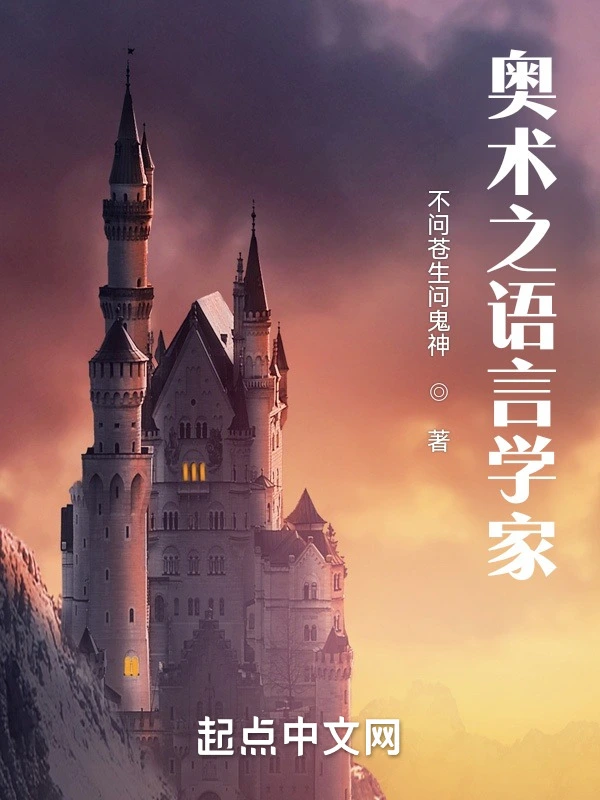
Arcane Linguist
奥术之语言学家
- Status
- Completed
- Length
- 1.9M Words
- Genre
- Eastern Fantasy
- Audience
- Male
- Subgenre
- Otherworld Continent
- Updated
- 2y ago
- Source
- Qidian
Stats
0Monthly votes
17.4kRecommends
39.1kFans
519Chapters
Tags
Synopsis
Reader comments
In booklists 5
Premium Online Literature Collection Pavilion
This is a collection of Nanlu's favorite novels
9Books85Follows2yUpdated
Traveling Through Another World
A book list dedicated to collecting interesting time travel stories
11Books85Follows1yUpdated
Wizard Mage Arcanist Book List
Collect various book lists about wizards, mages, and arcane masters
6Books85Follows2yUpdated
Books Read by a Ten-Year-Old Bookworm
A bookworm who has been a bookworm for ten years may not necessarily have read all the books, but at least he has read more than half of them.
44Books72Follows3yUpdated


Card Reading Method 3.0
It's a great way to organize things!
6Books0Follows2yUpdated
Readers also read
 Eternal Immortal Industry: Starting from Seeing the Entry of Spiritual Beasts
 Panlong, Comes with a Small Universe at the Beginning
 Do You Believe Your Conspiracy Theories but Not Mine?
 Xuanjian: Thousands of Incarnations, Enlightenment Through Time
 Never Walk Alone!
 The Great Aristocrat Who Realized His Fantasy
 Wizards: Start with Potions
 Daming: Have I Become Wanli's Portable Grandfather?
 I Am Drawing a Hot-Blooded Episode in the Zhiyu Episode!
 Wizard: I Have a Scale of Truth
 If I Can't Invite God, I Have No Choice but to Become a God Myself.
 Genius Wizard
 Yanzhe's Path
 Daqizong
 Yulingzhenxian
 Xiangzu
 Daqian Demon Suppressor
 Alchemist of the Witch World
 Become a Great Painter in the Abnormal World
A review containing this novel
Examining online novels from the perspective of mapping social existence into social consciousness, especially fantasy novels represented by novels about cultivating immortals and Western fantasy novels, I believe that its mainstream imagination is to promote the scientism of omnipotence in the world of immortality and magic. The pinnacle of this aspect may be "Arcane Throne". The protagonist appears in an era where arcana has appeared but has not yet been fully developed. The so-called arcana is a kind of magic that applies modern scientific thinking and utilizes modern scientific achievements. The protagonist understands more advanced modern scientific knowledge, so he leads arcane breakthroughs one after another, but the pinnacle of his imagination of military force cannot achieve breakthroughs such as nuclear bombs and black holes. In this sense, the pinnacle of immortality novels corresponding to such Western fantasy may be "Into the Cultivation of Immortality", in which the protagonist appears in an era when the old method has declined and the new method is developing rapidly. The protagonist carries knowledge of modern mathematics and is therefore able to facilitate rapid breakthroughs in new methods. Closely related to scientism is the promotion of industrialization and modernization to the magical world. It has a special name, farming flow. I think the particularly successful ones are "Magical Industrial Empire" and "Release That Witch". A slightly new one is "I Created the Internet Era in the Magical World" which promotes the Chinese-style Internet economy in the magical world. But the difference is that, strangely enough, there are no novels that have left an impression on me that brought industrialization and modernization to the world of immortality. Maybe it's because the world of immortality itself is a highly modernized world, especially its sect system. In the early years, when the sect system had not yet taken shape, there were many novels about cultivating immortals, such as novels about supernatural beings such as "Sou Shen Ji" by Wild Fox Under the Tree, "Buddha Is the Tao", which combs and integrates the great flow of Chinese mythology, and other novels about interstellar travel and immortality, such as "Ethereal Journey" and "Star Transformation", which travel around various planets and worlds at all levels. But over the years, they have gradually been unified into the protagonist being limited to cultivating immortality in a sect in the world of immortality. The world of cultivating immortals is composed of sects, and sects are located in a spiritual land that is different from the mortal city. The sect distinguishes seniority based on cultivation level. Those who practice qi are called uncles who build the foundation. When the cultivation level reaches a breakthrough, the seniority level will naturally increase. This kind of novel about cultivating immortals is only as naked as it depicts urban life in contemporary China. The so-called dichotomy between the world of immortality and the secular world is the dual structure of urban and rural areas. The world of immortality is the city, and the secular world is the countryside. Just as the countryside provides talents to the city, the secular world also provides talents with spiritual roots to the world of immortality. But just like children in cities have better educational resources, disciples from aristocratic families in the world of immortality have better spiritual roots and better cultivation resources. The sect is the company, and cultivation such as Qi Lian Qi Building Fund Dan Yuanying is the company's hierarchy. When the cultivation level breaks through, for example, during the Qi Lian Lian period, you will call yourself uncle in the foundation period, just like after being promoted, your former colleagues can no longer call you brothers and sisters. And what's amazing is that in this world framework, I haven't seen the Tribulation Stage and the Mahayana Stage for a long time. The author uses a lot of pen and ink to describe the protagonists' cultivation between the Qi Training Stage and the Golden Elixir Stage. It seems that it is impossible to imagine the scene of ascending to another world. Isn't that an interesting metaphor? It reflects everyone's pessimism about class solidification. Contemporary Chinese immortality novels and Western fantasy novels are generally inseparable from the core of scientism-industrialization-modernization, so some slightly different ideological cores impressed me deeply. First of all, some novels break away from popular scientific imagination and make deeper use of specific natural science and mathematical knowledge. For example, there was an ancient novel called "Magic Change". The author used physicalization to imagine magic. The author bluntly said in the postscript, "After all, this novel is "Magic Change" and not "Physical Change"." This has made me remember it for more than 20 years. The aforementioned "Into the Cultivation of Immortality" is more about applying mathematical knowledge. Because of it, I still remember that Poincaré is intuitionism and Hilbert is formalism. Therefore, I also know that there are other ways to enter mathematics besides Soviet-style mathematics education. Because of this novel, I read a book that teaches matrices from intuitionism. In addition to these novels that use natural science and mathematics, there are also a small number of fantasy novels that use humanities. For example, "Forty Thousand Years of Cultivation" touches on a lot of discussions about political systems in political philosophy. The core contradictions at the end of each volume are designed around issues in political philosophy. (And Woniu Zhenren is generally a good comrade with a similar position to mine.) The novels mentioned above are all relatively successful. We can find that the knowledge they use is generally knowledge that most Chinese people are interested in. Perhaps in the process of reading these novels, in addition to being happy, everyone also has the pleasure of satisfying their thirst for knowledge, which may have contributed to the success of their novels. There are also some novels that are not so well-known and use relatively niche humanities knowledge that are still fresh in my memory. For example, "The Ming Dynasty and the New Rome and the Infinite Divine Machine", which is still in the process of being serialized, uses a lot of religious knowledge. For example, it clearly quotes and rewrites the stories in Fraser's "The Golden Bough", a representative work of religious anthropology, and establishes its magic system with similar witchcraft and sympathetic witchcraft. In particular, the author discussed from the perspective of the law of similarity the Foundation Establishment Pill, which has gradually been accepted as the core setting since "Ghost Valley and Eight Wildernesses", which impressed me: "Because "similar causes" can lead to "similar results." When the first heavenly being opens the way, the following people can move along the path he opened up as long as they imitate it." Then the conversation changed and he compared morality from the perspective of imitation: "The so-called morality itself is also an imitation of the best year in human history." The Foundation Establishment Pill is discussed from the perspective of imitation: "The Foundation Establishment Pill is an imitation of the miracle of "Foundation Establishment", and the Condensation Pill - the reason why a miracle is a miracle is because it can only be approached, but cannot be reached. So the formula is not important, what is important is whether it is "similar". Because only if it is similar enough, can it arouse the response of the great road, thereby lowering the miracle again." There is also the case of "Arcane Linguist" which was released not long ago and uses linguistic knowledge, especially Saussure's linguistics. It can be called the linguistic version of "Arcane God's Throne". In its setting, the reason why magical words such as dragon language and elven language are magical is that these magic words have meanings related to the signifier and the signified: "Magicization in linguistics is essentially a special resonance phenomenon, just like objects with fixed frequencies. Magic words often have a certain resonance rate. Its origin is closely related to the "signifier" and "signified" of language and words, and the interaction between the two produces "meaning." The arcane world believes that the spell used to cast spells is usually a special language structure. By reciting or writing specific sentences, powerful power will be generated, and this "specific sentence" is also a kind of "meaning" generated by the sustenance of these spirits and thoughts, and is related to the ubiquitous thing between heaven and earth, which is called "mana". A), magical elements (magic) are produced. "I think it is groundbreaking in that it uses linguistics to specifically explain the mechanism by which magic runes may work, that is, "meaning" can resonate with "mana", which is something that no previous novel has. In addition to giving such a metaphysical assumption to the magical world, it further explains the mechanism of spell scrolls: "According to basic linguistic principles, language symbols are arbitrary, and the magic runes written on spell scrolls should be replaceable and replaceable." Here Saussure's principle of arbitrariness is used to explain spell scrolls.
Arcane Linguist
[Keywords] Time travel, reversal, academic dominance, college [Storyline] The original Roland had no choice but to commit suicide because his graduation thesis was plagiarized. Roland from another world traveled through time and roared at this unfair world... Roland, who originally studied linguistics, traveled to the Arcane Empire. Unfortunately, he did not have a golden finger, and his graduation thesis was even plagiarized by his former friends. He was reduced to being ridiculed and ridiculed, but Roland was not willing to accept it, so he incorporated the oracle bones in his memory into the thesis. Roland: It doesn't matter, Oracle will slap everyone in the face.
The introduction and title are very attractive, but the first ten chapters gave me a slap in the face with low-level pretentiousness. There was no research at all. It would not be inappropriate to change the term and post it to the fantasy area.
History is the most embarrassing part of this book
The language part is quite well written, and it is unique among the science and magician Xueba articles But when it comes to the so-called "historical background", there is an ancient level of embarrassment [How can the thousands of years old elves/tens of thousands of years old dragons/hundreds of thousands of years of gods in front of me understand the vastness of China for five thousand years! Every time I see a boast in a foreign world with immortal species, it's as embarrassing as seeing the American History Museum Assuming that the empire's calendar is already five digits, how can Chinese characters form an ancient attack? It is more reasonable to set it to a novel and useful text.
The introduction and content of the old-fashioned white text are high and low, seducing people and filling them with drugs.
There are more than 100 chapters in the abandoned book. The advantages and disadvantages are obvious. You can only read it in the early stage.
Let's talk about the advantages first. The author's characterization and narrative rhythm are very good, so the entire early reading experience is more enjoyable. In this aspect, it is better than at least 80% of the books in the starting point. But the shortcomings are also obvious. The core point of this article is that after time travel, Chinese civilization faces various advantages and dimensionality reduction attacks from other civilizations. This in itself is not a problem. Although the routine is old, it is really easy to use. The problem is that the author is greedy and tries to keep the IQ online throughout the story. In this regard, I can only say that I have thought too much. This standard novice routine does not support you to do this, nor do you think about the circumstances under which the language of one civilization can be better than the language of another civilization in all aspects. Of course, it is only when the civilization itself leads in all aspects in any field. The author sets up a magical civilization that is no less developed than modern times, but each has its own strengths, and then has all the languages of this civilization be crushed by Oracle. This feels extremely awkward to read, because the plot depicts the splendor and magnificence of this magical civilization on one side, and at the same time, it is exciting and belittles it all the time. The handling of this conflict point is too poor. At this point, Dufa abandons the book, hoping that the author will learn from it when he opens a new pit.
This green dragon should die quickly. It's so annoying to watch that I don't even want to spend money to watch it.
The author's writing is in-depth, but the hot topics are not enough. Using oracle bones as a magical language, poems and songs will also have a certain power, similar to Confucianism and Taoism. It takes a certain amount of time to transform the results, but the protagonist seems to know nothing now. It would be better to wait for others to discover and create his own exclusive magic. Novels are just like games, emphasizing the sense of gain, similar to online game novels, about acquiring equipment, skills, hidden professions, special rewards, etc. I feel that the author's works have always had good stories, but they are relatively bland and lack the sense of gain and satisfaction. The feeling of Taneda flow is very good.
The account is sold, but this writing is not as good as some studio routine articles, which are so pretentious that their faces are embarrassing.
The creativity of Xiangzu back then was top notch, but unfortunately the story written by the author is difficult to describe in one sentence.
When I first started watching it, I just wanted to say, the magic world doesn't even have the magic to detect lies. Besides, if you encounter reports of plagiarism in your graduation thesis, whether it's true or false, you should strictly investigate it. Even if you want to eliminate the unintelligent one like the protagonist, you can't let someone with poor character take over! If this continues, the whole system will take jujube pills! Of course, I only read the beginning. Please forgive me if there are any mistakes!
It's still early block fonts. Next, when the text is "deduced" to regular official script, calligraphy and seals can be studied. Seals can refer to spells such as secret seals, while calligraphy can combine the spirit and will of the writer. In addition to magicians, knights and monks can also use text to cast spells (such as using the word "suppression" that is integrated with the will of monks to suppress evil objects, and using the banner with the word "brave" that is integrated with the spirit of chivalry to fight against fear spells, etc.). In this way, on the one hand, you can attract more people to join your own interest groups, and on the other hand, you can take care of old classmates, echoing the previous article. Cursive writing, the method of writing multiple characters in one stroke, seems to be integrated into the spell-casting process of the mage. As long as there is a pre-casting movement, you can recite the incantation while using the staff to trace the cursive writing in the air. It should allow ordinary mage to easily achieve the maximum effect of spells, and allow excellent mage to realize the super magic expertise early. Calligraphy and painting are inseparable. You can link calligraphy and Chinese painting, especially some spells involving the soul. Using a combination of calligraphy and ink painting to make spell scrolls should be very effective; there are also spells to summon magic mounts. Going a step further and transcending the existing writing system, "Throne of the End of the Law" displays three-dimensional runes. The author can also consider this later.
Why do I feel like the protagonist's butt is a little crooked in Reiner's World?
I want to watch C Succubus! Why are you summoning me?
I don't seem to understand why this book on linguistics, which is originally a good book, turns into an inexplicable card battle as I write it. Yu-Gi-Oh or something? What does this have to do with the main plot?
Started like a childish child
Learning a first-level spell actually requires authorization, which shows how strict and exclusive this arcane system is. The hierarchy of the pyramid is clear at a glance, and it seems to have little to do with one's own magic power. It seems that the linguist's words are just adding bricks and tiles to this system, expressing the same spell in different languages, adding more power, reducing some time, etc. He is a person who wants to compile it.
You have the ability to summon the succubus, but you have the ability to fuck!
Post a page of Nordic runes
I hope the author will read more Taoist scriptures and Buddhist scriptures. If the author writes about immortals and heroes, he should not write about the three spiritual roots, but the spiritual roots. In Xianxia, it is written that one spiritual root and three spiritual roots are wrong.
I can only say that the discovery of this book was distorted after participating in the Reiner World War. The Puppet Man + exclaimed at every turn during the whole process, and no substantial enhancement was seen after 200 chapters.
The author, the writing style is okay, the plot structure is also okay, but the writing is too offbeat! ! ! Not mainstream!
I haven't read a few chapters, so I don't know if there are any problems with the subsequent plot development. But there are so many descriptions of Tuqa that I can't stand it anymore, so I just took two pictures to show you
I don't like this green dragon, especially the latest one, so I can only say goodbye
Hahaha, I haven't seen this book for a day, why is it limited to free? 😏 You can get 60 chapters for free 😆
Isn't the author good at fairy tales? He can write the second part of Yuling Zhenxian, and the other one is Golden Finger: The Demon Refining Pot. 🙂
Drive high and go low
It's okay up front, but it's completely useless after the card duel. It's like picking sesame seeds and throwing away watermelon. For example, when you write a history book, you don't simply say that Chinese people like to play mahjong when they have nothing to do. Instead, you write a big book about mahjong that gives him the power to change the war. This is putting the cart before the horse.
This latest chapter has a great title
The content of the author's book is relatively niche, but it is really unique. It is suitable for old bookworms and friends who read slow books. Like! Praise! ! !
I have finished reading the first free chapter and a little bit of the later ones. I can only say that it is quite uncomfortable to read. The book is for readers. The author has added too many private goods in it, which affects the reading experience. The author's books except for the Daqizong and Yanzhe Daotu (although it is said that it is difficult to read in the later period, but I still finished it) are not bad. I really can't stand Shangxiangzu.