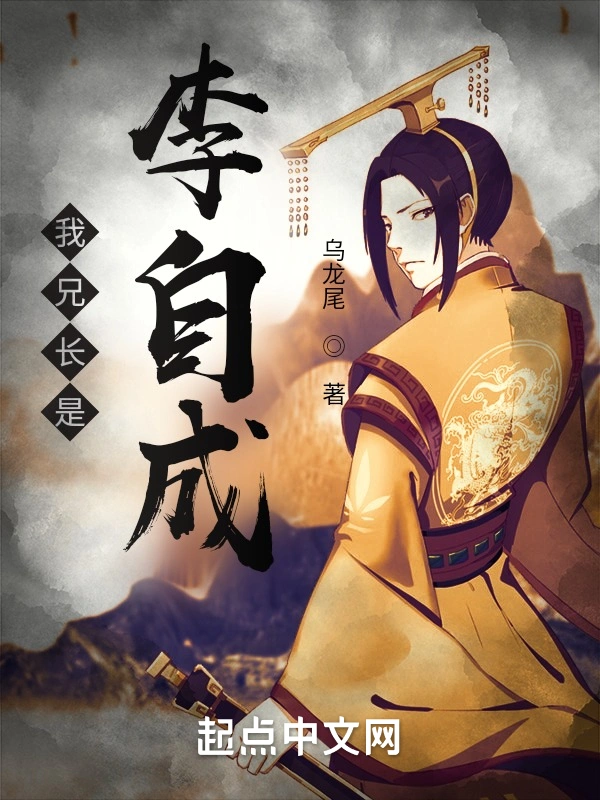
In the Disaster Year of the Late Ming Dynasty, I Had a Trading Space for Traditional Chinese Medicine
明末灾年,我有一个中药交易空间
- Status
- Completed
- Length
- 819k Words
- Genre
- Historical
- Audience
- Male
- Subgenre
- Alternate History
- Updated
- 3y ago
- Source
- Qidian
Stats
0Monthly votes
4kRecommends
9kFans
342Chapters
Tags
Synopsis
Reader comments
Readers also read
 Please Call Me Your Majesty the Tsar
 In the Red Mansion: Escort Daiyu to Beijing at the Beginning
 1914 Begins with the Rejection of the Schlieffen Plan
 Talker in the Song Dynasty
 Never Walk Alone!
 Little Landlord of Ming Dynasty: I Am Really the Descendant of the Dragon!
 Traveling Through the Ming Dynasty: I Can Receive Modern Supplies
 Daming: Have I Become Wanli's Portable Grandfather?
 I Am Drawing a Hot-Blooded Episode in the Zhiyu Episode!
 More Than People? I Occupy the United States with Unlimited Dead Soldiers
 Republic of China 1937: I Have an Anti-Japanese Aid System
 I'm a Gunner
In the thirty-fourth year of Wanli in the Ming Dynasty, Li Zicheng was born into a peasant family in Mizhi County, a border area in Shaanxi Province near the Great Wall. It is desolate, sparsely populated, with undulating wilderness and often yellow sand blocking out the sun. When Li Zicheng's father and grandfather were born, their family was relatively well off. His father, Li Shouzhong, was listed as a horse breeder by the Ming government. My mother is from Ansai County. Li Zicheng was "taught to read and write when he was six years old. He was smarter than ordinary people, but his sexual desire was uncontrollable." When he was a teenager, he often traveled to frontier areas to go back to her husband's family to herd horses. Many people from the border areas practiced martial arts. Li Zicheng also loved martial arts since he was a child. When he was a little older, he went to Yan'an Prefecture teacher Luo Junyan to learn stabbing, and he "got quite good". Li Shouzhong later invited Luo Junyan to his home and asked Li Zicheng, his grandson Li Guo and Liu from Tongli to practice martial arts together. Under the oppression of the government, gentry and landlords, and coupled with famine, the Li family was gradually declining. After the death of his parents, Li Zicheng quickly exhausted all his family property. Due to the difficulty of life, Li Zicheng worked as a bartender, learned blacksmithing, plowed fields, worked as a farmhand, and engaged in various kinds of labor. At the age of twenty-one (six years from tomorrow), Li Zicheng was recruited to work as a groom in Yinchuan Station. He "learned riding and shooting with a bow and arrow, and sometimes sent mails." He began to be famous for his good martial arts and bravery. When Li Zicheng was working as a groom, the peasant uprising in Shaanxi had already broken out. But this had no impact on Li Zicheng. Until the second year of Chongzhen, Li Zicheng was still living well in Yinchuanyi as a formal employee of the state. If it were not for the memorial to cut postal services in the second year of Chongzhen, Li Zicheng would probably have worked in the "postal" industry of the Ming Dynasty for the rest of his life. In the second year of Chongzhen's reign, the Criminal Division of the Ming Dynasty asked Liu Mao to supply the Shaanxi frontier areas with two years' salary shortage, and sent 100,000 internal coins to relieve Yansui, but Chongzhen refused. So Liu Mao also asked to abolish the Shaanxi post station and use the post fee to support the military. He could get hundreds of thousands every year. Chongzhen readily agreed and renamed Liu Mao as the Military Department to Shizhong to be in charge of post delivery. Chongzhen said: "If we can save a certain amount, we will reduce the quota and distribute labor and food to improve the people's strength." As a result, "all the people who depended on food and shelter lost their place." This year Li Zicheng was officially laid off. For Li Zicheng, his luck was extremely unlucky. Because he killed two stage horses while riding at the inn, he must be compensated for the damage to public property. Li Zicheng himself had no financial strength to compensate, so he had to borrow money from the wealthy gentry and landlords named Ai in Tongli. The wealthy gentry landowner surnamed Ai once served as the Tongzhi of a certain mansion in the Ming Dynasty, and was known as Ai Tongzhi or Ai Lao Juren. Later, Li Zicheng had no money to repay his debts, so he was caught and whipped by Ai Tongzhi. Ai Tongzhi also ordered Yan Zibin, the magistrate of Mizhi County, to put Li Zicheng in shackles and expose him to the scorching sun, almost killing him. Li Zicheng escaped this disaster because of the injustice of the postmen and their struggle against persecution. Li Zicheng and his nephew Li Guo fled to Gansu together and joined the army of Governor Mei Zhihuan as soldiers. He was subordinate to the commander-in-chief Yang Zhaoji, and was soon promoted to commander-in-chief and became a junior officer. Some records say that it was at this time that Li Zicheng met Gao Yingxiang. In November of the first year of Chongzhen, Gao Yingxiang, king of Chuang, gathered hungry people in Ansai to revolt. Gao Yingxiang was once a bandit, leading more than a hundred people in eastern Gansu. When Li Zicheng was serving as a soldier under Yang Zhaoji, the commander-in-chief of Gansu Province, he asked himself to capture thieves. He and Gao Yingxiang "battled for a long time, and their skills and bravery made them aware of the enemy... And they became brothers." Although Li Zicheng was unemployed at that time, he did well by joining the army with his martial arts skills. But the Ming army in Shaanxi was also short of money and food. In late October of the second year of Chongzhen, Huang Taiji led the Jin army into the fortress. In early November, Beijing was under martial law, and the Ming court summoned the "Qinwang" soldiers from all towns. Li Zicheng followed the generals to the east of the kingdom and passed through Jin County. The soldiers mutinied because they had no pay. Li Zicheng took the lead in binding the county magistrate to demand pay. He was angry and killed the kingdom and raised his troops to revolt. This record comes from Volume 1 of Wu Weiye's "Sui Kou Chronicles". From the experience of Li Zicheng, we can see a real situation of the Shaanxi Uprising in the late Ming Dynasty. The collapse of Shaanxi was not just the impact of natural disasters but the collapse of the entire society. Most of the leaders of the peasant uprisings in the late Ming Dynasty were frontier soldiers of the Ming army. For example, in July of the first year of Chongzhen, Wang Jiayin, a deserter from the Dingbian camp, gathered many hungry people to revolt in Fugu, broke into the houses of wealthy landlords, and distributed the grain they had stored to the hungry farmers. Wang Zuogao, a native of Qingjian, was also a deserter from Yansui. He gathered thousands of cavalrymen to rebel against the Ming Dynasty in Long'erzui, Yichuan. They burned the houses of bureaucrats and landlords everywhere. Many able-bodied farmers joined the rebel army. In December of this year, hundreds of hungry soldiers in Guyuan rioted, robbed the county treasury and fled. When Governor Wu Zhiwang chose "lax restraints" in impeaching the general, he also believed that "the hunger and cold were extremely severe, and there was nothing to do with the law." For example, according to the records of "Chronicles", Zhang Xianzhong once participated in aiding the Liao Dynasty, but later broke up and returned to his hometown to participate in the uprising. From all of this, we can see that the main force of the rebels in the late Ming Dynasty was by no means ordinary farmers, but border soldiers who were skilled in battle formations and fighting.
This book is still readable, but the author is too casual in assigning women to the pig's feet! Even if it is a second-hand piece of writing that has been trashed by others, it will be more acceptable to write down than this freshly trashed piece! If you want to survive being raped just now, save her with a pig's trotter and immediately get under the covers with the pig's trotter! Later, I also specially wrote more chapters about pig's feet and several women's jealousy and sexual intercourse!
I would like to give you a suggestion. In the future, the protagonist may not necessarily have all historical celebrities as his subordinates. After all, when they rebelled in ancient times, they were all members of their own family and local people. When choosing leaders, they would all choose leaders with whom they have a good relationship. When they succeed later, if these commanders are not dead, they will all be high-level. The protagonist can choose those worthy of training among the people who rebelled against him.
Dragon God? ? ? ? It is better to say that Shen Nong, who just collects medicinal materials, has a better reputation and will not be exploited by interested people.
Shennong is here, come and see my review. There are several points in this book that I think are very disappointing to readers. If the author can see my comments, he hopes to change them. 1. In the first few chapters, the author has been connoting himself in the text. Maybe you, the author, find it interesting, but I came to read the novel to see the content, not to see you connoting yourself. I think this behavior is very dramatic. 2. Including the book you read before traveling through time, and then knowing what will happen next, which made me very uncomfortable. 3. Originally I came to watch this system, but after reading a few chapters, this thing has become purely poisonous. Thank you for your patronage. You don't have to do this to suppress the protagonist, right? It's better to just clearly mark the price. The lottery is really disgusting! 4. In order to hide the identity fabricated by the system, you can fabricate it first, but what you wrote is too childish. Ask yourself, the author is writing it for fun. The protagonist in the article does not believe it himself. Who else would believe it? To lie to others, you must first lie to yourself! [It is recommended to refer to the book "The Anti-Routine of the Fire"] 5. There is too little feedback from the supporting characters. It was originally a very good point, but it ended up being picked up high and then put down gently. What other points are there? That's it for now. If the author changes it, this history book won't say it was a big hit, but it will still be easy to earn enough money to go to the club.
The plot is forced together, and I can't stand it even if I have enough poison resistance. . .
They already have golden fingers, and they let Li Zicheng enter the trouble room, and follow the historical trajectory, which is nonsense.
Good guy! ! Are they all meat buns? There is no plan at all for the money to exchange the medicinal materials. No matter how much the medicinal materials are exchanged for, they will all be bought with white flour and meat buns, even if they buy some mixed noodles? There is no need for all men, women and children to eat meat buns, right?
The system settings are too poor, and then you insist on letting people follow history. What is the use of your system besides food? And how rich can you be if you eat steamed buns and meat buns all the time? Although the money is picked up, don't you need to save more for the lottery? Nothing to save your life
The author writes well, but it is best not to frequently write the name of the book in the book, which will make readers feel disconnected.
As for the question about Zhang Xianzhong, the author seems to regard Zhang Xianzhong as the great demon of Khorne, which is essentially a stereotype.
The front part looks okay, but it turns out I copied it from A Little Soldier of the Border Army in the Late Ming Dynasty, and I wrote the back part myself. It's so bad that I can't read it.
The entry point is very innovative. Come on, I'm optimistic about you.
The battalion system of the late Ming Dynasty was a military reform that was carried out due to the inability to adapt to high-intensity wars due to stomach problems. The later Shunjun Five Battalion Field Army and the Green Flag Soldiers of the Qing Dynasty can be said to be reforms based on this idea. Many novels of the late Ming Dynasty regard the servants of the Ming army as the main force, but as long as you understand the military system of the late Ming Dynasty, you will know that the governor Biaoying and the general Biaoying are the main force of the Mingmu field army. In the late Ming Dynasty, the power of the general army was expanded, from 3,000 to 4,000 at the beginning, and the number was expanded to nearly 10,000. This was a military reform carried out by the Ming Dynasty in response to large-scale military wars. The main force ranged from the armed servants in the Wanli period to the camp system in the Chongzhen period of Tianqi. The standard camp under civilian supervision was the core armed force to control the generals. Except for the Governor's Camp. The ranger battalions, reinforcement battalions, and regular barracks (standard battalions) under the general corps are all considered regular field tactical corps. They have independent supplies and semi-independent personnel (the general corps has the right to make suggestions), and they are all under the jurisdiction of the Ministry of War. Civil servants at the four levels of governor, manager, governor, and governor have their own direct battalion (not included in the general military). The governor is organized as a regular barracks (the deputy general of the standard battalion is set up), the governor-general is organized as a reinforcement battalion (the deputy general of the standard battalion is set up), and the governor is organized as a guerrilla battalion (the standard battalion is set up as a guerrilla). If the establishment is reasonable in theory, the ranger battalion is equivalent to the regiment (2,000-2,500 people), the reinforcement battalion is equivalent to the reinforced regiment (3,000-4,000 people), and the regular barracks is equivalent to the brigade (4,000-5,000 people). A normal general-level unit has a normal establishment of at least 10,000 people, such as three tours, two staff members, and one general. The number of large military leaders like Zuo Liangyu will be doubled, which is equivalent to a division, a small army, or an advanced tactical corps. In wartime, it can be strengthened in units of at least 800-1,000 people per thousand (divisional level). During wartime, general-level military units set up grain stations to be responsible for logistics and supply, which were shouldered by officials jointly dispatched by the Ministry of Household Affairs and the governor's yamen. The eunuchs directly appointed by the emperor were responsible for the military's wartime discipline and merit-recording. During combat, the general-level soldiers go out alone and are supervised by the first-level civil servants sent by the superiors. The campaign operations of the 2-3 general-level units are supervised and directed by the governor (with the directly affiliated standard battalion). The 4-5 general-level soldiers engage in campaign operations with the governor-general's strategic supervision and command (with the directly affiliated standard battalion). Larger-scale combat strategic campaign operations are coordinated by the supervisor (with the directly affiliated standard battalion).
Another problem is that people rebel only when they can no longer survive. So why do they still rebel with you when they have food and drink?
The person who failed the most in the rebellion was Li Zicheng
If you want to take the religious route, you can refer to Hong Xiuquan. Although A Hong has been completely blackmailed by marketing accounts, he is still good at religious theology. At least missionaries who come to China cannot argue with him.
Li Zicheng, a civilian bureaucrat of the Dashun regime, Niu Jinxing - Juren, Yang Yongyu - Doctor of Qintianjian Xiao Yingkun - former Chief Envoy of Guangxi in the Ming Dynasty, Deng Yanzhong - Juren, Wang Jiazhu - Jinshi, magistrate of Qingyang Gu Junen - Chusheng, Yu Shangyou - Jinshi, official to censor Yao Xiyin - Juren, An Xingmin - Juren Chen Kexin - Juren, Song Qijiao - Jinshi Lu Zhiqi - Jinshi, official to the Chief Envoy of Shaanxi Province in the Ming Dynasty Yang Wangxiu - Juren, official to Tongguan, Shaanxi Province Yang Jianlie - Jinshi, Jiang Xueyi - Jinshi Gong Yan - Jinshi (the one who announced the reform of the eight-legged essay as a policy in the Dashun regime), Zhang Guoshen - Jinshi Zhang Linran - Jinshi (the one who wrote the edict in the first year of Yongchang in Dashun) Wang Zayao - Jinshi, Wu Su - Jinshi Lu Bizhou - the minister of the original Ming Dynasty Henan Post Office Han Wenquan - Jinshi, Lei Yulin - Juren Chen Xin - Jinshi, Jin Youzhang - Gongsheng Liu Jun - Jinshi, Wang Huangji - Juren Jin Ruli - Jinshi, Hong Shengyi - Shengyuan Liu Maoxian—Sheng Yuan, Chu Rong—Ju Ren Cheng Qi—Ju Ren, Jia Shijun—Sheng Yuan Xu Chengyin—Sheng Yuan, Sun Cheng—Sheng Yuan Shang Guojun—Sheng Yuan, Fan Jun—Sheng Yuan Guo Jingbang—Sheng Yuan, Deng Yilian—Ju Ren Niu Wancai—Ju Ren, Xu Jida—Sheng Yuan Xu Shengzu—Sheng Yuan, Wu Tengfang—Ju Ren Song Yuanpu—Sheng Yuan, Liu Zhongtai—Sheng Yuan Liu Zuoyuan - Shengyuan, Ma Shicong - Shengyuan Gao Dangui - Juren, Song Bingkui - the former magistrate of Dongchang in the Ming Dynasty Yan Yangcui - Shengyuan, Cheng Wenhuan - Shengyuan Wang Yuqi - Jinshi, Gong Keyi - Jinshi Xiong Shiyi - Jinshi, Zhao Yusen - Jinshi Wang Ming - Shengyuan, Wu Rushu - Shujishi Zhang Qi - Jinshi, Wu Da - Handan magistrate Zhang Zhiqi - Hanlin Academy review, Shi Min - Jinshi Qin Yan - Jinshi, Wu Erxun - Shujishi
This system is not good. In fact, your writing is quite good, but in the end, when you think about all the credit you owe to the system, it seems that without the system, you are nothing.
Another thing to note is that Li Zicheng's nicknames are Chuang Jiang and Chuang Wang. This was probably an ordinary person in Henan who thought this name was unpleasant and gave him a name casually. Its core generals and civilian advisers should call him Chuangjiang or Generalissimo. Moreover, Li Zicheng has nothing to do with Gao Yingyang. At most, they have worked together and are not his subordinates. Li Zicheng's boss was Zhang Mengchun, a former marshal of the peasant army. He had served as the captain of the eighth team in the non-stick army.
The Dashun government also established a military system. The Dashun Army is divided into five major field camps: center, left, right, front and rear, which are controlled by generals at all levels. Below General Quan, there are General Zhi, General Guoyi, General Weiwei, Captain, Commander-in-Chief, Headquarters Commander, Headquarters Commander, etc. Twenty-nine self-made trusted generals were divided into five camps. During the battle, depending on the direction of the central military general, the generals will be organized into four camps: front, rear, left and right, and each will lead his troops to follow. There are five battalions of soldiers, including 160,000 elite troops on horseback and infantry. Each elite soldier is accompanied by cooks, grooms, and equipment. In addition to the five battalions of combat troops, the Dashun Army also has guards who defend the local areas. The guards are divided into separate areas, and a total of thirteen additional guard generals are added. Also in Xiangyang, Nanyang, Dengzhou and other places, the fields of the royal family and bureaucratic gentry that had been deprived of their status were cultivated by the local peasant army and were cultivated by the army. When the Dashun regime was established, a fight broke out within the peasant army. Li Zicheng killed He Yilong at a banquet, and then led his cavalry into the Luo Rucai camp and killed him in the tent. Li Zicheng continued to expand the central power established in Xiangyang in Xi'an. The official positions of cabinet bachelor, Hongwenguan (i. E. Hanlin Academy), Liu government admonishment (i. E. Liukegeishizhong), and Zhizhishi (i. E. Censor) were added, but the positions were vacant. The six governments added one minister each and two ministers. For the time being, Zuo Shilang, who also held the post of Shangshu, marched with the army. Military positions are supplemented by titles, divided into five categories: Duke, Marquis, Bo, Zi, and Male. General Quan and General Zhi were granted the title of marquis, and General Guoyi and the following were granted the title of Bo, Zi, Nan, etc. Civil servants must abandon sedan chairs and ride horses. Local political power was changed from province to state, and the world was divided into twelve states. It will not be implemented until the country is unified. The county officials in Fuzhou are still the same as those in Xiangyang. After establishing the capital in Xiangyang, he started to open courses to obtain scholars. In Xi'an, stereotyped writing was abolished and the examination was changed to prose. The content tested focuses on policy theory. For the first time when a subject was opened in Xi'an, Zhang Wenxi, a Fufeng examiner, won the first place and drafted a memorandum to denounce Chou Zhen's mistakes. Li Zicheng once again expanded the central power in Beijing. The fictitious official positions in Xiangyang and Xi'an will be filled with real officials. The cabinet of the Ming Dynasty was renamed Tianyou Hall and a bachelor's degree was established. The Hanlin Academy was renamed the Hongwen Academy, and the Literary and Selection Department of the Li Government was upgraded to the Wenyu Academy. The establishment of the six governments is still the same as when Xi'an was established. Only the minister is supplemented by actual officials, and Zuo Shilang is no longer concurrently appointed. The local government changed the governor into a military envoy, taking charge of the military and political affairs of the province. The governor was abolished and no other one was established. Instead, the patrol officer was renamed as the defense envoy, and the chief secretary was appointed as the general secretary, who was in charge of saving money and food. The government, state, and county officials are still as they were during the establishment of Xiangyang and Xi'an. In terms of military positions, the Commander-in-Chief of the Fifth Army was changed to the Headquarters of the Fifth Army, and there were still left and right governors. The commander-in-chief will be corrected to be the chief commander, and the deputy will be the deputy commander-in-chief. It was also changed from Jinyiwei to Longyiwei. It was also stipulated that there should not be more than a thousand eunuchs in the palace. At the same time, subjects were officially opened to obtain bachelor's degrees. First, the examination was held in Beijing, and a total of fifty people were admitted and sent to the government for selection. He also examined the talents of Shuntian Prefecture (i. E. Beijing) and selected 12 of them and sent them to the Imperial College for training. He ordered people from Hebei and Shanxi to come to Beijing to listen to the election, and notified all provinces, prefectures and counties that they would hold rural examinations during the Mid-Autumn Festival this year. "The self-formed and restructured system was mostly based on the Ming Dynasty. Although the names of various officials such as admonishing officials, Hongwenguan bachelors, Jiedu envoys, defense envoys, state pastors, county magistrates, etc. Were imitated in the Tang Dynasty, the names were only changed, and the reality was not changed." (Li Wenzhi's "Civil Revolution in the Late Ming Dynasty")
One thing to talk about is the protagonist's ability. It's no problem to be a Christian or the Son of God. Not ready to cosplay?
Regarding the issue of Li Zicheng's origin, "Fu Shan Quanshu·Volume 19·Biography of the Ming Dynasty Li Yushi": Liu returned from the pseudo-military government and passed on his words: "Since the Yushi was detained, the pseudo-official Liu Su said that the Yushi surrendered, but the Yushi was unyielding. The censors were from the same clan, and the censors distinguished their clans..." If they are really the descendants of Li Jiqian, there is no need to find Li Zhensheng of the Mizhi Erjia Li family to marry.
Historically, Li Zicheng's strategy for conquering the world was decided from Xiangyang. Li Zicheng summoned his advisers to discuss the plan to conquer the world. Niu Jinxing please take Hebei first and go straight to the capital; Yang Yongyu plans to go down to Jinling along the river and cut off the luck, and the Yan capital will be trapped. When the debate was going on, Gu Junen said: "None of them are the best strategy. Jinling is in the lower reaches. Although it helps with big things, its strategy fails slowly. If we go straight to the capital, if we are defeated and we have nowhere to retreat, our strategy will fail urgently. It is better to decide on Guanzhong first and be the Yuan Dynasty." Commander (referring to Li Zicheng), the state of Sangzi, the capital of Qin, is the best place to build a country. Then, he will use his troops to capture Shanxi, and then move toward the capital where there are areas to attack and retreats to defend." If you become good by yourself, your will will be resolved. Therefore, from this point of view, Sun Chuanting's regiment may be blocking Li Zicheng's way. Moreover, Shaanxi was in ruins at that time. In addition to having a large amount of Ming Dynasty military resources, the local money and food were really not suitable for fighting for hegemony. Although the land of Henan is convenient for Li Zicheng to use troops, it is also easy to attack and difficult to defend. With Sun Chuanting Corps as a threat, it is unlikely that Li Zicheng would develop elsewhere before eliminating Sun Chuanting.
The establishment of the Fifth Battalion of Dashun is generally based on the one built by Li Zicheng in Xiangyang in the 15th year of Chongzhen. The basic personnel establishment should be as follows: Zhongying Commander Zhongquan General Quan Liu Zongmin, Tian Jianxiu Commander He Jin Commander Zhongquan Former General Guoyi Ren Jirong General Guoyi Wu Ruyi Zheng Weiwei General Zhang Nai Deputy Weiwei General Dang Shousu Zuo Weiwu General Xin Sizong Right Weiwei General Li You Xie Yinglong Yang Yanchang Luo Daien Zhao Yingyuan Zuo Ying System General Liu Fangliang Deputy System General Liu Xiyao General Zuo Guoyi Ma Shiyao General Right Weiwu Liu Rukui Ma Shitai Zhang Hong Wang Jincai Liu Shijun Hao Yaoqi Youying General General Yuan Zongdi General Zuo Guoyi Bai Yuhe General You Guoyi Liu Tichun Yuan Zongdao He Dengyun Ma Yunxiang Li Furong Ta Tianbao Front camp Control general Gu Kecheng General Zuo Guoyi Xie Junyou General You Guoyi Tian Hu Back camp Control general Li Guo General Zuo Guoyi Zhang Neng General You Guoyi Ma Chongxi Li Laiheng Helan Lu Yingbiao Gao Yigong Li Shiwei Wu Pingxiao
Let me briefly ask: Is the ultimate goal of this book is to proclaim feudalism as emperor? Is there such a rapid improvement in social productivity?