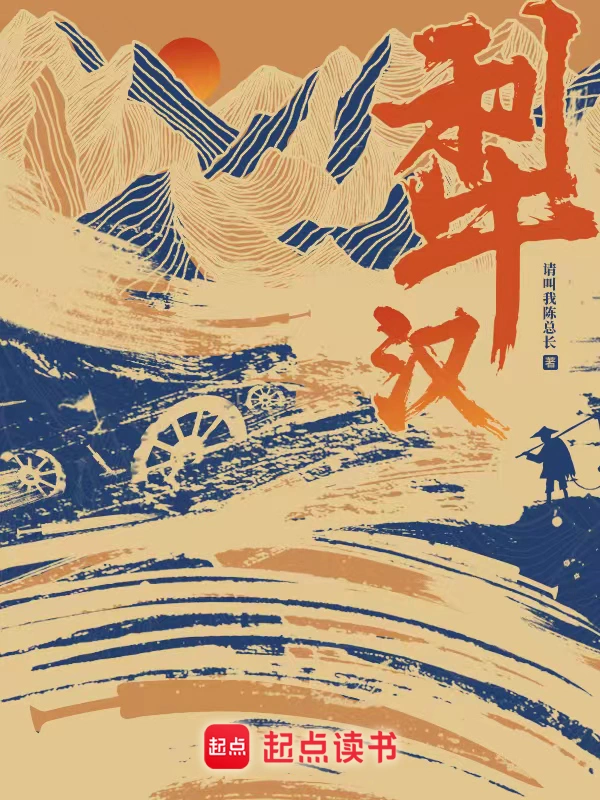
Li Han
犁汉
- Status
- Completed
- Length
- 3.6M Words
- Genre
- Historical
- Audience
- Male
- Subgenre
- Qin-Han & Three Kingdoms
- Updated
- 1y ago
- Source
- Qidian
Stats
Tags
Synopsis
Reader comments
In booklists 11
Collection of Old Bookworms, Updated from Time to Time
I have been writing online novels for more than ten years, and the earliest one was "Kunlun" that I read in martial arts magazines. This book only recommends various types of novels, and there will be short reviews.
Recommended by a Fifteen-Year Old Bookworm
Can't go wrong with the recommendation
Recommend Some Good Books That I Have Read
Basically historical
Sunshine Book List
Book friends can also introduce their favorite books to me and earn income.
Books Read
Recommend some books you have read
A Book List That Focuses on Thinking and Logic
The single owner's book list mainly recommends IQ Online's imaginative articles, with less interesting articles, and he guarantees that all the book list owners have read them. In addition, some of the articles are quite good, such as Lao Dao's The World Is Dangerous, Riding in Another World, and Half Frog's From 1935 to 2020, which are highly recommended.
Good Historical Books (Since There Are Few Historical Books and Even Fewer Good Books, There Are Books About Eunuchs)
There are excellent books about time travel and history. Since you all have a tendency to like fantasy, I will add some novels that combine fantasy and history here. But I still focus on history.
A Completely Subjective Personal Book List of a Ten-Year-Old Bookworm - History
His fairy grass, my poison is common knowledge in the novel world. I will briefly outline some of my personal favorites and surprises. There is no serious point of "throw it away!", But it generally follows the principle that the more cool points, the fewer bad points, and the higher the evaluation. Summary of preferences: 1. The story has a clear main line, or enough intense conflicts to attract readers to read. 2. The emotional line is well written and has a strong sense of empathy. 3. The mal
I Only Recommend Books I Have Read and Liked
I don't recommend books that I can't stand.
Personal Preference
Add by chance.
A Book for Burning the Midnight Oil! Boutique
A book that will make you want to put down and stay up late at night! High quality products
Readers also read
 Please Call Me Your Majesty the Tsar
 In the Red Mansion: Escort Daiyu to Beijing at the Beginning
 Talker in the Song Dynasty
 1914 Begins with the Rejection of the Schlieffen Plan
 Never Walk Alone!
 Long Wanshengshi
 Taipingji
 Daming: Have I Become Wanli's Portable Grandfather?
 I Am Drawing a Hot-Blooded Episode in the Zhiyu Episode!
 Gou Qin
 Da Liu Bandits
 The Age of Huangtian
 Entrepreneurship in the Late Tang Dynasty
Abandoned the trap and came back to abandon the trap again. Let's talk about your thoughts.
I was disgusted by this betrayal of brotherhood and ran away. Then in the past two days, because of the recommendation of Jin Mo Long Sword, I ran back and picked it up. Because it had been too long and I had forgotten the details. I thought it looked good at first, but then I kept thinking about why I slipped away in the first place.,:1,,,,,,,,,, Of course, the war can continue, but in fact there is also a break. You can write about daily life, write about political reform, system innovation and talent cultivation, and write whatever you want to advance the plot. Of course, it must be a war in the end. A war ends a plot. Is this a novel? The author is so kind, he cut it right from the beginning and left it to play the whole war. 2. In fact, the first question is not the most critical question. The most critical issue is that the author will suddenly give you a defense. At first, the brain was quite normal, but suddenly it became abnormal. Originally, the Taishan Army was trying to develop well, but suddenly someone betrayed him, the protagonist suddenly became emotional, and suddenly the literary youth wanted to kill him alone. Please understand, you are the leader of a military and political group, and the power of an emperor lies in gathering the crowd. What are you trying to illustrate with this plot? This kind of inexplicable plot that suddenly appears is, in my opinion, connected to the first problem, which is that the author cannot write plots, so when he wants to write, he can only write this kind of reply. 3. There is no main line. I guess the author originally wanted to follow the historical process like many Three Kingdoms novels, but accidentally broke down the writing, so he started fighting all the way. As long as he fought, he would win. I don't know how to win. It is said that the protagonist is invincible. He can boost the morale of a powerful military and political group with a few words, so that the army can keep fighting and getting stronger. If you understand, the readers are tired after reading it. The people in it have to want to die, and you don't let people rest. That's it, you've been blinding me for a few days, Mike is a rip-off! Why did you give him so many monthly votes for nothing? You tricked me into watching this.
About Yang Qiu. Historically, this king was a cruel official and wanted to eradicate the eunuchs. But it is strange, why did he want to kill Duan Xi, who was a powerful man in the army at that time? History has no record. The author came up with an idea based on Yang Qiu's character: Because he must retaliate, an overtaking before entering the palace caused this political bloody battle. Originally, Yang Qiu planned to enter the palace to express his gratitude, but because of Duan Xi's insult to him, he ignored the plan and angrily decided to falsely accuse Duan Xi in order to vent his hatred. This is also the influence of the strong customs of the Han Dynasty. Also, how did Duan Xi die? History records that after the death of Wang and his son, Xi also committed suicide. Suicide? Is this the end of a heroic warrior from Liangzhou? Maybe history means he committed suicide. But how does the author creatively depict this person? First of all, as soon as Duan appears, the author describes a unique means of travel, a chariot carried by twenty people. Historically, does Duan have this? In fact, no, because it was specially made for Shi Hu's fat body during the Northern and Southern Dynasties. The reason why the author added this paragraph is actually because of Duan's character, who is as straight as a stone tiger and cruel. Also, he hid troops in the palace and insulted Yang Qiu in the imperial edict. The author was all expressing the Liangzhou warriors' disdain for the entire central officials. Not only him, but also Dong Zhuo behind him, it can even be said that almost all Liangzhou warriors had this trait. Why? Because they had developed from the war into the most violent group at that time during the three conquests of the Qiang, and this group was abandoned by the central government several times. Everything they have now is earned by the children of Liangzhou themselves in the war. Therefore, they looked down upon those Kanto scholars who wanted to abandon them. So when the author writes about Yang Qiu, he is not writing about Yang Qiu alone, but about the last group of scholar-bureaucrats with big ambitions. They still try to use methods within the system and rules to eradicate the eunuch group. After the deaths of Yang Qiu, Chen Qiu and others, the scholar-bureaucrats of the Han Dynasty no longer considered using this route to resolve disputes. Later, Yuan Shao invited foreign soldiers to Beijing because of Yang Qiu's failure. Then the author writes a paragraph, which is also very clever. From the beginning, the emperor didn't want him to die, and then Yang Qiu wanted to force him to commit suicide, but how could a martial artist commit suicide, so he broke out of the prison, and in the end he was captured by the judge and committed suicide. The whole story is designed with twists and turns, and finally a tail is given, that is, why the emperor will kill Yang Qiu a few months later, explaining the motivation. Finally, I especially appreciate the author's careful exploration of a character and his matching. Historically, Shen Pei never appeared in this story. Through discovery, from the time he was born of Chen Qiu to the second-ball league, this person had to be creatively added. In the future, Shen Pei, as Yuan Shao's important adviser, opposed the establishment of the emperor. Wasn't it because of his experience with the establishment that he was completely disappointed with the Han Dynasty? Finally, what I want to say is that when reading these chapters, I always thought that they were not written by the author, but that history was just like this, just telling us under the guise of the author's pen. What do you think?
This is a poorly written historical novel about the Three Kingdoms. This is the first time in recent years that I have read it from beginning to end in one go! I must use fairy grass. I hope the author will not be a eunuch and work hard to write it well. Monthly vote has been cast
After reading dozens of free chapters, Quan should explore the way for readers. I am not commenting on the quality of the book, but I am just pointing out a few points that some readers may be more concerned about. No spoilers. 1. Half written and half white. Some of the dialogues of some characters in the book have a strong sense of classical Chinese, with many rare words. Of course, the dialogues also have a strong colloquial flavor, which may be difficult for readers who are used to written language to understand. 2. Golden finger. The protagonist's golden finger does not come from the foresight of modern people, nor is it a skill in a certain field, but a "plug-in" provided by the author; in the first few chapters, some readers asked whether this was a systematic article, and the author replied that it was not a system. 3. Group portrait. The author's writing is rather out-of-the-box, and he likes to write about supporting characters at random. The perspective often switches between multiple parties, and he puts a lot of emphasis on non-protagonist forces. The first few dozen chapters look a bit like a group portrait, but some readers think that the detailed plot is inappropriate. 4. Non-philatelic destination. So far, we haven't seen a plot in which the protagonist recruits future famous ministers and generals as his subordinates. The protagonist's subordinates are all original characters, and there is no scene where historical figures bow to them; I personally feel that this is not the author's ambition. 5. There is a knife. The author wrote some flesh-and-blood supporting characters, but they ended up dead. Although it reflects the cruelty and reality of the last years of the feudal dynasty, some readers don't like the author writing the supporting characters to death. This is a matter of opinion. 6. This chapter says. This chapter is sparse, and there are no interesting comments. I have basically summarized the complaints from readers to the previous few items, so there is no need to click on it. After reading it, you will only be left speechless by some ignorant comments. Having said so much, in fact, the first dozens of chapters do not have the kind of poisonous points that are enough to dissuade most readers. The aspects given above are only provided to some readers in need. After all, everyone has their own preferences. The above is not a modification suggestion for the author. On the contrary, the author's plot logic is generally smooth, the characters' IQs are basically online, and the historical research is quite informative. I hope the author will perform stably in the future. After reading the latest chapter, I will decide whether to follow up the review depending on the situation. If other readers or authors have objections to the above content, they can reply to me and communicate rationally and discuss it together.
After seeing Chapter 134, it's still hard to accept it and I'm not happy about it. It's right to foreshadow the plot, and it's right to want to sensationalize, but I just feel very uncomfortable. I just think this is a whitewash. Do you have the guts to be corrupt, have the guts to run out to eat, drink and have fun, and finally help the protagonist block a knife to clear your name? Zhang Gou leaked so much information and killed so many people, but the protagonist actually thinks he didn't betray? So the protagonist feels that leaking information about friendly forces is not considered betrayal? Do you think it is not a betrayal that those who died were not our intelligence officers? If the slaves who provide information are killed by someone other than one of our own, does that count as betrayal? The protagonist gave me a really good feeling at the beginning, and I really liked this different Three Kingdoms story. I tolerated the system and the flaws in the technology, but up to this point I only felt that the protagonist was really incapable of implementing his ideas. Even if he went to attack Dongpingling, I didn't think it was unreasonable. It's only natural for people to be angry and revolt. But when someone betrays his ideals, he actually chooses to forgive him. This really subverts the purpose of the book, so much so that I feel that every next sentence he says is a show by the emperor. It's too uncomfortable, I wrote a lot, and there is no logic. Just watch it, just to vent your emotions.
What a barren stuff the latest chapters have written. The protagonist's career has improved, he has gathered thousands of troops, and the situation is looking good. Suddenly another traitor appears, and the protagonist insists on taking two people to fight against him, and ends up trapped in a tight siege. The protagonist is so incompetent and furious...
Regarding the issue of "Cheat Finger" I see many friends are discussing the issue of "Cheat Finger" and "system", and everyone has their own opinions. Let me share my views after communicating with the author: We all know that "poor literature and rich military power". In ancient times, especially in the pre-Qin and Han Dynasties, aristocratic families monopolized culture and knowledge, and also monopolized force. Without enough nutrition, medicinal materials and free time, it is impossible to build up strength and cultivate force. Therefore, if you really want to rise in the troubled times of the late Han Dynasty, you must be a bad guy in terms of force. Otherwise no one can beat it. So the "system" emerged. After all, the protagonist's monopoly on culture and knowledge has made up for his shortcomings through time travel, but in terms of force, the shortcomings of the original Zhang Chong are actually difficult to make up for with materialism.
There is another pitfall. The protagonist writes Zhang Jiao too badly. The three Zhang Jiao brothers all have no descendants, so there is no way they have any intention of fighting for power. I think that the three Zhang Jiao brothers know that rebellion will inevitably lead to death and defeat. Knowing that they are being used by aristocratic families, they still want to start a rebellion of the lower class people and let them see the anger of the lower class. As preachers, the three Zhang Jiao brothers have healed dozens of lower class civilians in the world. They are a powerful family. I think they are more like idealists. They also knew that they were about to die, so they started a rebellion in the last years of their lives. Moreover, I read in other Three Kingdoms novels. The authors checked the information and said that the Year of Jiazi was another year of drought in the country at the end of the Han Dynasty. The poor people at the bottom would starve to death if they did not rebel. The three Zhang Jiao brothers foresaw this outcome and rebelled in this year.
The pace is already slow, and having to describe the side missions in detail is really uncomfortable. Zhang Liao's chapter sets up most of the chapter, Zhang Liao appears, and the introduction is over. And he's not going to join the protagonist. Is it necessary to introduce it in such detail? ? ? ?
Hedong, Guanzhong, Shandong
Xuande, the guy next door, banned me just because I said he was stupid and crazy! It's a shame that I haven't subscribed to this book recently, so I subscribed to him. Absolutely!
A: The reasons why there is a golden finger: 1. Accelerate the protagonist's growth in force. The protagonist's class is too low. The possibility of him being able to stand out and even change history can only be had on the battlefield. But four years later there will be a big change. How can he, an ordinary farmer, survive, so this golden finger is a last resort. 2. In order to give readers a richer experience. Let's talk about why online game cheats are so popular? Because it is quantifying this complex world. Words are too lacking to describe actual force. Either you are proficient in bowing and horse riding, or you are proficient in spear and stick, and then you can't write down the details of what you have mastered. This golden finger divides martial arts into four levels: mastery, proficiency, penetration, and integration. In this way, when a character appears, readers will know at a glance, oh, his strength is at this stage. B: Will Golden Finger destroy the entire book? No, because this is a real world. For example, a warrior who is proficient in swordsmanship can be caught in a net and stabbed to death by a peasant with a manure stick if he is not careful. There won't be the absolute dominance of high levels over low levels like online games. The real world still lies at the upper limit of personal martial arts. No matter how brave Lu Bu was in history, he still had his head taken off. Lu Bu is brave enough to be like this, but he doesn't say he will be victorious in every battle. For real war, the impact of personal martial arts is greatly weakened. So this golden finger will not appear, killing indiscriminately, unparalleled. Finally, what I want to express is that this is a rigorous and orthodox historical text, not what you think of as a systematic historical text. Readers can continue to read further.
Li Dian died at the age of 36. In 215, he and Zhang Liao defeated Sun Quan. In 220, Cao Pi ascended the throne and pursued Li Dian. He died in 215-220, indicating that he was born in 179-184 AD. In this book, he was born twenty years earlier, and the Yellow Turbans had not yet revolted. Li Dian is already 20 years old. It makes me laugh. The reason why Li Dian is at odds with Zhang Liao is because his uncle Li Qian and Lu Bujun died in the battle. Later, his cousin Li Zheng died of illness after taking over the army, and Li Dian took over.
Even if the protagonist has not been seen all year round, then you can describe the development of the forces under his command, but in the end, you use a long and lengthy chapter to describe the enemy. Who is the protagonist?
In fact, ordinary people in ancient times really couldn't do much without golden fingers. Do you think they are fools? More eyes than anyone else.
The plot lately has been pretty disgusting. They've obviously betrayed the intelligence. The protagonist doesn't even bring more people with him when he arrests people, but he still shows personal heroism. What the hell is this writing?
There are so many strong generals under your command, Zhao Yun, Ma Chao, Huang Zhong, Dian Wei, Taishi Ci Pangde are all top generals, but there is only one opponent, Wen Chou, who has defeated them one by one and it is so difficult to write. Your soldiers have been trained for so long, and their equipment is better than others. They are all veterans of the war. You have raised Yuan Shao too high. What kind of battles have Yuan Shao's soldiers fought? Not worthy
I saw Chapter 23, and all I can say is that the author should not be too idealistic. The protagonist's thoughts cannot express too much beyond the Han Dynasty, otherwise the protagonist will be the second Wang Mang. The aristocratic families in the Eastern Han Dynasty have already experienced Wang Mang's era, and will not allow the second Wang Mang to appear. As long as you have the slightest sign of this, all the aristocratic families will attack together.
Author, your novel does not have a main idea or system. It's all a hodgepodge of miscellaneous things. Feels like a stitch monster. Sometimes when I think of this and say that, it makes people feel like what is your novel about? None of the political system, military system, and land system were mentioned or established. It feels like the systems in your novel are all a hodgepodge of systems here and there. I can't even feel that you will either be a eunuch or a loser in the future.
The total length is cowhide. I can't sign the contract for women's clothing.
Came here after reading the author's second book! The previous book is quite exciting! Later, I felt that the author had a literary problem! Others are pouring water, but the author is drowning in the sea! The back is basically full of poison! Forcibly strengthen the enemy! For example, the part where Taishi Ci escorted Yuan Tan was really poisonous to me, knowing that I had captured an important person alive! In the end, there were only four people including the driver! What kind of plot can this cerebral thrombosis be written about? What's even more speechless is that in every battle, whether it's the enemy or your own army, every time there is a crisis, they can forcefully add drama! There is a reason to explode! Forget it if it breaks out! Every time the reinforcement team comes in time! Then the author asked everyone to support him in clarifying the numbers! Damn it, why don't you give everyone the water chapter for free? ! He just knows how to be greedy for money! They even charge money to introduce chapters of new books!
What I want to say is, don't always describe others... After all, you still have to serve the protagonist. There is too much space to describe others... I almost forgot who the protagonist is.
What is Thailand called?
No matter how much you say, you can't accept it, okay? What kind of level is it? Thailand, there is no sense of substitution at all!
The yield per mu in that year was not low, even higher than during the Republic of China
About the "Three Gongs" of the Eastern Han Dynasty
In the Eastern Han Dynasty, Taifu was regarded as "Shang Gong", and Taiwei, Situ and Sikong were regarded as "Gong". San Gong is known as Wan Shi. If a person who had served as the Third Duke served as a minister of thousands of stones or a minister of six hundred stones, the imperial court would increase his rank to two thousand stones to show preferential treatment; but at this time, his seal ribbon was still a copper seal and ink ribbon, and was not changed to a silver seal and green ribbon because of the increase in rank of two thousand stones (the seal ribbon grade is subordinate to the position and a symbol of power and responsibility, not subordinate to the personnel.). At the end of the Eastern Han Dynasty, during the reign of Emperor Ling, there was an extremely ridiculous act of selling officials and titles. The price of his "officials in the west residence" is as follows: The price of Sangong was 10 million, but Cui Lie, who was the Tingwei at the time, only spent 5 million to buy the position of Situ. Because he was a "famous person in Jizhou", the emperor gave him a discount. The Secretariat of the Eastern Han Dynasty expanded greatly, dividing the administrative powers of the three Dukes, Taiwei, Situ and Sikong. There were even sayings that "although the Three Dukes were established, the affairs were returned to the Taige" and "the Three Dukes were virtual tools", but their basic functions remained unchanged. According to "The Later Han Dynasty" "Book·Hundred Officials Chronicles One", the three divisions of labor and responsibilities are as follows: 1. Taiwei (Da Sima Gai) (Taiwei) "is in charge of military affairs in all directions. At the end of the year, he will report to his palace and give rewards and punishments." According to "Guangya·Explanation": "Lecture means test." "Zhou Li·Gongzheng" Zheng notes: Gong means "official position". In this regard, Sun Yirang Zhengyi said: ""Xiaoerya·Guangjue" says 'Gong, Shiye'. "Guangya·Shijie" says, 'Position, Shiye'. When officials are appointed, they will have things to do, and when they succeed, they will have merits. Therefore, duties and things are generally called merit." It can be seen that the Taiwei is mainly in charge of various military affairs and the inspection and supervision of relevant officials. 2. Situ The main thing is to "take charge of people's civil affairs. ... Whenever the civil affairs of the four directions are over, at the end of the year, he will report to his palace and give rewards and punishments." It can be seen that Situ is mainly in charge of various civil affairs, as well as the inspection and supervision of relevant officials. Because they were in charge of civil affairs, and counties and states directly governed the people, they sent officials to the capital every year (or every three years) with "count books" (documents recording the increase or decrease in household registration, the number of thieves, etc.) To the capital. In name, it was the emperor, but in fact it was often Situ (the second government in the Western Han Dynasty) who listened to reports. "Book of the Later Han Dynasty·Wenyuan Zhaoyi Biography": "The commander of the county came to the capital. At that time, Situ Yuan Feng accepted the plan. Hundreds of planners worshiped in the court, no one dared to look up, and only one of them bowed. It was different... He was placed on the throne because he asked about Western affairs, which was a great pleasure." This is evidence that Situ accepted the planner and asked the planner to understand the situation of the rule. 3. Sikong The main thing is to "take charge of water and earth affairs. ... Whenever the water and earth affairs in the four directions are completed, at the end of the year, he will play the most important role in his palace and give rewards and punishments." It can be seen that Sikong is mainly in charge of various matters related to water and soil engineering such as embankment construction and city building, as well as the inspection and supervision of relevant officials. "Book of the Later Han Dynasty·Zhang Chun Zhuan": As the Great Sikong, "it went up to the Yang Canal and diverted the Luo River into a canal, and the people benefited from it". "Xunli Wang Jingzhuan": "Shen Shen has many tricks and skills, and established Sikong Fugong Mansion". Someone recommended Jing to be good at water control, and Emperor Ming of the Han Dynasty used him to preside over the construction of the Yellow River from Xingyang to Haikou for more than a thousand miles, and the effect was very remarkable. Of course, at this time, Wang Jing was not only a subordinate of the Sikong Prefecture, inspecting and supervising officials related to the construction of water conservancy projects, but also directly presiding over the affairs. In the strict sense of division of labor, he had become the object of inspection and supervision by the Sikong Prefecture. But looking at the root cause, the reason why he was recruited by Sikong was precisely because Sikong needed such a subordinate official who was familiar with the water and soil engineering business to help him inspect and supervise. In addition, it is worth mentioning that the average term of office of the prime ministers in the Western Han Dynasty was 4.55 Years, and the average term of the three Dukes of the Eastern Han Dynasty was only 2.43 Years (Huang Liuzhu: "Discussion on the Retirement and Removal System of the Han Dynasty").
This book is too wordy. I hate the inclusion of personal information when reading a historical article. I just read it for fun, and it almost catches up with the history book. As long as the logic is smooth and the plot is connected! The word count from beginning to end is inexplicably low, and the way it keeps going back to an hour ago, and the self-question-and-answer writing style made me uncomfortable, and I have no interest in continuing to read it. If it is simplified, it is a good book. It can pass the time, but it is worthless to spend money on it. I give it up!
Sorry, this book seems to have the rhythm of becoming a god in one book. It is very beautiful, but the update is too slow. It is too painful to read it every day, so I can only keep it for now! Wait until after the Chinese New Year and watch again
Since it's not a group portrait, why is there so little description of the protagonist?
The contract is signed, keep up the good work!
Questions about discipline and women
After reading Chapter 30, I want to know how the discipline issues were dealt with after the Xue family was conquered, how to restrain the subordinates from committing crimes against the original Xue family's Qiu, and the issue of women. How to prevent so many hot-blooded war beasts from attacking women in ancient times.