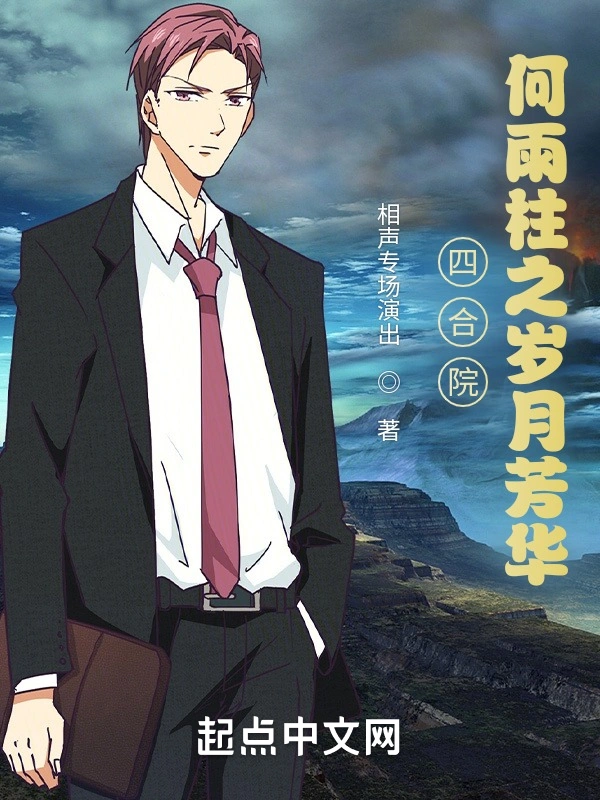
Siheyuan: He Yuzhu's Youth and Youth
四合院:何雨柱之岁月芳华
- Status
- Completed
- Length
- 697k Words
- Genre
- Urban
- Audience
- Male
- Subgenre
- Urban Life
- Updated
- 3y ago
- Source
- Qidian
Stats
0Monthly votes
2.6kRecommends
5.5kFans
302Chapters
Tags
Synopsis
Reader comments
Readers also read
 Is There Any Limit to This Engineer's Military Research and Development?
 Peninsula: the Insomniac Artist Is Connected
 1979 Once Upon a Time in the Northwest
 What Do You Mean I Am a Warmonger!
 Never Walk Alone!
 Rebirth Won Three Major Awards at the Beginning of the Prosperous Era
 The Days When I Was Keeping Healthy in the Film and Television World of the Era
 Daming: Have I Become Wanli's Portable Grandfather?
 I Am Drawing a Hot-Blooded Episode in the Zhiyu Episode!
 Siheyuan: Starting from the Transportation Section of the Steel Rolling Mill
 Great Power Army Reclamation
 After the Divorce, I Started to Change My Mind
 Siheyuan: Spare Your Life! I, Xu Damao, Am Willing to Support the Entire Hospital
 Siheyuan Liu Guangfu: the Little Boss in the 1980S
 Siheyuan: the Retribution Begins with the Deaf Old Lady
 Rebirth in 1981 Starts from the Factory
I have summarized some rules after reading hundreds of books 1. Those whose protagonists are silly pigs will basically not be popular 2. Those who lick old ladies and silly pigs will 100% not be popular 3. There is a high chance that the protagonists will not be popular if they are not Cao Thief These are the three golden rules of Siheyuan novels
A batch of poison, and I lost control of my body and could only watch
How much did you spend on daily detoxification?
I have nothing to say about this rubbish!
What is written here is not that the time traveler takes the body of the stupid pillar, but that the time traveler takes the body of the time traveler. No! It should be Shazhu who took over the author's body.
In those days, He Yuyu was sent to the countryside to work as a barefoot doctor. How much did he hate He Yuyu? In those days, country people were eager to live in the city and have a registered residence. This was the first time I saw this when they sent their own sisters to the countryside when they were so good.
What kind of nonsense are you writing! There really is no ugliest thing, only the uglier ones
This stupid pillar... I really can't bring it in.
Author, what exactly did you write?
It's not like normal peoplesay
I complained earlier that Silly Zhu's IQ was on the ground, but it turned out that the protagonist's own IQ was in the sewer.
It can only be said that the author is uneducated and does not know a few characters. Yan Bugui is actually pronounced as Yan Fugui.
It turns out that novels can be written so badly
Fan Zhi's character is Wensu, and he is a native of Zongcheng. My father Shouyu was a defensive judge in Zhengzhou. On the night of her birth, her mother dreamed that the god would give her a five-color pen. At the age of nine, he was able to belong to literature. At the age of thirteen, he was in charge of "Shangshu" and taught students. In the fourth year of Changxing's reign in the later Tang Dynasty, he was promoted to Jinshi, promoted to an official in Jiedu of the Zhongwu Army, and moved to Qiuling. In Tianfuzhong of Jin Dynasty, Sang Weihan, the prime minister of Jin Dynasty, was promoted to the supervisory censor. When Weihan left the town of Xiangzhou, he visited the two festivals of Taining and Jinchang, and asked for pledges to work. When Weihan returned to the prime minister, he moved to the Foreign Affairs Bureau and the Zhishi Museum as host and guest. When he was more than a year old, he was recruited as a scholar of Lin, a doctor of the Gabi tribe, and a Zhizhigao. When the Khitan invaded the border, the young emperor ordered Han Zu and other fifteen generals to go out. That night, when Zhi entered Zhi, the young emperor ordered to call all the scholars to divide the grass system, and said: "The palace is closed, and I am afraid that the secret will be revealed." The unique grass can advance, and the rhetoric and reasoning are excellent and supportive. It was called that at that time. In the early Han Dynasty, he was a member of Shushe in Jiazhong and the Minister of Hubu. When Zhou Zu launched a rebellion, every time the imperial court sent envoys and issued imperial edicts to deal with military matters, they were all in accordance with the timing. Zhou Zu asked who made this speech, and the envoy confronted him. He sighed and said: "It is also the prime minister's weapon." The ancestors of Zhou raised troops from Ye to march to Que. The capital was disturbed and the people hid their treasures. They searched for it and were very happy. It snowed heavily at that time and took off their robes. He also ordered the Empress Dowager to write an edict and comment on the rituals of welcoming Xiangyin. The text was pale and yellow, and was called the purpose. It was Empress Dowager Bai who served as Minister of War and Deputy Privy Envoy. At the beginning of Zhou Guangshun's reign, he paid homage to Zhongshu Shilang, Ping Zhangshi, and Jixian Palace Bachelor. The next day, he also participated in the affairs of the Privy Council. After the sacrifice in the suburbs, he came to the throne, Zuo Pushe, who also served as the minister of the family, conducted affairs, and supervised the compilation of national history. After returning from the expedition to Gaoping, he joined Situ and Hongwenguan as bachelors. In the summer of the fourth year of Xiande's reign, he returned from the expedition to Shouzhou and added a lordship. The quality suggestions are complicated and complicated, and the importance and severity are unfounded, so the officials will be treacherous. Sejong's special order was specified in detail, which was called "Xingtong". In the summer of the sixth year, Emperor Shizong was on an expedition to the north. He was ill and stayed in the capital, and was given millions of dollars to provide medicine to the city. And south of Pingguan, to Yingzhou, where the quality is found on the left side of the road. When the master returned, Wei Renpu, the privy envoy, was appointed as his prime minister, and he was ordered to attend the affairs of the privy council together with Wang Pu. Shizong did not hesitate and accepted his orders. When he succeeded to the throne of Emperor Gong, he added the three divisions of Kaifu Yitong and was granted the title of Xiao Guogong. And Taizu's Northern Expedition, he was promoted by the Sixth Division and returned to the government office from Chenqiao. At that time, Zhifang was in the dining pavilion. Taizu came in and led Wang Pu and Wei Renpu to visit him at his house. Taizu sobbed and shed tears in response to him, and seemed to be pushing him with words. Before he could answer the question, Luo Yangui of the military academy raised his sword and said, "We have no master, and today we must have the emperor." Taizu scolded Yanhuan for refusing to retreat, and the question was at a loss, so he and Pu and others were demoted and accepted the order. In the early Song Dynasty, he served as a minister and served as a privy minister. When he was ill, Taizu conquered Ze and Lu. Fortunately, he was given the throne and was given two hundred taels of gold, one thousand taels of silver, two thousand pieces of silk, and two million coins. When Taizu first came to the throne, he was modest in his affairs. As for the vassal Qi Shangshui Chongjian, the shogunate was not listed as a guest or assistant. Zhiyin's memorial said: "Since ancient times, emperors have established foundations to start businesses, and feudal sons have established Panwei. As clans and relatives have prospered, the country has been consolidated forever. When I saw the emperor's younger brother Taining Jun Jiedushi Guangyi, he took himself as a military officer. He was responsible for the generals and the leadership of the vassal, especially for his expectations. The Jiazhou defense envoy was Guangmei, handsome and old, cultivated and good, and was praised day by day. He begged for a seal and applied for a letter of destiny. The emperor Although the princess is still in her infancy, she still begs for the appointment of a minister. I also heard that as the prime minister, I should recommend talents to assist the emperor. I have learned about the affairs of Duanri Yongdian and the deputy minister Zhao Pu. First of all, when the prime minister saw the emperor discussing major political affairs, he would order him to sit down and discuss it, calmly give him tea and then retreat. This system was still followed in the Tang and Five Dynasties. He was so worried about the Emperor's brilliance that he always brought forward every matter with the words: "In this way, I will make the best use of my talents to avoid unnecessary mistakes." The Emperor followed. Since then, there have been many imperial memorials, and the ritual of sitting and discussing has been abolished. At the beginning of the Qian Dynasty, the emperor had something to do with Yuanqiu, so he used the pledge as a great gift. Zhi discussed the old scriptures with Zhang Zhao, the official envoy of Lu Book, and Liu Wensou, the envoy of honor guard, and decided to put it on "The Map of Ceremonies in the Southern Suburbs". Diyou Award. This is the beginning of the preparation of the etiquette, and the quality is the order. After the ceremony, he was granted the title of Duke of Lu, and he refused to accept the offer. In the first month of the second year, he was deposed as Crown Prince and Tutor. In September, he died, aged fifty-four. At the end of his life, warn his son Min not to ask for a posthumous title or carve a tombstone. When Taizu heard about it, he gave up his court in sorrow. As a gift to the emperor, he received five hundred bolts of silk and one hundred stones each of millet and wheat. A strong memorization of qualitative mechanics and a clear understanding of nature. When he was promoted to Jinshi, He Ning used the Hanlin Bachelor's Dian Gong Department to appraise the written texts and put them in the most important positions. In Gongwei, it is called "passing the robe and bowl". Later, he ascended the throne and became the crown prince and tutor, and was granted the title of Duke of Lu, all of which were the same as Ning. At the beginning, after Zhi came to the court, he still kept his hands on the scrolls, and people might be working on them. He said: "If you have good looks, I will be the prime minister and assistant in the future. As he said, I don't have to learn how to deal with it." Later, Shizong conquered Huainan, and many edicts came out of his hands. All the scholars in Wuzhong were shocked. Every time an imperial edict is issued, the law is not broken. When the county magistrate is ordered to be governor, the household registration and registration must be the most urgent thing. The imperial court sent envoys to inspect people's fields and prison cases. They were all delayed to express the emperor's concern and diligence, and then sent them. Shizong first conquered Huainan, stationed in Shou and Hao, and determined to capture it. He also discussed traveling to Yangzhou. As a teacher, I stopped weeping and admonishing Wang Pu. When he drove to Yangzhou again, Dou Yi was angry because of something, and the crime was unexpected. When the host came to see him, Shizong wanted to save him and avoided him. Zhi Qianqian said: "I am a minister who is close to me, and I should not punish him if he is too small." He kowtowed and wept, saying: "I am ready to be the prime minister, how can I make the master angry and kill my close minister? I hope that I will be forgiven." Emperor Shizong understood his intention, sat down again, and immediately sent the pardon ceremony. He has an urgent nature and a good face. With integrity and self-discipline, he never received gifts from all directions, and most of his income was given to the orphans. In the boudoir, the food is the same. No body, no money left for the family. Because of his instructions to the Assistant Prime Minister, Taizu said to his ministers: "I have heard that Fan Zhizhi is the real prime minister because he is in the first place and does not engage in production." Taizong also tried to call him: "There is no prime minister who can follow the rules, be careful about names and weapons, and be honest. There is no one who can be right, but it is a pity that Shizong died." From the son's school, Lang Gao asked for a memorial to transfer the rank, and wrote a poem about it, which was passed on to people at that time as a warning. There is a collection of thirty volumes, and it is also said that from Zhu Liang to Wu Dynasty, the sixty-five volumes of "Tonglu" were published in the world. Zimin. Min, named Guishen, can belong to Wen at the age of ten. His father appointed you Qianniu Beishen and the prince Si Yilang, and he later became Zuo Lang. In the early Song Dynasty, he was a member of the Du Zhi Yuan Wai Lang and judged the official affairs of Dali, and he knew Kaifeng County. During the reign of Emperor Taizong, he took charge of Jingyin and summoned and spoke to him several times, which he regarded very highly. Lingnanping, moved to Yongzhou and served as land and water transport envoy. The customs favored obscene sacrifices, despised medicine, and emphasized ghosts. Min ordered it to be banned. He cut his own body and gave it to the market medicine, and gave it to the sick, and thousands of them recovered. Then he carved stone scripts and put them on the walls of the halls, so that the people could learn from them. Deng Cunzhong, an official in Guangzhou who knew Huinan Han, robbed 20,000 natives and attacked the city for more than 70 days. Min often went out to fight personally, with the arrow focused on his chest, and still encouraged the generals to fight to the death, so the thieves were few and far away. When the illness struck, he stood firm and sent fifteen generations of envoys to ask for help. Reinforcements arrived from Guangzhou, and they surrounded him and rewarded him with a seal. Min was seriously ill, so he was ordered to carry him back to the palace on a carriage. After he recovered from his illness, he passed the judgment on Zhenzhou and had an able voice. He was given two million yuan and moved to Wai Lang, a member of the Treasury Department. In the ninth year of Kaibao's reign, he learned about the transshipment in Huainan. Taizu said to Min, "I am now entrusting you with the most important aspects. All tasks such as eliminating the hidden dangers of the people and urgent military needs will be carried out cheaply. There is no need to do anything one by one." Every year, he transported more than a million stones to the capital, and he was said to be scheming at that time. At the beginning of the Taiping and the rejuvenation of the country, he was called a doctor in the Ministry of Water. Qian Chu presented the land, and Min was appointed as the meritorious doctor, with the right to know the military affairs of the two Zhejiang states. Min said: "When Chu was in the country, the corvee tax was heavy and severe. All the salary grains, fruits and vegetables, and dustpans were collected. If you want to give them all, don't take them, so as to avoid their disadvantages." Follow this. He drove a chariot to conquer Jinyang, wrote a letter asking for compliance, and was summoned as a right-hand admonishment official and deputy envoy of the Third Division. The teacher returns and adds to the matter. He was asked by someone to be good at selling bamboo and wood and join the official position. Wang Rengan appointed him and demoted him to the position of Secretary of Fang Prefecture. The words are in "The Biography of Renshan". Moved to Tangzhou. Six years later, he died at the age of forty-six. There are twenty volumes and three volumes of "Yong Guan Ji". Later, his son Yisun issued an edict to restore him to his old position. From the official Yisun to the host and guest, Wailang. The master of Gaozi returned, his father was Zheng, and he was engaged in Qingzhou. Gao Shaogu treats him as his own son. Dedicated to learning, he is as famous as Guzang Li Jun and Fenyang Guo Yu. His writing is profound and difficult to understand, and many later generations admire him. He used Yin to make up for the Taimiao Zhailang, and then moved to the four gates of the Imperial College. He tried to pay a visit to Tao Gu and Dou Yi with his essays, and Xian University praised them and said to Gao: "If you are promoted to Jinshi, you should be in the Jia Department." In the autumn examination, there was a letter saying that Dai Yu's family should not compete with poor scholars for academic qualifications, so Gao should not be promoted. After a while he moved to work as Zuolang, and worked for Xu and Dengzhou, so he was exempted from work. At the beginning of the Taiping and the founding of the People's Republic of China, he moved to the Shizhu Lang and Zhishi Museums, where he collected artifacts from the right and made up for the mistakes from the left. In the second year of Yongxi's reign, Tongzhi Gongju was held. He wrote that his talents were better than those of Dongfang Shuo, and he wanted to put them to good use to see their effectiveness. Taizong Zhuangzhi promoted Zhizhi and made imperial edicts. Gao's family was poor and he borrowed millions from others. His mother and brother, Xi, were stingy by nature and became Shaoyin of the Xingyuan Dynasty. They were in charge of foreign affairs and had a fortune of tens of thousands. A relative came from Chang'an, and Fing Gao said, "Shao Yin no longer has Jin's property, so he has spent money without calculation." Gao was delighted when he heard that, because he spoke to his elder brother and asked for a sign from the capital so that he could support him. Taizong invited him. He was changed to a doctor in the Ministry of Works and dismissed from the imperial examination. Now that Gao has arrived, he is as stingy as before and often does illegal things in the government. Great regret. Gao has been in charge of matters for more than a year and has not been cured within the territory. Liu Wo, the bandit commander, plundered the county, and the officials were dismissed, so he became frightened and became ill. When he moved to Shouzhou, he said: "My family is a historian, and I am willing to uphold the straight pen and establish the grand ceremony of the country and dynasty." He was called to compile and compile for the History Museum, and he insisted on mastering the imperial edict, and the emperor followed it. At that time, Song Bai, a bachelor of the Hanlin Academy, moved to Yanzhou. Jia Huangzhong and Li Hang were involved in political affairs. Su Yizhi inherited the decree and Gao Lian wrote to the prime minister's office, asking to be a bachelor. He also said to Prime Minister Li Fang: "My ancestors tried to give me the first edition of imperial edicts, and I think Gao is qualified for this position." Because he showed Fang, Fang repeatedly opened it. Not long after, Taizong Feibai wrote "Yutang" on his forehead as a gift to the Imperial Academy. Gao also wrote "Yutang Ji" in order to prepare for his post. Taizong disliked his impatience and competition, so he changed his position to admonish the officials, learned about Haozhou, and summoned him back to compile and compile for the History Museum. At the beginning, Taizong thought that Taizu's dynasty policy had not been prepared, so he decided to summon Gao. Gao was very happy when he heard about his fate, thinking that he would be promoted well and advance morning and night. When he arrived in Songzhou, he met Qian Xi, the general judge of Langzhou. Gao asked him, "Who is the official servant of the general in court?" Xi said, "Re-edit the "Taizu Baolu"." Gao remained silent for a long time. Feeling sick, he went to the capital and died in ten months at the age of fifty-six. Taizong Minzhi recorded his second son. Gao's nature is unreal, and when he interacts with others, he is good at reputation and bad at bad, but with Liu Kaishan, they are more attracted to each other and have always been inseparable. If you are not good at managing your life, your family will be poor. You will sit upright all day long, not knowing what to do, and everyone will laugh at it. Zitan also became a Jinshi.
If you can't write just don't write, don't eat this bowl of rice
Tiantian Siheyuan, is it suitable to live in a Siheyuan?
Okay, I am next door to you. Have you ever asked the editor when it will be put on the shelves? How much to pursue?
{"Url":"https://qdreaderpic-1252317822. File. Myqcloud. Com/41475075/8f5b26 25dc2249a5b6d3cbf46726b826_original. Jpg","Width":"1080","Height":"2400"}
It's better to commit suicide after traveling into Silly Zhu's body, or go to Tibet to seek initiation from a lama and reincarnate your soul.
Book author group 743996042 Welcome all book lovers to join the group!
It's not likable to travel through time and become a stupid pillar, but it's even less likable to be a lunatic! How come you, a time traveler, are not as good as Silly Pillar? Silly Zhu was so happy to lick it after all!
Chapter 1: Anyone who can read it should not be poisoned to death. I will die first to respect it.
Chapter 1: Persuading to Quit
What kind of xx is the author writing about? He was so bragging in the first three chapters that he was thrown to death while building a house, and the factory director came to express his condolences.
😤Just use your personal name
Author, don't you know that books about courtyard houses are not very popular nowadays? No one has read them. It's not too late to write another book.
As an excuse to recommend a book, I wrote "Silly Zhu's Happy Life", a courtyard novel, obscene and developed, not violent, with Gao Yuanyuan, Wan Qian, Liu Tao, Liu Yifei, Zhao Liying and other stars to help. Welcome everyone to comment.
There is a feeling, like catching a small fish in a big river
A complete introduction to domestic fruits and vegetables of the family Cucurbitaceae Fifth Power Story Original 2021-8-25 17:46 · Creators in the field of high-quality science Cucurbitaceae is also one of the plant groups most closely related to humans. If you want to be a qualified melon-eater, you must be able to carry the following kinds of melons clearly. Well, put aside the foreign melons you've never seen before and eat the domestic ones first. Master Section Chief Picture 1.1 Gourd Picture 1.2 Crane-headed Gourd 1. Gourd/Lagenaria siceraria, known as gourd in ancient times, belongs to the genus Cucurbita and is native to my country. The flowers are white, and the fruits have ever-changing shapes and sizes. They can be tall, short, fat or thin, but not necessarily waistless. It can be eaten when young. When mature, the skin becomes lignified and can be used to make various tools or for viewing. Note that some plants have high cucurbitacin content, and the fruits are bitter and inedible. After poisoning, people may lie on a wooden board or sleep in a coffin. There is no way to identify it just by looking at its appearance. You can only taste it yourself. If it tastes bitter, discard it (the same below). Figure 1.3 Gourd Two varieties are dedicated to vegetable food, gourd/var. Hispida and gourd/var. Depresses. The former is long cylindrical and the latter is oblate spherical. In my opinion, there is no need to strictly distinguish between the two. They are both green-skinned and white-flesh, jade-white and ice-clear, and they are nothing more than fat and thin. It is said that gourds bloom in the evening in summer and wither at noon the next day. Shanghai calls it "night blooming", and the Japanese are more pretentious and call it "Xiyan". Another variant of small gourd/var. Microcarpa, the fruit is less than 10 cm long and is only enjoyed by the leisure class. Three Pumpkin Brothers Picture 2.1 Pumpkin Picture 2.2 Pumpkin Picture 2.3 Pumpkin 2. Pumpkin/Cucurbita moschata has a lot of common names, so I will skip it. It is native to America and introduced to my country in the Ming Dynasty. The variety of fruits is even greater than that of gourds, and it is impossible to tell which type of pumpkin it is just by its shape. Remember to identify the key points. The fruit stem has ribs and grooves, and the melon base expands into a trumpet shape. It can be eaten by both young and old. It can be used as a food substitute to satisfy hunger in special times. When times are quiet, it can also be used to make flavored pastries or pumpkin porridge. Pumpkin flowers and pumpkin heads can also be used in dishes (the same below). Figure 3.1 The most common zucchini Figure 3.2 Zucchini Figure 3.3 Saucer melon, varieties of zucchini 3. Zucchini/C. Pepo, native to America, introduced from Europe in the Qing Dynasty. Most of the common zucchini varieties in China have a regular and uniform appearance. They are usually sliced and fried, or grated and fried into pancakes. In fact, the fruits of zucchini are as fickle as pumpkins, and they can look like any kind of moth. The "flying saucer melon" used by various tourist attractions to deceive tourists in the past few years is also a variety of zucchini. The key to identification lies in the fruit stem: there are obvious ridges, and the fruit stem is thickened or slightly enlarged, but not trumpet-shaped. Picture 4.1 Winter squash Picture 4.2 Winter squash Picture 4.3 Winter squash 4. Winter squash/C. Maxima is also native to the Americas. It is not clear when it came. The market share is not low. In most cases, it is named after pumpkin. This is not surprising. The taste, taste and cooking methods of the two are basically the same, and there is usually no distinction in English-speaking countries. To identify it, you still need to look at the fruit stem: the fruit stem of winter melon is short, cylindrical, without edges and grooves, and the melon base is not enlarged or slightly enlarged. In addition, winter squash has a thicker skin, while pumpkin skin is slightly thinner. Winter squash is more cold-resistant than pumpkin, and is also known as "Northern Melon". Luffa aegyptiaca Twins Figure 5 Luffa 5. Luffa aegyptiaca is native to Asia and may originate from India. It is distributed wild in Yunnan and other places. Popular summer vegetables are available everywhere and are especially suitable for garden cultivation. The fruit is cylindrical, generally between 15 and 30 centimeters in length, and there are also longer varieties. It is necessary to install a "pendant" after the fruit is hung to keep it straight and prevent it from growing into a "crooked melon and split jujube". It tastes soft and smooth when young, but becomes unpalatable when old. The loofah inside can be used as a scrubbing tool instead of a sponge. Picture 6 Guangdong luffa 6. Guangdong luffa/Luffa acutangula, also known as angular luffa and Cantonese luffa. In some areas of South China, this species is called luffa, and ordinary luffa is called water melon. It is native to Asia and is mostly cultivated in southern my country, but rarely in northern China. The temperament of ordinary loofah is very different. There are 8-10 vertical sharp edges and grooves on the fruit surface. The surface of ordinary loofah is relatively smooth with only dark vertical lines. When cooking, it is advisable to remove the hard edges and corners, so that the texture of the melon meat will be relatively chewy. Cucumber Duo Figure 7.1 Cucumber Figure 7.2 Cucumber Figure 7.3 Cucumber, trade name "Golden Girl" 7. Cucumber/Cucumis sativus, native to India, widely cultivated in my country. "Fora of China" describes the cucumber fruit as follows: "The surface is rough, with spiny-pointed tumor-like protrusions, which are extremely sparse and almost smooth." To be honest, in the past, our hometown was famous for its "big thorny cucumbers", and there were few cucumbers on the market without thorns. Nowadays, there are more and more "nearly smooth" varieties, and they are no longer "extremely rare", and thorny cucumbers are being squeezed out. In addition, the female flowers of cucumber can be eaten directly and have a good taste. Figure 8.1 Melon Figure 8.2 Hami melon Figure 8.3 Vegetable melon Figure 8.4 Horse melon 8. Melon/Cucumis melo, native to Africa, has a long history of cultivation, many varieties, and huge morphological differences. It can be divided into two types: thin-skinned melons and thick-skinned melons. Traditionally melons, such as cantaloupe, honeydew, and croissant, belong to the former, while white melons, cantaloupes, and Elizabeth melons belong to the latter. There is a subspecies of cabbage melon/subsp. Agrestis, with white-green flesh, no aromatic sweetness, and is suitable for vegetable consumption; Mapao melon is the wild type of cabbage melon, which has a refreshing fragrance but is not suitable for consumption. These are all single seedlings Picture 9.1 Yellow watermelon Picture 9.2 Rainbow watermelon Picture 9.3 Seed melon 9. Watermelon/Citrullus lanatus, watermelon genus, was called cold melon in ancient times. Originally from Africa, it was introduced to China in the Fifth Dynasty. It is an extremely important summer fruit and is cultivated in various parts of my country. There are many varieties, including red, yellow and white flesh, and now there is "rainbow flesh". The peel and seeds are also very diverse, but they remain the same, at least the appearance is basically unified. There is also "Zi Gua (also known as Da Gua)" which is specially made from melon seeds for consumption. The white flesh is light in taste and has never been seen by ordinary people. Figure 10.1 Winter melon Figure 10.2 Black-skinned winter melon 10. Winter melon/Benincasa hispida, winter melon genus. It is native to southern Asia and may originate from my country. It is distributed wild in Xishuangbanna, Yunnan and other places, and the fruits are very small. The fruit is cylindrical or nearly spherical, with bristles and hoarfrost on the peel. It can grow to a very large size, ranking first among domestic Cucurbitaceae fruits and vegetables (not in foreign countries, and not as good as the three pumpkin brothers). The melon meat tastes as light as water. In addition to being used for vegetarian food, it can also be dipped into various candies. "Pineapple cake" is made of winter melon. Picture 11.1 Bitter Melon Picture 11.2 Small Bitter Melon 11. Momordica charantia, commonly known as balsam pear and brocade lychee, belongs to the genus Momordica charantia. It is native to Africa and was introduced to China from India in the 14th century. It can be divided into two varieties: large balsam pear and small balsam pear; the former is for vegetable food and has cylindrical fruit; "Jinlingzi" belongs to the latter and has spindle-shaped fruit. There are differences in shape, size and peel wrinkles between the two, but the essence is the same. Both are bitter when unripe, turn orange-red when ripe, and the red arils are sweet. Finally, they are split into three valves at the top. Picture 12.1 Snake Melon Picture 12.2 Snake Melon 12. Snake Melon/Trichosanthes anguina, Trichosanthes anguina, native to India, cultivated in small quantities in both north and south. The corolla is white, with long curled tassels at the top of the lobes, and the shape is quite unique; the fruit is green with pale stripes, orange-yellow when mature, up to 2 meters long, and usually twisted and coiled, like a snake. Because the fruit looks a bit like a giant cowpea, it is also called snake bean or carob bean. In my impression, it contains more water and is not very tasty. It is rarely seen on the market in recent years. Picture 13 Chayote 13. Chayote/Sechium edule, also known as luffa and hand melon, belongs to the genus Chayote. It is native to South America and is mostly cultivated in the south. The fruit is light green and has a strange face. At first glance, it looks like a fisted "Buddha's hand", hence its name. The surface of this melon is bumpy and uneven, making it difficult to peel it cleanly. It is also bland and tasteless, so don't eat it. In addition, this species is cultivated as a perennial in the south. The underground roots are edible, and the young shoots can also be eaten. In this regard, it is a rare all-rounder. Two new fruits Picture 14 Thorny melon 14. Thorny melon/Cucumis metuliferus, cucumber genus, also known as fire ginseng fruit, African honeydew melon, African horned cucumber, fire peach, Mars fruit and so on. It is native to the Kalahari Desert in Africa and has been introduced and cultivated in China. The fruit has a strange skeleton and is covered with hard thorns, just like a golden hard-skinned sea cucumber. The flesh is like gel. It is said that it "tastes like a mixture of banana, lemon and cucumber". To be honest, it still tastes like old cucumber. Don't chew it when you eat it. If you can't chew it, cut it open, add honey, and suck it through a straw. Figure 15 Thumb Watermelon 15. Melothria scabra/Melothria scabra, trade name Thumb Watermelon, Melothria scabra. It is native to Mexico, Central America and other regions, and has been introduced and cultivated in my country. The ripe fruit is about 2.5 Centimeters long, just about the same size as your thumb. It has silvery-green stripes on the surface, a bit like a miniature watermelon. The inner flesh is green and a bit like a cucumber. The strange thing is that it also tastes like sour cucumber. It is obviously not closely related to the cucumber. It's expensive and not good, so I don't recommend trying it. In addition, there are some economic crops in the Cucurbitaceae family, such as Trichosanthes kirilowii, Siraitia grosvenorii, Hodgsonia heteroclita, Gynostemma pentaphyllum, and Bolbostemma paniculatum, etc., Which have little to do with daily life and are far from the concept of "melon" in the general context. Search Cucurbitaceae includes various melons Gourd What are the cruciferous vegetables Pictures of white-skinned melons like winter melon China's eight most poisonous plants Comprehensive picture of white-skinned pumpkins
Shouldn't He Yuyu be arranged to go to the broadcasting room of the steel rolling mill? Replacing Yu Haitang, it is said that he also has this ability, or he may be arranged by the senior leader to work as an office in another unit.