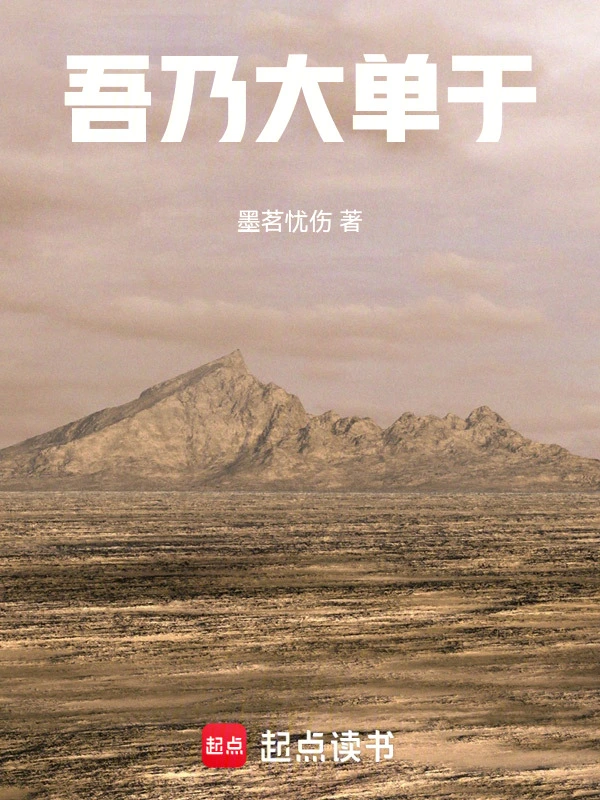
I Am the Great Chanyu
吾乃大单于
- Status
- Completed
- Length
- 1.2M Words
- Genre
- Historical
- Audience
- Male
- Subgenre
- Pre-Qin Antiquity
- Updated
- 3y ago
- Source
- Qidian
Stats
0Monthly votes
591Recommends
0Fans
373Chapters
Synopsis
Reader comments
Readers also read
 1914 Begins with the Rejection of the Schlieffen Plan
 In the Red Mansion: Escort Daiyu to Beijing at the Beginning
 Please Call Me Your Majesty the Tsar
 Talker in the Song Dynasty
 Never Walk Alone!
 The Rise of Prussia
 Gou Qin
 Daming: Have I Become Wanli's Portable Grandfather?
 I Am Drawing a Hot-Blooded Episode in the Zhiyu Episode!
 War Palace and Knee Pillow, Austria's Destiny
 Make Habsburg Great Again!
 Japan's Warring States Period: the People of the World in Ise
 At the End of Jin Dynasty, Yan Was Raised and Begonia Was Cast.
The performance of this book will not be very good. As a foreign race, you can get close to Qin and integrate with China, but you cannot keep licking Qin brainlessly.
It can only be said that it is a daily guide to poison.
What should I say? I suggest that the author supplement the history of the development of the Xiongnu... How weird does it seem? During the Touman period, the Xiongnu could not even defeat the Dayue clan and had to use their sons as hostages. Mao Dun killed his father and seized the throne throughout his life. He integrated all the Xiongnu tribes and defeated the Dayue clan. Donghu occupied Hetao. This was how the Great Wall came to be. After that, the country of Yinggong was ordered to be so powerful that the Chanyu was so powerful. How come you are here and Touman is so awesome that he can arm-wrestle with the Qin army? At this time, the Xiongnu were in disarray, and where was the Donghu? What about Da Yuezhi?
Such a good name and writing material were completely messed up by the author. Historical novels are basically about the Han people fighting for hegemony in the Central Plains. Why can't they be written from the perspective of the nomadic people? If you don't want to destroy the Han Dynasty, you can learn from part of the Han Dynasty culture and add your own national culture to create a new civilization. Learn from the Mongols' Western Expeditions and fulfill the wishes of most readers. Conquer Europe or fight with ancient Europe and write about the style of a nomadic empire.
Mingdi killed his father and returned China, right?
Since the time travel name, don't write Li Xin. I originally wanted to read the book title, but I didn't expect that the name after time travel is still a Han name. It's better to forget about time travel and become a Han person. Failure
When I picked this title, I should have thought about what people coming in want to read.
Why don't you change the beginning of the article? It's less popular now, so it can attract more people to read it. The amnesia and wanting to go to Qin at the beginning are really poisonous.
Mao Dun Que is really awesome. From the time he started, the grassland has become stronger and stronger.
What writing would the Huns use? Should we be like Japan or create a set of Pinyin?
Why is it that Li Xin and Li Xin are still talking about it after ten chapters? Do you have any feelings?
Can I update a few more chapters a day?
Moton? Shanyu Maodun? He is a ruthless person 🍉
Well written, the subject matter is novel.
It's not unreasonable to have only this comment in 1 million words.
This battle started but ended, as if there were eighty-one difficulties.
The author updates every few days, so slow!
The author believes that the emergence of great unification and great centralization of power in the grasslands is entirely a response to the great unification and great centralization of power in the Central Plains. Author, what do you want to do by arranging such a mutiny in Chapter 57? The southern protagonist leads the elite and the main force to fight to the death, while the northern father-in-law is ready to cut off his escape, make peace with the enemy, and seek to seize the big position. Not to mention that this is very likely to lead to the loss of all troops going south. The Han Emperor will seal the wolf as a subordinate in advance, and the Xiongnu will be exterminated. Even if Liu Bang went crazy, after killing the protagonist, he would give all the captive soldiers going south to the protagonist, his father-in-law. Not to mention whether he could suppress the resentment of the main force going south, how the protagonist, his father-in-law, would deal with the subsequent great rebellion in the grassland tribes is a question. Suppress him with force. If he had this ability, he would not be crushed to death by the protagonist's father. He is very learned and bribes him with money. Poor guy, do you have the money? Let's not talk about whether it's okay to be a dog for the Han Dynasty. Even if you can be a dog, the Han officials will definitely force the Huns to rebel after a long time. This situation existed in both Han Dynasties, and the Later Han Dynasty even forced out the Liangzhou horse that destroyed the Han Dynasty. Moreover, as the most important force for the protagonist's rise to power, the Huyan tribe will be suppressed after success, but more should be relied on. After all, as long as the hero knows how to advance and retreat, he can basically end well. Emperor Gaozu of the Han Dynasty and Emperor Taizu of the Ming Dynasty both killed meritorious officials, but many more meritorious officials also met a happy end. The Huyan tribe, as a meritorious tribe, and as the emperor's rear, as long as it does not stand on the wrong side in future political struggles, it will basically prosper forever. Therefore, the father-in-law has no motivation to overthrow his son-in-law. As for the Xiongnu tribes, they were afraid that the royal court would be too strong. The strength caused by the strength would weaken the independence of each tribe, and even weaken and destroy the tribes, so they wanted to rebel, and they rebelled on the battlefield instead of a palace coup. This substitutes into the formula of the opposition between centralization and enfeoffment. The Shang Dynasty was more enfeoffed than the Zhou Dynasty. Why did the princes from all over the world support the Emperor of Zhou more and even helped him put down the rebellion in the Three Prisons? The Tang Dynasty was more centralized than the Zhou Dynasty, so why did the Zhou Dynasty take longer to collect tributes from all directions than the Tang Dynasty's Guozuo, while the Tang Dynasty had to use a knife to collect taxes from the rebellious feudal towns. It should all be beneficial. The bloody human sacrifices of the Shang Dynasty made the four parties more and more intolerable. The Zhou covenant also contained the content of abolishing human sacrifices. During the Zhou Gong period, he also worked hard to abolish this custom, so the princes from all over the world helped the Zhou court, which was even less enfeoffed, to quell the chaos. The tribute system of the Zhou Dynasty reduced transaction costs in an era when a unified market was not yet established, similar to the old fairs in the countryside. It also provides a platform for diplomatic mediation by various countries. As for the Tang Dynasty, let's just tell a joke. After the An-Shi Rebellion, the Tang court's taxes in Hebei were reduced, and Hebei just had a prime minister borrowed from it. The separatist rule of vassal towns also extended the Tang Dynasty in another aspect. Therefore, as long as the protagonist centralizes power, it will bring more benefits than harm to the ministries. None of the leaders would think about rebellion all the time. As mentioned earlier, the unification of the grasslands was in response to the unification of the Central Plains, and the centralization of power in the grasslands was in response to the centralization of power in the Central Plains. Otherwise, the grasslands are vast and sparsely populated, and resources are scarce. Even writing has not been invented. How can we centralize power? Therefore, at least the advantages of the protagonist's previous efforts to strengthen the royal court outweigh the disadvantages, and far outweigh the disadvantages. The specifics can be seen in the establishment of an era by Genghis Khan, the most centralized king of the steppe. The endowment of the grassland also makes it impossible for the Khan who forced the grassland to truly establish Central Plains-style centralization. Otherwise, if you push too hard, the grassland will not be covered, and I will run away at worst. Therefore, before the protagonist can greatly reduce the tribe, he will either run away early or his income will not cover his expenses and he will go bankrupt. Even the Central Plains could not achieve feudal centralization as we understand it during the Han Dynasty and for a long time after that. In the former Han Dynasty, there were feudal states, and in the later Han Dynasty, the officials regarded the county guards as the main monarchs. Therefore, in the late Han Dynasty, the separatist regime was directly based on states and counties. The Northern and Southern Dynasties were dominated by aristocratic families. Therefore, most of the rebellions encountered by the protagonist should occur before the protagonist is established. The benefits, military power and victory brought by the protagonist's centralization of power are enough to make the leaders of the tribes cease their activities. So, author, instead of writing about the aristocratic rebellion caused by centralization of power at the top and enfeoffment at the bottom, which is not in line with history and customs, it is better to write like this. The various tribes had doubts about whether the benefits of the southern expedition outweighed the disadvantages. Finally, as time went by, the previous gaps were added up and turned into a series of rebellions. Isn't this more reasonable than the dual opposition between centralization and enfeoffment, which resulted in various tribes getting together early and finally seizing the opportunity to plot rebellion during wartime? As for the ending, it can be completely written that the protagonist achieves the minimum goal, making the two countries of Yan and Zhao become the backbone of the protagonist in terms of interests. Firstly, the protagonist relies on Yan and Zhao to prevent the Han court from completely blocking the protagonist. Secondly, it can use the two countries to deal with it. Thirdly, it can draw on the resources of the Central Plains to learn from the Mongolian Western Expedition and expand the scope of Chinese civilization. As for Han Ting, you can definitely write about fighting against it. And I don't really believe that the protagonist can conquer the Central Plains. The Han Dynasty will shine more dazzlingly under greater pressure than in history. The author can even write a continuation where there are time travelers in this changed world who completely eliminated the princes and pacified the Huns during the reign of Emperor Wu. After all, the resource endowment of the Central Plains far exceeds that of the grasslands. At the end of the Tang Dynasty, the Khitan was defeated in a single town in Youzhou. At the end of the Jin Dynasty, the Hebei landowners were able to push back the Mongols, relying on the Guanhe defense line to hold on for decades. Song Dynasty fought for more than half a century. And the Han Dynasty possesses the essence of Qin, Wei and Chu. It wins by shape and potential. It is not a dynasty like the two Jins and the two Songs that won the country in an unfair way. The bloody nature has not faded, so how can it not be prosperous. So there is barbarism conquering civilization, only civilization conquering civilization, or civilization "conquering" itself
Author, I want to create a book list including recommendations for this book. Can you give me some materials?
Readers are very angry when there is only one update every two days.