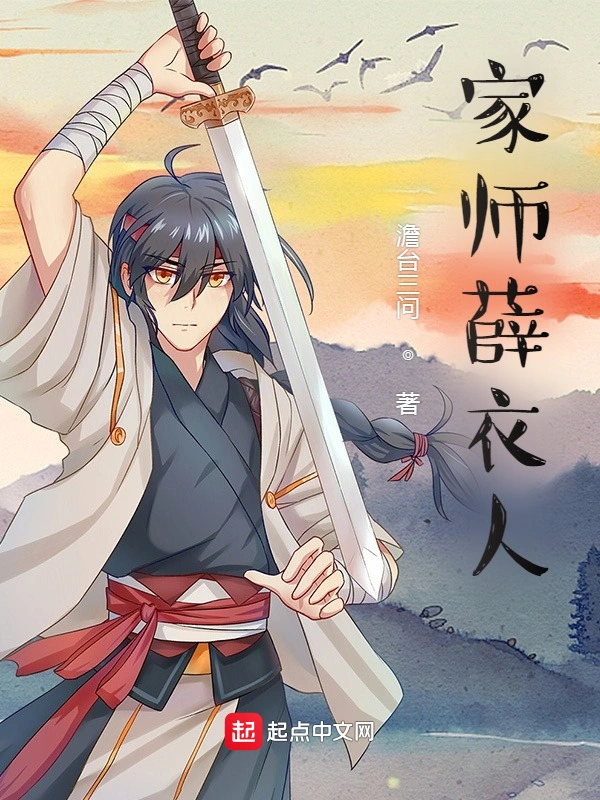
Tutor Xue Yiren
家师薛衣人
- Status
- Completed
- Length
- 1.0M Words
- Genre
- Martial Arts
- Audience
- Male
- Subgenre
- Wuxia Fan Fiction
- Updated
- 3y ago
- Source
- Qidian
Stats
0Monthly votes
3.8kRecommends
8.4kFans
391Chapters
Tags
Synopsis
Reader comments
Readers also read
 The Reincarnation of Immortals and Martial Arts Begins with the Enlightenment of the Supreme Being
 God Rewards Hard Work, Starting from Xiao Li Feidao
 Become Invincible in the World from the Eighteen Palms of Subduing the Dragon
 Pretending to Be a Postman, He Gained the Power of Four Dragons and Four Elephants at the Beginning!
 Never Walk Alone!
 The Road to Jianghu Starting from Xiaoao
 Jiangye: I Am a Fairy in the World
 Daming: Have I Become Wanli's Portable Grandfather?
 I Am Drawing a Hot-Blooded Episode in the Zhiyu Episode!
 Great Wolf Gold Catcher
 I Am a Bad Handsome Man in the Heavens
 Start with the Meteor Butterfly Sword
 I Am the Young Owner of Peacock Villa
Those who learn from the ancient dragon will live, those who resemble the ancient dragon will die.
Gu Long has only read "Chu Liuxiang", "Lu Xiaofeng" and "Happy Heroes". It can be seen that the author tried hard to imitate the ancient style, okay 😁. But I still have to say: the author is actually not very good at this. The writing of this book is really ugly 🤭. Not only did it fail to make people think about it again and again like "Happy Heroes", but the character creation was also not good. Chu Liuxiang and Lu Xiaofeng didn't watch it again and again. After reading it, I can't say that the book is good. But they have distinct characteristics, and I instantly remembered the characters after watching it. Their characters were all successfully created, and even the supporting roles were impressive. The characters in this book make people feel that they have no memory points. The character creation is very poor. I am afraid that few well-informed readers today will find such a character attractive. They will only think that this person is sick. What's worse is that it doesn't even have the specialty of online writing - "coolness". It's a bit different and I can't stand it anymore.
It is obvious that the enemy cannot defeat the protagonist, but the protagonist has to smile bitterly every time. Why are you laughing? It is better to kill him with a sword. The protagonist is too lustful. He originally caught the enemy (a woman), but when he touched her, he became uneasy. This is a hungry ghost in lust. Is he really a modern man reborn?
I found that in many martial arts novels, the protagonist must have a particularly lustful character. Can't it be a little more normal? It's normal, the level of lust for ordinary people, isn't it? Does it have to be written like the reincarnation of Teddy, if you see a beautiful girl and want to have sex with her, is this going to disgust people? It would be a pity not to be reincarnated as a dragon. After all, dragons do not matter the species, as long as they are female, they can have sex. Could it be that the way the protagonist died in the end was to lie on top of a woman, shout: "Bili is poisonous!", And then die?
Tang Taizong, Song Taizu, there are so many titles for ancient emperors, what do they mean  SunFlower Original 1 week ago · Creator in the workplace Follow China has a very long history, and hundreds of emperors have been born in the long history. In the process of learning history, in the process of reading historical novels, in reading any ancient materials, and even when watching historical dramas in costumes or time-travel dramas, many titles of emperors will appear. Let me give you a very familiar example first, that is Emperor Kangxi. Kangxi is his reign name, his name is Aixinjueluo Xuanye, his temple name is Qingshengzu, and his posthumous title is Hetian Hongyun, Wenwu Ruizhe, Emperor Frugal, Filial, Honesty, Neutralizing Merit and Dachengren. The reign name refers to the year when Kangxi was in power. The temple name is the name given to the Chinese monarch when he is enshrined in the temple after his death. Posthumous titles refer to words in which descendants give praise or derogatory comments after the death of a person with a relatively high social status, based on their life deeds.  To give another example, we are all familiar with Li Shimin, Taizong of the Tang Dynasty. Taizong is his temple name, and his reign name is also widely known to us, which is Zhenguan. The famous Zhenguan rule is named after his reign name. Actually, most of us don't know much about it. Today I will mainly tell you about the temple name of the emperor to clarify everyone's confusing understanding. I hope it will be helpful to you. First of all, let me popularize it. Not all ancient emperors had temple names. Some ancient emperors had many temple names. There were also some small countries during wars, such as the Northern and Southern Dynasties and the Five Dynasties and Ten Kingdoms. Many emperors of small countries gave themselves a very famous temple name. This is an indiscriminate use of temple names. In the following article, we will talk about the use of normal temple names. We will not go into details about the small countries that have invaded. If you are interested, you can check or search.  The characters used in the temple name are basically the two characters ancestral and ancestral. Taizu, Gaozu Taizu and Gaozu refer to the founding king, that is, the first emperor after the founding of the country. Representative emperors: Han Taizu Liu Bang, Song Taizu Zhao Kuangyin, Ming Taizu Zhu Yuanzhang Sui Gaozu Yang Jian, Tang Gaozu Li Yuan Shizu Shizu is generally the king of ZTE, that is, the person who makes the dynasty prosperous again. Representative emperors: Liu Xiu, the ancestor of the Han Dynasty, Aisin Gioro Fulin, the ancestor of the Qing Dynasty Saint Ancestor Saint clan generally refers to the kings of powerful countries, that is, the dynasty has become strong in this generation. Representative Emperor: Aixinjueluo Xuanye, the Holy Ancestor of the Qing Dynasty Chengzu Chengzu generally refers to the emperor who made great achievements, which means that the dynasty achieved extraordinary achievements in this generation. Representative Emperor: Zhu Di, Chengzu of the Ming Dynasty  Taizong built the country into a strong country, expanded its territory, developed its economy, made its people prosperous, grew its population, and basically had no wars. Representative emperors: Emperor Taizong Li Shimin of the Tang Dynasty, Emperor Taizong Zhao Guangyi of the Song Dynasty, Emperor Taizong of the Yuan Dynasty Bo'er Zhijin Wokuotai, Emperor Taizong Aixinjueluo Huang Taiji of the Qing Dynasty Renzong Just like the literal meaning, it represents the emperor's generous and kind character. Representative emperors: Song Renzong Zhao Zhen, Ming Renzong Zhu Gaochi Xiao Zong A filial emperor who was famous for his filial piety during his lifetime. Representative emperors: Song Xiaozong Zhao Shen, Ming Xiaozong Zhu Youtang Ruizong Just like the literal meaning, it shows that the emperor was more intelligent during his lifetime. Representative emperors: Tang Ruizong Li Dan, Ming Ruizong Zhu Youqi Gaozong During his reign, the dynasty reached its highest peak and began to decline. Representative emperors: Tang Gaozong Li Zhi, Song Gaozong Zhaogou, Qing Gaozong Aixinjueluo Hongli (Qianlong)  Wuzong As the name suggests, he is an emperor who advocates force. Representative emperors: Li Yan, Wuzong of the Tang Dynasty, Zhu Houzhao, Wuzong of the Ming Dynasty Wenzong Weak and incompetent emperors. Representative Emperor: Tang Wenzong and Li Ang Shenzong The gods were nagging and made the country a mess. Representative emperor: Song Shenzong Zhao Xu Dezong An emperor who experienced war during his reign and was forced to flee. Representative emperors: Li Shi, Dezong of the Tang Dynasty, Guangxu, Dezong of the Qing Dynasty Yingzong The name "Yingzong" seems to have a good meaning literally, but it actually means praise and derogation, which is the opposite meaning. Representative emperors: Ming Yingzong Zhu Qizhen  Mu Zong, Guangzong Refers to emperors who reigned for a short time and basically did nothing or very little. Representative emperors: Tang Muzong Li Heng, Song Guangzong Zhao Dun, Ming Guangzong Zhu Changluo Aizong, Sizong refers to the king who subjugated his country, and the current dynasty was lost in his hands. Representative emperors: Brother Li, Aizong of the Tang Dynasty, Zhu Youjian, Sizong of the Ming Dynasty Zhongzong, Shengzong The dynasty experienced a resurgence in the hands of this king, which meant that it reversed its downward trend and experienced an upward stage. Representative emperors: Tang Zhongzong and Li Xian Shizong and Daizong Generally refers to the bloodline transfer in this generation of dynasties, with collateral lines or branches ascending to the throne. Representative emperors: Tang Dynasty Zong Li Yu, Ming Dynasty Zong Zhu Qiyu Zhezong, Xingzong, Chengzong, Xianzong Generally refers to the emperor who defends Cheng, which means that the emperor has no obvious political achievements and no obvious mistakes. Representative emperors: Song Zhezong Zhao Xu, Ming Xingzong Zhu Biao, Yuan Chengzong Tiemu'er, Jin Xianzong Sima Yan  Su Zong was interested in reviving the dynasty. He struggled for a long time and tried various methods, but failed. Representative emperors: Tang Suzong and Li Heng Xianzong, Xuanzong, and Jingzong Representative emperors had merits and demerits during their reign. Representative emperors: Tang Xianzong Li Chun, Ming Xianzong Zhu Jianshen, Tang Xuanzong Li Chen Ning Zong A very cowardly and incompetent emperor, both in internal governance and in dealing with foreign countries. Representative emperors: Ningzong of the Song Dynasty and Zhao Kuo Daozong, Xuanzong, Zhenzong, and Lizong People like to be mysterious and like to be exaggerated and flashy. Representative emperors: Daozong of the Liao Dynasty Yelu Hongji, Xuanzong of the Tang Dynasty Li Longji, Zhenzong of the Song Dynasty Zhao Heng, Lizong Zhao Yun of the Song Dynasty  Duzong, Dingzong, Shunzong The transitional emperors of the dynasty had little influence and little achievements. Representative emperors: Song Duzong Zhao Xu, Yuan Dingzong Guiyu, Tang Shunzong Li Song Huizong When he was in power, he was ineffective in governing the country, the country was in ruins, and he made no achievements in domestic and foreign affairs. The representative emperor: Minghui President Zhu Yunwen Xizong Ignored political affairs and was mediocre and decadent. Representative emperors: Tang Xizong and Li Xuan These are the main temple names of emperors in the past. As we all know, there are many ethnic minority regimes around our country. Most of these ethnic minority regimes also adopt the political system of the orthodox dynasties of the Central Plains. Many of them also have temple names, which is diverse and dazzling.  For example, the countries established by ethnic minorities such as Liao, Goryeo, Jin, Xixia, Xianbei, and Turks in the north, Annan and Vietnam in the south, as well as the regimes established by ethnic minorities in the southwest and the northwest all followed the Central Plains regime and adopted the method of posthumous temple names for deceased emperors. As I said at the beginning of the article, not every emperor had a temple name. Some emperors had more than one temple name. However, the meanings of the temple names mentioned in the article are the meanings given under normal circumstances. I have little talent and little knowledge. I only provide a little humble opinion. Everyone is welcome to criticize and correct me.
Gu Long is getting paid per word. If you are not writing by Gu Long, there are people who will pay you. You don't have it. Don't keep imitating Gu Long. Unless you are like Mermaid II, you will be paid per word. There is no upper limit.
What's your introduction? ? ? Yan Shisan, Qi Changzheng, Long Wu, Ximen Chuixue, Ye Gucheng. May I ask which one of these people, Xue Yiren, dares to say can definitely win?
Teddy among men, the author has this psyche problem, has he never seen a woman be angry?
It's too wordy, the plot is too ink-written, there's really no need to imitate Gu Long's writing, and the writing is too confusing, and the setting is too broad.
It should be a trumpet, the same literary youth, Gu Long style writing, the protagonist is too hypocritical
No, I just want to ask, why do you need women to be in the world?
I would like to make a suggestion, if your writing is not good, write less male-female dramas. It's not that readers hate harems and multiple female protagonists, it's that if your writing is poor, readers will easily get poisoned and die.
The third young master and Tianzun asked Xue Yiren to kill Tian Boguang😒
Lustful, tsk tsk, such people are not out to be plotted in the ancient dragon world.
The plot is very interesting and the writing is good, but there are a lot of women. This has just debuted, and there are so many women who are ambiguous with the protagonist. What will happen next? The woman who is the protagonist all over the world, can it end!
It's boring. If you don't have a golden finger, why should you be so proud? Why should you surpass others just by working hard? While you are working hard, your peers are also working hard, and your seniors are also working hard. Just by traveling through time, can you become the best in the world? Looking back, every master and every number one in the world will always experience different regrets and regrets in life in the process of becoming a master and number one in the world. These regrets and regrets include the loss of lovers (representative figures Lu Xiaofeng and Qiao Feng, etc.), The loss of family members (representative figures Zhang Wuji and Gui Haiyida), and some losses... Too much. So, let me ask the author, what are you going to let the protagonist lose? Or is it a false and empty writing method that allows the author to basically become the strongest king smoothly? One sentence: Why should the efforts of several generations be lost to your ten years of hard study? I don't know what purpose this type of author has in writing. But I can see clearly that it is very difficult to balance the strength and character of each person when combining the plots of different original works into one world. Either the author's writing style is incredible, or the book is so overwhelming that it makes people feel unreadable. Gu, Liang, Wen, Jin, and Huang are the five masters of martial arts novels. They have different experiences and are exposed to different things, so there are serious differences in their three views. Therefore, each martial arts novel they wrote is very different in the characters and personalities, as well as the overall style of the book. In this book, the author uses Gu Long's writing style to write about people in other books, which seems awkward at first glance, so there is no sense of immersion.
The protagonist does not rely on gold fingers, knows how to practice hard, has strong martial arts, is charming, and has a sense of justice (albeit in a pretense). The protagonist almost meets all my requirements for the Prodigal Son Ranger. However, I can't stand the book because you don't have a story. I understand "the drama is not enough, and the women join in." But after 60 chapters, it is just about picking up girls, and there is no drama at all. I don't want to read it at all.
Wenqing The protagonist is very good at pretending. Reminds me of a saying that serves as both a watch and an arch. This sentence fits the protagonist perfectly.
This book is quite unconventional. . . The problem is that these days, evil spirits are popular. The characters in Gu Long's works are all Madonnas and Sherlock Holmes. They make friends every day after leaving school. If you can kill Yan Shisan with a designated climax, what's the point of chatting with them?
Such a wretched protagonist is just disgusting
I won't talk about anything else, but I just want to ask a geographical question: How did the Southern Song Dynasty confront the Jin people in northern Xinjiang? Have the Ming Dynasty and the Northern Song Dynasty disappeared among them?
I think the protagonist of this kind of book should be romantic, but the author didn't write that feeling. Let's just say it's sexy, but it's not that serious. It's like going back to ancient times, when dreams can only be made in words, but if you don't have enough money, you can only do it.
As for the protagonist being lustful, that's okay, and having a harem is okay, as long as you have the ability and can afford it, there are two things I don't feel good about. First, twice someone asked the protagonist what he didn't know, and the protagonist said he didn't know who liked him. The first time Lei Chun was shy and grabbed the corner of his clothes, but the second time he met Murong Qiudi, he showed that he didn't like the protagonist? The second time he asked this question, he had the same reaction. The writing was a bit confusing. Secondly, some places are written repeatedly. For example, a sentence in the first question was written twice or more. There is also the issue of combat power. There is no golden finger. The protagonist only relies on talent and hard work, but he is still on the same level as Xie Xiaofeng. Although he has a different way of thinking and appears smart, he is not the best in terms of martial arts and cannot dominate the entire generation.
After reading dozens of chapters, it feels like old martial arts, like Gu Long, but I feel a little tired after reading it for no reason. I can't explain why, just like reading Gu Long's original works also makes me tired. In this regard, Jianghu Fengyun is good, and I'm not tired from reading, but there is an evil system...
The story of the attack On the evening of the fourth day of May in the forty-third year of Wanli (1615), a man armed with a jujube stick quietly broke into Ciqing Palace where the crown prince lived. He wounded Li Jian, the eunuch guarding the palace gate, with the stick, and then broke into the eaves of the front hall. There, he was captured by the chamberlain Han Benyong and others, and he was immediately handed over to the guard commander Zhu Xiong and others stationed at Donghua Gate, who temporarily detained the prisoner. The assault case among the three cases in the late Ming Dynasty that had been troubled for many years happened like this. The next day was the Dragon Boat Festival, and the crown prince rushed to tell Wanli what happened that night. Wanli received the report and ordered the criminal to be handed over to the nearby judicial department for interrogation. Liu Tingyuan, the imperial censor of the Imperial City who tried the case, reported roughly this after the interrogation: The prisoner's name was Zhang Cha and he was from Jizhou. He said that he was a fasting person, his language was very incoherent, and he looked like a madman. But looking at his appearance, he seems to be very cunning. It would be better to hand it over to the judicial department for strict interrogation. Liu Tingyuan's statement about the situation was very lively. He not only said that Zhang Cha looked like a madman, but also said that he seemed to be very cunning. These were the customary techniques used by officials at that time to deal with official affairs. Each aspect was taken up, and no aspect was said to be dead, so that the matter could be handed over smoothly and let other people handle it on their own. After the case was transferred to the Ministry of Punishment, it was tried jointly by the doctor Hu Shixiang, the Yuanwai Lang Zhao Huizhen and Lao Yongjia. At that time, the legend that the prince would be deposed sooner or later had been circulating for many years and had become a common knowledge. Moreover, Concubine Kuang Zheng's family was becoming more and more prominent, with their followers everywhere, even the chief minister Fang Congzhe obeyed their instructions. Hu, Zhao and Lao are all people accustomed to officialdom. They already know what to do. Liu Tingyuan, who was in charge of the first trial, said that Zhang Cha was a lunatic, which was the best, so they began to cross-examine him and said that Zhang Cha was originally a firewood seller. Because his firewood was burned, he went crazy with anger and went to Beijing to complain in April. On the way, two unknown people were traveling with him. They lied to Zhang Cha and said that there was no case for complaining and he could use a wooden stick instead. Zhang Cha believed it to be true, so he took the wooden stile and sneaked into the palace through Donghua Gate and went straight to the gate of Ciqing Palace. According to the law, if you sneak into the palace gate with a murderous weapon, you should be asked to be executed. The criminal also shot and injured the servant, so it seems that he should be punished with a higher penalty and be executed immediately. They drafted the case and just waited for it to be submitted to the official of the Ministry of Punishment, who would translate it on his behalf, and then it would be settled. Unexpectedly, at this time, how they made the verdict had already been known to the outside world. Immediately, there was an uproar and people wrote memorials one after another. They said that Zhang Cha entered the palace to commit the murder, and there must be someone behind the scenes. However, the Ministry of Punishment only focused on Zhang Cha and wanted to execute him quickly. It was obviously intended to silence the person and protect the real culprit behind the scenes. It is only right to ask for another detailed investigation to find out the culprit. Apart from the sparse discussion, there were even more discussions among outsiders, and they all believed that Concubine Zheng and others were secretly instigating this. This made Concubine Zheng and others extremely panicked, and even Wanli felt very troubled. The only thing that can make them feel at ease is that they collude with the Ministry of Punishment and strictly supervise Zhang Cha. No one from outside is allowed to visit Zhang Cha. Isolating Zhang Chai from the outside world can certainly reduce the number of complications, but they don't know that there are people everywhere who pay attention to this case and are willing to detect the actual situation, including the Ministry of Punishment. At this time, Wang Zhicai, the head of the Criminal Department, took the initiative to figure out the case. Wang Zhicai had served as a county magistrate before joining the Ministry of Punishment, and he was quite experienced in trying cases. Although he was not appointed as the interrogator of the attack case and could not conduct a public trial on the case, since he was an official in the Ministry of Punishment, he could always come up with some solutions. After much thought, he felt that it would be a good way to manage prison food. After making this decision, he agreed to take on the job of being in charge of prison meals. He personally led the prison staff to deliver meals to the prisoners one by one, leaving Zhang Cha alone at the end, who was already feeling hungry. When it was his turn at last, Wang Zhicai asked Zhang Chai to put the meal aside and asked Zhang Cha to tell the truth before he was allowed to eat. At that time, Zhang Cha had been beaten with a cane several times, and his physical strength was very low. Moreover, it was already early in the meal and he was already starving. Then he said incoherently, "I'm here to complain, what do you want to ask me?" Then he said, "Beat me to death, it's useless!" Wang Zhicai ordered people to bring the rice to Zhang Cha, but two jailers held him tightly, looked at him and said, "See, the food is there. If you tell the truth, I will give you food. If you don't tell the truth, I will starve you to death!" Zhang Cha was really hungry and couldn't bear it, so he had to start telling the truth. Wang Zhicai was an expert at investigating cases. Under his questioning, all the facts about Zhang Chai could no longer be concealed. In one decoy trial, the general situation was revealed. Although there were still some hidden things, it was enough. During the interrogation, Wang Zhicai also ordered someone to record Zhang Cha's confession. His confession was roughly as follows: Zhang Cha was from Jizhou, and his nickname was Zhang Wuer. When he came to Beijing, Uncle Ma Sanjiu and Grandpa Li from their hometown asked him to come with an unknown husband (people customarily call the internal prisoner a husband). They told him to obey the husband's instructions in everything, and said they would give him a few acres of land after the matter was completed. After he arrived in Beijing, he entered a large house with an unknown street name. A husband gave him food to eat, and said to him, "Go and break in. If you meet someone, beat him to death. If you kill someone, we will save you." After that, they gave him a jujube stick and took him into the Houzai Gate and all the way to the palace gate. There he knocked over a janitor, but then more husbands came and he was caught. Wang Zhicai knew that there were many untruths in Zhang Cha's confession, but he had opened a gap. From this, the interrogation would make everything clearer. So, he wrote Zhang Cha's confession into an unveiling note and sent it to Zhang Wenda, the minister of the Department of Printing and Punishment, to write the memorial on his behalf. At the end of the post, Wang Zhicai also said that in his opinion, Zhang Cha was neither crazy nor stupid, and he was very courageous. He hoped to tie him to the Wenhua Palace and hold a court trial. Or it could be handed over to the joint trial of Jiuqing Kedao and the Three Laws Division. In that case, a lot of details will be revealed, making it impossible for the instigators behind the scenes to escape. After Zhang Wenda submitted Wang Zhicai's disclosure note, Wanli felt that he didn't know what to do, so he had no choice but to leave it alone without any approval. However, the content of the unveiling had already spread, and it was useless to leave it unapproved. Memorials asking about the matter came one after another. Among them, the most powerful ones included Wang Shichang, the Prime Minister of Dali Temple, Sizheng Lu Dashou, the director of the Ministry of Household Affairs, Zhang Ting, and Yao Yongji. In Lu Dasheng's essays, the word "treacherous relative" was found in many places, and the target of the attack was directly directed at Zheng Chengxian and others. Wanli felt disgusted with these things, but he had no choice but to ignore them all. Concubine Zheng and her family felt extremely frightened. They kept sending people out for activities, but they could not alleviate the menacing attack. At this time, another censor named Guo Tingxun came. He also went to Shuji to discuss the matter and said, "Misfortune strikes elbows and armpits, and cannot be ignored." After Wanli left his memorial in Zhong, he sent the court lecture to Jizhou, asking the local officials there to report everything that happened to Zhang Chai at home. Qi Yanling, the magistrate of Jizhou, quickly wrote a reply to the imperial censor. This reply was very favorable to Concubine Zheng. The palindrome said that Zhang Cha was indeed a madman. The reason why he became mad was because Concubine Zheng wanted to build a temple in Jizhou and sent her servants to set up a kiln to bake bricks there. The residents could make a profit by selling firewood to the kiln. Zhang Cha sold all his family's fields and rushed to start a firewood business. The residents near the brick kiln hated him for stealing business and secretly burned all his firewood. Zhang Cha complained to the chamberlain in charge about the firewood being burned, but was scolded instead. He went crazy, held a wooden stile in his hand, and said he was going to Beijing to complain to the emperor. This palindrome is very consistent with Liu Tingyuan's initial trial confession, and is more detailed than that confession. Therefore, some people suspect that the Zheng family has been sending people around for activities, and Qi Yanling, the magistrate of Jizhou, may have been bribed by them to write this. In fact, it is obvious that as soon as Jizhou's reply came, not only Zheng Chengxian and others became much more active, but also Liu Tingyuan and others, who had initially tried the case, felt that they had an excuse and became active again. On May 21, the Ministry of Punishment gathered the chief officers of the Thirteenth Division and Hu Shixiang, Lu Menglong, Zhao Huizhen, Lao Yongjia, Wang Zhicai and others to interrogate Zhang Cha again. This time, Zhang Chai's confession caused even greater shock. He confessed the names of people and places he had never mentioned before: Ma Sanjiu's name was Ma Sandao, Li's maternal uncle's name was Li Shoucai, the unknown husband was Pang Bao, the chamberlain who went to repair the iron and tile factory, and the big house he went to was the residence of Liu Cheng, the chamberlain, who had a big house outside Chaoyang Gate. He also confessed clearly that it was Pang Bao and Liu Cheng who asked him to knock on the palace gate. He said that they told him, "If you beat the young master, you will have no worries about food and clothing!" The so-called young master, of course, refers to the crown prince, which is what the chamberlain always calls him. Zhang Cha also confessed his accomplices, five of them in total, and his brother-in-law Kong Dao was also one of them. In this trial, it can be said that everything is correct. The Ministry of Punishment immediately sent a letter to Jizhou, asking local officials to help arrest Ma Sandao, Li Shoucai, Kong Dao and others, and detain them to await questioning. On the other hand, he made a request and asked the judicial officer to go to Da Nei to bring Pang Bao and Liu Chengdu for confrontation. This time, even the chief assistant Fang Congzhe couldn't hold back his anger. He actually asked Shu, just like He Shijin and others in the incident, to strictly investigate the chief envoy and not let him off easily. Wanli also felt that people's opinions and records, both inside and outside the court, could no longer be suppressed, so he also issued an edict, allowing strict investigation. The situation is so tense, and the one who can't stand it the most is naturally Concubine Zheng. Pang Bao and Liu Cheng are both deacons and eunuchs around her. Once they are asked to be interrogated, who knows what they will say? She cried to Wanli several times, hoping that the emperor would make the decision for her. Wanli felt the menacing force coming from outside, and even he could not suppress it. He sighed, "Now that the situation is like this, I'm afraid it will be difficult to solve. It might be easier if the crown prince comes forward. But you have to go and beg him yourself." Concubine Zheng had no choice but to beg the prince. As soon as she met, she bowed to the prince, and the prince returned the bow. After the imperial concubine bowed her head, she began to cry to the prince, begging him to save her and see that she had been wronged. The prince was also very scared at this time and wanted to end it as soon as possible. After listening to the imperial concubine's complaint, the chamberlain Wang An, who was busy accompanying her to study, issued an order on his behalf, asking the ministers not to entangle them too much. Since the culprit Zhang Cha had been captured, it was just a matter of putting him to death. To entangle him too much would be embarrassing. Although this edict sounds good, it actually has little effect. Concubine Zheng's family aroused public outrage, but the ministers still insisted on tracking down the culprits. At this point, Wanli felt that he had no other choice but to personally come forward to appease the ministers. At that time Wanli was already tired of government affairs and had not seen his ministers for twenty-five years. For this matter, he had to make a special exception and summon his chief assistant Fang Congzhe, cabinet minister Wu Daonan, and other civil and military ministers to Cining Palace to meet him. Before summoning him, he also summoned the crown prince and three of his grandsons. He ordered the prince to stand on the right side of his throne, and the three emperors and grandsons to stand in a row at the foot of the steps on the left. When Fang Congzhe and the ministers arrived, Wanli first blamed the ministers for alienating their father and son. They also asked them to just convict Zhang Cha, Pang Bao, and Liu Cheng of being executed, and not to implicate them too much. After saying that, he took the prince's hand and said to the ministers: "This child is very filial and I love him very much." After a pause, he measured the prince's body with his hand and said: "He has grown from a baby to an adult. If I had no other intention, why not replace him long ago? Besides, King Fu has gone to live in his fiefdom, and there are thousands of people away from here. If there is no summons here, how can he fly back?" After that, he called several of the emperor's grandsons to come closer, and asked the ministers to take a look at them, and said: "My grandsons have grown up, what else can I say?" Finally, he looked at the crown prince and asked him to tell the ministers everything he wanted to say, without any scruples. The crown prince also spoke with the encouragement of his father, which he had already planned. He first talked about Zhang Cha, thinking that he was just a lunatic and should be executed quickly. Then he scolded the ministers not to make a fuss and drive a wedge between father and son. He finally said: "I think you have seen with your own eyes how dear my father and son are, and there are many discussions in the outer court. In this way, you have become ministers without a king, and I have become an unfilial son. You must not continue to be like this." His words were greatly praised by Wanli. He even asked the ministers: "Have you heard what the crown prince said? Have you heard it?" All the ministers kowtowed, indicating that they had heard it, and then left together. Under the joint performance of Wanli father and son, the ministers naturally had no choice but to obey the orders and handle the matter. Therefore, after leaving the Cining Palace, they immediately ordered the judicial department to execute Zhang Cha as soon as possible and settle the case. So Zhang Cha was kidnapped and taken to the execution ground the next day, where he was beheaded. The day after Zhang Cha was executed, Pang Bao and Liu Cheng were also taken to Wenhuamen for trial. At that time, they knew that Zhang Cha had been executed and there was no one to testify against him, so they all tried their best to explain away everything. These two people are both deacons and internal supervisors that Concubine Zheng highly trusts, and everything they do is based on Concubine Zheng's instructions. Although they were so incompetent and made things so bad that Concubine Zheng was almost implicated, Concubine Zheng still wanted to survive them all. Since Zhang Cha was dead, they could push them away, so their original thoughts were over. Unfortunately, some of the ministers in the outer court refused to give up and continued to discuss the attack. They must find out the culprit behind the scenes. In the end, Wanli was angered by those essays and was afraid of long nights and dreams and unexpected complications, so he thought it would be best to get rid of these two people. Therefore, he finally sent an order to the Supervisor of Ceremonies, asking them to secretly execute Pang Bao and Liu Chengdu in the inner court. In this way, Pang Bao and Liu Cheng, who were bent on pleasing Concubine Zheng for personal gain, only lived ten days longer than Zhang Cha, and finally lost their lives. Zhang Chai, Pang Bao, and Liu Cheng were all killed, and the Ministry of Punishment also sentenced Ma Sandao, Li Shoucai, Kong Dao, and others to exile. Although the culprit behind the attack was not found, on the surface it seemed that the case had been closed and there would be nothing more. At this time, there are probably very few people who can think of repeating it in the future.
The protagonist is Teddy. The young knight-errant can be romantic and suave, but not obscene. The protagonist written by the author is not romantic at all but very obscene.
Gu Xianzi? Isn't Princess Shuangxiu called Gu Zixian?
The author also writes martial arts fan fiction. If so, consider writing Hua Wuque as the main character.
To be honest, it's too tedious. The whole process is described and explained. The description of the inner words is too detailed, too tedious, and boring. Are you afraid that readers will be fools and not understand the characters you write?
Can you go faster? It's a pleasure to watch so little.