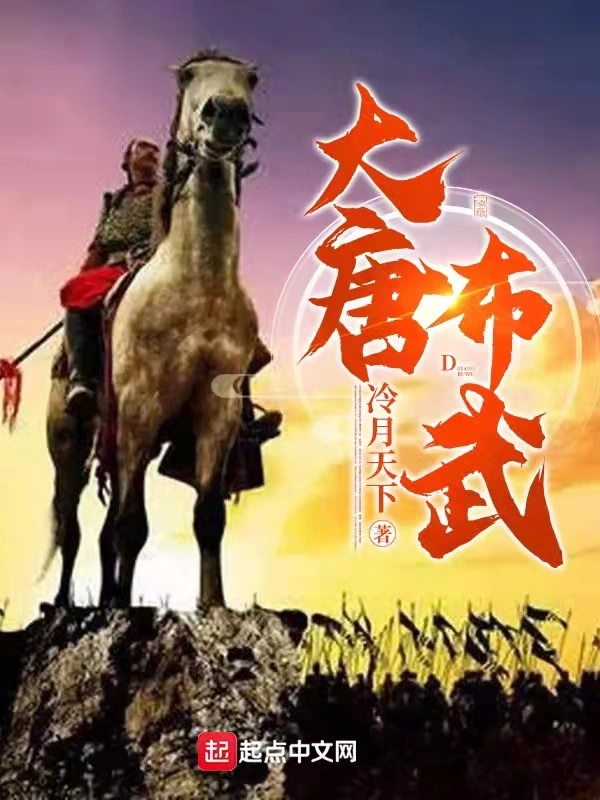
Datang Buwu
大唐布武
- Status
- Completed
- Length
- 125k Words
- Genre
- Historical
- Audience
- Male
- Subgenre
- Jin-Sui-Tang Dynasties
- Updated
- 4y ago
- Source
- Qidian
Stats
0Monthly votes
241Recommends
9Fans
56Chapters
Tags
Synopsis
Reader comments
Readers also read
 Talker in the Song Dynasty
 Please Call Me Your Majesty the Tsar
 In the Red Mansion: Escort Daiyu to Beijing at the Beginning
 1914 Begins with the Rejection of the Schlieffen Plan
 Never Walk Alone!
 Da Liu Bandits
 Ten Kingdoms Week
 Daming: Have I Become Wanli's Portable Grandfather?
 I Am Drawing a Hot-Blooded Episode in the Zhiyu Episode!
 The Age of Huangtian
 When Nao's Flowers Fall
 Conquer the World
 Counterattack in the Era of Wealth
 The Era of Super Intelligence
 After a Nuclear War, I Can Be Resurrected Indefinitely
 Live in Computer
 The Technological Battle Begins with the Integration of Time and Space Memory
 Fighting Back Against Alien Invasion Starts with Precognitive Dreams
 Start Subverting the World from the Weapons Museum
 Movies and TV: Thousands of Protagonists Are Invited to Die
From the peerless raptor, I hope this book is as fierce as the peerless raptor 😍
Author, when can the protagonist get to Hexi and Anxi? It's been fifty chapters and we're still on the way.
The update time of this book is modified as follows: Updated at 0:09 am Updated at 8:09 am The reading data of the new book period determines whether there is a good recommendation position, so book friends who have collected books please read more and support!
The writing is fluent and has a strong sense of immersion. This period of history is quite interesting.
Already collected, welcome to collect "Maude and His Students"
Very well written! Just too little! Lots of updates! Welcome to visit us and give us advice!
So what happens to the protagonist in the end?
I was just trying to find some novels from the mid-Tang Dynasty, but found that they haven't been updated for a while.
When Huang Taiji surrendered to Hong Chengchou, did Concubine Zhuang go into battle or warm her heart in person? Sun Dao of the Qing Dynasty solves the shocking mystery  Xiang Jingzhi Original 5 years ago · Scholar of Ming and Qing history, book reviewer, member of paid content evaluation expert group, creator in the field of high-quality history Follow Xiang Jingzhi 1 Most of the film and television dramas about the anecdotal and secret history of Empress Xiaozhuang Wen will arrange an emotional drama to make the famous Ming Dynasty surrender Hong Chengchou the temporary male protagonist. The story is that red sleeves add fragrance, love and loyalty make the hero unable to pass the beauty test. In March of the seventh year of Chongde (1642), the Qing army captured Hong Chengchou, the governor of Jiliao in the Ming Dynasty. Huang Taiji ordered him to be taken to Shengjing, and sent his confidants Fan Wencheng and Zhang Cunren to persuade him in turn. Hong Chengchou was always unyielding, so Huang Taiji was very hesitant and unwilling to eat. Concubine Zhuang of Yongfu Palace recommended herself and went to persuade him in person. She "put a pot on his lips" and poured ginseng juice into him one mouthful at a time, moving him with emotion and reasoning. After several days of hard work, she finally persuaded Hong Chengchou to surrender to the Qing court.  Still photos of Concubine Zhuang and Hong Chengchou in "The Secret History of Xiaozhuang" This is a quite sensational rumor. When the conqueror is in a semi-civilized state, in order to harvest and utilize the conqueror's wisdom and value, it is entirely possible for him to adopt unethical and barbaric methods, almost sacrificially melting the moral heart of the civilized man, and making him a new slave of the conqueror's power and wealth. The TV series "Secret History of Xiaozhuang" did not arrange for Concubine Zhuang to recommend herself. Instead, Fan Wencheng, who was educated in Confucian etiquette concepts, offered advice to his master and used cold violence to force Concubine Zhuang to go into battle. Of course, both Huang Taiji and Dorgon were reluctant. They squatted outside the room nervously and listened for any movement. Fortunately, Concubine Zhuang woke up the dreamer with a word, and Hong Chengchou surrendered gratefully. The matter of Concubine Zhuang persuading Hong Jinglue to surrender is not mentioned in the official history. Even the "Biography of Qing History" includes the Hong family as one of the second ministers, and there is no record of doing something that could not be done in the military camp on the bed. However, the legend is still widespread among the people and has become a mystery in the academic world! 2 During the Battle of Songshan under the command of Huang Taiji, his favorite woman, Concubine Guan Jugong, died of illness, which made him devastated. However, he captured Hong Chengchou and also received some spiritual comfort. After all, taking Hong Chengchou would remove a huge boulder on his way to the Ming Dynasty. In order to subdue Hong Chengchou, Huang Taiji tried his best. Volume 1 of Zhaoyi's "Xiaoting Miscellaneous Records" says: "Hong was aware of the encounter with Emperor Ming and vowed to die unyielding. He kept his hair unkempt and barefooted day and night, scolding him endlessly. Emperor Wen ordered all ministers to exhort him, but Hong did not answer a word." People, such as Fan Wencheng, a Han official dispatched by Huang Taiji, used reason and emotion, always seeking a quick death to realize "the illusory moral heroism" that he shared as a scholar-official in the late Ming Dynasty (Wei Feide's "Hongye-The Founding History of the Qing Dynasty"). Hong Chengchou looked as if he was ready to die, but was noticed by the attentive and shrewd Fan Wencheng. Hong brushed the dust on his shoulders from time to time, so he reported to Huang Taiji: "Chengchou will not die, but how can he cherish his clothes and his body?" ("History of the Qing Dynasty·Hong Chengchou Biography") Huang Taiji personally went to the place where Hong Chengchou was detained, "undressed his mink fur and clothes", and asked about his welfare.  "The Secret History of Xiaozhuang" Liu Dekai plays Huang Taiji and Ning Jing plays Zhuang Fei In the Ming Dynasty, Hong Chengchou went from being a Tixue Daotai and a vassal official to becoming a feudal governor and military commander in a few years. However, as soon as he made a mistake and was temporarily ineffective, he was impeached by political enemies and powerful ministers, and was demoted by the emperor. He was trapped in the isolated city without rescue for a long time. Now that Taizong Yu has condescended to the throne and untied his fur and shawl, it warms people's hearts and makes Hong Chengchou burst into tears of gratitude: "He is the true master of this world!" Hong Chengchou is such a big contrast that he actually wants to try to cooperate with the Manchus and seek a new opportunity for political reform. He had been in the officialdom for a long time and suppressed the rebels. He was deeply saddened by the fact that in the late Ming Dynasty, the eunuchs used power and chaos, the emperor was mediocre and willful, the civil servants were corrupt and perverted the law, and the generals took the reward for their merits, which led to the bloated and ruined country and the hardship of the people. In a situation of extreme moral uneasiness, he still wanted to display his lofty political ambitions, rather than die for the sake of simple benevolence and justice. Li Zhiting, a famous historian of the Qing Dynasty, said in "An Examination of Hong Chengchou's Surrender to the Qing Dynasty": "Hong Chengchou followed the general trend of history, abandoned the dark side and turned to the bright side. He dedicated his talents to the new cause of unification and made unremitting efforts for this purpose. Whether it was a merit or a fault, he was in no way related to the 'traitors' who surrendered to the foreign invaders. Times have changed. , The old historical concepts are also changing. Only by abandoning the standard of evaluating historical figures based on the distinction between Chinese and Yi can we make a scientific evaluation of Hong Chengchou and other people who surrendered to the Qing Dynasty. " Huang Taiji treated Hong Chengchou enthusiastically and finally made him surrender. After rewarding him with countless treasures, he performed hundreds of operas to celebrate. The princes and ministers were displeased and asked Taizong why he treated "Hong Chengchou as a prisoner" so favorably. Taizong asked, why are we fighting with all our lives in spite of the wind and rain? People say that he has entered the Central Plains. Taizong expressed the value of Hong Chengchou: "For example, all travelers are blind, but now that I have a guide, I will not be happy!" ("Xiaoting Miscellaneous Records·Yong Hong Wenxiang") Wenxiang was posthumously given the posthumous title by Emperor Kangxi after Hong Chengchou's death. 3 Taizong went to great lengths to surrender Hong Chengchou, despite being rumored to have betrayed his wife's appearance, but did not give him a heavy responsibility. He was only superficially courteous to Hong Chengchou and assigned him to the Xianghuang Banner Han Army that he personally led. He only served as a consultant on the national conditions of the Ming Dynasty and did not appoint any actual duties. He kept Hong under house arrest most of the time and did not allow him to go out for activities. Until the Shunzhi Dynasty, Prince Regent Rui appointed him to replace Prince Duduo of Yu to governor Jiangnan. Shizu provided him with a broad stage to display his talents and ambitions, allowing him to create huge historical contributions to the unification of China in the Qing Dynasty. However, no matter what positive role he played in the embarrassing situation, he was at a major disadvantage, surrendered to the enemy and treason, and could not shake off the label of an enemy that was hated by the Han people and despised by the Manchu people. Xiao Yishan said: "Chengchou has a long-standing reputation, and his shortcomings in his life are rare. Once he betrays, it will be unexpected. If we judge it without the concept of the nation and the state, it seems to be human nature, but in the era of autocratic monarchy, we will inevitably leave the humiliation of the officials." ("Qing Dynasty" ("Qing Dynasty") "General History of the Dynasty") In "Xiaoting Miscellaneous Records·Yong Hong Wenxiang", Zhaoyi, a member of the Qing Dynasty, except that Huang Taiji took off his mink fur to protect the Hong family from the cold and warm their heart, it did not say that Taizong arranged for Zhuang Fei to go into battle and play a beauty trap with her coquettish postures. That's not a bad idea! Zhaozhen continued to write: "Mao Xihe said that Hong Chu would not surrender, and he would be tempted by the superior man. Hong was a Fujianese, and he was accustomed to favoring men, so he lost his integrity." Is the Hong family a favor to men? The Hong family was determined not to surrender at first. Is it true that, as Mao Qiling said, Hong was gay because he could not resist the temptation of a male favorite? Zhaoyuan quoted Mao Qiling, a scholar of the Qing Dynasty, who seemed to refute the rumor that the Empress Dowager Xiaozhuang had committed herself to surrender to the Qing Dynasty. Although he added "How can it be so false", he changed his tone: "Therefore, when Emperor Ming first heard about his death, he set up an altar to offer sacrifices. It was not without reason." This potentially means that Hong Chengchou had a habit of cutting off his sleeves, and there might be some confusion between him and Emperor Chongzhen. Could it be that his affectionate care for Huang Taiji, undressing his clothes and covering his body, was also a fantasy.  "A Brief Portrait of Hong Jing" by Zhu Henian of the Qing Dynasty Which is true or false, right or wrong can only be left to the smoke of that period of history nearly four hundred years ago. Zhaoyi was the main general in the Qing Dynasty's attack on the Central Plains (even said to be one of the most effective eagle dogs). He was also influenced by the Qianlong Emperor's appointment of two ministers by the Hong family. In the 41st year of Qianlong's reign, Emperor Gaozong of the Qing Dynasty ordered the National History Museum to compile the "Biography of the Second Officials of the Ming Dynasty". Hong Chengchou, Jin Zhijun and other Shunzhi Dynasty scholars, like other rebel officials who surrendered to the Qing Dynasty, had to be recorded because they "created the scale of a great unification". It is used to calm people's hearts and make people obedient. To put it bluntly, if there are people who are all trying to defeat the officials of the country, they are in difficult times and cannot give orders to their masters in times of danger. They are often afraid of death and are shy and surrender. Zhaoyun was the sixth grandson of Daishan, the second brother of Taizong. He was born in the 41st year of Qianlong (that is, the year when Emperor Qianlong included Hong Chengchou as his second minister). In the tenth year of Jiaqing, he became the eighth prince of Li. Due to internal strife among the Manchu aristocracy, Zhaozhen, who relied on his talents to let his country go wild, received an anonymous post in November of the 20th year of Jiaqing, reporting that he had insulted ministers and abused punishments in the palace. Emperor Jiaqing reprimanded him in the edict: "On weekdays, he was involved in numerous lawsuits in Shuntian Mansion, Infantry Commandery, Punishment Department and other yamen due to the fine rent of land." He also issued four strict edicts. For the crimes of "arrogance and lack of superiority", "abuse of non-criminal punishment", "insulting ministers" and other crimes, he was removed from the royal title and imprisoned in the Zongren Mansion. He was released after three years and was no longer reused. In his later period, Zhaoyi was depressed and frustrated, so he devoted himself to poetry, literature and history, and wrote the rich "Xiaoting Miscellaneous Records", which preserved a large number of precious historical materials about politics, economy, military, culture, rules and regulations, anecdotes of civil and military officials and social customs before the early years of Daoguang. Zhaoyi was born as Prince Heshuo and was close to the water. His knowledge of the old news and secrets of the royal family and ministers was more credible than the author of other books. He records that Hong Chengchou "divided the peach and cut the sleeves" and implicated Emperor Chongzhen. How true it is is difficult to determine without other books to corroborate it. Hong Chengchou was a very controversial and important figure during the Ming and Qing Dynasties. Facing hundreds of thousands of rebels, he passed the pass and beheaded the generals, which was regarded as loyalty to the country and harmed the interests of the people. At the Battle of Songjin, he had more troops but was defeated by more than 100,000 Manchu and Qing troops. He was defeated and captured. He should be considered for his own benefit. In particular, he was persuaded by Huang Taiji to surrender, surrendered to the integrity of the nation, and surrendered to foreign powers. After a period of neglect, he came back to make plans and fight on the battlefield for the Qing Dynasty to unify China, which confirmed the fall of a traitor to national morality. But it is undeniable that he made a historical contribution to the unification of multi-ethnic China when the Qing army entered the Pass, mobilized Jiangnan, and marched into the southwest. He promptly stopped the killings of the Eight Banners soldiers in the battle, prevented the people from suffering, eased the ethnic conflicts between Manchu and Han, and made historical contributions to the unification of multi-ethnic China. When we evaluate the historical existence of different dynasties and different characters, we must not only return to the background scene where human nature was brutally slaughtered to criticize, but also make new evaluations in accordance with the development laws of reconstruction after the social order is broken. Only by starting from the perspective of the metabolism of Chinese historical development and examining the national unification after ethnic disputes in the complex integration of Chinese culture can we avoid being bound by the narrow theory of a single nation and subjectively denying ethnic relations and power politics in a special era.
Very well written, keep up the good work!