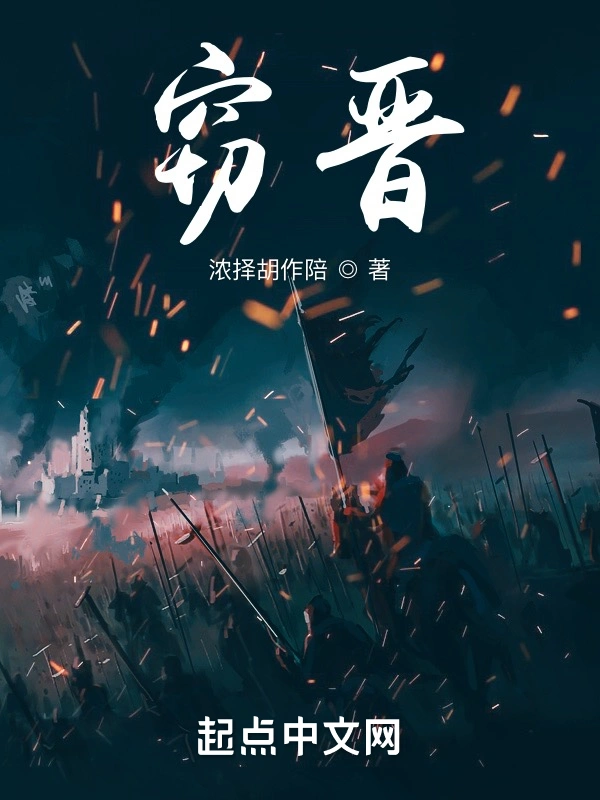
Steal Jin
窃晋
- Status
- Ongoing
- Length
- 1.1M Words
- Genre
- Historical
- Audience
- Male
- Subgenre
- Jin-Sui-Tang Dynasties
- Updated
- 3y ago
- Source
- Qidian
Stats
0Monthly votes
2.9kRecommends
6.3kFans
509Chapters
Tags
Synopsis
Reader comments
Readers also read
 Fu Ming 1627
 After Lying in Bed for Three Years, He Was Forced to Help the Han Dynasty
 Northern Qi, Sage Khan
 Red Mansion: Start Escaping and Farming from the Equipment Bar
 Siheyuan: Start by Picking up Attributes
 Ten Kingdoms Week
 Late Tang Dynasty: Last Descendant of the Clan
 Beastmaster: I Can See the Evolutionary Path
 Immortal Who Seizes the Body
 Northern Qi: My Father, Emperor Wenxuan
 Gou Qin
 Late Tang Dynasty: Father-In-Law Strategy Guide
Choosing the Southern Dynasty, do you think being a time traveler can turn the tide? Do you know how powerful Liu Yu, the founding emperor of the Liu Song Dynasty, was? As a result, he was held back by the Jiangnan family and could not dominate the country?
The reform of the military system is really a bit too hasty and the pace is a bit too big. There is one major problem. There is a word "huo", why should there be five people called "wu", two Wu and one Shi. That is, ten people form a "gang". What does it mean? It means ten people eating together. The ancient marching pot was prepared for ten people. One more person is not enough to eat, so charging one more person is a waste. The reform of the military system is not only an issue of combat effectiveness, but also an issue of its own status, an issue of political impact, and the most important issue is logistics. Thousands of troops have not moved yet, but food and grass go first. Moreover, the smaller the minimum establishment, the more officers are needed. The more programs are commanded at the same time, which is fatal in an era when communication relies on shouting. Even now, there are ten people in a class, just for the convenience of eating. The 2-5 system was a military system developed under the social background of the time, and it was a manifestation of the rationality of its existence.
Answer book friends' questions about restructuring.
Regarding the restructuring issues raised by book friends. Actually it doesn't matter. What the protagonist changes is inside the grassroots combat unit. It is a reform aimed at flattening the command and delegating combat deployment to a team of fifty people. In order to continue the process of restoring the synthetic troops of the Han Dynasty. Cao Cao's greatest contribution in his life was actually the establishment of a classical military system. To put it simply, it is to forcefully ignore the differences between the various arms, and use the four simple and crude standards of assault, projection, array, and skirmishing to disrupt and reorganize the entire tactical system. Cao Cao directly organized heavy infantry and heavy cavalry into assault infantry divisions according to assault functions, and organized array projection light infantry, skirmisher projection artillery and light cavalry into auxiliary divisions. So the main force of Cao Cao's Tiger and Leopard Cavalry is actually heavy infantry, not cavalry. In the Wei and Jin Dynasties, each army still abolished the cavalry and increased the infantry on the basis of Cao Cao's tiger and leopard cavalry. This is actually a regression based on the initial synthesis in the Han Dynasty. From the Han Dynasty to the Tang Dynasty, grassroots combat units have always been teams of fifty people. The difference is that the Han and Tang dynasties were highly synthetic. However, the synthesis of Han Dynasty stagnated and even regressed at the end of Han Dynasty. The Han army and the Wei and Jin armies left over from Cao Cao's military reforms were in two directions. In the Tang Dynasty, the synthetic army truly brought order to the chaos. The organizational reform in the Tang Dynasty had two points. One is the compression and flattening of the brigade-level command structure. The second is to change from a three-level establishment to a four-level establishment. This triangular squad of three soldiers in a formation makes the individual soldiers' cooperation more flexible. Every three squadrons formed a squadron again. Every five squadrons form a group. The formation changes of each team require a more flexible degree of organization, which is difficult to achieve without more flexible organizational reforms. At the same time, this reform of refining the basic organization also makes the soldiers' combat skills more professional and modular. This kind of command-to-team reform can abolish the old system of a thousand-man team and a five-hundred-man team. It can allow generals to conduct full command and mobilization before expeditions and battles, greatly improving the efficiency of the use of effective troops. The problem of officers does not actually exist. Wu Qi's military reform has used veterans who are skilled in operations and tactics to serve as grassroots officers. Specific on-the-spot command only extends from the brigade-level commander to the team-level. The width of the frontal battlefield of a regiment is only 300 steps (450 meters), which is very narrow. Military-level generals will not intervene in specific command. A situation like moving the machine gun position 50 meters to the left will not happen. Pre-war deployments are all attended by military judges and issued by military judges. The deputy captain at the end of the team is responsible for issuing orders for temporary formation changes during wartime. This officer is usually at the rear of the team and is responsible for observing the drum beats and flags of the Chinese army at all times, and then conveying them to the military judge and flag bearer of the team.
There were two ways to make a fortune in the Eastern Jin Dynasty. The first was to learn from Huang Chao, and the second was to join.
Previous picture
The family members are easy to deal with. Just follow Huang Chaotian Street and trample all the bones of the ministers. They have no effect other than holding them back. Kill them all and use their corpses to compost and increase land production. Then it is the time for the Northern Expedition to slaughter a city of barbarians. Make the barbarians afraid of you, otherwise the powerful Northland will also be held back.
What do you think of a maid? Funny
Did the Eastern Jin and Southern Dynasties still try to turn the tide? Forget it! It was okay for the Eastern Jin and Southern Dynasties to survive, but it was nonsense to ask for the Northern Expedition or even unification. Is Huan Wen powerful? After Luoyang was captured, he advocated moving the capital to continue the Northern Expedition. As a result, "the fields and houses could no longer be taken back, and the boats and carriages could not be obtained." Later, Luoyang was also lost. Is Liu Yuli powerful? Swallowing thousands of miles like a tiger, what will be the result? In the last few years of his life, he faced Tuoba Si, Emperor Mingyuan of the Northern Wei Dynasty who was also about to die, and he also lost his city and territory.
The country is only that big, its geographical location is not good, its finances are not good, and a lot of people are corrupt. The monarchs and ministers also acted collectively, wary of each other, and engaged in internal fighting. The people and soldiers at the bottom were desperately exploited by the high-level insects and became slaves of the powerful families, resulting in the disunity of the people and the disunity of the military. It's hard to make money if you don't write this kind of opening well.
Why use plagiarism? Damn the Jin Dynasty, still using plagiarism?
Chapter 20 What kind of idiot can write such a plot?
The wind is blowing, the Yu family is about to be wiped out
Unifying the world is a very risky thing and requires all resources to be invested in it, because if it fails, it will lead to death. The clans generally pursue self-interest and will not invest all their resources at all. They also have a certain degree of weakness and will waver once the war goes unfavorably.
In the Jin Dynasty, rebellion in the fields is better than being in officialdom, right? In the manor economy, people gather together and no one cares about them. They also waste several years observing filial piety, recruiting refugees to open up wasteland, drying salt and catching fish, and making steel plate armor and bronze cannons. I don't believe that the soft goods of the Jin Dynasty can stop it.
To carry out the Northern Expedition, we must first deal with the Eastern Jin Dynasty and the noble clans. But where is the economic foundation and social order, how can we deal with it?
I don't know if the author can update it again