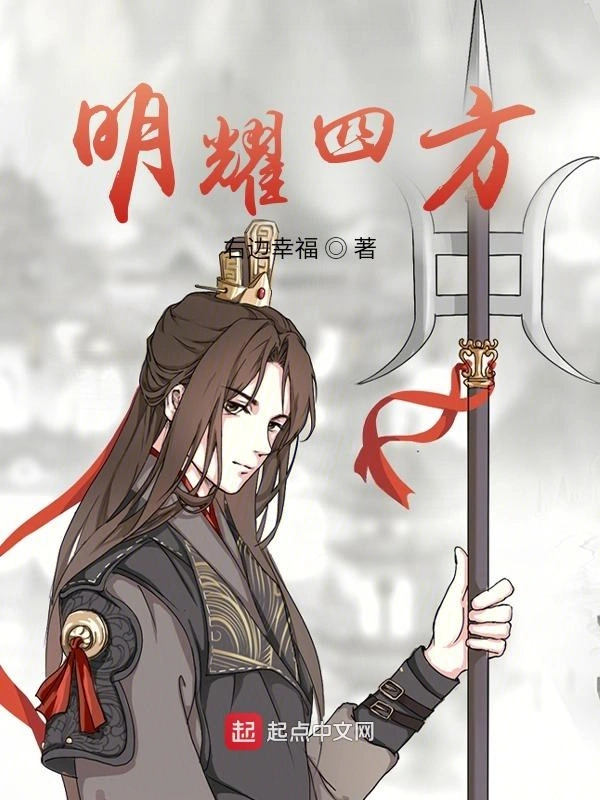
Shining Brightly in All Directions
明耀四方
- Status
- Completed
- Length
- 844k Words
- Genre
- Historical
- Audience
- Male
- Subgenre
- Song-Yuan-Ming Dynasties
- Updated
- 4y ago
- Source
- Qidian
Stats
0Monthly votes
4.8kRecommends
9.7kFans
382Chapters
Tags
Synopsis
Reader comments
In booklists 2

🍀It's True, 🍁It's Hard to Find a Book You Like. 🌾
Books are really "poisonous" (◦˙▽˙◦) and addictive! (๑•璒•๑) I have read every book Basically it includes categories such as urban, science fiction, fantasy, history, etc. If you like it, just click on it and have a look. Remember to collect~~~ (Today, I! I'm back again! Hahahahahaha!) [Severe anxiety, moderate depression. [How many blows does it take for a person to see through his life? It only takes once. [This time, I was really hit all over my body. I gave everything and got it. You don't
80Books334Follows4yUpdated



The World Is a Chess Game
Cultivation, imagination
22Books5Follows4yUpdated
Readers also read
 Talker in the Song Dynasty
 In the Red Mansion: Escort Daiyu to Beijing at the Beginning
 Please Call Me Your Majesty the Tsar
 1914 Begins with the Rejection of the Schlieffen Plan
 Never Walk Alone!
 Da Liu Bandits
 Long Wanshengshi
 Daming: Have I Become Wanli's Portable Grandfather?
 I Am Drawing a Hot-Blooded Episode in the Zhiyu Episode!
 Travel Through the Ming Dynasty and Become a Tyrant
 1853: Mein Kampf
 Daming Under Facebook
 Hello Cross Farm
 Protect the Queen
 Travel to Southeast Asia
Price Analysis of Red Cannons Imported in the Ming Dynasty According to "European Shipwrecks and Western Cannons Spread to China in the Late Ming Dynasty" (written by Huang Nong, a scholar of the history of the late Ming Dynasty and a scholar of ancient artillery in Taiwan) - book display: The first year of Tianqi (1621) During Xu Guangqi's military training period in 2001, Xu Guangqi's friends asked the Portuguese in Macau to purchase a Portuguese artillery weighing four thousand pounds. After many efforts, they finally succeeded in purchasing it. The price was said to be one thousand taels per gun. Huang Yinong pointed out that the cannon donor here exaggerated the price in order to falsely claim credit, and the actual price should be less than 1,000 taels. Huang Yinong calculated that if the cannon were made in Britain, the cost of each gun would be just over two hundred taels of silver. I can't find the weight data of artillery in the seventeenth century at the moment. Based on the historical calculation of artillery based on the weight of four-pounder cannons in the eighteenth and nineteenth centuries, the weight of four-pounder cannons in the seventeenth century should not exceed 1,200 pounds. In other words, the cost of the four-pound cannon manufactured in Britain at that time was no more than sixty taels of silver. After subtracting factors such as false reports and purchase requests, I think the selling price of a four-pounder gun should be around one hundred taels to one hundred and fifty taels. If it is a small-caliber artillery such as a four-pounder, which is easy to manufacture and has low confidentiality, its purchase difficulty should be lower than that of the red-coat heavy artillery. Therefore, the price of two hundred taels can completely buy a Portuguese or Dutch four-pound cannon. However, the red cannon is different. The red cannon is a typical ship-borne long heavy artillery. The main difficulty of the red cannon lies in the long barrel technology. The length of the 130 mm 18-pounder gun is about 3 meters, which is about 22 times the diameter. What was popular at that time was the idea of barrel proportional modulus, which gradually thickened from the muzzle to the barrel to the barrel. Moreover, this belongs to the British Coffelin long-barreled gun class. Such a long barrel requires a smooth bore and a consistent caliber. In the late Ming Dynasty, brittle white pig iron casting was the main manufacturing method, which was indeed high technology. Of course, this is not to say that casting red cannons is an insurmountable threshold. The casting technology of the Ming Dynasty was actually very superb. In terms of technical difficulty, casting red cannons, a previously unseen technical task, was not difficult for the skilled craftsmen of the Ming Dynasty. From the initial explosion of cannons to the later iron-body copper core cannons, it can be seen that the artillery technology of the Ming Dynasty has far surpassed the Western artillery technology at that time in just a few decades. As for the reason why large-caliber artillery is difficult to popularize, apart from the technical difficulty (which will be discussed later), the main reason is the cost issue, not the technical issue. In fact, few people know that before the mid-19th century, regardless of whether in the East or the West, the scrap rate of artillery castings was actually quite high. This situation was known when Western artillery manufacturing technology was introduced in the late Ming Dynasty. It is recorded in "Fire Attack and Key Points" that because the quality of casting was not very stable at that time, even in Europe, "Those who can cast ten blunderbuss from one big blunderbuss and get two or three usable can be called a master." In other words, the scrap rate is as high as 70~80%. Naturally, the cost of artillery cannot be reduced. The most important and fundamental reason why the gun casting rejection rate was so high at this time was the cooling rate gap between the inside and outside of the gun barrel. Due to this difference in cooling speed, many gun barrels with poor materials and uneven uniformity will develop cracks in the gun barrel due to thermal expansion and contraction during cooling. And a gun barrel with cracks in the barrel is naturally a waste product. That's not all. Some cracks are not visible on the surface, but are inside the metal of the pipe wall. Therefore, all the artillery built at that time needed to be tested for the first time. That is, filling the gun barrel with gunpowder but not loading the cannonball, and releasing it once. Those with no cracks in the tube wall are qualified. If there is internal damage to the pipe wall, it will crack when it is released and can be eliminated immediately. In addition, when casting super-large-caliber guns, especially multi-ton fortress heavy artillery, the larger the caliber, the greater the difference in cooling rate between the inside and outside. Therefore, in the era of natural cooling, the larger the caliber of the gun, the higher the scrap rate when casting, and the weight and price soared sharply - out of proportion, almost exponentially. Above a certain level, the failure rate is almost 100%. Therefore, it was rare to see iron super-large-caliber artillery at that time. The largest one was only about 8 inches. No matter how large the artillery was, it was difficult to successfully manufacture it; casting- -If only one of a hundred large-caliber cannons can be used, it does not mean that the cost is just the material price of one successful cannon, but a hundred! So the price of a 32-pound or 42-pound heavy cannon can even be equal to the sum of the prices of dozens of 4--6-pound field guns! Of course, dozens of 4--6-pound cannons fired dozens of volleys when attacking a city, which can only leave traces on the city wall. There are some shallow pits but no major damage to the city wall, but a few rounds from a 32-pound heavy cannon may completely destroy a section of the city wall (and this is especially important when dealing with rough-skinned battleships in naval battles). Therefore, the destructive power of a heavy cannon when attacking a city is far from being comparable to dozens of small cannons (of course, against infantry groups, the power of heavy artillery is not as powerful as small field guns). It is precisely because of this that the price of heavy artillery remains high. The American Rodman internal mold water cooling technology in the 19th century can solve this problem. It can ensure that the cooling speed of the inner and outer tubes is the same, or through experiments and adjustments, the speed difference can be controlled within a safe range, so that the body tube will not cause internal injuries. This immediately reduces the scrap rate to a single-digit percentage, or even to zero, thus significantly reducing the price of building a cannon. And because the cannon itself is relatively strong and has no hidden damage, the average lifespan is increased by five times. Therefore, even if this technology cannot actually improve the combat performance such as the range and power of artillery, it is a very valuable technology just because it causes a significant reduction in the cost of artillery. The red-coated cannons from Europe in the late Ming Dynasty traveled across the ocean to come to China. Not only were the material prices and processing costs of a single cannon a problem, but there was also the issue of scrap rate during processing. High-quality British cast iron cannons were sold to Europe for five times the price of their own countries. In addition to their own technical confidentiality issues, they also had scrap cost issues I found this online.
Who knows why the author didn't write the book "Going to Southeast Asia with the System"? 😫
The women wrote very failed stories, one tried to stop him from buying a concubine, and the other was sent to training. It's just that my brain is not up to par.
It would be better to directly establish a constitutional monarchy and evade all imperial power, which is more serious than that of the United Kingdom. After all, Elizabeth II even fired the Prime Minister of Australia. Then he was given privileges that he didn't have, such as not needing a driver's license to drive, and all the Zhu Ming royal family were recruited to form the Royal Guards. Then we will implement an electoral system. Every position must elect literate people to vote. If you want to be a county magistrate in a small position, you only need to take an exam. The exam content is divided into physics, chemistry, arithmetic, Chinese, agriculture, epidemics, pests and beasts (biology), geography, governance (similar to politics, most of them test how to deal with things). There is no need to learn a foreign language, let those barbarians learn Chinese I am just giving you a suggestion, it doesn't matter if you ignore it.
Until Chapter 7. The author is too sketchy about industry. Refractory bricks and coke are not readily available in modern times. Determine the needs based on the use and build your own kiln for firing. Why is the first generation of iron in Foshan in the south good? Because it mainly uses charcoal instead of coke. Where to buy coke? ? Ask people in the ceramic industry to find suitable clay and build a small kiln mouth. 2. The sealing of steam engines has nothing to do with rubber. You can find out by just searching. Can high temperature sealing rubber be used? Metal pads, oil, etc. Are the right way.
The pace is too slow, there are no guns, and there is no maritime hegemony. How can the Ming West India Company be established?
Did you guys negotiate this?
Your sister can keep it to herself in West India. Why are you making fun of her when she is far away?
I'll tell you the number. It's up to you, the author, to update 20,000 words a day.
Your covers are so funny😃 and you both made me laugh in the popular serials
Judging from the amount of discussion, I recommend the author to write about foreign countries. There are too many works about the Ming Dynasty. Although the market is large, the competition is more fierce. The style of starting in North America and entering Southeast Asia should be good. I really don't want to read this book now.
Please support the genuine version, otherwise the author will become a eunuch again.
What about the previous book? Can't it be released?
I just want to ask you, does the protagonist rebel?
Well written! Things develop logically and the characters are very distinct. The most important thing is that the protagonist does what he wants!
Up and down
Awkward () = convex
The author opens a double-passing door for Mingmo, it feels suitable for you
It's getting shorter and shorter, what's going on
I would like to ask the author, how exaggerated is an ancient only son in ancient times?
When the founding emperor went hunting with his heroes, he entered the woods and asked the other party to kill him. Everyone hurriedly kowtowed  History Secret Agent 3 years ago · Creator in the field of high-quality history Follow In ancient China, the founding emperor could not avoid the moral violation of killing heroes. For example, Liu Bang killed Han Xin, Peng Yue and others who had helped him expand his territory and had experienced hundreds of battles. Zhu Yuanzhang, the founding emperor of the Ming Dynasty, also started from scratch and followed the rebel army from the grassroots to the emperor. However, he still used various reasons to kill many heroes, such as Lan Yu, Hu Weiyong and others, as well as the huge organizations they were implicated in.  Liu Bang Liu Bang killed the heroes because he was afraid that he would be overshadowed by his merits, and that one day he would be unable to control the brothers who accompanied him through life and death. Zhu Yuanzhang killed the heroes because he was afraid that these heroes would be proud of themselves and their descendants would not be able to control the situation after his death. It is said that it is easy to conquer a country but difficult to defend it. When you conquer a country, you need capable people, but when you defend a country, you need obedient people. There is another founding emperor in history. This person's method of gaining power can be described as "half a dozen, half a gift". He is Zhao Kuangyin, who wears a yellow robe. Zhao Kuangyin is a lucky man. Since joining the army, he has been deeply appreciated by the old leader Chai Shizong, the former leader of the Later Zhou Dynasty. With his own efforts, his continuous accumulation of war experience, and the fact that he had experienced two generations of kings, Zhao Kuangyin established a high prestige in the army. It must be said that he is a very capable person.  Zhao Kuangyin After Chai Rong died of illness, Zhao Kuangyin and others became the pillars of the Later Zhou Dynasty. The prince was young, and Chai Rong was left alone. If not at this time, the young new emperor would sooner or later lead everyone to the ditch. So everyone gathered together and simply selected a capable person to start a new dynasty. As a result, Zhao Kuangyin was elected, Chen Qiao mutinied, and the yellow robe was added to his body. Without much bloodshed, Song Taizu picked up a dynasty in vain. Although it is a bit dishonest, after all, Chai Rong once trusted and admired Zhao Kuangyin during his lifetime. But if you think about it carefully, if you leave national affairs to a child in that era of constant war, there will be no good results. Ever since, Zhao Kuangyin suddenly changed from a general to an emperor. After the founding of the Song Dynasty, Zhao Kuangyin organized a hunting competition. In this competition, Zhao Kuangyin summoned all the military governors from all over the country to participate, which was equivalent to a gathering. Of course, those generals who participated naturally wanted to perform well in front of the new emperor. Among them, there are many old subordinates and heroes who have been with Zhao Kuangyin through life and death.  Yellow robes and body Although it is hunting, bows and arrows are not very good. In such an environment, it is difficult to ensure the safety of the emperor, so the emperor usually hunts in the paddock, and he must be protected by top-notch guards. But Zhao Kuangyin did not do this. He had one man and one horse, only bringing a bow and arrows, and went into battle lightly. The emperor and ministers gained a lot from this hunting. In the evening, they should have ended the hunting and returned to the palace to rest. But Zhao Kuangyin didn't look tired at all, as if he was in high spirits. He rode his horse into a deep mountain and old forest, and the ministers hurriedly followed him. When he reached the depths of the woods, Zhao Kuangyin suddenly stopped his horse, gathered the ministers together and said: "There is no one here. If you want to be an official, you can kill me and do it!" It means there is no one here. If anyone wants to kill me, just do it! This sudden sentence frightened these heroes. They dismounted and kowtowed like garlic, constantly expressing their loyalty and support for Zhao Kuangyin. Seeing this scene, Zhao Kuangyin nodded with satisfaction and returned to the palace with these ministers.  A glass of wine releases military power In fact, Zhao Kuangyin has always been very afraid of military generals. Judging from his own journey, he believes that it is very dangerous for military generals to hold military power. Therefore, even though these generals repeatedly stated that they would loyally follow Taizu, Zhao Kuangyin later released his military power over a glass of wine, restricting the power of the generals everywhere, turning the military attache into a complete migrant worker. This approach of Song Taizu indeed made the possibility of usurping power by generals almost zero. Even if Yue Fei trained the famous Yue Family Army, he still could not mobilize a single soldier if the court did not order it. There are thousands of ways for a dynasty to perish. Although he controlled this hidden danger on the one hand, it also turned the Song Dynasty's military power into a shortcoming. The military strength of the Song Dynasty was not weak, but in such a repressive environment, the talents of the generals could not be put to use, and the real power was mostly in the hands of some civil servants who could only talk on paper, which eventually led to the slow demise of the Song Dynasty after losing its bloody spirit!