
The Rise of Vassal Kings in the Late Ming Dynasty
明末之藩王崛起
- Status
- Completed
- Length
- 377k Words
- Genre
- Historical
- Audience
- Male
- Subgenre
- Song-Yuan-Ming Dynasties
- Updated
- 4y ago
- Source
- Qidian
Stats
0Monthly votes
3.4kRecommends
6.5kFans
185Chapters
Tags
Synopsis
Reader comments
Readers also read
 Please Call Me Your Majesty the Tsar
 In the Red Mansion: Escort Daiyu to Beijing at the Beginning
 1914 Begins with the Rejection of the Schlieffen Plan
 Talker in the Song Dynasty
 I Am a Great Power
 I Am the Carpenter Emperor
 Travel Through the Ming Dynasty and Become a Tyrant
 Three Kingdoms: Ji Han Liu Zhang
 Dreaming Back to the Plutocratic Empire That Started World War II in Sicily
 Emperor Zhengde
 Da Liu Bandits
 Ni Ming 1644
 The Iron-Blooded and Wise General Who Resisted Japan
 The Iron-Blooded Warrior Who Resisted Japan
 Acting as a Guard for Kong Jie with a Bright Sword
 Siheyuan: Since 1958
 Siheyuan, Was Defeated at the Beginning
 The War of Resistance: Starting from the Chief Secretary
 Fighting Behind Enemy Lines in the Anti-Japanese War
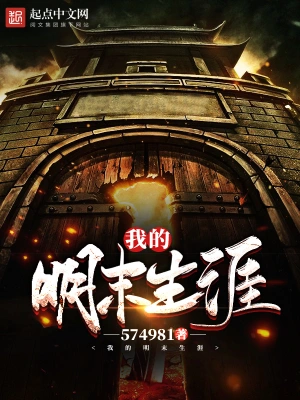 My Career in the Late Ming Dynasty
I've read a lot of time-traveling articles, but now no one is reading mindless white articles. Because the suspicious and incompetent Chongzhen cannot believe you. Without the support of the imperial power, it is impossible to revitalize the Ming Dynasty and can only rebel secretly. In that historical environment, human life was like a piece of grass. A time traveler must have a system, a status and a sufficient foundation, otherwise he will be destroyed by the general trend of history, and it will be difficult for him to survive, let alone others. I can understand that you don't write the system. After all, you still have some foundation to be a county king, but if you want to succeed in the rebellion, it is useless for an ordinary person to understand a little bit of history? How useful can people who are not majoring in physical and chemical engineering be? If you don't write systems, you must have physical and chemical abilities, right? I thought it was ridiculous when I read about filtering coarse salt into refined salt. Can refined salt be prepared using carbon alone? What kind of international joke are you kidding? If you filter like this, you can filter out potassium chloride and magnesium chloride. These two substances are the main bitter components in coarse salt. Using activated carbon as a filtration method can only remove insoluble matter. It still tastes bitter when eaten. This is not refined salt, it can only be regarded as crushed coarse salt at best. If you don't want to write a systematic article, I'll trouble you to check more information and stop writing content that makes people think it's ridiculous, okay?
Can there be less systems in the historical text? It's really terrible. It feels like it's beyond common sense. It's very abnormal to travel back in time and come with a memory plug-in for future generations. If you try to use the system again, it will feel boring.
In addition to surrendering to Li Zicheng and other rebels, the Ming Dynasty vassal kings lurked and imitated Liu Xiu's method of using the power of the rebels to restart the dynasty. As the author wrote, the Tang king had something to say! Chongzhen's control over the vassal king is not just a joke!
Goldfinger was sprayed by trolls? If there is no gold-fingered dog, you won't even watch it!
Do you have any misunderstanding about the title of Wang? It was okay for Dongchang to extort money at the beginning, but how could a servant guarding the hospital be so awesome? The murder part was so stupid, and the part about going out to eat was so stupid, it successfully made me sick.
As long as Chongzhen is not dead, the world will not be in chaos, and the vassal kings will not be able to do anything, so stop thinking nonsense. This is the reality.
Your mother saw Chapter 12 and didn't see Goldfinger either.
In the late Ming Dynasty, vassal kings were not allowed to recruit private soldiers. If you are found to be recruiting private soldiers, Fengyang will have to build a high wall, but you will be fine if you recruit the palace guards. Although Zhu Di cut down the vassal and abolished most of the palace guards, a considerable number of palace guards remained. For example, in the late Ming Dynasty and Tang Dynasty, King Zhu Yujian had more than 600 palace guards. Zhu Yujian once asked the Yiwei Department of the Royal Palace to overhaul the Nanyang City Wall, but because he thought the number was small, he asked Chongzhen to transfer the Kaifeng squadron and restore it to full strength. Chongzhen was petty, so he refused in a high-sounding way with the ancestral system. Later, Zhu Yujian used the royal palace's silver to privately recruit thousands of soldiers and set up guards around Nanyang day and night, and won a few small battles with nearby peasant armies. After Zhu Yujian was imprisoned, the Yiwei Department of the Tang Palace did not withdraw its guards. There were still guards. In the end, they all died in the battle when the troops attacked the city. So you can make a compromise. Only recruit royal guards, not large-scale private soldiers.
I don't like reading system history articles either. You can read Han Shizu. This book is quite good.
Can't Level 5 authors directly sign a contract?
Let me write again about the question of whether a prince could have an army in the late Ming Dynasty. Take the famous Longwu Emperor Zhu Yujian in the late Ming Dynasty as an example. If the prince of the clan is found to be recruiting private soldiers, Fengyang will have a high wall, but if you recruit the palace guards, it will be fine. Although Zhu Di cut down the vassal and abolished most of the palace guards, a considerable number of palace guards remained. For example, in the late Ming Dynasty and Tang Dynasty, King Zhu Yujian had more than 600 palace guards. Zhu Yujian once asked the Yiwei Department of the Royal Palace to overhaul the Nanyang city wall, but because the number was too small, he asked Chongzhen to transfer the Kaifeng squadron and restore it to full strength. Chongzhen was petty, so he refused in a high-sounding way with the ancestral system. Later, Zhu Yujian used the royal palace's silver to privately recruit thousands of soldiers, and set up guards around Nanyang day and night, and won a few small battles with nearby peasant armies. After Zhu Yujian was imprisoned, the Yiwei Department of the Tang Palace did not withdraw its guards, and there were still guards. In the end, they all died in the battle when the troops attacked the city. In this example, the only thing the King of Tang did wrong was to believe Chongzhen's order of the King of Qin in the World. If he did not go north, he would continue to stay in his palace of the Tang Dynasty and continue to train these palace guards. By the 17th year of Chongzhen, with the money and food in the hands of the Tang Palace, he would be able to expand at least several thousand troops based on the courage of the few hundred soldiers of the palace.
Systematic articles have nothing to do with it. The main thing is to write well. Many platinum writers still write systematic articles. Only if the main articles are well written will people read them.
According to this development, even if Chongzhen dies, you will not dare to rebel.
I wrote more than ten chapters in one battle against the Japanese pirates, and it was so successful. In the future, the national war will have two hundred chapters in one battle. How can I write like this for a long time?
I have nothing to say, but this...
You are also an old author, so I won't go into details. Since you have the foresight, your own territory to develop, and the money left by your ancestors for the early stage 🤫, why do you need to build a system? Moreover, once ancient literature relies too much on gunpowder and thermal weapons, the book will be finished, and not many people will subscribe and reward it. It is recommended that you change the settings now before it is too late
As some readers said, Chongzhen had a strong control over the vassal kings, so he would treat the county princes like he did the vassal kings and not allow him to leave his fiefdom? Can anyone shed some light on this? If the protagonist wants to develop, it is better to take the overseas route first. Japan, Korea, Liaodong, and Shandong are just right for triangular trade. The forces on land can just build slaves and come to Shandong to protect themselves. Don't do more. Think about it. When the vassal king went to Qinwang, he was killed by Chongzhen. Why is the protagonist doing this?
If you didn't rebel at the end of the Ming Dynasty, even if you conquered the world for Chongzhen, you would be exterminated at any time. The emperor, a minister with great achievements, does not need it. As long as you are alive or your descendants continue to be loved by the army and the people, the emperor will not sleep well.
Author, have you ever considered the issue of armor? Those with armor can defeat three without armor. If you build an army without armor, killing the Qing army will also cost you a life.
Like before the end of the Ming Dynasty, it's okay to have no golden fingers. If you have time, you can do it slowly. In the later period, if you don't have the golden fingers, you really can't do anything. You have no money, no soldiers, no food, and no one. What can you do in the late Ming Dynasty?
You wrote this at the beginning. I really don't know how to die. There is also the bottom versus the top. If you dare to say that, you will die. And if you do this, you are also being sold and seeking death. The technique is too young.
It doesn't look good, not good-looking at all…
The Ming Dynasty has been too long. Many people who can rise are not the most capable, and many people who are smeared do not mean that they are the worst.
Nowadays, the increase of system literature has something to do with the environment. In the previous novels of 2005, the protagonists could do everything, but now the protagonists are all flying, and they can't do it without a golden finger. This is a change in the thinking of the entire online literary world.