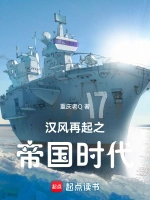
1635 Han Style Returns
1635汉风再起
- Status
- Completed
- Length
- 3.7M Words
- Genre
- Historical
- Audience
- Male
- Subgenre
- Song-Yuan-Ming Dynasties
- Updated
- 3y ago
- Source
- Qidian
Stats
Tags
Synopsis
Reader comments
In booklists 23
Favorite Historical Text (Focuses on Fighting for Hegemony, Many Niche Dynasties)
Feel the weight of history. There are both new and old books, everyone is welcome to recommend~ (ps: some books will be recommended in the comment area)

They Are All Novels Worth Reading (Currently Being Serialized, Recommended by a 20-Year-Old Bookworm)
Personally I think it's a pretty good book and worth reading (I've deleted all the previous dozen or so old books, and the books I recommend now are mostly still updated)


Shen Nong's Baicao Jing - Poison Chapter
Have you ever experienced that a book review you worked so hard to write was suddenly deleted? Do you feel uncomfortable sometimes without vomiting? Has anyone reported you? Are fans restricted from speaking? Are there some books that are good in the early stages, but suddenly change in the middle and later stages and throw you a curveball★? Yes, I've encountered them all!


Friends from Shuhuang Click Here
I always feel like I'm short of books, but in fact I haven't finished reading many of the books on the list.

Just Like It
Just do whatever you want
History·reality·imagination
The Yan, Huang, Yu, Xia and Shang Dynasties, the Zhou Dynasty and the Warring States Period were destroyed, and the Qin Dynasty merged with the six kingdoms. Ying Zheng was named the First Emperor. The Chu-Han divide finally belongs to Liu Bang. The Western Han Dynasty gave birth to Xinmang, and the Eastern Han Dynasty moved to Luoyang. At the end of the year, the Yellow Turban appears, Each of the three kingdoms became kings, the Western Jin Dynasty became the Eastern Jin Dynasty, and the capit


Mortals Share Their Favorite Books
Reasonably cool,


This Order Is Not a Comparison Order
Please follow me! ! If you have any good new books you can recommend to me. Thank you to all the book friends! !

Everyone Likes
They are all books I have read or am reading.
Xiao Yang Is a Reading List for Workers
The book list mainly includes history, heaven, and immortals.


A Personal Reading List for Ten-Year-Old Readers
I have read them all myself. I like historical texts, and I have read everything else. The ones I recommend are generally of good quality.
Pretty Good Book List
Various novels, major cities and history



You Can Read It If You Are in a Book Shortage
Farming Literature + Time Travel Literature
An Inappropriate Recommendation from Mr. Pai
Historical essay, hegemony essay

I Recommend
They are all interesting novels that I like to read or read.
Read Shi Mingjian, Historical Travel Literature
Through history, we can understand gains and losses. The history of China for about 5,000 years is a masterpiece that allows us to understand gains and losses. We should read it, learn from it, take the essence and discard the waste.




Novels I'm Reading Now
I can definitely watch it
Emperor's Library
Princes, generals and prime ministers would rather have the seed


Your Own Good Book List
Give yourself a backup library (urban; fantasy; history; games; science fiction; two-dimensional)

My Book List
What I like.


Good Articles About Rebirth
I've been chasing the scroll for a long time and can't let it go.

Foreign Historical Literature, Participating in the Rise and Fall of the World
Rebirth abroad

Double Entry Doors. . .
Double door
Readers also read
 Northern Qi, Sage Khan
 Red Mansion: Start Escaping and Farming from the Equipment Bar
 Fu Ming 1627
 After Lying in Bed for Three Years, He Was Forced to Help the Han Dynasty
 Siheyuan: Start by Picking up Attributes
 Da Liu Bandits
 The Age of Huangtian
 Beastmaster: I Can See the Evolutionary Path
 Immortal Who Seizes the Body
 African Entrepreneurship Record
 The Wind Rises in North America 1625
 Long Wanshengshi
 The Imperial Age with the Resurgence of Han Style
How much transport capacity is needed to transport 20,000 Ming people from the Jiaodong Peninsula to Australia a year? The voyage is nearly ten thousand miles, and a sailing ship of 4-500 tons depends on the monsoon winds, so it only takes one round trip a year. You have to make at least 2-3 stops along the way, otherwise even modern people can't afford it! If the conditions for transporting African slaves are followed, the loss rate will be less than 50%. A 4-500 ton sailing ship has a crew of at least 50-60 people. It is necessary to ensure the health and condition of the immigrants when traveling on such a long sea route. If it is exhausted, it can still carry 200 more people. However, wind, waves, epidemics, mental health and other factors will definitely cause losses. Calculated at 5%, only about 190 people on one ship can reach Australia. 20,000 People need at least 110 fully loaded large sailing ships of 4-500 tons, and a single sailor and crew will need 6,000+! So Australia is too far away. According to this book, getting nearly 200,000 people in 10 years is already a big deal. In fact, according to the conditions of Qi State, when it really started in 1645, it would be laughable to get 30,000 authentic Ming Dynasty immigrants from the mainland to Australia.
It's well written and worth reading.
A shallow-water armored heavy gunboat used for inland and offshore operations. The hull above the waterline is fully covered with 10mm wrought iron armor
I see a lot of people in the comment area who want to go to North America. You can't just think that North America is good now that the United States is the hegemon. Australia's geographical advantage is much better than that of North America. As long as it controls the Indian Ocean and is close to the source of goods in East Asia, it will be the overlord! The sustainability is much better than that of the UK. There is no need to worry about the constant threat of war like Europe. As long as we continue to colonize and develop our navy, all wars will be outside the homeland and we will not be able to attack the homeland at all.
Australia is blessed with a unique geographical environment. Cattle are raised and ramie is grown on the northeastern coast, soybeans and fine velvet cotton are cultivated in rotation in the central east, vegetables, fruits and mulberry trees are grown on the southeastern coast, and wheat and sheep are mixed in the southeastern plains. The four major textile products were mainstream trade products before the advent of chemical fibers. Oil palm grown in the northwest and olive oil grown in the southwest are both gold liquids. New Zealand is an important dairy product producing area, New Guinea rubber, coffee, cocoa, tea, spices, and rice. It is the third and fourth largest fishing areas in Australia and New Zealand, and if it controls Sakhalin and Hokkaido, it is the largest fishing area. Add the Hawaiian Islands, and you will know what is going on if you look at the world map. Half of the Pacific Ocean has become an inland fish farm. Also, the papermaking industry is very promising at this time. There are more crocodiles in Australia and New Guinea than people, with millions at their peak. The leather industry also has prospects. Coupled with the rich mineral resources, there will be no future industrial development, not to mention. The author believes that trade is the mainstream of a powerful country. Britain started its business in the textile industry. If it catches up with it and occupies the market, Britain will not be able to cause trouble in the future, and the chain reaction will have nothing to do with the United States. (As long as the water problem is solved) Access to the Andes and Arabian Peninsula is too easy as shipbuilding develops, energy and minerals. Oil supremacy
The protagonist helps the Ming Dynasty unify. Don't you think it's funny, author? I know you are either taking care of the emotions of some Chinese fans, or you are. But come on, the book you wrote looks like the rise of South America, and the author seems to have been greatly affected by it. But shouldn't you see clearly that given Australia's geographical location, it has to be a troublemaker and allow a unified mainland regime to be used, and you will not be happy? To put it bluntly, Qi State exists to open up territory for the Chinese nation and exist for the living space of the Chinese nation, not for the mainland. If you want to write like this, you might as well just write about the founding of the country from the mainland. Wouldn't the readers feel more involved?
India is probably only suitable for colonization, not permanent rule. There are too many people. At this period, the Mughal Empire alone had a population of more than 100 million. It gives me a headache just thinking about it.
The article is reproduced for reference only. Australia is probably the most sparsely populated country in the world. There are actually 25.44 Million people living in the 7.6 Million square kilometers of land. A large amount of land has been abandoned and the population is too small, making it impossible for things here to achieve a higher and faster level of development. When discussing why Australia has a sparse population, many people point out that Australia's living environment is harsh and most of its land belongs to arid and semi-arid areas, which is not suitable for human survival. I was thinking, where did these people learn geography lessons? Have you returned them all to the geography teacher? Any conclusion you give must be supported by data. Just seeing that the arid areas of the Australian continent are large, it is said that Australia's population carrying capacity is small. Isn't this nonsense? In fact, if you carefully observe the current situation of Australia's resources, you will find that Australia's environmental carrying capacity is not much worse than China's. So, today we will conduct a comprehensive comparison of resources to see how big Australia's environmental carrying capacity is. 1. The first set of data, comparison of humid and semi-humid areas in China and Australia. Approximately how much of China's humid and semi-humid area occupies the land area? Arid and semi-arid areas are mainly concentrated in the four provincial-level administrative regions of Xinjiang, Inner Mongolia, Qinghai and Tibet. The areas of these four provincial administrative regions are Xinjiang 1.66 Million, Inner Mongolia 1.16 Million, Qinghai 720,000, and Tibet 1.22 Million. The combined area of these provinces has reached 4.76 Million, accounting for half of the total territory of our country. Therefore, China's humid and semi-humid areas only cover half of its land area. Even if we make optimistic estimates and count as many as possible, we can only boast about 5 million square kilometers. How many humid and semi-humid areas are there in Australia? Data shows that 70% of Australia's land belongs to arid and semi-arid areas, and the remaining 30% is humid and semi-humid areas. A simple calculation shows that Australia has 2.31 Million square kilometers of humid and semi-humid areas. Even without 70% of the arid and semi-arid areas, Australia's land area is still considered a large country, and its resource endowment far exceeds that of countries such as Mexico and Pakistan today. Humid and semi-humid areas can be engaged in agriculture, forestry, and fishery, and the returns are relatively high. Basically, by calculating the area of humid and semi-humid areas, you can know the population carrying capacity of a country. Therefore, Australia, which has 2.3 Million square kilometers of livable land, has a much greater upper limit for future population growth than most people imagine. 2. The second set of data is a comparison of the actual developed agricultural land areas in China and Australia. Agricultural land usually includes three parts: cultivated land, forest land, and grassland. We can talk about them separately. The area of cultivated land in my country is approximately between 1.8 Billion acres and 2 billion acres. Different statistical calibers vary greatly. Some say that China is close to the red line of 1.8 Billion acres, while others say that China's cultivated land has exceeded 2 billion acres, which is equivalent to the planting area of the United States. Data shows that Australia's cultivated land area is only 48.75 Million hectares. One hectare is 15 acres, so Australia's cultivated land area is 700 million acres, which is approximately equivalent to between one-third and two-thirds of my country's cultivated land area. If China's 1.8 Billion acres of arable land can feed 1.8 Billion people, Australia's 700 million acres of arable land can definitely feed 700 million people. Let's look at the forest area. China's forest coverage rate is the third in the world in terms of land area, but its forest area is only the fifth in the world. My country's forest area is 1.82 Million square kilometers, accounting for 18% of the land area. Australia's forest coverage rate is 21.3%, With a total area of 1.63 Million square kilometers. Among them, there are 53,000 square kilometers of virgin forest. Australia is one of the countries with the richest forest resources in the world. my country's forest area is only slightly larger than Australia's. In comparison, China's forests have to bear a lot of desertification prevention and control work and cannot be cut down casually. Australia is already the world's largest exporter of forest trees. In terms of forestry resource area, Australia actually exceeds ours. Look at the grass area again. Data from the Food and Agriculture Organization of the United Nations show that Australia has the most permanent grazing land in the world, with a total area of 414 million hectares, while China has a total area of 400 million hectares. The two countries are on par. When we compared the agricultural resources of China and Australia, we were surprised to find that Australia has a lot of agricultural resources. It only has less arable land. The area of woodland, grassland, and humid and semi-humid areas is almost the same as that of China. Therefore, according to a simple estimate, Australia's population will reach 7.8 Billion in the future, which is equivalent to half of China. There is no pressure at all. Why did I suddenly think of the plot in "The Three-Body Problem"? The Trisolarans invaded the earth and regarded Australia as the last reservation for mankind. Billions of people can survive in the desert. Nothing wrong! Of course, if Australia lowers its standards, what is the maximum population it can reach? The country with the greatest population pressure and the most problematic food problem is of course Egypt, a long-established agricultural country. Egypt uses 60 million acres of land to feed a population of 100 million. This is equivalent to supporting 1.7 People per acre of land. According to Egypt's living standards, even Australia's 700 million acres of arable land, excluding grassland and woodland, can support a population of 1 billion or more. If Australia and the United States cooperate better, they can follow Mexico's example of planting a large number of cherry trees, engaging in high-end agriculture, and then importing a large amount of food. There is no problem at all in feeding a population of over 2 billion or even 3 billion. More importantly, Australia's arid and semi-arid areas can be developed for efficient water-saving agriculture like California and Israel. Then life in Australia will be even more beautiful. Of course, Australians cannot think this way. Just like Che Guevara, it is impossible to work part-time, and it is impossible to work part-time in this life! Australia has no working-class temperament at all, so this continent is expected to maintain a low level of development for a long time in the visible historical space. The landlord's son, if you let him work hard, you might as well kill him!
1635 Han style resurgence: 11-20
The author's first book is so well written, it's promising, keep up the good work
The resurgence of the Han style 1635: 55-62
The emperors of the late Ming Dynasty and the emperors of the late Qing Dynasty were both invaded by foreign enemies. One committed suicide and the other chose to be a dog. What else is there to do? In one sentence, there is no rebellion but a chrysanthemum set of electric drills.
Transported map, enlarged version
It has been written that since Australia was founded, we cannot just kneel down and lick the motherland. This is not in line with human nature
It's 5 chapters, and I still don't even know who the protagonist is! The halo of the supporting characters overshadows the protagonist, and there is not even a plot that highlights the protagonist... The reviews of Fengshen are also amazing.
After reading a novel about Chongqing, I also went online to check information about Australia. Basically, it is difficult to support a world empire just by relying on Australia. A large world empire, even in modern times, Australia itself may not be able to support a population of 100 million, not even without modern agriculture. There are too many people, and Australia's ecology cannot support it. However, the powerful agriculture, industry, and population size of a large empire are all indispensable, and it can bring Nanyang's If Indonesia's land plan is settled, the food output of Java Island alone can feed 170 million people before, which is still below Indonesia's agricultural level. But in that case, the population will be much larger than that of the mainland. How to solve the centrifugal force that may occur in the future?
The protagonist lives very passively
The author may have arranged for the protagonist to have an uncle who is the emperor in order to reflect the fundamental difference between civil and military thoughts, but it is really uncomfortable to watch along the way. It can be said that the life and death of the protagonist depends entirely on the kindness of the uncle. If the uncle is slightly shaken, conservatively speaking, the protagonist's hard work may be in vain, but according to the martial arts thought, it may be wiped out. Human nature cannot withstand the test... Can anyone really hand over the throne to a nephew? Or when I have a background in the Later and Ming dynasties, and this nephew has great achievements... Some people may say that this uncle only wanted to pave the way for his nephew from the beginning. If you say that, you must have ignored the impact of circumstances on people's hearts. To give a simple example, if I have 100 million, I will give you one billion, but you want me to give you a dime, but it won't work, because I Really... This uncle brought up his nephew's family just to have enough food and make a living. Even when he later came to Australia, he never thought about how big his fortune would be. Even if the protagonist mentioned it many times, he would not take it seriously... But when he really has a foundation and a son, it is like a hundred million depreciated into a dollar. If he can really pay it out, people's hearts will not change?
Australia's environment has been demonized. Although there are vast areas of barren desert in the country, Australia's eastern coast is one of the most livable areas in the world. Climate and environmental issues depend on the era. Just like the climate of the Qinghai-Tibet Plateau during the Tang and Tubo periods was completely different from today's. A lot of Australia's harsh environment is caused by man-made deforestation and overgrazing. Factors such as Shaanxi (the same as Shaanxi, a man-made evil in the past) cannot blindly compare the current Australian climate with the Australian climate in the period of the book. When it comes to environmental protection, what Qi has done in the book is obvious to all. It not only built water conservancy, but also planted a large number of trees. It is conceivable that Qi will carry out more environmental transformation in the future. This may be one of the highlights of this book.
Everyone looks down on the Qing Dynasty, everyone criticizes the Qing Dynasty, and says that the Qing Dynasty is all bad. The Qing Dynasty has a territory of 13 million square kilometers, ranking second in all dynasties. The Qing Dynasty was really bad and had a territory of 11 million square kilometers for a long time until its demise. Is the Qing Dynasty considered bad?
Do you know why the United States and Canada almost killed all the local indigenous people? If you still keep the indigenous people, without any political consciousness, it is ten thousand times better for you to immigrate Africans than to keep the indigenous people. The consequences of this outcome are very serious, because the government is inherently irrational. Are you going to immigrate them?
This book has actually been published. Navigation in the age of sail was very dangerous, and it was not easy to open up wasteland in tropical and subtropical areas. There were too many accidents and diseases. According to a more realistic situation, if God favors and immigration and land reclamation go smoothly, the population of Qi should be only about one-third of what is written in the article (excluding slaves).
The writing is very reasonable. Unlike other time travels, it seems that you can fly into the sky. You don't have to think about it to be lucky to survive.
Even if the protagonist dies suddenly, Hanzhou can continue to develop, and the seeds of modernization have been laid. It's much better than other novels that focus on technology trees without making social changes.
It's rare to see a book with an attractive opening chapter that doesn't have a brilliant protagonist! This book has the makings of a god! Wait for the update!
The rise of a non-systematic essay
Personally, I don't think you should stick to advanced technology. With one hundred thousand elite soldiers and one million guard posts, it's enough to seize control of the Central Plains and establish a huge empire that divides the earth vertically. The author's writing is a bit too conceited. He believes in finesse but not in quantity, and in terms of science but not skill. Even if there are thousands of military garrison posts, It's generally not good, but it can support an army of millions, which is enough for the protagonist to compete in the Central Plains. He already has a pretty good basic plan. Even if he can't imitate Zhu Yuanzhang, he is still much better than Liu Bang, not to mention that the protagonist can already learn to imitate the yellow robe in the middle stage of development. The Qing Dynasty could succeed, basically by sweeping the Central Plains with the momentum of great victory. Once the Qing Dynasty's power was broken, the series of events in the mid-term would not happen at all. What it could really rule was Beijing, Hebei, Liaoning, Jilin, and the south of Heilongjiang, with a military strength of no more than 5 00,000, the total number of Manchu, Mongolian and Han elites was only 70,000. As soon as the victory was broken, warlords all over the country were in a melee. The Qing Dynasty could not even occupy the north, let alone Nanjing and Jiangnan. It could only retreat, and then the protagonist would seize one side (it seems to be Dengzhou Prefecture, and then try to take the north to Jinan, with Jiangning in the Nantong, Kaifeng in the west, the Bohai Sea and the Yellow Sea in the east, and the local princes and ships that use the Yellow River and canal shipping, do not need to build Western-style ships. Navigating inland rivers is not as easy to use as flat-bottomed boats. You can also build a large number of Chinese-style Fuchuan for outer sea navigation, which is beneficial to Make good use of China's local irregular sailors, and they will become regular. They are bullying a minority that has no water warfare ability. After separatist rule, the population of the Central Plains will move south to Hanzhou, and the core of Hanzhou will return to the Central Plains. Internal reforms can be slowly carried out. As for the Zheng family navy, I am talking about the middle stage of the protagonist. They have more than a dozen warships and 40 armed merchant ships. They are invincible in simple naval battles. The Zheng family has many small ships and land and islands are still usable. It is impossible to fight in open sea battles. Let alone land battles. There is a natural barrier across the Yangtze River on the ground, which is basically no problem, and the defense of Nanjing City is more than enough. It can also be used as a nail to prevent the Zheng family from crossing the Yangtze River wantonly. You have cavalry, advanced firearms troops, and a large number of troops. I can't think of any way. Lose, of course, to achieve this goal, it will take about 3-5 years after the protagonist's second Dutch War, and it can be basically formed. It will take another 5-10 years to complete the basic formation. Although the previous reforms cannot be completed, it is no problem to establish a country with the largest territory, the largest population, the richest products, and the strongest economic and military strength in the world. If it is continued directly, it will be impossible to write. The next generation alone must be a conservative king. There is no way to expand anymore, because domestic production requires at least 60-120 years to develop. So I suggest that the timeline jump directly to 1830, and write about a country where the autocratic dynasty ignored development and Confucianism continued to develop (because the previous development ideas are destined to have a lot of feudal traditional power, although it can be avoided to a certain extent, but historical development and later people Who can say clearly about the will of the People's Republic of China? Let's just regard it as a restoration. Besides, the technology of that era could only achieve power, not hegemony at all. The sea route from Southeast Asia to Western Europe took at least 9 months at that time, and sufficient supplies were needed along the way. However, the sea voyage season was very important. Factors that are necessary, so nine months are simply impossible, at least a year and a half. Tens of thousands of troops have been floating on the sea for a year and a half. It is impossible to supply supplies. We have to fight all the way. The population is not enough. Not every place we occupy will have enough people to develop it. The territory mentioned above is It already has 40-50 million square kilometers. According to the population in the early Qing Dynasty, it was only 170 million people. In addition, a war in the Central Plains. Although there were immigrants and new stable areas, I estimate that the remaining people were about 100 million people. Counting the places with better Chineseization, that is to say, the Chinese language The total number of foreigners who practice Han rites and can be directly regarded as Han people is only 120 million, occupying nearly 0.5 Square kilometers per capita. Although there will be a population explosion, the outbreak will take decades or hundreds of years. When the protagonist dies at the age of 100, the number of Han people will not exceed 300 million. But by 1830, based on the birth rate of the Qing Dynasty, the number of Han people would not be less than 800 million, let alone the number of other people who would be integrated into the Han people in two hundred years. If fertilizers were not produced, the population carrying capacity of these 40 to 50 million square kilometers would be only a billion. We also need to consider The problem of uneven population distribution then requires a new protagonist to lead the Qi Dynasty in 1830 to conquer America and Africa, and recover North and Central Asia. These places are vast and sparsely populated. They will continue to immigrate, and then invade South Asia, West Asia and Eastern Europe. They will also immigrate, but they will have to go abroad. Immigrated to Europe, and Europe became a multi-racial area. The final territory was 120 million square kilometers, and the population carrying capacity has reached the limit) Finally, if the author wants to enter science fiction, he can continue to write a third book, unify the world, enter the interstellar era, and the earth is the Chinese mother planet. Finally, to summarize, history needs to be respected and specific issues analyzed in detail. Don't always think about using modern elite troops to conquer the world. Sea transportation is okay. The logistics of land transportation in ancient times for modern elite troops can support up to 50,000 people. A shell plus a propellant weighs more than ten or twenty kilograms. How to transport it? It must be in line with the times. In that era of China, there was no way to conquer the world with only elite troops. If it encountered 100,000 to 200,000 enemy troops, it would be the same.
The author's writing is good, and the plot is also good, but the plot arrangement of the mainland is very unpleasant, which is a pity.
Come on, write well, be sure to order all of them
Controlling two oceans, it is still possible to be the overlord of the sea for 300 years. You can basically rest assured about the mainland. They do not have marine genes. After all, for a large group of rentiers, the harm outweighs the benefits. The ocean and innovation represent instability. They like to sit back and collect rent and stability.
The Qing army, with only more than 100,000 Manchus, 49,000 Manchu troops and 26,000 Mongolian troops, swept through the Ming Dynasty, which had more than 100 million people. It is called the most powerful army in human history, and the Ming people are called the most useless people in history!
Thinking that Australia is close to Asia and convenient for immigrants, and focusing on Australia as the core, this is a serious strategic mistake. The Americas have 40 million square kilometers of land and countless natural resources. Whoever integrates the Americas (North America) will be the world's most powerful country and can completely suppress Australia.