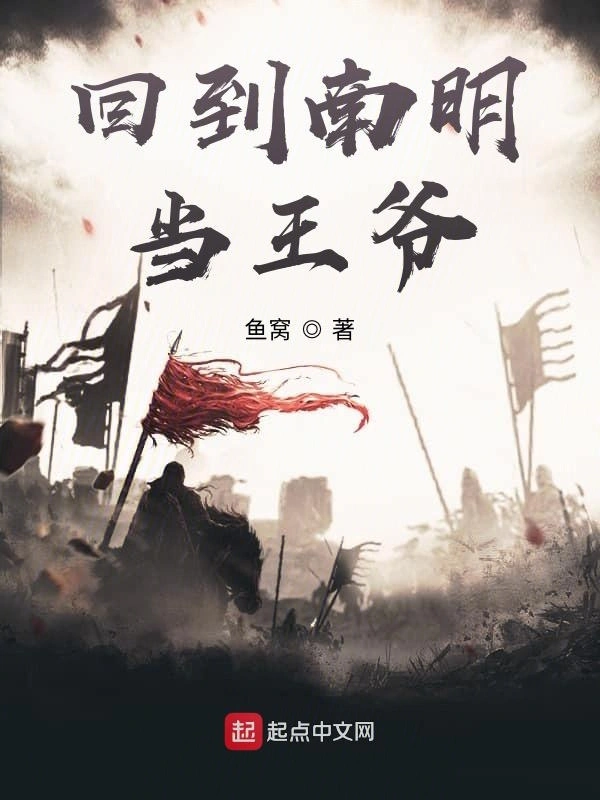
Return to Nanming and Become a Prince
回到南明当王爷
- Status
- Completed
- Length
- 992k Words
- Genre
- Historical
- Audience
- Male
- Subgenre
- Song-Yuan-Ming Dynasties
- Updated
- 4y ago
- Source
- Qidian
Stats
0Monthly votes
4.3kRecommends
11.7kFans
338Chapters
Tags
Synopsis
Reader comments
Readers also read
 In the Red Mansion: Escort Daiyu to Beijing at the Beginning
 1914 Begins with the Rejection of the Schlieffen Plan
 Talker in the Song Dynasty
 Please Call Me Your Majesty the Tsar
 The Reborn Fashion King
 Da Liu Bandits
 Ten Kingdoms Week
 Fusion of Wolf Spider Genes, Killing Like Crazy on the Russian-Ukrainian Battlefield
 Live Forever as a Cat
 Travel Through the Ming Dynasty and Become a Tyrant
 I Am the Carpenter Emperor
 The Age of Huangtian
 1850 American Gold Tycoon
. . . . . . I would like to remind the author that the matchlock can only fire about 3 rounds per minute, the effective range is only 80 yards, which is almost 74 meters, and the maximum sprint speed of a horse is 14m/s. In other words, you can only fire one or two rounds at best, and people will rush in front of you, and you don't even have the speed to draw the sword. Secondly, when horses are moving at high speed, even if you kill someone, they will rush into Fang Town with the inertia. Let me tell you this, before World War I, European countries still maintained a large number of cold weapon cavalry. The flintlock gun had better air tightness, so its range was much better than the matchlock gun. In 1860, the United States pioneered the revolving barrel gun. At this time, I was completely shaken off.
The military establishment should not be based on what others say!
Before the Spring and Autumn Period and the Warring States Period, military establishment basically corresponded to social administrative organizations. According to the records of "Zhou Li·Di Guan·Da Situ", the social administrative organizations are Bi, Lu, clan, party, state, and township, and the corresponding military establishments are Wu, Liang, pawn, brigade, division, and army. So according to the organizational structure, the Zhouli army organization and the Taiping Heavenly Kingdom army chief officers and generals' names are basically the same. It can be seen from this that there were no organizational titles in ancient times. These were all acquired after the reforms in the late Qing Dynasty. Even though it was compiled under Guan Zhong of Qi State, it was not used by other countries due to its flaws. After Guan Zhong's death, Qi State did not use this system. A similar description of the organization of the Qi State in Guan Zhong's era is undoubtedly the one written by Guan Zhong in "Guoyu. Qiyu". Ten rails constitute a li, so fifty people are called Xiaorong, and there is a commander-in-chief in the li. A company is four miles apart, so there are 200 soldiers, and the company commander is appointed. Ten companies are a township, so there are two thousand people for the brigade, and good brigade commanders from the hometown will serve as them. There is one commander in five villages, so ten thousand people form an army, and the generals are in charge. The army establishment mentioned in "The Rites of Zhou" is actually a reflection of the infantry establishment during the Warring States Period, and is somewhat representative. The specific organization is: 5 people make up a corps, and the corps has a corps commander; 5 corps consists of 1 tael, and the commander is two commanders; 4 taels is one pawn, and the commander is the pawn commander; 5 pawns are one brigade, and the commander is the brigade commander; 5 brigade is one division, and the commander is the division commander; 5 divisions are the 1st army, and the commander is the military general. There are 12,500 people in an army. As for countries that originally had fewer tanks or already had independent infantry, they are not the same as these. For example, the establishment of the Qin State is 5 people for one "Wuchang", 50 people for 1 "Tuen Chief", 500 people for 1 "Five Hundred Lords", and 1000 people for 1 "2500 Lords"; Since the infantry separated from the chariot and became its own branch, the number of infantrymen belonging to the chariot was naturally reduced. The specific number is unknown in history. According to the number of infantrymen in the chariots unearthed from the Qinling Terracotta Warriors and Horses pit, based on the statistics of 32 chariots passing through the six holes, there are seven types of infantry in each chariot: 12, 40, 44, 60, 108 and 152. Among them, there are 12 vehicles with 12 people, accounting for 37.5% Of the number of vehicles, 6 vehicles with 40 people, accounting for 18.75% Of the number of vehicles, and 2 vehicles each for the others, which is less than 6.25% Of the number of vehicles. It can be inferred from this that each chariot may have 12 infantrymen, and the others may be temporary combat groups of chariots and independent infantry to facilitate coordinated combat between vehicles and infantry, rather than organic formations. The establishment of the cavalry, according to the "Six Tao", is "five cavalry and one commander, ten cavalry and one official, one hundred cavalry and one general, two hundred cavalry and one general"; its combat formation is "thirty cavalry and one tuen, sixty cavalry and one generation". The cavalry phalanx unearthed from the No. 2 Pit of the Qinling Terracotta Warriors and Horses consists of 4 cavalry in one group, 3 groups in one column, 9 columns of 108 cavalry in one unit, and 6 chariots. This may be due to different preparations in different countries, or it may represent preparations in two different periods.
Why were the vassals and troops of the Ming Dynasty unable to establish a unified and stable Nanming regime? It basically has nothing to do with blood, legal principles, etc. Chongzhen himself would have the same virtues if he ran to Nanjing. When Chongzhen was in Beijing, he could no longer command Zuo Liangyu, Wu Sangui, Gao Jie, and Liu Zeqing. They abandoned the capital and ancestral graves and fled to Nanjing. Is it possible that their prestige could skyrocket out of thin air? Sun Chuanting, the last main army that could obey the orders of the imperial court, was sent away by Chongzhen. There was no financial resources to build a new army, and it could not even pay the existing army. Administrative capabilities have been severely blunted, making it impossible to effectively manage local areas. Because of a series of failures in the past 26 years, the whole country has lost confidence in the imperial court. This situation is hopeless no matter who becomes the emperor. The reason why Nanming was able to survive for 18 years was entirely due to the support of the Qing Dynasty. Most of the people who supported the Ming Dynasty did not love the Ming Dynasty, but just hated the Qing Dynasty.
To be honest, at the end of the Ming Dynasty, soul penetration was useless for anyone. Diaosi was still a diaosi in the past, and would not become stunningly talented just because of a change of environment. Only double penetration was the king. Relying on the technology of later generations, after unifying the world, relying on powerful force, began various reforms.
Let me first ask, in the end, the protagonist is the successor to the emperor, or the constitutional monarch, isn't he always under Chongzhen? If it had always been a prince, I wouldn't have watched it Asuka Jinliang Gongzo. Come on, author, the popularity of historical novels is slowly growing.
The author's writing is good, but the plot persuades him to quit. In Chapter 10, the protagonist escapes on a boat. It happens that a woman is being chased by refugees on the shore. The two women are masters and servants, and the mistress is so beautiful that she jumps into the river and then realizes that she can't swim (the protagonist is the prince). The prince jumps into the river to save the beauty without even his men reacting. After CPR, the beauty is resuscitated, and the female maid comes to stop the protagonist and says what's wrong with the protagonist~~ What kind of ridiculous plot is this?
. . . . . Why did the author work so hard to update it before it was put on the shelves, but now that it is on the shelves, chapters are broken every now and then? What are you doing?
Let's talk about some common sense about the first generation of firearms warfare. First, because the matchlock has the danger of igniting the gunpowder of other soldiers, the matchlock cannot be arranged in a dense bayonet hollow square like the flintlock. Therefore, when facing the opponent's cavalry, spearmen must be protected on the periphery. Please refer to the Spanish Grand Square for details. Second, contrary to what everyone thinks, even in the era of line infantry, hand-to-hand combat is still the mainstream. Many soldiers win a battle, and many just fire a bullet at each other and then charge directly to fight with bayonets. Specifically refer to the movie The Patriot. At that time, the line infantry of the Great Army liked to withstand the opponent's firepower and fire at a distance of less than 20 meters, using a cruel casualty ratio to defeat the opponent's will to fight, and then all bayonet charges. Third, before the birth of the machine gun, neither the matchlock flintlock nor the extremely fast-firing British Lao Lee rifle in World War I could stop the cavalry charge. Only strict formations were the nemesis of the cavalry. Fourth, the smoke after shooting with black powder is huge, and the battlefield is filled with smoke. If there is no wind, you can fire a continuous salvo, and you can't see anything five meters away. 5. In the smoothbore artillery period, the range of direct-fire artillery was very short. The classic Napoleonic twelve-pounder can only fire a little more than one kilometer. Artillery positions were generally in the core area of the battlefield and were easily attacked by sneak attacks. . I can't think of anything else for the moment, so I'll give you some reference. I ask knowledgeable readers to criticize and correct me at any time.
I just said that the Qing Dynasty did not respect martial ethics, so the qd backend was not allowed to publish it, and it had to be approved!
The author, I suggest not to engage in the North Korea. The North Korea was beaten by Huang Taiji and all members of the clan were captured. They had no choice but to surrender when the troops came to the city. After the fall of the Ming Dynasty, North Korea still used the Chongzhen reign name, and even built a large newspaper altar to worship Ming Taizu, Emperor Wanli and Emperor Chongzhen. To be honest, North Korea has not failed the Ming Dynasty.
A few people in the country occupy almost all social resources. This problem has not been solved yet? Even the prosperity of the Tang and Han Dynasties could not stop the people's continuous uprisings. Even if you block it now, you will not be able to stop it in the future. Also, confiscation of homes is the best way to directly redistribute social resources. The tax revenue of the Ming Dynasty is not as good as confiscation of homes. In the Jiangnan area, at least hundreds of millions of taels of silver were confiscated, which is comparable to the tax revenue of the Ming Dynasty for decades. After a few years, business developed again, and they were harvested like leeks.
It made me laugh to death. Many people think that cavalry is powerful. Please go to the cavalry bar and learn from it. Cavalry only has advantages in maneuverability, but not in combat power. If cavalry is so powerful, China has long become the descendants of nomads, not farmers. As long as the trained infantry are arrayed in a 2v1 formation, there is no problem. If there is no formation, it will just be a meal. Horses are also afraid of the reflection of people and weapons. If you want to ride your horse into battle, your horse will be as difficult to train as a dead warrior among humans. Those are all crazy horses. It dares to bump into people and horses from behind, and it will be afraid even if you point a weapon at it. In the era of cold weapons, there was the Swiss Halberdier Phalanx to restrain cavalry charges, and with hot weapons, there were Spanish Phalanx, Morris Phalanx, and Qi Family Army Chariot Array. In the history of the Qing Dynasty, the Fukang and Anbu troops marched 5,000 kilometers in 50 days with one man and six horses. Long-distance march, 100 kilometers a day, at the end, there are still 6 horses.
Why is it not being updated? I don't know how to be a eunuch anymore. This book is on the popularity list of 270,000 people. Save it and watch it. Continue to update it.
French Shark class, a very classic sailing ship, details
I also wrote a Nanming novel, but no one read it. . . Can you guys take a look?
Does the author not plan to let the protagonist become emperor?
If Zhu Yousong continues to be the emperor, the rear will only become more and more chaotic. However, if Jing Nan is directly proclaimed emperor, the pressure from public opinion may be very great, and many things after becoming emperor (such as the Northern Expedition) will not be convenient to do in person. Still looking forward to the author's next content. 😁
Well, I originally thought that it would be outrageous to travel to the Ming Dynasty to save the Ming Dynasty after the Apocalypse. There were also people who traveled to the Nanming Dynasty to save the Ming Dynasty. Ever since I learned about Nanming in history books, I no longer have hope for the Han Dynasty. I don't believe that the Han people will have any future within 150 years 😒 Because the British have already appeared during the Qianlong period. With their urine, the northern and southern Han people will be two ethnic groups.
When the prince can't save the Ming Dynasty, if there is a rebellion later, why support Prince Fu? The name is not justified.
Xiaobai's pornographic writing, for old readers, this book has many flaws.
It is well written. From just these few chapters, you can see that the author has a solid foundation in literature and has some research and own ideas about the late Ming Dynasty. As far as books about the late Ming Dynasty are concerned, this book is still outstanding.
Hello! Wake up! (づ ●─● )づ
His son, Zhu Linmo, was canonized as the crown prince in the first month of the second year of Longwu and joined the army. Tingzhou fell, and I don't know where I ended up Having a son
Only one of Qinhuai's Eight Beauties accepted Li Xiangjun, right? Besides Liu Rushi, are there six more waiting?
Nowadays, all the Ming Dynasty novels are badly written. They seem boring. After writing, only a few people are the emperors.
Will the protagonists be able to have a territory like the Qing Dynasty after they are unified?
The content is obviously different from the title. I haven't reached Nanming yet after traveling through the past.
Write slowly, take your time, come on,
I think the author should update the frequency more regularly and more reasonably.
I would like to ask, is this book written before becoming emperor or after becoming emperor?
After reading dozens of chapters, I feel that this book is still good and worth reading.