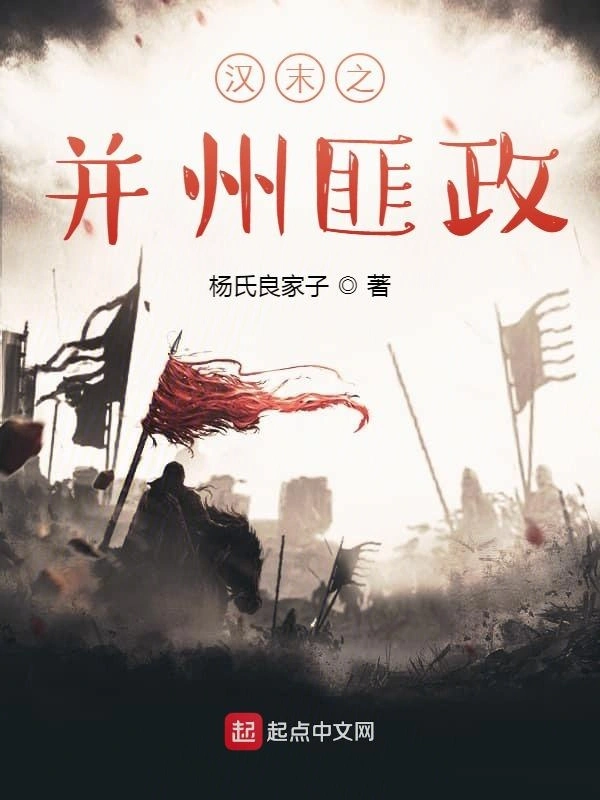
Banditry in Bingzhou in the Late Han Dynasty
汉末之并州匪政
- Status
- Completed
- Length
- 1.8M Words
- Genre
- Historical
- Audience
- Male
- Subgenre
- Qin-Han & Three Kingdoms
- Updated
- 4y ago
- Source
- Qidian
Stats
0Monthly votes
26.6kRecommends
78.4kFans
856Chapters
Tags
Synopsis
Reader comments
In booklists 5
I Like
Get your hands dirty. See for yourself
22Books25Follows5yUpdated

Various Hodgepodges, Urban Rebirth, Historical Hegemony, Classical Cultivation, Sports Competition
I have read them all myself. If you like them, please follow them.
11Books10Follows3yUpdated


Boutique for Old Bookworms
I have been a bookworm for more than ten years, so I can only push the books I have finished reading and the books I am currently reading. You can also use me as a guide. Welcome to communicate.
25Books9Follows4yUpdated



Books Worth Reading Several Times (I've Read Them All)
I personally think it looks good and there is no specific classification, so I would like to share it with you.
13Books6Follows4yUpdated


Read It Personally
Like 😊
100Books1Follows2moUpdated
Readers also read
 In the Red Mansion: Escort Daiyu to Beijing at the Beginning
 Please Call Me Your Majesty the Tsar
 1914 Begins with the Rejection of the Schlieffen Plan
 Talker in the Song Dynasty
 The Reborn Fashion King
 The Age of Huangtian
 Travel Through the Ming Dynasty and Become a Tyrant
 Fusion of Wolf Spider Genes, Killing Like Crazy on the Russian-Ukrainian Battlefield
 Live Forever as a Cat
 Da Liu Bandits
 The Sun and the Moon Are Always There
 The Heroic Ambitions of the Late Eastern Han Dynasty
 National Wasteland: I Can Infinitely Strengthen the Shelter
 Overlord!
 The King of the Late Han Dynasty Did Not Have a Stable Career
 I Am the Song Dynasty
Discuss a thousand horses and how much grain Zhang Yan's official position is worth
I commented on it in this chapter, so I'll say it again here. About the situation where the protagonist asked for 10,000 shi of military rations and whether it was cost-effective to sell more than 1,000 horses. First of all, we need to find out how much food a soldier of the Han Dynasty had to eat in a year. "Book of Han·Shi Huo Zhi" records that "two stones of millet, worth three hundred and ninety", "pay two hundred and two, and buy two stones of millet, worth one hundred and ten." The money was two hundred and ten, and two stones of millet and millet were purchased, and a hundred and five stones were paid. Pay a hundred and ten cents, buy a stone of barley, and buy a stone of barley and buy a stone of a hundred and ten cents."... Taken together, the price of one hundred cents per stone of grain in normal years is more credible, and each soldier needs at least 2,400 cents in food expenditure. In Taiping years, one hundred cents was almost one stone of grain, and a soldier needed twenty-four stones of military rations a year According to "The Size of the Han Dynasty Border Guard Army and its Military Expenses" "Discussion" The clothing cost of soldiers in the Han Dynasty was no less than 3,000 yuan a year. In addition to the necessary clothing and food, other non-staple food items such as meat, vegetables, and salt were also consumed. According to Juyan Han bamboo slips, the cost of food was almost 500 yuan a year, while the cost of meat was 600 yuan, and the cost of salt was 40 yuan. 2400+3000+500+6. 00 + 40 = 6540. Converting the purchasing power, one dollar ≈ 0.42 Yuan, which is 2940 yuan. Of course, it is impossible for the protagonist to do this, but you have to include food, right? We don't count vegetables, we don't count meat, we count salt and grain. Volume 35 quoted from Heng Tan's "New Theory", we here count grain as five hundred dan, and how much is a horse? During the Taiping period, it was 15,000 dan, and during Wang Mang's period, we counted it as 150,000 dan, and one thousand horses = 150,000 dan. , And these 300,000 dan of military grain can feed 12,000 to 3,000 people. And the price of horses here can still be raised, and the price of grain is unlikely to rise to 500 dan. Let's calculate how much Zhang Yan's general is worth, not mentioning the team left by the protagonist's father, just calculate the official position. Zhonglang Jiang, this is not the point, the point is that he has the right to promote filial piety, which is equivalent to a county guard. In the early Han Dynasty, it cost at least 20 to 30 million yuan to buy a county guard. If we convert the grain into 25 million yuan, it is 25 million yuan divided by 500, which is equivalent to 50,000 shi. It is worth 50,000 shi of grain, not including the manpower, forces, weapons, equipment and other items left behind. Under normal circumstances, these 1,000 horses and all the rights transferred by the protagonist should be worth about 400,000 shi of grain. If Zhang Yan cannot afford these 400,000 shi of grain, it will be impossible for him to be stable in his position. Even after the protagonist left, some people would scold Zhang Yan, a pure white-eyed wolf, Big Brother was so kind to you, but you cheated his son of 100 million and everything. Can we have a good life with such an unloyal thing? So I have listed so many data, do you understand how outrageous the protagonist's deal with Zhang Yan is?
The book is really good-looking and suits my taste. I hope the author will continue to create and arrange the plot reasonably. I will give you a reward.
It is very well written and is one of the few novels about the Three Kingdoms that sees the root cause. The fundamental chaos of the Three Kingdoms is still the problem of the economic base and superstructure. The author has changed the original family system through a series of measures, which is also very insightful.
Indeed, under the equal land system, if there is not enough political skill or military iron blood, then the protagonist will definitely die in despair. The ancients just had little knowledge, and the intelligence of those who can stand out among the billions of people in history is not bad!
The prerequisite for evenly granting land is that you have strong abilities. Otherwise, the aristocratic family would have torn you alive
Personally, I suggest that when it snows heavily, you should look out the window and say in front of the civil and military officials, "It will provide tens of thousands of mansions, and it will shelter all the poor people in the world." The tone should be light and descriptive, as if it were said inadvertently, so that the subordinate civil and military officials can better understand the protagonist's aspirations. If it is spread, it will gain a good reputation and win the hearts of the people.
The more I watch it, the more I feel that the protagonist should not be someone from the 21st century who created the past. Gunpowder, glass, distilled liquor, printing, petroleum, compound fertilizer... There are so many good things that the protagonist doesn't touch any of them.
The captured prisoners of war were asked to mine, control sandstorms, dig rivers and canals, build bridges and build roads. They must make transportation convenient. Convenient transportation can make the country richer and curb the phenomenon of the sky being high and the emperor being far away. It would be a pity not to have free labor from these captive slaves.
The government military system is a big failure. History has said that this will not work. You used it very well in the early stage, but if you don't pay taxes and study, where will your finances come from before you have an industrial foundation? The industrial base must also be financed first. Nowadays, the land is vast and sparsely populated. When it comes to the population explosion in Jizhou and the Central Plains, how can there be so much land? Don't think about future reforms. This is the interest of the army. The stronger you are, the stronger the army will be. When the time comes, your ability to govern will decline as you age and weaken, will your arrogant generals listen to your descendants? Do you still expect that your descendants will all be talented? It will only take you one generation at most, and your country will be over.
This book is personally the best among the Three Kingdoms novels I have read.
The recent plot is a bit bloody, forcibly creating difficulties, Gao Shun led ten thousand people to guard Huayin, but he just sent scouts dozens of miles away to detect and warn. Dong Zhuo sends troops to attack, either Wuguan or Hangu Pass. If you choose one of the two, won't you send people to watch at your door? If a security team of more than a dozen people is placed on guard near Hangu Pass, won't the warning period be longer than if you release people dozens of miles away? Besides, Lu Bu came with 30,000 people, so he would definitely be slower than the people you were guarding. You must know that when an army marches, the more people there are, the slower the march will be. The plot as written now is really a bit forced, making the protagonist's group of famous historical generals look like retarded people 😅.
In fact, in ancient times, there have always been policies to check and divide land, and there were also policies to suppress land annexation. For example, Emperor Guangwu of Han Dynasty Liu Xiu did not compromise and surrender with aristocratic families. On the contrary, they established a land transfer system to suppress land annexation and suppress powerful aristocratic families. Therefore, it has never been a question of whether there is such a policy. The question is whether the policy can be implemented, how to implement it, and whether it can be maintained.
Traveling to the end of the Han Dynasty, he still held the concept that people are worth money. People in the late Han Dynasty were the most worthless people. They were so worthless that even a bunch of them would die.
Wang Mang has already tried it, and modern concepts were a disaster when applied to the Han Dynasty.
A lot of historical novels are very good when they first start a business, accumulating experience, troops, and wealth bit by bit, but once they occupy a province, they start to disappear. The reason why time-travelers rebelled in ancient times, especially at the end of the dynasty, was not because of how powerful the time-travelers were politically or how shrewd they were. If they were like this, they would be able to live very well in the modern era. It was because the time-travelers knew what the future would be like, who was truly talented, who was the enemy, who was the friend, and who was the base. Because this answer is given by history. History has successively given opportunities to the Manchu Qing Dynasty, peasant uprisings, Westernizationists, old literati, Tongmenghui, Beiyang warlords, and the Kuomintang, but history has proved that none of them worked. Therefore, it would be a joke if we still rely on these people if we don't accept successful experience.
There is no need to deliberately advertise Liu Bei, spend thousands of people to surround and kill an unprepared person, and then run away, the protagonist's aura is so terrifying?
Wang Mang also misses you just as much as you do. He divided the land and gave it away to others. He died. You can make up your own mind next time.
The state of Meng... Was a bit defeated. It was better to merge the states and directly establish the state of Jin. The overlord spirit of the Jin Dynasty was fully displayed. The powerful Jin state in the Spring and Autumn Period can still be vaguely seen. (The meaning of the word Meng is also so-so)
Facts tell us that policies are only suitable for the times and need to keep pace with the times. In the old era, if there were not enough people who knew how to read, no matter how good the policy was, it would be a piece of shit. There are policies above and countermeasures below. Don't underestimate anyone of any era.
I personally think that it is better for the protagonist of Han Dynasty to be before the Yellow Turban, because this way he can enjoy the first wave of dividends before the collapse of the Han Dynasty. The key point is that it is easier to buy officials. The later the Han Dynasty, the more people he lost. By the time of the Three Kingdoms, most of the people had already lost, so what else is there? They fought for millions of square kilometers of land for more than 10 million people, which was too little. Even if the country was unified, it would take decades to cultivate one's health. Moreover, the climate at the end of the Han Dynasty was not good, natural disasters were frequent, and the surrounding herdsmen were developing rapidly. One hundred years later, the Jin Kingdom completely let the Han nation fall into the dust.
Why don't you stallion? Isn't it good to see each other? 🙂🙂
This is the most enjoyable Three Kingdoms novel I have read in recent years! ! ! Although the routines are still those routines, it can still be seen that the author is still very careful. Like it! ! !
If you follow the author's approach, it will be impossible to support an army, and it is impossible to have so much food and fields. The productivity in ancient times was already backward, and it was easy to be exempted from taxes for ten years. It would be better if you were exempted from corvee. The second is that after the thieves are defeated, one person will be divided into forty acres, tens of thousands of people at a time, and then the common people will also be divided. You have so much land. Let's not talk about the issue of whether the equal land system will continue to be implemented. If you adopt the government land system, renting is better I'm not nitpicking, it's too exaggerated. If you calculate it this way, productivity will soon catch up with modern times.
As an old bookworm who has been reading for nearly 20 years, I think this book ranks among the top three in the Three Kingdoms category. I especially like the description of the battlefield. Come on, please update more.
In the future, Liu Xie can be thrown to South Korea and let him establish the Han Kingdom there, just like the Zhou Dynasty enfeoffed the descendants of the Xia and Shang royal families.
I don't understand so many systems, but I just feel that this book is well written.
I have to say, this book is a very fascinating book for me. Great book!
The most comfortable Three Kingdoms movie I have watched in recent years. Six monthly passes are now available.
Come on, come on, it's getting better and better! Must tip 👍
This book on the Three Kingdoms is indeed very good overall. The author's writing style is exquisite, he quotes extensively, the concept is reasonable, and the refreshing points also deeply appeal to the readers' psychology. It is a rare masterpiece in recent years. But I don't know if the author has discovered one thing: whether food prices are too low. If a person pays 60 kilograms for one stone, it is unlikely that the average grain will be fifty yuan, because the average price of a kilogram of grain is one penny. So how much does it cost to buy a steamed bun on the roadside, and how can you pay it? Can one penny be broken into ten yuan? Don't underestimate this problem. The smallest payment currency in any era must be closely related to people's lives. Whether it is a penny in ancient times, a penny in the early days of the founding of the People's Republic of China, or a dollar now, it is basically the selling price of a steamed bun, and it will not go up or down much. And why did the consistent money appear in the Song Dynasty and the Ming Dynasty? There were one or two basic units. Comparison can be found that they are often closely related to one stone of grain. Taking into account the regular changes in prices in ancient times and the information in some documents, it is more likely that a bucket of rice cost 50-100 yuan during the peace years of the Han Dynasty, and a bucket of stone cost 500-1,000 yuan. In other words, the protagonist's food prices are ten times cheaper, so the protagonist's economy has always been very wealthy. I don't know if the analysis is correct.