Edo Traveler
江户旅人
- Status
- Completed
- Length
- 2.2M Words
- Genre
- Historical
- Audience
- Male
- Subgenre
- Foreign History
- Updated
- 3y ago
- Source
- Qidian
Stats
Tags
Synopsis
Reader comments
In booklists 26
Explore more →
Big Historythe One I Love Is Named Huaxia🧐
The Spring and Autumn Period and the Warring States Period - the modern times of the Republic of China, as well as the fictional history of demonic reform, you want it and I have it. ️⚛️⚛️⚛️⚛️⚛️⚛️⚛️⚛️⚛️⚛️ Why do we love historical texts so much? Because every rabbit has a dream of a great country in his heart. Listen to my strongest voice of China—— "Everything in the world is the land of the king; on the shore of the land, there is nothing but the king's ministers." "I am the First Emperor.
A First-Rate Fairy Tale Novel!
I just want the plot to be good! I can no longer read the novels on the list. The same routine of defeating monsters and upgrading, killing people and grabbing treasures, and auction competitions. Therefore, I recommend some mudslides in fairy novels! How about being different, white and rosy?
Shen Nong's Test of Poison
Various seedlings with the potential to become gods


His Story
Pray here and interesting souls will come.
Dream Tower
Mainly, they are books that I think have good plots. I have been following them recently or have read them, such as YY Rejection Stallion, and I am not a novice. To me, each novel is like a big dream, and it is interesting to make the dream more beautiful and exciting, right?
Foreign History War Urban Myth Graphic Novel
Various novels involving and taking place in foreign countries, including the United States, Japan, Russia, the United Kingdom, France, Germany, Italy, the Balkans, Greece, South Africa, North Korea, Austria, Poland, South American countries, African countries, and other countries. The forms include ancient hegemony, modern cities, modern wars, American comic life, Japanese life, etc. The methods include seizing the body, time travel, etc. There are some completed books and eunuchs. They are so
Book List for Personal Use
Personal use
A Hodgepodge of Any Type Possible
There is no particular consistency. It can be found in any type of book.
Traveling Through History, Exquisite Products Dominate China and Foreign Countries
Travel to ancient times and achieve hegemony
Mangosteen's Spiritual Food
My spiritual food🤪

A New Book with Unique Bones, the Aroma of Wine Must Also Have Character
Some books are innovative and of high quality but are not well-known, or they are updated repeatedly. They cannot bear the smell of wine and are afraid of the depth of the alley, so they do their best. This book only recommends unfinished novels. For those ranked within 100 on the ranking list, there is no need to recommend them in one fell swoop.
Real-Time Updates, Novel Online Articles Worth Reading
This is a book that I like to read. I hope everyone will like it too.
New Book Recommendations
Long time no update! I have put together the books I have read recently and the books I have read! If you have any recommendations, please tell me!


My List of Books to Read.
If you don't become a god, you become a ghost. There is nothing trivial and nothing girlish. Only Shen Nong's experience of tasting hundreds of herbs, some books that may not be popular enough, but are absolutely excellent, provide a guide for all those who love e-books.
Book List of Stars
The character is lazy
Interesting Book List
According to personal interests


Li Xiaoyao's Pocket Book List~\(≧▽≦)/~
The books I am following, and I add them from time to time, are all food and fodder.

Accommodate Guests from All over the World and Recommend a Place of Water and Soil!
The ancients said: "Ten years of hard study in a cold window", Shan Zhu has been reading for more than ten years. I want to share with everyone what I have seen and what I want to say, and not let it be buried in some books.

Grain and Grass Series, Urban, Historically Related, Reasonable Preference, Partial Textual Research, Lao Baiwen
6-Year-old Bai Shushuang
Mainly Promote Novels of Various Niche Genres
Mainly collects niche types + suits my taste My language skills are limited, so I won't write a book review. Everyone's book recommendations are welcome (if you have any😄)
Nice Novel
Mainly those that are being updated
Ripples of History
History is yesterday's reality. Taking a few more steps or taking a few fewer steps will have different results, such as the Battle of Feishui, Song Xianggong, and Qin and Jin's retreat. Small changes in history may cause huge changes in reality. Fantasy has no boundaries and imagination is king.
Good Book Recommendations
Historical light novel entertainment sports
Please Read the Book Shortage
Book shortage
Readers also read
 Talker in the Song Dynasty
 Please Call Me Your Majesty the Tsar
 In the Red Mansion: Escort Daiyu to Beijing at the Beginning
 1914 Begins with the Rejection of the Schlieffen Plan
 The Reborn Fashion King
 War Palace and Knee Pillow, Austria's Destiny
 Rebirth of the Tokyo Bubble Era
 Fusion of Wolf Spider Genes, Killing Like Crazy on the Russian-Ukrainian Battlefield
 Live Forever as a Cat
 Father of France
 Tokyo Criminal 1962
 1422: Restoration of Eastern Rome
 Li Chao's Eternal Traitor
 The Drums and Drums Reveal the Sky and Break the Song Dynasty
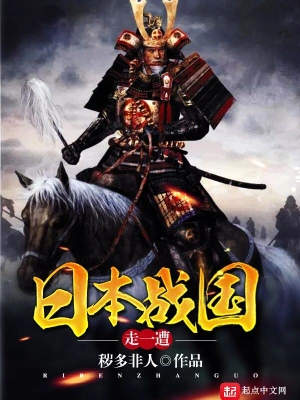 A Tour of Japan's Warring States Period
The royal family should wear official clothes when getting married. I used Mao Lilan's face to dress the wedding clothes.
The plot of this 226 is too messy
This is very different from the historical situation of 226. It is completely copied! According to historical facts 226, the Japanese economy at that time had been in a slump due to the 30-year economic crisis. At the same time, all the dividends obtained by occupying the Northeast were eaten up by the upper class, and then they expanded their army in order to further invade China. The exploitation of the people became increasingly serious. It can be said that the bottom class was in dire straits, much worse than during the shogunate period. On the other hand, the army is becoming more and more class-solidified. The ruling faction's group of academics who have connections or are good at taking exams have taken up all the high-level positions, while the imperial faction's group is in the middle and lower levels, with bleak prospects for promotion. As for the situation in the book, Japan has not been a country for a long time. In terms of economy, due to the influence of the protagonist, a large amount of gold has been prevented from flowing out, and the raw silk industry has been established in advance. It can be said that the damage to Japan's traditional economy after the founding of the country was not too great, and the people did not complain. In the army, the people in the training team were originally just farmers with the title of samurai. After joining the training team, the military pay is not bad, and the room for advancement is also very smooth. These people who planned the trouble are already junior officers. After returning from the war, they can easily get promoted based on their merit and seniority. It can be said that the future of obtaining the formal imperial family is right in front of them. Why are you so crazy? Do you really think they are so noble as Decembrists? Moreover, the December Party members have been organizing and brewing for nearly 10 years! As for the heavy losses in this expedition, although the losses were very heavy, after fighting so many hard battles, there would be no less opportunities for robbery after the war. The leader of the team was not a corrupt person. Under normal circumstances, each person could get more than ten kilograms of gold and silver without any pressure. With such a huge sum of money to support them, how much resentment could there be? Moreover, this group of people are just low-level junior officers. Incited by Sakamoto Ryoma's constitutional theory, they dream of becoming members of parliament. This is too much of a daydream. One or two people are just crazy. It is simply unreasonable to have a dozen junior officers go crazy like this!
It now appears that the shogunate will be less aggressive in the book than in history. It has many shackles and a heavy historical burden. The Meiji Restoration has already changed dynasties, abolishing vassals and establishing counties. According to the book's own standards, it can be regarded as "greatly strengthening the centralization of power." After all, the government revenue from the same agricultural tax had exceeded Otisei many years before the Sino-Japanese War. As for the shogunate reforms led by Edogawa, the situation of numerous princes has not changed. This financial capacity and mobilization ability are far behind, and they cannot support greater ambitions. At the same time, as mentioned in the book, the concerns of feudal regimes are also different. When it comes to foreign aggression, especially the "Conquest of the Qing Dynasty", if they win, will the samurai family merge with the public family, or will the Tokugawa shoguns be allowed to live forever? If they lose, Toyotomi Hideyoshi is not far away, and the history of how the Tokugawa family came to power must not be forgotten, right? However, the failure of the Westernization Movement and the historical reforms at the end of the Tokugawa period have proved that it is not feasible to rely on the introduction of new technologies to maintain the old way of governance. Edogawa was an active founder of the country, and he also took the initiative to introduce new productive forces and organizational forms. Most of us don't know how Western things impacted the old social order. Most of us don't know the specific process in this book. Everyone knows what happened in China. It can't be that Li is made of special materials and is not affected, right? Part of the factors of the Meiji Restoration include the fact that Japan's old order disintegrated more quickly, and it was not until the 20th century that this volume was cleared. Edogawa may not have learned historical materialism very well. His reforms themselves were introducing new forces, and the impact of the changes on Japan's small-scale peasant economy was also creating new instability. The shogunate was not a regime that served the people, and had neither the will nor the ability to solve these problems. The recent actions of Edogawa's leaders are quite self-confident that I have snuffed out all the signs. They did not take into account that new conflicts are continuing. Standing at the lower reaches of history is a bit mechanical and materialistic. In addition, Edogawa relied on the shogunate system and would always encounter areas where the feudal foundation could not be changed. It would be outrageous to create a "restoration government" under the guise of the shogunate. Judging from the overall trend, the shogunate still has to face the point where conflicts will break out. However, because of the Edogawa factor, the forces involved are expected to change, the methods may be different, the time point will be delayed, and the shogunate will be stronger. With these points in mind, even if the shogunate fails, the chance of the new regime rising from the ashes is much worse than the Meiji government; if the shogunate continues, it will have to face a certain ghost in the 20th century, and it may not necessarily take an unimagined path. But these have nothing to do with the protagonist, and they can hardly be written realistically. Therefore, based on the story about Edogawa living to fifty, it is very likely that at the end of the day, the shogunate was in full bloom due to the dividends of the "Family Restoration", and the volcano of contradictions was still gathering strength. This is very similar to the situation of Mizuno Tadakuni, the political role model of Edogawa's leaders. As soon as he left, the good weather in the shogunate changed within a few years. How could the idealistic Li people understand this? Later generations will not be able to boast about it. Oh my god, the book review area is so deserted, but now chapter reviews are subject to review? It's too long and difficult to post in sections…
Shinsengumi (from encyclopedia)
The Shinsengumi (しんせんぐみ, Shinsengumi) was a pro-shogunate samurai organization during the late shogunate period in Japan. It was also an armed group of ronin in the late shogunate period. Mainly active in Kyoto, responsible for maintaining local security and dealing with anti-shogunate people. They assisted the shogunate in the Boshin War and were disbanded after their defeat and surrender in 1869. The Shinsengumi, nicknamed the "Mibu Wolf", was supported by Matsudaira Yoho, the lord of the Aizu Domain who was the guardian of Kyoto at the time, in the early days of its establishment, and was incorporated into the establishment of the Aizu Domain. In the Ikedaya Incident in 1864, the Shinsengumi severely damaged the radical faction in Kyoto that advocated respecting the king and resisting foreigners. The Shinsengumi's most well-known features include the team flag with the word "sincerity", the unique haori (a type of outerwear) with a mountain-shaped pattern on the sleeves, and the strict "game rules" (strict rules adopted to maintain organizational discipline). The Shinsengumi was a joint organization between the private sector and the shogunate, and was supported by Matsudaira Yoho, the lord of the Aizu domain who was the guardian of Kyoto at the time. During the late Tokugawa period in Japan, anti-shogunate rogues often assassinated shogunate officials and people close to the shogunate in Kyoto. As a result, the mainstream faction within the Shinsengumi - the "Tsueikan faction" - emerged to constantly eliminate the opposition. In the second year of Bunkyu (1862), when the Edo shogunate Tokugawa Iemo came to Beijing, Qinghe Hachiro proposed to recruit rogues to form the shogun's guard, which was adopted by the shogunate. The Edo shogunate adopted a gentle policy to control the ronin, and specially organized the ronin group. In February of the third year of Bunkyu (1863) (Japanese calendar, the same below), more than 200 rogues arrived in Kyoto. Qinghe had an affair with King Qin's forces and tried to use those rogues as troops under the emperor's deployment. After the plan was exposed, Qinghe and more than 200 people left Kyoto and headed for Edo. The Shoeikan faction centered on Kondo Isamu and Hijikata Toshizo and the Mito Roshi centered on Serizawa Kamo remained in Kyoto. In March of the same year, Kondo Isamu, Serizawa Kamuo and others established the Shinsengumi's predecessor, the "Mibu Roshi Group" (also known as the "Seitada Roshi Group"). From then on, the Shinsengumi was also called the "Mibu Wolf". They recruited new members in Rensheng Village and formed a team of 36 people. The guardian of Kyoto, Matsudaira Rongbao, assigned them to maintain law and order in Kyoto and deal with the rogues who rebelled against the Tokugawa sect. The group split because one of its leaders, Qinghe Hachiro, colluded with the Zunbo faction. Qinghe was assassinated shortly after returning to Edo. Kondo Isamu, Serizawa Kamo and others who stayed in Kyoto were under the control of Matsudaira Yōho, the guardian of Kyoto, and formed the Shinsengumi. On August 18 of the same year, a coup occurred. The Mibu Roshi-gumi assisted the shogunate forces and was named the "Shinsengumi" by the court (some say it was Matsudaira Yoshiho who gave the name "Shinsengumi"). In September of the third year of Bunkyu (1863), the Kondo faction purged the Serizawa faction. Okita Souji, Hijikata Toshizo, Yamanan Keisuke, Harada Sanosuke and others assassinated Serizawa, and Kondo Isamu took control of the Shinsengumi and became the leader (called "Director"). Kondo Isamu and Hijikata Toshizo took control of the real power and tried their best to suppress the Zunniu and Tokugawa factions. On June 5, the first year of Yuanji (1864), the Shinsengumi severely damaged the power of the overthrow faction in Kyoto in the Ikedaya Incident. During the Forbidden Gate Incident in July, the Shinsengumi assisted the shogunate in repelling the attack of the Choshu clan's rebel faction. These two events earned the Shinsengumi more than 200 taels of gold as a reward from the imperial court, shogunate, and Aizu Domain. In September of the same year, the Shinsengumi recruited members for the second time. The number of members increased to more than 200, and the base was moved from Mibu Village to Nishi Honganji (Shimokyo Ward, Kyoto City). In March of the third year of Keio (1867), the Shinsengumi faction of Koshiko Taro Ito and Heisuke Toudo were ordered to become the imperial mausoleum guards of Emperor Komei. They broke away from the Shinsengumi and were purged by the Shinsengumi in November of the same year.
I need to give this protagonist a good ending! ! ! Stop being tragic! ! ! ! Don't stop! ! !
Well written
Xiao Taihei died of illness, Hong Jinglai was assassinated, and Tadayemon might be about to be punished by the Overthrow Sect.
To be honest, I feel a little conflicted about this book. The better it is for the protagonist to lay an industrial, military, and cultural foundation for Japan now. It is to lay a better foundation for Japan, Russia or Japan to invade China in the future. I neither want to watch the protagonist make Japan stronger now. But I also want to see what abilities the protagonist can use. Alas╯╰ people are really troublesome
I started following the author from Station B. I watched the author finish writing about Japan and North Korea, and now he is going back to writing about Japan. When will he write about Vietnam among the four countries in East Asia? What a good start as a Mingxiang native
Without the God of Harmony The nineteenth century was a century of change and expansion. Britain, France, Russia, the United States, Japan, and even Germany, while promoting industrialization, vigorously expanded their sphere of influence and colonies in order to obtain the markets, raw materials, and capital needed for industrialization. Although expansion and aggression are evil, it is undeniable that it is a necessity for primary industrialization. As a small country, Japan has no way out if it does not expand based on real history and the premise that its rulers cannot turn stone into gold. Especially Britain, Russia and Japan have retained a large number of old feudal aristocrats, and the benefits of industrialization have to be cut out of thin air to appease the old forces. So practicing internal strength alone is not enough, and all three countries have shown strong aggression. Under the premise that time travelers are in power and the God of Harmony does not exist, it may not be appropriate to follow the route of the invaders of the old time and space. But when you are an ostrich and only practice internal skills, you are just delaying revolution and turmoil as much as possible. You can consider taking the Pan-Asian route. In the Treaty of Beijing in 1860, Russia forced the Qing Dynasty to recognize the territory ceded by the Treaty of Aihun. Russia officially joins the Northeast Asian poker table. You can use the Russian threat theory as an excuse to use moderate diplomacy to promote the founding of North Korea and expand trade with the Qing Dynasty.
By the way, you, Edogawa, have succeeded to the throne, are you going to hold a big Olympics beauty pageant? You are fertile, and you are a general. The more sons and daughters you have, the better. In addition, the infantry is no longer active, and your leisure time has become longer. Naturally, there will be a wave of beauty pageants to reproduce.
The author is great, Japan, Ming Dynasty, the United States, and North Korea are all there. Next time, I will be the third brother. I will drink this bowl of Ganges water and become an Indian in the next life.
Don't compare food prices back then with today. Moreover, a kilogram of rice in Japan now basically costs 200 yen, which is even more expensive. A Japanese scholar specifically calculated it based on the yield per mu, the number of fields, the cost of transportation and preservation, and the demand for food (in ancient times, the Japanese did not eat cattle, sheep, pigs, or as much fish as they do now). In the early Meiji period, food prices were seven times what they are now in Japan. One pound of rice is about one hundred yuan. One stone and three hundred catties is thirty thousand. According to the calculation of two yuan per kilogram of rice, it is nonsense. Don't think that a feudal lord is nothing. A Wanshi feudal lord is just like the nobles of thousands of households in ancient China. One hundred thousand dan is enough to complete the household transfer. How many nobles in ancient China had 10,000 households? It seems that during the reign of King Li Shimin and King Qin, they only had 20,000 households. Moreover, the feudal lord and his tenant farmers basically turned in 60% of their grain. And all the rights of the fief. After the family was destroyed, several noble families had this income.
Babble
Wow! It's a new book, so give yourself a shot in advance. I hope the protagonist dies in the last chapter and doesn't die early. In addition, blindly guess that the timeline of the next book is 1900. The protagonist's main task is to establish the Japanese Communist Party, lead the Japanese people's revolution, build the socialist People's Democratic Republic of Japan. The side plot is to travel around the world, France, Germany, the United States, the Soviet Union, and China. In a nutshell- Internet Nachonnar will definitely come true! The timeline of the author's next book may be 1985, Japan during the bubble economy. As for what the author wants the protagonist to do... I don't know. emmmm... Maybe after writing several serious books, the author will consider writing entertainment stories and let us fall in love with the paper man's wife?
Pulling off the Tahara Domain,,, I had never heard of this domain before, but Watanabe Kazan was quite famous, so I went to check it out. The information comes from feeding chickens. Tahara Clan is located in Atsumi County, Mikawa Province. The first leader was the Toda family who received 10,000 koku. On May 9, 1664 (Kanbun 4th year), the Toda family was granted a title and moved to Tomioka Domain in Higo Amakusa County. Instead, the Miyake family from the Mikawa Jumu Domain (until the end of the Tokugawa period) received 12,000 koku. Although the Miyake family is a small name, it is a famous family. Due to the large number of feudal lords (ah this) and the fact that Tahara was located in a barren land with many natural disasters, it often faced financial difficulties. Therefore, the 11th generation feudal lord Miyake Yasunao appointed Watanabe Ezan (Noboru) to be in charge in 1832 (Tembo 3rd year), reformed the feudal salary system, rectified the yikura system (grain reserve system), etc., And saved the domain from the Tenho famine. After the death of Kazan in 1841 (the 12th year of Tenpo), the peasant politician Ozo Nagasune and others carried out feudal and financial reforms; at the same time, Murakami Norichiro carried out military reform and promoted the casting of cannons and the introduction of Western gunnery. Why did the Tahara clan have so many orchidists at that time? In 1810 (the 7th year of culture), Xuansheng, the feudal doctor, opened Seongjangkan as a feudal school. The name of the school comes from the word "feiranchengzhang" in Gongye's long chapter in The Analects of Confucius. Seishōkan has successively produced talented people such as Yunobu Miyake and foreign scholars such as Watanabe Kazan, Suzuki Haruyama, and Murakami Norichi. In the early days of its establishment, the main educational content was the reading of Chinese books and martial arts. Starting from the first month of 1834 (Tianbao 2nd year), Suzuki Haruyama and others were invited to teach Western music, and Murakami Nori taught Western military art. Abandoned feudal vassals and set up abandoned schools in counties. The 12th generation of the feudal lord was deposed in July 1871 (Meiji 4) and is now located in Aichi Prefecture. The residence of the Miyake family of the Edo clan is located where the current Supreme Court of Japan is located, hence the nickname Miyakezaka. According to statistics during the period when the feudal clan was abolished and the county was established, the Tahara clan had 4,621 households with a total of nearly 30,000 people, 12 people in the feudal lord's family, 595 nobles, 298 clan members, 246 monks, nuns, and clergy.
Modern Emperor
A group of neon people are having a meeting: The host said on the stage: Those who agree with the fall of the curtain should sit on the left, and those who support the shogunate should sit on the right. Everyone sat down one after another, except for one person in the middle who didn't know where to go. The host asked him why. He said: I agree with the fall of the shogunate, but I also very much support the shogunate. The host shouted: "Edo Kawanaka, you are welcome on stage!" Both sides raised their knives at the same time.
Writing about young people in small towns in the United States is really not good. It is far from the America of Qing Shi. The author is actually suitable for writing about East Asia.
Can the next book be about Southeast Asian countries? Both Japan and South Korea have written
Now the protagonist is still thinking about the first mayor of Edo. Now the protagonist controls the Shogi team, the Shinsengumi before and after. Satsuma is a relative, Hizen is a brother, and Chosu is the younger brother. If he works hard enough to let Matsudaira Yōho succeed to the throne, he can directly become a senior. What kind of bicycle does he need? Now the protagonist is still shouting about bloodless city opening every day. He is indeed a thief of the shogunate. He recommends devastation 😏
Even if you can see it, the author will not write the ending. Either the protagonist dies suddenly and ends immediately, or the Chunqiu style of writing suddenly dies and dies and ends. It would be fine if we had a sequel-style ending. There is no need for the protagonist to die before the ending.
Congratulations to the Chinese Women's Football Team for winning the Asian Cup! ! !
I came back to read it for the second time. To be honest, this book is really well written, especially the atmosphere of the citizen class life in the early Edo period. It is like an ukiyo-e spread out in front of my eyes, which is refreshing.
Maori Ran is here, next are Ai Haibara from the chess family, Masumi Sera, Tomoko Suzuki and Sonoko from the merchant family, Shizuka Hattori from the swordsman family, Yukiko Kudo from the Noh family, Miwako Sato from the Hatamoto family, and Princess Eri from the public family.
Just over half way through the plot, the protagonist suddenly became seriously ill. In one chapter, he went from waiting for the curtain to fall to helping the shogunate without any foreshadowing. It was a complete mess.
Good book, why are there so few monthly tickets? I have always liked historical books, and recently I have only been following Edo and July. The articles written by Zhao Ziyue are also very good, but it is a pity that Zhao Ziyue's "Jilu Battlefield Strategy" contains too many characters, too many scenes, bloody scenes, too hard-core, and it is tragic and not relaxing. It is more suitable for male readers. I really can't let it go.
Introduction to Masayoshi Matsudaira who appeared today Masayoshi Matsukata (March 23, 1835 - July 2, 1924), whose childhood name was Kinjiro. Commonly known as Sukezaemon. No. Haidong. Politician, fiscal reformer, Japanese Prime Minister (Prime Minister), and Duke during the Meiji Restoration period. A Samurai warrior from the Satsuma clan. Its fiscal reforms stabilized and strengthened Japan's finances in the 1880s, providing Japan with the funds to modernize. After the overthrow of the Edo shogunate, he held important positions in the Imperial Japanese government of Emperor Meiji. In 1881, he was appointed Minister of Finance and Minister of the Interior, becoming the main initiator and implementer of fiscal reforms. At that time, the government issued banknotes to adapt to the shortage of modern funds. In the 1880s, paper currency continued to lose value, and people scrambled to save coins. Since the land tax is fixed, the national annual revenue is gradually decreasing in real terms. After he took office, he carried out local tax reform, promoted industrial development, sorted out banknotes, greatly reduced government spending, sold newly built factories to private operators, redeemed previous banknotes, founded the Bank of Japan with the power to issue convertible banknotes, implemented the so-called Matsukata finance, and created the Bank of Japan and the exchange system. Within three years, inflation was under control and the government's financial situation improved. He was appointed Prime Minister twice in 1891 and 1896, but due to opposition from Congress, his term was short-lived. In 1897, he was again appointed Minister of Finance, prompting Japan to adopt the gold standard. He was listed as a senator in 1900, an advisor to the Privy Council in 1903, and a minister in 1917.
It's rare to write about foreign history and you're not the kind of author who hasn't read history at all. As for the weak protagonist, I can only say that the more you know about history, the less likely you are to write something dramatic.
Author, honestly speaking, is there any element of escaping from marriage when the protagonist travels to the West this time?
How does the author manage to know so much about the folk culture and official positions of various countries, whether he is writing about the Ming Dynasty or Japan and Korea? 😰