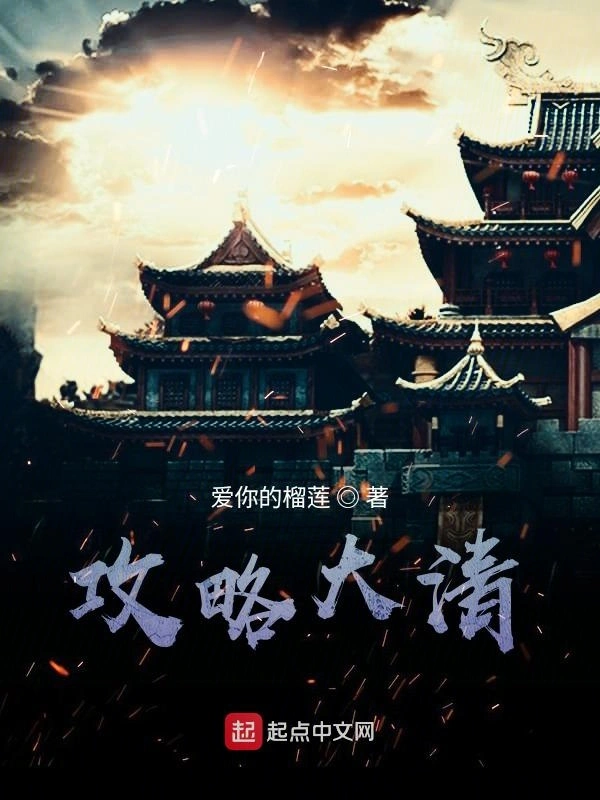
Strategy for the Qing Dynasty
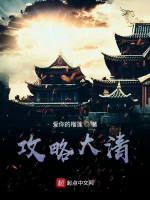
攻略大清
- Status
- Completed
- Length
- 1.9M Words
- Genre
- Historical
- Audience
- Male
- Subgenre
- Qing & Republican Era
- Updated
- 3y ago
- Source
- Qidian
Stats
Tags
Synopsis
Reader comments
In booklists 6
Mangosteen's Spiritual Food
My spiritual food🤪
History❤️games❤️technology❤️refuse to Be Brainless
This book list includes: farming and climbing technological trees, analysis of social and workplace, answers to historical questions, and imagination-expanding fantasy. *The books in the book list have all been read by me. I have sorted them out and shared them with everyone. ↓↓↓Purpose of book list↓↓↓ ❌If the writing is not good, don't use it! ❌Don't let the plot be vulgar! ❌No brainless harem! You are also welcome to recommend some books you like! Every day is a day full of books...
There Are Some Good Books That I Personally Think Are Good. If You Think They Are Good, Please Follow Them and Give Them Some Points🌼
Mainly recommending historical books as well as some interesting books and classic works
Squirrel's Food Reserve
I have experienced book shortages countless times, the feeling of book shortage, tsk tsk tsk! I will put the books that I have read and thought are good into my book list and share them with all my book friends! Everyone is welcome to come and cut the sheep! At the same time, if you have any good-looking books that are not on the book list, remember to recommend them. Books by great masters will not be used for the time being, because they are easy to find. I recommend more books by new authors
Daily Drug-Free Book List
No white text, no brains, no logic. They are all books worth staying up all night. It's not toxic anyway, just watch it.
The Most Righteous Thing to Win a Country Is Ming
The most righteous thing to win a country is Ming
Readers also read
 1914 Begins with the Rejection of the Schlieffen Plan
 Please Call Me Your Majesty the Tsar
 In the Red Mansion: Escort Daiyu to Beijing at the Beginning
 Talker in the Song Dynasty
 The Reborn Fashion King
 Da Liu Bandits
 The Age of Huangtian
 Tokyo: Starting from Pretending to Be a Boyfriend
 Fusion of Wolf Spider Genes, Killing Like Crazy on the Russian-Ukrainian Battlefield
 The Sun and the Moon Are Always There
 Travel Through the Ming Dynasty and Become a Tyrant
 Strategies for Revitalizing the Northern Song Dynasty
 They Eavesdropped on My Thoughts and Drove Me Crazy. I Was Responsible for Eating Them.
 Zhu Xian: I Can Fuse Infinitely, Shocking the Mountain Gate
 My Son Is a Modern Man
8 Lines, I read it back and forth several times, but I can't stand it. It's ok for free, but I can't stand it if it's paid. It's too cumbersome.
It's the best one about the Qing Dynasty's rebellion. I love reading this one 😍. I'd like to give the author a few small suggestions. It's up to you to listen or not. Isn't there too much drama between two women? It seems very discouraging. During the Qing Dynasty's rebellion, they were in Taiwan. They had soldiers and food, so they could vigorously develop the navy. The two foreign dynasties in Chinese history, Yuan and Qing, both relied heavily on the Grand Canal. They could cut off water transportation and grain supply, and at the same time support internal rebel forces such as Shandong Qingshui Sect, White Lotus Sect, Luo Sect, Hunyuan Sect, and Wenxiang Sect. Finally, get a golden finger for the pig's feet and add some essence😊
I am not advocating for the feudal monarchy system, but the system should adapt to the environment of the times, right? In modern China in 2020, when the literacy rate is close to 96%, there are a lot of rumors about "iodized salt to protect against radiation", "Isatidis can cure SARS and COVID-19", pyramid schemes, cults, and feudal superstitions everywhere. How can China, which had a literacy rate of about 5% 300 years ago, build a democratic republic? A democratically elected government? Even in the late Qing Dynasty, when she was faced with internal and external troubles and was reduced to ashes, Cixi was forced to live for another 60 years and survived into the 20th century. In the context of an era when we have not experienced the impact of foreign cultures, the threat of national subjugation, the ideological and cultural changes of the New Culture Movement, and the Confucian feudal imperial thoughts are deeply rooted in the hearts of the people, a "republic" is a regime that seriously weakens the authority of the central government and lacks executive power. A lot of monsters and monsters will appear every minute and tear the country apart!
In that era, when the emperor suddenly disappeared, those who were educated in Confucianism might go crazy. An uneducated person would be at a loss without an emperor. Anyway. That era was not suitable for the emperor to suddenly disappear. The best way is to let the protagonist bear the name of an emperor. Just do presidential stuff. It won't cause people to drink randomly and make people confused. Ancient China. The emperor was more than a ruler. He is also a symbol of a nation and the spiritual sustenance of the nation. It is also a semi-divine belief. It cannot disappear suddenly. That kind of blow. Than for a devout Christian to admit that God does not exist. At that time, the people will definitely be in chaos. Then suddenly something else appeared. Chaos is before your eyes. Ancient people versus emperors. Just like Christians do to God. It is a symbol and belief. At a time when 99% of people are ignorant. The emperor could have no rights. But there must be a symbol. Anyway. In that ancient environment. The emperor cannot disappear all of a sudden. The emperor disappears. Faith disappears. My heart suddenly felt empty. A lifetime of faith is false. The spiritual sustenance suddenly collapsed. Chaos ensues, then madness. The subsequent riots resulting from the collapse of faith were inevitable.
I really don't want to complain, but when I mention Europe, I ignore their long history of "relative democracy" and ignore the turmoil and the victims of the so-called development of medicine, military, and technology. But in ancient China, any situation, such as technological stagnation, unemployment caused by increased productivity, refugees caused by natural disasters, restrictions on the movement of people, the inability to restrict people, excessive taxes, and the inability to collect taxes, all became the incompetence of the dynasty, institutional flaws, and even the root of civilization and culture. Even natural disasters themselves were ignored. In general, readers generally believe that Europeans are worth the "sacrifice" whether it is meaningful or meaningless for development. Once in China, no matter whether it is meaningful or meaningless "change" and causing casualties, it is not acceptable. The closer we are to our own era, the less "sacrifice" is allowed. But once you switch to the protagonist and master the "absolutely correct line of progress", all sacrifices are worth it. All opponents, even potential opponents, deserve to die, and the three tribes should be implicated to avoid future troubles. Now the Internet historical environment has begun to criticize Yang Guang, but which protagonist and readers who "represent progress" are not "Yang Guang"?
The time traveler is a cat crying like a mouse and pretending to be compassionate. He clearly has enough advantages to overthrow the Manchu Qing Dynasty but insists on vigorously developing economic infrastructure while fighting foreign wars. He cannot distinguish between the primary and secondary tasks that the protagonist should do first to overthrow the Manchu Qing Dynasty. The time traveler always complains about the Manchu Qing Dynasty. Well, since you have the ability to change this world, then go and unify this country and change this world. Don't sit on the other side and watch the people living in dire straits under the Manchu Qing rule. First let them live like human beings, and then let them have enough to eat.
This book feels very much like the Anti-Japanese War period
Emotional drama is grinding, and I am confused with several women. Can't you be more decisive? Give birth to more children quickly to ensure the inheritance, and write about rebellion, hegemony, war, politics, economy, education, etc. Seriously. Can't you be more serious?
According to the rate at which the Qing army killed civilians in the book, the population could be reduced by half at the time of reunification, and there would not be many people left. And the Qing army in the book can withstand casualties better than modern armies. The casualties suffered by the army have a lot to do with the strength of the officers. How did the Qing army support half of its casualties?
It took 300 years of the Renaissance and 100 years of the Enlightenment to create a republican United States in the New World. France, the birthplace of the Enlightenment, went back and forth between a republic and an empire many times. Since 1841, after experiencing internal and external interference, with the success of countless people with lofty ideals, various social trends of thought have fluctuated with each other, and N systems have been tried, modern China has emerged. In China, which was under imperial rule in 2000, at the peak of the imperial system in the 18th century, it was unrealistic to rely on one person to propagate the establishment of a republic, or to favor gczy's republic. The foundation of social ideological trends and a unified consensus are the foundation of the upper-level political system. There is no best system, only a suitable system. Republic is not a panacea.
Well written. When modern people travel back in time, they will definitely integrate with the world, mobilize resource trade in neighboring countries, and use colonies to solve domestic problems. For internal education and cultivation of scientific and technological objects, the most important thing is thick black science and the law of the jungle. I also suggest adding less emotional drama and not telling the truth. Don't give women too many rights, take it step by step,
I've only read over 50 chapters, so I subscribed to a few chapters to post a comment. Although I have seen the author using things from the Currency War as a basis before, I know that the historical basis of this book is probably not very good, but when I saw the author writing about the Dutch East India Company, people would be surprised to see the embassies of various countries. The author thought that Europe did not have a system of sending ambassadors to each other at this time and really couldn't bear it... The system of European countries sending permanent diplomatic ambassadors to each other has long been established. You are almost 1800. In Europe, which capital city does not have a few foreign embassies? A few decades later, after the Napoleonic Wars ended, the modern diplomatic system began to be established. In this era in the book, the gap between China and Europe is simply two worlds. There are already traces of modern society in Europe. Even if a modern person travels back to China, it will not be too difficult to adapt, because the various rules and regulations that modern society is accustomed to have already taken shape. However, if he travels back to China at this time, he will be really out of place in ancient times. The writing is quite interesting, but the flaws in historical knowledge really made me feel uncomfortable watching it.
When I saw Chapter 61, I actually wanted to establish a republic. It was awesome. In my opinion, there was no basis for success in that era. Moreover, if a normal person traveled through ancient times and wanted to become an emperor, he would never become a president.
Don't mention the Republic in the Qing Dynasty. The working people have been trained into slaves by the Qing Dynasty. You can only empire.
After searching for a long time, it seems that this is the only novel in the Republic, right? I didn't see any others. I saw other people who started to rebel against the Qing Dynasty in 1860. After they succeeded, they still proclaimed themselves emperors and continued to engage in feudalism. I almost vomited.
The heroine is an indigenous savage and a woman without a few teeth. How ugly and off-putting she is.
The writing of Dongyi Bangtou and Xiyi Bangchui is full of bland and boring plots. It feels boring to skip chapters. There is no sparkle or excitement at all. It is just a bland plot description. It is boring and tiring to watch.
The leader is not like the leader, and the core layer is not like the core layer. They say they have common ideals, but they have never discussed and unified them internally. They say they are warlords, but they seem to be holding various committees... In short, they are neither fish nor fowl. I just ordered a few chapters, but I haven't read any more. I hope it will get better as I write more.
The content of the compulsory course of high school history clearly criticized the Westernizationist approach of only studying utensils and staying at expressions. Changing old ideas into new ideas, breaking the old system and establishing a new system is the primary task
It's easy and relaxing. This book is really easy to write. The protagonist in the article does nothing serious every day. He is either wandering around, promoting cooking, or driving a steam tricycle. It is really leisurely. He is accompanied by the protagonist of the observation team sent by Lanfang, and several protagonists of Shanxi Shanxi merchants personally accompany him for half a day. You don't have any business personnel at your disposal? Is the co-protagonist specifically not doing business? Don't the protagonists need to review official documents? The description of fighting pirates is almost like playing house. An experimental iron ship parked in its own port can be occupied by a group of pirates. It is simply unbelievable. How unprofessional is your navy? Isn't this iron ship a military secret of the Renaissance Army? With such an advanced thing, there is no warning. How unprofessional must the commander be to lead the team?
It's rare! There are very few Qing Dynasty and rebellion articles nowadays!
I just read Chapter 20, and I honestly can't stand it anymore. The pace is a bit fast, and the overall feeling is stiff and dull. There is a serious lack of detail. The characters are also not good. I could use more adjectives.
I'm speechless. It took more than 500 chapters to regain Guangdong. The premise has always been king and hegemony in South Asia. Such a strong force has never made an expedition to the north, and has been frying fish in the fish pond bureau throughout the whole process.
The casualty ratio of this book is like a joke, it's really disgusting
The author is generous and retains some of the diversity of developed countries. After all, times are advancing with the times and are changing all the time. Keeping more diversity can be a good way to make improvements and learn from each other's strengths. Otherwise, there be only one kind of political power in the future, and then we will have to cross the river by feeling the stones. (You don't even have to touch the stone, because no other country develops faster than Zhonglan)
I couldn't stand it anymore after reading Chapter 26, so I said goodbye.
The author has no common sense that troops equipped with miniguns can kill cold weapon troops with zero casualties.
To be honest, I skipped reading this novel, especially the chapters describing the war, which I couldn't bear to watch. For example, in Chapter 72, dozens of solid single-shot rounds hit Wenzhou City and caused hundreds of casualties on the city wall (I count if the Qing troops on the wall lined up with 2 rows of people and let you roll 2 people, there were no hundreds of casualties, not to mention that the defenders could not stand in two rows aligned). In Chapter 210, a group of troops with miniguns, artillery, and grenades It also allowed the cold weapon troops to attack in front of them, and caused hundreds of casualties from bows and arrows (didn't the author know that in the First Opium War, 8,000 British and French forces were equipped with 3,000 muskets, more than 10,000 cavalry, and more than 10,000 other troops, and a total of more than 30,000 people were eliminated, but the British and French forces only killed 2 people and injured more than a dozen people). It is common sense that the author has no equipment and can shoot hundreds of meters of firearms against the cold weapon troops, which is a massacre with zero casualties.
Overthrow the Manchu Aboriginal people's books? Well, it depends. You have to occupy the whole country first, at least the south of the Yangtze River, then build industry, build railways and build trains, and finally colonize the Americas and compete with Western Europe for colonies.
Author, you should now lay the groundwork to contact and support the rebels who cultivated the Qing Dynasty, such as the White Lotus Sect, Hongmen, the Tiandihui, and the Bagua Sect while selling cold weapons to them to do business. Their rebellion can share a lot of pressure for you. You also need to occupy Hokkaido and raise horses, otherwise you will not be able to defeat the Yangtze River, even if you have a rifle.
Is it a harem? If it were, I wouldn't watch it.