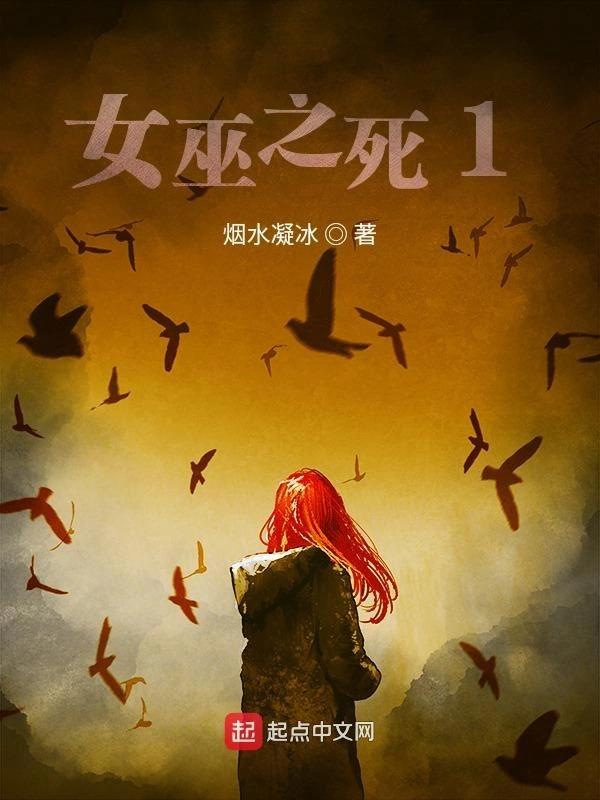
Death of a Witch 1
女巫之死1
- Status
- Completed
- Length
- 15k Words
- Genre
- Short Story
- Audience
- Female
- Subgenre
- Short Fiction
- Updated
- 5y ago
- Source
- Qidian
Stats
0Monthly votes
15Recommends
0Fans
9Chapters
Synopsis
Reader comments
Readers also read
 I Was Born in 1996
 The Hard-Working Mr. Liang
 Don't Laugh at the Crazy People in the World
 My Aunt Is a Master of Cultivating Immortals
 Beast Control Starts from Zero Points
 Song Tan's Notes
 Zheng Loves a Person with One Heart
 Abandoned Wives Are at Ease
 Quickly Wear It: I Just Want to Farm
 Northern Song Life Consultant
 Fight Between Famous Girls
 Houfu
Houfu
The Middle Ages lasted about a thousand years, and there are many good subjects. Personally, I feel that it is not realistic, so I can write in an imaginary direction, because I feel that the author does not know enough about the Middle Ages... Let me just talk about witches. In what year was "Hammer of the Witches" released? At this time, the Middle Ages has almost finished... I have collected the book and will read and review it later. If you want to write in a realistic direction, I suggest you work hard to read historical materials...
Author's Interpretation Version: Only represents the author's personal opinion, readers may have different interpretations. Author's Interpretation: 1. The first chapter describes the heroism of leading thirty people to exterminate the bandits, but in the second chapter it is revealed that it was actually a temporary and helpless act. Let the hero's heroism be less stereotyped and more real. 2. Witches are always described in the dark, such as at the beginning of Chapter 3, but in Chapter 5 they say they are afraid of the dark. It is implied that the witch is not accepted by others, but always longs to be accepted. 3. In Chapter 3, the rope is broken into two pieces from the middle. The dog should take away the piece that tied it. Rez was obviously lying. He forgot to tie the rope and used it to disguise himself later. That's why Reitz gets nervous when asked casually. After the village saw the scene, they realized that they were all lying. They felt depressed and refused to watch the scene where the hammer was lost. 4. The beginning of Chapter 4 describes the usually joyful atmosphere of the church, which shows that Grady had tried his best to resist the influence of the Holy See, which corresponds to the expulsion of the Holy See's informant in Chapter 7. It also highlights his seriousness and effectiveness in conducting anti-witch propaganda. 5. Time and space are used many times in the article. For example, "It's ready" when the meal is ready in Chapter 5, and "This time, it's my turn to save you" said by the pastor in Chapter 7, are both conversations that happened in the past and present. Memories and reality overlap and contrast with each other, which is embarrassing. 6. In Chapter 5, the witch said, "For my wish, but it is gone now." Corresponding to Chapter 4, Grady said that she had been wanted in the north for a long time. She was getting closer and closer to the center of the Holy See, but she completely let down her guard in Hed Village. It means that her wish is to come to Hede Village to meet her father, and then it is best to be accepted and stay there. 7. "Is it completed or is it a failure?" "Forget it." It's all because although the witch met her father, she found that she could not belong here and could not be accepted by the villagers. So when I heard "persuade everyone to accept you" later, my eyes lit up, but after thinking about it I realized it was impossible, so it only lit up for a moment. He also "expected" to be asked to leave. 8. In Chapter 5, Escap has his hands behind his back, probably hiding a hammer. What Rez wanted to tell the village chief was that the dog had been found. But the village chief said he was not angry because of the rumors, so Rez did not dare to speak, fearing that the village chief would blame him. 9. Chapter 6, "Duty to Duty" is elongated, which is meant to be ironic, because Yin Wei knows that Rasta bribed the guard. 10. In Chapter 7, the priest ignited hope because Praed said, "Hope is always there until I give up." He decided to fight against the Holy See and save others as a priest. The statue of the god was intact, but its head was smashed off by the priest, giving it an O. Henry-esque feel. 11. The cracking sound at the end of Chapter 7 and "This time, he may not be able to control..." In Chapter 8 indicate that the priest gave the witch a potion to light a fire and install magic when the situation got out of hand. The bottle contains flammable substances such as phosphorus. The cracking sound was the sound of a bottle being thrown. The "hotter, bigger flame" refers to the populist anger of the villagers. Later, it did get out of control and ruined Grady's plan. In Chapter 8, the flower language of the red lotus has a strong hint. 12. Chapter 9, written many years later. It was obvious that the villagers had teamed up to kill Praed, but they still blamed the witch's magic for Praed's death. Even though Rez, Grady and others actually knew that the witch was not a witch and had no magic. The people who once wanted to expel Praed, but actually killed Praed, praised him, commemorated him, and even regarded the first snowfall that killed him as a grand festival. Very ironic. 13. Chapter 9 can also talk about magic and witches positively. Corresponding to what Grady said before, witch hunting is actually just emerging. There is also a contrast between the hopeful description of witches and magic in the ending and what actually happened to the witches. 14. The names of the six people are all original words or simple synonyms of the seven deadly sins. Together with gluttony and anger in one person, there are actually seven deadly sins. The article summarizes it in one sentence: Under the influence of the 7 deadly sins, Herd killed Mercy. 15. The witch is not the protagonist, but a totem that represents innocence and kindness in the story and in Praed's heart. The witch herself didn't struggle much, she was consistent and never looked back. The function is to show the destruction at the end and trigger the struggle of the protagonist, the village chief. The protagonist is always struggling between duty and kindness: he chooses to sacrifice his reputation to save the witch, but he still feels a sense of relief when the witch sacrifices his life; he discovers that the villagers are lying, but he will not expose them, etc. He was always wandering between the two, unable to do the ultimate good or the ultimate duty, and finally died in regret.
Gadget from the comment section, although I am just a new writer, I am a seasoned bookworm. Generally speaking, I feel that you can divide the previous paragraphs into paragraphs. Don't insist on finishing a paragraph before dividing it into paragraphs. This is not writing. Only by making it easy for readers to read can you retain readers. To be honest, no matter how good your writing is, it is squeezed into a paragraph that is 8 or 9 lines long. Here, in the eyes of readers, they will automatically pass this passage that makes them tired to read. I read it again, and I found that as long as it is a long paragraph, I just glance at it and read the following. On the contrary, I read those short 2 or 3 lines of text very seriously.
Your writing is very good, but unfortunately 😢😢😢I don't have a letter of recommendation. I feel that the situation is similar to yours. I don't have any readers, and I even doubt whether it is a robot, hahaha. But you insist on writing more and see if you can sign a contract, hahaha