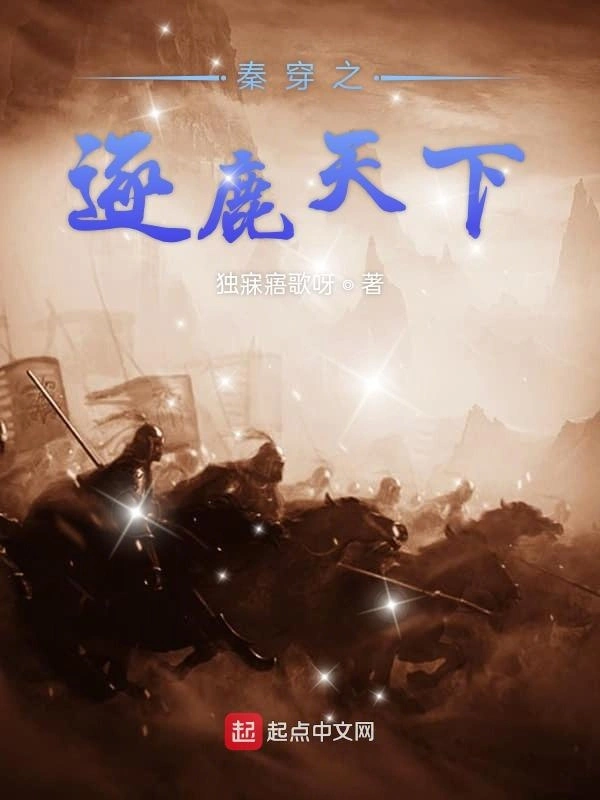
Qin Chuanzhi Competes in the World
秦穿之逐鹿天下
- Status
- Ongoing
- Length
- 65k Words
- Genre
- Historical
- Audience
- Male
- Subgenre
- Qin-Han & Three Kingdoms
- Updated
- 5y ago
- Source
- Qidian
Stats
0Monthly votes
715Recommends
6Fans
32Chapters
Tags
Synopsis
Reader comments
Readers also read
 Red Mansion: Start Escaping and Farming from the Equipment Bar
 Fu Ming 1627
 Northern Qi, Sage Khan
 After Lying in Bed for Three Years, He Was Forced to Help the Han Dynasty
 Tokyo Criminal 1962
 Start Integrating All Beasts by Extracting Characteristics
 Return to the Three Kingdoms and the Battle of Wuhu
 Three Kingdoms: My Father Xuande, the King of Guanzhong Is Here
 Vampires Don't Suck Blood, What the Hell Is a Cultural Invasion!
 Fantasy: Starting from Dialogue Elixir to Enlighten All Things
 From the Scapegoat to the Black-Hearted Taoist Master!
 Starting from Containing Corpses, One Can Rule for Eternity
Explanation on Liu Bang's name: The statement "The emperor of the Han Dynasty changed his name to Ji when he ascended the throne and changed his name to a country" comes from "Historical Records Suoyin": Note: "The name of the country was named Ji" in the Han Dynasty. This single cloud word is also suspicious. Note: The eldest brother of Emperor Gaozu of the Han Dynasty was named Bo, and the second was named Zhong. If there is no other name, Ji is also the name. Therefore, Xiang Dai said, "The great ancestor Ji Bu changed his name to the country after he came to the throne. Later, because the country was taboo, Ji Bu was not taboo, so Ji Bu was still called Ji Bu." The author of "Historical Records Suoyin" is Sima Zhen of the Tang Dynasty. Sima Zhen, whose courtesy name is Zizheng, calls himself Little Sima. There is no biography in the old and new Tang books, and his life story is unknown. Xiang Dai is also unknown, and his life story is unknown. Sima Zhen said that "The Book of Han records that the emperor of the Han Dynasty named Bang with the courtesy name Ji. This single cloud character is also suspicious." There are many single-character names in the Zhou, Qin and Han dynasties, such as: Guan Yiwu, the prime minister during the Duke Huan period of Qi, had the courtesy name Zhong; the common ancestor of the Qi family Liu and Qi Fan had the courtesy name Shihui; the king of Wu in the Spring and Autumn Period The fourth son of Shoumeng, Gongzi Zha, was given the courtesy name Ji; Confucius's disciple Yan Zhimu was given the courtesy name Shu; Han Sui, a Korean doctor, was given the courtesy name Zhong; Su Qin was given the courtesy name Ji; Fan Ju was given the courtesy name uncle; Xiang Juan of the Xiang family of Chu was given the courtesy name Bo; Wu Guang was given the courtesy name Uncle; Sima Zhen said, "The eldest brother of Emperor Gaozu of the Han Dynasty was named Bo, and his second name was Zhong. If there is no other name, Ji is also the name." "Han Shu·Prince and Hou Biao Shang" records: Heyang Houxi, the emperor's brother, was the acting king. The Xiongnu attacked Dai, abandoned the country, and deposed him as a marquis. There are too many examples of incomplete names in "Historical Records". It cannot be said that "Historical Records" does not record the names of others. "Historical Records" does not record the name for two reasons. One is that the name is lost, and the other is that it is taboo for the venerable. "Zuo's Spring and Autumn Annals" records: "It's slow, and Zi's family has not yet died, hence the name." It also records that "on Bingwu of the first month, the Marquis of Wei destroyed Xing, and they have the same surname, hence the name." Zuo Qiuming believes that naming is a criticism of the monarch. "Gongyang Chunqiu" records: "Who is the father? The king of Zhu Lou. Why the name? The word. The name is the name? The praise." The Gongyang school of scholars believes that the title is a kind of praise. "Historical Records" records: Gaozu and Lu Wanzhuang both learned calligraphy and fell in love with each other. "Hanshu" records: Chu Yuan Wang Jiaoziyou, the great ancestor's same father and younger brother. Great book, diverse arts. When he was young, he, together with Lu Musheng, Bai Sheng and Shen Gong, received "Poetry" from Fu Qiu Bo. The uncle is a member of Sun Qing's family. When Qin burned books, they all went away. In that era, how could a family that could provide education for two sons be a poor person who didn't even know a name? The "Han Ji" written by Xun Yue of the Eastern Han Dynasty contains: The emperor of the Han Dynasty tabooed the country, with the courtesy name Ji. Finally: Anyway, I will adopt Xun Yue's statement. As for what Sima Zhen and Xiang Dai said, I don't believe it.
Map of Qin's counties
Jiazi Date Table
One coin is one Qin half liang "Sleeping Tiger Land Qin Slips·Jin Bu Lv": The width of the cloth is eight feet, and the width of Fu Guang is two feet and five inches. Ten pieces of money are equivalent to one piece of cloth. That is, eleven coins can buy a piece of cloth eight feet long and two feet five inches wide. For the brown clothes, I will give you the clothes: a big brown one, worth eighteen catties of gourd, worth sixty cents; a medium brown one, worth fourteen catties of gooseberry, worth sixty cents; a small brown one, worth eleven catties of gooseberry, worth thirty-six cents. That is, a large brown garment uses eighteen catties of hemp and is worth sixty coins; a medium brown garment uses fourteen catties of hemp and is worth forty-six coins; a small brown garment uses eleven catties of hemp and is worth thirty-six coins. "Sleeping Tiger Land Qin Bamboo Slips·Sikong": Those who are guilty must pay a ransom and have responsibilities to the public. If they are asked by the emperor, if they can't enter and reward, they can be ordered to live in the house, and the daily residence is eight qian; for those who live in public, the daily residence is six qian. That is to say, if you do not eat public food, you can pay eight qian for a day; if you do not eat public food, you can pay six qian for a day. Those who are responsible for pounding the city's food at the end of the day will receive thirty coins in stone. That is thirty yuan for one stone of millet. I don't think you should eat rice when you are doing hard labor. "Liye Qin Bamboo Slips": In October of the 35th year of the lunar calendar, in the tenth month of the 35th year of the reign of Emperor Shuo Yiyou, Shao Nei's guard went out of the capital of Guizhou and received two dou of tiger meat, which was sold to the father of the garrison in Wucheng. "Liye Qin Slips" contains: The big slave has a salary of 4,300; the small slave has a salary of 2,500. "Liye Qin Slips" records the price of selling sacrifices: half a dou of wine is one qian; "Historical Records·Xiao Xiangguo's Family": On this day, more than ten people, father, son and brothers were granted the title of "Empty Town". How can I be granted the title of 2,000 households? How could I be given two coins as a gift when the emperor tried to conquer Xianyang? Xiao He once gave Liu Bang two extra coins, and Liu Bang was extremely grateful. The following grain prices are my own guesses. Corrections and additions are welcome. A dou of grain is worth five cents, a dou of rice is fifty cents a stone; a dou of millet is three cents, a dou of rice is thirty cents a stone; a dou of wheat is three cents, a dou of rice is thirty cents a stone; a dou of bean sprouts is two cents, a dou of rice is twenty cents a stone. Other prices: Two thousand five hundred cents for a small slave; four thousand three hundred cents for a big slave; one dollar for a dou of wine; eight cents for a dou of pork; and one dollar for a small piece of dried meat.
It's a really good book. When I saw the title, I immediately rolled in. I was really satisfied with the result.
The plot is wonderful. It's rare to see a good book with such characteristics.
What a good man, honest and upright, and his calm and witty personality is very endearing.
This book is good, keep up the good work and look forward to you 😚😚😚
A very well-researched late Qin text
After reading a few chapters, I feel that the author is a new author. The current Qin Dynasty article with exquisite writing style makes me feel like the author of "Qin Nong" is a trumpet. The careful wording should be a result of great efforts in research, and the names of everyday people in Qin Dynasty documents are also very careful.
The author pays attention to details everywhere in the article, which shows his intention and skill.
This book is great, I hope the follow-up will be even better!
Refer to. . Fingerprint. . Is there such a historical development? . .