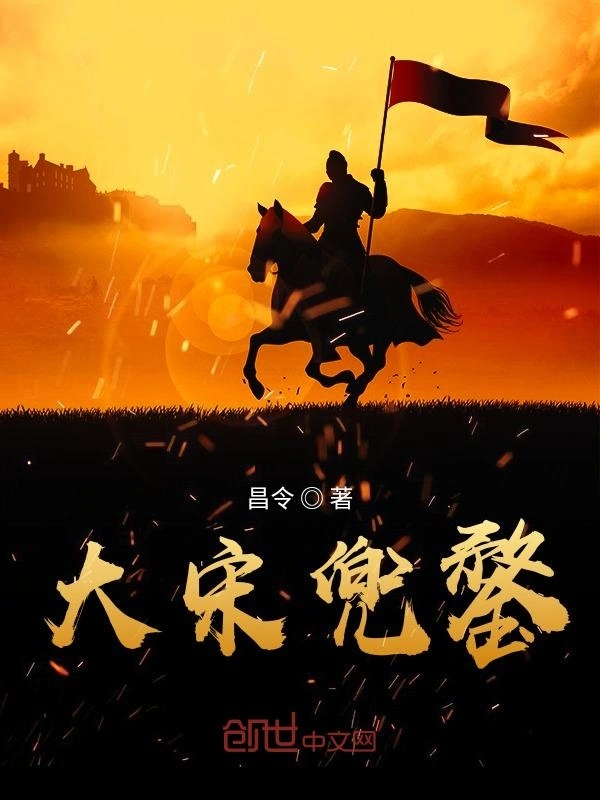
Doumun of the Song Dynasty
大宋兜鍪
- Status
- Completed
- Length
- 921k Words
- Genre
- Historical
- Audience
- Male
- Subgenre
- Song-Yuan-Ming Dynasties
- Updated
- 5y ago
- Source
- Qidian
Stats
0Monthly votes
330Recommends
840Fans
425Chapters
Tags
Synopsis
Reader comments
Readers also read
 Please Call Me Your Majesty the Tsar
 Talker in the Song Dynasty
 In the Red Mansion: Escort Daiyu to Beijing at the Beginning
 1914 Begins with the Rejection of the Schlieffen Plan
 The Reborn Fashion King
 Strategies for Revitalizing the Northern Song Dynasty
 The Sun and the Moon Are Always There
 Tokyo: Starting from Pretending to Be a Boyfriend
 Fusion of Wolf Spider Genes, Killing Like Crazy on the Russian-Ukrainian Battlefield
 I Am the Carpenter Emperor
 The Unparalleled Scholars of the Northern Song Dynasty
 Ming Dynasty Started with Caution
The biggest highlight is that it writes a different Song Huizong from different angles. Other novels all belittle him. He has been the emperor for so many years. He cannot be a fool. His power can even rival that of Jiajing, but he is just a subjugated king.
You should go to Damingfu to develop and develop
I just started reading it after a long time, and suddenly I realized that my friend, you have mixed it into the Water Margin as you wrote it. Those writing about the late Northern Song Dynasty all have a characteristic, reading the Water Margin as history. Hey, I am a laggard and still like to read historical novels 😢
In fact, the archers were relatively powerful a hundred years before the founding of the Song Dynasty The British-style long bow was used for combat, that is, the back of the war bow was bent from a complete piece of wood. Since the back of the bow is the most important part of a bow, the standards for material selection and craftsmanship are quite strict. The best choice for bow-making wood is hard and elastic high-quality yew wood, because the quantity of yew wood is limited. Hard woods such as elm, hazel, ash or oak are also common bow-making materials. The main source of imported timber in the UK is the Mediterranean coastal areas, including Spain, Italy, Crete, Greece and other places. It is generally believed that the quality of yew wood from Castile, Spain is relatively high. In the late 14th and 15th centuries, in order to ensure a reliable supply of bow materials, the United Kingdom even formulated laws regarding the use of yew wood as a tariff. By the mid-15th century, Venice had become the largest distribution center for longbow wood in England. The Royal Armories and the Armory of the Tower of London issued huge orders for timber to the European continent, and British merchants used Venice as a central base during this period to store and ship high-quality timber. In addition to obtaining wood through imports, yew wood produced on the island of England is also used to make longbows, but its evaluation is generally not high. The total length of the finished longbow is generally between 5 feet 7 inches and 6 feet 2 inches (about 1.7-1.9 Meters), with a few being as long as 7 feet. According to records, the basic requirements for general longbow wood are "wood three fingers wide, seven feet long, uniform and straight, without knots." Bow-making wood usually comes from the middle part of the trunk near the heart of the tree; the core material near the heart of the tree, called the "belly" by bow makers, is highly flexible and resistant to pressure. In contrast, the sapwood in the part near the bark, called the "back", has better tensile properties and can meet the elasticity and hardness requirements on the inside and outside of the bow's back respectively. In addition to the material, the shape of the bow's back is also very important; the cross-section of the English longbow's back is not a wide and flat arc, but a cylindrical shape with a similar length-to-width ratio, and the inside of the bow is almost flat. This is to increase the pulling force while protecting the relatively fragile sides of the bow. On the other hand, when the back of the bow is bent, it should ideally form an arc of equal radius. In order to meet this requirement, the thickness and width of the back of the bow must gradually decrease from the middle to both ends. This requires bow makers to use fine cutting techniques to achieve this goal. The ability to accurately and efficiently process wood into the ideal shape is an important criterion for judging whether a bow maker is proficient. The process of gradually adapting the bow back to the bend is called "bow training" by bow makers. Longbows are different from ordinary compound bows in that they have a simple arc shape. The most important process of making a bow is to bend the bow body to the appropriate degree. British craftsmen do not use fire to train bows, because fire can easily reduce the elasticity of the bow's back. When bending the bow's back, the craftsmen use special brackets to bend the bow's body in multiple bends to prevent the bow's back from breaking or losing tension. Whether the arc of the back of the bow is smooth and even is the most important criterion for judging the quality of a bow. For this reason, the bow maker needs to make many fine adjustments to the bending degree and tension. When the appropriate full bow opening is reached, the surface of the back of the bow is flat, the two ends are symmetrical, and a uniform arc is formed, the bow training process is completed. Due to the heavy draw weight of a longbow, simply carving wooden string grooves on the two sections of the bow's back may not be able to withstand the tension. Therefore, the two ends of the longbow are generally covered with horns or other material bases and then the string grooves are processed. This is also a prominent feature of the English longbow. The main material used by British craftsmen to make the strings of the English longbow was hemp fiber. Because bowstrings made of tendon and leather are severely affected by water, plant fibers are less affected. In contrast, when rolling a bowstring, glue is needed to bind the fibers together. After being made, craftsmen and longbowmen need to be careful to prevent the bowstring from drying out too much, because if the glue that binds the fibers hardens due to dryness, the bowstring can easily break. Bowstrings made from hemp fiber proved to be reliable and strong. According to records, a 1/8-inch (about 0.3 Cm) wide bowstring is sufficient for all situations, and even those archers with extraordinary strength do not need to use special thickened bowstrings. According to Roger Asham, bowmakers outside England also used linen, silk, and other materials to make bowstrings, but he did not cite examples for verification. By the 18th century, craftsmen generally began to use glued flax fibers to make bowstrings. From then until World War II, the Belgian region on the European continent became the producer of the best quality bowstrings. Complementing bow making, the wooden bow back and bow strings need to be properly protected during use. Sir John Smith also specifically pointed out in his treatise: "... In the past, the wooden longbow bow body was specially maintained... A well-maintained longbow has a service life much longer than today's longbows, and the bow body rarely breaks...". For a qualified longbowman, longbow maintenance is also an important part of daily life. Oiling and waxing the back of the bow is a common means of protection; Roger Asham once recorded: "Longbowmen must wipe their bows with a waxed wool soft cloth every day... This not only makes the bow look neat and bright, but also forms a smooth and hard protective layer on the surface of the back... In this way, weather changes and moisture cannot affect the bow." John Smith's description of longbow maintenance verifies this statement. He mentioned that "Archers usually mix wax, resin, and tallow, heat them together, and apply wool cloth to the bow body, which can effectively resist the heat, cold, and moisture." He also mentioned that longbowmen always carry several well-maintained bow strings with them. When the bow is not needed, the longbowman will remove the bowstrings from the bow and keep them properly. During the Hundred Years' War, longbowmen in the British army liked to put their bowstrings and spare bowstrings in their hats and hang them up when preparing for battle. For skilled longbowmen, it only takes less than a minute to string and tie the longbow and adjust the longbow to the ready state. I would like to recommend you a unit, the Longbowman There are many types of arrows used in longbows. According to the description of the British scholar Prestwich, the arrow is about one yard (about 35 inches, 90 centimeters) long, with an iron arrow head installed on the head, and the arrow shaft is thick and straight to fly smoothly. In the regulations of the Bow Makers Guild in 1484, it was mentioned that 100 arrow shafts of the best quality, high strength and weight could be ordered for 16 pence. Arrow shafts should be "polished to the highest standards, peeled off the bark and coated with varnish." Arrows made of light materials are called flying arrows, which have a long range and are generally designed for shooting at long distances. In combat, longbows usually use heavy arrows made of heavy materials such as ash, birch, etc., And the diameter of the arrow shaft is about 1/2 inch (about 1.3 Cm). Although heavy arrows have a shorter range due to their greater weight, their penetrating power and lethality are correspondingly stronger. The arrow feathers are composed of three pieces of feathers (usually goose feathers), glued at an angle of 120 degrees at 7-9 inches of the arrow tail, and tied firmly with string to prevent them from falling off during rapid flight. Longbowmen usually bundle 24 arrows in a bundle. Longbowmen will carry a bundle or half a bundle (24 to 12 arrows) of arrows on their belts for emergency use, and the other two bundles (48 arrows) in a cloth quiver and carry them on their backs. When engaging in battle, longbowmen would also take out their arrows and insert them into the ground in front of them for easy access. When Henry VIII went north in 1513, he brought 26 ammunition carts with 240,000 arrows. The famous English longbow was actually invented by the Welsh. The bow was six feet long and used arrows three feet long. This longbow is one of the most powerful weapons in medieval Europe. Archaeologists today can easily identify the remains of longbow archers from this period because their spines were so severely curved. The roughly 100 pounds of draw weight required to use a longbow is the main reason why the archer's spine is so curved. In the life of a British man, the thing that accompanied him most was his longbow. The longbow would be placed next to Britannia when he was sleeping, reminding him to practice at any time. During battle, the British longbowmen usually stood in a row, drew their bows and released arrows toward the sky, relying on the lethality of the arrows to penetrate the relatively weak helmets and shoulder armor. An experienced longbowman can make six high-percentage shots in a minute. Longbows have a long range and great power. On medieval battlefields, a large number of longbowmen can cause great damage to the enemy. If six bows and arrows are fired per minute, 3,000 longbowmen can fire 18,000 bows and arrows at a dense enemy army. The effect of this area attack can cause great trauma to enemy troops.
The English longbowmen once frightened their enemies with their powerful murderous weapons. The English longbow is known as one of the most terrifying weapons among cold weapons. This kind of bow first originated in Wales, and later spread to England and was carried forward by the English. The long bow is made of yew or ash wood, and the bow body is 1.8 To 2.2 Meters long. Users are required to be of considerable height. In England in 1279, the requirements to become a longbowman were to be at least 1.75 Meters tall and to have strong arm strength. The arrows of the longbow are also specially made. The arrows are made of iron and can easily penetrate the breastplate of the cavalry. When shooting an arrow, the archer opens the bow toward the sky and lets the arrow fall freely. Because there are many shields on the front, it is difficult to escape the rain of arrows falling from the sky, and the arrows increase their speed during free fall. Arrows are kept in arrow pots, usually 12 in each pot. The longbow has a range of over 300 meters. In the Middle Ages when firearms were not yet popular, this was undoubtedly a terrifying long-range killing weapon. Development History In 1332, a small group of English troops invaded Scotland and took a defensive posture on Mount Duplin. The Scottish army, composed entirely of heavy infantry, advanced up the hill, with the main force concentrated in the center and a small phalanx on each side. The English wisely dismounted their cavalry and turned against the heavy infantry, spreading their numerous longbowmen around the cavalry's flanks. The Scots failed to pay attention to the role of the British archers. Their central group launched an attack on the stationary dismounted cavalry, failing to achieve an absolute advantage. While the dismounted soldiers from both sides were fighting each other, the English archers moved to the front and quickly fired arrows at the two Scottish flanking phalanxes from the left and right sides, forcing them to retreat and squeeze together with the main force of the central group. Because the soldiers in front could not move forward, and at the same time the troops on both wings retreated inward before the arrival of the opponent's arrows, the scene at that time was as described by a medieval historian: the Scottish army "trampled each other to death due to overcrowding, and more people were crushed to death than were killed by arrows." The Scottish army was attacked from three sides at the same time. The situation was similar to the situation of the Roman army in the Cannae War, and "the amazing scene was something that had never been seen or heard in any battle before. The height of the corpses was even higher than the length of the spears." When the Scottish army finally began to retreat, many English cavalry mounted their horses to pursue them, causing more casualties to the Scots. In contrast, the English suffered very few casualties, and the Scots did not harm their archers at all. Using the longbow to end the age of chivalry: English longbowmen The next year, at Halliton Hill, the Scots attacked the English formation again. The smart and energetic young king of England, Edward III, occupied a position on a steep mountain and adopted new tactics, which was to dismount the cavalry and disperse the archers on both sides of the dismounted cavalry and in the gaps between the formations. As the Scottish army advanced, archers fired down from the hills, and the longbowmen turned to attack the heavy infantry without the assistance of heavy cavalry, coming to the halting spearmen. The Scottish army soon fell back, leaving the victory of the battle to Edward III. The king, who was only 20 years old at the time, began his almost undefeated military career. Battle of Agincourt The war resumed in 1415, and the initial situation was more favorable to England. At this time, France was ruled by a mentally disturbed king and was suffering from internal sectarian struggles that caused disunity. At the same time, England had an outstanding military commander, Henry V, whose ability exceeded that of his great grandfather Edward III and the Duke of Lancaster. This knowledgeable, sincere and pragmatic strategist and state activist actively strengthened naval construction and enabled England to regain control of the sea. He formulated a comprehensive strategic plan for the conquest of France and put it into effect in August 1415. He led a large army to land at the mouth of the Seine River and began to besiege the fortified port city of Harfleur. He benefited from the power of his artillery and captured the city in five weeks. The siege was the first in a series of actions he planned to conquer France. He also led a small force from northwest France to carry out a raid, and then returned to England from the port of Calais. As part of his new strategy, he instructed his men not to pillage along the roads, lest they distract from his underlying political goals. The main purpose of this attack must be to humiliate the French and add some luster to the outcome of the campaign. King Henry only brought 1,000 heavy cavalry and 5,000 longbowmen. He seemed very uneasy along the way and always seemed to be trying to avoid fighting with the larger French army. His action once again repeated what Edward III had done before the Battle of Crécy. In that battle, the French army tried to drive the British army to the river and force them to fight. In an attempt to recreate the success of King Edward's March of Crecy, King Henry planned to ford the Somme's mouth at low tide. When he found the French defense at the mouth of the river, he went up the river to find a fording site. The scene was like that of his grandfather, who had marched near Crécy in search of crossing the Seine. The army's own supplies of grain and grass had been exhausted, and nothing could be found locally to satisfy their hunger. His officers and soldiers had to eat unground wheat to satisfy their hunger. His troops were soaked in rain every day and suffered from dysentery. The French army must have robbed the countryside of food and grass supplies, and if du Guéclin's strategic thinking can still dominate the French army's actions, then only a very small number of Henry's troops will be able to reach Calais. In order to find a suitable crossing point, the British army had to go far along the upper reaches of the Somme. A few days later, in the village of Agincourt, the French blocked the British road to Calais. Henry dismounted a small number of cavalry and deployed his troops in a defensive posture, using archers to form a 700-yard front. A forest of trees served as a screen on each side of the deployment, and a row of long stakes was set up in front of the archers, with their heads facing the enemy. Although his heavy cavalry was relatively weak, he occupied a strong defensive position. This actually provided the French army with an opportunity to apply a logistics strategy. They made the British army sit on the ground and forced the hungry British army to come down to plunder food and grass, attack the French army, or resume their march. However, the commander of the French army, as the representative of the insane king of his country, lacked the corresponding power to control the large number of powerful feudal nobles. These nobles insisted that they could not be despised by the weak English army, which was mostly composed of archers from the lower classes of society. As a result, the French army began to deploy its own troops to carry out the attack. The first two columns of the troop formation are dismounted cavalry, and the third column behind is the cavalry who remain on their horses. The French commander deployed a small cavalry group on each front wing of the army formation to attack the archers on both sides of the British army. Although King Henry moved his troops a little towards the French to meet the French attack, two factors made it almost impossible for the French to advance: first, because the armor of the heavy cavalry was too heavy, so the dismounted heavy cavalry could not move as easily as the heavy infantry; second, it rained heavily, forming knee-deep mud on the road leading to the British position. When the French dismounted heavy cavalry was finally able to advance forward, the French cavalry's first attack on the archers failed completely. On the one hand they were too few, perhaps only 150 men per wing; on the other hand the archers held back the cavalry because the muddy road slowed their charge. In this regard, a contemporary historian described it this way: "The (French army's) war horses were seriously injured and could not move independently." After the cavalry attack failed, the French army's first line of dismounted heavy cavalry approached the first line of British soldiers. This was due to the limitations of their own heavy armor, coupled with the deeper mud and British arrow rain, which made them move slowly. Although longbowmen were also part of the first line of the British army, the French knights concentrated their forces on attacking the dismounted British cavalry who had equivalent social status and could demand ransom. King Henry, however, ordered his strong and agile archers into battle. These archers "left the tree stumps, dropped their bows and arrows, took up bayonets, axes and other short weapons, and began to attack the armored French soldiers, breaking into the opponent's line, killing or stabbing the French soldiers, but these French soldiers offered little or no resistance at all," because the knights, weighed down by their heavy armor, were stuck in the mud. The success of the British longbowmen in this assault did not solely rely on the poor performance of the French cavalry as heavy infantry. Although they had no shield for protection and lacked training in using bayonets and axes, the British archers each had an iron helmet, a breastplate or a thick piece of clothing to protect their bodies. In this way, they became the opponents of the French heavy cavalry on foot. Even if those heavy cavalry on foot were not killed by the opponent, they fell and could not stand up without help. The British army defeated the attack of the first two columns of French troops, killing many, and also captured many cavalry who had lost the ability to maneuver on the ground. Because the French dismounted heavy cavalry could not run in front of the agile British archers, the French army suffered heavy casualties. The third column of cavalry who remained on horseback had no intention of attacking. While the British troops were identifying the French troops lying on the ground and distinguishing the dead from the living, most of these cavalrymen only lingered at a certain distance without taking action. As the local French militia attacked the British army's garrison, and the third column of cavalry seemed to be about to attack, the British army captured and killed many French soldiers. The order was given by the king, because he feared that the French army would attack to recover the fallen knights, so that those knights who had rested by lying prone in the mud and pretending to be dead would return to the battlefield. However, no real attack was carried out. The next day, the 28-year-old King of England marched towards Calais again with 2,000 prisoners. In addition to boosting the morale of the British officers and soldiers and increasing their enthusiasm for war, the victory of the battle did not immediately bring more favorable conditions to King Henry's comprehensive strategy of conquering French territory. The next year, King Henry started another war of conquest in Normandy. This time he had a fortress, a mentally disturbed king, and internal factions competing for power. Therefore, even when the British army besieged Rouen, the provincial capital of Normandy, the French ignored the British army's seizure of French territory. Rouen, a large city protected by a five-mile-long solid wall, finally surrendered due to hunger. King Henry held his army in position for five months, with the English supplying the army by water while preventing them from plundering themselves. By 1419, Henry had completely conquered Normandy and collected a large amount of money from cities that had resisted him, such as Rouen. In addition, the king also eased conflicts by retaining local institutions so that the Normans could accept his rule. With the political support of some French people, the English soon controlled a large area of territory, including Paris. Later, the English tried every means to expand the territory they controlled despite the limited resistance of the French. Britain's resources were very limited compared to the vast geographical space of France. In addition, many French people strongly opposed the British king occupying the French throne, thus preventing Britain from expanding the scope of conquest. Using the longbow to end the age of chivalry: English longbowmen However, inspired by Joan of Arc, the French began to counterattack the British and gradually regained the territory of northern France. Although the new king, Charles VII, was not very talented and physically weak, he eventually provided good guidance for France's long-lasting counterattack with the support of the advisory board and the influence of the martyr Joan of Arc. The counteroffensive consisted of a series of siege operations. Due to improvements in artillery performance, the speed of sieges at this time had been greatly accelerated. The French learned to avoid frontal attacks, waiting to attack while the British troops were on the march, or attacking British positions or unprotected flanks. As besiegers, the French thus had the opportunity to exert the power of defensive operations and force the British to carry out offensive operations. The British army's victory in the long war with the French should be attributed to their de facto professional army. Although the British army is not a standing convoy, due to the continuity of personnel and regular campaign operations, this army has many characteristics of a standing army. In addition, providing sufficient funds for the army, a thorough understanding of the role of logistics support, and the ability to provide supplies to the army from the base camp through waterways were all indispensable factors that contributed to the British victory. Throughout the century-long conflict, the British had their own capable and experienced leaders. They can understand the importance of retaining reserves during combat, understand the power of defensive operations, and act according to the principle of winning combat at the minimum cost. And most of the time, they can understand that commanders should guide the battle, not just lead the troops. Although the longbow has almost become a secret weapon of the British army due to its fast firing speed, high power, and high shooting accuracy, the success of the British army does not only rely on this particularly effective light infantry weapon system. The comprehensive use of light and heavy infantry provides the best combination for defensive operations. Heavy infantry can resist the impact of heavy cavalry, and light infantry can shoot the opponent's light cavalry. When resisting an attack by a mixed formation of light and heavy infantry similar to our own, the defensive force enjoys the advantages of defensive operations, such as the right to prioritize position selection, sufficient preparation time, and field fortifications. In the three major battles with the French army, the British army chose their positions on the hillside, with natural barriers on both sides, and used natural or artificial obstacles to protect the archers. Except for the Battle of Crecy, if the dismounted cavalry can give full play to its advantages in defensive operations, a sufficient number of dismounted cavalry should also be able to withstand the French attack. In the Battle of Crecy, the longbowmen's defeat of the French crossbowmen seemed to be the key to success. However, even in this battle, if they did not have powerful light infantry (longbowmen) and used a small amount of heavy cavalry to attack on horseback, they could still scatter the crossbowmen with a slow firing rate. Henry V's adventurous march to Agincourt showed that the British army's strategy and tactics exploited the shortcomings of the French's unorganized feudal army and their medieval combat ideas. The Battle of Agincourt clearly demonstrated that the British tactical system took advantage of the French army to implement a very wrong frontal attack. If the French army did not do this, then there would not even be an offensive procedure in the British army's combat theory. In their own civil war, the British had nothing better to do than have their archers shoot at each other and their cavalry to dismount and huddle together for a frontal charge. It was clear that their tactics could not defeat even the ancient war artists. Although the British emphasized longbowmen, they still thought of heavy cavalry in the Middle Ages.
Ling Ling Jiang~ Will there be a female protagonist in this book? (:[___]←Waiting for reply
Didn't Liang Hongyu's family get convicted only when they were in Square La?
Chapter fifty-seven, speechless, again boasting about modern training methods, brother, those are ancient times. I am prohibited from saying that there were also ancient armies, but I have to say other things, it is inappropriate. It is impossible to win in 15 days. The ancient armies basically all formed formations and could do it with basic cooperation. Even with strong generals, it was impossible to have zero casualties. Look how long the Qi Army has been training. In 15 days, they trained spies to be able to defeat the Imperial Guards. Are you thinking too much?