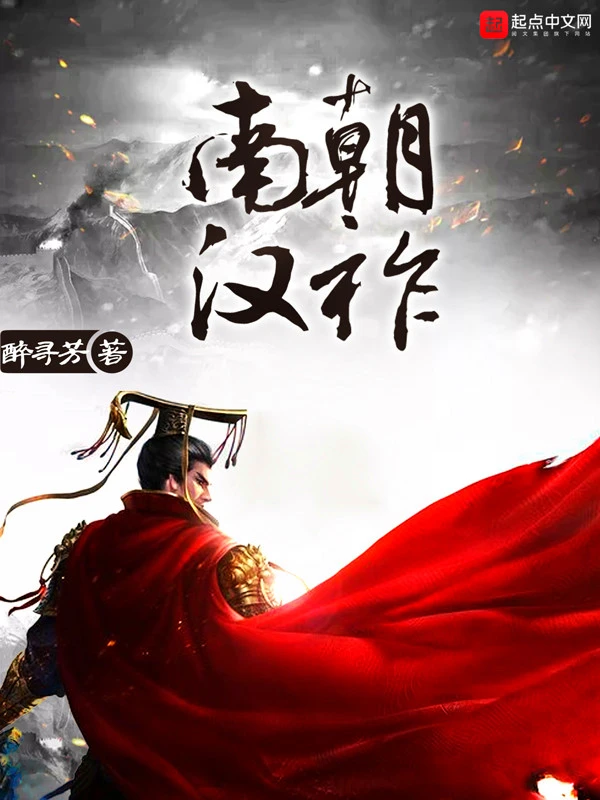
Han Zuo in the Southern Dynasties
南朝汉祚
- Status
- Completed
- Length
- 903k Words
- Genre
- Historical
- Audience
- Male
- Subgenre
- Jin-Sui-Tang Dynasties
- Updated
- 6y ago
- Source
- Qidian
Stats
0Monthly votes
4.5kRecommends
26.4kFans
341Chapters
Tags
Synopsis
Reader comments
In booklists 3



A Little Bookstore That Travels Through Time and Space
My taste has now settled down, and I have begun to specialize in cities and history. They are all books with thick writing or fresh style. I hope that those who are lucky enough to see this book list will find books they love.
23Books109Follows5yUpdated
Jie Fang Bookstore
In the vast sea of books, where can I find the inspiration? No bullshit, no noobs, just good books!
48Books98Follows6yUpdated

I Like Reading Books About History! Very Niche!
These are all my favorites to watch recently, and they all feel pretty good!
22Books33Follows6yUpdated
Readers also read
 1914 Begins with the Rejection of the Schlieffen Plan
 In the Red Mansion: Escort Daiyu to Beijing at the Beginning
 Please Call Me Your Majesty the Tsar
 Talker in the Song Dynasty
 The Reborn Fashion King
 Ten Kingdoms Week
 Da Liu Bandits
 Tokyo: Starting from Pretending to Be a Boyfriend
 Fusion of Wolf Spider Genes, Killing Like Crazy on the Russian-Ukrainian Battlefield
 Northern Qi: My Father, Emperor Wenxuan
 The Age of Huangtian
 The Sun and the Moon Are Always There
 Walk with the Ming Dynasty
 My Domination
 Fairy Dynasty
Reprint "The Death of Tan Daoji and the Decline of the Beifu Army Group"
The late Jin Dynasty and early Song Dynasty were an era of sharp contradictions and frequent wars. Such an era provides a stage for many generals who are good at fighting to show their talents. They ascend to high positions by virtue of their military exploits, and after entering the center of power, they will consciously or unconsciously influence the development of history. Tan Daoji is one of the more outstanding ones. The allusion of "blocking the Great Wall" used by Lu You in the Song Dynasty in his poem "Shu Anger" refers to him. However, none of the previous research results have specifically discussed it. As a representative of the Beifu Army Group, his fate is closely related to the rise and fall of the group. This article will examine the relationship between Tan Daoji and the Beifu Bing Group to reveal the rise and fall of power between imperial power and regional groups in the late Jin and early Song Dynasties. 1. Tan Daoji's military talents As a famous general, Tan Daoji first left his name in history with his outstanding military talents and brilliant military career. The following will introduce the three most important battles he commanded and participated in in his life: The first one was the war between Daoji and Liu Yu in the Northern Expedition to Later Qin in the twelfth year of Yixi (416 years) of Emperor An of the Eastern Jin Dynasty. Together with Wang Zhene, he served as the vanguard of Liu Yu's army. "He surrendered in the battle and marched to Luoyang." He also worked with other troops to capture Tongguan, laying a solid foundation for the capture of Chang'an, the destruction of Later Qin, and the final victory. It was through this victory in the Northern Expedition that Liu Yu accumulated enough political capital to complete his preparations to proclaim himself emperor on behalf of the Jin Dynasty. The second war was in the third year of Yuanjia (426) when Emperor Wen of the Song Dynasty personally led an army to attack Xie Hui's rebellion. Daoji's army under Xie Hui "lined up from Jiangjin to the tomb, with flags and flags shining, and Wu took the light". However, under the circumstances of "Yan Zhi's defeat, he retreated to Yinji", he followed Yan Zhi's advance, causing Xie Hui's army to "collapse without fighting", and the battle turned from defeat to victory. The rule of Emperor Wen of the Song Dynasty was finally consolidated after this battle. The third war was the Liu Song Northern Expedition to the Northern Wei from the seventh year of Yuanjia (430) to the eighth year (431). In the seventh year, "Zhi Yanzhi invaded Wei, and Henan was leveled and lost again", "the palace cache and arsenal were empty"; in the eighth year, "the governor of Daoji conquered various military forces, captured the territory in the north, and moved to Jishang", "more than thirty battles with the Wei army were achieved". In the end, because the military supplies were exhausted, they had to withdraw their troops and return. "Although Henan could not be conquered, the whole army rebelled, and his reputation was greatly enhanced." The reason why Tan Daoji is good at fighting is inseparable from his qualities in the following aspects. First of all, Daoji is extremely resourceful, able to strategize and change according to opportunities. Before Emperor Wen of the Song Dynasty asked Xie Hui for help, he asked him for advice. Daoji made the following incisive analysis: "I and Xie Hui marched together from the north in the past. They made nine of the ten strategies when entering the pass. Hui had nine out of ten strategies. He was very talented and well-trained, and it was almost difficult to defeat the enemy. However, he did not win a decisive victory alone, and his military service was probably not his strength. I know my wisdom, but I know my courage. Now that I have been ordered by the king to attack outside, I will definitely be defeated without forming a formation." The result of the war was exactly as he expected. When the troops retreated from the Northern Wei Dynasty, the army's supplies were exhausted, and "the soldiers were worried and had no ambition." He had an idea and "singed at night to measure the amount of sand and scatter the remaining rice on it." "At the end of the day, the Wei army said that they had enough supplies, so they stopped pursuing." The fate of the defeated army was avoided. This enables him to transcend the realm of ordinary "fighting generals" and "fierce generals" and become a "wise general" and "general". Secondly, he knows how to use correct political strategies to win the support of the people. During the Northern Expedition to the Later Qin Dynasty, "every city was attacked and fortresses were broken, and more than 4,000 people were captured. The debaters said that they should all be slaughtered as capital guards." Daoji said: "It is now a crime to punish the people. They are all sent and released. In the end, it achieved the effect of "the Central Plains is happy, and many people returned", which greatly accelerated the process of victory in the war. Again, he had extraordinary courage and magnanimity. On the eve of his participation in the dethronement of the Young Emperor of Song Dynasty, "Daoji thanked Huisu when he entered the leadership mansion, and he was so terrified that he couldn't sleep. Daoji fell into a deep sleep, and Hui took it. "When the troops retreated in the eighth year of Yuanjia, "the troops were outnumbered and weak. Daoji ordered the sergeant to wear armor, wear white clothes, and ride on the chariot, and Xu went out of the periphery. The Wei army was afraid of an ambush and did not dare to force them, so they returned. "This enabled him to respond calmly when the situation was critical and not be alarmed. 2. Cause of Tan Daoji's death Sadly, such a wise and courageous general with outstanding military achievements was eventually unjustly killed by Emperor Wen of the Song Dynasty. However, let us analyze it carefully and find that the underlying reasons for Daoji's death are inseparable from his own character and his relationship with the Beifu Bing Group, so it is inevitable. At the end of the Eastern Jin Dynasty, conflicts between the ruling classes were acute internally. The imperial power in Yangzhou in the lower reaches was often threatened by force from the Jingzhou generals in the upper reaches. In order to deal with this situation, Xie Xuan was first recruited by Emperor Xiaowu in the early Taiyuan years of the Jin Dynasty. The northern soldiers from the Jingkou, Guangling and Jinling areas formed the Beifu soldiers. These northern refugees were mainly composed of inferior gentry and ordinary people. Wang Euzhi commented on them: "Moreover, among the people from the south in the Central Plains, there are many brave and heroic people. They are more important than those of the Chu people." "They have strong combat effectiveness, which was demonstrated in the Battle of Feishui not long after the Beifu soldiers were formed. Eighty thousand Beifu soldiers defeated the former Qin army, which was said to be one million. In the subsequent wars, the Beifu soldiers generals from the inferior gentry were gradually promoted and entered the leadership. In the second year of Jin'an (398), after the defeat of Wang Gong, a noble gentry who led the Beifu soldiers, the Beifu soldiers general Liu Laozhi took control of the Beifu soldiers, making them independent from the control of the gentry and forming the Beifu soldiers group led by the inferior gentry. Emperor Wu of the Song Dynasty, Liu Yu, usurped the throne at the end of the Jin Dynasty. When the original leader of the Beifu Bing Group, Liu Laozhi, and others died, and the group tended to fall apart, he rebuilt this group and relied on it to seize the throne and establish the Liu Song Dynasty. Tan Daoji's family had lived in Jingkou for a long time. He followed Emperor Wu of the Song Dynasty to attack Huan Xuan, "Ping Jingcheng", and participated in the entire process of rebuilding the Beifu Army Group. He also made great contributions and helped Emperor Wu of the Song Dynasty finally ascend the throne. For his meritorious service, he was renamed Yongzhi County Duke, with the title of Danyang Yin, and the general of the army." He became one of the fourteen meritorious officials specially praised by Liu Yu when he came to the throne, and a representative figure of the Beifu Army Group. During the transition between Jin and Song Dynasty, Liu Yu not only felt the great achievements brought to him by the Beifu Bing Group, but also knew that appropriate policies and measures must be adopted to make it a tool of taming. The Beifu Bing Group was a double-edged sword for Liu Yu. It could not only help the Jin Dynasty, but also become a potential force to destroy the Liu Song imperial power. Therefore, it became the need of the rulers of the Liu Song Dynasty to weaken and control the Beifu Bing Group. In the third year of Yongchu (422), Liu Yu divided the Beifu Army Group into two, with Liu Yikang, King of Pengcheng, as the governor of South Xuzhou and the town of Jingkou; while Tan Daoji "supervised the military forces in the south and north of the Yangtze River and Huainan" under Xu Yan's control. "General Zhenbei and governor of Nanchongzhou". "In the third year of Tan Daoji, it became Nanyanzhou, and Guangling became a state." The seat of Nanyanzhou was also moved to Guangling in the north of the Yangtze River. However, Tan Daoji's status increased during this split. He had outstanding achievements and great prestige. This time he gained half of the people in Jingkou, where the Beifu Group was located, and became the leader of the Beifu Bing Group. This important political and military force in his hands became the target of all the political struggles in the future. When Liu Yu was about to die, "Sikong Xu Xianzhi, Zhongshu Ling Fu Liang, leading general Xie Hui, and Zhenbei General Tan Daoji were ordered to do so. "In less than a year, the ministers of Gu Ming, Xu Xianzhi, Fu Liang, and Xie Hui, planned to depose the young emperor who succeeded him. "The old generals of the previous dynasty, Dan Daoji, the governor of Yannan, were intimidated by the palace provinces and had many soldiers, so they summoned Daoji and Wang Hong, the governor of Jiangzhou, to join the court" and "reported the plan to abolish the establishment." They wanted to draw him into their own party and use his prestige and military power to achieve great things. Before the young emperor ascended the throne, Tan Daoji had served as his subordinate officials for a long time, such as "Sima, the general who conquered the captives", "General Xizhonglang, the crown prince, the domestic history of Liang", "Sima, the general who conquered the captives, general champion" and "Dai Zhong of the Song Dynasty, the concubine of the crown prince, and the great Zhongzheng of Yanzhou" , Wait, the relationship between the two is definitely not bad. Liu Yu may have considered this relationship when he chose him as the Minister of Gu Ming. Before his death, Liu Yu specifically told the young emperor: "Although Tan Daoji has a strategy, he has no ambition, and it is difficult to control him unless he is a brother." "I think he is still reliable. After Tan Daoji came to Beijing, he was also dissatisfied with some of the intentions of Xu Xianzhi and others, such as the memorial to the deposed Young Emperor - the deposed King of Luling Liu Yizhen "repeatedly stated that it was unacceptable". But in the case of "the competition was not accepted", not only did he not Instead of insisting on his own opinions, in the action of deposing the young emperor, he first "led the troops", "entered the Yunlongmen", and then "entered the court to defend the court", acting as the vanguard of Xu, Fu and Xie's party . After participating in the dethronement, Tan Daoji was regarded as one of their own by Xu, Fu and others, and included in the plan to consolidate their own power. "Xu Xianzhi and Fu Liang sought self-preservation and stayed in the upper class, while Tan Daoji held Guangling, and each had strong troops to control the court; if they admired them, they would be more prominent and hold power for a long time. "I thought that this set of arrangements would be enough to continue to be in power under the new emperor Wen. However, Tan Daoji had already begun to "become closely attached to Wang Hong, the brother of Wang Tanshou, the favored minister of Wen, and envied him every time." A few years later, in order to strengthen the imperial power and eliminate the power of Gu Ming's ministers, Emperor Wen killed him in the central government. Xu Xianzhi and Fu Liang were preparing to attack Xie Hui who was stationed in Jingzhou. He thought of enlisting the power of Tan Daoji. Seeing that Tan, Xu and Xie were in the same party, they believed that "Daoji was not trustworthy." "There will be no worries". He ordered Yanzhi to stay in front of him, and Daoji followed him. He personally led the six armies to attack Xie Hui. As expected, Daoji was successfully "pacified" by Emperor Wen. When the former army was defeated by Yanzhi, Daoji decided the success or failure of both parties. Only then did Emperor Wen of the Song Dynasty truly secure his position. Tan Daoji was in In these two political struggles, there was no clear political direction and there was no clear political direction. Just as Mr. Tian Yuqing wrote in "The Politics of Eastern Jin Dynasty" about the father and son Liu Laozhi and Gao Yazhi of the Beifu Group, "the generals who were involved in the vortex of upper-level politics did not know how to deal with themselves and acted quite blindly. However, Mr. Tian believes that they are "the pioneers and victims of the historical event of the inferior gentry entering the highest dominance" and "a manifestation of the social class of the generals of the inferior gentry who are at a loss in the changes in clan politics." They maintained the characteristic of being at a loss in the face of major political struggles. Although they had strong power, they could not recognize the direction and could not use it. They could only serve as tools in the hands of the imperial power and other powerful ministers. Just like Liu Laozhi and others could only become tools of the powerful gentry, "Although they have strategies but no ambitions" may be their common character and the source of their tragedy. However, the power of Beifu possessed by Tan Daoji was shown in the dethronement. After all, Emperor Wen of the Song Dynasty felt a potential threat to the imperial power. In the wars against Xie Hui and Yuanjia's seven-year campaign against the Northern Wei Dynasty, Emperor Wen also asked his confidant Luo Yanzhi, who was far less talented than Daoji, to serve as the vanguard or command the main force, which showed his guard against Daoji. However, in these two wars, Daoyan failed, but Daoji won once and returned with his entire army, which further improved his ability and strength. Especially after returning to the army from the Northern Expedition, "Daoji made great contributions to the previous dynasty, and his reputation was very great. He had experienced hundreds of battles, and his disciples were talented." People at that time said, "I know it is not Sima Zhongda." So " The court was suspicious and fearful of him." Emperor Wen of the Song Dynasty's poor physical condition ultimately intensified the conflict and contributed to Daoji's death. "Taizu had been ill for many years and suffered many crises. King Yikang of Pengcheng cared for the palace and drove Yan Chai. Daoji cannot be copied. In the twelfth year of Yuanjia (435), Shangjidu summoned the prisoners as border bandits and summoned Daoji into the court. In the spring of the thirteenth year of Yuanjia (436), Daoji was sent back to the town. He had already disembarked from the ship. He quickly moved on to summon the ancestral Dao to collect and pay Tingwei. "Yu Tingwei executed him". When Daoji was killed, he was accused of "sneaking gold goods to attract cunning", "waiting for opportunities day and night, hoping for something extraordinary", and "because of my illness, I have evil intentions". Before he died, he could only be "angry, his eyes were like a torch, and he drank a handful of dendrobium every now and then." Then he took off his crotch and threw himself on the ground, saying, "This is destroying your Great Wall." 3. The impact of Tan Daoji's murder At the same time that Tan Daoji was killed, "he and his son, the minister of Huangmen, Zhi, Situ, Zhonglang Can, Prince Sherenhun, the leader of the northern campaign, Bo Chengbo, and secretary Lang Zhongzun, were executed together." "They also killed Xue Tong, Gao Jinzhi, Sikong, who joined the army, and Daoji's confidants."? His power was wiped out, and the threat to the imperial power no longer existed. When Tan Daoji was killed, it had been more than 30 years since the second rise of the Beifu Army. Most of the generals of the Beifu Army Group died of illness and retired from old age. Liu Cui, Dao Yanzhi, and Wang Zhongde, the only remaining 14 heroes who were specially commended when Liu Yu came to the throne, all died of illness one after another. The upper echelons of the Beifu Army Group had no successors and their talents were withering. The lower-level soldiers of the Beifu Army also suffered heavy losses in previous internal disputes and external battles. For example, in the third year of Yuanjia (426), when Xie Hui was defeated, he left Jingzhou with 30,000 "elite soldiers and old generals to support them", and "the army was instantly defeated." During the Northern Expedition of Yanzhi in the seventh year of Yuanjia (430), there were "50,000 armored soldiers" and more than 20,000 were killed and captured. The following year, Tan Daoji commanded more than 30,000 troops during the Northern Expedition. On the eve of his return to the army, he was already "outnumbered". The main force in these battles should be Beifu soldiers. The losses were at least 50,000 people. The main components of the Beifu soldiers were expatriates from Jingkou and Guangling areas, and the total population of expatriates from the north in Jingkou was only 220,000. Among them, more than half are old, weak, women and children who are not eligible to join the army. The large number of northern refugees and southern disciples mainly occurred in the early Eastern Jin Dynasty, and then gradually decreased, making it increasingly difficult to recruit soldiers. The support from the lower levels of the Beifu Army Group is also becoming increasingly weak. By the time Emperor Wen of the Song Dynasty sent Wang Xuanmo to the Northern Expedition in the twenty-seventh year of Yuanjia (450), he had already "already sent out three or five civilians from Qing, Ji, Xu, Yu, and Yan six prefectures", and "recruited people from China and foreign countries with horse, foot, various arts and martial arts to take the exam." This Northern Expedition ended with Liu Song's disastrous defeat. When talking about the reasons for Liu Song's failure, Sima Guang said: "The Jiangnan Baiding can easily advance and retreat, which is why they were defeated." The leading role on the battlefield is no longer the Beifu soldiers, but the Jiangnan Baiding who are generally conscripted or recruited. The Beifu Bing Group, which was an important supporting force in the early stage of the Liu Song Group, has basically withdrawn from the stage of history. As the only remaining general in the Beifu Army Group during the reign of Emperor Wen of the Song Dynasty who had both war experience and resourcefulness, Tan Daoji's death not only marked that Emperor Wen of Song Dynasty eliminated the threat of the Beifu Army Group to imperial power and consolidated his rule, but also marked the weakening of the power of the Beifu Army Group and even the Liu Song Dynasty. The people in the Northern Wei Dynasty were very happy when they heard that Tan Daoji was dead. "They all said: 'Daoji is dead, and the descendants of Wu are not worthy of resurrecting it.' Since they have been going south for many years, they have the ambition to drink from the Yangtze River." In the twenty-seventh year of Yuanjia (450), Emperor Taiwu of the Northern Wei Dynasty led his troops to Guabu on the north bank of the Yangtze River. "When Emperor Wen came to the Stone City and looked at it, he looked very worried. He sighed: 'If Daoji were here, why would we be here?" At this time, Tan Daoji had been hating Jiuquan for fifteen years. How sad!
If you don't want to deal with the civil strife in Ding first, why don't you start the Northern Expedition? And with the title of Grand Unification, the emperor himself ran away first? This operation is simply unfeasible and violates the most basic political logic.
Liu Song Map
I hate it for so many times and it always fails to pass review. I will open another post and this is the whole picture
Why not first establish the protagonist's own orthodoxy (kill his brother first), but instead make the Northern Expedition when the rear is unstable?
I recommend a novel about the Ten Kingdoms that was written a long time ago, from an external website, Ten Kingdoms Qianjiao, written by Xifeng Jin. It has been four or five years since I remembered the names of the protagonists and supporting characters. I can understand it even though I don't know much about the history of the Five Dynasties. After reading it, I was so moved that I read it a second time🐶
Ladies of the Wei and Jin Dynasties
A good emperor turned into a warlord.
Is this okay
I think it's okay, please support me!
Map of Liu and Song Dynasties in Southern Dynasties
It's available online
It seems that the author has really given up.
Heavy riding
New readers who are not familiar with the history of the Southern and Northern Dynasties can watch the video of the Five Hus and Sixteen Kingdoms made by Anzhou Mu, the up owner of B site. After watching it, they will have a general understanding of the Five Hus and Sixteen Kingdoms. This period of history is particularly interesting.
The time traveler must think of every way to benefit himself, increase his own chance of winning, and attack the enemy at the lowest cost. What he hates most is that he knows that black powder is not used, but instead fights wits and courage with the natives. Doesn't this increase the difficulty of hell? Let's not talk about strategic issues, let's talk about the system. We clearly know that the queue is a cold weapon and the political commissar is the most effective in brainwashing the loyalty of the lower-level soldiers. Isn't it not stupid to use it?
I was just passing by and saw this excellent historical novel about the Northern and Southern Dynasties, and it left a deep impression on me.
During this period, the cavalry three-piece high-bridge saddle, stirrups, and horseshoes. The first two pieces should be mature horseshoes. It should be only Goguryeo in the northeast. There should be terrain reasons there. The Central Plains should be ignored. Take back the Western Region, and have oil and naval battles that are invincible. I also want to complain that every time I read a time-travel novel, my color changes whenever someone mentions gunpowder. I think it's funny. As a time traveler, if you are not a professional or don't have a golden finger, you will be totally blind. On the contrary, black gunpowder is the golden finger that everyone has. Even if you don't know how to match the Taoist priests, you just need to let them make a large number of mixes. The biggest role of black gunpowder is probably to defend the city. Secondly, put it in a coffin to blow up the city gate or dig under the city wall to blast it. Can you still use it in field battles? Don't be ridiculous. The cavalry will teach you how to be a man, and the saltpeter in China is not that rich. You are not a geography student, and you don't know where it is. If you use it, the consumption will probably exceed your production. Do you think you can make guns and cannons with gunpowder? Do you use copper to make gun barrels? The iron is not up to standard anyway. If the temperature is not up to standard, the coal produced will be iron, not steel. In terms of mathematics and physics, it's not like there weren't people in ancient China. It's a pity that it wasn't taken seriously and there were no talents. Even if we had to play the protagonist, he would probably die soon if he could figure it out. Besides, the protagonist's main opponent is basically cavalry in the north. Even if you get some gunpowder, it won't have much effect. It's rare that you think you can achieve success in one step. I don't believe you can produce yellow gunpowder and smokeless gunpowder without professional knowledge, experiments and equipment. The writing of this book is okay. It doesn't matter whether the author can produce gunpowder or not. I just complain about those people who change their faces whenever someone mentions gunpowder.
After the integration of local prefectures and counties, there are Yangzhou, Yuezhou, Jiangzhou, Xiangzhou, Jingzhou, Guangzhou, Jiaozhou, Ningzhou, Yizhou, Liangzhou, Huaizhou, Yuzhou, Xuzhou, Qingzhou Dudufu, Jingzhou Dudufu, and Qinzhou Dudufu. Is there anything missing?
Tell me, which chapter killed his third brother? I'll just jump to read it. His wife was killed and he didn't unify the south first and continue the Northern Expedition? It's not fun to read! Generally speaking, a novel should finish the rebellion in three golden chapters and then prepare to unify the country with the ultimate move. This is not satisfying at all.
IrrigationZhao Guangyi's Redemption
When he was conquering the Liao Dynasty, he was defeated thousands of miles away in the Battle of Gaoliang River due to Zhao Guangyi's strategizing. He accidentally hit his butt again with an arrow. Ouch! It hurts so much! Zhao Guangyi, who was riding in the royal chariot, finally returned to Bianliang. After several months of recovery, Zhao Guangyi, who claimed that opening the book was beneficial and could not let go of it, finally finished reading "Song Book: The Chronicles of Taizu". He couldn't help but feel sad and burst into tears~ "Brother Liu Yu and his son are really too tough, I can't do it! I can't do it!" > At this moment, Zhao Guangyi only felt that he was weak, helpless and pitiful, and suddenly realized the fact that he was very useless~ "No, no, no, as a Sogdian descendant, oh no... It's me, I am very powerful in the harem~ I want to rise! I want to rise!"
I feel that the amount of information in the first few chapters is a bit confusing for me. I read it three times before I could sort out my ideas 🤐 (Water)
I really like Liu Song's themes, but I don't understand this time-traveling node. I've only read a dozen chapters + some of the second volume. If the protagonist travels through time early, it is possible to appease the four ministers, defeat the third brother, and then arm-wrestle with Wei Taiwu. Now this forcefully divides Liu and Song Dynasties into two, and pushes people like Tan Daoji to the opposite side (even Xiao Chengzhi, a little cunning guy. I wonder if he can be castrated together with his clan brothers, then Qi Liangzhi will not say anything 🙂🙂🙂). Seeing that it is a bit more difficult now, it is hard to believe that the Northern Wei Dynasty will not destroy the two Song Dynasties.
{"Url":"https://qdreaderpic-1252317822. File. Myqcloud. Com/37202858/2f81577cdedb45ac97eb09be6aef3ef7. Jpg","Width":"638","Height":"1700"}
Damn it, I haven't been to the starting point for several days. When I came back, I saw that the book was gone.
I've given you two monthly passes and today's three recommendations. Come on.
If you keep it, it will disappear. . . .
Why is this novel so confusing? It's like a TV screen, not clear.
Didn't it say at least three to four million words? If you are a eunuch, just say it, and you won't come to see it every day. If something happens, just say it.
Isn't the recent plot going too fast? We just finished pacifying the South and edited a few chapters, so why are we fighting again?
For the protagonist, productivity has increased, and black gunpowder is available. The Northern Expedition is always a simple matter, and it is an opportunity at any time. Don't use poison as an excuse for the Northern Expedition. Let's see how the nationalist Chiang Kai-shek was defeated.
I just started reading, can the author tell me how to break the game with pig's feet ? What are the next steps? Nowadays, people have two masters. The longer time goes by, the less prestige the protagonist has.