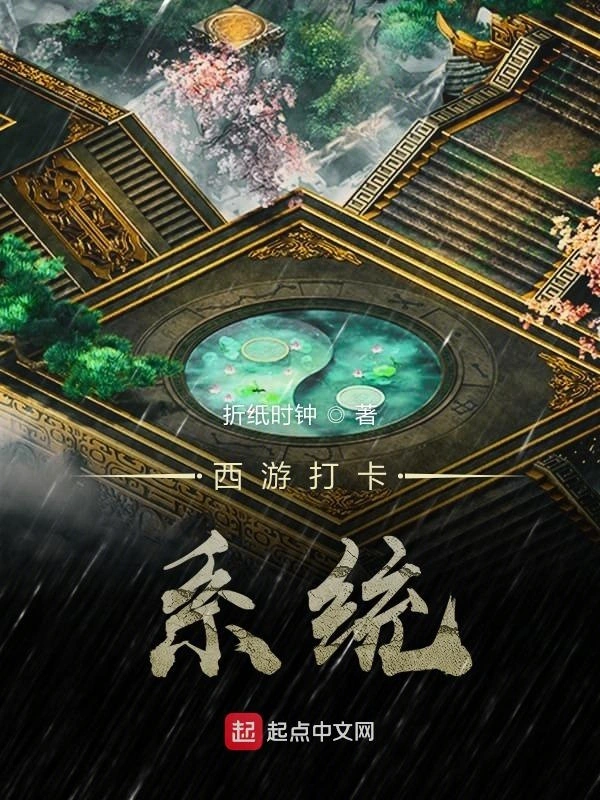
Journey to the West Punch-In System
西游打卡系统
- Status
- Completed
- Length
- 206k Words
- Genre
- Cultivation
- Audience
- Male
- Subgenre
- Mythic Cultivation
- Updated
- 6y ago
- Source
- Qidian
Stats
0Monthly votes
266Recommends
2Fans
100Chapters
Tags
Synopsis
Reader comments
Readers also read
 Immortal Travel
 Xuanjun
 Guixuxuanji
 Your Magic Weapon Version Is Too Low!
 Honghuang: I Am in Jiejiao Settling Down and Preaching
 Check in from the Rebirth of Journey to the West
 After Signing in to the Tang Dynasty for Eighteen Years, I Suddenly Discovered That It Was Journey to the West.
 Dou Po: the Strongest in the Whole Map, I Will Always Be Above You
 Physically Invincible Ash Wants to Become a Pokémon Master
 Becoming Stronger by Committing Suicide Infinitely
 Open a Rental in the Comic World
 Zombie: I Was Dug Out by Uncle Jiu Again
The power system of this book
The Buddhist power system in this book is different from other books. There are only four realms for Buddhist mortal monks: entering concentration, golden body, sacrificing the body, and nirvana. Among them, entering the state of concentration corresponds to Qi training but is weaker than Qi training, the golden body corresponds to foundation building, the sacrificial body corresponds to elixir formation, and Nirvana corresponds to Nascent Soul. It only corresponds to the realm, but the combat power of the general Nirvana realm is at most the same as that of the Danjie monks, but it is very fast to practice. You can reach the Nirvana realm before you are one hundred years old. A hundred-year-old monk may still be practicing Qi. Of course, monks in the Nirvana realm can only live an average of more than two hundred years, and they have very few means. The weak ones are equivalent to stronger foundation building, and the stronger ones are equivalent to pill formation or even Nascent Soul. … Why does this happen? Because the cultivation method of Buddhism is different from that of Taoism, monsters and warriors. If you practice the retribution of the afterlife, you will be directly promoted to an Arhat or a Bodhisattva in the next life, and then you will naturally awaken the memory of all reincarnations. The advantage of this method is that the power of Buddhism is particularly concentrated. All Buddhist monks are under the jurisdiction of Lingshan, and they are all Lingshan forces. Although the overall strength of the Taoist sect is stronger, there are various divisions. The actual subordinates of the Heavenly Court are only those on the list of gods. The Antarctic Immortals and the like basically do not listen to the Heavenly Court. … Let me mention the next realm. After practicing Hinayana Buddhism, one can achieve Arhat status. Arhats have four fruition levels, and the highest four fruition Arhats, Arhats, are comparable to the pinnacle of Taiyi True Immortal and the level of the Eighteen Arhats. Weak ordinary Arhats can't even compare to the Tribulation Monk. After practicing Mahayana Buddhism, you can achieve the status of Bodhisattva The Bodhisattva status is divided into twelve levels. The strongest Bodhisattva is like the four great Bodhisattvas, and the level of Daluo Jinxian. The weakest one is also incomparable to the monks who have crossed the tribulation. To become a Buddha and to become a saint requires great merit or luck. If Tang Monk obtained the Sandalwood Merit Buddha after studying the sutra, he would be at the quasi-sage level, and the same would be true for the Great Sage [because a lot of merits were divided up by the Heavenly Court Lingshan. The envoy of Jingtan is a Bodhisattva, but his name is different. … As for the Taoist monks, they are exactly the same as what everyone remembers: Qi training, foundation building, elixir formation, Yuanying, transcending tribulations, heavenly immortals, Taiyi true immortals, Daluo Jinxian, and saints. … The website is short and can be invested.
As the protagonists of the world, the human race needs to have its destiny liberated, and the prerequisite for liberation is the existence of beings who can control the destiny, and one or two such existences are far from enough. So, the best way to improve your luck is actually to awaken.
Clock, come on, the subject matter is pretty good
After reading the first few chapters, I wonder what kind of pursuit the author wants to arrange for the protagonist in this work? If it's just the ones mentioned so far, then forget it.
I just saw that the protagonist can upgrade the system for the first time, but he hasn't upgraded yet. I came here to comment. There are too many words to fit in the chapter. , upgrade slowly, the system is usually here to get your merit and luck, but it is also easier to get your merit and luck because of the system, which is a transaction behavior, using your merit and luck in exchange for things. But you have to keep some for yourself, such as a thousand merits and a thousand luck upgrades, then save them to two thousand or ten thousand, otherwise all the merits and luck will be given to the system. If the system disappears unexpectedly, you will definitely be dead, and the luck and merit will be insufficient. The system should not be able to directly deduct merit and luck. It must be voluntary, otherwise it will be taken away directly. So part of it is used to change things into the system to improve oneself, and then it will be easier to gain merit and luck, and the rest is kept. The system is better at this point, and can intuitively see one's own merit and luck. What happens next? Directly reveal the golden wheel of merit, and intuitively see the merits and know the consequences of one's actions. Not to mention the merits of becoming a saint, at least he is a quasi-sage. In the future, if you have more merits and virtues, you will really be immune to all attacks. There is no need to worry about disasters.