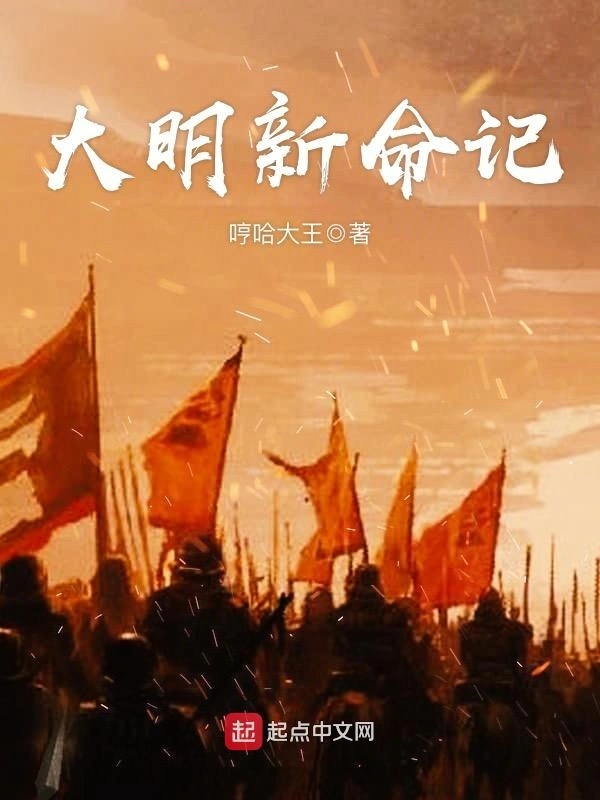
Ming Dynasty New Ming Dynasty
大明新命记
- Status
- Ongoing
- Length
- 4.4M Words
- Genre
- Historical
- Audience
- Male
- Subgenre
- Song-Yuan-Ming Dynasties
- Updated
- 2d ago
- Source
- Qidian
Stats
24Monthly votes
13.9kRecommends
39.3kFans
1.4kChapters
Tags
Synopsis
Reader comments
In booklists 2

A Calm and Engaging Slow-Burning Masterpiece
It records many years of classics. The protagonist is calm and rational, the supporting characters have online IQs, the plot is exciting, and it is beneficial to open the book.
52Books36Follows1yUpdated
I Like Reading Books About History! Very Niche!
These are all my favorites to watch recently, and they all feel pretty good!
22Books33Follows6yUpdated
Readers also read
 Fu Ming 1627
 At the Beginning, Please Ask Chongzhen to Abdicate!
 I Am a Tyrant in Nanming
 Red Mansion Xiaoke
 Disciples of Fangcun Mountain, Traveling Westward
 Long Wanshengshi
 Da Liu Bandits
 I Have a Dark Secret Martial World
 Peninsula: My Idol Is Randomly Refreshed
 Daming Under Facebook
 I Am the Carpenter Emperor
 Ni Ming 1644
Rational critique of the author's work plus writing advice
It is obvious that the author worked very hard, checked a lot of information, and updated a lot of text every day. Unfortunately, the results did not meet the author's expectations. The key is that the author's own writing characteristics are actually inappropriate for the work itself. It's not that you're not writing well, it's that you're not giving your audience what they want to see. Author, your writing is in a calm and meticulous style, so writing "The Sun and the Moon Shine in the Sky over China" is very in line with the magnanimity of a superior, but your article about traveling through Yang Zhen is not suitable. In fact, I have a crazy idea that I hope you can travel through Hong Chengchou and reverse your destiny. The writing style needed to travel through a military commander like Yang Zhen should be crisp and passionate writing. Also, you are actually not good at writing characters, so many people have the same taste. And you also like to introduce many characters together in this book. This only aggravates your weakness of not being good at writing about people. In "The Sun and the Moon Shine in the Sky over China", because a large number of characters are historical figures, we can use our imagination to make up for your shortcomings in character creation. Many people in this book have very few historical narratives, so we can't make assumptions based on history. Even your protagonist Yang Zhen can't feel the character. Your portrayal of Emperor Chongzhen in "The Sun and the Moon Shines in the Sky over China" left a very good impression on me, as if Emperor Chongzhen Zhu Youjian was reincarnated into the modern era, and after learning modern knowledge, he traveled through the Ming Dynasty to save the country. It's a pity that Yang Zhen's impression of this book is very bad. Obviously he is also a loyal minister and martyr, and you also want to create a brave and resourceful general, but now Yang Zhen is a bit more slippery and cold, and lacks talent and strategy. Also, after such a big thing happened, there was no movement from the court? Except for an imperial edict, Emperor Chongzhen had no inner activities. Therefore, it is recommended to strengthen character creation in the future. If you cannot use famous historical figures, do not create your own characters. Also, it would be better to change the protagonists to Prince Chongzhen Zhu Cixiang and Emperor Yongli of the Southern Ming Dynasty in the future. Stop writing about generals. You are actually not good at writing about generals traveling through time.
I have read a hundred chapters. It is a slow-burning book with detailed content and truthful content. The book is in a good state starting from chapter 30, and the taste slowly emerges. I can see that the author has a broad layout and vivid details. As long as he sticks to his original intention, he will become a masterpiece that can stand the test of time.
Everyone rushes to the extremely cold place ="#000000">
I have read a lot of Ming Chuan's novels, and this one is really top-notch. It has no drama, no cheating, a good rhythm, good character descriptions, smooth and logical writing, and fairly stable updates. It occasionally lacks updates, so please give it a thumbs up, author.
In the history of the Ming Dynasty, Zhu Yuanzhang's image was made so ugly, but he didn't think about it. At that time, Zhu Yuanzhang was only the ninth captain, and now he is the squad leader of the army. If he is ugly, what is it worth for Guo Zixing to marry his daughter to him? ? Isn't it the kind of border general who needs to be won over 🤭? It was obviously Zhu Yuanzhang who attracted Queen Ma. Ancient times were an era where faces were valued. If Zhu Yuanzhang was ugly, he would not be able to be Guo Zixing's personal soldier unless he was super capable of fighting. He would also not be able to attract Queen Ma. Since he can attract Queen Ma, at least he must not be ugly and must be humorous.
Another book that helps the late Ming Dynasty. I'm really convinced, I always thought there would be hope for salvation at the end of the Ming Dynasty
The sun and moon shine in the sky over China
I hope it can be finished, even if it is an internal version. Is there a group? This time travel is boring if I don't travel to the emperor.
I watched the free part. If the protagonist has a halo, all the superiors will kill you. You don't think about how to run away. You still go there stupidly. It feels too unreasonable. The thinking of modern people is to run away first, farm enough to gain enough strength and then fight back. You are not an ancient person and do not have the mentality of foolishness and loyalty.
Even in the 17th year of Chongzhen, it was easy to save him, as long as he fled to the south. Pull down the traitors and civil servants, put Huang Degong, Zhou Yuji and other loyal ministers on top, and lead hundreds of thousands of troops to defend the south. It will not be a problem. There is enough money to see the reply below, and then slowly build a counterattack by the British and French allied forces. It's extremely easy, and every one of them is said to be a hell difficulty. It's simply a waste among wastes. Reply: It's very simple. After Chongzhen fled to the south, he made Huang Degong and Zhou Yuji a general, commanding all the troops in the world to guard the southeast. The general's personal soldiers were increased twenty times, and the heavy armor was increased three times to prevent the death of Tatars from sneak attacks in history. Detain Zheng Zhilong's family and seal all Fujian to Zheng Zhilong's service. For example, Li Zicheng confiscated 35 million taels of silver from wealthy households in Nanjing, confiscating half and keeping the other half. It was very kind. Recognize the Qing Dynasty and the Western Dynasty and let them attack first and they will succeed. Even if the Manchu Qing attacked Nanming regardless of the rear, there would be no problem if the general did not die but only defended. I was so afraid of death that I lived in a military camp for the rest of my life. .
It can't be saved by the end of the Ming Dynasty! Go and see what it's like at the end of the Ming Dynasty! If you think your blood pressure is low, go and read the history of Nanming. I don't believe you can think of saving the Ming Dynasty after reading this history! In a time-travel novel, the protagonist travels to the Ming Dynasty just to maintain the feudal system? Thinking of continuing to extend the life of the feudal system? What kind of "nine leaky fish"? Fan Ming, don't be stunned. Even if you build a modern dictatorial military government, it will still be more advanced than the feudal system of the Ming Dynasty! Some people may defend the author and say, "The author can write whatever he wants", but readers can also say, "The reader can comment however they want"!
Starting in the twelfth year of Chongzhen, there was a small officer in Ningyuan. I weakly ask, can Ming be saved at this time and place? The whole of Liaodong is either a selfish warlord trying to deceive his teammates! Or they are capitulationists bent on surrendering to the flag! It is difficult to be a small officer here, work hard to govern, and save the Ming Dynasty step by step. It's harder than resurrecting Old Man Huang and defeating the Four Little Strongmen in the dark Warhammer world!
Let's put it this way, Ming Mo is rotten to the core and not worth saving. The author still writes Ming Mo very well. According to the original historical protagonist, even if he makes meritorious deeds, it may not be his. . . . .
{"NickName":"King Hengheng","UserId":325491313} Please tell me where I can support this book.
Even gods can't save Mingmo, it sucks. The princes and princes of the gentry and landlord family have already given the land to Huo Huo. How to save? Only by cleaning up this rotten system from top to bottom. Later Jin took control of the Central Plains and established a new dynasty because Li Zicheng and others killed many people, and Dai Qing himself also killed fiercely.
When I first read it, the first chapter described the protagonist's appearance: His face was full of scars, and his face was even more disfigured than Zhang Mazi's. When others saw it, they would say: "He has an incompetent appearance." This protagonist is destined not to become the emperor, and no one will follow him. The ancients believed that the Holy Emperor will protect him. None of the emperors who emerged in troubled times lacked parts and lost their appearance. Like Li Zicheng, when he had millions of troops, there was a turmoil for a while. But when Li Zicheng lost one eye, the people who followed him murmured that he was not a false dragon or a phoenix.
The writing is too detailed and too slow. I wrote 100 chapters just for the first rescue of Jinzhou. There are many details that readers simply don't want to know. How long will it take to finish the book like this? It doesn't seem exciting enough.
After reading a few chapters, I feel that this book is trying to whitewash the Liaodong warlords in the late Ming Dynasty, and whitewash Zu Dashou, a group of self-respecting traitors who support the bandits? I won't watch it.
Since the author knows that in the late Ming Dynasty, the commander-in-chief was called "chief town" and the deputy general was called "deputy town", why did he still keep talking about "sir"? Do you know what it means when Commander Ji Liao calls a commander-in-chief "Sir"? Determining whether the quality of a historical article is high or not, the title is an important reference. Authors who are ambitious will definitely conduct research carefully. Even if it is a little troublesome, as the quality of the novel improves, it is always a good deal.
Study and steal Ming, Ming supported and strengthened himself at the same time, and finally won the world. Li Zicheng and the Manchu Qing Dynasty are going to be wiped out, and Ming Dynasty cannot be saved, so it can only delay time. I feel that Tie Ming is the best among the late Ming Dynasty texts.
After reading so many books about the late Ming Dynasty, I feel that there is really no way to save the Ming Dynasty, unless I beat it to pieces and start over. The author chose to be a warrior. In that era, it was easy to be killed by civil servants, teammates and the emperor.
No, no one really thinks that the Ming Dynasty really died during the Chongzhen period, right?
I'm really convinced, I'm really fed up with you conspiracy theory readers. The Ming Dynasty during the Chongzhen period was really not as difficult to break as you think. If you think about it, Chongzhen was probably the easiest to break among all the unified dynasties. If Hu Hai was also considered the last king, then Hu Hai was the easiest, but Hu Hai died early and he was not the last king. Not counting Yang Guang. When he died, the Sui Dynasty was not yet dead. Think about Puyi, the young emperor of the Southern Song Dynasty, Zhaozong in the late Tang Dynasty, Emperor Xian in the late Han Dynasty, the last emperor of the Jin Dynasty, etc. I'm not kidding, Chongzhen's start was the best among all the last emperors, and Chongzhen's power was also the greatest among all the last emperors. The Ming Dynasty was also the most stable among all the last dynasties. It was not the Qing Dynasty. It had no divergent ideas and no anti-imperialist remarks. It was not the Tang Dynasty. Every place in the Ming Dynasty obeyed the orders of the imperial court. It's really outrageous. Why do the comments think that such a dynasty cannot be saved? To other emperors, you give it to Constantine XI, the mayor of Constantinople, he could die laughing. If you let Zhu Yuanzhang return to Chongzhen and be reborn, he can sigh that God is so good to him. Don't read a few novels about the late Ming Dynasty. Marketing accounts will think that the late Ming Dynasty is so and so, that's about it. Many of those opinions are just sensationalism. Let's not talk about anything else, let's just talk about the civil service group. Where do civil servants come from the civil service group? When the Jiajing incident was discussed, were the civil servants united enough at that time? But aren't there traitors like Zhang Cong and Xia Yan? The civil servants have never been united. If the civil servants are really united, then the dynasty will change, and its leaders can completely change the dynasty. Reform in the Ming Dynasty was not as difficult as many people imagined. The ancestral law was a joke. The Kaizhong Law that many people criticized was abolished. It was very easy and not difficult at all. Jiajing appointed craftsmen as ministers of the Ministry of Industry, craftsmen who had not passed the imperial examination and had no meritorious titles. In the Ming Dynasty, as long as the emperor wanted to, as long as the emperor could convince some civil servants, the emperor's power was almost unlimited. The civil servants could not stop him at all. The emperor could break through any imperial examination or any bottom line. In Jiajing, after spending all the Wanli money, I went to the small treasury of the civil service agency to ask for money. The civil service officials had no objection, but how many times had they stopped the emperor from doing this? Even if Wanli fails to go to court, there are so many civil servants who oppose it. They just want to open mines. Who can really stop it? Chongzhen changed his chief minister, killed civil servants, and did all kinds of things that violated the political bottom line. Who really did anything to the emperor? You people really underestimate the role of the emperor in the dynasty. He also underestimated the destructive power of Chongzhen himself to the Ming Dynasty. Such a huge advantage can't save the Ming Dynasty, so don't write novels about other last dynasties. Even the late Ming Dynasty can't be saved. How can other dynasties be saved?
The pattern of natural disasters during the Chongzhen period was frightening to death
In the summer of the first year of Chongzhen, there was a drought in Jifu, and the red land was thousands of miles away. On Renwu in July of the first year of the year, a tsunami hit Hangzhou, Jiazhou and Shaoxing, destroying tens of thousands of houses and drowning tens of thousands of people. Ding Mao in September, there was an earthquake in the capital. In the autumn of the first year of the year, there was a severe drought in Shaanxi, and the land was bare for thousands of miles. In the second year, drought led to severe famine in Shanxi and Shaanxi. In the second year, the temperature dropped sharply, and the extreme cold of the Little Ice Age hit. In September of the third year of Xinchou, there was heavy rain and hail. Three years ago, there was a flood in Shandong. Severe drought in Henan. In March of the third year of 1898, the gunpowder bureau suffered a disaster. In the eighth month of Guiyou, there was a disaster at Toudaoguan, and there was no trace of firearms bombardment. In September of the third year of 1898, there was an earthquake in Nanjing. In May of the fourth year, there was rain and hail in Xiangyuan, which was as big as a bullock and as small as a fist, killing tens of thousands of people and animals. June Bingshen, heavy rain and hail. In June of the fourth year, there was a flood in Shandong. In June of the fourth year of Yichou, there was an earthquake in Lintao and Gongchang. In June of the fifth year of Renshen, heavy rains reached Mengjin, flooding hundreds of miles horizontally. In August, it rained again and damaged Qingling. Rains in 27 counties in Sunchon damaged crops. In the past five years, there has been no rain in Hangzhou, Jiazhou and Huzhou, and there has been a severe drought. In April of the fifth year, there were earthquakes in Nanjing and Sichuan. On Ding Mao in October, there was an earthquake in Shanxi. In November Jiayin, there was an earthquake in Yunnan. In the first month of the sixth year of Xinhai, there was heavy snowfall, more than two feet deep. In the first month of the sixth year of Guichou, the Shun Temple in Jinan suffered a disaster. (Fire) In the sixth year, there was a drought in the capital and Jiangxi. Ding Si in the first month of the sixth year, the ground in Zhenjiang cracked several feet. In July 1898, there was an earthquake in Shaanxi. In the sixth year, there was a great famine in Shaanxi and Shanxi. There was famine in Huai and Yang, and plague broke out. In the second month of the seventh month of Chongzhen's reign, there was a flood of rain and blood in the sea. In the third month of the seventh year of Wuzi, the days in Huangzhou were as dark as the nights. In April of the seventh year of Renxu, there was widespread rain and hail in Changzhou and Zhenjiang, damaging the wheat. In May of the seventh year, floods occurred in Qiong and Meizhou counties, destroying city walls, farm buildings, and destroying people and animals. In June of the seventh year, plague broke out in the northwest, especially in Ningxia. In September of the seventh year, there was a disaster in the armor factory. In September of the seventh year, the imperial censor Gong Ting presented the painting "Picture of Hungry People" for advancement. There was a great famine in Taiyuan, and people were eating each other. In July of the eighth year, there was heavy hail in Linxian County for three days, which accumulated more than two feet and was as big as goose eggs, damaging the crops. In July of the eighth year, there were locusts in Henan, and there was no harvest. In the winter of eight years, there was an earthquake in Shanxi. In the first month of the ninth year of Chongzhen, during Jiaxu, thunder destroyed the Xiaoling Mausoleum in Nanjing. At the end of September in the ninth year of the 9th year, a meteorite fell from the sky in Taikang. Wu Chen, March 9, 2009, there was an earthquake in Fujian. At the end of July, Qingjiang City fell. In December of the ninth year of Chongzhen, a landslide occurred in Jinjiling, Zhenjiang. In the ninth year, there was a great famine in Nanyang, and a mother cooked her daughter. Jiangxi is also hungry. In April of the 10th year of Chongzhen, there was heavy rain and hail. In the leap month of Guichou, there will be heavy rain and hail in Wuxiang and Qinyuan, the biggest ones being as big as cattle. In April of the 10th year of Yihai, thunder and fire in Jizhou burned down Dongshan for more than dozens of miles. In June of the 10th year, there were locusts in Shandong and Henan. In August of the tenth year, there was a flood in Xuzhou. Those who went to the state hall and Gaofu were spared, and the rest were wiped out. Ten years ago, the well in Ningyuan began to roar, but it stopped after three days. The Ru River in Henan has changed color, is dark and smells bad, and is plagued by plague. Shandong has rain and black water, and so does Xinxiang. In the summer of ten years, there was no rain in the capital and Hedong, and there was a severe drought in Jiangxi. On Bingwu in the first month of the tenth year, there was an earthquake in Nanjing. On Renwu in July, there was an earthquake in Yunnan. In October Yimao, there was an earthquake in Sichuan. In December, earthquakes occurred in Xi'an and Haila, Shaanxi Province at the same time, which continued for several months. Ten years ago, there was a great famine in Zhejiang. Fathers, sons, brothers, and husbands and wives ate each other. In May of the eleventh year, there was three feet of snow at Xifengkou. In June of the 11th year of Jiayin, there was heavy rain and hail in the Ganshi River Mountain Field in Xuanfu. In June of the eleventh year, there was a severe drought and locust plague in Beijing, Shandong, Henan, and Shaanxi. In April of the 11th year of the 18th century, the New Gunpowder Bureau suffered a disaster. Hurt a lot of people. In June Guisi, the Anmin factory suffered a disaster, which destroyed the city walls and buildings, and caused countless casualties among the residents. In August, there was another disaster in the Gunpowder Bureau. In September of the 11th year of Renxu, there was an earthquake in Liaodong. In August of the twelfth year, in Baishui, Tongguan, Luonan, and Longxi cities, rain and hail fell for thousands of miles and stopped within half a day, damaging countless fields. In July of the twelfth year, lightning struck the pavilion in Miyun City, and all the cannon wood stored there was shattered. In October 1st, winter began, and thunder and lightning broke out. In December of the twelfth year of the year, it rained heavily in Zhejiang, and the streets became flooded. In the twelfth year, Jinan, Shandong, Henan, Shanxi, and Zhejiang suffered from drought. In February Guisi of the twelfth year, there was an earthquake in the capital. In the twelfth year, Shandong, Shanxi, Shaanxi, and Jiangxi suffered from hunger. There was a great famine in Henan, people were eating each other, and the plague was rampant. In 12 years, a smallpox epidemic broke out in Shandong. In April of the thirteenth year, frost killed the crops in Huining. In May of the 13th year, there was a severe drought of locusts in Beijing, Shandong, Henan, Shanxi, and Shaanxi. In May of the thirteenth year, there was a flood in Zhejiang. The five prefectures of Jiaxing, Huzhou, Jinhua, Hangzhou and Shaoxing were flooded and no grains were harvested. In June of the thirteenth year in Renshen, the fire in Zhen'an was as bright as dendrobium, falling to the ground from the west, and all the people and trees were scorched. In the autumn of the 13th year, the Yangtze and Huaihe Rivers were completely frozen. The Little Ice Age reached its peak. In the fourteenth and fifteenth years of the year, there was a severe drought in Gansu, Shaanxi, Shanxi, Hebei, Henan, Jiangsu, and Huaibei. The Yellow River dried up and locusts covered the sky. Zhejiang, Hangjia, Hubei, southern Anhui and northern Anhui were all hit by severe drought, and the plague was rampant. In the 16th year of Chongzhen, the plague spread to Beijing and surrounding areas. "The sick vomited blood like watermelon water and died immediately." To the point where nine out of ten rooms are empty, and even all households are gone, with no one restraining themselves.
If there was no system in the twelfth year of Chongzhen, even if the king of heaven came...
I haven't read it yet but detoxify first.
Rebellious? Or licking the emperor?
Tell me why you like seeing through Ming novels
I don't really like the Ming Dynasty, but the Qing Dynasty is too disgusting. I read through Ming novels not because I wanted to save the Ming Dynasty, but more because I wanted to destroy the Qing Dynasty. And the more some people belittle the Ming Dynasty, the more I like to see the plot of destroying the Qing Dynasty, the more cruel the better.
Revolution is not a dinner party! Distinguish between friend and foe
It can only be said that the author was born at the wrong time! In fact, Sun and Moon is much better than that 1627, but it was actually blocked.
This is a thinking of Ming history
When the Ming Dynasty was established in 1368, years of wars had led to desolation of the land, a sharp decline in population, and a serious lack of social productivity. Recuperation and recuperation were a must-have national policy. In 1371, Emperor Taizu of the Ming Dynasty issued the "Sea Ban", which "forbids people living near the sea to go to sea privately." Any merchants and shipowners who go to sea without permission to conduct smuggling trade will face severe punishment. In 1374, the Baobao Promotion Department was established, and the Ming Dynasty Baobao was officially issued the following year. It was initially put on the market through financial channels such as salary and military pay, and the paper currency standard was enforced. Private minting of copper coins was severely cracked down, and the circulation of gold and silver was banned. (Since the imperial court banned the circulation of gold and silver, where was the gold and silver circulating among the people? Where did it come from? Obviously, precious metals like gold and silver have not needed the power of the state to give them credit value since ancient times. The currency may not be gold and silver, but gold and silver are naturally currencies. The rich and powerful will naturally hoard precious metals. After the border smuggling of the past dynasties and the development of trade on the land and sea Silk Road, society began in the Song Dynasty. At the meeting, a large amount of precious metals were no longer in the hands of the court, and the newly established Ming Dynasty had almost no gold and silver reserves. In order to maintain the operation of the country, continuous financial expenditures were needed. If precious metals were directly used as national currency, it would mean that the country voluntarily gave up its monetary sovereignty. Without monetary sovereignty, there would be no food sovereignty. This court was left with only an empty frame, existing in name only. For example, if paper money was forced to be used as the national currency without reserves, and the country's credit overdraft was clean, the country would still be destroyed.) In 1381, Ming Taizu further strengthened the sea ban policy and the control of maritime trade, and reiterated: "It is forbidden for people on the coast to communicate privately with overseas countries." (While banning private overseas trade, the tribute trade system was used to establish a maritime trade monopolized by the central royal power. Earning overseas gold and silver provided credit support for the Ming Dynasty treasure banknotes. Hedging bureaucratic capital and private capital used hoarded precious metals to seize the country's monetary sovereignty. All foreign trade was settled with treasure banknotes. The Ming Dynasty purchased precious wood, spices, and foreign luxury goods. The prices of foreign trade silk, porcelain, and iron pots were all set by the Ming Dynasty.) In 1402, Emperor Yongle ascended the throne. In addition to continuing Zhu Yuanzhang's national policies, he also sent Zheng He on seven voyages to the West from 1405 to 1433, expanding trade routes, destroying pirates, escorting merchant ships, and monitoring private smuggling (for specific records, please refer to the monument "The Legend of Tianfei Lingying"). Zhu Yuanzhang established the rules of living for the people when he founded the country, and set the tax rate at a very low level. Emperor Yongle was able to move the capital to Beijing, build the Forbidden City, build the Ming Tombs, conduct five expeditions to Mobei, conduct an expedition to Vietnam, repair the Great Wall, and dredge the North-South Grand Canal. Compiling the Yongle Canon, any of the above items would be enough for the whole court and the public (such as Emperor Yang of the Sui Dynasty and Emperor Wu of the Han Dynasty), but if the Yongle Dynasty did all these things, then he must have the money to do these things, and where does this money come from? It can only be the Western trade. It is easy to earn, otherwise there is no way to explain the national finances (all the vassal states at that time accepted the Ming Dynasty treasure banknotes. Zheng He used such depreciating banknotes to exchange for a large amount of gold, silver and various physical objects. The Ming Dynasty treasure banknotes can be printed as much as they want, and the Ming Dynasty does not need to worry Regarding the issue of inflation, Zheng He sold high and bought low. Ming historians estimate that Zheng He made seven voyages to the West and earned 720,000 taels of gold and 12.76 Million taels of silver. This is the total income. At the same time, he spent a total of 6 million taels of silver on the seven voyages. The total cost was that when Ming Xianzong Zhu Jianshen became emperor, there were still 2.4 Million taels of silver in the treasury) In 1435, Ming Xuanzong died at the age of 37, and Ming Yingzong, who was only 8 years old, succeeded to the throne. Amid the cry of "wasting money and wasting money and wasting no benefit to the national economy", all data files and maritime fleets related to the maritime trade in the Western Sea were basically sealed or destroyed, causing the Ming Dynasty's central finance to shrink significantly. Even with the support of the wealth accumulated in previous maritime trade, the national credit of the Ming Dynasty treasure banknotes began to gradually decline and depreciate. (From Guo Yan's epitaph, we can learn that in the eighth year of Zhengtong (1443) of Emperor Yingzong of the Ming Dynasty, he was ordered to supervise the construction of 120 "sea-going ships" and served as the "general coordinator of the eight prefectures". Because of his good supervision, "the military and the people benefited from it". After the completion, "the military and civilian officials of the eight prefectures came to the mansion to express their gratitude". This confirms the national plan of Emperor Yingzong of the Ming Dynasty to restart the Western Ocean trade, and the sea-going ships were built. It was first shelved due to the civil uprising, and then the Tumubao Incident occurred in 1449. In 1457, just a few months after the restoration of Emperor Yingzong of the Ming Dynasty, he wanted to launch the voyage to the West. Zhang Zhao objected on the grounds of needing disaster relief. In order to clean up the mess of his predecessor, he stopped the voyage, and there was no record of the 120 ships built. By the Chenghua period in 1464. Zhu Jianshen, Emperor Xianzong of the Ming Dynasty, ordered the Ministry of War to search for archives of Zheng He's voyages to the West, but found that the relevant documents (including charts) were missing, and Liu Daxia, an official of the Ministry of War at the time, was accused of hiding or destroying these files. Since then, the imperial court had completely lost the ability to return to the West.) In 1567, Emperor Longqing Zhu Zaijing was increasingly experiencing financial losses in the country. The government was forced to turn the switch on and off, and bureaucratic capital and private capital began to encroach on the maritime trade that was originally a monopoly of the Ming Dynasty's state-owned enterprises. Except for the court's share of the tax revenue, most of it went into the hands of bureaucratic capital and private capital. The amount of silver in private circulation also began to increase massively, and the monetary sovereignty of the Ming Dynasty was gradually being eroded. Longqing Emperor Zhu Zaijing was an adult and knew the stakes. Silver must not be allowed to become the legal currency of the Ming Dynasty. However, this was the last step for bureaucratic capital and private capital plutocrats to steal the monetary sovereignty of the Ming Dynasty. From the death of Ming Xuanzong at the age of 37 to the ascension of Emperor Longqing to the throne, it was 1 In 31 years, it was 132 years before Emperor Longqing switched on and off. How could the century-old plan of bureaucratic capital and private capital plutocrats stop progressing and fall short? Therefore, Emperor Longqing had to die in 1572, five years after the switch, in pursuit of beauty and lust, in order to ensure that Emperor Wanli, who was only 10 years old, ascended the throne. In 1581, Zhang Juzheng promoted a whip law to abolish treasure banknotes and use silver as the national currency. Taxes were also paid in silver instead of in kind. As a result, the country lost its monetary sovereignty. The economic lifeline gradually fell into the hands of bureaucratic interest groups, Jiangnan gentry and maritime merchants who controlled large amounts of gold and silver. Capital plutocrats could control market inflation or deflation at will, draining the country's wealth while getting rid of the control of the central royal power. After Zhang Juzheng's death, Emperor Wanli liquidated him on charges of "authoritarianism and chaos in government", deprived him of his title and ransacked his home. Wanli once ordered "dissection of coffins and slaughter of corpses", intending to dig graves and whip corpses to vent his anger. However, due to the strong persuasion of officials such as Chief Assistant Shen Shixing, this was not actually implemented. Chinese society has always been dominated by a self-sufficient small-scale peasant economy. Farmers produce goods in kind with a lifestyle of men farming and women weaving. After converting into silver and paying taxes, the bourgeoisie manipulates the market and causes price fluctuations, which increases the burden. (In the 16th century, Spanish and Portuguese colonists discovered huge silver deposits in Peru and Mexico in the Americas. Since Zhang Juzheng of the Ming Dynasty reformed the use of silver as the national currency in 1581, European colonists began to use silver stolen from the Americas. Silver was traded with China, and foreign merchant ships always came loaded with silver, and then left loaded with Chinese goods. A large amount of silver flowed into China) In 1627, during the Chongzhen period, the eunuchs were purged, and there were no checks and balances in the bureaucracy. He was able to borrow money from ministers to pay the army, and eventually hanged himself in Meishan (Dynastic changes in Chinese history have never deviated from the main line of the game between state rights and the agent class. In summary, during the Xia and Shang Dynasties: when the authoritative central force was not formed, the Xia Dynasty was equal In the Republic era, each tribe developed independently without affecting each other. The Shang Dynasty used military conquests and human sacrifices to intimidate each tribe to surrender. The Western Zhou Dynasty: With the transition between Shang and Zhou Dynasty as the turning point, the Zhou royal family established a political model of co-governance with the princes based on land enfeoffment. , Zhou rites are the cultural product of this period: the pre-Qin period: after the central authority of the Western Zhou Dynasty collapsed, the war between the princes began until the Qin Dynasty unified. The Qin Dynasty unified the foundation for the destruction of the princes, and the early Han Dynasty began with the elimination of kings with different surnames. Weakened and eliminated the princes through concessions to the aristocratic class. From the Western Han Dynasty to the Sui Dynasty: After the demise of the princes' power, the gentry, big aristocrats and large estate owners occupied a dominant position in society, and merged with the new power of the cultural gentry in the troubled times of the Jin and Southern and Northern Dynasties. From the Sui Dynasty to the Song Dynasty: The cultural gentry was completely destroyed by the Huang Chao uprising in the internal fighting. The chaebol gentry, representing the gentry and landlords, succeeded the former and became a new social force. In the Song, Yuan, Ming and Qing dynasties, since the chaebol gentry had no capital to directly confront the government, they had to constantly look for and support agent regimes that could maintain their interests until they reached satisfactory cooperation with the Manchu regime. ) In 1662, the Southern Ming Dynasty fell, and the Manchu Qing Dynasty began a 268-year dark rule. The dominance of Chinese culture and the right to interpret scriptures were lost since then. (During the Taiping Heavenly Kingdom, they could only borrow foreign religious concepts to organize the general public. During the Republic of China, they could only learn to borrow the so-called Western ideas of democracy and freedom, and the Marxist-Leninist ideological and theoretical system to organize the people and save this ancient country.)
It's been so many years and I'm still updating it.
I've caught up with the latest, and I'll write some emotion.
The first 150 chapters should be rated at least 80 points or above. The character description, plot advancement, detail description, inner activities of the characters, and logic are all very good. As we get to the back, it becomes more and more difficult to describe. 1. Starting in March of the 12th year of Chongzhen, within 8 months of development, it actually severely damaged the Qing Dynasty, causing countless casualties. Huangtaiji was almost destroyed. . 2. They are all bosses, and they take part in every detail, including exploring paths and robbing caravans. You may have to write down details to give a sense of immersion, but it seems very illogical and the number of words is too small. 3. The rhythm is completely broken. The 7 million words are basically in the Northeast. The general level is similar to that of a modern division commander. All subordinates or acquaintances are called brothers. The attitude towards Zu Dashou is too strange, with repeated contradictions, and I don't know what I want to do. 4. Online novels should be exciting, advance layer by layer, and have setbacks. The early expectations of this book were too high, but in fact there is a problem with the entire setting. You can definitely start with a small character and win step by step. The battle of Songshan Guards that severely damaged the Qing army will be left in the later part. There are many things that can be written about in the late Ming Dynasty. For example, the peasant army is not mentioned at all, and it moves to fight across the country, such as joint operations with other troops, and high-level games. For example, many historical figures, including Chongzhen, are written very superficially. The more you look at the back, the fewer comments there are. What a pity!