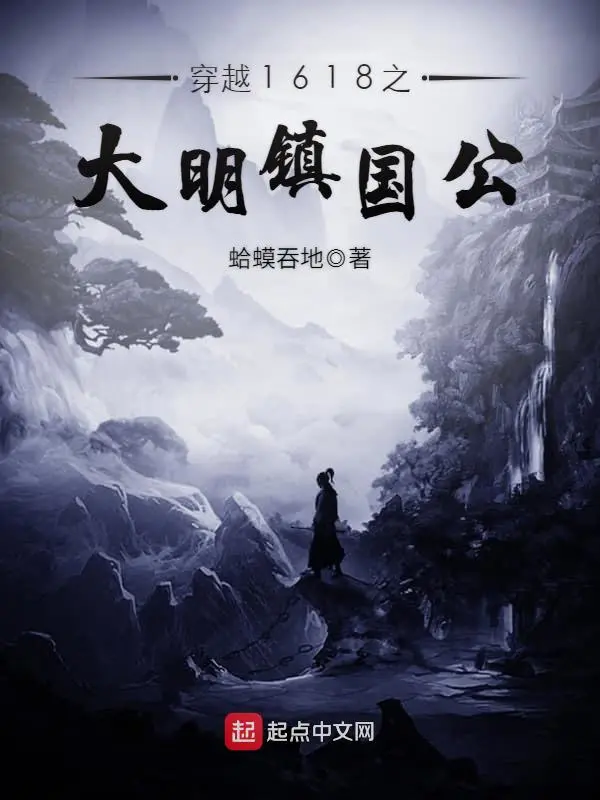
The Duke of Daming Town Who Traveled Through 1618
穿越1618之大明镇国公
- Status
- Completed
- Length
- 1.8M Words
- Genre
- Historical
- Audience
- Male
- Subgenre
- Song-Yuan-Ming Dynasties
- Updated
- 6y ago
- Source
- Qidian
Stats
0Monthly votes
5.4kRecommends
18.3kFans
560Chapters
Tags
Synopsis
Reader comments
Readers also read
 In the Red Mansion: Escort Daiyu to Beijing at the Beginning
 1914 Begins with the Rejection of the Schlieffen Plan
 Talker in the Song Dynasty
 Please Call Me Your Majesty the Tsar
 Spies
Spies
 I Am the Carpenter Emperor
 Emperor Zhengde
 Anti-Japanese War: Beginning with the Battle of Changde
 Anti-Japanese War: Rebuilding the Mountains and Rivers
 Ni Ming 1644
 Invincible Righteousness
 Chief Assistant of the Ming Dynasty
 The Soldier King of Xiliang in the Three Kingdoms
 Northern Tang Dynasty
 The Great Beggar
 Six Thieves and Dandies
Author's words
It is a fact that there were no generals in the late Ming Dynasty. During the period of Emperor Wanli, the Ming Dynasty trained some famous generals, such as Qi Jiguang and Li Chengliang, but after that there were no good generals. The reasons are... First, when these generals appeared, it was when Zhang Juzheng was in power. Zhang Juzheng alone subdued everyone in the court. Even if there were dissatisfied officials, they could not be affected by it. When Zhang Juzheng was in power, his family was the only one. Secondly, whether it is fighting the Japanese or the northern Tatars, the leading generals are not affected by civilian officials at this time. They only need to answer to Zhang Juzheng, the chief and assistant, and have independent command and combat authority. Third, these generals who commanded the army were all military generals, not the later Kedao Yanguan. ......... Xiong Tingbi doesn't talk about it. Yuan Chonghuan followed Sun Chengzong's policies. In essence, Yuan Chonghuan was just Sun Chengzong's shadow. In other words, whether there were famous generals in the late Ming Dynasty was essentially Sun Chengzong's approval or disapproval. I think Sun Chengzong does not meet the characteristics of a famous general. First, he still implemented the policy of defending first and then attacking, gradually advancing northward with military fortresses. This would face several problems. 1. Whether Ming's finances could support his huge plan, which was extremely consuming of financial resources. 2. There is an old saying that "if you defend for a long time, you will lose." The specific reason is that defense is a passive party. If you defend for a long time, it will cause great damage to your own morale. The fear of the enemy will become more and more timid. In the end, it is likely that a problem in one link will cause the entire situation to get out of control. 3. Advance the strategy step by step, just like the Long Snake Formation. After the enemy shrinks back, attack the seven inches of the Long Snake Formation and cut it off directly. Due to long-term defense and insufficient field combat capabilities, once the back road is blocked, the front fortress will be surrounded. After panic, it is likely to be completely destroyed, destroying all efforts. 4. The success of the gradual advancement strategy in Liaodong was based on the assumption that the Tatar tribes on the west side fully cooperated with the Ming army and resisted Nurhaci tenaciously. If the Tatars did not cooperate, they could completely bypass Shanhaiguan and enter Beijing. However, the Ming army in a passive defensive state could not scare the Tatars. Without fear, it would be impossible to cooperate with the Ming army. ......... From these points, Sun Chengzong's strategy itself was not enough to save the crisis. ......... And Sun Chengzong himself does not have the potential to be a famous general. I think the reasons are: first, there are big problems with the strategy itself. The reasons have been mentioned above. Secondly, there is the issue of Sun Chengzong's attitude towards Wei Zhongxian. When Wei Zhongxian was dissatisfied with the Donglin Party and took action, Sun Chengzong quit. His attitude determines everything. His attitude is not in line with the perseverance and perseverance of the famous general himself. Third, a qualified commander not only has good military qualities, but also has a high political vision. The most difficult thing for the Ming Dynasty at this time was lack of money, and internal emptiness was the key. Although Wei Zhongxian had many shortcomings, Wei Zhongxian was like Zhang Juzheng, while Sun Chengzong was not Qi Shuai, and did not have Qi Shuai's political vision.
Daming has too many pig teammates! The emperor was fooled
I found out that the book written by this author actually has a useless protagonist.
Your introduction has persuaded you to quit...
Raising a son for the emperor, he is still the eldest son. Haha, as a male reader, I really can't stand this poison. Female readers probably won't read your book either, and I'll never see you again.
Is this pig's foot a lunatic?
Author's words
Chapter 38, I really don't like to leave the scene so sadly, but the plot is like this. Some people said that the army should not disperse its forces and should merge into one. In fact, this is wrong. The terrain determines that this approach is just wishful thinking. The next thing is what happened in the capital, and Liu Weimin will thoroughly analyze the Battle of Sarhu in the capital to prove everything. I am very grateful to the friends who have always been with me. Being with you is my greatest happiness. I am afraid that I fail to satisfy my friends and live up to their support. Thanks again!
Map of the Ming Dynasty, please improve it
I keep seeing the enemy being a female leader and staying behind. I feel like vomiting when I watch this plot.
It was poisoned from the beginning. Even when death is imminent, he still cherishes his beauty. What era was this written in?
Author's words
Three chapters were posted together today. There are some words I would like to say. In a normal and long-term country, political stability is very important. Since ancient times, there has been a theory of checks and balances between the civil and military phases. In modern times, there is a talk about the independence of the three powers. In fact, it is still checks and balances. The independence of the legislation, executive and judiciary is actually to ensure the political stability of the country. As for the distinction between civil and military affairs in ancient times, even though the empire also required judicial fairness, the judiciary was not independent and still belonged to the civil service system. In the final analysis, civil and military affairs still competed. But the Ming Dynasty was different. Perhaps there were lessons learned from the past. The emperor of the Ming Dynasty hoped to have a force that broke away from the distinction between civil and military forces, and hoped that a third force would be used to balance it. So there was Jin Yiwei, and there were Dongchang, Xichang, and Neichang. Of course, Xichang and Neichang only existed for a short time. As for the origin of "Xichang", it should be the Director of Ceremonies. The Si Li Supervisor was the place where poetry and literacy were taught in the inner court. It had a "factory" dedicated to printing books. It was also the department of supervision and inspection of the inner court. As for approving red books and stamping big seals, that was something that happened after Xuanzong. In fact, the Ming Dynasty attached great importance to the royal guards and eunuchs. Some of the reasons were indeed many of the strange things of the Ming emperor. However, it was precisely because he "learned from history" and saw the destructive power of military generals in the Han, Tang and Five Dynasties, and also saw the weakness and dangers of party strife under the civilian rule of the Song Dynasty that it was possible to attach so much importance to the third force. Of course, this is also a family opinion. If you disagree, don't curse, just throw stones. Hey-hey……
In fact, Sun Chengzong is capable, but if he is not a famous general, his ability is probably at Li Guang's level.
Author's words
After Emperor Wanli of Shenzong did not like the son of Zhu Changluo of Guangzong, it extended to his grandson Zhu Youxiao. Emperor Wanli liked this grandson. We can see some clues from the fact that Emperor Wanli had his biological mother under house arrest since the birth of his grandson. When Zhu Youxiao was born, Zhu Changluo himself was not liked by Emperor Wanli, and he was eager to find an excuse to depose him. He didn't dare to treat Zhu Youxiao's mother, the Wang family, harshly just because he doted on the Xili emperor. He didn't dare to imprison her for ten years, so that she died of illness before Zhu Youxiao ascended the throne. This would give Emperor Wanli an excuse to dethrone the crown prince, so the purpose of imprisoning the Wang family could only be Emperor Wanli's! ... I guess that the reason why Emperor Wanli imprisoned the Wang family was the shadow of the previous generation. Empress Dowager Li cast too great a shadow on him. When he could not change the prince, Emperor Wanli placed his hope on his grandson Zhu Youxiao, and Zhu Youxiao's temperament was also very similar to Emperor Wanli's temperament - cowardly and affectionate. In order to prevent his grandson from following his own path in the future (because Zhu Changluo was as lustful and in poor health as Emperor Wanli's father), Emperor Wanli felt that It should be thought that the son will die as young as his father), in order to prevent the grandson from following his own path, and to prevent the Wang family from being as domineering as his mother Li family (perhaps the Wang family is as strong-tempered as the Li family, although there are not many historical records), this resulted in the consequences of confinement. As for historical records, Xi Li selected attendants to bully and treat the Wang family harshly, and Zhu Changluo imprisoned the Wang family. The records are not true. Prince Zhu Changluo did not dare to do such a thing when Emperor Wanli was alive.
Zhu Youjian is the man behind the scenes! (Because Zhu Youjian may have had a hand in Tianqi falling into the water)
Persuade you to retreat, persuade you to retreat! This book is poisonous, please don't be poisoned
There are only two ways to get money, one is to raise fat pigs and kill them to make dumplings for the New Year, and the other is to cash out the sheep's wool by selling stocks 🤓. The former is to kill people for treasures and take both black and white, and the latter is to expand the population and climb technology trees 😁
Author's words
... Wei Zhongxian knew that these eunuchs were corrupt, and he couldn't do anything to stop it. This is the reason. But he also squeezed these wealthy eunuchs, such as changing some royal etiquette rules, such as riding horses in the palace, customizing clothing, customizing housing and transportation, and even The false title, etc. Means that if you take money, I will give you more honors. The eunuchs themselves have no children and are more willing to spend money to get them. Wei Zhongxian used some of his own methods to deduct as much as possible from the eunuchs the "fifty tax one" wealth they embezzled. ... The money itself should be handed over to the Ministry of Revenue, because the civil servants and the merchants behind them were unwilling to pay it. The eunuch tax supervisor assumed the responsibility of the tax bureau. He took part of it himself and sent the remaining part to the inner treasury. This also made the civil servants who did not want to eat grapes but felt sour do not want to do so. Whether they want to collect it or not is one thing, but if it is collected by the inner court, it should be sent to the external treasury of the Ministry of Household Affairs, and it should be strictly supervised by them! ... This is a big contradiction. If the inner court does not use eunuchs to collect taxes, the outer court will not collect them. If the inner court uses eunuchs to collect taxes, some eunuchs will inevitably embezzle some taxes, and the outer court will impeach them. Moreover, it is an irreconcilable contradiction. ... Facts have proved that this is also the case. After Emperor Chongzhen abolished the eunuch group, he tried to let the outer court and civil servants collect the "fifty tax to one" commercial tax. As a result, he changed cabinets one after another. He was the emperor who changed cabinets the most frequently in the entire Ming Dynasty. In the end, the commercial tax was gone. ... If you don't like it, don't spray it. Personal opinion.
I don't read books, I just read book reviews. Here I can tell you not to think that the throne of the Ming Dynasty is very stable. Because of system problems, the most likely person to seize the throne is the vassal king, because the possibility of others is too small. In addition, Chongzhen's temperament blindly shirks responsibility and is also quite vicious. Why do I say this because his grandfather, father, and brother were all treated by civil servants? To reach this point, what else can be described besides ruthlessness and incompetence?
Full order, please add more details. By the way, when will the author release a new book?
What did you write🙂
What does Zhu Youxiao's concubine's husband mean?
Chapter 2: I'm tired of being confused between modern times and the Ming Dynasty, so I won't read it anymore
The author should be a beginner in writing ancient novels, but his writing is not very good, and the language expression is very awkward. You should write a few modern novels first before writing about ancient history. You should read how dozens of ancient TV dramas from the Ming Dynasty spoke. Any author who writes history with good writing skills has a deep foundation, otherwise it will be in vain.
I think it's still possible. Writing a book is not easy, but you have to do it and cherish it. I am from Guanning, Liaodong.
What the hell are you writing?
As an old bookworm, it is too hard to read. I have passed the age of reading word by word.