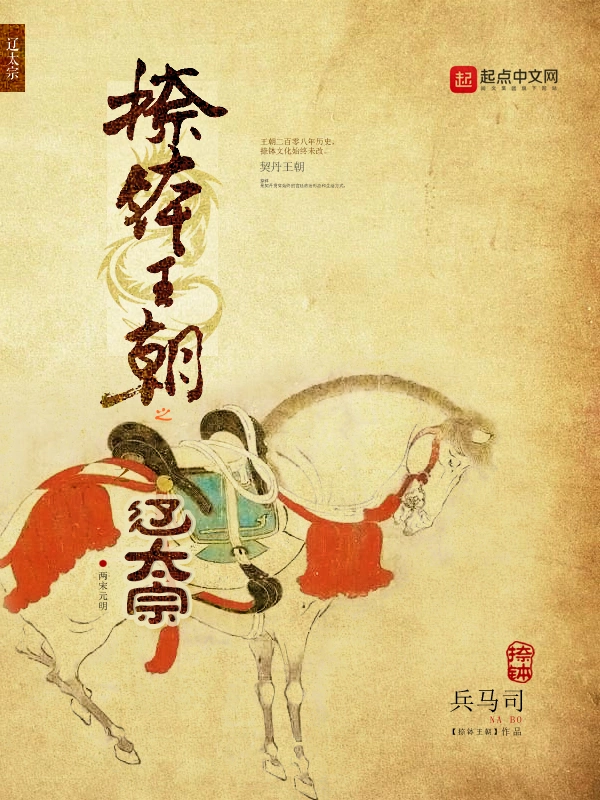
Taizong of Liao Dynasty
捺钵王朝之辽太宗
- Status
- Completed
- Length
- 492k Words
- Genre
- Historical
- Audience
- Male
- Subgenre
- Song-Yuan-Ming Dynasties
- Updated
- 6y ago
- Source
- Qidian
Stats
0Monthly votes
89Recommends
0Fans
124Chapters
Synopsis
Reader comments
Readers also read
 Please Call Me Your Majesty the Tsar
 1914 Begins with the Rejection of the Schlieffen Plan
 Talker in the Song Dynasty
 In the Red Mansion: Escort Daiyu to Beijing at the Beginning
 The Reborn Fashion King
 When Nao's Flowers Fall
 Bloodbath in Xiantian of Ming Dynasty
 Tokyo: Starting from Pretending to Be a Boyfriend
 Fusion of Wolf Spider Genes, Killing Like Crazy on the Russian-Ukrainian Battlefield
 Steam World: Become a God from Daily Information
 What's Wrong with Taking an Olympic Champion to a World Cup?
 Gaowu of the Great Song Dynasty
The author is too polite🙏 My humble opinion is that the unrestrained nomads are part of the blood of the Chinese people. "The Classic of Mountains and Seas" records that the Quanrong and the Xia people have the same ancestor, both descended from the Yellow Emperor. "Historical Records" records that the Xiongnu are descendants of the Xiahou clan. The history of the Chinese nation cannot be limited to Zhengshuo in the Central Plains farming area. We should have a broader perspective. In addition to understanding the cultural traditions of the Central Plains farming ethnic groups, we can also understand the cultural traditions of the northern nomadic groups of our Chinese nation, the cultural traditions of the southern maritime ethnic groups, and the cultural traditions of the northwest plateau ethnic groups, forming a complete community historical narrative of national integration. I think the author's book is particularly consistent with this historical narrative. It can promote national unity, increase national cohesion and pride, and explain clearly the historical origins and legal basis of our inherent land. The conspiracy of some so-called historians in neighboring countries to identify their ancestors with ulterior motives has been exposed. Some people have tried every means to incorporate the traditional history and culture of the Chinese nation into their history, and their ambitions are obvious. An old saying goes: A country that destroys its people must first destroy its history. Some hostile elements in neighboring countries with territorial ambitions towards our country have begun to steal the culture of Goguryeo, South Vietnam, and the culture of Xiongnu, Xianbei, Khitan, Jurchen and Mongolia, but in fact these are all part of the cultural tradition of the Chinese nation. This series of books written by the author can be said to be at the right time, to rectify the source, and to prove that the Khitans are of Chinese blood, not from the Korean Peninsula. Any attempt by a historical thief to steal our history is doomed to be in vain! Support the author to write this series well, author, come on! 🌹
I saw the author's masterpiece again, and I'm going to read it carefully! 😁
It's really well written👍🌹
In addition, a note for the author: "Seven Things to Do" is actually an early multi-purpose military tool and armed belt, similar to the "Swiss Army Knife". It is said that this is inherited from the Tang Dynasty. There is also a saying that since the Sui and Tang Dynasties in the Northern and Southern Dynasties, the nomadic races in Central and North Asia who believed in Zoroastrianism and Shamanism had frequent exchanges with the barbarians who invaded the Central Plains. Therefore, the seven military gadgets they hung on their knight belts generally included: sabers, daggers, oyster stones (whetstones), Qibuzhen (engraving knives), Erjue (awls), syringes, and flints. Later it evolved into "Seven Things to Do". However, this statement lacks rigorous research and is just a variant of the Central Asian Aryan military group going south to invade India. In fact, the so-called "Seven Things to Do" should be a collection of convenient and easy-to-use military equipment that the nomadic peoples of northern China summed up during their long-term military struggles with cavalry. This method of using armed belts to assemble weapons and equipment is just like the Picatinny rails on today's light weapons, which systematically integrates cavalry weapons. I think this should be a military initiative by the warriors of the Southern and Northern Dynasties and the Sui and Tang Dynasties. The nomads in Central Asia should have copied the invention of the grassland peoples of northern China, and it was not their first creation. 😜👍Also, recommend this book
A history book worth reading! The writer wrote so well. 👍👍🌹🌹
🤭🤭👍👍🌹🌹
Open the book and start trying poison
Although there are very few readers, I can only say that this guy is awesome!
Bingma Si won't write a new book, either? Alas, what happened to the author? Well enough?
Hasn't the author updated it? Or is it too hot and you need to take a rest? 😜
The author has lost contact with the book you published before
Bangbang👍👍🌹🌹
Why can't Mao comment? Why is this? Unable to comment on the chapter! 🤔🤔🤔🤔