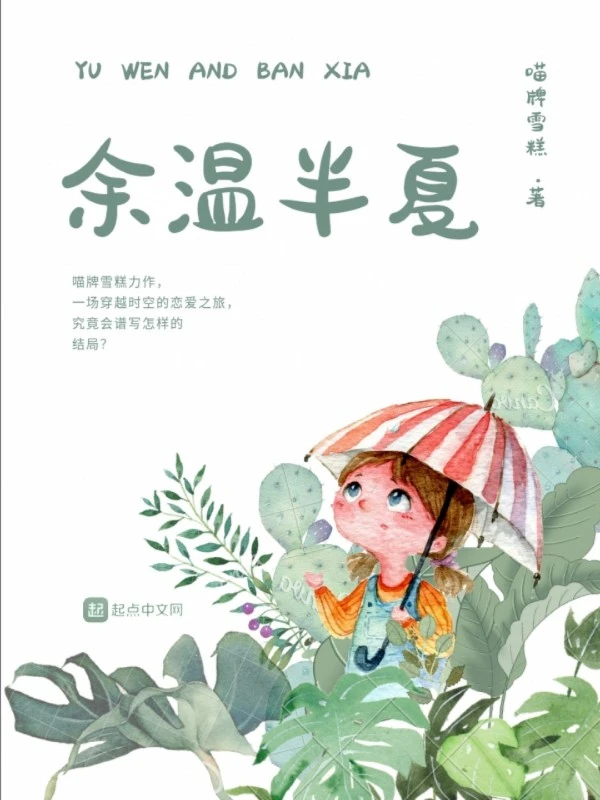
Remaining Warmth of Pinellia Ternata
余温半夏
- Status
- Completed
- Length
- 268k Words
- Genre
- Light Novel
- Audience
- Male
- Subgenre
- Aesthetic Fantasy
- Updated
- 7y ago
- Source
- Qidian
Stats
0Monthly votes
43Recommends
31Fans
123Chapters
Tags
Synopsis
Reader comments
Readers also read
 Conan's First Love Is the Profiler
 Calabash Baby Vs. Naruto Pirate
 Do You Know That After Rebirth, Who Still Spoils His Scumbag Father?
 The Soul Leaves the Body and Becomes an Immortal
 Did Mr. Mo Propose Today?
 Master Jiu Dug a Hole Again
 The Airborne God Lives Next Door
 The Young Male God of the Emperor Always Urges Marriage
 My Princess Is so Sweet
 Loving Like a Queen
 Mother Reborn as a Villain
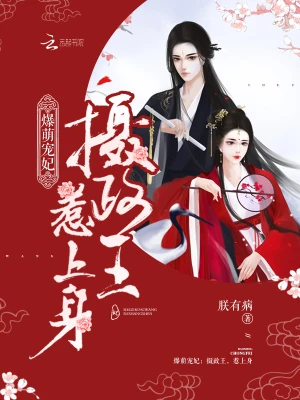 The Prince Regent's Favorite Concubine
About the pronunciation of the surname [half]
About the word [half]. Generally speaking, there is no polyphonic pronunciation of this character, but this surname does exist among surnames. It is a rare surname and the frequency of use is very low, so I will give you a supplement here, or you can search it online for yourself. Here I will directly put the original words from Baidu: Half surname, half also is Mi, pronounced as mǐ(ㄇㄧˇ), or bān(ㄅㄢ), but not bàn(ㄅㄢˋ). The ancestors of the surname are Xiong Xun (Mifu), Douban, and Queban. The Ban surname is an ancient Han surname with many origins, but it is not among the top 3,000 surnames in the surname list in mainland China, and it is not in Taiwan Province. With Fufeng and Liyang as the county commanders, the number of people is very small, and they are mainly distributed in Zhengding County, Shijiazhuang City, Hebei Province. Chinese name Ban surname Pinyin mǐ Can also be read as bān De surname ancestor Xiong Xun, Douban, Queban Basic introduction Ban [ban, , pronounced as mǐ(ㄇㄧ ˇ), can also be read as bān(ㄅㄢ), but cannot be read as bàn(ㄅㄢˋ)] Origin of the surname The first origin It comes from the surname Mi, which comes from the Xiong family, the monarch of the Chu state in the Spring and Autumn Period. The Ban clan originated from the Chu State during the Spring and Autumn Period. According to the historical record "Customs", the founder of the Ban clan, Douban, also known as Douban, was a noble clan of the Chu State. According to the history book "Records of the States of the Eastern Zhou Dynasty": "The southern country is called Chu, with the surname Mi and a viscount. Chongli, the grandson of Emperor Pinxiang, was an official of the Huozheng family of Gaoxin. He was able to bring light to the world and was named Jiu Zhurong. Chongli died, and his younger brother Wu Hui's heir was Zhu Rong. He married the daughter of the king of Guifang and was pregnant for eleven years. He opened his left side and gave birth to three sons. He also opened his right side and gave birth to three sons. His eldest name was Fan. His surname was named Wei Xu, and he was named Xia Bo. Tang Fajia destroyed it. The second one was called Shenhu, with the surname of Dong, and was granted the title of Hu in the Zhou Dynasty. The third one was named Pengzu, whose surname was Peng, and was granted the title of Shang Bo. The fourth one was named Huiren, whose surname was Wu, who was granted the title of Zheng. Xu Xiaowu said An, whose surname was Cao, and was granted the title of Xiexu. Liu said Jilian, whose surname was Mi, and he was a descendant of Jilian. This half clan was corrupted by the descendants of Xiong Xun (Mi Fumao), the brother of King Xiong Tong of Chu Wu (reigned from 740 BC to 690 BC). Xiong Xun was later killed by his younger brother Xiong Tong. When Xiong Tong usurped the throne and killed his brother and nephew, some members of Xiong Xun's family escaped Xiong Tong's ruthless killers. His descendants, Jian, changed the original surname "Mi" to "Ban" and called the Ban family, but the pronunciation was still mǐ (ㄇㄧˇ). The second origin It comes from the surname Mi. It comes from Douban, a descendant of Ruao Ao of Chu State in the Spring and Autumn Period. It is a surname that is a homophonic abbreviation. Chu Ruoao had a son named Dou Bobi, and Dou Bobi had a son named Dougu Yutu. According to legend, Dougu Yutu grew up eating tiger milk. Because the tiger has markings on its body, and the markings in Jingchu area are called "Dou" or "spots", it is also called "Douban". And because Dougu Yutu's fiefdom was in Shenyi (today's Shanghai), it was also called "Shen Gong Douban". Dou Bobi also had a son named Ziwen. King Chu Cheng Mi Wei (Xiong Yun) was only nine years old when he came to the throne (671 BC). Although his uncle Ling Yin Ziyuan did not reach out to seize his nephew's kingdom, he always controlled the affairs of his nephew King Chu Cheng. He was very domineering, like an overlord, and the child King Chu Cheng had nothing to do with him. For this reason, in the thirteenth year of Ji Lang, King Hui of Zhou Dynasty (the eighth year of King Cheng of Chu, 664 BC), Shen Gong Douban killed Ling Yin Ziyuan and asked his nephew Wen Ji to be Ling Yin, who was called Ling Yin Ziwen in history. After Ling Yin Ziwen came to power, also known as Ling Yin Queban, he began to vigorously rectify the internal affairs of Chu and became the top minister of Chu during the reign of King Chu Cheng (reigned from 671 BC to 626 BC). Where it is; standing in the dynasty without knowing it, and returning when the sun is dark... The third official is Ling Yin, and there is no look of joy; the third official (being dismissed), there is no look of anger. ""Que" originally means the attic on both sides of the palace gate for observation, such as "Gong Que". Later, it was widely used to represent the residence of the emperor and to refer to the imperial court, such as "quexia". "Que Ban" means that Ling Yin Ziwen was the most trusted minister of King Cheng of Chu at that time, so he could always stand in Que Ban. Among the descendants of Douban and Queban, there are those who have the surnames "Ban" and "Dou" in the names of their ancestors, and they are called the Ban family and the Dou family. During the Spring and Autumn Period and the Warring States Period, the words "Ban" and "Ban" were used interchangeably with the same pronunciation, so some people later changed the surname to "Ban" in simple Chinese. Among the descendants of the Ban clan, there are those who changed their surname to the homophonic character "ban", and they are called the Ban clan, and the pronunciation is still bān (ㄅㄢ). This branch of the Ban family is actually the Ban family or the Ban family, which is of the same lineage and clan. Most of the Ban clan people respect Douban (Dougu Yu Tu) or Queban (Ling Yin Ziwen) as the ancestor of the surname. [1] The third origin It comes from the surname Mi, which comes from the Yin Que class of the Chu State in the Spring and Autumn Period. It is a surname that is abbreviated from the ancestor's name. During the Spring and Autumn Period, the official names of the vassal states included the title "Bantai". But it is not a specific official title, but people at that time called Sima, Sikong, and Situ the "Three Chaotangs", so "Bantai" was used to call these three departments, and later it was used to refer to court officials in general. Among the descendants of Sima, Sikong, and Situ in the past dynasties, there are those who take the "Ban" in the official title of their ancestors as their surname, and they are called Ban. Among the descendants of this branch of Banshi, there are also those who changed their surnames to the homophonic character "ban", and they are called Banshi. The pronunciation is still bān (ㄅㄢ), and they are actually Banshi. The origins of the surnames in this branch are complex and cannot be discussed in one summary. The ancestor of the surname Xiong Xun (Mifenmao), Douban and Queban. The Ban clan originated from the Chu State in the Spring and Autumn Period. According to the historical record "Customs", Douban, the ancestor of the Ban family, was a duke of the Chu State. It is estimated that they are descendants of the ancient Zhuanxu Gaoyang family. According to the historical record "Manuscript of the Words and Deeds of Mingxian Clan", he grew up eating tiger milk, and the tiger that fed him had Ban patterns on his body, so he was named Douban, which also made his descendants "take the name of Wang's father as their surname" and take the surname Ban. In ancient times, "ban" and "ban" were used interchangeably, so it was called Ban's. Descendants of Ban's family changed their surname to the homophonic character "Ban" and called them Ban's family. Because the descendants of the Ban family are descended from the Ban family, they all regard Douban as the ancestor of the Ban family. Migration Distribution The Ban surname is an ancient Han surname with many origins, but it is not among the top 3,000 surnames in the surname list in mainland China, and it is not in Taiwan Province. With Fufeng and Liyang as the county commanders, the number of people is very sparse, and they are mainly distributed in Zhengding County, Shijiazhuang City, Hebei Province.
.
I can't even recognize the word, half (bān)
Do you want melon seeds, cigarettes, mineral water, plum spicy strips chewing gum?
Come on 🤭, the writing is great, (///▽///)
Well, just a chapter of 2,000 words or so, just update one chapter a day. Before it is put on the shelves, one chapter will be updated every day, and more chapters will be saved for manuscript collection. After 130,000 words are published, two chapters will be published every day. Remember, one chapter is two thousand words! Then, remember to write a title for each chapter!
🎁🎁🎁
There is a male supporting actor named Beiyu💁🏻♀️Nais
The writing style is very intentional, the foreshadowing is delicate, and there is good cheer and mutual visits.