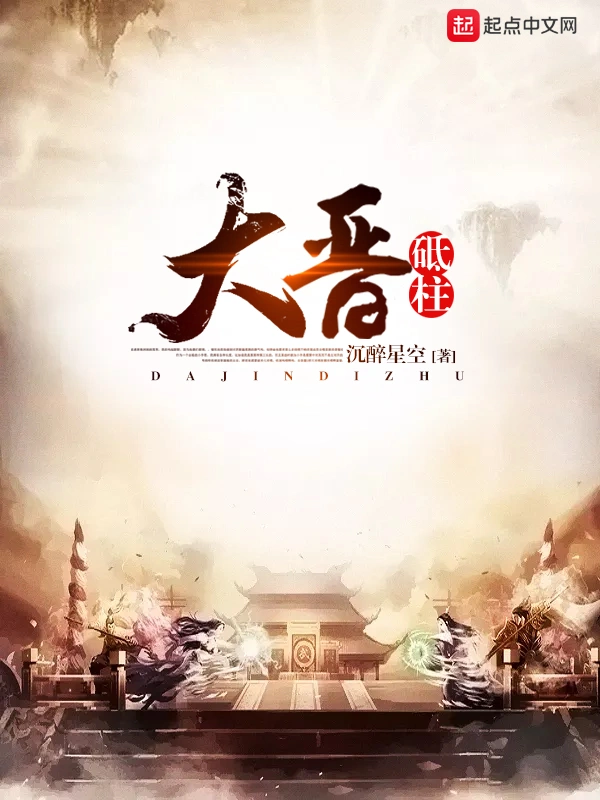
The Mainstay of the Jin Dynasty
大晋砥柱
- Status
- Ongoing
- Length
- 617k Words
- Genre
- Historical
- Audience
- Male
- Subgenre
- Jin-Sui-Tang Dynasties
- Updated
- 7y ago
- Source
- Qidian
Stats
0Monthly votes
402Recommends
1.3kFans
251Chapters
Tags
Synopsis
Reader comments
Readers also read
 Red Mansion: Start Escaping and Farming from the Equipment Bar
 After Lying in Bed for Three Years, He Was Forced to Help the Han Dynasty
 Northern Qi, Sage Khan
 Fu Ming 1627
 Tokyo Criminal 1962
 Strategies for Revitalizing the Northern Song Dynasty
 The Sun and the Moon Are Always There
 Three Kingdoms: My Father Xuande, the King of Guanzhong Is Here
 Vampires Don't Suck Blood, What the Hell Is a Cultural Invasion!
 Emperor Zhengde
 My Neighbor Is the Emperor
 Picked up a Copy of Chronicles of the Three Kingdoms
At this time, the eunuchs did not have the official title of eunuch, and the eunuch was not yet an eunuch.
Eunuch is an ancient Chinese official name, which may have evolved from the name eunuch. It first appeared in the Northern Wei Dynasty and was a title for female officials. In the Tang Dynasty, it was another name for the official eunuchs of foreign dynasties. In the Song Dynasty, it was the title of a senior female official, and in the Liao Dynasty, it was the title of a senior government position. By the Ming Dynasty, because the eunuch position was often held by eunuchs, "eunuch" became the title of senior eunuchs. By the Qing Dynasty, eunuchs were collectively called eunuchs, which became the collective name for eunuchs. The term eunuch first appeared in the Northern Wei Dynasty. Emperor Xiaowen appointed female officials to manage internal affairs, including the post of eunuch, which was below the position of chief eunuch and above the number of female attendants ("Northern History: Preface to the Biography of the Concubines": "Xiaowen changed the title of eunuch... To the post of female official to regulate internal affairs: The internal secretary is regarded as the minister and the servant; the secretary, the eunuch, and the maid are regarded as the second rank. "), And the ancients often used "da" and "tai" interchangeably, so the "da eunuch" may be the eunuch [source request], such as Mu Huanghua (zi Shili) who was a palace maid in the Northern Qi Dynasty. Gao Wei, the empress of the Northern Qi Dynasty, was called the "Relic Eunuch" ("The Book of the Northern Qi Dynasty: Hu Lu Hou Biography": "The empress, Queen Mu, had a bad name... The small character is Huanghua, and the latter character is Relic. ... When he entered the palace, he was lucky enough to be the empress, so he was called the 'Relic Eunuch' in the palace."). In the Tang Dynasty, among the official positions in foreign dynasties, there were chief eunuchs and eunuchs. The record of "eunuch" as a formal official name first appeared in the Song Dynasty. According to Sun Fengji's "Jiu Ji Fen Ji", Emperor Taizong of the Song Dynasty set up internal officials (female officials) in the inner court, including Shanggong and eunuchs, who were both responsible for internal affairs. The eunuch was also changed to Shangshu Neishang, and Shangshu and eunuchs were both called Shangshu. The eunuchs here have the title of senior female officials and are also chief eunuchs ("Office of Officials: Neiguan": "Taizong of the state established Shanggong and eunuchs, and they were aware of internal affairs. He also changed Neisheng to Shangshu Neishang. He ordered Shanggong and eunuchs to be named Shangshu."). There are also other government offices with eunuch positions. In the Liao Dynasty, the eunuchs were the chief officials of the eunuch, shaofu, secretary, general, and water supervisors in the south. There were also the young eunuch and the chengcheng. In the Yuan Dynasty, the eunuchs were art and literature supervisors, Dian Yong supervisors, Dian medical supervisors, Dian Mu supervisors, Zhen Yong supervisors, eunuch supervisors, Duzhi supervisors, utilization supervisors, Zhongshang supervisors, Zhang Pei supervisors, Jingzheng supervisors, secretary supervisors, etc. All government offices had eunuch positions, ranking second to the Qing or Taiqing of each eunuch. In the Ming Dynasty, there were twenty-four yamen in the palace, with twelve supervisors, four divisions, and eight bureaus, each with a dedicated eunuch to collect the money. And the chief officials of other institutions. Among the twelve prisons, the internal official supervisor, the imperial supervisor, the fourth department, the eighth bureau, the inner government supply warehouse, the admiral Dongchang, etc., Each have one eunuch. In some institutions, such as the ceremonial eunuch, in addition to the eunuchs who hold the seal, there are also admiral eunuchs, eunuchs who hold the pen, and the eunuchs who follow the hall; in addition to the eunuchs who hold the seal, the admiral's capital camp also has eunuchs who sit in the camp. Since these eunuchs were often appointed by eunuchs, "eunuch" later became the title of senior eunuchs. However, the Ming Dynasty did not stipulate that eunuch positions must be filled by eunuchs. In the Qing Dynasty, eunuchs were collectively called eunuchs, and the word eunuch was completely synonymous with eunuch.
Finished reading! I hope that smart people will appear, and they will all be deaf and dumb scholars. The mute barracks can be composed of deaf and mute warriors, all of whom are loyal to the protagonist Ma Yu! The author is a middle school history teacher. Have you read these information books? Passed down from person to person, Records of famous craftsmen of China's past dynasties, A new chronology of major events in Chinese history, Chronology of wars in China's past dynasties Especially the biographies of famous Chinese craftsmen of past dynasties record the information of mathematicians, astronomers, scientists and craftsmen of the Jin Dynasty! Huangdi's deaf officer and war general Na Xia You, a deaf disciple of Confucius Deaf warrior general Jing Nan of Qin State He Guanzi, the deaf prime minister of Zhao State Xu Pi, the deaf prime minister of Han Dynasty Zhao Jieyu, the deaf concubine of the Han Dynasty Gou Yi and his wife Du Wei, a famous deaf official of the Shu Han Dynasty, one of the Three Kingdoms Huang Fumi, the deaf miracle doctor of Jin Dynasty Zhang Gui, the deaf minister of Jin Dynasty and founder of Xiliang The two deaf generals who fought against Hu in the Five Husties were Du Cong and Jing Zhan, who were deaf and mute. Du Cong's grandfather, Du Ming, was a deaf scholar and a wise scholar. He was a descendant of Du Wei, the great deaf strategist of the Three Kingdoms. Du Ming joins the protagonist and is responsible for intelligence analysis and monitoring civil and military officials. Jing Zhan's grandfather Jing Zheng is a mute, and Jing Zheng joins the protagonist's mute camp as a general! There were twenty mutilators from the Qin State and the Qin Dynasty; Fifty muses of the Han Dynasty; In the Jin Dynasty, there were one hundred wise men and three thousand dumb soldiers; "On the Hand" compiled by Confucius during the Spring and Autumn Period; "Manual" written by Mozi during the Spring and Autumn Period; "Shuhua" written by Huang Fumi, a deaf miracle doctor of the Jin Dynasty; Ran Min's grandfather Ran Long was a general of the begging army under Liu Kun, the governor of the Jin Dynasty. Ran Long can be promoted as a young general by the protagonist! List of scientists and craftsmen in Ran Min's era Although Zhang Kang is not as talented as his two elder brothers, he still has writings and is proficient in music and acting skills. Together with Zhang Zai and Zhang Xie, he is known as the "Three Zhangs". Kong Ting, a native of Nanyang, digital astronomy, 285-356. Shi Tanyi, surnamed Yao, Qiang, Jizhou, monk craftsman. Jia Ba, a great cart builder, was a famous craftsman from Shihu. Jie Fei and Wei Meng are two famous craftsmen, Shihu's famous craftsmen. Dong Quan once wrote a book "Three Rank Numbers". The third rank is called upper, middle and lower. The lower numbers are called tens and tens. If one hundred thousand is called billions, one billion is called trillions, and ten trillions is called capital. The middle ones are called tens of thousands. If one is spoken of tens of thousands, it is called billions. Ten thousand trillions is called trillions. Wanzhao is called Jingye. From billions to Zai, it finally reaches the Great Evolution. If the number is higher, the number will change when the number is poor. If we say tens of thousands, it is called billions, billions and billions is called zhao, and zhaozhao is called Jingye." That is, the lower notation methods are all ten-thousands; the medium notation are all ten-thousands; and the superior notation is multiplication. Ren She, a native of Liangzhou, was a descendant of the Luban Mohist family. Wang Jia (?-390), Courtesy name Zinian, was a native of Anyang, Longxi (governing the east of present-day Qin'an County). An alchemist during the Eastern Jin Dynasty, he was funny and good-tongued. Works "Supplementary Notes", chemical physics. Wang Shuozhi was a calendarist in the Eastern Jin Dynasty. Lang (now Linyi) people. "Tongli" was created in the eighth year of Emperor Mu's Yonghe reign (AD 352). This calendar is also called the "Yonghe Calendar" and is not used. [1] Kou Qianzhi (365-448), named Qian and courtesy name Fuzhen[1], was born in Feng Yi Wannian (now Wutun Township, Yanliang District, Xi'an City, Shaanxi Province). When he was young, he established a powerful Taoist alliance, and later became a Taoist monk in Songshan Mountain.
It's interesting. Your time travel was a bit late. If it had been a year or two earlier, the situation wouldn't be as passive as what you wrote in your book.
Can I not use my pre-travel name? Looks awkward
The author, Jiang Tong wrote "Lun on the Rong", not "Lun on the Rong"
The Sima family won the country improperly, so they can only rule the world together with the aristocratic family.
The name Ma Yu seems extremely twisted.
The author, at this time, the terms "Miss" and "Master" have not been invented yet, so I hope not to use modern terms.
Not the second young lady, but the second young lady. There were no young ladies at that time. In addition, at that time, silver was not a currency in circulation. The currency in circulation was copper coins and cloth, and large amounts were gold. Silver became popular after the Song Dynasty.