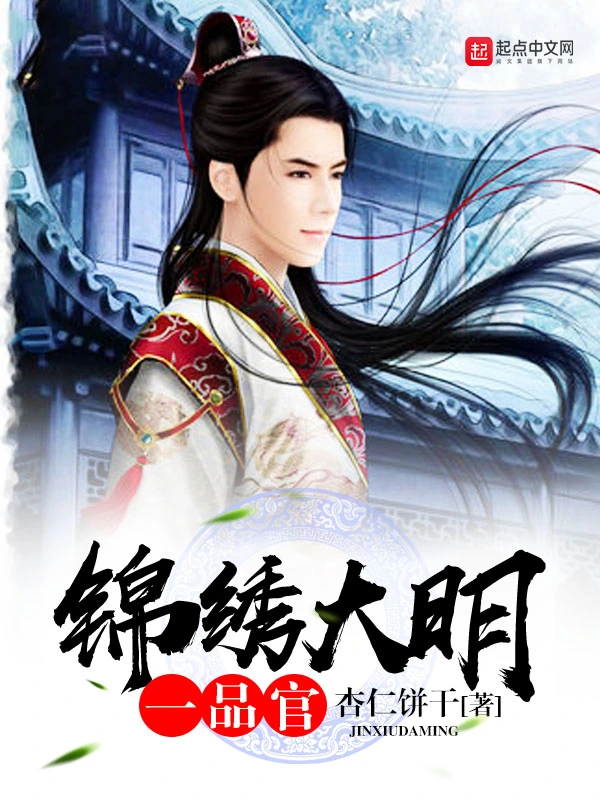
Splendid Ming Dynasty First Grade Official
锦绣大明一品官
- Status
- Completed
- Length
- 332k Words
- Genre
- Historical
- Audience
- Male
- Subgenre
- Song-Yuan-Ming Dynasties
- Updated
- 5y ago
- Source
- Qidian
Stats
0Monthly votes
838Recommends
11Fans
139Chapters
Tags
Synopsis
Reader comments
Readers also read
 Please Call Me Your Majesty the Tsar
 1914 Begins with the Rejection of the Schlieffen Plan
 Talker in the Song Dynasty
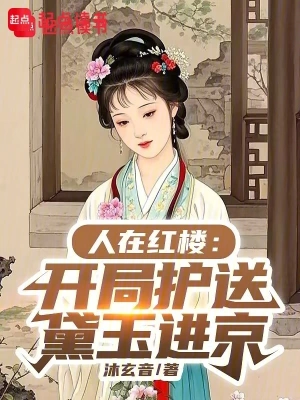 In the Red Mansion: Escort Daiyu to Beijing at the Beginning
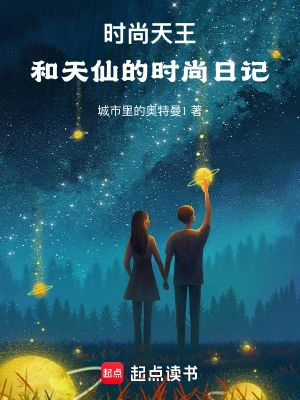 The Reborn Fashion King
 My Neighbor Is the Emperor
 Emperor Zhengde
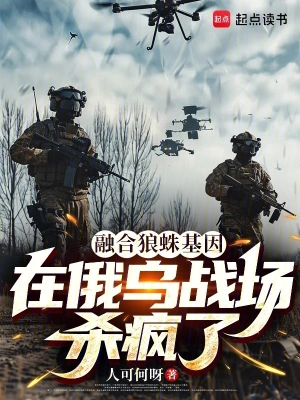 Fusion of Wolf Spider Genes, Killing Like Crazy on the Russian-Ukrainian Battlefield
 Live Forever as a Cat
 Strategies for Revitalizing the Northern Song Dynasty
 Invincible Righteousness
 Conquer the World
TenChapter 4: Death from poison!
Not bad, nice looking.
It is written with the charm, sentiment and sense of humor of the bright moon back then, and it is worth reading.
Another chapter where a beast is worse than a beast! I'm not happy at all, but I still made an agreement with Loli. Why else would the protagonist be a eunuch?
It's completely at the level of a primary school student. He kept chatting about economics and economics. The protagonist bought a rag weaving factory in installments of 100 taels. First, hey, he was lucky. It brought raw materials worth 160 taels of silver cloth (all sold at half price for 80 taels). Second, hey, he was lucky. After changing the owner, a batch of new machines appeared out of nowhere. A man surnamed Liu comes to be the accountant. If the protagonist wants business to be good, he will sell it at half price. If the protagonist is short of money, he will sell it at half price. Before returning home, he has made thousands of pieces of cloth, and his luck is really good. He doesn't need the protagonist to improve any skills. The cloth is of high quality. Then out of nowhere, a rich boss will ask for it all at once and give more money. The most disgusting thing is that the ancient cloth made with backward technology is sold at half price, and you can still make money, and a lot of money. If you sell it for 80 taels, you will make a few dozen taels of profit, and then you can go home and show off for fun. The protagonist is awesome. There is no cost to make cloth. No capital injection is required. (The profit of cloth making in ancient times was really high. According to the content given by the protagonist, the profit of cloth made in ancient times was almost ten times). You can make money by opening a factory. I don't understand why companies in modern society need loans and financing. The protagonist is so comfortable. It would be great to buy a factory that comes with raw materials and tools that are worth more than the price.
I hope you all will enjoy watching it and pay attention to this sentence... Before I put this book on the shelf, I was always in the process of repeatedly proofreading and revising it. Therefore, you often find that a small cloud icon always appears on the catalog page. You can delete the book continuously and then re-add it to the bookshelf to see the latest proofread version that I have modified. The modified one looks much different from the unmodified one. All good books can be improved upon
Everyone is welcome to leave your comments. This book seeks truth in everything. The author feels that the most rare thing to pay attention to is always thinking "can it be realized?" Don't be afraid of careful analysis when traveling through time. The male protagonist does not have any unreasonable superpowers, he is very humble, just an ordinary businessman. Not a saint
Simple instructions for cotton textiles
How to turn a pile of cotton into cotton cloth? First of all, some of you may have never seen cotton? Well, cotton is a very common crop in northern my country. This thing is made of cotton bolls. If you want to weave it into cloth, let alone removing the shells, you must first remove the cotton seeds. This process is called rolling; Then the key comes. Cotton needs to be turned into cotton thread. This process is called spinning, and the machine used for spinning is called a spinning machine. Then the final step is weaving, and there is a printing and dyeing process before weaving.
Please be sure to click on the directory. Take a look. Which directory has the Little Cloud logo on it for re-downloading? It can be said that every chapter of this novel of mine has been revised. At the beginning, it must have been revised repeatedly, more seriously, before it was put on the shelves. All need to be modified repeatedly. You can save the book first and then read it after it is put on the shelves.
1. No emperor in official history can pay a private visit incognito. Not to mention the emperor, even the modern president cannot go down to the grassroots level so deeply, such as going to the fields to pay exorbitant taxes. In the Ming Dynasty, only Emperor Zhengde liked to visit privately incognito, which resulted in very bad consequences. 2. The civil service group. In fact, from an economic point of view, the civil service group is also divided into many strata. Some represent advanced productive forces. For example, some are in charge of handicrafts in the Jiangnan area and mining in various places. Some represent the interests of landlords and large landowners. Some are in charge of the military. Some are in charge of civil affairs and law. All of these people will generally ask the emperor to do something from their own perspective. If an emperor only knew how to centralize power, then did the emperor of the Qing Dynasty centralize power? Could he be out of touch with the reactions below? For example, some areas are too old, such as salt industry and mining. This is an example. Some taxes should be increased, while some places should reduce some taxes, such as emerging industries... Such as the textile industry, which is vigorously promoted, but due to the existence of centralization, a wrong sentence will cause a strong transmission effect... So if the emperor tried to use factory guards to attack civil servants, then... Forget it, it's good to think about it. 3. The emperor personally takes charge of guns and the like. The most important thing for an emperor is to stabilize and establish a very good system. Whether Dafei does well or not, small things like guns really don't matter. Even if you insist on developing this new type of firearm, you need to find some capable people and give them high power. So I never heard that the emperor would do it himself
I've read Chapter 10, but I still don't see the protagonist's abilities. I've always been bragging about my abilities.
Today I just woke up to a question: Why were officials in ancient times so majestic?
Because they are rulers, why rule? Mencius has a saying that has always been controversial: He who works hard will govern others, and he who works hard will govern others. Why is this happening? Many truths can be boiled down to one sentence: People have superior resources. They are well educated. Education was of great importance in ancient times, and the imperial examination was the result of an extraordinary emphasis on this principle. In fact, today, educational resources are still extremely fragmented, and those who hold key technologies are responsible for treating those poor people who only know how to work hard. The author was born in a rural area and returned home after graduating from college. Every time he communicated with his parents and relatives, the most painful sentence in his heart was: "Those who farm don't make money." Why? Because farming is becoming less and less technological, it is becoming increasingly obsolete. Modern rural areas are also trying their best to popularize scientific and technological knowledge, but who can compete with each other? There is a weapon in hand, and murderous intentions are everywhere. If you know one more piece of information than others, you know that the price of things in your hand, such as food, will rise tomorrow. Then you don't care if others starve to death or whatever, if you just raise the price, then others will be your lambs waiting to be slaughtered. 😆
I'm back again!
Whose youth is not confused. I decided to resume updating again, thank you all for your support. In fact, every book has its own value. As long as there is someone who likes to read it, I will continue to write it.
Recently, when I was reading novels, I discovered that there was a book a long time ago that had basically the same story, background, and creative ideas as my book "Splendid Ming Yipinguan". "The Golden Lord of the Ming Dynasty" was an early work of Delicious Borscht by the academic master I admired. When I wrote 230,000 words in my book, I found that his book was much better than mine in terms of literary talent, depth of insights, and novel style. Unfortunately, there were still very few novels written during this period that readers really liked. The books written by other great writers ended hastily. In fact, I am not saying bad things about him. I couldn't stand two of his Ming Dynasty books. Borscht has its own distinctive style, that is, it is too bookish. In both the Golden Lord of the Ming Dynasty and the Golden Scales, I feel that the male protagonist and the worldview he constructs are either too elegant or too lacking in the enterprising spirit of Mudleg. Of course, this is just my feeling. It is said that the author himself has a very high cultural level, so the text has a stronger bookishness... So let's go back to my own books. Through comparison, I know what my books are like. I belong to a state of "whiteness but don't admit it". I'm neither above nor below. Writing literature and novels must be a bit more artistic, and it should be more or less literary. Of course, I also hope to apply the economic theory that I studied professionally into the novel and incorporate it into it. In doing so, it is indeed a little deeper than simply writing blank articles, but it is still neither good nor bad.
It feels like there are so many chapters
I haven't watched it for a long time. . .
The writing is too poor, the pace is a bit fast, and I can't read it.
Some friends may not get certain points. For example, to monetize silver, you can go to the book
Silver underwent an unusual monetization process during the Ming Dynasty. In the early Ming Dynasty, silver was not a legal currency. At that time, the legal currency was first copper coins, and then banknotes. In order to implement the paper currency system, private gold and silver transactions were banned, but this failed to stop the circulation of silver. Private transactions were still customary to use silver. As a medium of exchange, the unit value of currency should be compatible with the development level of the commodity economy. Due to the development of the market and the expansion of the scale of commodity transactions after the middle of the Ming Dynasty, copper coins were no longer able to fully meet market demand. Therefore, a precious metal with a larger unit value and easy to carry was needed to act as a medium of exchange, and silver naturally became the main currency. In the Ming Dynasty, silver monetization began among the people and went through a bottom-up development process. It was only launched nationwide after it was gradually recognized by the state.
Why hasn't it been updated for so long? I'm still thinking of saving more and watching it together.
Long time no see
Come and see if the author is lazy 🤭
Features of this book Self-introduction 1. The angle is novel. This book selects the Ming Dynasty's Longwan Reform period and the entire 80 years during which silver rapidly flowed into the Ming Dynasty as a major era. It constructs a "Ming Dynasty New Environment" with a grand blueprint for the development of a capitalist empire. It carefully deduces on the basis of historical facts, makes bold assumptions and carefully demonstrates, and creates a new idea of a textual research-style time-travel drama. From the perspective of industry, commerce, handicrafts, and economics, the author has a profound vision when looking at the cause and effect of the rise and fall of the Ming Dynasty. The text itself is astonishingly deep. 2. The plot is novel. The author has invented something in the same way, and the author's writing is very useful as a reference. It expresses real theoretical knowledge of management, economics, and marketing social sciences, and can give readers the effect of in-depth thinking. Of course, in terms of entertainment, the novel is also wonderfully written. The scroll unfolds, and several vivid characters appear on the page. The male protagonist has a bookish image of a big capitalist, which is also very vivid. 3. Strong thinking. What the male protagonist embodies is the indomitable entrepreneurial spirit, the courage to explore, the spirit of science, freedom, and democracy are always implemented throughout the text. Overall, this book is worth reading!
I can't understand it a little bit
The author's ideas are too jumpy and difficult to understand.
I can't stand the first few pictures. I bought a factory and started complaining about all the old stuff, but then a few new machines appeared out of nowhere. I was momentarily confused. It's acceptable for the protagonist to create one through his own memory, but when everything is missing, it feels very confusing. The main plot of a novel must at least describe the abilities of the protagonist. The luck bonus of the branch content makes the content okay, but the main plot also relies on luck. Moreover, the protagonist is very much a virgin, and modern people are indeed used to thinking that everyone is equal. But this does not mean that modern people are all holy mothers.
Convert this price. . . . . .
At first it was said that a thousand pieces of cloth should be close to a thousand taels, but in the end the protagonist took 50 taels. . . . There are also emotional descriptions that are too confusing and conflicting, and the aftermath of the conflict is simply skipped. . . . What the hell is this.
The first few chapters are a running account, with a strong sense of character self-narration. The reader has no sense of involvement and really can't stand it. Then when I read the book review, I suddenly realized that this book was just a product of the author's own entertainment. I hope the author can find readers who think like him.
I forgot how I clicked in. It was okay in the beginning. The framework and concept are good, but recently it feels a bit awkward. After thinking about it, I probably feel like "rushing to leave the novice village". The harem is not a problem, but the guide feels a bit too fast. Forget about the redemption of the little loli. The other two gradually feel like they just push and withdraw when they see a different flavor.
When the birds are gone, the good bow is hidden. The six-character mantra is sent to you.