The work describes the changes in Chinese society from the 1911 Revolution of 1911 to the Sino-Japanese Changsha War in 1941, interspersed with historical stages such as the Wuchang Uprising, the May 4th Movement, the Anyuan Coal Mine Strike, the Northern Expedition, the leftist troubles within the Communist Party, the Anti-Japanese War, and the second cooperation between the Kuomintang and the Communist Party. During these 30 turbulent years, a family composed of a group of unrelated people with ill-fated experiences and ups and downs, and the different experiences of each member, interpreted a primitive and simple instinct that ordinary Chinese people have always maintained amidst drastic social changes, and a kind of traditional virtue of the Chinese nation that was inadvertently but inevitably displayed under the drive of this instinct. This family of 12 main characters includes senior intellectuals, widows of high-ranking officials in the late Qing Dynasty, descendants of the heroes of the Boxer Rebellion, beggars living on the streets, and prostitutes trapped in spring buildings. There are Kuomintang members who resolutely defend the Huangpu spirit, and there are also Communists who sincerely believe in Marx's theory. Everyone has a seemingly bizarre yet inevitable, sad yet tragic, and sometimes tear-jerking experience that brings them together organically rather than expediently. Their destinies are connected and they depend on each other for life. Although there are many people, they help each other. The etiquette, justice and morality revered by the Chinese nation are all reflected in this family.
This family is actually a microcosm of the entire old Chinese society. Through the joys and sorrows of this family, it reflects the social connotation and characteristics of old China in different historical periods, and embodies the true Chinese characteristics and the inherent essence of the Chinese people.
The protagonist Zhao Xiuying is a typical traditional Chinese woman. She is uneducated. In her consciousness, there are no terms such as "society", "politics" and "ism", let alone what the worldview is. But from her diligence, simplicity, contentment, kindness, sincerity, tolerance, her perseverance in the face of adversity, her clear love and hatred, and a series of natural behaviors that are not affected by external factors, considering the overall situation and understanding the overall interests, what is revealed is a unique character of the Chinese nation that has been formed through thousands of years of cultural precipitation. For her, these touching qualities do not require any rhetorical preaching to inspire them, nor do they need to be inculcated by rhetorical speeches, nor do they need any profound theoretical basis to guide them. All her actions are completely natural expressions of instinctive, inner and even meaningless motivations. This makes her appropriately represent the characteristics of the Chinese nation and the beauty of humanity from one aspect, as well as the innate concept of honor and disgrace of the kind-hearted ordinary Chinese people. This kind of quality and human beauty is the national outlook, national outlook and moral style that we shout loudest and flaunt the most in form, but in fact have been eclipsed. The article contains heart-wrenching sadness, hilarious joy, refreshing love, and unforgettable hatred. Although the plot has ups and downs and bizarre twists and turns, it insists on being interlocking without any redundancy that deviates from the theme. There are some unexpected suspense, but it is by no means absurd or pretentious. It is a natural expression of the traditional Chinese view of "the unity of nature and man" and an exploration and excavation of "human nature" and "history".
 Song Jue Is so Lucky to Have Met You
 Love in Winter and Hope for Warmth in Summer
 After Passing Through the Book, I Started the Heroine Script
 The School Girl Is a Bit Difficult to Control
 Beast Control Starts from Zero Points
 Zheng Loves a Person with One Heart
 Abandoned Wives Are at Ease
 Quickly Wear It: I Just Want to Farm
 Northern Song Life Consultant
 Fight Between Famous Girls
 Houfu
Houfu
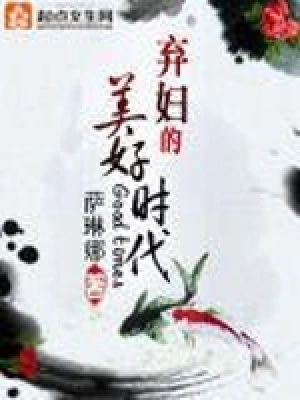 Abandoned Wife's Beautiful Era