Library
Browse and search books
2,982 novels found
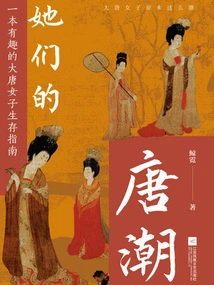
Their Tang Dynasty
History她们的唐潮
Whale Ni
The popularity of ancient puppet dramas and heroine-themed themes has made many people curious about the daily lives of ancient women, and they have also paid more attention to female themes. However, serious histories mostly focus on the major deeds of important historical figures, which are serious, obscure and not close to life. This book tells the daily life of women in the Tang Dynasty from the perspectives of culture and education, clothing and makeup, views on marriage and love, living habits, festival traditions, etc. Each chapter begins with a conversational cartoon between a modern woman and an ancient woman. It uses sharp and humorous language to reflect the current social status of the time and show the cultural and ideological collision between ancient women and modern women. It also quotes ancient books and documents in the text to increase literary appreciation and credibility. The article can be both rigorous and popular science, easy to understand and fascinating. Readers can not only learn the history of the Tang Dynasty, but also learn from the women of the Tang Dynasty their independent, brave and daring breakthrough spirit.
The popularity of ancient puppet dramas and heroine-themed themes has made many people curious about the daily lives of ancient women, and they have also paid more attention to female themes. However, serious histories mostly focus on the major deeds of important historical figures, which are serious, obscure and not close to life. This book tells the daily life of women in the Tang Dynasty from the perspectives of culture and education, clothing and makeup, views on marriage and love, living habits, festival traditions, etc. Each chapter begins with a conversational cartoon between a modern woman and an ancient woman. It uses sharp and humorous language to reflect the current social status of the time and show the cultural and ideological collision between ancient women and modern women. It also quotes ancient books and documents in the text to increase literary appreciation and credibility. The article can be both rigorous and popular science, easy to understand and fascinating. Readers can not only learn the history of the Tang Dynasty, but also learn from the women of the Tang Dynasty their independent, brave and daring breakthrough spirit.
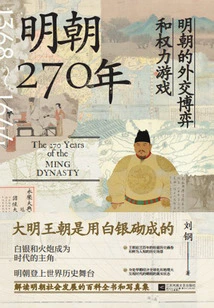
明朝270年:明朝的外交博弈和权力游戏
Liu Gang
This is not a history of emperors and generals, nor a chronological history book, but a written account of the Ming Dynasty's shipping, trade, diplomacy and other matters that are not often focused on. The focus of this book is not within the palace walls. The Ming Dynasty was the era when China truly began to open its eyes to the world. Observing the performance of the Ming Dynasty during the period of geographical discovery and the process of economic globalization is also an important part of understanding the 276 years of the Ming Dynasty. In this book, the court is not the main plot. Smugglers, big pirates, progressive scholars, and thinkers occupy a lot of space. This book can give readers a more three-dimensional and multi-dimensional understanding of the Ming Dynasty. You can see the exchanges and wars between China and North Korea, Japan, Spain, Portugal, the Netherlands and other countries, as well as the prosperous and developing Ming Dynasty society and the undercurrent of ideological movements. This empire built of silver is both advanced and conservative, rich and poor. When future generations look at it, they can't help but sigh.
This is not a history of emperors and generals, nor a chronological history book, but a written account of the Ming Dynasty's shipping, trade, diplomacy and other matters that are not often focused on. The focus of this book is not within the palace walls. The Ming Dynasty was the era when China truly began to open its eyes to the world. Observing the performance of the Ming Dynasty during the period of geographical discovery and the process of economic globalization is also an important part of understanding the 276 years of the Ming Dynasty. In this book, the court is not the main plot. Smugglers, big pirates, progressive scholars, and thinkers occupy a lot of space. This book can give readers a more three-dimensional and multi-dimensional understanding of the Ming Dynasty. You can see the exchanges and wars between China and North Korea, Japan, Spain, Portugal, the Netherlands and other countries, as well as the prosperous and developing Ming Dynasty society and the undercurrent of ideological movements. This empire built of silver is both advanced and conservative, rich and poor. When future generations look at it, they can't help but sigh.
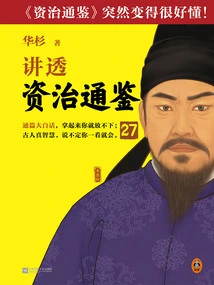
华杉讲透《资治通鉴》27
Huashan
"Zi Zhi Tong Jian" writes from the Warring States Period to the Five Dynasties and Ten Kingdoms, vividly showing the living people and stories in the 1,362-year history of the 16 dynasties. It can be said to be the "big data" and "case collection" of China's political and cultural heritage. This book is the 27th volume in Huashan's "Zi Zhi Tong Jian" series (AD 784-812), which mainly tells the history of more than thirty years from Tang Xianzong to Tang Wuzong in the middle and late Tang Dynasty. After pacifying Huaixi, Tang Xianzong became increasingly indulgent and soon collapsed. Subsequent Tang Muzong, Tang Jingzong, and Tang Wenzong were either incompetent or weak, and the court showed a weakening trend. After Emperor Wuzong of the Tang Dynasty came to the throne, he attacked the eunuch group internally and defeated Hui Ge externally, which alleviated the court's predicament. Open this book to see why Tang Wenzong was trapped in the vortex of party struggle and learn lessons from management failure!
"Zi Zhi Tong Jian" writes from the Warring States Period to the Five Dynasties and Ten Kingdoms, vividly showing the living people and stories in the 1,362-year history of the 16 dynasties. It can be said to be the "big data" and "case collection" of China's political and cultural heritage. This book is the 27th volume in Huashan's "Zi Zhi Tong Jian" series (AD 784-812), which mainly tells the history of more than thirty years from Tang Xianzong to Tang Wuzong in the middle and late Tang Dynasty. After pacifying Huaixi, Tang Xianzong became increasingly indulgent and soon collapsed. Subsequent Tang Muzong, Tang Jingzong, and Tang Wenzong were either incompetent or weak, and the court showed a weakening trend. After Emperor Wuzong of the Tang Dynasty came to the throne, he attacked the eunuch group internally and defeated Hui Ge externally, which alleviated the court's predicament. Open this book to see why Tang Wenzong was trapped in the vortex of party struggle and learn lessons from management failure!
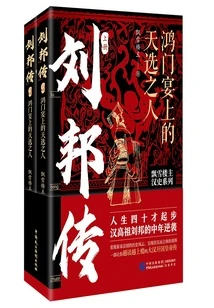
刘邦传:鸿门宴上的天选之人
The Owner Of Piaoxue
Liu Bang, the founding emperor of the Han Dynasty, was the "True Dragon Emperor" and he always had noble people to help him throughout his life. With Xiao He's help, he started his official career; Zhang Liang's appearance let him know that the country was won by strategy; Xiang Yu's help let him know that he was not fighting alone. In the light of swords and shadows, Bao Qin fell, but his powerful ally Xiang Yu stood up. Former teammate, now rival, Liu Bang, who was single and weak, chose to endure and hide in Hanzhong to hide his strength and bide his time. Here, relying on Han Xin's strategy, he built plank roads openly and secretly visited Chencang, and began the four-year Chu-Han conflict with Xiang Yu, and finally defeated Xiang Yu and ascended to the throne of emperor. The Han Dynasty was the first prosperous dynasty in Chinese history. Over the past four hundred years, wonderful stories have been told. There were many emperors in the Han Dynasty, but the most representative ones are undoubtedly the three emperors Liu Bang, Emperor Wu of the Han Dynasty, Liu Che, Emperor Wu of the Han Dynasty, and Liu Xiu, Emperor Guangwu. This work is one of the best-selling author Piao Xue Louzhu's "Biography of the Three Emperors of the Han Dynasty" series, in which the legend of Liu Bang's life is contained. Piaoxue Louzhu uses historical records as the blueprint, human nature as the core, and uses skillful and smooth writing to tell the story of the founding emperor of the Han Dynasty in thousands of twists and turns. The whole story is always like a blazing flame, exuding fascinating light and heat. This is a popular historical reading that is suitable for both refined and popular tastes. It is interesting and solid, and can also trigger thinking. It can lead readers to learn from history and learn the wisdom of life and work.
Liu Bang, the founding emperor of the Han Dynasty, was the "True Dragon Emperor" and he always had noble people to help him throughout his life. With Xiao He's help, he started his official career; Zhang Liang's appearance let him know that the country was won by strategy; Xiang Yu's help let him know that he was not fighting alone. In the light of swords and shadows, Bao Qin fell, but his powerful ally Xiang Yu stood up. Former teammate, now rival, Liu Bang, who was single and weak, chose to endure and hide in Hanzhong to hide his strength and bide his time. Here, relying on Han Xin's strategy, he built plank roads openly and secretly visited Chencang, and began the four-year Chu-Han conflict with Xiang Yu, and finally defeated Xiang Yu and ascended to the throne of emperor. The Han Dynasty was the first prosperous dynasty in Chinese history. Over the past four hundred years, wonderful stories have been told. There were many emperors in the Han Dynasty, but the most representative ones are undoubtedly the three emperors Liu Bang, Emperor Wu of the Han Dynasty, Liu Che, Emperor Wu of the Han Dynasty, and Liu Xiu, Emperor Guangwu. This work is one of the best-selling author Piao Xue Louzhu's "Biography of the Three Emperors of the Han Dynasty" series, in which the legend of Liu Bang's life is contained. Piaoxue Louzhu uses historical records as the blueprint, human nature as the core, and uses skillful and smooth writing to tell the story of the founding emperor of the Han Dynasty in thousands of twists and turns. The whole story is always like a blazing flame, exuding fascinating light and heat. This is a popular historical reading that is suitable for both refined and popular tastes. It is interesting and solid, and can also trigger thinking. It can lead readers to learn from history and learn the wisdom of life and work.
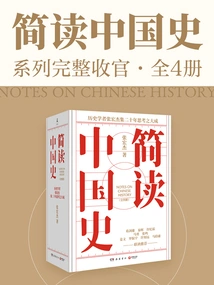
简读中国史(全4册)
Zhang Hongjie
This is the end of a brief reading of all 4 volumes of Chinese history. They are "A Brief Reading of Chinese History", "A Brief Reading of Chinese History: The Power and Finance Behind the Corruption in Chinese History", "Tribute Circle" and "The Evolution of Chinese National Character". Chinese civilization has never developed in isolation. From the moment it emerged, it has been influenced by factors from other civilizations in the world. The first book helps readers establish an overall concept of Chinese history by comparing Chinese history with world history. The second book runs through the Han, Tang, Song, Yuan, Ming and Qing dynasties, restoring the true ecology of ancient Chinese officials. The third book gives a panoramic description of the foreign relations under China's leadership in ancient East Asia. The last book explores the past and future of Chinese national character, and then understands the core of ancient China. Each is independent and complements each other from four aspects, fully presenting the development context of China's thousand-year history.
This is the end of a brief reading of all 4 volumes of Chinese history. They are "A Brief Reading of Chinese History", "A Brief Reading of Chinese History: The Power and Finance Behind the Corruption in Chinese History", "Tribute Circle" and "The Evolution of Chinese National Character". Chinese civilization has never developed in isolation. From the moment it emerged, it has been influenced by factors from other civilizations in the world. The first book helps readers establish an overall concept of Chinese history by comparing Chinese history with world history. The second book runs through the Han, Tang, Song, Yuan, Ming and Qing dynasties, restoring the true ecology of ancient Chinese officials. The third book gives a panoramic description of the foreign relations under China's leadership in ancient East Asia. The last book explores the past and future of Chinese national character, and then understands the core of ancient China. Each is independent and complements each other from four aspects, fully presenting the development context of China's thousand-year history.
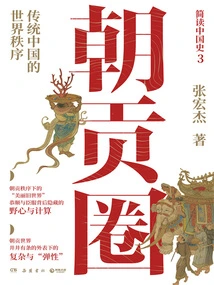
朝贡圈:传统中国的世界秩序
Zhang Hongjie
Tribute Circle - the key to understanding the ancient history of East Asia! Historian Zhang Hongjie's new work in the "Brief Reading of Chinese History" series! Understanding the tribute system is the key to understanding the history of China and East Asia. For more than two thousand years, the East Asian cultural circle with Chinese civilization as its core has established a unique etiquette system - tribute. Through this tribute system, various countries maintained frequent exchanges with China, and the Chinese-style political system and cultural concepts were slowly spread. This world, which originally had different customs and languages, was gradually woven into a "civilized" world with a unified script and unified values over more than a thousand years. Showing the "beautiful old world" under the tributary order, the ambitions and calculations hidden behind obedience and surrender. This book deeply analyzes the unique tributary system of ancient China and reproduces the glory of "common master". By detailing nine different tribute types including Korea, Ryukyu, Japan, and Vietnam, it presents readers with the inner operating mechanism of the longest-lasting international order in human history. The well-known historian Zhang Hongjie has devoted five years to present a panoramic view of traditional China's world order - the tributary system - with rich and detailed historical materials. The book shows the international environment in East Asia and the actual operation of the tributary system over the past two thousand years, and reveals the waves and turbulence under the calm surface in multiple centers in the unified system!
Tribute Circle - the key to understanding the ancient history of East Asia! Historian Zhang Hongjie's new work in the "Brief Reading of Chinese History" series! Understanding the tribute system is the key to understanding the history of China and East Asia. For more than two thousand years, the East Asian cultural circle with Chinese civilization as its core has established a unique etiquette system - tribute. Through this tribute system, various countries maintained frequent exchanges with China, and the Chinese-style political system and cultural concepts were slowly spread. This world, which originally had different customs and languages, was gradually woven into a "civilized" world with a unified script and unified values over more than a thousand years. Showing the "beautiful old world" under the tributary order, the ambitions and calculations hidden behind obedience and surrender. This book deeply analyzes the unique tributary system of ancient China and reproduces the glory of "common master". By detailing nine different tribute types including Korea, Ryukyu, Japan, and Vietnam, it presents readers with the inner operating mechanism of the longest-lasting international order in human history. The well-known historian Zhang Hongjie has devoted five years to present a panoramic view of traditional China's world order - the tributary system - with rich and detailed historical materials. The book shows the international environment in East Asia and the actual operation of the tributary system over the past two thousand years, and reveals the waves and turbulence under the calm surface in multiple centers in the unified system!
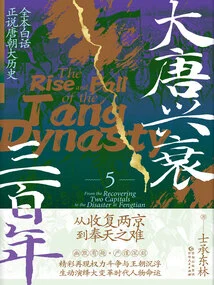
大唐兴衰三百年5:从收复两京到奉天之难
Shi Chengdonglin
This set of books mainly tells the story of the Tang Dynasty during the three hundred years from 607 to 907. Based on official official history and classic history books (Old Book of Tang, New Book of Tang, Notes on the Entrepreneurship and Daily Life of the Tang Dynasty, Zizhi Tongjian, etc.), With time as the longitude and key figures and events that influence the historical process as the latitude, it adopts humorous narrative methods to panoramically display the lives of the twenty-one emperors of the Tang Dynasty, as well as their ministers, generals, scholars and commoners, and involves the interpretation and evaluation of the political and economic system of the Tang Dynasty. It is a work that speaks the great history of the Tang Dynasty in vernacular. The first edition of this set of books has been selling well for more than five years since its release and is deeply loved by readers.
This set of books mainly tells the story of the Tang Dynasty during the three hundred years from 607 to 907. Based on official official history and classic history books (Old Book of Tang, New Book of Tang, Notes on the Entrepreneurship and Daily Life of the Tang Dynasty, Zizhi Tongjian, etc.), With time as the longitude and key figures and events that influence the historical process as the latitude, it adopts humorous narrative methods to panoramically display the lives of the twenty-one emperors of the Tang Dynasty, as well as their ministers, generals, scholars and commoners, and involves the interpretation and evaluation of the political and economic system of the Tang Dynasty. It is a work that speaks the great history of the Tang Dynasty in vernacular. The first edition of this set of books has been selling well for more than five years since its release and is deeply loved by readers.
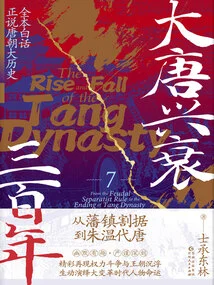
大唐兴衰三百年7:从藩镇割据到朱温代唐
Shi Chengdonglin
This set of books mainly tells the story of the Tang Dynasty during the three hundred years from 607 to 907. Based on official official history and classic history books (Old Book of Tang, New Book of Tang, Notes on the Entrepreneurship and Daily Life of the Tang Dynasty, Zizhi Tongjian, etc.), With time as the longitude and key figures and events that influence the historical process as the latitude, it adopts humorous narrative methods to panoramically display the lives of the twenty-one emperors of the Tang Dynasty, as well as their ministers, generals, scholars and commoners, and involves the interpretation and evaluation of the political and economic system of the Tang Dynasty. It is a work that speaks the great history of the Tang Dynasty in vernacular. The first edition of this set of books has been selling well for more than five years since its release and is deeply loved by readers.
This set of books mainly tells the story of the Tang Dynasty during the three hundred years from 607 to 907. Based on official official history and classic history books (Old Book of Tang, New Book of Tang, Notes on the Entrepreneurship and Daily Life of the Tang Dynasty, Zizhi Tongjian, etc.), With time as the longitude and key figures and events that influence the historical process as the latitude, it adopts humorous narrative methods to panoramically display the lives of the twenty-one emperors of the Tang Dynasty, as well as their ministers, generals, scholars and commoners, and involves the interpretation and evaluation of the political and economic system of the Tang Dynasty. It is a work that speaks the great history of the Tang Dynasty in vernacular. The first edition of this set of books has been selling well for more than five years since its release and is deeply loved by readers.
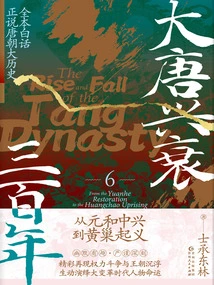
大唐兴衰三百年6:从元和中兴到黄巢起义
Shi Chengdonglin
This set of books mainly tells the story of the Tang Dynasty during the three hundred years from 607 to 907. Based on official official history and classic history books (Old Book of Tang, New Book of Tang, Notes on the Entrepreneurship and Daily Life of the Tang Dynasty, Zizhi Tongjian, etc.), With time as the longitude and key figures and events that influence the historical process as the latitude, it adopts humorous narrative methods to panoramically display the lives of the twenty-one emperors of the Tang Dynasty, as well as their ministers, generals, scholars and commoners, and involves the interpretation and evaluation of the political and economic system of the Tang Dynasty. It is a work that speaks the great history of the Tang Dynasty in vernacular. The first edition of this set of books has been selling well for more than five years since its release and is deeply loved by readers.
This set of books mainly tells the story of the Tang Dynasty during the three hundred years from 607 to 907. Based on official official history and classic history books (Old Book of Tang, New Book of Tang, Notes on the Entrepreneurship and Daily Life of the Tang Dynasty, Zizhi Tongjian, etc.), With time as the longitude and key figures and events that influence the historical process as the latitude, it adopts humorous narrative methods to panoramically display the lives of the twenty-one emperors of the Tang Dynasty, as well as their ministers, generals, scholars and commoners, and involves the interpretation and evaluation of the political and economic system of the Tang Dynasty. It is a work that speaks the great history of the Tang Dynasty in vernacular. The first edition of this set of books has been selling well for more than five years since its release and is deeply loved by readers.
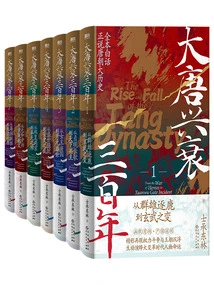
大唐兴衰三百年(套装全7册)
Shi Chengdonglin
This set of books mainly tells the story of the Tang Dynasty during the three hundred years from 607 to 907. Based on official official history and classic history books (Old Book of Tang, New Book of Tang, Notes on the Entrepreneurship and Daily Life of the Tang Dynasty, Zizhi Tongjian, etc.), With time as the longitude and key figures and events that influence the historical process as the latitude, it adopts humorous narrative methods to panoramically display the lives of the twenty-one emperors of the Tang Dynasty, as well as their ministers, generals, scholars and commoners, and involves the interpretation and evaluation of the political and economic system of the Tang Dynasty. It is a work that speaks the great history of the Tang Dynasty in vernacular. The first edition of this set of books has been selling well for more than five years since its release and is deeply loved by readers.
This set of books mainly tells the story of the Tang Dynasty during the three hundred years from 607 to 907. Based on official official history and classic history books (Old Book of Tang, New Book of Tang, Notes on the Entrepreneurship and Daily Life of the Tang Dynasty, Zizhi Tongjian, etc.), With time as the longitude and key figures and events that influence the historical process as the latitude, it adopts humorous narrative methods to panoramically display the lives of the twenty-one emperors of the Tang Dynasty, as well as their ministers, generals, scholars and commoners, and involves the interpretation and evaluation of the political and economic system of the Tang Dynasty. It is a work that speaks the great history of the Tang Dynasty in vernacular. The first edition of this set of books has been selling well for more than five years since its release and is deeply loved by readers.
Pre-qin Scholars (2024)
History先秦诸子(2024)
Yi Zhongtian
"Pre-Qin Scholars" is a historical summary and ideological condensation of the pre-Qin era. Taking Confucianism, Mohism, Taoism and Law as the main line, it explains in detail the great debates among hundreds of schools of thought on the good and evil of human nature, the rule of virtue and the rule of law, and action and inaction, spanning more than three hundred years. The Mohists paid attention to society and left behind social ideals, which are equality, mutual benefit, and fraternity; the Taoists paid attention to life and left behind the pursuit of life, which is truth, freedom, and tolerance; the Legalists paid attention to the country and left behind the concepts of governance, which are openness, fairness, and justice; the Confucians paid attention to culture and left behind the core values, which are benevolence, justice, and self-improvement. In other words, Mohism left behind the beautiful ideal of building a homeland, Taoism left behind the crystallization of wisdom to guide life, Legalism left behind the ideological resources to cope with changes, and Confucianism left behind the value system that unites the people. A great debate that has lasted for three hundred years has no answer, but has affected the Chinese nation for thousands of years.
"Pre-Qin Scholars" is a historical summary and ideological condensation of the pre-Qin era. Taking Confucianism, Mohism, Taoism and Law as the main line, it explains in detail the great debates among hundreds of schools of thought on the good and evil of human nature, the rule of virtue and the rule of law, and action and inaction, spanning more than three hundred years. The Mohists paid attention to society and left behind social ideals, which are equality, mutual benefit, and fraternity; the Taoists paid attention to life and left behind the pursuit of life, which is truth, freedom, and tolerance; the Legalists paid attention to the country and left behind the concepts of governance, which are openness, fairness, and justice; the Confucians paid attention to culture and left behind the core values, which are benevolence, justice, and self-improvement. In other words, Mohism left behind the beautiful ideal of building a homeland, Taoism left behind the crystallization of wisdom to guide life, Legalism left behind the ideological resources to cope with changes, and Confucianism left behind the value system that unites the people. A great debate that has lasted for three hundred years has no answer, but has affected the Chinese nation for thousands of years.
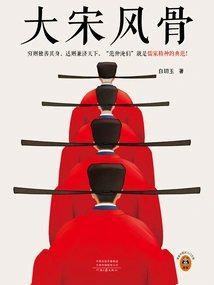
大宋风骨
White Cut Jade
If you are poor, you can benefit yourself; if you are rich, you can help the world. "Fan Zhongyan and others" are examples of Confucian spirit! In the middle of the Northern Song Dynasty, the internal "three redundancies" were serious, natural disasters continued, external wars were with Xixia, and the Liao State was sued for peace, and the regime was on the verge of collapse. At this time of internal and external troubles, Fan Zhongyan, who was hailed by later generations as the "model for the world," came out of nowhere. He led Ouyang Xiu, Fu Bi and other civil servants who "worried about the world before they did" to step forward to save the declining Northern Song Dynasty, and pushed the Confucian spirit of caring about the country and the people to its peak. Fan Zhongyan, whose posthumous title is "Wenzheng", spent his life interpreting the concern for the country and the people; Ouyang Xiu, the Wenzong of the generation, was an eternal talent who knew people well and was responsible for their duties; Fu Bi, an important official in three dynasties, remained a gentleman despite adversity;... Open this book and appreciate the true Confucian spirit!
If you are poor, you can benefit yourself; if you are rich, you can help the world. "Fan Zhongyan and others" are examples of Confucian spirit! In the middle of the Northern Song Dynasty, the internal "three redundancies" were serious, natural disasters continued, external wars were with Xixia, and the Liao State was sued for peace, and the regime was on the verge of collapse. At this time of internal and external troubles, Fan Zhongyan, who was hailed by later generations as the "model for the world," came out of nowhere. He led Ouyang Xiu, Fu Bi and other civil servants who "worried about the world before they did" to step forward to save the declining Northern Song Dynasty, and pushed the Confucian spirit of caring about the country and the people to its peak. Fan Zhongyan, whose posthumous title is "Wenzheng", spent his life interpreting the concern for the country and the people; Ouyang Xiu, the Wenzong of the generation, was an eternal talent who knew people well and was responsible for their duties; Fu Bi, an important official in three dynasties, remained a gentleman despite adversity;... Open this book and appreciate the true Confucian spirit!
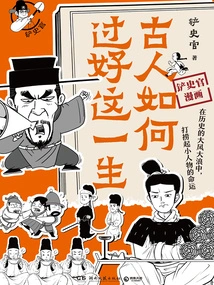
古人如何过好这一生
Shovel Historian
The major new work of "Shovel Historian", a major historical fan with millions of fans, is the life history of ancient people under the microscope! When we in the future generations look back on the long river of history, what we touch are the leaders of that era. And history is not only about princes and generals, but also about the passion of little people! Fighting, wandering, looking for relatives, begging for food, seizing wives, kidnapping, revenge, rebellion... In the stormy waves of history, the team of historians salvage the fate of small people in ancient times and see how they turn around in the unpredictable era! With 600+ interesting cartoons, you can easily conquer "history"! The comic team of Shovel Historian carefully outlines the daily life, joys, sorrows, and joys of small people in ancient times, as well as their unpredictable fate in the times. It has historical evidence and connects historical knowledge points with interesting stories! More than 2,000 years ago, Qin soldiers Hei Fu and Jingyuan went to Chu to fight. They just wanted to win military honors for their poor families and gain the possibility of class advancement; Du Huan, who was born in the prosperous Tang Dynasty and grew up in a wealthy family, originally wanted to follow the victorious generals in his career, but he was accidentally captured by a cannibal in the Battle of Talos, and started an eleven-year wandering journey; during the Hongwu period of the Ming Dynasty, After Yao Xiaowu, a farmer from Hongdong County, Shanxi Province, married his wife and gave birth to three children, he was violently snatched away by a military commander. In desperation, he took the lawsuit to Yingtian Mansion, the capital, and got it under the nose of Zhu Yuanzhang... In any era, there are countless little people caught in the middle, and they also have rich and complicated life experiences, but most of them are lost in the dust of history. The Shiguan Comics team combed through historical materials from unearthed bamboo slips, literati's notes, and local chronicles to outline the daily routines, joys, sorrows, and joys of small people in ancient times, as well as their unpredictable fates in the times.
The major new work of "Shovel Historian", a major historical fan with millions of fans, is the life history of ancient people under the microscope! When we in the future generations look back on the long river of history, what we touch are the leaders of that era. And history is not only about princes and generals, but also about the passion of little people! Fighting, wandering, looking for relatives, begging for food, seizing wives, kidnapping, revenge, rebellion... In the stormy waves of history, the team of historians salvage the fate of small people in ancient times and see how they turn around in the unpredictable era! With 600+ interesting cartoons, you can easily conquer "history"! The comic team of Shovel Historian carefully outlines the daily life, joys, sorrows, and joys of small people in ancient times, as well as their unpredictable fate in the times. It has historical evidence and connects historical knowledge points with interesting stories! More than 2,000 years ago, Qin soldiers Hei Fu and Jingyuan went to Chu to fight. They just wanted to win military honors for their poor families and gain the possibility of class advancement; Du Huan, who was born in the prosperous Tang Dynasty and grew up in a wealthy family, originally wanted to follow the victorious generals in his career, but he was accidentally captured by a cannibal in the Battle of Talos, and started an eleven-year wandering journey; during the Hongwu period of the Ming Dynasty, After Yao Xiaowu, a farmer from Hongdong County, Shanxi Province, married his wife and gave birth to three children, he was violently snatched away by a military commander. In desperation, he took the lawsuit to Yingtian Mansion, the capital, and got it under the nose of Zhu Yuanzhang... In any era, there are countless little people caught in the middle, and they also have rich and complicated life experiences, but most of them are lost in the dust of history. The Shiguan Comics team combed through historical materials from unearthed bamboo slips, literati's notes, and local chronicles to outline the daily routines, joys, sorrows, and joys of small people in ancient times, as well as their unpredictable fates in the times.
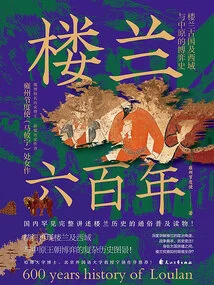
Six Hundred Years of Loulan
History楼兰六百年
Yongzhou Jiedushi
This book is a popular and popular reading about the history of the ancient country of Loulan. The book begins with Loulan's first appearance in the letters written by the Xiongnu to the Han Dynasty during the period of Emperor Wen of Han Dynasty. In chronological order, it combines ancient and modern Chinese and foreign historical documents and various unearthed cultural relics to tell the story of Loulan's survival in different dynasties, trying to solve many questions about Loulan: What race are the Loulan people? What language do Loulan people speak? When was Loulan founded? Where was the capital of Loulan? How did Loulan survive between the Han Dynasty and the Xiongnu? What is Loulan's strategic position on the Silk Road? Why did Loulan suddenly perish? What is the reason for Loulan's disappearance...
This book is a popular and popular reading about the history of the ancient country of Loulan. The book begins with Loulan's first appearance in the letters written by the Xiongnu to the Han Dynasty during the period of Emperor Wen of Han Dynasty. In chronological order, it combines ancient and modern Chinese and foreign historical documents and various unearthed cultural relics to tell the story of Loulan's survival in different dynasties, trying to solve many questions about Loulan: What race are the Loulan people? What language do Loulan people speak? When was Loulan founded? Where was the capital of Loulan? How did Loulan survive between the Han Dynasty and the Xiongnu? What is Loulan's strategic position on the Silk Road? Why did Loulan suddenly perish? What is the reason for Loulan's disappearance...
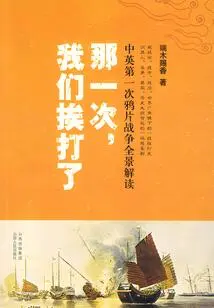
那一次,我们挨打了:中英第一次鸦片战争全景解读
Duanmu Gives Fragrance
This book is a panoramic interpretation of the Opium War between China and Britain from 1840 to 1842. The whole book places the Sub-Opium War in the international context, showing the world's power pattern under a wide-angle lens in the mid-19th century. It describes in detail the comparison of the comprehensive strength of China and Britain, pre-war preparations, war processes, post-war results and impacts, etc., Giving readers a comprehensive and multi-level understanding of the Sub-Opium War. The author hopes to use this panoramic interpretation to show the situation when Western countries were accelerating towards modern civilization, while China was stumbling in autocracy and ignorance. Through this comparison, the author hopes to clarify the fundamental reasons why the Qing Dynasty suffered a complete defeat and was repeatedly beaten during the Opium War: It does not depend on the ability of an emperor, the loyalty of several ministers, or the support of the people. The rotten autocratic system is the main reason for the backwardness and beatings of modern China. The text in this book continues the distinctive style of the author's previous works, with sharp humor and a touch of Internet language ridicule, making it a hearty read. Her knowledge background as a history major makes her writing pay great attention to the authenticity and accuracy of historical facts. Coupled with the author's strong social responsibility, the book is thought-provoking and has endless aftertaste. It is a historical work worthy of the market's expectations.
This book is a panoramic interpretation of the Opium War between China and Britain from 1840 to 1842. The whole book places the Sub-Opium War in the international context, showing the world's power pattern under a wide-angle lens in the mid-19th century. It describes in detail the comparison of the comprehensive strength of China and Britain, pre-war preparations, war processes, post-war results and impacts, etc., Giving readers a comprehensive and multi-level understanding of the Sub-Opium War. The author hopes to use this panoramic interpretation to show the situation when Western countries were accelerating towards modern civilization, while China was stumbling in autocracy and ignorance. Through this comparison, the author hopes to clarify the fundamental reasons why the Qing Dynasty suffered a complete defeat and was repeatedly beaten during the Opium War: It does not depend on the ability of an emperor, the loyalty of several ministers, or the support of the people. The rotten autocratic system is the main reason for the backwardness and beatings of modern China. The text in this book continues the distinctive style of the author's previous works, with sharp humor and a touch of Internet language ridicule, making it a hearty read. Her knowledge background as a history major makes her writing pay great attention to the authenticity and accuracy of historical facts. Coupled with the author's strong social responsibility, the book is thought-provoking and has endless aftertaste. It is a historical work worthy of the market's expectations.
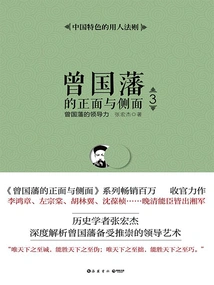
曾国藩的正面与侧面3
Zhang Hongjie
The third part of "The Front and Side of Zeng Guofan" analyzes Zeng Guofan's leadership and the employment rules with Chinese characteristics! "Only the most sincerity in the world can defeat the most hypocritical in the world; only the most clumsy in the world can defeat the most skillful in the world." In the minds of many people, Zeng Guofan is often synonymous with "power and conspiracy", and they feel that Zeng Guofan is a scheming and even cunning person. It should be said that this is a big misunderstanding. Zeng Guofan's principle of treating others is not Machiavellian. When Zeng Guofan dealt with the internal relations of the Hunan Army Group, he followed the principle of "clumsy and sincerity", advocating clumsiness and sincerity. The first characteristic of his treatment of colleagues and subordinates is that he does not use power. The second characteristic is that "if you want to establish yourself, you can help others, and if you want to reach yourself, you can help others." The third characteristic is the word "forgiveness", which means accepting people with a broad mind. "The Front and Side of Zeng Guofan" tells the ups and downs of Zeng Guofan's life and reveals many unknown details. The author shows us a diligent, pragmatic and self-disciplined "Wen Zhenggong" Zeng Guofan, a contradictory and struggling career official embedded in the core of the system. Through Zeng Guofan, readers can get a glimpse of the subtle and complex "hidden rules" of traditional Chinese officialdom and the unique philosophy of survival with Chinese characteristics.
The third part of "The Front and Side of Zeng Guofan" analyzes Zeng Guofan's leadership and the employment rules with Chinese characteristics! "Only the most sincerity in the world can defeat the most hypocritical in the world; only the most clumsy in the world can defeat the most skillful in the world." In the minds of many people, Zeng Guofan is often synonymous with "power and conspiracy", and they feel that Zeng Guofan is a scheming and even cunning person. It should be said that this is a big misunderstanding. Zeng Guofan's principle of treating others is not Machiavellian. When Zeng Guofan dealt with the internal relations of the Hunan Army Group, he followed the principle of "clumsy and sincerity", advocating clumsiness and sincerity. The first characteristic of his treatment of colleagues and subordinates is that he does not use power. The second characteristic is that "if you want to establish yourself, you can help others, and if you want to reach yourself, you can help others." The third characteristic is the word "forgiveness", which means accepting people with a broad mind. "The Front and Side of Zeng Guofan" tells the ups and downs of Zeng Guofan's life and reveals many unknown details. The author shows us a diligent, pragmatic and self-disciplined "Wen Zhenggong" Zeng Guofan, a contradictory and struggling career official embedded in the core of the system. Through Zeng Guofan, readers can get a glimpse of the subtle and complex "hidden rules" of traditional Chinese officialdom and the unique philosophy of survival with Chinese characteristics.
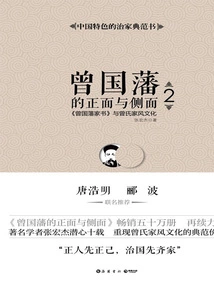
曾国藩的正面与侧面2
Zhang Hongjie
The second part of "The Front and Side of Zeng Guofan" takes a closer look at the "Zeng family", learns about Zeng Guofan from the family culture and the situation of the Zeng family with Zeng Guofan as the core, and leads readers to interpret this model book of family governance with Chinese characteristics - "Zeng Guofan Family Letter". "Rectify oneself first, and govern the country before one's family." As a Confucian, Zeng Guofan's life was based on the logical structure of "The Great Learning". Therefore, he only did four things in his life: self-cultivation, ordering the family, governing the country, and bringing peace to the world. Zeng Guofan's way of managing the family has four points: 1. A strong sense of responsibility for the family, "teaching all my brothers what I know"; 2. Being truthful and frank with the family, sharing his own life experience; 3. The principles are simple and have been verified by his own thinking and verification; 4. Teaching according to people. Of course, if we read "Zeng Guofan Family Letters" in depth, we will also find that no one is perfect, and Zeng Guofan, a famous minister of his generation, also has his shortcomings. "The Front and Side of Zeng Guofan" tells the ups and downs of Zeng Guofan's life and reveals many unknown details. The author shows us a diligent, pragmatic and self-disciplined "Wen Zhenggong" Zeng Guofan, a contradictory and struggling career official embedded in the core of the system. Through Zeng Guofan, readers can get a glimpse of the subtle and complex "hidden rules" of traditional Chinese officialdom and the unique philosophy of survival with Chinese characteristics.
The second part of "The Front and Side of Zeng Guofan" takes a closer look at the "Zeng family", learns about Zeng Guofan from the family culture and the situation of the Zeng family with Zeng Guofan as the core, and leads readers to interpret this model book of family governance with Chinese characteristics - "Zeng Guofan Family Letter". "Rectify oneself first, and govern the country before one's family." As a Confucian, Zeng Guofan's life was based on the logical structure of "The Great Learning". Therefore, he only did four things in his life: self-cultivation, ordering the family, governing the country, and bringing peace to the world. Zeng Guofan's way of managing the family has four points: 1. A strong sense of responsibility for the family, "teaching all my brothers what I know"; 2. Being truthful and frank with the family, sharing his own life experience; 3. The principles are simple and have been verified by his own thinking and verification; 4. Teaching according to people. Of course, if we read "Zeng Guofan Family Letters" in depth, we will also find that no one is perfect, and Zeng Guofan, a famous minister of his generation, also has his shortcomings. "The Front and Side of Zeng Guofan" tells the ups and downs of Zeng Guofan's life and reveals many unknown details. The author shows us a diligent, pragmatic and self-disciplined "Wen Zhenggong" Zeng Guofan, a contradictory and struggling career official embedded in the core of the system. Through Zeng Guofan, readers can get a glimpse of the subtle and complex "hidden rules" of traditional Chinese officialdom and the unique philosophy of survival with Chinese characteristics.
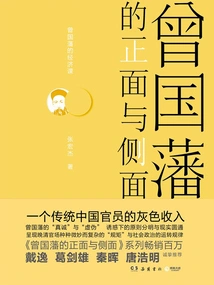
曾国藩的正面与侧面4
Zhang Hongjie
The fourth part of "The Front and Side of Zeng Guofan", Zeng Guofan's "sincerity" and "hypocrisy", interprets the gray income of a traditional Chinese official. Comprehensively interpret Zeng Guofan's "sincerity" and "hypocrisy", his clear principles and reality under temptation; present the various subtle and complex "rules" of the officialdom of the late Qing Dynasty and the operating rules of social politics. This book is not only a research work on Zeng Guofan, but also a research work on the political and social history of the late Qing Dynasty. Observing the economic life of Zeng Guofan from a unique perspective and with exquisite conception, it analyzes the economic status of officials in the late Qing Dynasty and further restores a more three-dimensional and vivid late Qing dynasty. It is a window and a key to unlock the mystery of the economic ecology and the actual operation of the administrative system of the late Qing political circles. "The Front and Side of Zeng Guofan" tells the ups and downs of Zeng Guofan's life and reveals many unknown details. The author shows us a diligent, pragmatic and self-disciplined "Wen Zhenggong" Zeng Guofan, a contradictory and struggling career official embedded in the core of the system. Through Zeng Guofan, readers can get a glimpse of the subtle and complex "hidden rules" of traditional Chinese officialdom and the unique philosophy of survival with Chinese characteristics.
The fourth part of "The Front and Side of Zeng Guofan", Zeng Guofan's "sincerity" and "hypocrisy", interprets the gray income of a traditional Chinese official. Comprehensively interpret Zeng Guofan's "sincerity" and "hypocrisy", his clear principles and reality under temptation; present the various subtle and complex "rules" of the officialdom of the late Qing Dynasty and the operating rules of social politics. This book is not only a research work on Zeng Guofan, but also a research work on the political and social history of the late Qing Dynasty. Observing the economic life of Zeng Guofan from a unique perspective and with exquisite conception, it analyzes the economic status of officials in the late Qing Dynasty and further restores a more three-dimensional and vivid late Qing dynasty. It is a window and a key to unlock the mystery of the economic ecology and the actual operation of the administrative system of the late Qing political circles. "The Front and Side of Zeng Guofan" tells the ups and downs of Zeng Guofan's life and reveals many unknown details. The author shows us a diligent, pragmatic and self-disciplined "Wen Zhenggong" Zeng Guofan, a contradictory and struggling career official embedded in the core of the system. Through Zeng Guofan, readers can get a glimpse of the subtle and complex "hidden rules" of traditional Chinese officialdom and the unique philosophy of survival with Chinese characteristics.
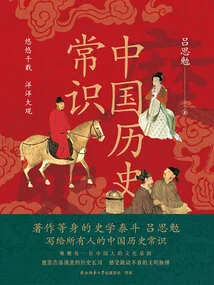
Chinese Historical Knowledge
History中国历史常识
Lu Simian
"Common Sense of Chinese History" is Lu Simian's famous historical work, and it is also my country's first vernacular general history of China. It has been popular at home and abroad for nearly a hundred years since the advent of the Republic of China, and is recognized by many scholars and history enthusiasts. This book is lucidly written, from ancient myths of national origins to the modern revolution of the Republic of China. It provides sophisticated interpretations from political, geographical, social, and cultural aspects, integrating five thousand years of history into one book. This revised version is equipped with a large number of exquisite illustrations to help readers easily get started with Chinese history.
"Common Sense of Chinese History" is Lu Simian's famous historical work, and it is also my country's first vernacular general history of China. It has been popular at home and abroad for nearly a hundred years since the advent of the Republic of China, and is recognized by many scholars and history enthusiasts. This book is lucidly written, from ancient myths of national origins to the modern revolution of the Republic of China. It provides sophisticated interpretations from political, geographical, social, and cultural aspects, integrating five thousand years of history into one book. This revised version is equipped with a large number of exquisite illustrations to help readers easily get started with Chinese history.
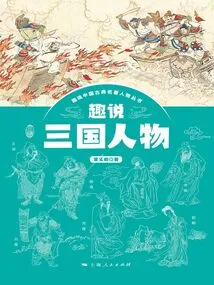
趣说三国人物
Zhang Yihe
There have been several eras of great divisions in Chinese history, but the Three Kingdoms era had the most talents and the most profound influence. The three dynasties of the Three Kingdoms are regarded as the "General Exhibition Hall of Ancient Chinese Talents", and all kinds of talents from all dynasties can be found here. "The Romance of the Three Kingdoms" took more than a thousand years from conception to completion. During these thousands of years, on the one hand, there are historical materials of the Three Kingdoms recorded in the annals and the process of folk evolution of historical facts; on the other hand, through "history telling", acting, novels and other means, the storyline of the Three Kingdoms has been enriched and the characters of the Three Kingdoms have become more complete. Based on a deep understanding of the characters in "The Romance of the Three Kingdoms", this book is divided into characters of the Eastern Han, Wei, Shu, Wu, and Western Jin Dynasties. It uses modern concepts and thinking to interpret the life experience, experience, personality, abilities, and endings of nearly a hundred characters in the book.
There have been several eras of great divisions in Chinese history, but the Three Kingdoms era had the most talents and the most profound influence. The three dynasties of the Three Kingdoms are regarded as the "General Exhibition Hall of Ancient Chinese Talents", and all kinds of talents from all dynasties can be found here. "The Romance of the Three Kingdoms" took more than a thousand years from conception to completion. During these thousands of years, on the one hand, there are historical materials of the Three Kingdoms recorded in the annals and the process of folk evolution of historical facts; on the other hand, through "history telling", acting, novels and other means, the storyline of the Three Kingdoms has been enriched and the characters of the Three Kingdoms have become more complete. Based on a deep understanding of the characters in "The Romance of the Three Kingdoms", this book is divided into characters of the Eastern Han, Wei, Shu, Wu, and Western Jin Dynasties. It uses modern concepts and thinking to interpret the life experience, experience, personality, abilities, and endings of nearly a hundred characters in the book.
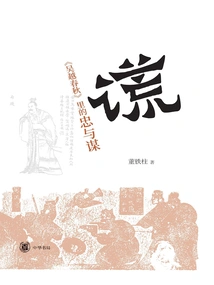
“谎”:《吴越春秋》里的忠与谋
Dong Tiezhu
"Wu Yue Chun Qiu" is a work written by Zhao Ye of the Eastern Han Dynasty that details the historical events of Wu and Yue during the Spring and Autumn Period and the Warring States Period. There has always been controversy about its stylistic nature. This book provides a new perspective and examines "Wu Yue Chun Qiu" in the context of philosophical thought from the Han Dynasty to the Wei and Jin Dynasties. On the basis of in-depth study of the text, in-depth narrative texture, and extensive absorption of cutting-edge theories from international academic circles, "lying" is taken as a main line in the interpretation of "Wu Yue Chun Qiu". All topics are discussed with "lying" as the center. The "lying" referred to in this book has its specific cultural and political connotations. The author not only elaborates on the connotation of "lie" in detail, but also analyzes the type, nature and performance of "lie" in detail. Through the mirror of "lie", the images of important figures in the Spring and Autumn Period such as Gou Jian and Wu Zixu are vividly displayed in front of readers.
"Wu Yue Chun Qiu" is a work written by Zhao Ye of the Eastern Han Dynasty that details the historical events of Wu and Yue during the Spring and Autumn Period and the Warring States Period. There has always been controversy about its stylistic nature. This book provides a new perspective and examines "Wu Yue Chun Qiu" in the context of philosophical thought from the Han Dynasty to the Wei and Jin Dynasties. On the basis of in-depth study of the text, in-depth narrative texture, and extensive absorption of cutting-edge theories from international academic circles, "lying" is taken as a main line in the interpretation of "Wu Yue Chun Qiu". All topics are discussed with "lying" as the center. The "lying" referred to in this book has its specific cultural and political connotations. The author not only elaborates on the connotation of "lie" in detail, but also analyzes the type, nature and performance of "lie" in detail. Through the mirror of "lie", the images of important figures in the Spring and Autumn Period such as Gou Jian and Wu Zixu are vividly displayed in front of readers.
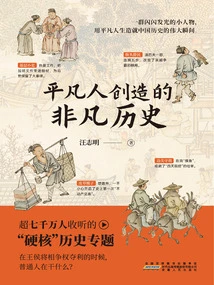
平凡人创造的非凡历史
Wang Zhiming
History books not only record the wonderful lives of princes and generals, but also many ordinary people. History is not a carefully arranged script, and many inconspicuous little people may inadvertently change the direction of history. This book focuses on ordinary people in history and uses a microscopic perspective to tell the major events they caused or experienced. Ordinary people rarely have a Machiavellian mind and are prone to being impulsive, but they also shine with a glimmer of humanity. They may be willing to act as killers with butcher knives in their hands out of righteous indignation, and get involved in the troubled times of the Spring and Autumn Period and the Warring States Period. They may also be greedy for personal gain, frame the pillars, and hasten the demise of a dynasty. Or they may work hard to establish extraordinary achievements in a humble position and protect the peace of all countries. From them we can see the atmosphere of the times and the real life of the people, and we can also discover the causes and imprints of historical changes or major turning points, making the grand history full of flesh and blood and more moving. Beings as small as dust are also the protagonists of history, and they deserve to be seen.
History books not only record the wonderful lives of princes and generals, but also many ordinary people. History is not a carefully arranged script, and many inconspicuous little people may inadvertently change the direction of history. This book focuses on ordinary people in history and uses a microscopic perspective to tell the major events they caused or experienced. Ordinary people rarely have a Machiavellian mind and are prone to being impulsive, but they also shine with a glimmer of humanity. They may be willing to act as killers with butcher knives in their hands out of righteous indignation, and get involved in the troubled times of the Spring and Autumn Period and the Warring States Period. They may also be greedy for personal gain, frame the pillars, and hasten the demise of a dynasty. Or they may work hard to establish extraordinary achievements in a humble position and protect the peace of all countries. From them we can see the atmosphere of the times and the real life of the people, and we can also discover the causes and imprints of historical changes or major turning points, making the grand history full of flesh and blood and more moving. Beings as small as dust are also the protagonists of history, and they deserve to be seen.
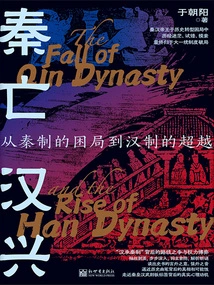
秦亡汉兴: 从秦制的困局到汉制的超越
Yu Chaoyang
From the First Emperor of Qin to Emperor Wu of the Han Dynasty, several generations of emperors blazed a new trail in the midst of centuries of hardship. Together, they completed a great change in China's political system - from co-ruling the world and establishing separate states to a unified country with centralized power and supremacy of imperial power. This had a profound impact on the politics and history of the next two thousand years. This book takes the national policy changes of the Han Dynasty and the Qin Dynasty as its main theme, from the collapse of the Zhou Dynasty to the establishment of the Qin Dynasty, to the Han's inheritance of the Qin Dynasty, and finally to the mature Han Dynasty, unfolding the picture of the Qin and Han system changes for readers. Starting from the four dimensions of era, characters, factions, and culture, through micro-level psychological analysis of characters and decision-making of famous emperors and generals from Emperor Qin to Han Wu, combined with macro-level trend deduction, using important historical events as nodes and starting points, it provides readers with an in-depth analysis of the internal affairs of historical figures. The decision-making logic of the heart not only shows the outstanding talents of historical figures in "heroes make the times", but also shows the limitations and difficulties of "the times make heroes" that historical figures cannot escape. It tries its best to show readers in the era of great changes, how each familiar historical celebrity stands out, and why it is difficult to distinguish their merits and demerits.
From the First Emperor of Qin to Emperor Wu of the Han Dynasty, several generations of emperors blazed a new trail in the midst of centuries of hardship. Together, they completed a great change in China's political system - from co-ruling the world and establishing separate states to a unified country with centralized power and supremacy of imperial power. This had a profound impact on the politics and history of the next two thousand years. This book takes the national policy changes of the Han Dynasty and the Qin Dynasty as its main theme, from the collapse of the Zhou Dynasty to the establishment of the Qin Dynasty, to the Han's inheritance of the Qin Dynasty, and finally to the mature Han Dynasty, unfolding the picture of the Qin and Han system changes for readers. Starting from the four dimensions of era, characters, factions, and culture, through micro-level psychological analysis of characters and decision-making of famous emperors and generals from Emperor Qin to Han Wu, combined with macro-level trend deduction, using important historical events as nodes and starting points, it provides readers with an in-depth analysis of the internal affairs of historical figures. The decision-making logic of the heart not only shows the outstanding talents of historical figures in "heroes make the times", but also shows the limitations and difficulties of "the times make heroes" that historical figures cannot escape. It tries its best to show readers in the era of great changes, how each familiar historical celebrity stands out, and why it is difficult to distinguish their merits and demerits.
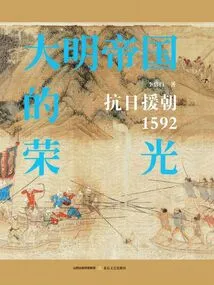
大明帝国的荣光:抗日援朝1592
Li Haobai
In the twentieth year of Wanli (1592), Japan brazenly launched an aggressive war against North Korea and the Ming Dynasty of China. At the request of the Korean king, Zhu Yijun, the Wanli Emperor of the Ming Dynasty, resolutely sent the famous general Li Rusong to the Eastern Expedition to resist Japan and aid Korea, and fertile the Korean Peninsula with blood. Everyone has their own feelings and judgments about history. The author adopts the method of "Zuo Zhuan" to make the decision before success or failure, using people to lead the affairs, and vividly shows the strategies of the various forces and the wit of the generals before the war. In the book, the image of each character is so distinct, and the connotation of each character is so rich. Wanli's victory in resisting Japan and aiding Korea had a decisive impact on the development of the Asian pattern.
In the twentieth year of Wanli (1592), Japan brazenly launched an aggressive war against North Korea and the Ming Dynasty of China. At the request of the Korean king, Zhu Yijun, the Wanli Emperor of the Ming Dynasty, resolutely sent the famous general Li Rusong to the Eastern Expedition to resist Japan and aid Korea, and fertile the Korean Peninsula with blood. Everyone has their own feelings and judgments about history. The author adopts the method of "Zuo Zhuan" to make the decision before success or failure, using people to lead the affairs, and vividly shows the strategies of the various forces and the wit of the generals before the war. In the book, the image of each character is so distinct, and the connotation of each character is so rich. Wanli's victory in resisting Japan and aiding Korea had a decisive impact on the development of the Asian pattern.
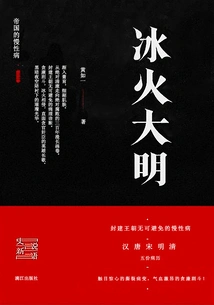
冰火大明:帝国的慢性病
Huang Ruyi
The Ming Dynasty was the relatively cleanest and toughest dynasty in history, but it still could not escape the historical laws of the feudal empire. This book begins with Ming Taizu's iron-fisted governance of the country, from the absolute incorruptibility and zero tolerance at the beginning of the founding of the People's Republic of China, to the gradual emergence of slight cracks, and finally to the fact that it became difficult to recover and finally paid the heaviest price. From the perspectives of finance, imperial examinations, and court regulations, the history of the Ming Dynasty for more than 300 years is described in detail. From the "Four Major Cases of Hongwu" in the Zhu Yuanzhang period, to the "Change of Seizing the Gate" of Emperor Jingtai, to the "three pavilions made of paper and six ministers of clay" in the Xianzong Dynasty. Among them are loyal people with innocent hearts, sinners who have been despised by history through the ages, and court villains who blindly protect themselves. Zhu Yuanzhang, Yu Qian, Tang Bohu, Zhang Juzheng, Wei Zhongxian... These well-known historical figures have brought us new inspiration through the author's narration.
The Ming Dynasty was the relatively cleanest and toughest dynasty in history, but it still could not escape the historical laws of the feudal empire. This book begins with Ming Taizu's iron-fisted governance of the country, from the absolute incorruptibility and zero tolerance at the beginning of the founding of the People's Republic of China, to the gradual emergence of slight cracks, and finally to the fact that it became difficult to recover and finally paid the heaviest price. From the perspectives of finance, imperial examinations, and court regulations, the history of the Ming Dynasty for more than 300 years is described in detail. From the "Four Major Cases of Hongwu" in the Zhu Yuanzhang period, to the "Change of Seizing the Gate" of Emperor Jingtai, to the "three pavilions made of paper and six ministers of clay" in the Xianzong Dynasty. Among them are loyal people with innocent hearts, sinners who have been despised by history through the ages, and court villains who blindly protect themselves. Zhu Yuanzhang, Yu Qian, Tang Bohu, Zhang Juzheng, Wei Zhongxian... These well-known historical figures have brought us new inspiration through the author's narration.
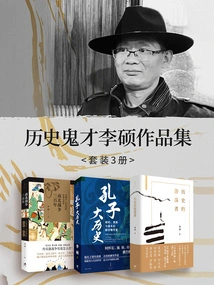
历史鬼才李硕作品集(套装3册)
Li Shuo
"The Great History of Confucius": Li Shuo describes the life and world of the saint in detail, restores the truth of Confucius' life, and reveals the hidden secrets that have not been revealed for thousands of years. Taking the life of Confucius as a microcosm, it fully demonstrates the style of aristocratic society in the Spring and Autumn Period. "Three Hundred Years of the Civil War": How to fight a cold weapon war? Li Shuo wrote about the details of arms and tactics, corrected the deficiencies in history and ancient books, revealed the truth about the changes in the Six Dynasties, and described the troubled times of blood and sword disputes. "The Wanderer of History": Li Shuo's courageous work, 12 episodes of academic wandering, and 3,000 years of time and space travel. This book has a broad vision, taking into account many fields such as political history, social history, legal history, and intellectual history. In addition to sorting out historical materials and constructing stories, it also has insight into people's hearts and strives to restore the little-known subtleties and truths in the depths of time.
"The Great History of Confucius": Li Shuo describes the life and world of the saint in detail, restores the truth of Confucius' life, and reveals the hidden secrets that have not been revealed for thousands of years. Taking the life of Confucius as a microcosm, it fully demonstrates the style of aristocratic society in the Spring and Autumn Period. "Three Hundred Years of the Civil War": How to fight a cold weapon war? Li Shuo wrote about the details of arms and tactics, corrected the deficiencies in history and ancient books, revealed the truth about the changes in the Six Dynasties, and described the troubled times of blood and sword disputes. "The Wanderer of History": Li Shuo's courageous work, 12 episodes of academic wandering, and 3,000 years of time and space travel. This book has a broad vision, taking into account many fields such as political history, social history, legal history, and intellectual history. In addition to sorting out historical materials and constructing stories, it also has insight into people's hearts and strives to restore the little-known subtleties and truths in the depths of time.
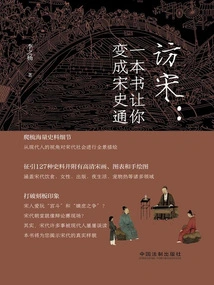
访宋:一本书让你变成宋史通
Li Zhiyang
What this book presents is not "a report card of the Song Dynasty", but "the production methods, lifestyles, ways of thinking, and behaviors that modern people think did not exist in ancient times, and most probably did not exist in 'other ancient times', but the Song Dynasty had them." Can you imagine that the people of the Song Dynasty also loved staying up late and sucking cats as much as you do, that the emperors and common people of the Song Dynasty also ate takeaways like you, and that the salary levels of senior officials in the Song Dynasty were not as good as those of the rich in 18th-tier counties as in modern times? The author of this book has studied the history of the Song Dynasty for many years. He cites 127 historical materials in the book and attaches high-definition Song paintings, charts and hand-drawn drawings to restore the true style of the Song Dynasty for you and provide a panoramic view of how all classes in the Song Dynasty lived their daily lives. After reading this book, you may find that many modern people still have some misunderstandings about the Song Dynasty.
What this book presents is not "a report card of the Song Dynasty", but "the production methods, lifestyles, ways of thinking, and behaviors that modern people think did not exist in ancient times, and most probably did not exist in 'other ancient times', but the Song Dynasty had them." Can you imagine that the people of the Song Dynasty also loved staying up late and sucking cats as much as you do, that the emperors and common people of the Song Dynasty also ate takeaways like you, and that the salary levels of senior officials in the Song Dynasty were not as good as those of the rich in 18th-tier counties as in modern times? The author of this book has studied the history of the Song Dynasty for many years. He cites 127 historical materials in the book and attaches high-definition Song paintings, charts and hand-drawn drawings to restore the true style of the Song Dynasty for you and provide a panoramic view of how all classes in the Song Dynasty lived their daily lives. After reading this book, you may find that many modern people still have some misunderstandings about the Song Dynasty.
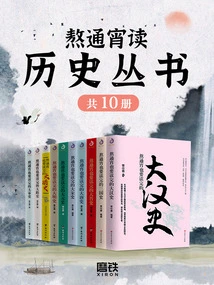
熬通宵读历史丛书(共10册)
Qin Shiyong
The set has 10 volumes in total, including "The History of the Qin Dynasty that needs to be read all night long", "The History of the Han Dynasty that needs to be read even if you stay up all night", "The History of the Three Kingdoms that needs to be read even if you stay up all night", "The History of the Jin Dynasty that needs to be read even if you stay up all night", "The History of the Great Jin Dynasty that needs to be read even if you stay up all night" "The History of the Song Dynasty", "The History of the Sui Dynasty that you need to stay up all night to read", "The History of the Tang Dynasty that you need to stay up all night to read", "The History of the Yuan Dynasty that you need to stay up all night to read", "The History of the Ming Dynasty that you need to stay up all night to read", "The History of the Qing Dynasty that you need to stay up all night to read".
The set has 10 volumes in total, including "The History of the Qin Dynasty that needs to be read all night long", "The History of the Han Dynasty that needs to be read even if you stay up all night", "The History of the Three Kingdoms that needs to be read even if you stay up all night", "The History of the Jin Dynasty that needs to be read even if you stay up all night", "The History of the Great Jin Dynasty that needs to be read even if you stay up all night" "The History of the Song Dynasty", "The History of the Sui Dynasty that you need to stay up all night to read", "The History of the Tang Dynasty that you need to stay up all night to read", "The History of the Yuan Dynasty that you need to stay up all night to read", "The History of the Ming Dynasty that you need to stay up all night to read", "The History of the Qing Dynasty that you need to stay up all night to read".
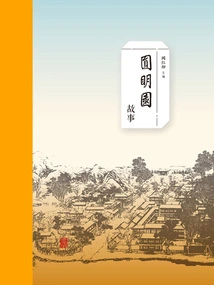
Old Summer Palace Story
History圆明园故事
Editor-in-chief Kan Hongliu
The "Garden of Ten Thousand Gardens", the Old Summer Palace, is a window for in-depth understanding of the history, palace life, and royal gardens of the Qing Dynasty. This book is divided into three parts: "The Emperor and the Empress in the Imperial Garden", "Reminiscing about Old News on the Range Rover" and "How Many People and Things", with a total of more than 30 articles. It brings together many scholars of Qing history to talk about the story of the Old Summer Palace that is closer to history, outlines the art and humanistic activities of the royal gardens in a delicate way, and pursues the lost "Garden of Ten Thousand Gardens".
The "Garden of Ten Thousand Gardens", the Old Summer Palace, is a window for in-depth understanding of the history, palace life, and royal gardens of the Qing Dynasty. This book is divided into three parts: "The Emperor and the Empress in the Imperial Garden", "Reminiscing about Old News on the Range Rover" and "How Many People and Things", with a total of more than 30 articles. It brings together many scholars of Qing history to talk about the story of the Old Summer Palace that is closer to history, outlines the art and humanistic activities of the royal gardens in a delicate way, and pursues the lost "Garden of Ten Thousand Gardens".
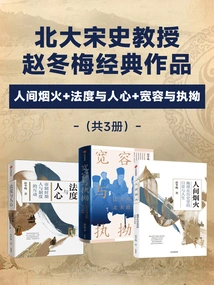
赵冬梅经典作品(套装共3册)
Zhao Dongmei
"Tolerance and Stubbornness" centers on the growth path, life experience and social activities of Sima Guang, a historian, politician and great Confucian of the Northern Song Dynasty. It tells the historical changes of the five dynasties that his life spanned from Zhenzong, Renzong, Yingzong, Shenzong to Zhezong, as well as the interactions, grievances and entanglements of famous officials in the political arena of the Northern Song Dynasty such as Wang Anshi, Fan Zhongyan, Ouyang Xiu, Bao Zheng and the Su Shi brothers. "Fireworks in the World - Daily Life and Life Buried in History" is a popular historical work that interprets the history of daily life in ancient China in a simple and in-depth way. The author provides a thorough interpretation and in-depth care of the fate of individuals in ancient history from the microscopic perspective of ancient people's clothing, food, housing, transportation, walking, sitting, and lying down. "Laws and Human Hearts - The Interaction between People and Systems in the Imperial Period" is a popular book for ordinary readers that comprehensively explains the entanglements between people and systems in the imperial period, based on 30 years of historical research by teacher Zhao Dongmei, an expert on Song history from Peking University. This book consists of three parts: institutional history, cultural history, and intensive reading of historical works. The author changes the serious stereotype of institutional narratives, and uses a relaxed and lively way to think about institutional changes, understand the gains and losses of previous institutions, and tell the relationship between the system and people at different levels from national stories, group stories, and individual stories. Compared with other writers of institutional history, the author puts more emphasis on "paying attention to the life and destiny of individuals from a historical perspective."
"Tolerance and Stubbornness" centers on the growth path, life experience and social activities of Sima Guang, a historian, politician and great Confucian of the Northern Song Dynasty. It tells the historical changes of the five dynasties that his life spanned from Zhenzong, Renzong, Yingzong, Shenzong to Zhezong, as well as the interactions, grievances and entanglements of famous officials in the political arena of the Northern Song Dynasty such as Wang Anshi, Fan Zhongyan, Ouyang Xiu, Bao Zheng and the Su Shi brothers. "Fireworks in the World - Daily Life and Life Buried in History" is a popular historical work that interprets the history of daily life in ancient China in a simple and in-depth way. The author provides a thorough interpretation and in-depth care of the fate of individuals in ancient history from the microscopic perspective of ancient people's clothing, food, housing, transportation, walking, sitting, and lying down. "Laws and Human Hearts - The Interaction between People and Systems in the Imperial Period" is a popular book for ordinary readers that comprehensively explains the entanglements between people and systems in the imperial period, based on 30 years of historical research by teacher Zhao Dongmei, an expert on Song history from Peking University. This book consists of three parts: institutional history, cultural history, and intensive reading of historical works. The author changes the serious stereotype of institutional narratives, and uses a relaxed and lively way to think about institutional changes, understand the gains and losses of previous institutions, and tell the relationship between the system and people at different levels from national stories, group stories, and individual stories. Compared with other writers of institutional history, the author puts more emphasis on "paying attention to the life and destiny of individuals from a historical perspective."
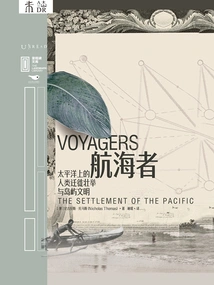
航海者:太平洋上的人类迁徙壮举与岛屿文明(里程碑文库)
(australia) Nicholas Thomas
A classic masterpiece by the author who won the 2010 Wolfson History Prize. The Wall Street Journal's top ten best books of 2021. Thousands of islands are scattered across the vast Pacific Ocean, inhabited by many different peoples. Beginning with Captain James Cook in the 16th century, European explorers who visited the Pacific were shocked to see people thriving thousands of kilometers away from the mainland. Who are these people? Where do they come from? How did they arrive and disperse across such a vast ocean of islands? The distinguished anthropologist Nicholas Thomas charts the migrations of humans between the islands of Asia and the Americas starting in late prehistory, and the seafaring technology that made these epic voyages possible. This book allows you to quickly understand the island civilization in the Pacific, while also experiencing the myths, history and customs of the islanders in an all-round and multi-dimensional way.
A classic masterpiece by the author who won the 2010 Wolfson History Prize. The Wall Street Journal's top ten best books of 2021. Thousands of islands are scattered across the vast Pacific Ocean, inhabited by many different peoples. Beginning with Captain James Cook in the 16th century, European explorers who visited the Pacific were shocked to see people thriving thousands of kilometers away from the mainland. Who are these people? Where do they come from? How did they arrive and disperse across such a vast ocean of islands? The distinguished anthropologist Nicholas Thomas charts the migrations of humans between the islands of Asia and the Americas starting in late prehistory, and the seafaring technology that made these epic voyages possible. This book allows you to quickly understand the island civilization in the Pacific, while also experiencing the myths, history and customs of the islanders in an all-round and multi-dimensional way.
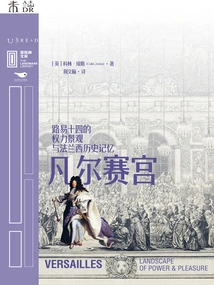
凡尔赛宫:路易十四的权力景观与法兰西历史记忆(里程碑文库)
J
When Louis XIII set out to build his hunting palace in sparsely populated Versailles in 1623, he must not have imagined that this small two-story building would be expanded by his son Louis XIV into a magnificent, gorgeous and luxurious palace complex in Europe. For hundreds of years, this unique "French garden" has witnessed France's glorious and turbulent history, and has also triggered imitation by European countries. In this book, French history expert Colin Jones uses the latest research results to explain the unusual rise and fall of the Palace of Versailles, examines its process from construction and repair to becoming an eternal historical heritage, and explores how this pearl in the treasure house of human art gradually gained a status comparable to myth from a landscape architecture that demonstrated royal power, and finally became a symbol of French historical memory.
When Louis XIII set out to build his hunting palace in sparsely populated Versailles in 1623, he must not have imagined that this small two-story building would be expanded by his son Louis XIV into a magnificent, gorgeous and luxurious palace complex in Europe. For hundreds of years, this unique "French garden" has witnessed France's glorious and turbulent history, and has also triggered imitation by European countries. In this book, French history expert Colin Jones uses the latest research results to explain the unusual rise and fall of the Palace of Versailles, examines its process from construction and repair to becoming an eternal historical heritage, and explores how this pearl in the treasure house of human art gradually gained a status comparable to myth from a landscape architecture that demonstrated royal power, and finally became a symbol of French historical memory.
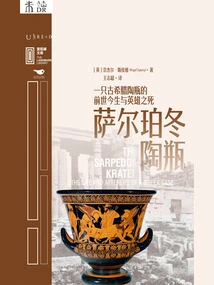
The Sarpedon Vase: the Past, Present and Heroic Death of an Ancient Greek Vase (milestone Library)
History萨尔珀冬陶瓶:一只古希腊陶瓶的前世今生与英雄之死(里程碑文库)
(uk)nigel Spivey
The Sarpedon vase was once the pride of the Metropolitan Museum of Art in New York. This cocktail shaker, made by the Athenian potter Oxiteos and the painter Euphronios, is actually only 45.7 Centimeters high, but that does not prevent it from becoming the first ancient Greek pottery bottle to sell for a million dollars on the art market, nor does it prevent a series of bizarre events comparable to Hollywood suspense blockbusters from being related to it. In this book, British classical scholar Nigel Spivey will lead us to a "close" appreciation of this "hot pot" (the nickname of the pottery bottle) from the late 6th century BC, to see why it is so small and expensive, why it seems to always be "scandalous", and most importantly - the image of "Death and Sleep carrying Sarpedon's corpse" on the bottle, especially the arm of the dead, has affected the inheritance and development of Western art for thousands of years.
The Sarpedon vase was once the pride of the Metropolitan Museum of Art in New York. This cocktail shaker, made by the Athenian potter Oxiteos and the painter Euphronios, is actually only 45.7 Centimeters high, but that does not prevent it from becoming the first ancient Greek pottery bottle to sell for a million dollars on the art market, nor does it prevent a series of bizarre events comparable to Hollywood suspense blockbusters from being related to it. In this book, British classical scholar Nigel Spivey will lead us to a "close" appreciation of this "hot pot" (the nickname of the pottery bottle) from the late 6th century BC, to see why it is so small and expensive, why it seems to always be "scandalous", and most importantly - the image of "Death and Sleep carrying Sarpedon's corpse" on the bottle, especially the arm of the dead, has affected the inheritance and development of Western art for thousands of years.
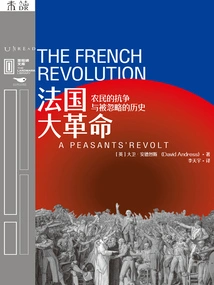
法国大革命:农民的抗争与被忽略的历史(里程碑文库)
(uk) David Andres
In this book, David Andrés makes a shocking statement: It was the French peasant class that made the Revolution of 1789 a victory and defended its final results. For a long time, when people talked about this revolution, they only focused on the French aristocracy, elites, and citizens. But in fact, the struggle of the peasant class benefited a wider group of people and had a greater impact. Historical works devote more space to telling the stories of Robespierre, Danton, and Napoleon, but ignore the French farmers who took the lead in rising up in this revolution, and their active role in desperately defending their political rights and the rights of the people at the bottom. This book shows us a rural world full of conscience, diligence and down-to-earth, and shows how people in this world struggle to defend their lives and work hard for future generations and the collective.
In this book, David Andrés makes a shocking statement: It was the French peasant class that made the Revolution of 1789 a victory and defended its final results. For a long time, when people talked about this revolution, they only focused on the French aristocracy, elites, and citizens. But in fact, the struggle of the peasant class benefited a wider group of people and had a greater impact. Historical works devote more space to telling the stories of Robespierre, Danton, and Napoleon, but ignore the French farmers who took the lead in rising up in this revolution, and their active role in desperately defending their political rights and the rights of the people at the bottom. This book shows us a rural world full of conscience, diligence and down-to-earth, and shows how people in this world struggle to defend their lives and work hard for future generations and the collective.
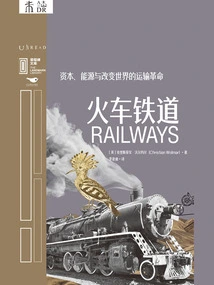
火车铁道:资本、能源与改变世界的运输革命(里程碑文库)
N
After a new world is born, everyone will begin to get used to its existence. From horse-drawn railways to today's high-speed railways, the century-old history of trains and railways is completely recorded. Trains and railways are pioneers of the economy and a booster of the process of human civilization. Capital, energy, technology, revolution, country, war, industrialists, reformers, politicians, businessmen... A history of trains and railways is a brief history of the modern world. Christian Warmer uses the development of trains and railways as a clue to comprehensively demonstrate the impact of the invention of railways on everyone in the past 200 years. From the establishment of the nine-to-five work system, to people's living, eating and entertainment styles, to the international pattern, history has been restored to its original appearance in a changing and flowing world.
After a new world is born, everyone will begin to get used to its existence. From horse-drawn railways to today's high-speed railways, the century-old history of trains and railways is completely recorded. Trains and railways are pioneers of the economy and a booster of the process of human civilization. Capital, energy, technology, revolution, country, war, industrialists, reformers, politicians, businessmen... A history of trains and railways is a brief history of the modern world. Christian Warmer uses the development of trains and railways as a clue to comprehensively demonstrate the impact of the invention of railways on everyone in the past 200 years. From the establishment of the nine-to-five work system, to people's living, eating and entertainment styles, to the international pattern, history has been restored to its original appearance in a changing and flowing world.
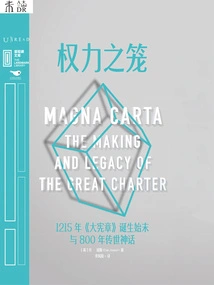
The Cage of Power: the Birth of Magna Carta in 1215 and the 800-year-old Myth (milestone Library)
History权力之笼:1215年《大宪章》诞生始末与800年传世神话(里程碑文库)
I
One day in the summer of 1215, at Runnymede on the Thames, John, the "Landless King", was forced by a group of feudal nobles to sign a document that although neither party was satisfied with, would eventually change future generations - the 1215 Magna Carta. This document was of great significance and far-reaching influence. It not only established the concept of "habeas corpus", but also put the originally arrogant royal power in a cage, laying the foundation for the British constitutional monarchy. But the question is, more than 800 years have passed, why are people still talking about this boring document full of technical details? In this book, the famous British historian Dan Jones takes us back to the Plantagenet Dynasty with a wonderful pen, and re-examines the background, process and impact of the birth of this document, especially how it obtained its unprecedented historical status.
One day in the summer of 1215, at Runnymede on the Thames, John, the "Landless King", was forced by a group of feudal nobles to sign a document that although neither party was satisfied with, would eventually change future generations - the 1215 Magna Carta. This document was of great significance and far-reaching influence. It not only established the concept of "habeas corpus", but also put the originally arrogant royal power in a cage, laying the foundation for the British constitutional monarchy. But the question is, more than 800 years have passed, why are people still talking about this boring document full of technical details? In this book, the famous British historian Dan Jones takes us back to the Plantagenet Dynasty with a wonderful pen, and re-examines the background, process and impact of the birth of this document, especially how it obtained its unprecedented historical status.
帝王将相的38种活法
Ai Gongzi
38 typical imperial elites and 38 ways of life cover the life patterns of all elites in ancient China, virtually forming a miniature history of China. What this book hopes to do is to tear off labels and stereotypes, reconstruct the richness of each period of history and life, and restore as diverse and complex details as possible. We don't even dare to draw conclusions about any of the biographies we write about. We just want to use a slightly colder brushstrokes to arrive at a relatively accurate historical situation. Although we still carry the moral law in our hearts, we are always just spectators of other people's lives.
38 typical imperial elites and 38 ways of life cover the life patterns of all elites in ancient China, virtually forming a miniature history of China. What this book hopes to do is to tear off labels and stereotypes, reconstruct the richness of each period of history and life, and restore as diverse and complex details as possible. We don't even dare to draw conclusions about any of the biographies we write about. We just want to use a slightly colder brushstrokes to arrive at a relatively accurate historical situation. Although we still carry the moral law in our hearts, we are always just spectators of other people's lives.
权力的困境: 武则天和她的时代
Li Xiaomiao
In the era in which she lived, Wu Zetian, faced with the dilemma of power, could only make "choices without choices" again and again. Her life experience was the result of historical necessity and individual choices. It can be said that it was historical destiny that created a generation of queens. The reason why Wu Zetian is still a huge topic today may not necessarily be because of the mysteries and legends, but because thousands of years have passed and society has developed to this day. People have been dragged away from the shackles of feudalism, have more rights, and bear more responsibilities. However, the power dilemma Wu Zetian encountered a thousand years ago still resonates with modern people to a certain extent. Sometimes, historical figures and our contemporary people are like neighbors living on different floors. Although they don't often meet, their presence can be felt all the time.
In the era in which she lived, Wu Zetian, faced with the dilemma of power, could only make "choices without choices" again and again. Her life experience was the result of historical necessity and individual choices. It can be said that it was historical destiny that created a generation of queens. The reason why Wu Zetian is still a huge topic today may not necessarily be because of the mysteries and legends, but because thousands of years have passed and society has developed to this day. People have been dragged away from the shackles of feudalism, have more rights, and bear more responsibilities. However, the power dilemma Wu Zetian encountered a thousand years ago still resonates with modern people to a certain extent. Sometimes, historical figures and our contemporary people are like neighbors living on different floors. Although they don't often meet, their presence can be felt all the time.
传承:百年家族背后的中国史
Ai Gongzi
"Heritage: Chinese History Behind a Century-old Family" is a popular history book about famous families in history. This book selects 38 famous families in history. These families may have lasted for hundreds or even thousands of years, or they may have had celebrities emerge in succession. This book combs through the origins, rise and fall of each of these families, narrates the deeds of famous figures from each family, and explains the success of these families. For a family, the inheritance of material wealth often only lasts two or three generations, while the inheritance of spiritual culture can benefit several or even dozens of generations. The success of these famous families in history is often precisely because they pay attention to inheriting spiritual culture. This book tells the story of how these centuries-old families pass on their spiritual wealth through the specific stories of each family.
"Heritage: Chinese History Behind a Century-old Family" is a popular history book about famous families in history. This book selects 38 famous families in history. These families may have lasted for hundreds or even thousands of years, or they may have had celebrities emerge in succession. This book combs through the origins, rise and fall of each of these families, narrates the deeds of famous figures from each family, and explains the success of these families. For a family, the inheritance of material wealth often only lasts two or three generations, while the inheritance of spiritual culture can benefit several or even dozens of generations. The success of these famous families in history is often precisely because they pay attention to inheriting spiritual culture. This book tells the story of how these centuries-old families pass on their spiritual wealth through the specific stories of each family.
疑案里的中国史2
Ai Gongzi
Ai Gongzi's new work, "If history is a long river, then the mysteries in history are like water ripples on the river surface, rising with the wind and spreading layer by layer. And through the ripples, we can glimpse the ecology under the water, and thus have a deeper perception of the entire history. This book selects 40 independent historical mysteries, and uses a news feature-style writing style to analyze them piece by piece, peel off the cocoons, constantly focus on the historical reality, and dig deeper into the history. Historical significance. From the unsolved historical cases for thousands of years, to the mysteries in the gaps in ancient books, and to the truth behind the history and legends. Now, please follow our strokes to see the water lines of the long river of history, and the undercurrents beneath the water lines. The sequel of "The History of China in Mysteries" contains 40 various bizarre cases and 40 hearty historical reasonings. Through the ripples of the mysterious cases, you can see the full picture of the long river of history.
Ai Gongzi's new work, "If history is a long river, then the mysteries in history are like water ripples on the river surface, rising with the wind and spreading layer by layer. And through the ripples, we can glimpse the ecology under the water, and thus have a deeper perception of the entire history. This book selects 40 independent historical mysteries, and uses a news feature-style writing style to analyze them piece by piece, peel off the cocoons, constantly focus on the historical reality, and dig deeper into the history. Historical significance. From the unsolved historical cases for thousands of years, to the mysteries in the gaps in ancient books, and to the truth behind the history and legends. Now, please follow our strokes to see the water lines of the long river of history, and the undercurrents beneath the water lines. The sequel of "The History of China in Mysteries" contains 40 various bizarre cases and 40 hearty historical reasonings. Through the ripples of the mysterious cases, you can see the full picture of the long river of history.
Why the Empire: Looking at the History of China from a Financial Perspective (why the China Series)
History何以帝国:从财政视角再看中华史(何以中国丛书)
Liu Shougang
Uncover the hidden financial logic behind three thousand years of Chinese history. The history of money is not only "finance", but also "politics". The demise of many dynasties was fundamentally determined by finances. The fate of the dynasty could not be changed even by the wise and foolish emperors and generals. Follow the money and see a different Chinese history. In any time and space, the game of wealth can tear a hole in history. From this section, readers can see the competition between forces of all parties and understand the true driving force for the forward development of history. For the Chinese Empire, the history of money is not only "finance", but also "politics". This book has a total of thirty chapters, starting from the early taxation in the pre-Qin Dynasty to the tax branch in the late Qing Dynasty. By answering historical questions one by one, it uses financial clues to reorganize the growth process of ancient China and explains many historical phenomena from the perspective of money. Each lecture in the book revolves around three clues: the changing trajectories of the three elements of the fiscal system, revenue, expenditure, and management, in historical time and space; looking at the continuous growth of the Chinese country from the perspective of changes in the fiscal system; and the historical process of the coercive power in the fiscal field gradually realizing publicization from the private power of the monarch. Follow the money and see a different Chinese history.
Uncover the hidden financial logic behind three thousand years of Chinese history. The history of money is not only "finance", but also "politics". The demise of many dynasties was fundamentally determined by finances. The fate of the dynasty could not be changed even by the wise and foolish emperors and generals. Follow the money and see a different Chinese history. In any time and space, the game of wealth can tear a hole in history. From this section, readers can see the competition between forces of all parties and understand the true driving force for the forward development of history. For the Chinese Empire, the history of money is not only "finance", but also "politics". This book has a total of thirty chapters, starting from the early taxation in the pre-Qin Dynasty to the tax branch in the late Qing Dynasty. By answering historical questions one by one, it uses financial clues to reorganize the growth process of ancient China and explains many historical phenomena from the perspective of money. Each lecture in the book revolves around three clues: the changing trajectories of the three elements of the fiscal system, revenue, expenditure, and management, in historical time and space; looking at the continuous growth of the Chinese country from the perspective of changes in the fiscal system; and the historical process of the coercive power in the fiscal field gradually realizing publicization from the private power of the monarch. Follow the money and see a different Chinese history.
探源红色根脉:衙前农民运动
Compiled By Zhou Donghua
This book is a public history book that tells the story of the Yaqian Peasant Movement, the red root of Zhejiang Province. It was compiled for the editor. The Yaqian peasant movement that occurred in Xiaoshan, Zhejiang was the first peasant movement led by the Communist Party of China. It opened the prelude to the peasant revolution led by the Communist Party of China. This also made the Yaqian peasant movement occupy a very important position in the history of the Communist Party of China. The author uses archival documents to sort out the ideological foundation, organizational foundation, and class foundation of this movement, introduces rural education and rural governance related to the movement, and specifically shows the deeds of various advanced figures in this movement. All these make this book both academic and readable, with good academic value and social benefits.
This book is a public history book that tells the story of the Yaqian Peasant Movement, the red root of Zhejiang Province. It was compiled for the editor. The Yaqian peasant movement that occurred in Xiaoshan, Zhejiang was the first peasant movement led by the Communist Party of China. It opened the prelude to the peasant revolution led by the Communist Party of China. This also made the Yaqian peasant movement occupy a very important position in the history of the Communist Party of China. The author uses archival documents to sort out the ideological foundation, organizational foundation, and class foundation of this movement, introduces rural education and rural governance related to the movement, and specifically shows the deeds of various advanced figures in this movement. All these make this book both academic and readable, with good academic value and social benefits.
野史未必假
Wang Lei
From the Three Sovereigns and Five Emperors to the Ming and Qing Dynasties, we will reveal the historical truth in popular unofficial history for you! This book analyzes 22 popular unofficial histories in Chinese history from Three Dynasties and Five Emperors to the Ming and Qing Dynasties. It reveals the historical truth in popular unofficial histories through scene reproduction, historical data collection, and logical reasoning. Is Qin Shihuang's biological father Lu Buwei? Did Song Taizong kill his brother and usurp the throne? Did Zheng He go to the Western Seas to find Emperor Jianwen? Was Yongzheng's accession to the throne a false edict to seize the direct descendants? Pretending to be a princess for more than 20 years without anyone finding out? Which of the two "Prince Chongzhen" in the north and south is the fake? ...Rumors do not appear out of thin air, the truth is often hidden within them.
From the Three Sovereigns and Five Emperors to the Ming and Qing Dynasties, we will reveal the historical truth in popular unofficial history for you! This book analyzes 22 popular unofficial histories in Chinese history from Three Dynasties and Five Emperors to the Ming and Qing Dynasties. It reveals the historical truth in popular unofficial histories through scene reproduction, historical data collection, and logical reasoning. Is Qin Shihuang's biological father Lu Buwei? Did Song Taizong kill his brother and usurp the throne? Did Zheng He go to the Western Seas to find Emperor Jianwen? Was Yongzheng's accession to the throne a false edict to seize the direct descendants? Pretending to be a princess for more than 20 years without anyone finding out? Which of the two "Prince Chongzhen" in the north and south is the fake? ...Rumors do not appear out of thin air, the truth is often hidden within them.
这个汉朝太有意思了(第六卷)
Zhu Yaohui
"This Han Dynasty is So Interesting" begins with Liu Bang, the founder of the Han Dynasty, and continues to the Zen position of Emperor Xian of the Han Dynasty, a total of more than 400 years of history. The complete set of books consists of seven volumes and is published in two parts. The first part includes the first four volumes, starting from the struggle for hegemony between Chu and Han and ending with Wang Mang's replacement of the Han Dynasty; the second part includes the last three volumes, starting from Liu Xiu's rebellion and ending with Cao Pi's usurpation of the Han Dynasty.
"This Han Dynasty is So Interesting" begins with Liu Bang, the founder of the Han Dynasty, and continues to the Zen position of Emperor Xian of the Han Dynasty, a total of more than 400 years of history. The complete set of books consists of seven volumes and is published in two parts. The first part includes the first four volumes, starting from the struggle for hegemony between Chu and Han and ending with Wang Mang's replacement of the Han Dynasty; the second part includes the last three volumes, starting from Liu Xiu's rebellion and ending with Cao Pi's usurpation of the Han Dynasty.
这个汉朝太有意思了(第七卷)
Zhu Yaohui
"This Han Dynasty is So Interesting" begins with Liu Bang, the founder of the Han Dynasty, and continues to the Zen position of Emperor Xian of the Han Dynasty, a total of more than 400 years of history. The complete set of books consists of seven volumes and is published in two parts. The first part includes the first four volumes, starting from the struggle for hegemony between Chu and Han and ending with Wang Mang's replacement of the Han Dynasty; the second part includes the last three volumes, starting from Liu Xiu's rebellion and ending with Cao Pi's usurpation of the Han Dynasty.
"This Han Dynasty is So Interesting" begins with Liu Bang, the founder of the Han Dynasty, and continues to the Zen position of Emperor Xian of the Han Dynasty, a total of more than 400 years of history. The complete set of books consists of seven volumes and is published in two parts. The first part includes the first four volumes, starting from the struggle for hegemony between Chu and Han and ending with Wang Mang's replacement of the Han Dynasty; the second part includes the last three volumes, starting from Liu Xiu's rebellion and ending with Cao Pi's usurpation of the Han Dynasty.
这个汉朝太有意思了(第四卷)
Zhu Yaohui
"This Han Dynasty is So Interesting" begins with Liu Bang, the founder of the Han Dynasty, and continues to the Zen position of Emperor Xian of the Han Dynasty, a total of more than 400 years of history. The complete set of books consists of seven volumes and is published in two parts. The first part includes the first four volumes, starting from the struggle for hegemony between Chu and Han and ending with Wang Mang's replacement of the Han Dynasty; the second part includes the last three volumes, starting from Liu Xiu's rebellion and ending with Cao Pi's usurpation of the Han Dynasty.
"This Han Dynasty is So Interesting" begins with Liu Bang, the founder of the Han Dynasty, and continues to the Zen position of Emperor Xian of the Han Dynasty, a total of more than 400 years of history. The complete set of books consists of seven volumes and is published in two parts. The first part includes the first four volumes, starting from the struggle for hegemony between Chu and Han and ending with Wang Mang's replacement of the Han Dynasty; the second part includes the last three volumes, starting from Liu Xiu's rebellion and ending with Cao Pi's usurpation of the Han Dynasty.
这个汉朝太有意思了(第二卷)
Zhu Yaohui
"This Han Dynasty is So Interesting" begins with Liu Bang, the founder of the Han Dynasty, and continues to the Zen position of Emperor Xian of the Han Dynasty, a total of more than 400 years of history. The complete set of books consists of seven volumes and is published in two parts. The first part includes the first four volumes, starting from the struggle for hegemony between Chu and Han and ending with Wang Mang's replacement of the Han Dynasty; the second part includes the last three volumes, starting from Liu Xiu's rebellion and ending with Cao Pi's usurpation of the Han Dynasty.
"This Han Dynasty is So Interesting" begins with Liu Bang, the founder of the Han Dynasty, and continues to the Zen position of Emperor Xian of the Han Dynasty, a total of more than 400 years of history. The complete set of books consists of seven volumes and is published in two parts. The first part includes the first four volumes, starting from the struggle for hegemony between Chu and Han and ending with Wang Mang's replacement of the Han Dynasty; the second part includes the last three volumes, starting from Liu Xiu's rebellion and ending with Cao Pi's usurpation of the Han Dynasty.
熬通宵也要读完的大元史
Qin Shiyong
The Yuan Dynasty was the first unified dynasty established by ethnic minorities in Chinese history. The Yuan Empire, which arose in the desert grasslands, quickly rose and died in East Asia with the power of a mighty tiger. As a result of conquering the vast Eurasian region and actively absorbing the strengths of multiple civilizations, the Yuan Dynasty's commodity economy and overseas trade were relatively prosperous, promoting exchanges between Chinese and foreign cultures. Culture has also developed towards diversification, and cultural forms such as Yuan opera and Sanqu have enriched the connotation of Chinese culture. This book comprehensively presents the historical features of the Yuan Empire and outlines the rise and fall of this huge empire in Chinese history.
The Yuan Dynasty was the first unified dynasty established by ethnic minorities in Chinese history. The Yuan Empire, which arose in the desert grasslands, quickly rose and died in East Asia with the power of a mighty tiger. As a result of conquering the vast Eurasian region and actively absorbing the strengths of multiple civilizations, the Yuan Dynasty's commodity economy and overseas trade were relatively prosperous, promoting exchanges between Chinese and foreign cultures. Culture has also developed towards diversification, and cultural forms such as Yuan opera and Sanqu have enriched the connotation of Chinese culture. This book comprehensively presents the historical features of the Yuan Empire and outlines the rise and fall of this huge empire in Chinese history.
这个汉朝太有意思了(第五卷)
Zhu Yaohui
"This Han Dynasty is So Interesting" begins with Liu Bang, the founder of the Han Dynasty, and continues to the Zen position of Emperor Xian of the Han Dynasty, a total of more than 400 years of history. The complete set of books consists of seven volumes and is published in two parts. The first part includes the first four volumes, starting from the struggle for hegemony between Chu and Han and ending with Wang Mang's replacement of the Han Dynasty; the second part includes the last three volumes, starting from Liu Xiu's rebellion and ending with Cao Pi's usurpation of the Han Dynasty.
"This Han Dynasty is So Interesting" begins with Liu Bang, the founder of the Han Dynasty, and continues to the Zen position of Emperor Xian of the Han Dynasty, a total of more than 400 years of history. The complete set of books consists of seven volumes and is published in two parts. The first part includes the first four volumes, starting from the struggle for hegemony between Chu and Han and ending with Wang Mang's replacement of the Han Dynasty; the second part includes the last three volumes, starting from Liu Xiu's rebellion and ending with Cao Pi's usurpation of the Han Dynasty.