Library
Browse and search books
521 novels found
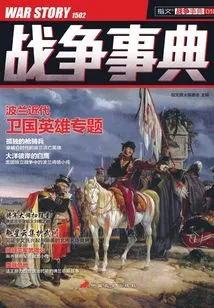
战争事典010:波兰近代,卫国英雄专题
Chief Editor Of Zhiwen Fenghuo Editorial Board
This book is composed of "The General Killed the Crazy Boy: Emperor Wuzong of the Tang Dynasty Defeated the Battle of Zhaoyi Liu Zhen", "Special Topic on Polish Patriotic Heroes in Modern Times", "The Lone Lancer: Polish Heroes in Exile in the Napoleonic Era", "The White Eagle on the Other Side of the Ocean: Polish Generals in the American War of Independence" "Leading Biography", "Quixing Gathered to Protect Wuchuan: Famous Ministers and Generals of the Northern Zhou Dynasty Who Witnessed the Rise and Fall of the Yuwen Family", "Wu Zhougong, the Single Champion of Three Armies: A Biography of Zhou Panlong, the General of the Southern Qi Dynasty" and "Fighting in the Lowlands: The Flanders War during the Reign of King Philip IV of France". By analyzing the battle of Emperor Wuzong of the Tang Dynasty to pacify Liu Zhen of Zhaoyi, the modern Polish patriot heroes, the famous ministers and generals of the Northern Zhou Dynasty, the General Zhou Panlong of the Southern Qi Dynasty, and the Flanders War during the reign of King Philip IV of France, history lovers and military fans can better understand the real history and thus understand the context of history.
This book is composed of "The General Killed the Crazy Boy: Emperor Wuzong of the Tang Dynasty Defeated the Battle of Zhaoyi Liu Zhen", "Special Topic on Polish Patriotic Heroes in Modern Times", "The Lone Lancer: Polish Heroes in Exile in the Napoleonic Era", "The White Eagle on the Other Side of the Ocean: Polish Generals in the American War of Independence" "Leading Biography", "Quixing Gathered to Protect Wuchuan: Famous Ministers and Generals of the Northern Zhou Dynasty Who Witnessed the Rise and Fall of the Yuwen Family", "Wu Zhougong, the Single Champion of Three Armies: A Biography of Zhou Panlong, the General of the Southern Qi Dynasty" and "Fighting in the Lowlands: The Flanders War during the Reign of King Philip IV of France". By analyzing the battle of Emperor Wuzong of the Tang Dynasty to pacify Liu Zhen of Zhaoyi, the modern Polish patriot heroes, the famous ministers and generals of the Northern Zhou Dynasty, the General Zhou Panlong of the Southern Qi Dynasty, and the Flanders War during the reign of King Philip IV of France, history lovers and military fans can better understand the real history and thus understand the context of history.
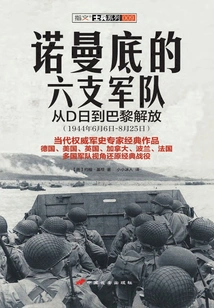
诺曼底的六支军队:从D日到巴黎解放:1944年6月6日~8月25日
(uk) John Keegan
The Normandy landing was the largest landing operation in World War II and even in human history. Its success caused a fundamental turning point in the strategic situation of World War II. Participating in the landing operations were troops from the United States, Britain, Canada, Poland, France and other countries. They launched a two-month desperate struggle with the German troops who were waiting for them. This book starts with the difficult establishment of the combat plan by the United Kingdom and the United States, and uniquely analyzes the different situations and table games faced by the above-mentioned six countries. In addition to the intense battle scenes, this book also comprehensively and three-dimensionally presents the behind-the-scenes of the Normandy landing in front of us.
The Normandy landing was the largest landing operation in World War II and even in human history. Its success caused a fundamental turning point in the strategic situation of World War II. Participating in the landing operations were troops from the United States, Britain, Canada, Poland, France and other countries. They launched a two-month desperate struggle with the German troops who were waiting for them. This book starts with the difficult establishment of the combat plan by the United Kingdom and the United States, and uniquely analyzes the different situations and table games faced by the above-mentioned six countries. In addition to the intense battle scenes, this book also comprehensively and three-dimensionally presents the behind-the-scenes of the Normandy landing in front of us.
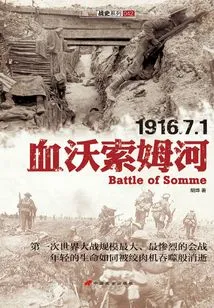
Blood Wassom
Military血沃索姆河
Hu Ye
This book more carefully presents the situation on the first day of the Battle of the Somme in World War I from the perspectives of the British army and the German army. The full text takes time as the axis and uses the memories of surviving veterans who participated in the war as evidence to sort out the battle that day and analyze and summarize the reasons that led to the outcome of the battle that day.
This book more carefully presents the situation on the first day of the Battle of the Somme in World War I from the perspectives of the British army and the German army. The full text takes time as the axis and uses the memories of surviving veterans who participated in the war as evidence to sort out the battle that day and analyze and summarize the reasons that led to the outcome of the battle that day.
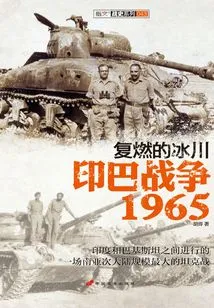
复燃的冰川:印巴战争1965
Hu Ye
This is a life-and-death war in the South Asian subcontinent. For Kashmir, India and Pakistan launched three large-scale contests. Among them, the most eye-catching one is the second India-Pakistan War in 1965. In order to completely capture the "Princess", Pakistan did not hesitate to launch a large-scale attack on India, and India was not willing to be outdone and fought back, performing the largest tank battle in South Asia. The courage and wisdom of the soldiers on both sides were fully reflected in this war.
This is a life-and-death war in the South Asian subcontinent. For Kashmir, India and Pakistan launched three large-scale contests. Among them, the most eye-catching one is the second India-Pakistan War in 1965. In order to completely capture the "Princess", Pakistan did not hesitate to launch a large-scale attack on India, and India was not willing to be outdone and fought back, performing the largest tank battle in South Asia. The courage and wisdom of the soldiers on both sides were fully reflected in this war.
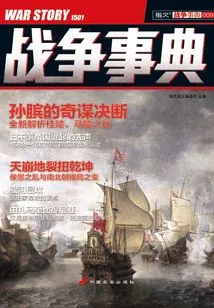
战争事典009:孙膑的奇谋决断
Chief Editor Of Zhiwen Fenghuo Editorial Board
This book consists of "Heralds of the Rise of the Empire on which the Sun Never Sets: The Evolution of British Naval Tactics from 1588 to 1667", "Shatters of Heaven and Earth: The Rebellion of Hou Jing and the Changes in the Pattern of the Northern and Southern Dynasties", "Suruga Invasion: The Peak of the Takeda Family's Plan", "Sun Bin's Strange Decision: A New Analysis of the Battles of Guiling and Maling" and "From Zama to Bithynia: The Second Half of the Life of Hannibal and African Scipio". By analyzing the evolution of British naval tactics, the Hou Jing Rebellion, the Suruga Invasion, the Battle of Guiling and Maling, etc., History lovers and military fans can better understand the real history and understand the context of history.
This book consists of "Heralds of the Rise of the Empire on which the Sun Never Sets: The Evolution of British Naval Tactics from 1588 to 1667", "Shatters of Heaven and Earth: The Rebellion of Hou Jing and the Changes in the Pattern of the Northern and Southern Dynasties", "Suruga Invasion: The Peak of the Takeda Family's Plan", "Sun Bin's Strange Decision: A New Analysis of the Battles of Guiling and Maling" and "From Zama to Bithynia: The Second Half of the Life of Hannibal and African Scipio". By analyzing the evolution of British naval tactics, the Hou Jing Rebellion, the Suruga Invasion, the Battle of Guiling and Maling, etc., History lovers and military fans can better understand the real history and understand the context of history.
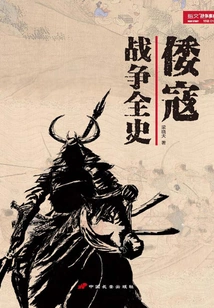
倭寇战争全史
Liang Xiaotian
"The Complete History of the Japanese Pirates War" records the events in the Ming Dynasty when the Japanese armed groups swept through and poisoned China's coast, Taiwan, Ryukyu, North Korea and even Southeast Asia, as well as the history of the Ming Empire's famous generals Tang Shunzhi, Yu Dayou, Qi Jiguang and others who led their troops to fight against the Japanese pirates.
"The Complete History of the Japanese Pirates War" records the events in the Ming Dynasty when the Japanese armed groups swept through and poisoned China's coast, Taiwan, Ryukyu, North Korea and even Southeast Asia, as well as the history of the Ming Empire's famous generals Tang Shunzhi, Yu Dayou, Qi Jiguang and others who led their troops to fight against the Japanese pirates.
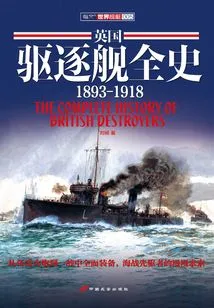
英国驱逐舰全史:1893~1918
Liu Yang
Today's Royal Navy is the largest in Europe and one of the most advanced navies in the world, and is the forerunner of most modern naval forces. In the long history of the development of the Royal Navy, destroyers were once an important tool for the British Empire to maintain its status as a strong military and economic power. They played an important role in all major maritime wars. In the 21st century, they have become an important pillar for the UK to demonstrate its strong military power on the global ocean. Early destroyers had weak capabilities and a single mission. However, in the following more than a hundred years, destroyers have become surface combat platforms with multi-mission capabilities such as surface attack, escort, air defense and anti-submarine, and ground fire support. This book starts from the origin of British destroyers in the 19th century to the huge scale of shipbuilding during the First World War. It details the development of each ship type based on the process of the destroyers gradually taking shape and continuously applying new technologies. The book is supplemented by detailed and accurate equipment data, combined with exquisite ship line drawings and precious historical photos, to show readers the tortuous and spectacular development of British destroyers.
Today's Royal Navy is the largest in Europe and one of the most advanced navies in the world, and is the forerunner of most modern naval forces. In the long history of the development of the Royal Navy, destroyers were once an important tool for the British Empire to maintain its status as a strong military and economic power. They played an important role in all major maritime wars. In the 21st century, they have become an important pillar for the UK to demonstrate its strong military power on the global ocean. Early destroyers had weak capabilities and a single mission. However, in the following more than a hundred years, destroyers have become surface combat platforms with multi-mission capabilities such as surface attack, escort, air defense and anti-submarine, and ground fire support. This book starts from the origin of British destroyers in the 19th century to the huge scale of shipbuilding during the First World War. It details the development of each ship type based on the process of the destroyers gradually taking shape and continuously applying new technologies. The book is supplemented by detailed and accurate equipment data, combined with exquisite ship line drawings and precious historical photos, to show readers the tortuous and spectacular development of British destroyers.
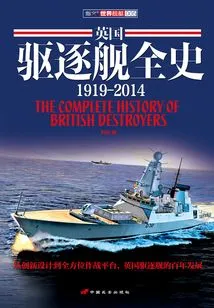
英国驱逐舰全史:1919~2014
Liu Yang
Today's Royal Navy is the largest in Europe and one of the most advanced navies in the world, and is the forerunner of most modern naval forces. In the long history of the development of the Royal Navy, destroyers were once an important tool for the British Empire to maintain its status as a strong military and economic power. They played an important role in all major maritime wars. In the 21st century, they have become an important pillar for the UK to demonstrate its strong military power on the global ocean. Early destroyers had weak capabilities and a single mission. However, in the following more than a hundred years, destroyers have become surface combat platforms with multi-mission capabilities such as surface attack, escort, air defense and anti-submarine, and ground fire support. The book "The Complete History of British Destroyers 1919-2014" starts from the exploration and innovation of British destroyers in the peace period after World War I, to the new air defense ships of the 21st century. It details the development of each ship type based on the process of the destroyers gradually taking shape and continuously applying new technologies. The book is supplemented by detailed and accurate equipment data, combined with exquisite ship line drawings and precious historical photos, to show readers the tortuous and spectacular development of British destroyers.
Today's Royal Navy is the largest in Europe and one of the most advanced navies in the world, and is the forerunner of most modern naval forces. In the long history of the development of the Royal Navy, destroyers were once an important tool for the British Empire to maintain its status as a strong military and economic power. They played an important role in all major maritime wars. In the 21st century, they have become an important pillar for the UK to demonstrate its strong military power on the global ocean. Early destroyers had weak capabilities and a single mission. However, in the following more than a hundred years, destroyers have become surface combat platforms with multi-mission capabilities such as surface attack, escort, air defense and anti-submarine, and ground fire support. The book "The Complete History of British Destroyers 1919-2014" starts from the exploration and innovation of British destroyers in the peace period after World War I, to the new air defense ships of the 21st century. It details the development of each ship type based on the process of the destroyers gradually taking shape and continuously applying new technologies. The book is supplemented by detailed and accurate equipment data, combined with exquisite ship line drawings and precious historical photos, to show readers the tortuous and spectacular development of British destroyers.
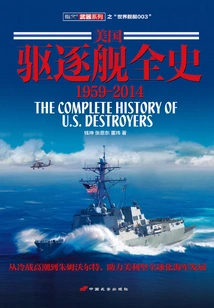
美国驱逐舰全史:1959-2014
Qian Kun Zhang Endong Dong Wei
As the world's number one maritime power, U. S. Destroyers have been leading the world's trends since World War II. Its design ideas had a profound impact on the entire Europe and even Japan and other Far Eastern countries after the war. Due to the large number of U. S. Destroyers, before this book, there was no "ship-by-ship" monograph in China that listed and introduced U. S. Destroyers. This book strives to list every destroyer that has served in the United States from the "Bainbridge" class to the latest "Zumwalt" class, and focuses on introducing some of the famous battles, equipment, characters, etc. This book should be the first-hand information for domestic readers to systematically understand American destroyers.
As the world's number one maritime power, U. S. Destroyers have been leading the world's trends since World War II. Its design ideas had a profound impact on the entire Europe and even Japan and other Far Eastern countries after the war. Due to the large number of U. S. Destroyers, before this book, there was no "ship-by-ship" monograph in China that listed and introduced U. S. Destroyers. This book strives to list every destroyer that has served in the United States from the "Bainbridge" class to the latest "Zumwalt" class, and focuses on introducing some of the famous battles, equipment, characters, etc. This book should be the first-hand information for domestic readers to systematically understand American destroyers.
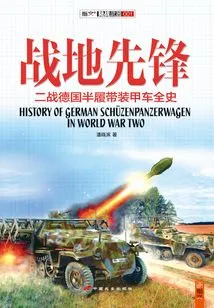
战地先锋:二战德国半履带装甲车全史
Pan Xiaobin
During World War II, the German Army was recognized by other countries as the most elite force in the world because of its well-equipped equipment and well-trained soldiers. One of the important factors that contribute to the German Army's prestige is the numerous models of full-track and half-track military vehicles it equips. Among the latter, the Sdkfz 250 and Sdkfz 251 half-track armored personnel carriers are the half-track combat vehicles with the largest number of equipment and the most widely used in the German army. The two models adopt a combination of one light and one heavy, becoming the mainstay of Germany's mechanized combat forces. "Battlefield Pioneer: The Complete History of German Half-Track Armored Vehicles in World War II" mainly focuses on the German-made Sdkfz 250 light half-track armored vehicle and Sdkfz 251 medium-sized half-track armored vehicle during World War II. The content includes the main parts such as the research and development and combat use of combat vehicles, and is introduced in chapters according to models.
During World War II, the German Army was recognized by other countries as the most elite force in the world because of its well-equipped equipment and well-trained soldiers. One of the important factors that contribute to the German Army's prestige is the numerous models of full-track and half-track military vehicles it equips. Among the latter, the Sdkfz 250 and Sdkfz 251 half-track armored personnel carriers are the half-track combat vehicles with the largest number of equipment and the most widely used in the German army. The two models adopt a combination of one light and one heavy, becoming the mainstay of Germany's mechanized combat forces. "Battlefield Pioneer: The Complete History of German Half-Track Armored Vehicles in World War II" mainly focuses on the German-made Sdkfz 250 light half-track armored vehicle and Sdkfz 251 medium-sized half-track armored vehicle during World War II. The content includes the main parts such as the research and development and combat use of combat vehicles, and is introduced in chapters according to models.
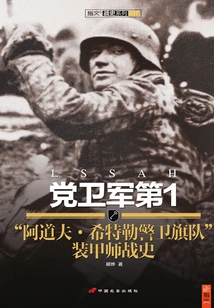
党卫军第1“阿道夫·希特勒警卫旗队”装甲师战史
Hu Ye
The 1st SS Armored Division "Leibstandarte Adolf Hitler" is the number one ace of the Armed SS. This unit named after the Führer was formerly the Berlin SS Headquarters Guard commanded by Dietrich. Although their original mission was to serve as the personal guard of German leader Adolf Hitler, they were generally derided as the "Guard Guards". Under the discriminatory gaze of the Wehrmacht, the 1st SS Armored Division "Legend Guardsman Adolf Hitler" showed considerable strength as soon as it entered the battlefield, leaving its presence in Poland, France, and the Soviet Union. Especially in the Battle of Rostov in 1941 and the counterattack in Kharkov in 1943, the 1st SS Armored Division "Legend Guardsmen Adolf Hitler" became the absolute main force in the German army. Although Germany gradually declined during the war, the division remained courageous and set off black storms again and again in Normandy, the Ardennes, the Hron Bridgehead and Lake Balaton. As long as there is an offensive operation, the 1st SS Armored Division "Adolf Hitler's Leibstandarte" will always be the one who rushes to the front and fights the farthest and achieves the greatest results. Even with such a powerful fighting force, they could not escape the fate of shameful defeat because they served evil forces.
The 1st SS Armored Division "Leibstandarte Adolf Hitler" is the number one ace of the Armed SS. This unit named after the Führer was formerly the Berlin SS Headquarters Guard commanded by Dietrich. Although their original mission was to serve as the personal guard of German leader Adolf Hitler, they were generally derided as the "Guard Guards". Under the discriminatory gaze of the Wehrmacht, the 1st SS Armored Division "Legend Guardsman Adolf Hitler" showed considerable strength as soon as it entered the battlefield, leaving its presence in Poland, France, and the Soviet Union. Especially in the Battle of Rostov in 1941 and the counterattack in Kharkov in 1943, the 1st SS Armored Division "Legend Guardsmen Adolf Hitler" became the absolute main force in the German army. Although Germany gradually declined during the war, the division remained courageous and set off black storms again and again in Normandy, the Ardennes, the Hron Bridgehead and Lake Balaton. As long as there is an offensive operation, the 1st SS Armored Division "Adolf Hitler's Leibstandarte" will always be the one who rushes to the front and fights the farthest and achieves the greatest results. Even with such a powerful fighting force, they could not escape the fate of shameful defeat because they served evil forces.
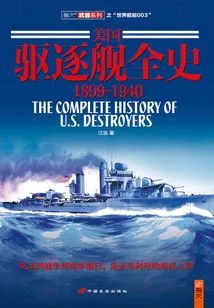
美国驱逐舰全史:1899-1940
Jiang Hong
As the world's number one maritime power, U. S. Destroyers have been leading the world's trends since World War II. Its design ideas had a profound impact on the entire Europe and even Japan and other Far Eastern countries after the war. Due to the large number of U. S. Destroyers, before this book, there was no "ship-by-ship" monograph in China that listed and introduced U. S. Destroyers. This book strives to list every destroyer that has served in the United States from the "Bainbridge" class to the latest "Zumwalt" class, and focuses on introducing some of the famous battles, equipment, characters, etc. This book should be the first-hand information for domestic readers to systematically understand American destroyers.
As the world's number one maritime power, U. S. Destroyers have been leading the world's trends since World War II. Its design ideas had a profound impact on the entire Europe and even Japan and other Far Eastern countries after the war. Due to the large number of U. S. Destroyers, before this book, there was no "ship-by-ship" monograph in China that listed and introduced U. S. Destroyers. This book strives to list every destroyer that has served in the United States from the "Bainbridge" class to the latest "Zumwalt" class, and focuses on introducing some of the famous battles, equipment, characters, etc. This book should be the first-hand information for domestic readers to systematically understand American destroyers.
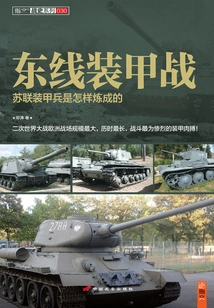
东线装甲战
Deng Tao
Eastern European battlefield - as one of the most important battlefields in World War II, various countries launched an unprecedented armored war here. This war is also a history of blood and tears that records the gradual development of armored forces on the Eastern Front in Europe from weak to strong. At the same time, it also had a profound impact on the subsequent development of armor around the world. Through a large amount of historical data, this book objectively tells the development process of the armored forces on the Eastern Front battlefield in Europe during World War II, and provides a detailed explanation of the military tactics at each stage of its development. In addition, this book also uses more than 900 precious pictures to describe the development of major armored weapons in various periods of the war. Among them, most of the armors have detailed cross-section and structural diagrams, as well as detailed parameters and historical introduction. Finally, the book also summarizes the details of the armored weapons captured by the German army in World War II.
Eastern European battlefield - as one of the most important battlefields in World War II, various countries launched an unprecedented armored war here. This war is also a history of blood and tears that records the gradual development of armored forces on the Eastern Front in Europe from weak to strong. At the same time, it also had a profound impact on the subsequent development of armor around the world. Through a large amount of historical data, this book objectively tells the development process of the armored forces on the Eastern Front battlefield in Europe during World War II, and provides a detailed explanation of the military tactics at each stage of its development. In addition, this book also uses more than 900 precious pictures to describe the development of major armored weapons in various periods of the war. Among them, most of the armors have detailed cross-section and structural diagrams, as well as detailed parameters and historical introduction. Finally, the book also summarizes the details of the armored weapons captured by the German army in World War II.
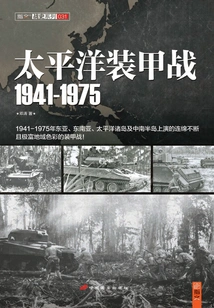
太平洋装甲战:1941-1975
Deng Tao
"Pacific Armored Warfare 1941-1975" can be divided into two parts in chronological order, namely "Armored and Mechanized Warfare during the Pacific War from 1941 to 1945" and "Armored and Mechanized Warfare that took place in Vietnam and the Indochina Peninsula from 1954 to 1975." In detail, "Pacific Armored Warfare" is displayed in a multi-level and multi-angle panorama from the aspects of technology, political and historical background, battle situation, tactical application, combat examples, etc.
"Pacific Armored Warfare 1941-1975" can be divided into two parts in chronological order, namely "Armored and Mechanized Warfare during the Pacific War from 1941 to 1945" and "Armored and Mechanized Warfare that took place in Vietnam and the Indochina Peninsula from 1954 to 1975." In detail, "Pacific Armored Warfare" is displayed in a multi-level and multi-angle panorama from the aspects of technology, political and historical background, battle situation, tactical application, combat examples, etc.
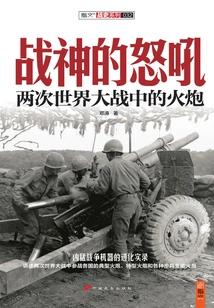
战神的怒吼:两次世界大战中的火炮
Deng Tao
This book takes the development of artillery in the two world wars as the main axis, introduces it from the aspects of historical background, military technology, model categories, etc., And comprehensively and multi-anglely shows readers the typical artillery, special artillery and various infantry support artillery of the participating countries in the two world wars. Each artillery is equipped with development and use conditions, combat participation, corresponding pictures and performance indicators.
This book takes the development of artillery in the two world wars as the main axis, introduces it from the aspects of historical background, military technology, model categories, etc., And comprehensively and multi-anglely shows readers the typical artillery, special artillery and various infantry support artillery of the participating countries in the two world wars. Each artillery is equipped with development and use conditions, combat participation, corresponding pictures and performance indicators.
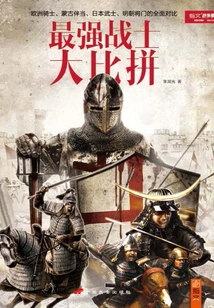
最强战士大比拼
Li Huguang
As one of the four ancient civilizations, China has a military culture that ranks first in the world. The soldiers of the ancient Chinese feudal dynasty had long used force to connect the distant East and the West. Hundreds of years before China was opened to the country by the West with strong ships and cannons, there had been large-scale collisions between the armies of the East and the West. Ancient Chinese warriors, Japanese samurai, and European knights used Eurasia as the arena and launched many thrilling competitions. European knights and Japanese samurai were both products of the feudal enfeoffment system, and such a system existed in some areas in ancient China for a long time. This is how the Mongolian companions and the Ming Dynasty generals came into being. European knights, Japanese samurai, Mongolian sidemen, and Ming Dynasty generals all have similar but distinctive military cultures, and they have also fought fiercely on the battlefield. Through a large number of historical facts, this book studies the political systems and economic foundations on which military groups in these different countries rely, compares their living habits, religious beliefs and other aspects, finds out their similarities and differences, and attempts to answer the question "who is the strongest?"
As one of the four ancient civilizations, China has a military culture that ranks first in the world. The soldiers of the ancient Chinese feudal dynasty had long used force to connect the distant East and the West. Hundreds of years before China was opened to the country by the West with strong ships and cannons, there had been large-scale collisions between the armies of the East and the West. Ancient Chinese warriors, Japanese samurai, and European knights used Eurasia as the arena and launched many thrilling competitions. European knights and Japanese samurai were both products of the feudal enfeoffment system, and such a system existed in some areas in ancient China for a long time. This is how the Mongolian companions and the Ming Dynasty generals came into being. European knights, Japanese samurai, Mongolian sidemen, and Ming Dynasty generals all have similar but distinctive military cultures, and they have also fought fiercely on the battlefield. Through a large number of historical facts, this book studies the political systems and economic foundations on which military groups in these different countries rely, compares their living habits, religious beliefs and other aspects, finds out their similarities and differences, and attempts to answer the question "who is the strongest?"
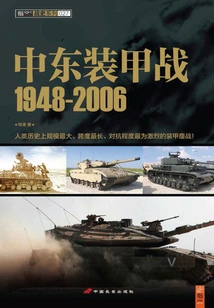
中东装甲战:1948-2006
Deng Tao
The book takes the mechanized armored war that took place between Arab and Israeli forces in the Middle East from 1948 to 2006 as the main line, and runs through history, politics, technical equipment, combat examples, and war history. It comprehensively and multi-anglely presents the largest-scale, longest-span, and highest-intensity mechanized armored war in human history after the end of World War II.
The book takes the mechanized armored war that took place between Arab and Israeli forces in the Middle East from 1948 to 2006 as the main line, and runs through history, politics, technical equipment, combat examples, and war history. It comprehensively and multi-anglely presents the largest-scale, longest-span, and highest-intensity mechanized armored war in human history after the end of World War II.
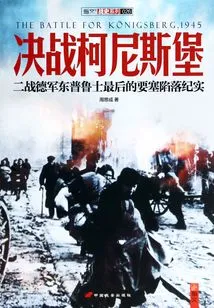
决战柯尼斯堡:二战德军东普鲁士最后的要塞陷落纪实
Zhou Sicheng
"The Decisive Battle of Königsberg: A Record of the Fall of the Last German Fortress in East Prussia in World War II" is a history of the Königsberg War in World War II. The book has five chapters. It not only tells the long history and culture of Königsberg before the war, but also reconstructs and restores the fall of Königsberg from multiple angles.
"The Decisive Battle of Königsberg: A Record of the Fall of the Last German Fortress in East Prussia in World War II" is a history of the Königsberg War in World War II. The book has five chapters. It not only tells the long history and culture of Königsberg before the war, but also reconstructs and restores the fall of Königsberg from multiple angles.
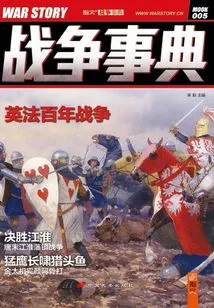
战争事典005:英法百年战争
Editor-in-chief Song Yi
This book is composed of three parts: "The Hundred Years' War between Britain and France", "The Decisive Victory over Jianghuai: The Battle of the Jianghuai Domain in the Late Tang Dynasty" and "The Screaming Eagle and the Headhunting Fish: Jin Taizu Wanyan Aguda". By analyzing the Hundred Years' War between Britain and France, the wars between the Jianghuai vassals in the late Tang Dynasty, and Wanyan Aguda of Jin Taizu, history lovers and military fans can better understand the real history and thus understand the context of history.
This book is composed of three parts: "The Hundred Years' War between Britain and France", "The Decisive Victory over Jianghuai: The Battle of the Jianghuai Domain in the Late Tang Dynasty" and "The Screaming Eagle and the Headhunting Fish: Jin Taizu Wanyan Aguda". By analyzing the Hundred Years' War between Britain and France, the wars between the Jianghuai vassals in the late Tang Dynasty, and Wanyan Aguda of Jin Taizu, history lovers and military fans can better understand the real history and thus understand the context of history.
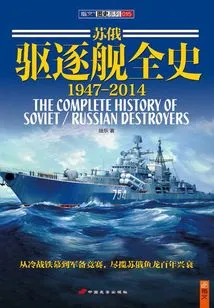
苏俄驱逐舰全史:1947-2014
Lu Le
As a unique sight in the world's naval history, Russian destroyers and the Soviet destroyers that inherited most of their characteristics have had a great impact on the development of destroyers in our country's navy and other third world countries. Different from the previous domestic introductions of single types or brief histories of chronological periods in the form of "cutting off the beginning and ending", this book starts from the late 19th century when Russia decided to follow the trend of naval development and started the construction of emerging destroyers. The content introduces each type of destroyer in the history of the Soviet Russian Navy in detail, so that readers can clearly understand the overall development of destroyers in this former maritime power.
As a unique sight in the world's naval history, Russian destroyers and the Soviet destroyers that inherited most of their characteristics have had a great impact on the development of destroyers in our country's navy and other third world countries. Different from the previous domestic introductions of single types or brief histories of chronological periods in the form of "cutting off the beginning and ending", this book starts from the late 19th century when Russia decided to follow the trend of naval development and started the construction of emerging destroyers. The content introduces each type of destroyer in the history of the Soviet Russian Navy in detail, so that readers can clearly understand the overall development of destroyers in this former maritime power.
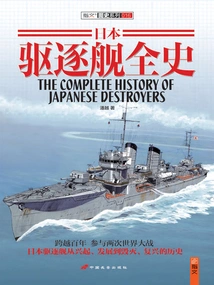
日本驱逐舰全史
Pan Yue
In the form of pictures and texts, it introduces to the vast number of domestic military enthusiasts the complete history of Japanese destroyers from introduction, self-building of troops, development to world-class level, to complete destruction in World War II, and revival after the war. This book uses time as the axis to clearly show all the development stages of Japanese destroyers from birth to growth, and describes each ship type one by one, with performance parameters and a large number of pictures.
In the form of pictures and texts, it introduces to the vast number of domestic military enthusiasts the complete history of Japanese destroyers from introduction, self-building of troops, development to world-class level, to complete destruction in World War II, and revival after the war. This book uses time as the axis to clearly show all the development stages of Japanese destroyers from birth to growth, and describes each ship type one by one, with performance parameters and a large number of pictures.
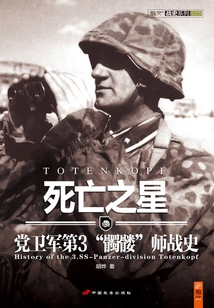
死亡之星:党卫军第3“髑髅”师战史
Hu Ye
The book uses nearly 200,000 words, more than 300 battlefield photos and information pictures, and selects many classic battle examples to completely tell the battle history of the 3rd "Skull" Armored Division of the German Armed SS from its establishment, to participating in the first battle on the Western Front, to the bloody battle on the Eastern Front, and finally to its final destruction.
The book uses nearly 200,000 words, more than 300 battlefield photos and information pictures, and selects many classic battle examples to completely tell the battle history of the 3rd "Skull" Armored Division of the German Armed SS from its establishment, to participating in the first battle on the Western Front, to the bloody battle on the Eastern Front, and finally to its final destruction.
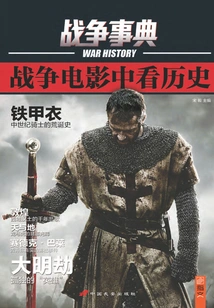
战争事典特辑002:战争电影中看历史
Editor-in-chief Song Yi
This book analyzes the movies "Iron Armor", "Heaven and Earth", "The Great Tribulation of the Ming Dynasty", "Dunhuang" and "Sediq Bale", so that historical movie lovers and military fans can better understand the real history behind the movies and thus understand the context of history. After King John of England signed the Magna Carta, did the people really gain the right to freedom? What kind of decisive battle did Uesugi Kenshin, known as the "Dragon of Echigo", and Takeda Shingen, known as the "Tiger of Kai", staged in the Fourth Battle of Kawanakajima? There is still something to be done for medical people, but how can the medical country survive the collapse? Why was Sun Chuanting dragged into the abyss by the apocalyptic dynasty? A man from the Song Dynasty went to the Hexi region, which was not ruled by the Song Dynasty at that time, to join the Xixia army, fight with the Uighurs, and turn against the Xixia ruler because of a Uighur woman. What kind of story is this? Why did Taiwan's aboriginal people fight against the powerful Japanese army in order to become "real people", to the point that almost the entire family died in the war?
This book analyzes the movies "Iron Armor", "Heaven and Earth", "The Great Tribulation of the Ming Dynasty", "Dunhuang" and "Sediq Bale", so that historical movie lovers and military fans can better understand the real history behind the movies and thus understand the context of history. After King John of England signed the Magna Carta, did the people really gain the right to freedom? What kind of decisive battle did Uesugi Kenshin, known as the "Dragon of Echigo", and Takeda Shingen, known as the "Tiger of Kai", staged in the Fourth Battle of Kawanakajima? There is still something to be done for medical people, but how can the medical country survive the collapse? Why was Sun Chuanting dragged into the abyss by the apocalyptic dynasty? A man from the Song Dynasty went to the Hexi region, which was not ruled by the Song Dynasty at that time, to join the Xixia army, fight with the Uighurs, and turn against the Xixia ruler because of a Uighur woman. What kind of story is this? Why did Taiwan's aboriginal people fight against the powerful Japanese army in order to become "real people", to the point that almost the entire family died in the war?
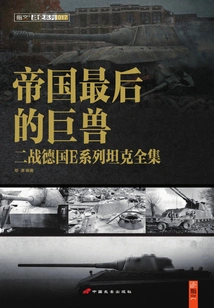
The Last Behemoth of the Empire: the Complete Collection of German E-series Tanks in World War Ii
Military帝国最后的巨兽:二战德国E系列坦克全集
Compiled By Deng Tao
"The Last Behemoth of the Empire: The Complete Collection of German E-Series Tanks in World War II" takes the "E-Series", the "next-generation tank family" planned by Nazi Germany at the end of World War II, as the core content. It analyzes in detail from the aspects of politics, economy, battle situation, technology and even characters, all-round and multi-level analysis of the Nazis' delusion at the juncture of imminent destruction, what kind of "futuristic picture" they tried to use to reverse the war situation, as well as the origin, technical characteristics, achievements and final destruction of this delusion - the E-series.
"The Last Behemoth of the Empire: The Complete Collection of German E-Series Tanks in World War II" takes the "E-Series", the "next-generation tank family" planned by Nazi Germany at the end of World War II, as the core content. It analyzes in detail from the aspects of politics, economy, battle situation, technology and even characters, all-round and multi-level analysis of the Nazis' delusion at the juncture of imminent destruction, what kind of "futuristic picture" they tried to use to reverse the war situation, as well as the origin, technical characteristics, achievements and final destruction of this delusion - the E-series.
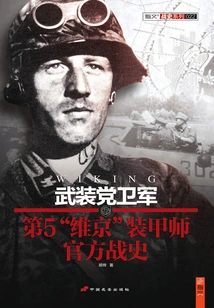
武装党卫军第5“维京”装甲师官方战史
Hu Ye
Looking through the vast sea of German data on World War II, nothing is more impressive than the seven elite armored divisions of the Waffen-SS. The SS 1st "Adolf Hitler's Leibstandarte" Armored Division, which bravely championed all three armies, and the SS 2nd "Reich" Armored Division, the Flower of the Empire, are both very well-known. However, few people thought that the 5th SS "Viking" Armored Division, composed of Nordic foreign soldiers, also set off a black storm on the Eastern Front. This book is divided into fourteen chapters, comprehensively tracing the combat history of the 5th SS "Viking" Armored Division in World War II, including the history of its establishment and development - the overwhelming breakthrough in 1941, the rush to the Caucasus in 1942, the arduous tug-of-war from 1943 to 1945, and the major battles leading to the final surrender. The book is full of detailed content and rich in information, making it a rare collection for military history lovers.
Looking through the vast sea of German data on World War II, nothing is more impressive than the seven elite armored divisions of the Waffen-SS. The SS 1st "Adolf Hitler's Leibstandarte" Armored Division, which bravely championed all three armies, and the SS 2nd "Reich" Armored Division, the Flower of the Empire, are both very well-known. However, few people thought that the 5th SS "Viking" Armored Division, composed of Nordic foreign soldiers, also set off a black storm on the Eastern Front. This book is divided into fourteen chapters, comprehensively tracing the combat history of the 5th SS "Viking" Armored Division in World War II, including the history of its establishment and development - the overwhelming breakthrough in 1941, the rush to the Caucasus in 1942, the arduous tug-of-war from 1943 to 1945, and the major battles leading to the final surrender. The book is full of detailed content and rich in information, making it a rare collection for military history lovers.
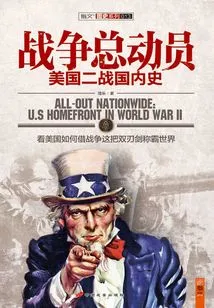
战争总动员:美国二战国内史
Lu Le
"All War: A Domestic History of the United States during World War II" takes thousands of exquisite American wartime posters of World War II as the main entry point, and for the first time shows readers in detail every detail of the social development of the American rear during World War II. The book consists of 12 chapters in total, covering all aspects of the mobilization work for the American civil war at that time, including war propaganda, funding allies, recruitment, promotion of production, material supply, war bonds, civilian assistance, anti-enemy and anti-special forces, disease control and prevention, etc. It allows readers to understand from another unknown side how the entire United States transformed from an indifferent neutral to a main fighter who did its best for the final victory of the anti-fascist war. This book is not only a useful supplement to related domestic fields, but also a concise chronological history that introduces the social process of the United States during World War II.
"All War: A Domestic History of the United States during World War II" takes thousands of exquisite American wartime posters of World War II as the main entry point, and for the first time shows readers in detail every detail of the social development of the American rear during World War II. The book consists of 12 chapters in total, covering all aspects of the mobilization work for the American civil war at that time, including war propaganda, funding allies, recruitment, promotion of production, material supply, war bonds, civilian assistance, anti-enemy and anti-special forces, disease control and prevention, etc. It allows readers to understand from another unknown side how the entire United States transformed from an indifferent neutral to a main fighter who did its best for the final victory of the anti-fascist war. This book is not only a useful supplement to related domestic fields, but also a concise chronological history that introduces the social process of the United States during World War II.
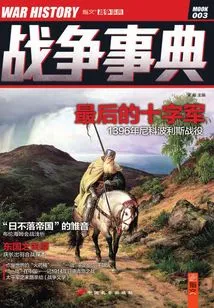
战争事典003:最后的十字军
Editor-in-chief Song Yi
This book is composed of "The Last Crusade: The Battle of Nicopolis in 1396", "Sekigahara of the Eastern Kingdom: An Exploration of the Battle of Keicho Idewa", "The Early Voice of the "Sun Never Sets": A Brief Analysis of the Battle of Blenheim", "The Powder Keg That Detonated the World: The Balkan War Before the First World War", "The First World War in China: A Record of the Japanese-German Battle of Qingdao in 1914" and the war literature "The End of the Taiping Army". In 1396, the Kingdom of Hungary, the Kingdom of France, the Knights Hospitaller, the Republic of Venice and knight elites from all over Europe formed a powerful Crusade and launched a magnificent east-west war with the Turkish Ottoman Empire. In 1600 AD, the Sekigahara War determined Japan's ownership of the world since the Warring States Period, but the prologue of this battle began with Tokugawa Ieyasu's crusade against Uesugi Kagekatsu. What is puzzling is that Uesugi Kagekatsu did not participate in the Sekigahara War, which decided who belonged to Japan. What made Uesugi Kagekatsu so reckless of the general trend of the world? There was a war that not only brought to naught the plan of Louis XIV, the "Sun King" of France, to dominate Europe, but also set Britain on the glorious journey of the "empire on which the sun never sets". What kind of war was it? The Balkans triggered World War I, and it was the Balkans that caused great changes in the world structure, but why did the Balkans become such a huge problem? World War I is very unfamiliar to the Chinese, and compared with the Anti-Japanese War, it seems to be something that happened in another world. However, the large-scale battles in the Far East during the "World War I" were fought on Chinese soil; the Taiping Rebellion was something that could not be ignored in the late Qing Dynasty. No matter what the controversy, there were always a few loyal ministers who performed this desolate tragic ending.
This book is composed of "The Last Crusade: The Battle of Nicopolis in 1396", "Sekigahara of the Eastern Kingdom: An Exploration of the Battle of Keicho Idewa", "The Early Voice of the "Sun Never Sets": A Brief Analysis of the Battle of Blenheim", "The Powder Keg That Detonated the World: The Balkan War Before the First World War", "The First World War in China: A Record of the Japanese-German Battle of Qingdao in 1914" and the war literature "The End of the Taiping Army". In 1396, the Kingdom of Hungary, the Kingdom of France, the Knights Hospitaller, the Republic of Venice and knight elites from all over Europe formed a powerful Crusade and launched a magnificent east-west war with the Turkish Ottoman Empire. In 1600 AD, the Sekigahara War determined Japan's ownership of the world since the Warring States Period, but the prologue of this battle began with Tokugawa Ieyasu's crusade against Uesugi Kagekatsu. What is puzzling is that Uesugi Kagekatsu did not participate in the Sekigahara War, which decided who belonged to Japan. What made Uesugi Kagekatsu so reckless of the general trend of the world? There was a war that not only brought to naught the plan of Louis XIV, the "Sun King" of France, to dominate Europe, but also set Britain on the glorious journey of the "empire on which the sun never sets". What kind of war was it? The Balkans triggered World War I, and it was the Balkans that caused great changes in the world structure, but why did the Balkans become such a huge problem? World War I is very unfamiliar to the Chinese, and compared with the Anti-Japanese War, it seems to be something that happened in another world. However, the large-scale battles in the Far East during the "World War I" were fought on Chinese soil; the Taiping Rebellion was something that could not be ignored in the late Qing Dynasty. No matter what the controversy, there were always a few loyal ministers who performed this desolate tragic ending.
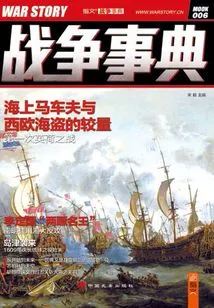
战争事典006:海上马车夫与西欧海盗的较量
Editor-in-chief Song Yi
This book consists of "The Contest between Sea Coachmen and Western European Pirates: An Anglo-Dutch Battle", "Li Dingguo's "Two Knocks to Fame": The Southern Ming Dynasty's Kwai Sichuan and Hunan Counterattacks", "Shimadzu's Attack: The Beginning and End of the Keicho Ryukyu Battle in 1609", "From Beginning to the Future: The Hood before and after the Invergordon Mutiny", "The Sky of Zeppelin" and "Guan Yu, who killed good looks, punished Wen Chou and passed five passes to kill six generals". Comprehensive analysis of the First Anglo-Dutch Naval Battle, the Southern Ming Dynasty's Guishan and Hunan Counterattacks, and the Battle of Keicho Ryukyu.
This book consists of "The Contest between Sea Coachmen and Western European Pirates: An Anglo-Dutch Battle", "Li Dingguo's "Two Knocks to Fame": The Southern Ming Dynasty's Kwai Sichuan and Hunan Counterattacks", "Shimadzu's Attack: The Beginning and End of the Keicho Ryukyu Battle in 1609", "From Beginning to the Future: The Hood before and after the Invergordon Mutiny", "The Sky of Zeppelin" and "Guan Yu, who killed good looks, punished Wen Chou and passed five passes to kill six generals". Comprehensive analysis of the First Anglo-Dutch Naval Battle, the Southern Ming Dynasty's Guishan and Hunan Counterattacks, and the Battle of Keicho Ryukyu.
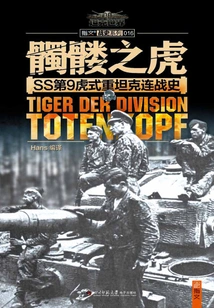
髑髅之虎:SS第9虎式重坦克连战史
Compiled By Hans
The Totenkopf Division, together with the other two most famous Waffen SS units, the Adolf Hitler Guards and the Reich Division, were equipped with the most legendary weapons and equipment in the German army, the Tiger tank. The difference is that the "Skeleton" heavy armored company is the only unit in the Waffen SS that has accompanied the mother division from its formation to the end of the war and has been fighting on the Eastern Front. Although it is only company-sized and equipped with only a dozen tanks at most, its excellent combat effectiveness often plays an important role as the core and backbone in combat. Together with the mother division, the company participated in such activities as\
The Totenkopf Division, together with the other two most famous Waffen SS units, the Adolf Hitler Guards and the Reich Division, were equipped with the most legendary weapons and equipment in the German army, the Tiger tank. The difference is that the "Skeleton" heavy armored company is the only unit in the Waffen SS that has accompanied the mother division from its formation to the end of the war and has been fighting on the Eastern Front. Although it is only company-sized and equipped with only a dozen tanks at most, its excellent combat effectiveness often plays an important role as the core and backbone in combat. Together with the mother division, the company participated in such activities as\
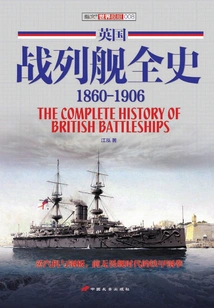
英国战列舰全史:1860-1906
Jiang Hong
As a once glorious empire on which the sun never sets, Britain relies on its powerful Royal Navy to control the entire ocean. After entering the ironclad steam era, battleships with large-caliber main guns, thick armor and high-power engines became the symbol of British maritime power. In the field of battleship construction, the UK has continuously launched works of epochal significance, including the "Sovereign" class, the "Dreadnought", the "Queen Elizabeth" class, etc. These powerful battleships have become the vane leading the development of the world's navy. Despite their fame, there is no book in China that systematically and completely introduces British battleships, and this book is the first attempt in this regard. From HMS Warrior to HMS Vanguard, this book includes and details every battleship that has served in the Royal Navy, and even includes the failed N3 battleship plan. This book will become a first-hand source for domestic readers to systematically understand British battleships and British modern sea power.
As a once glorious empire on which the sun never sets, Britain relies on its powerful Royal Navy to control the entire ocean. After entering the ironclad steam era, battleships with large-caliber main guns, thick armor and high-power engines became the symbol of British maritime power. In the field of battleship construction, the UK has continuously launched works of epochal significance, including the "Sovereign" class, the "Dreadnought", the "Queen Elizabeth" class, etc. These powerful battleships have become the vane leading the development of the world's navy. Despite their fame, there is no book in China that systematically and completely introduces British battleships, and this book is the first attempt in this regard. From HMS Warrior to HMS Vanguard, this book includes and details every battleship that has served in the Royal Navy, and even includes the failed N3 battleship plan. This book will become a first-hand source for domestic readers to systematically understand British battleships and British modern sea power.
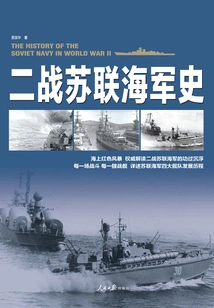
二战苏联海军史
Wu Ronghua
Contrary to popular belief, the performance of the Soviet Navy in World War II was not without merit. They still tenaciously fought against the enemy on the surface, underwater, in the air, and at various locations. "The navy has fulfilled its obligations to the motherland from beginning to end" - this is Stalin's fair evaluation of the Soviet Navy's performance in World War II. This book refers to a large number of research monographs and journal articles at home and abroad. It provides an introduction to the main warships participating in the war, detailed strength and combat loss tables, strategic and tactical assessments and other precious information. It also records various types of battles the navy participated in (base defense battles, coastal artillery operations, submarine operations, naval aviation operations, landing operations, breaking and maintaining diplomatic relations, etc.), And is supplemented by detailed descriptions. Readers can objectively understand the development process of the major fleets of the Soviet Navy from the large amount of historical data available in this book, as well as the main army building and combat ideas in each period.
Contrary to popular belief, the performance of the Soviet Navy in World War II was not without merit. They still tenaciously fought against the enemy on the surface, underwater, in the air, and at various locations. "The navy has fulfilled its obligations to the motherland from beginning to end" - this is Stalin's fair evaluation of the Soviet Navy's performance in World War II. This book refers to a large number of research monographs and journal articles at home and abroad. It provides an introduction to the main warships participating in the war, detailed strength and combat loss tables, strategic and tactical assessments and other precious information. It also records various types of battles the navy participated in (base defense battles, coastal artillery operations, submarine operations, naval aviation operations, landing operations, breaking and maintaining diplomatic relations, etc.), And is supplemented by detailed descriptions. Readers can objectively understand the development process of the major fleets of the Soviet Navy from the large amount of historical data available in this book, as well as the main army building and combat ideas in each period.
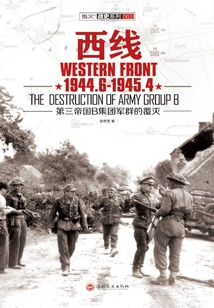
西线:1944.6-1945.4:第三帝国B集团军群的覆灭
Peng Zhiwen
During World War II, Germany formed a total of 19 army groups, and Army Group B was reorganized three times. In 1943, the third formation of Army Group B was completed. By 1944, it had become the "mainstay" of the Third Reich's army on the Western Front. It was the most important strategic military group supporting the entire Western Front. At its peak, its strength reached 400,000. Army Group B participated in almost every major battle on the Western Front, including the Allied landings in Normandy and the Battle of the Ruhr. In the end, it retreated steadily under the powerful Allied offensive and was eventually destroyed and the Western Front collapsed.
During World War II, Germany formed a total of 19 army groups, and Army Group B was reorganized three times. In 1943, the third formation of Army Group B was completed. By 1944, it had become the "mainstay" of the Third Reich's army on the Western Front. It was the most important strategic military group supporting the entire Western Front. At its peak, its strength reached 400,000. Army Group B participated in almost every major battle on the Western Front, including the Allied landings in Normandy and the Battle of the Ruhr. In the end, it retreated steadily under the powerful Allied offensive and was eventually destroyed and the Western Front collapsed.
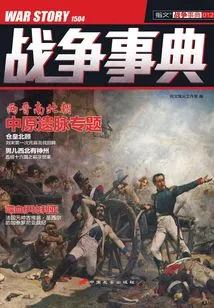
战争事典012:两晋南北朝,中原遗脉专题
Compiled By Zhiwen Fenghuo Studio
This book consists of "Blood in Iberia: The Catalan War Chronicles of French Marshal Gouvion Saint-Cyr", "Special Topics on the Legacy of the Central Plains in the Two Jin and Southern and Northern Dynasties", "The Story Before the "Three Officials and Three Farewells": Lingbao's Disastrous Defeat and the Fall of Tongguan", "A Hasty Visit to the North: Looking Back at the Northern Expedition of Liu Song Ciyuan Jia" and "A Man in the Northwest Has China: The Liang Family before the Five Hus and Sixteen Kingdoms". Comprehensively analyze Yuanjia's first Northern Expedition, and detail the Liang family before the Five Hus and Sixteen Kingdoms.
This book consists of "Blood in Iberia: The Catalan War Chronicles of French Marshal Gouvion Saint-Cyr", "Special Topics on the Legacy of the Central Plains in the Two Jin and Southern and Northern Dynasties", "The Story Before the "Three Officials and Three Farewells": Lingbao's Disastrous Defeat and the Fall of Tongguan", "A Hasty Visit to the North: Looking Back at the Northern Expedition of Liu Song Ciyuan Jia" and "A Man in the Northwest Has China: The Liang Family before the Five Hus and Sixteen Kingdoms". Comprehensively analyze Yuanjia's first Northern Expedition, and detail the Liang family before the Five Hus and Sixteen Kingdoms.
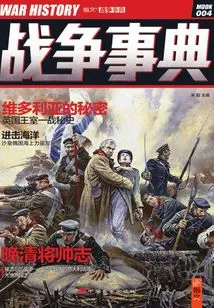
战争事典004:维多利亚的秘密
Editor-in-chief Song Yi
This book consists of "Victoria's Secret: The Secret History of the British Royal Family in World War I", "Attack on the Sea: The Development History of Czarist Russia's Maritime Power", "The Forgotten War: Remembering the Italian Battlefield in World War I", "The Generals of the Late Qing Dynasty" and the war literature "Gaochang Song of the Western Regions of the Tang Dynasty". The untold and intimate history of the British royal family during the Victorian era. For Russia, which has the largest territory in the world, having an ice-free port seems to be a luxury; huge polar bears not only eat whales on land but also long for the ocean. Starting from Peter the Great, Polar Bear began a long naval construction; the late Qing Dynasty was a troubled history, and the people and events in this period of great changes are vividly portrayed, which can bring some enlightenment to today's Chinese society; whether it was "World War I" or "World War II", Italy was the main participating country, and how did the Italians fight the war? For the Chinese, the Western Region is not a strange place. Since Zhang Qian of the Han Dynasty dug through the Western Regions, the Western Regions have become an integral part of the Central Plains Empire. No powerful and unified dynasty will let this land escape its control.
This book consists of "Victoria's Secret: The Secret History of the British Royal Family in World War I", "Attack on the Sea: The Development History of Czarist Russia's Maritime Power", "The Forgotten War: Remembering the Italian Battlefield in World War I", "The Generals of the Late Qing Dynasty" and the war literature "Gaochang Song of the Western Regions of the Tang Dynasty". The untold and intimate history of the British royal family during the Victorian era. For Russia, which has the largest territory in the world, having an ice-free port seems to be a luxury; huge polar bears not only eat whales on land but also long for the ocean. Starting from Peter the Great, Polar Bear began a long naval construction; the late Qing Dynasty was a troubled history, and the people and events in this period of great changes are vividly portrayed, which can bring some enlightenment to today's Chinese society; whether it was "World War I" or "World War II", Italy was the main participating country, and how did the Italians fight the war? For the Chinese, the Western Region is not a strange place. Since Zhang Qian of the Han Dynasty dug through the Western Regions, the Western Regions have become an integral part of the Central Plains Empire. No powerful and unified dynasty will let this land escape its control.
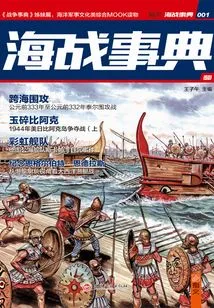
Naval War Code 001
Military海战事典001
Editor-in-chief Wang Ziwu
This book consists of "Cross-Sea Siege: The Siege of Tire from 333 BC to 332 BC", "Jade Broken Biak: The Battle for Biak Island between the United States and Japan from May to June 1944", "Rainbow Fleet: The Sinking Incident of the German High Sea Fleet at Scapa Flow" and "In Memory of Engelbert Endras: Atlantic Submarine Warfare from the Perspective of a Submarine Captain". Interpret maritime military culture from four angles: During Alexander's Eastern Expedition, in order to compete with Persia for sea control, the story of using the army to cross the sea to siege the port of Tyre shows how important sea power is to this great conqueror in human history; every combat detail of the Battle of Biak Island, which was one of the important island battles in the Pacific War; From a real perspective, the halo of honor of the German High Seas Fleet's scuttling in Scapa Flow faded, and the Rainbow Fleet incident was restored for readers; written by German Navy captain Erich Topp, he mourned his comrade who died in the battle - another captain Gelbert Endras. From this article written by the submariner himself, we can understand the submarine warfare of World War II from another perspective.
This book consists of "Cross-Sea Siege: The Siege of Tire from 333 BC to 332 BC", "Jade Broken Biak: The Battle for Biak Island between the United States and Japan from May to June 1944", "Rainbow Fleet: The Sinking Incident of the German High Sea Fleet at Scapa Flow" and "In Memory of Engelbert Endras: Atlantic Submarine Warfare from the Perspective of a Submarine Captain". Interpret maritime military culture from four angles: During Alexander's Eastern Expedition, in order to compete with Persia for sea control, the story of using the army to cross the sea to siege the port of Tyre shows how important sea power is to this great conqueror in human history; every combat detail of the Battle of Biak Island, which was one of the important island battles in the Pacific War; From a real perspective, the halo of honor of the German High Seas Fleet's scuttling in Scapa Flow faded, and the Rainbow Fleet incident was restored for readers; written by German Navy captain Erich Topp, he mourned his comrade who died in the battle - another captain Gelbert Endras. From this article written by the submariner himself, we can understand the submarine warfare of World War II from another perspective.
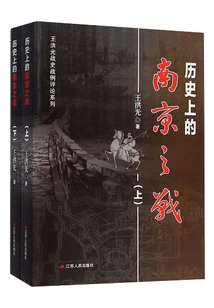
The Battle of Nanjing in History
Military历史上的南京之战
Wang Hongguang
This book is divided into three chapters: Six Dynasties, Song, Ming and Qing Dynasties, and the Republic of China. It records 27 major battles that occurred in Nanjing over a thousand years from the Battle of Jianye in the Western Jin Dynasty to the liberation of Nanjing by the People's Liberation Army. The author uses detailed historical materials and highly professional military literacy to comprehensively analyze Nanjing's military geographical environment. It provides a detailed explanation and objective in-depth analysis of the causes, processes, successes and failures of the important battles that took place in Nanjing in history. It also briefly explains and narrates the dynasty changes that accompanied the previous wars. It is a comprehensive, systematic and readable popular read on the military history of Nanjing.
This book is divided into three chapters: Six Dynasties, Song, Ming and Qing Dynasties, and the Republic of China. It records 27 major battles that occurred in Nanjing over a thousand years from the Battle of Jianye in the Western Jin Dynasty to the liberation of Nanjing by the People's Liberation Army. The author uses detailed historical materials and highly professional military literacy to comprehensively analyze Nanjing's military geographical environment. It provides a detailed explanation and objective in-depth analysis of the causes, processes, successes and failures of the important battles that took place in Nanjing in history. It also briefly explains and narrates the dynasty changes that accompanied the previous wars. It is a comprehensive, systematic and readable popular read on the military history of Nanjing.
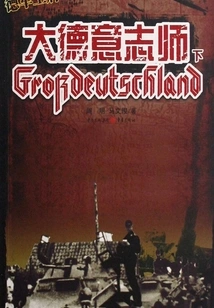
德军王牌:大德意志师(下)
Zhou Ming Ma Wenjun
The Grossdeutschland Division can be said to be the "living history" unit of the German army. It gradually developed from a small detachment to a regiment, then to a division, and finally expanded into an army. He participated in almost all major battles in Western Europe, Southern Europe and the Eastern Front, and won the highest honor of the German Wehrmacht: a total of 84 people were awarded the Knight Medal. It was hailed by the Supreme Command as the "German Fire Brigade on the Eastern Front". However, it also paid a heavy price: a total of 50,000 people were killed, including 1,500 officers. It can be said that they are a living historical portrayal of the German Army from its inception to its peak and finally its destruction during the "World War II" period.
The Grossdeutschland Division can be said to be the "living history" unit of the German army. It gradually developed from a small detachment to a regiment, then to a division, and finally expanded into an army. He participated in almost all major battles in Western Europe, Southern Europe and the Eastern Front, and won the highest honor of the German Wehrmacht: a total of 84 people were awarded the Knight Medal. It was hailed by the Supreme Command as the "German Fire Brigade on the Eastern Front". However, it also paid a heavy price: a total of 50,000 people were killed, including 1,500 officers. It can be said that they are a living historical portrayal of the German Army from its inception to its peak and finally its destruction during the "World War II" period.
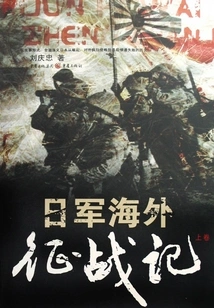
日军海外征战记(上)
Liu Qingzhong
Using history as a mirror, we can know the rise and fall. In order to arouse the vigilance of peace-loving people all over the world and maintain the good situation of peace and development; in order to awaken the mainstream public opinion in Japan and take active actions to fight against militarism; and also to warn the right-wing forces in the Japanese government and opposition parties to step back from the brink and not do the stupid thing of "shooting a stone to drop oneself in the foot". This book is based on basic historical facts, uses the form of chapters, and adopts a popular narrative method to comprehensively display the history of the Japanese army's wars, invasions, hegemony, and tragic defeats.
Using history as a mirror, we can know the rise and fall. In order to arouse the vigilance of peace-loving people all over the world and maintain the good situation of peace and development; in order to awaken the mainstream public opinion in Japan and take active actions to fight against militarism; and also to warn the right-wing forces in the Japanese government and opposition parties to step back from the brink and not do the stupid thing of "shooting a stone to drop oneself in the foot". This book is based on basic historical facts, uses the form of chapters, and adopts a popular narrative method to comprehensively display the history of the Japanese army's wars, invasions, hegemony, and tragic defeats.
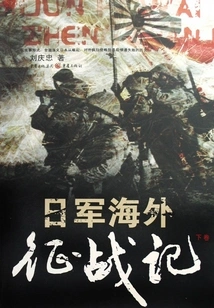
日军海外征战记(下)
Liu Qingzhong
Using history as a mirror, we can know the rise and fall. In order to arouse the vigilance of peace-loving people all over the world and maintain the good situation of peace and development; in order to awaken the mainstream public opinion in Japan and take active actions to fight against militarism; and also to warn the right-wing forces in the Japanese government and opposition parties to step back from the brink and not do the stupid thing of "shooting a stone to drop oneself in the foot". This book is based on basic historical facts, uses the form of chapters, and adopts a popular narrative method to comprehensively display the history of the Japanese army's wars, invasions, hegemony, and tragic defeats.
Using history as a mirror, we can know the rise and fall. In order to arouse the vigilance of peace-loving people all over the world and maintain the good situation of peace and development; in order to awaken the mainstream public opinion in Japan and take active actions to fight against militarism; and also to warn the right-wing forces in the Japanese government and opposition parties to step back from the brink and not do the stupid thing of "shooting a stone to drop oneself in the foot". This book is based on basic historical facts, uses the form of chapters, and adopts a popular narrative method to comprehensively display the history of the Japanese army's wars, invasions, hegemony, and tragic defeats.
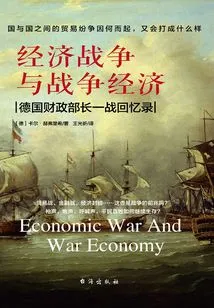
Economic War and War Economy
Military经济战争与战争经济
(germany) Carl Helfrich
This book discusses Germany's war methods and economic policies during World War I, and elaborates on two concepts: economic war and war economy. Economic war is a war against the economy. One party to the war uses a series of military and political means in order to achieve the strategic goal of weakening and destroying the enemy's economic power, and ultimately making the war situation beneficial to its own side. War economy is the economy in response to war. In order to break the economic blockade imposed by the enemy or alleviate the economic difficulties caused by the war, one party to the war adopts a series of extraordinary measures and implements some special wartime policies to support the entire war.
This book discusses Germany's war methods and economic policies during World War I, and elaborates on two concepts: economic war and war economy. Economic war is a war against the economy. One party to the war uses a series of military and political means in order to achieve the strategic goal of weakening and destroying the enemy's economic power, and ultimately making the war situation beneficial to its own side. War economy is the economy in response to war. In order to break the economic blockade imposed by the enemy or alleviate the economic difficulties caused by the war, one party to the war adopts a series of extraordinary measures and implements some special wartime policies to support the entire war.
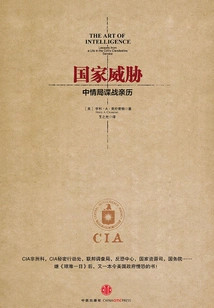
国家威胁:中情局谍战亲历
(us) Henryk Lempton
Henry A. Crumpton's distinguished 24-year espionage career began in Africa. For the next ten years, he spent the Cold War battlefields in Asia and Europe recruiting spies, from disgusting criminals to warriors. He went to the FBI and then the CIA's Counterterrorism Center, pioneering many new projects including the drone program. He went to Afghanistan and led the CIA's post-9/11 war against al-Qaeda; it was the most important and successful paramilitary covert operation in the CIA's history. Later, he returned to the CIA to run a variety of covert operations in the United States. The most fateful chapter in Crumpton's life was the time after 9/11, when he was ordered to participate in the Afghan campaign.
Henry A. Crumpton's distinguished 24-year espionage career began in Africa. For the next ten years, he spent the Cold War battlefields in Asia and Europe recruiting spies, from disgusting criminals to warriors. He went to the FBI and then the CIA's Counterterrorism Center, pioneering many new projects including the drone program. He went to Afghanistan and led the CIA's post-9/11 war against al-Qaeda; it was the most important and successful paramilitary covert operation in the CIA's history. Later, he returned to the CIA to run a variety of covert operations in the United States. The most fateful chapter in Crumpton's life was the time after 9/11, when he was ordered to participate in the Afghan campaign.
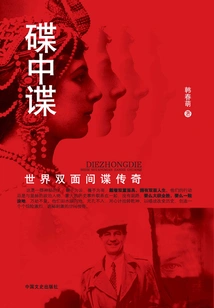
碟中谍:世界双面间谍传奇
Han Chunmeng
This book selects a group of world-famous double-faced spies as the subjects of description, and reveals the strange life of double-faced people through their thrilling life of licking blood at the tip of a knife. Among them are the battle of wits and courage between KGB and CIA agents, as well as the legendary lives of the red agents "Cambridge Five", Sorge and others; the stories of the romantic spy Marta and the prototype of 007 Popov, the secrets of the master of enchantment Wulf, the terrifying journey of the United Nations Deputy Secretary-General, and the story of the intelligence officer who almost triggered a world nuclear war. The complex psychology of this special group and their unique way of survival are revealed one by one. The espionage story is a case within a case, and the plot is thrilling and twists, making you want to put it down.
This book selects a group of world-famous double-faced spies as the subjects of description, and reveals the strange life of double-faced people through their thrilling life of licking blood at the tip of a knife. Among them are the battle of wits and courage between KGB and CIA agents, as well as the legendary lives of the red agents "Cambridge Five", Sorge and others; the stories of the romantic spy Marta and the prototype of 007 Popov, the secrets of the master of enchantment Wulf, the terrifying journey of the United Nations Deputy Secretary-General, and the story of the intelligence officer who almost triggered a world nuclear war. The complex psychology of this special group and their unique way of survival are revealed one by one. The espionage story is a case within a case, and the plot is thrilling and twists, making you want to put it down.
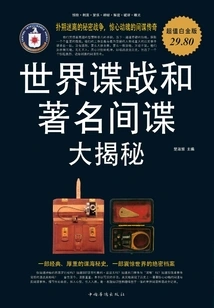
世界谍战和著名间谍大揭秘
Chu Shuhui
This book selects some of the most famous spies and the most representative espionage cases in modern times. It is based on historical data and uses realistic methods to describe it, leading readers to understand the stories of the battle of wits and courage among outstanding spies.
This book selects some of the most famous spies and the most representative espionage cases in modern times. It is based on historical data and uses realistic methods to describe it, leading readers to understand the stories of the battle of wits and courage among outstanding spies.
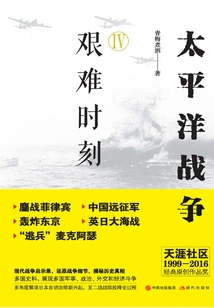
太平洋战争Ⅳ:艰难时刻
Green Plum Wine
The "Pacific War" series tells the panoramic story of the Pacific War in the Pacific, Indian Ocean and East Asia from 1941 to 1945 between Japan, the main member of the Axis Powers, and the Allies such as the United States and Britain during World War II. It completely presents the entire process of the rise and fall of Japanese militarism, in-depth analysis of the causes and consequences of the Pacific War, and displays the military, political, diplomatic and economic struggles between the Axis Powers and the Allies from multiple angles. The author writes fluently, has a clear context, quotes scriptures, restores historical facts, and has insightful insights into events and characters. The war scenes in the book are grand and the process is delicate; the characters are full-bodied and have outstanding personalities; the plot is thrilling and gripping. This book is "Hard Times", the fourth volume in the "Pacific War" series. It mainly covers the fierce battle between the United States and Japan in the Philippines, the "Quadruple Alliance"'s naval battle against Japan in Java, the Chinese Expeditionary Force's operations in Burma, Doolittle's bombing of Tokyo, the Anglo-Japanese Great Battle of Ceylon, and the Bataan Death March.
The "Pacific War" series tells the panoramic story of the Pacific War in the Pacific, Indian Ocean and East Asia from 1941 to 1945 between Japan, the main member of the Axis Powers, and the Allies such as the United States and Britain during World War II. It completely presents the entire process of the rise and fall of Japanese militarism, in-depth analysis of the causes and consequences of the Pacific War, and displays the military, political, diplomatic and economic struggles between the Axis Powers and the Allies from multiple angles. The author writes fluently, has a clear context, quotes scriptures, restores historical facts, and has insightful insights into events and characters. The war scenes in the book are grand and the process is delicate; the characters are full-bodied and have outstanding personalities; the plot is thrilling and gripping. This book is "Hard Times", the fourth volume in the "Pacific War" series. It mainly covers the fierce battle between the United States and Japan in the Philippines, the "Quadruple Alliance"'s naval battle against Japan in Java, the Chinese Expeditionary Force's operations in Burma, Doolittle's bombing of Tokyo, the Anglo-Japanese Great Battle of Ceylon, and the Bataan Death March.
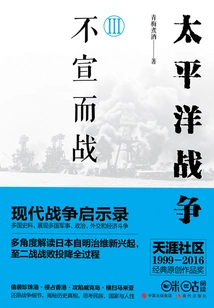
Pacific War Iii: Undeclared War
Military太平洋战争Ⅲ:不宣而战
Green Plum Wine
The "Pacific War" series tells the panoramic story of the Pacific War in the Pacific, Indian Ocean and East Asia from 1941 to 1945 between Japan, the main member of the Axis Powers, and the Allies such as the United States and Britain during World War II. It completely presents the entire process of the rise and fall of Japanese militarism, in-depth analysis of the causes and consequences of the Pacific War, and displays the military, political, diplomatic and economic struggles between the Axis Powers and the Allies from multiple angles. The author writes fluently, has a clear context, quotes scriptures and discloses historical facts, and has insightful insights into events and characters. The book describes grand war scenes and detailed processes; the characters are full-bodied and have outstanding personalities; the plot is thrilling and gripping. This book is the third volume of the "Pacific War" series, "Undeclared War". It mainly tells how Japanese militarism attacked Pearl Harbor, occupied Hong Kong, captured Wake Island, and swept through Malaya.
The "Pacific War" series tells the panoramic story of the Pacific War in the Pacific, Indian Ocean and East Asia from 1941 to 1945 between Japan, the main member of the Axis Powers, and the Allies such as the United States and Britain during World War II. It completely presents the entire process of the rise and fall of Japanese militarism, in-depth analysis of the causes and consequences of the Pacific War, and displays the military, political, diplomatic and economic struggles between the Axis Powers and the Allies from multiple angles. The author writes fluently, has a clear context, quotes scriptures and discloses historical facts, and has insightful insights into events and characters. The book describes grand war scenes and detailed processes; the characters are full-bodied and have outstanding personalities; the plot is thrilling and gripping. This book is the third volume of the "Pacific War" series, "Undeclared War". It mainly tells how Japanese militarism attacked Pearl Harbor, occupied Hong Kong, captured Wake Island, and swept through Malaya.
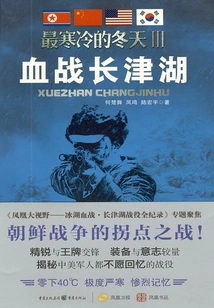
最寒冷的冬天Ⅲ:血战长津湖
He Chuwu Feng Ming Lu Hongyu
"The Bloody Battle at Changjin Lake (Coldest Winter III)" mainly describes the classic battle example in the War to Resist U. S. Aggression and Aid Korea and even in the entire military history - the Battle of Changjin Lake. Some historians say that the Battle of Changjin Lake was a turning point in history and a decisive battle in which the ace troops of China and the United States changed the course of history. The Changjin River, which originates from the Korean Peninsula, is an artificial water storage lake in northern North Korea. Here 63 years ago, the Ninth Corps of the Chinese People's Volunteer Army, wearing thin cotton-padded clothes, fought a 20-day battle with the most elite 1st Army Division of the U. S. Marine Corps in harsh weather approaching minus 40 degrees Celsius. The cruelty of this battle exceeded the imagination of all participants. Because of the extreme cold, the battle had become a desperate battle of willpower between the officers and soldiers of China and the United States. This battle has become a tragic memory that Chinese and American soldiers will never forget. The Battle of Changjin Lake forced the U. S. Military, the most powerful military force in the world, to experience its furthest defeat in history. The Chinese Volunteer Army also defended the dignity of Chinese soldiers with their blood and lives. To this day, it is still a combat example that is continuously studied and practiced in U. S. Military academies. It comprehensively and truly reproduces the heroic scenes of the Battle of Changjin Lake, starting from the strategic considerations of the United States, the Soviet Union, and China before the war, and the game between the great powers, and then describing various factors such as war preparations, strategies, and strength comparisons between China and the United States, and then to the fierce battle scenes in Xinxing-ri, Yudam-ri, and Hajieyuli. It makes people feel like they have returned to the snow-covered and smoke-filled battlefield. Watching this ancient decisive battle is extremely shocking.
"The Bloody Battle at Changjin Lake (Coldest Winter III)" mainly describes the classic battle example in the War to Resist U. S. Aggression and Aid Korea and even in the entire military history - the Battle of Changjin Lake. Some historians say that the Battle of Changjin Lake was a turning point in history and a decisive battle in which the ace troops of China and the United States changed the course of history. The Changjin River, which originates from the Korean Peninsula, is an artificial water storage lake in northern North Korea. Here 63 years ago, the Ninth Corps of the Chinese People's Volunteer Army, wearing thin cotton-padded clothes, fought a 20-day battle with the most elite 1st Army Division of the U. S. Marine Corps in harsh weather approaching minus 40 degrees Celsius. The cruelty of this battle exceeded the imagination of all participants. Because of the extreme cold, the battle had become a desperate battle of willpower between the officers and soldiers of China and the United States. This battle has become a tragic memory that Chinese and American soldiers will never forget. The Battle of Changjin Lake forced the U. S. Military, the most powerful military force in the world, to experience its furthest defeat in history. The Chinese Volunteer Army also defended the dignity of Chinese soldiers with their blood and lives. To this day, it is still a combat example that is continuously studied and practiced in U. S. Military academies. It comprehensively and truly reproduces the heroic scenes of the Battle of Changjin Lake, starting from the strategic considerations of the United States, the Soviet Union, and China before the war, and the game between the great powers, and then describing various factors such as war preparations, strategies, and strength comparisons between China and the United States, and then to the fierce battle scenes in Xinxing-ri, Yudam-ri, and Hajieyuli. It makes people feel like they have returned to the snow-covered and smoke-filled battlefield. Watching this ancient decisive battle is extremely shocking.
辽宁抗战往事
Propaganda Department Of The Cpc Liaoning Provincial Committee Communist Youth League Liaoning
To commemorate the 70th anniversary of the victory of the Chinese People's War of Resistance Against Japanese Aggression and the World Anti-Fascist War, the Party History Research Office of the Liaoning Provincial Party Committee, the Provincial Internet Propaganda Administration, and the Northeast Network Channel jointly produced a 50-episode micro-video series "History of the Anti-Japanese War in Liaoning" and published it in the form of a book.
To commemorate the 70th anniversary of the victory of the Chinese People's War of Resistance Against Japanese Aggression and the World Anti-Fascist War, the Party History Research Office of the Liaoning Provincial Party Committee, the Provincial Internet Propaganda Administration, and the Northeast Network Channel jointly produced a 50-episode micro-video series "History of the Anti-Japanese War in Liaoning" and published it in the form of a book.

Hostage of Justice
Military正义的人质
Zhang Qiu
The historical clues involved in this volume of film are three wars fought by the United States or led by the United States: the Korean War, the Vietnam War, and the War on Terror. The first two were hot wars in the Cold War. There are many internal connections between the three wars. They had a huge and profound impact on the United States, different camps, world civilization and global politics. Individuals involved in these major historical events experienced a fate that was more bizarre and difficult than the two world wars to a certain extent, because they found themselves not only trapped in the fog of war, but also in the fog of justice. In other words, the justice and injustice of war - whether it is justice in starting a war or justice in fighting, are no longer so clear-cut, but are highly controversial. So, in this case, what is the role of the individual? What is human nature?
The historical clues involved in this volume of film are three wars fought by the United States or led by the United States: the Korean War, the Vietnam War, and the War on Terror. The first two were hot wars in the Cold War. There are many internal connections between the three wars. They had a huge and profound impact on the United States, different camps, world civilization and global politics. Individuals involved in these major historical events experienced a fate that was more bizarre and difficult than the two world wars to a certain extent, because they found themselves not only trapped in the fog of war, but also in the fog of justice. In other words, the justice and injustice of war - whether it is justice in starting a war or justice in fighting, are no longer so clear-cut, but are highly controversial. So, in this case, what is the role of the individual? What is human nature?
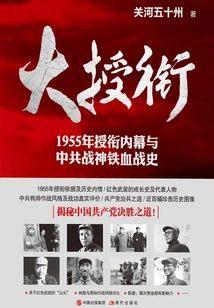
Grand Award
Military大授衔
Guanhe Fifty States
Who is the most successful person in Qilin Pavilion today? "The Great Ranking (The Inside Story of the Ranking of 1955 and the History of the Iron-Blooded War of the CCP God of War)" written by Guanhe Shishu gives a panoramic view of the major historical event of the first full-military ranking after the founding of the People's Republic of China. It truly interprets the military exploits and historical status of the top ten marshals and generals, explains in detail the basis and standards for awarding military titles such as marshals and generals, and tells the historical details of "giving up military rank" and "fighting for military rank" in the awarding of military titles. At the same time, surrounding the historical event of "Grand Conferment", this book starts from the Agrarian Revolution period, then goes to the arduous War of Resistance Against Japan and the War of Liberation, and ends with the War to Resist U. S. Aggression and Aid Korea. It can be said to be a magnificent history of the growth of the Chinese Communist Army and the history of the bloody battles of many famous "God of War" generals. It not only provides a true evaluation of the combat style and command level of these generals, but also the ups and downs of life experiences and distinctive character traits of these founding fathers.
Who is the most successful person in Qilin Pavilion today? "The Great Ranking (The Inside Story of the Ranking of 1955 and the History of the Iron-Blooded War of the CCP God of War)" written by Guanhe Shishu gives a panoramic view of the major historical event of the first full-military ranking after the founding of the People's Republic of China. It truly interprets the military exploits and historical status of the top ten marshals and generals, explains in detail the basis and standards for awarding military titles such as marshals and generals, and tells the historical details of "giving up military rank" and "fighting for military rank" in the awarding of military titles. At the same time, surrounding the historical event of "Grand Conferment", this book starts from the Agrarian Revolution period, then goes to the arduous War of Resistance Against Japan and the War of Liberation, and ends with the War to Resist U. S. Aggression and Aid Korea. It can be said to be a magnificent history of the growth of the Chinese Communist Army and the history of the bloody battles of many famous "God of War" generals. It not only provides a true evaluation of the combat style and command level of these generals, but also the ups and downs of life experiences and distinctive character traits of these founding fathers.