Library
Browse and search books
2,075 novels found
L
General FictionL
H
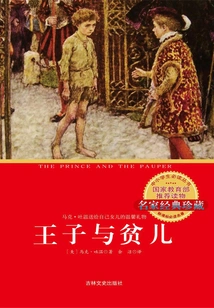
This book is set in England in the 16th century, and describes a fairy-tale story in which a prince and a pauper exchange identities. By chance, the identical-looking prince Edward and the pauper Tom exchange clothes, which leads to a reversal of fate. The former little beggar became the prince's "stand-in", and the real prince lived abroad, suffering bullying and ridicule. Later, the prince finally returned to the palace after experiencing various disasters; and Tom also returned the throne that did not belong to him to the prince. After this "exchange of identities", both teenagers learned a lot...
This book is set in England in the 16th century, and describes a fairy-tale story in which a prince and a pauper exchange identities. By chance, the identical-looking prince Edward and the pauper Tom exchange clothes, which leads to a reversal of fate. The former little beggar became the prince's "stand-in", and the real prince lived abroad, suffering bullying and ridicule. Later, the prince finally returned to the palace after experiencing various disasters; and Tom also returned the throne that did not belong to him to the prince. After this "exchange of identities", both teenagers learned a lot...
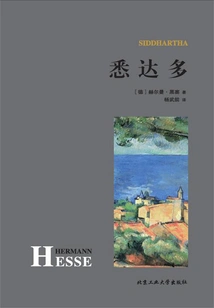
Siddhartha
General Fiction悉达多
(germany) Hermann Hesse
The clever Siddhartha is the son of a Brahmin with excellent morals and learning. In order to pursue his own value and his own truth, he left his Brahmin family and began his journey of seeking Taoism alone. In his life, he experienced love, success and other material and desires that could be achieved in earthly life, but the huge spiritual emptiness that followed made him extremely disgusted and despised himself. After making love with Kamala for the last time, he abandoned all worldly things. After almost a lifetime of pursuit, Siddhartha finally experienced the harmony and unity of all things, the indestructible nature of all life, and finally integrated himself into the eternity of the moment.
The clever Siddhartha is the son of a Brahmin with excellent morals and learning. In order to pursue his own value and his own truth, he left his Brahmin family and began his journey of seeking Taoism alone. In his life, he experienced love, success and other material and desires that could be achieved in earthly life, but the huge spiritual emptiness that followed made him extremely disgusted and despised himself. After making love with Kamala for the last time, he abandoned all worldly things. After almost a lifetime of pursuit, Siddhartha finally experienced the harmony and unity of all things, the indestructible nature of all life, and finally integrated himself into the eternity of the moment.
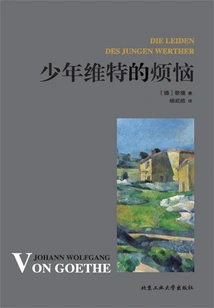
The Troubles of Young Werther
General Fiction少年维特的烦恼
(germany) Goethe
Werther is a young man who yearns for freedom and equal life. He is sentimental, frank and lovely, and has extreme thoughts. He met Lotte at a dance and fell in love with her at first sight. However, Lotte was already engaged and deeply in love with her fiancé Albert. Werther fell in love irresistibly. This love that had no results from the beginning made Werther struggle so hard that he could hardly bear the misery. In the end, Werther committed suicide by drinking a bullet with the belief that "if you cannot live for love, you will die for love."
Werther is a young man who yearns for freedom and equal life. He is sentimental, frank and lovely, and has extreme thoughts. He met Lotte at a dance and fell in love with her at first sight. However, Lotte was already engaged and deeply in love with her fiancé Albert. Werther fell in love irresistibly. This love that had no results from the beginning made Werther struggle so hard that he could hardly bear the misery. In the end, Werther committed suicide by drinking a bullet with the belief that "if you cannot live for love, you will die for love."

Magic Mountain (part 1)
General Fiction魔山(上)
F
"The Magic Mountain" is the masterpiece of Nobel Prize winner Thomas Mann. The novel is centered on a sanatorium and describes many feudal nobles and bourgeois figures in Europe, including Prussian officers, Russian ladies, Dutch colonists, Jesuits... They are all parasites of society. The entire sanatorium is filled with a morbid and dying atmosphere, symbolizing the decline of capitalist civilization. The work reveals the kinship between decadence and fascism through the ideological conflicts between the characters.
"The Magic Mountain" is the masterpiece of Nobel Prize winner Thomas Mann. The novel is centered on a sanatorium and describes many feudal nobles and bourgeois figures in Europe, including Prussian officers, Russian ladies, Dutch colonists, Jesuits... They are all parasites of society. The entire sanatorium is filled with a morbid and dying atmosphere, symbolizing the decline of capitalist civilization. The work reveals the kinship between decadence and fascism through the ideological conflicts between the characters.
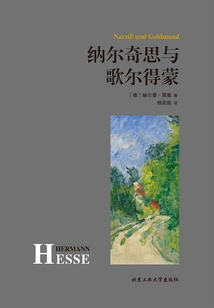
Narcissus and Goldmund
General Fiction纳尔奇思与歌尔得蒙
(germany) Hermann Hesse
In the monastery, Narcissus was extremely talented and was deeply loved by Dean Daniel. The new student Goldmund lost his mother when he was young and determined to serve God. Narcissus and Goldmund became friends. Narcissus found a temperament in Goldmund that was completely contrary to the spirit of the monastery, and advised him to abandon the shackles of asceticism and discipline, return to the nature given to him by his mother, and become an inspired person. After an unexpected encounter, Goldmund was shocked to realize his romantic nature and decided to start a wandering life. He wandered around, experiencing joy and hardship, and his wandering made him gradually mature. One day, Goldmund was shocked by the beauty of a statue of the Virgin, which inspired his deep creative talent. He began to study under a teacher and immersed himself in the art of sculpture. Finally, he returned to his close friend and mentor Narcissus. The two inspired each other with inspiration and reason respectively, and finally Goldmund mastered the art rules of turning moments into eternity and carved a perfect statue. However, his romantic nature still drives Goldmund to chase love and his last fantasy. Goldmund once again goes out on a parade to find his lover. On the way he fell seriously ill. Narcissus expressed his friendship to him before his death, which made him die with a sense of happiness.
In the monastery, Narcissus was extremely talented and was deeply loved by Dean Daniel. The new student Goldmund lost his mother when he was young and determined to serve God. Narcissus and Goldmund became friends. Narcissus found a temperament in Goldmund that was completely contrary to the spirit of the monastery, and advised him to abandon the shackles of asceticism and discipline, return to the nature given to him by his mother, and become an inspired person. After an unexpected encounter, Goldmund was shocked to realize his romantic nature and decided to start a wandering life. He wandered around, experiencing joy and hardship, and his wandering made him gradually mature. One day, Goldmund was shocked by the beauty of a statue of the Virgin, which inspired his deep creative talent. He began to study under a teacher and immersed himself in the art of sculpture. Finally, he returned to his close friend and mentor Narcissus. The two inspired each other with inspiration and reason respectively, and finally Goldmund mastered the art rules of turning moments into eternity and carved a perfect statue. However, his romantic nature still drives Goldmund to chase love and his last fantasy. Goldmund once again goes out on a parade to find his lover. On the way he fell seriously ill. Narcissus expressed his friendship to him before his death, which made him die with a sense of happiness.

Magic Mountain (part 2)
General Fiction魔山(下)
G
"The Magic Mountain" is the masterpiece of Nobel Prize winner Thomas Mann. The novel is centered on a sanatorium and describes many feudal nobles and bourgeois figures in Europe, including Prussian officers, Russian ladies, Dutch colonists, Jesuits... They are all parasites of society. The entire sanatorium is filled with a morbid and dying atmosphere, symbolizing the decline of capitalist civilization. The work reveals the kinship between decadence and fascism through the ideological conflicts between the characters.
"The Magic Mountain" is the masterpiece of Nobel Prize winner Thomas Mann. The novel is centered on a sanatorium and describes many feudal nobles and bourgeois figures in Europe, including Prussian officers, Russian ladies, Dutch colonists, Jesuits... They are all parasites of society. The entire sanatorium is filled with a morbid and dying atmosphere, symbolizing the decline of capitalist civilization. The work reveals the kinship between decadence and fascism through the ideological conflicts between the characters.
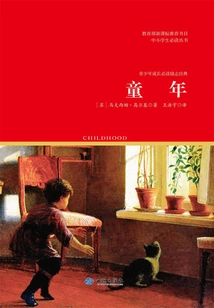
Childhood
General Fiction童年
J
When Alyosha was three years old, his father died of cholera, and his mother took him to live with his maternal grandfather. In this family, fathers and sons, brothers, and husbands and wives often quarrel and fight over property and even over trivial matters. My grandfather was moody and had a bad temper. He beat my grandmother fiercely and beat Alyosha unconscious. My grandmother was very kind to Alyosha, telling him legends, fairy tales and folk stories, and she endured all the pressures of life without complaining. The mother was forced to remarry and died of tuberculosis a few years later. After his grandfather went bankrupt, Alyosha was forced to live in the world and began to make a living independently. This book truly describes Alyosha's miserable childhood, and profoundly outlines a true and vivid picture of the vulgarity, selfishness, emptiness and boredom of the Russian petty bourgeoisie in the 19th century. At the same time, it also shows the integrity, simplicity, and diligence of the lower class working people. The image of the grandmother created in the book is one of the glorious and poetic images in Russian literature. This book is the first of Gorky's autobiographical trilogy, and it is also a work written by Gorky with great devotion and charm.
When Alyosha was three years old, his father died of cholera, and his mother took him to live with his maternal grandfather. In this family, fathers and sons, brothers, and husbands and wives often quarrel and fight over property and even over trivial matters. My grandfather was moody and had a bad temper. He beat my grandmother fiercely and beat Alyosha unconscious. My grandmother was very kind to Alyosha, telling him legends, fairy tales and folk stories, and she endured all the pressures of life without complaining. The mother was forced to remarry and died of tuberculosis a few years later. After his grandfather went bankrupt, Alyosha was forced to live in the world and began to make a living independently. This book truly describes Alyosha's miserable childhood, and profoundly outlines a true and vivid picture of the vulgarity, selfishness, emptiness and boredom of the Russian petty bourgeoisie in the 19th century. At the same time, it also shows the integrity, simplicity, and diligence of the lower class working people. The image of the grandmother created in the book is one of the glorious and poetic images in Russian literature. This book is the first of Gorky's autobiographical trilogy, and it is also a work written by Gorky with great devotion and charm.
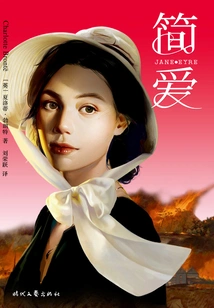
Jane Eyre
General Fiction简·爱
Charlotte Brontë
In the history of love struggle of "Cinderella", the wild lily finally ushered in the spring. As a typical modern urban girl with ordinary appearance, average figure, poor background and average education, Miss Jane Eyre ushered in the spring of her life as soon as she entered the society - she fell in love with the gentleman Rochester! However, her love does not seem to go smoothly... She has sharp edges and corners, and his character is decisive and extreme; he is unwilling to restrain his emotions, and she cannot hurt others; he ignores secular ethics, while she pursues all equality, and their love is on the rocks... In the pull of emotion, Jane becomes deeply independent and no longer only pursues romance and fun, while Rochester becomes more passionate, bold and decisive in dealing with the world. In the process of running in, the two people accepted the test of the fire of truth. After the unspeakable spiritual torture, they fit in with each other, gradually became perfect, and ushered in spring.
In the history of love struggle of "Cinderella", the wild lily finally ushered in the spring. As a typical modern urban girl with ordinary appearance, average figure, poor background and average education, Miss Jane Eyre ushered in the spring of her life as soon as she entered the society - she fell in love with the gentleman Rochester! However, her love does not seem to go smoothly... She has sharp edges and corners, and his character is decisive and extreme; he is unwilling to restrain his emotions, and she cannot hurt others; he ignores secular ethics, while she pursues all equality, and their love is on the rocks... In the pull of emotion, Jane becomes deeply independent and no longer only pursues romance and fun, while Rochester becomes more passionate, bold and decisive in dealing with the world. In the process of running in, the two people accepted the test of the fire of truth. After the unspeakable spiritual torture, they fit in with each other, gradually became perfect, and ushered in spring.
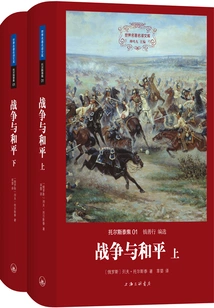
War and Peace (complete Collection)
General Fiction战争与和平(全集)
N
"War and Peace" by the great Russian writer Leo Tolstoy is an immortal masterpiece in the history of world literature. The most outstanding artistic achievement of the novel is its majestic, grand and complex structure and strict and orderly layout. Tolstoy used a genius to navigate between war and peace, psychology and society, history and philosophy, marriage and religion, with clear priorities and unique ingenuity. The novel "War and Peace" uses the lives of the four aristocratic families of Kuragin, Rostov, Bolkonsky and Bezukhov as the plot clue, and magnificently reflects the major historical events of Russian society from the early 19th century to the 1920s.
"War and Peace" by the great Russian writer Leo Tolstoy is an immortal masterpiece in the history of world literature. The most outstanding artistic achievement of the novel is its majestic, grand and complex structure and strict and orderly layout. Tolstoy used a genius to navigate between war and peace, psychology and society, history and philosophy, marriage and religion, with clear priorities and unique ingenuity. The novel "War and Peace" uses the lives of the four aristocratic families of Kuragin, Rostov, Bolkonsky and Bezukhov as the plot clue, and magnificently reflects the major historical events of Russian society from the early 19th century to the 1920s.
Y
Y
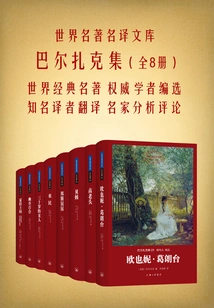
世界名著名译文库:巴尔扎克集(全8册)
I
"Eugénie Grandet" is Balzac's famous work and "one of the outstanding pictures" in "The Human Comedy". The novel tells a story about money destroying a family. "Petro Goriot" takes Paris in late 1819 and early 1820 as the social background. Through the story of the noodle merchant Goriot and his two daughters, as well as the "history of struggle" of the young college student Rastignac, it describes the bizarre and bizarre life of Paris society. "Aunt Bei" is an important work of Balzac. The novel is based on the life of the French upper class in the mid-19th century, and takes the fate of Baron Hulot de Hervé's family as the main line. It tells the story of how the baron, driven by crazy passion, betrayed his pure wife step by step, hurt his innocent daughter, ruined the family's reputation, tarnished the army's reputation, and was ultimately ruined. "Uncle Bangs" is Balzac's masterpiece and is known as the "peak of his art". Through Uncle Bangs, Balzac vividly presents to us the greatness and nobility of mankind, as well as the humbleness, ugliness and filth of mankind. "The Peasant" is Balzac's masterpiece. The novel describes the conflict between the land ownership of aristocratic large estates and the small land ownership of the bourgeoisie, and the peasants are in the middle of these two social forces, just like "a bug is caught between a hammer and an anvil." Balzac here describes the poverty situation in the countryside after the bourgeois revolution under the double exploitation of landlords and bourgeoisie, the farmers' strong hatred for the exploiters, and the farmers' dependence on loan sharks determined by their economic status at the time. "A Woman of Thirty" is an important work in Balzac's "Human Comedy". This book is actually a combination of six short stories published at different times. When included in "The Human Comedy", the author unified the names of the protagonists of the six stories and changed the overall title to "A Thirty-Year-Old Woman". In this book, for the first time, the author connects private customs with the era of characters' lives. The conflicts in private life and the conflicts in social life are integrated and complementary to each other. Love life, family life and public life are interdependent and harmonious with each other. In addition, this book also includes "The False Mistress". "Lily of the Valley" is one of Balzac's outstanding novels and a shining pearl in the treasure house of French literature. The novel describes the young aristocrat Felix's pursuit of Countess Morserve. This is a sad and touching love song. In the story that happened in the castle, we can see the changing times. The influence of the Hundred Days Coup, the changes in the palace, the exile life of the old nobles, the fortune of the young nobles in Paris, etc., Are all deeply marked by the times. "Colonel Chabe" is an anthology of Balzac's short stories and short stories, including "The Cat Ball Shop", "Gobusek", "Double Family", "Colonel Chabe", "The Abandoned Woman", "The Atheist at Mass" and "The Privacy of the Princesse de Cardignan".
"Eugénie Grandet" is Balzac's famous work and "one of the outstanding pictures" in "The Human Comedy". The novel tells a story about money destroying a family. "Petro Goriot" takes Paris in late 1819 and early 1820 as the social background. Through the story of the noodle merchant Goriot and his two daughters, as well as the "history of struggle" of the young college student Rastignac, it describes the bizarre and bizarre life of Paris society. "Aunt Bei" is an important work of Balzac. The novel is based on the life of the French upper class in the mid-19th century, and takes the fate of Baron Hulot de Hervé's family as the main line. It tells the story of how the baron, driven by crazy passion, betrayed his pure wife step by step, hurt his innocent daughter, ruined the family's reputation, tarnished the army's reputation, and was ultimately ruined. "Uncle Bangs" is Balzac's masterpiece and is known as the "peak of his art". Through Uncle Bangs, Balzac vividly presents to us the greatness and nobility of mankind, as well as the humbleness, ugliness and filth of mankind. "The Peasant" is Balzac's masterpiece. The novel describes the conflict between the land ownership of aristocratic large estates and the small land ownership of the bourgeoisie, and the peasants are in the middle of these two social forces, just like "a bug is caught between a hammer and an anvil." Balzac here describes the poverty situation in the countryside after the bourgeois revolution under the double exploitation of landlords and bourgeoisie, the farmers' strong hatred for the exploiters, and the farmers' dependence on loan sharks determined by their economic status at the time. "A Woman of Thirty" is an important work in Balzac's "Human Comedy". This book is actually a combination of six short stories published at different times. When included in "The Human Comedy", the author unified the names of the protagonists of the six stories and changed the overall title to "A Thirty-Year-Old Woman". In this book, for the first time, the author connects private customs with the era of characters' lives. The conflicts in private life and the conflicts in social life are integrated and complementary to each other. Love life, family life and public life are interdependent and harmonious with each other. In addition, this book also includes "The False Mistress". "Lily of the Valley" is one of Balzac's outstanding novels and a shining pearl in the treasure house of French literature. The novel describes the young aristocrat Felix's pursuit of Countess Morserve. This is a sad and touching love song. In the story that happened in the castle, we can see the changing times. The influence of the Hundred Days Coup, the changes in the palace, the exile life of the old nobles, the fortune of the young nobles in Paris, etc., Are all deeply marked by the times. "Colonel Chabe" is an anthology of Balzac's short stories and short stories, including "The Cat Ball Shop", "Gobusek", "Double Family", "Colonel Chabe", "The Abandoned Woman", "The Atheist at Mass" and "The Privacy of the Princesse de Cardignan".
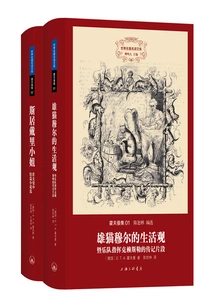
世界名著名译文库:霍夫曼集(套装共2册)
J
"Tomcat Moore's View of Life" is the author's masterpiece, marking the peak of Hoffmann's creation and an excellent work of the German Romantics. The novel consists of two parts: a biography of Tomcat Moore and a biography of bandleader Kreisler. Judging from the title of the novel, the former is the main body of the work. In fact, the latter is the core of the novel. The form is loose, but the theme is consistent. They both deal with the relationship between artists and society. The short stories and novellas selected in this book are all masterpieces of Hoffmann. Among them, the novella "Miss Scoudeli" is set in Paris during the reign of Louis XIV in the 17th century. It tells a bizarre story about an eccentric artist. It was hailed by some critics as "the first important detective novel" in German literature and had a certain influence on future generations of such novels. "Beautiful Mandala" tells a bizarre marriage and love story of a young college student. "Cousin's Corner Window" is a conversational novel about an episode in the life of a seriously ill, quadriplegic writer in his twilight years. "The Golden Vase" and "The Legend of Zack the Dwarf" are both artistic fairy tales. The former uses a humorous style to describe how a college student escapes from the depressing philistine environment and escapes to a whimsical and wonderful kingdom; the latter criticizes the current social ills and the corruption of the feudal court through the experience of a character who has no real talent and only knows how to cheat and bluff. It is Hoffmann's most cherished masterpiece and the most important satirical work of the German Romantics.
"Tomcat Moore's View of Life" is the author's masterpiece, marking the peak of Hoffmann's creation and an excellent work of the German Romantics. The novel consists of two parts: a biography of Tomcat Moore and a biography of bandleader Kreisler. Judging from the title of the novel, the former is the main body of the work. In fact, the latter is the core of the novel. The form is loose, but the theme is consistent. They both deal with the relationship between artists and society. The short stories and novellas selected in this book are all masterpieces of Hoffmann. Among them, the novella "Miss Scoudeli" is set in Paris during the reign of Louis XIV in the 17th century. It tells a bizarre story about an eccentric artist. It was hailed by some critics as "the first important detective novel" in German literature and had a certain influence on future generations of such novels. "Beautiful Mandala" tells a bizarre marriage and love story of a young college student. "Cousin's Corner Window" is a conversational novel about an episode in the life of a seriously ill, quadriplegic writer in his twilight years. "The Golden Vase" and "The Legend of Zack the Dwarf" are both artistic fairy tales. The former uses a humorous style to describe how a college student escapes from the depressing philistine environment and escapes to a whimsical and wonderful kingdom; the latter criticizes the current social ills and the corruption of the feudal court through the experience of a character who has no real talent and only knows how to cheat and bluff. It is Hoffmann's most cherished masterpiece and the most important satirical work of the German Romantics.
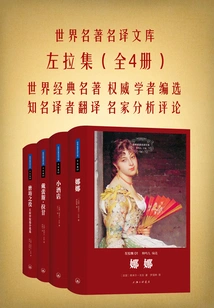
World-famous Translation Library: Zola (all 4 Volumes)
General Fiction世界名著名译文库:左拉集(全4册)
(france) Emile Zola
"Nana" The girl Nana was spotted by the entertainment theater manager, and her starring role in "Venus Blonde" was a success. Men from the upper class of Paris fell in love with her. The rise and fall of Nana's life became a portrayal of the corrupt and degenerate society of the Second Empire. In "The Little Hotel", the laundress Qiervise gave birth to two sons to the shoemaker Lantier when she was a minor. He was later abandoned and married to Coupeau, a house builder. After Coupeau suffered a work injury, he went in and out of the small hotel all day long. Soon, Kirvis began to drink too much and fell into depression. In the end, Coupeau died of a stroke in the lunatic asylum after drinking, and Kirvis also died in the black hole at the bottom of the stairs. "Thérèse Lacan" is a novel by Zola. It describes a woman, Thérèse, who meets and has a passionate collision with a young man, Laurent, after marrying her aunt's son, Camille. In order to escape the horrific hallucinations after the murder, the man and woman finally chose to commit suicide by taking poison. "Battle at the Mill" is a collection of Zola's short stories and short stories. It exposes the political darkness, religious hypocrisy, and bourgeois ugliness during the Second French Empire and the Third Republic. It sympathizes with the suffering of the poor, praises the greatness of workers, contrasts the loss of honor concepts of the ruling class and the heroism of ordinary people, and depicts the lives of small citizens and the activities of artists. The subject matter and content are quite extensive and rich.
"Nana" The girl Nana was spotted by the entertainment theater manager, and her starring role in "Venus Blonde" was a success. Men from the upper class of Paris fell in love with her. The rise and fall of Nana's life became a portrayal of the corrupt and degenerate society of the Second Empire. In "The Little Hotel", the laundress Qiervise gave birth to two sons to the shoemaker Lantier when she was a minor. He was later abandoned and married to Coupeau, a house builder. After Coupeau suffered a work injury, he went in and out of the small hotel all day long. Soon, Kirvis began to drink too much and fell into depression. In the end, Coupeau died of a stroke in the lunatic asylum after drinking, and Kirvis also died in the black hole at the bottom of the stairs. "Thérèse Lacan" is a novel by Zola. It describes a woman, Thérèse, who meets and has a passionate collision with a young man, Laurent, after marrying her aunt's son, Camille. In order to escape the horrific hallucinations after the murder, the man and woman finally chose to commit suicide by taking poison. "Battle at the Mill" is a collection of Zola's short stories and short stories. It exposes the political darkness, religious hypocrisy, and bourgeois ugliness during the Second French Empire and the Third Republic. It sympathizes with the suffering of the poor, praises the greatness of workers, contrasts the loss of honor concepts of the ruling class and the heroism of ordinary people, and depicts the lives of small citizens and the activities of artists. The subject matter and content are quite extensive and rich.
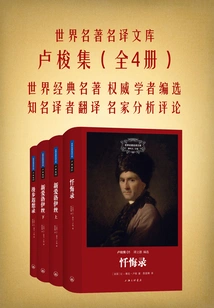
World-famous Translation Library: Rousseau (all 4 Volumes)
General Fiction世界名著名译文库:卢梭集(全4册)
I
The world-famous translation library: Rousseau (a total of 3 volumes) contains: "Rousseau: Confessions", "Rousseau: Reveries on a Walk", "Rousseau: New Héloïse (Part 1 and 2)". Introduction to episode content: "Rousseau: Confessions" is Rousseau's autobiography. The book is divided into two parts. The theme is to reflect some kind of cruelty and oppression of people by society through Rousseau's own rough life. In this book, which is called "a strange book in the history of literature", Rousseau analyzes himself as a human specimen. He presents his soul to readers sincerely and nakedly, and his level of frankness is unprecedented. Because of the spirit of individual freedom reflected in the work, the work is regarded as a precursor to romantic literature in the 19th century. "Rousseau's Collection: Reveries on a Walk" is Rousseau's posthumous work and the sequel to "Confessions". Rousseau's works advocate self-expression, express feelings, and love nature. These characteristics are more prominent in "Ramble" than in other works. The Rousseau in this work is Rousseau in his most innocent state. This work is the product of his intimate conversation with his own soul, and is an analysis and dissection of his own soul. "Rousseau: New Héloïse (Part 1 and 2)" is an epistolary novel written by Rousseau in 1761 and is known as the most important novel in the 18th century. The book is divided into six parts. The plot of the novel is from 1732 to 1745 and consists of 163 letters. The title of the book is borrowed from the love tragedy of the 12th century girl Heloise and her teacher Abelard. The novel tells the story of the love tragedy of the heroine Julie and her teacher Saint-Preux who fell in love but failed to do so. This book is the first novel in the history of French literature that praises love as a noble sentiment of human beings and describes the beautiful scenery of nature. It had a huge influence on subsequent French literature.
The world-famous translation library: Rousseau (a total of 3 volumes) contains: "Rousseau: Confessions", "Rousseau: Reveries on a Walk", "Rousseau: New Héloïse (Part 1 and 2)". Introduction to episode content: "Rousseau: Confessions" is Rousseau's autobiography. The book is divided into two parts. The theme is to reflect some kind of cruelty and oppression of people by society through Rousseau's own rough life. In this book, which is called "a strange book in the history of literature", Rousseau analyzes himself as a human specimen. He presents his soul to readers sincerely and nakedly, and his level of frankness is unprecedented. Because of the spirit of individual freedom reflected in the work, the work is regarded as a precursor to romantic literature in the 19th century. "Rousseau's Collection: Reveries on a Walk" is Rousseau's posthumous work and the sequel to "Confessions". Rousseau's works advocate self-expression, express feelings, and love nature. These characteristics are more prominent in "Ramble" than in other works. The Rousseau in this work is Rousseau in his most innocent state. This work is the product of his intimate conversation with his own soul, and is an analysis and dissection of his own soul. "Rousseau: New Héloïse (Part 1 and 2)" is an epistolary novel written by Rousseau in 1761 and is known as the most important novel in the 18th century. The book is divided into six parts. The plot of the novel is from 1732 to 1745 and consists of 163 letters. The title of the book is borrowed from the love tragedy of the 12th century girl Heloise and her teacher Abelard. The novel tells the story of the love tragedy of the heroine Julie and her teacher Saint-Preux who fell in love but failed to do so. This book is the first novel in the history of French literature that praises love as a noble sentiment of human beings and describes the beautiful scenery of nature. It had a huge influence on subsequent French literature.
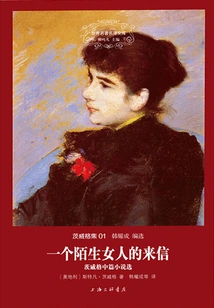
Letters from an Unknown Woman: Selected Novellas by Zweig
General Fiction一个陌生女人的来信:茨威格中篇小说选
J
This book is a collection of Zweig's novellas. "Letter from an Unknown Woman" tells the story of a man who received a thick unsigned letter on his forty-first birthday. The letter was written by a dying woman. Between the lines is her unforgettable love for him for eighteen years, but the man who received the letter had no idea about it. In addition, it also includes the famous works "The Burning Secret", "Tropical Madness", "Twenty-Four Hours in a Woman's Life", "The Story of Chess", etc.
This book is a collection of Zweig's novellas. "Letter from an Unknown Woman" tells the story of a man who received a thick unsigned letter on his forty-first birthday. The letter was written by a dying woman. Between the lines is her unforgettable love for him for eighteen years, but the man who received the letter had no idea about it. In addition, it also includes the famous works "The Burning Secret", "Tropical Madness", "Twenty-Four Hours in a Woman's Life", "The Story of Chess", etc.
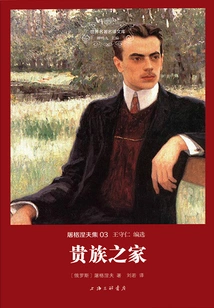
Noble House
General Fiction贵族之家
Turgenev
"The Noble House" is the second in Turgenev's series of six novels. It is the most beautiful and moving one, written in 1859. This is a deeply touching love novel and a social novel that profoundly reflects the times. The fate of each character, their love experiences, joys and sorrows, are closely related to the era and historical reality in which they live. The character traits of each character in the work specifically reflect the imprint of the times and history. The personality traits and interests and considerations they show in love are all expressions of human nature under specific social and historical conditions. It is rare in the history of world culture that the products of artistic image thinking can reach such a high level of ideological generalization. Therefore, this novel has become an immortal classic in the history of world literature.
"The Noble House" is the second in Turgenev's series of six novels. It is the most beautiful and moving one, written in 1859. This is a deeply touching love novel and a social novel that profoundly reflects the times. The fate of each character, their love experiences, joys and sorrows, are closely related to the era and historical reality in which they live. The character traits of each character in the work specifically reflect the imprint of the times and history. The personality traits and interests and considerations they show in love are all expressions of human nature under specific social and historical conditions. It is rare in the history of world culture that the products of artistic image thinking can reach such a high level of ideological generalization. Therefore, this novel has become an immortal classic in the history of world literature.
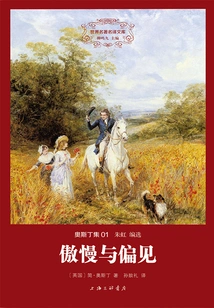
Pride and Prejudice
General Fiction傲慢与偏见
(uk) Jane Austen
"Pride and Prejudice" is Jane Austen's masterpiece. This work uses daily life as the material. It goes against the content and artificial writing methods of sentimental novels that were popular in the society at that time. It vividly reflects the conservative and closed-off British rural life and world conditions from the end of the 18th century to the beginning of the 19th century. This social style novel not only attracted a large number of readers at the time, but also provides readers with unique artistic enjoyment today. This book has been adapted into movies many times.
"Pride and Prejudice" is Jane Austen's masterpiece. This work uses daily life as the material. It goes against the content and artificial writing methods of sentimental novels that were popular in the society at that time. It vividly reflects the conservative and closed-off British rural life and world conditions from the end of the 18th century to the beginning of the 19th century. This social style novel not only attracted a large number of readers at the time, but also provides readers with unique artistic enjoyment today. This book has been adapted into movies many times.
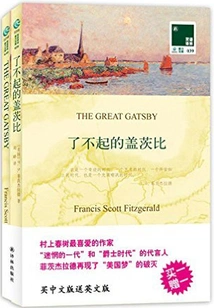
了不起的盖茨比 The Great Gatsby(中英双语)
(u. S.) F. S. Fitzgerald
"The Great Gatsby" is a short story written by the American writer F. S. Fitzgerald in 1925, set in New York City and Long Island in the 1920s. The background of the novel is set in the white circle of the middle and upper classes of modern American society, and is unfolded through Calloway's narration. It shows the disillusionment of the "American Dream". This novel denounces the American privileged class represented by Tom as being selfish and arbitrary and doing whatever they want. It describes Gatsby's tragedy with a sympathetic attitude and points out that his tragedy comes from his fantasy of life and love and his lack of understanding of upper-class characters.
"The Great Gatsby" is a short story written by the American writer F. S. Fitzgerald in 1925, set in New York City and Long Island in the 1920s. The background of the novel is set in the white circle of the middle and upper classes of modern American society, and is unfolded through Calloway's narration. It shows the disillusionment of the "American Dream". This novel denounces the American privileged class represented by Tom as being selfish and arbitrary and doing whatever they want. It describes Gatsby's tragedy with a sympathetic attitude and points out that his tragedy comes from his fantasy of life and love and his lack of understanding of upper-class characters.
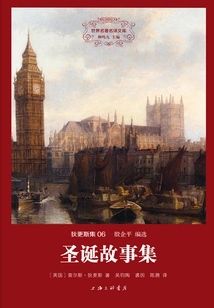
Christmas Stories
General Fiction圣诞故事集
H
There are five novels in "Christmas Stories": "A Christmas Carol", "Church Bells", "The Cricket on the Fireside", "The Battle of Life", and "The Possessed Man". These Christmas stories were published between 1843 and 1848. In "A Christmas Story", Dickens used fascinating artistic techniques to publicize both the poor and the rich, asking for an improvement in the "destiny" of the poor and a transformation of the moral character of the rich. From a humanitarian perspective, the writer exposed the evils of the ruling class, expressed deep sympathy for the homeless and unemployed workers, and expressed great anger towards the oppressors.
There are five novels in "Christmas Stories": "A Christmas Carol", "Church Bells", "The Cricket on the Fireside", "The Battle of Life", and "The Possessed Man". These Christmas stories were published between 1843 and 1848. In "A Christmas Story", Dickens used fascinating artistic techniques to publicize both the poor and the rich, asking for an improvement in the "destiny" of the poor and a transformation of the moral character of the rich. From a humanitarian perspective, the writer exposed the evils of the ruling class, expressed deep sympathy for the homeless and unemployed workers, and expressed great anger towards the oppressors.
Ac
General Fictionac
H
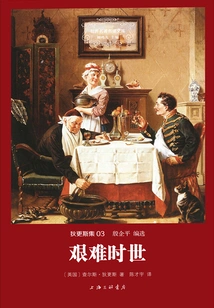
"Hard Times" is Dickens's masterpiece and one of the more influential novels in the 19th century. Gregorian is a member of Parliament and a so-called "educator". He prides himself on advocating a set of education methods that suppress human nature. The wealthy businessman Bounderby regards himself as a self-made success. They share the same values - utilitarianism as the principle of life, and together they control the economic system and educational institutions of the town. It is precisely based on the "down-to-earth" education method and the "valuing reality" life principle that Gregorian's daughter Louisa was eventually forced to marry Bounderby, who was more than thirty years older than her, while her son Tom became a prodigal son with dissolute behavior; it was also because of the "based on reality" utilitarian life principle that Bounderby even abandoned his biological mother and pretended to be an orphan in order to brag about being self-made, and ultimately ended up being betrayed and separated from his relatives.
"Hard Times" is Dickens's masterpiece and one of the more influential novels in the 19th century. Gregorian is a member of Parliament and a so-called "educator". He prides himself on advocating a set of education methods that suppress human nature. The wealthy businessman Bounderby regards himself as a self-made success. They share the same values - utilitarianism as the principle of life, and together they control the economic system and educational institutions of the town. It is precisely based on the "down-to-earth" education method and the "valuing reality" life principle that Gregorian's daughter Louisa was eventually forced to marry Bounderby, who was more than thirty years older than her, while her son Tom became a prodigal son with dissolute behavior; it was also because of the "based on reality" utilitarian life principle that Bounderby even abandoned his biological mother and pretended to be an orphan in order to brag about being self-made, and ultimately ended up being betrayed and separated from his relatives.
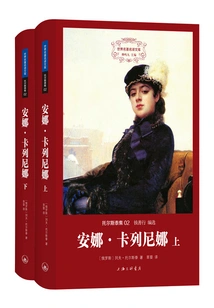
Anna Karenina (complete Works)
General Fiction安娜·卡列尼娜(全集)
N
"Anna Karenina" is the representative work of the famous Russian writer Leo Tolstoy. Through the two clues of the heroine Anna's tragedy of pursuing love, and Levin's reform and exploration in the face of crisis in the countryside, this book depicts a broad and colorful picture of Russia from Moscow to the countryside in other provinces. It has described more than 150 characters and is a social encyclopedia-style work.
"Anna Karenina" is the representative work of the famous Russian writer Leo Tolstoy. Through the two clues of the heroine Anna's tragedy of pursuing love, and Levin's reform and exploration in the face of crisis in the countryside, this book depicts a broad and colorful picture of Russia from Moscow to the countryside in other provinces. It has described more than 150 characters and is a social encyclopedia-style work.
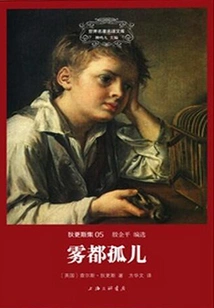
R
General Fictionr
H
"Oliver Twist", also translated as "Oliver Twist", was published in 1838 and is the author's first social novel. Set in the foggy city of London, it tells the story of an orphan's tragic life experience and experiences. The protagonist Oliver grew up in an orphanage, experienced an apprenticeship, escaped with difficulty, fell into a den of thieves by mistake, and was forced to work with a vicious murderer. After experiencing countless hardships, he finally found out his life experience and gained happiness with the help of kind people. The work exposed the miserable life of people at the bottom of society through the tragic experience of the orphan Oliver, which aroused great repercussions at the time.
"Oliver Twist", also translated as "Oliver Twist", was published in 1838 and is the author's first social novel. Set in the foggy city of London, it tells the story of an orphan's tragic life experience and experiences. The protagonist Oliver grew up in an orphanage, experienced an apprenticeship, escaped with difficulty, fell into a den of thieves by mistake, and was forced to work with a vicious murderer. After experiencing countless hardships, he finally found out his life experience and gained happiness with the help of kind people. The work exposed the miserable life of people at the bottom of society through the tragic experience of the orphan Oliver, which aroused great repercussions at the time.
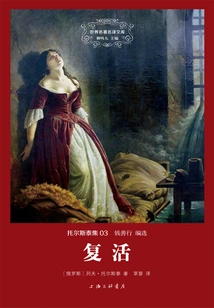
S
General Fictions
N
"Resurrection" is based on a real event. It mainly describes the hero Nekhludoff seducing his aunt's maid Maslova, making her pregnant and driving her out of the house. Later, she became a prostitute and was tried for murder. The hero appeared in court as a juror and was deeply condemned by his conscience when he saw the woman he had seduced in the past. He ran to avenge her and asked to marry her to atone for his sins. After his appeal failed, he accompanied her into exile in Siberia. His behavior touched Maslova and made her fall in love with him again. But in order not to damage his reputation and status, she finally did not marry him and married a revolutionary.
"Resurrection" is based on a real event. It mainly describes the hero Nekhludoff seducing his aunt's maid Maslova, making her pregnant and driving her out of the house. Later, she became a prostitute and was tried for murder. The hero appeared in court as a juror and was deeply condemned by his conscience when he saw the woman he had seduced in the past. He ran to avenge her and asked to marry her to atone for his sins. After his appeal failed, he accompanied her into exile in Siberia. His behavior touched Maslova and made her fall in love with him again. But in order not to damage his reputation and status, she finally did not marry him and married a revolutionary.
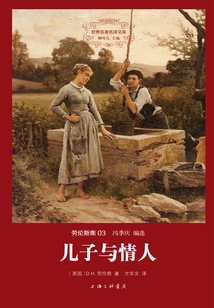
Son and Lover
General Fiction儿子与情人
(english) D. H. Lawrence
Lawrence's most banned novel. Penetrating instinctive desires and touching the "Oedipus complex" deep in human nature. "Sons and Lovers" is Lawrence's first novel. The novel took the world literary world by storm, and its charm remains undiminished to this day. The father in the novel, Morel, is a miner. Years of heavy labor and coal mine accidents have made him grumpy. His mother was born in a middle-class family and has a certain upbringing. When the couple is at odds, the mother begins to dislike her husband and devotes all her emotions and hopes to the child, resulting in abnormal maternal love. The protagonist Paul Morel suffered from physical and spiritual struggles in his relationship with his first love Miriam and married woman Clara until his mother died of illness.
Lawrence's most banned novel. Penetrating instinctive desires and touching the "Oedipus complex" deep in human nature. "Sons and Lovers" is Lawrence's first novel. The novel took the world literary world by storm, and its charm remains undiminished to this day. The father in the novel, Morel, is a miner. Years of heavy labor and coal mine accidents have made him grumpy. His mother was born in a middle-class family and has a certain upbringing. When the couple is at odds, the mother begins to dislike her husband and devotes all her emotions and hopes to the child, resulting in abnormal maternal love. The protagonist Paul Morel suffered from physical and spiritual struggles in his relationship with his first love Miriam and married woman Clara until his mother died of illness.
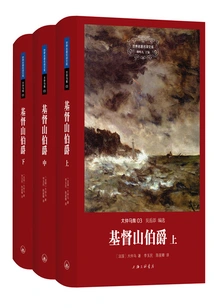
F
General FictionF
I
"The Count of Monte Cristo" is a popular historical novel and the representative work of the famous French writer Alexandre Dumas (1802-1870). Dontès, the first mate of the Pharaoh, was entrusted by the captain to deliver a letter to the Bonapartists. He was framed by two despicable villains and a judge, and was sentenced to death. The inmate Father Faria taught him all kinds of knowledge, and before his death, he told him the secrets of a group of treasures buried on the island of Monte Cristo. After escaping from prison, Dontes found the treasure and became a millionaire. From then on, he was known as the Count of Monte Cristo. After careful planning, he repaid his benefactor and punished his enemies. This book is full of romantic legend, and the chapters are unique, novel and fascinating.
"The Count of Monte Cristo" is a popular historical novel and the representative work of the famous French writer Alexandre Dumas (1802-1870). Dontès, the first mate of the Pharaoh, was entrusted by the captain to deliver a letter to the Bonapartists. He was framed by two despicable villains and a judge, and was sentenced to death. The inmate Father Faria taught him all kinds of knowledge, and before his death, he told him the secrets of a group of treasures buried on the island of Monte Cristo. After escaping from prison, Dontes found the treasure and became a millionaire. From then on, he was known as the Count of Monte Cristo. After careful planning, he repaid his benefactor and punished his enemies. This book is full of romantic legend, and the chapters are unique, novel and fascinating.
P
General Fictionp
I
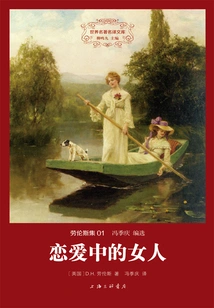
"Women in Love" is Lawrence's most important work and represents the highest achievement of Lawrence's novel creation. The novel takes the love stories of Ursula, Gudrun and their respective boyfriends as the development context. It explores the essential role of independent and complete personality and perfect sexual relations from the relationship between men and women, men and men, and women and women, and seeks eternal value from the essence of life and physical faith. At the same time, the novel revolves around pure destructiveness, and from the rushing death impulse, it launches discussions on philosophy, life, love, death and other fields, showing the profound modernity of the work. The works are detailed, beautiful and profound.
"Women in Love" is Lawrence's most important work and represents the highest achievement of Lawrence's novel creation. The novel takes the love stories of Ursula, Gudrun and their respective boyfriends as the development context. It explores the essential role of independent and complete personality and perfect sexual relations from the relationship between men and women, men and men, and women and women, and seeks eternal value from the essence of life and physical faith. At the same time, the novel revolves around pure destructiveness, and from the rushing death impulse, it launches discussions on philosophy, life, love, death and other fields, showing the profound modernity of the work. The works are detailed, beautiful and profound.
New Héloïse (complete Collection)
General Fiction新爱洛伊丝(全集)
H
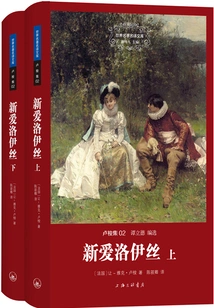
"New Héloïse" is an epistolary novel written by Rousseau in 1761 and is known as the most important novel of the 18th century. The book is divided into six parts. The plot of the novel is from 1732 to 1745 and consists of 163 letters. The title of the book is borrowed from the love tragedy of the 12th century girl Heloise and her teacher Abelard. The novel tells the story of the love tragedy of the heroine Julie and her teacher Saint-Preux who fell in love but failed to do so. This book is the first novel in the history of French literature that praises love as a noble sentiment of human beings and describes the beautiful scenery of nature. It had a huge influence on subsequent French literature.
"New Héloïse" is an epistolary novel written by Rousseau in 1761 and is known as the most important novel of the 18th century. The book is divided into six parts. The plot of the novel is from 1732 to 1745 and consists of 163 letters. The title of the book is borrowed from the love tragedy of the 12th century girl Heloise and her teacher Abelard. The novel tells the story of the love tragedy of the heroine Julie and her teacher Saint-Preux who fell in love but failed to do so. This book is the first novel in the history of French literature that praises love as a noble sentiment of human beings and describes the beautiful scenery of nature. It had a huge influence on subsequent French literature.
Demons (Complete Works)
General Fiction群魔(全集)
(russian) Dostoevsky
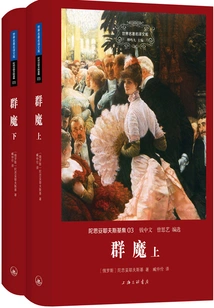
"Demons" is the most controversial work of the great Russian writer Dostoevsky. The work created a portrait of the old liberal intellectuals in the 1840s and the radical youth in the early 1970s. Liberal intellectuals represented by Stepan Trofimovich had social conscience and advocated truth, goodness and beauty, but at the same time they were timid and mediocre; social radicals represented by Peter Verkhovinsky opposed the old social order and despised the powerful, but at the same time they were cunning, vicious and shameless. The other protagonist, Stavrogin, is a typical Dostoevsky character. He has a dual personality. On the one hand, he is despicable, dissolute, and an extreme hedonist. His soul and body are far away from Christ, and he lives a devilish life; Stavrogin has a strong sense of guilt, but he is unable to bear his own sins and cannot redeem himself, so he can only eliminate his sins by annihilating his own body-committing suicide. In this world full of evil, there is always some sense of goodness, and a faint light shines brightly or covertly in everyone.
"Demons" is the most controversial work of the great Russian writer Dostoevsky. The work created a portrait of the old liberal intellectuals in the 1840s and the radical youth in the early 1970s. Liberal intellectuals represented by Stepan Trofimovich had social conscience and advocated truth, goodness and beauty, but at the same time they were timid and mediocre; social radicals represented by Peter Verkhovinsky opposed the old social order and despised the powerful, but at the same time they were cunning, vicious and shameless. The other protagonist, Stavrogin, is a typical Dostoevsky character. He has a dual personality. On the one hand, he is despicable, dissolute, and an extreme hedonist. His soul and body are far away from Christ, and he lives a devilish life; Stavrogin has a strong sense of guilt, but he is unable to bear his own sins and cannot redeem himself, so he can only eliminate his sins by annihilating his own body-committing suicide. In this world full of evil, there is always some sense of goodness, and a faint light shines brightly or covertly in everyone.
Insulted and Harmed
General Fiction被侮辱与被损害的
G
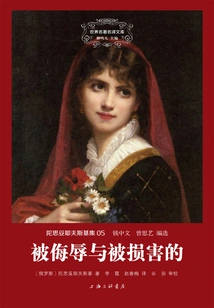
"The Insulted and Injured" was serialized in issues 1 to 7 of The Times in 1861. Because it is a long series, in order to attract readers, the plot of the novel must be fascinating, with ups and downs, climax after another, and it must be interrupted suddenly when it reaches the climax, so that people can continue to read the next issue. Therefore, this type of novel was called "essay-style novel" at that time, and it was famous for its tense and tortuous plot. This book is the first important work Dostoevsky completed after returning to Petersburg from exile. The novel describes the tragedy of two families caused by the bourgeois adventurer Valkovsky. First, he embezzled the only farm belonging to the poor and declining Ikhmenev noble family, and ruined the marriage between Ikhmenev's daughter Natasha and his son Alyosha in order to marry Katya, who had a millionaire fortune, as his daughter-in-law. The other is the old man Smith's family. His daughter was abandoned by Valkovsky from beginning to end, defrauded of her property, and died of poverty and illness. Smith eventually died of poverty. Smith's granddaughter cannot forgive her father, Valkovsky. Her stubbornness and crazy spirit of resistance arouse people's sympathy for those who are "insulted and damaged" and their hatred for the dark society, which shows the realism power of the novel. In the novel, these unfortunate people are often resigned, showing a sense of despair with no way out.
"The Insulted and Injured" was serialized in issues 1 to 7 of The Times in 1861. Because it is a long series, in order to attract readers, the plot of the novel must be fascinating, with ups and downs, climax after another, and it must be interrupted suddenly when it reaches the climax, so that people can continue to read the next issue. Therefore, this type of novel was called "essay-style novel" at that time, and it was famous for its tense and tortuous plot. This book is the first important work Dostoevsky completed after returning to Petersburg from exile. The novel describes the tragedy of two families caused by the bourgeois adventurer Valkovsky. First, he embezzled the only farm belonging to the poor and declining Ikhmenev noble family, and ruined the marriage between Ikhmenev's daughter Natasha and his son Alyosha in order to marry Katya, who had a millionaire fortune, as his daughter-in-law. The other is the old man Smith's family. His daughter was abandoned by Valkovsky from beginning to end, defrauded of her property, and died of poverty and illness. Smith eventually died of poverty. Smith's granddaughter cannot forgive her father, Valkovsky. Her stubbornness and crazy spirit of resistance arouse people's sympathy for those who are "insulted and damaged" and their hatred for the dark society, which shows the realism power of the novel. In the novel, these unfortunate people are often resigned, showing a sense of despair with no way out.
I
General FictionI
H
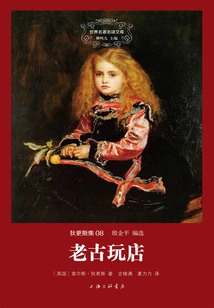
"The Old Curiosity Shop" (The Old Curiosity Shop) is a novel published by the British writer Dickens in 1840-1841. Turrent, the owner of an old antique shop, and his beautiful, kind-hearted granddaughter Little Nell depend on each other. In order for his granddaughter, who was under 14 years old, to live a happy life after his death, Torent wanted to get rich through gambling, but fell into the clutches of Daniel Quilp, an upstart loan shark. The greedy Quilp used loan sharking to not only take away all the property of the old antique shop, but also wanted to take away the beautiful little Nell. The grandfather and grandson were forced to flee London and live a life of begging. In the end, Xiao Nai'er, who was physically and mentally injured, died due to mental exhaustion. "The Old Curiosity Shop" is known as "Victorian melancholy".
"The Old Curiosity Shop" (The Old Curiosity Shop) is a novel published by the British writer Dickens in 1840-1841. Turrent, the owner of an old antique shop, and his beautiful, kind-hearted granddaughter Little Nell depend on each other. In order for his granddaughter, who was under 14 years old, to live a happy life after his death, Torent wanted to get rich through gambling, but fell into the clutches of Daniel Quilp, an upstart loan shark. The greedy Quilp used loan sharking to not only take away all the property of the old antique shop, but also wanted to take away the beautiful little Nell. The grandfather and grandson were forced to flee London and live a life of begging. In the end, Xiao Nai'er, who was physically and mentally injured, died due to mental exhaustion. "The Old Curiosity Shop" is known as "Victorian melancholy".
I
General FictionI
G
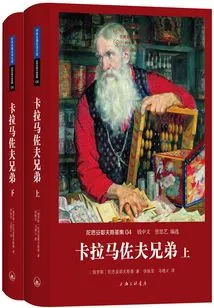
"The Brothers Karamazov" is one of Dostoevsky's masterpieces. The novel uses a real patricide case to describe the sharp conflict between the old Karamazov and his three sons, that is, two generations. The old Karamazov was greedy and lustful, monopolizing the inheritance left by his wife to his sons, and was jealous of a woman with his eldest son Dmitri. One night, Dmitry suspected that his lover was having a tryst with the old man, so he broke into his home and almost beat the old man to death in a rage. After he fled in panic, the old Karamazov's illegitimate son Smerdyakov, who was hiding in the dark and pretending to be ill, secretly killed the old man, causing a complicated and confusing murder that shocked the whole of Russia, and triggered a series of thrilling events. The work shows an intricate tragic theme of society, family, morality and human nature, and embodies superb artistic techniques.
"The Brothers Karamazov" is one of Dostoevsky's masterpieces. The novel uses a real patricide case to describe the sharp conflict between the old Karamazov and his three sons, that is, two generations. The old Karamazov was greedy and lustful, monopolizing the inheritance left by his wife to his sons, and was jealous of a woman with his eldest son Dmitri. One night, Dmitry suspected that his lover was having a tryst with the old man, so he broke into his home and almost beat the old man to death in a rage. After he fled in panic, the old Karamazov's illegitimate son Smerdyakov, who was hiding in the dark and pretending to be ill, secretly killed the old man, causing a complicated and confusing murder that shocked the whole of Russia, and triggered a series of thrilling events. The work shows an intricate tragic theme of society, family, morality and human nature, and embodies superb artistic techniques.
Dong Bei and Son (complete Works)
General Fiction董贝父子(全集)
H
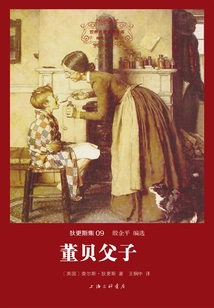
"Dombey and Son" is one of Dickens's most important works, published in 1848. The novel describes the rise and fall of Dong Bei and Sons. Dong Bei is a greedy big capitalist, and his wife and children have become tools and furnishings for him to pursue profits. The company manager Kaker is a treacherous villain. After defrauding Dong Bei's trust, he single-handedly caused his bankruptcy. In the lessons of reality, Dong Bei's thinking changed. In the end, although he was unable to rebuild the family business, he achieved real family happiness.
"Dombey and Son" is one of Dickens's most important works, published in 1848. The novel describes the rise and fall of Dong Bei and Sons. Dong Bei is a greedy big capitalist, and his wife and children have become tools and furnishings for him to pursue profits. The company manager Kaker is a treacherous villain. After defrauding Dong Bei's trust, he single-handedly caused his bankruptcy. In the lessons of reality, Dong Bei's thinking changed. In the end, although he was unable to rebuild the family business, he achieved real family happiness.
Lady Chatterley's Lover
General Fiction查泰莱夫人的情人
(english) D. H. Lawrence
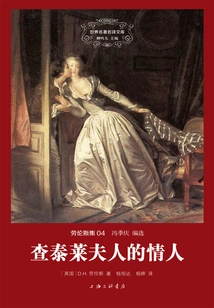
This book is the last novel by the famous British novelist and poet Lawrence. The story takes place in England, a country with a strict class system. Young Connie finally waited for her husband, who had been separated from her for a long time, and also waited for the sad news that her husband's lower body was permanently paralyzed. Facing the cruel reality, the kind-hearted Connie had to accept it silently. However, by chance, Connie meets the manor's caretaker... The emotional entanglement between the young woman and the two men deeply demonstrates the true humanity that is cleverly disguised in real life.
This book is the last novel by the famous British novelist and poet Lawrence. The story takes place in England, a country with a strict class system. Young Connie finally waited for her husband, who had been separated from her for a long time, and also waited for the sad news that her husband's lower body was permanently paralyzed. Facing the cruel reality, the kind-hearted Connie had to accept it silently. However, by chance, Connie meets the manor's caretaker... The emotional entanglement between the young woman and the two men deeply demonstrates the true humanity that is cleverly disguised in real life.
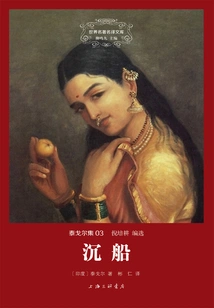
Shipwreck
General Fiction沉船
H
"Shipwreck" is Rabindranath Tagore's masterpiece. The whole story describes the joys and sorrows of Nari Naksha and Kamana, an extremely pious and kind-hearted young couple. The accidental encounters in the story clearly indicate in Tago's writing that everything is God's arrangement or God's will. He deliberately used this to promote his religious ideas. But more importantly, Tagore actually fully expressed his outlook on life and world view through this story.
"Shipwreck" is Rabindranath Tagore's masterpiece. The whole story describes the joys and sorrows of Nari Naksha and Kamana, an extremely pious and kind-hearted young couple. The accidental encounters in the story clearly indicate in Tago's writing that everything is God's arrangement or God's will. He deliberately used this to promote his religious ideas. But more importantly, Tagore actually fully expressed his outlook on life and world view through this story.
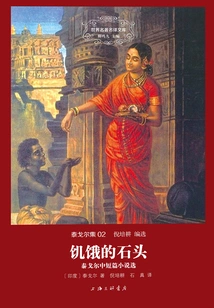
饥饿的石头:泰戈尔中短篇小说选
H
This book is an anthology of Rabindranath Tagore's short stories and short stories, including thirty short stories and short stories such as "The Secret Agent", "The Man of Kabul", "Skeleton", "The Hungry Stone", "Four People" and "Two Sisters".
This book is an anthology of Rabindranath Tagore's short stories and short stories, including thirty short stories and short stories such as "The Secret Agent", "The Man of Kabul", "Skeleton", "The Hungry Stone", "Four People" and "Two Sisters".
J
General FictionJ
I
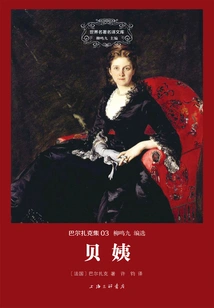
"Aunt Bei" is an important work of Balzac. The novel is based on the life of the French upper class in the mid-19th century, and takes the fate of Baron Hulot de Hervé's family as the main line. It tells the story of how the baron, driven by crazy passion, betrayed his pure wife step by step, hurt his innocent daughter, ruined the family's reputation, tarnished the army's reputation, and was ultimately ruined. Various characters, intricate plots, and thrilling battles between soul and flesh, love and hatred, good and evil, constitute a vivid tragicomedy in the world, a colorful history of civilization, and an endless elegy for the inevitable collapse of upper class society.
"Aunt Bei" is an important work of Balzac. The novel is based on the life of the French upper class in the mid-19th century, and takes the fate of Baron Hulot de Hervé's family as the main line. It tells the story of how the baron, driven by crazy passion, betrayed his pure wife step by step, hurt his innocent daughter, ruined the family's reputation, tarnished the army's reputation, and was ultimately ruined. Various characters, intricate plots, and thrilling battles between soul and flesh, love and hatred, good and evil, constitute a vivid tragicomedy in the world, a colorful history of civilization, and an endless elegy for the inevitable collapse of upper class society.
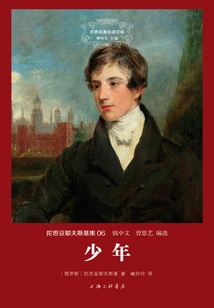
Juvenile
General Fiction少年
(russian) Dostoevsky
This book is Dostoevsky's masterpiece that integrates social novels, suspense novels, psychological novels and other types of novels with educational novels. In this noisy and impetuous world, the protagonist of this book faces a changing society that lacks faith and ideals. Due to lack of experience, he is extremely confused and hesitant. He has gone through twists and tribulations, encountered many tests and spiritual pain. Fortunately, he has always had a positive and persistent pursuit, and later received many good influences. After experiencing the struggle of exploring "good" and "evil", he finally woke up and completed his spiritual growth.
This book is Dostoevsky's masterpiece that integrates social novels, suspense novels, psychological novels and other types of novels with educational novels. In this noisy and impetuous world, the protagonist of this book faces a changing society that lacks faith and ideals. Due to lack of experience, he is extremely confused and hesitant. He has gone through twists and tribulations, encountered many tests and spiritual pain. Fortunately, he has always had a positive and persistent pursuit, and later received many good influences. After experiencing the struggle of exploring "good" and "evil", he finally woke up and completed his spiritual growth.
O
General Fictiono
I
"The Old Man and the Sea" is the famous masterpiece of American writer Ernest Hemingway. The story tells the story of Santiago, an old Cuban fisherman who drove a small boat alone and caught a particularly large marlin. After being dragged by the big fish at sea for three days, the big fish was exhausted and killed by the fisherman. On the way back, he was attacked by a shark. In the end, only the remains of the backbone of the big fish were left. This work shows a powerful and indomitable spiritual force, for which Hemingway won the 1954 Nobel Prize for Literature. In addition to "The Old Man and the Sea", this book also includes some of Hemingway's best short stories. For example, "The Old Man and the Sea", "Snow on Mount Kilimanjaro", "Mountains Like White Elephants", etc., The translations are all classic interpretations by senior British and American literary translators.
"The Old Man and the Sea" is the famous masterpiece of American writer Ernest Hemingway. The story tells the story of Santiago, an old Cuban fisherman who drove a small boat alone and caught a particularly large marlin. After being dragged by the big fish at sea for three days, the big fish was exhausted and killed by the fisherman. On the way back, he was attacked by a shark. In the end, only the remains of the backbone of the big fish were left. This work shows a powerful and indomitable spiritual force, for which Hemingway won the 1954 Nobel Prize for Literature. In addition to "The Old Man and the Sea", this book also includes some of Hemingway's best short stories. For example, "The Old Man and the Sea", "Snow on Mount Kilimanjaro", "Mountains Like White Elephants", etc., The translations are all classic interpretations by senior British and American literary translators.
P
General Fictionp
J
"Uncle Tom's Cabin" (1852) is the first "black novel" and created a new genre of "black novel". By describing the fate of the upright old black slave Tom and other characters, the novel exposes the brutality of black slavery and the suffering of black people in the southern plantations of the United States, and praises the black people's struggle to resist oppression and fight for freedom. After the novel was published, it received a strong response and effectively promoted the anti-slavery struggle in the United States. "Uncle Tom's Cabin" had such a huge impact on American society that in the early days of the Civil War, when Lincoln met with Mrs. Stowe, he said: "You are the little woman who started a great war." Later, this sentence was quoted by many writers.
"Uncle Tom's Cabin" (1852) is the first "black novel" and created a new genre of "black novel". By describing the fate of the upright old black slave Tom and other characters, the novel exposes the brutality of black slavery and the suffering of black people in the southern plantations of the United States, and praises the black people's struggle to resist oppression and fight for freedom. After the novel was published, it received a strong response and effectively promoted the anti-slavery struggle in the United States. "Uncle Tom's Cabin" had such a huge impact on American society that in the early days of the Civil War, when Lincoln met with Mrs. Stowe, he said: "You are the little woman who started a great war." Later, this sentence was quoted by many writers.
The Man in the Trap: Selected Short Stories by Chekhov
General Fiction套中人:契诃夫短篇小说选
I
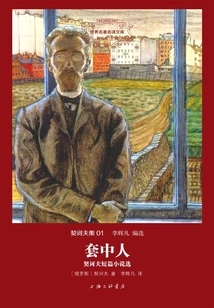
This book is an anthology of Chekhov's short stories, including more than 20 of Chekhov's representative short stories such as "The Chameleon", "Death of an Official", "Wanka", "Ward No. 6", And "The Man in the Trap". Chekhov is known as one of the three greatest short story writers in the world. His short stories are outstanding representatives of Russian and even world realist literature at the end of the 19th century. The works selected in this book represent Chekhov's creative achievements in different periods. Many of them have been selected into primary and secondary school textbooks and are well-known to every household.
This book is an anthology of Chekhov's short stories, including more than 20 of Chekhov's representative short stories such as "The Chameleon", "Death of an Official", "Wanka", "Ward No. 6", And "The Man in the Trap". Chekhov is known as one of the three greatest short story writers in the world. His short stories are outstanding representatives of Russian and even world realist literature at the end of the 19th century. The works selected in this book represent Chekhov's creative achievements in different periods. Many of them have been selected into primary and secondary school textbooks and are well-known to every household.
Entangled
General Fiction纠缠
H
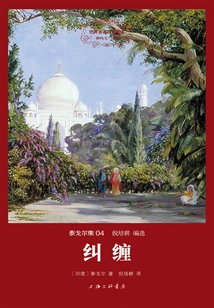
"Entanglement" is Tagore's novel describing urban life and the bourgeoisie. The author originally planned to write a trilogy about the lives of three generations of a capitalist family, entitled "Three Generations", but he only wrote the first part and published it under the name "Entanglement". Gumdini, a beautiful girl from a prominent family, marries the rude and frivolous millionaire Madusuna. The latter tries to control Gumdini by repeating the old trick of imposing his will on people and machines, but is defeated by Gumdini's strong personality and self-esteem. The novel chastises the empty and humble spiritual soul of capitalists, outlines the historical trajectory of capital's fortune and development, and truly describes the Indian bourgeoisie and its spiritual characteristics in the nineteenth century.
"Entanglement" is Tagore's novel describing urban life and the bourgeoisie. The author originally planned to write a trilogy about the lives of three generations of a capitalist family, entitled "Three Generations", but he only wrote the first part and published it under the name "Entanglement". Gumdini, a beautiful girl from a prominent family, marries the rude and frivolous millionaire Madusuna. The latter tries to control Gumdini by repeating the old trick of imposing his will on people and machines, but is defeated by Gumdini's strong personality and self-esteem. The novel chastises the empty and humble spiritual soul of capitalists, outlines the historical trajectory of capital's fortune and development, and truly describes the Indian bourgeoisie and its spiritual characteristics in the nineteenth century.
Y
General Fictiony
H
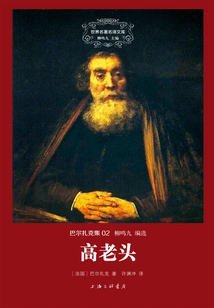
"Petro Goriot" takes Paris in late 1819 and early 1820 as the social background. Through the story of the noodle merchant Goriot and his two daughters, as well as the "history of struggle" of the young college student Rastignac, it describes the bizarre and bizarre life of Paris society.
"Petro Goriot" takes Paris in late 1819 and early 1820 as the social background. Through the story of the noodle merchant Goriot and his two daughters, as well as the "history of struggle" of the young college student Rastignac, it describes the bizarre and bizarre life of Paris society.
Notes from the Underground: Selected Novellas by Dostoevsky
General Fiction地下室手记:陀思妥耶夫斯基中篇小说选
G
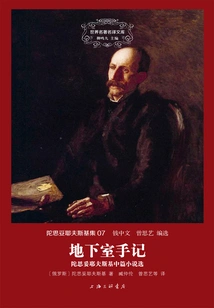
"Notes from the Underground" is a collection of Dostoevsky's novellas, which selects five of Dostoevsky's representative novellas: "The Poor Man", "White Nights", "The Resident of Stepanchikovo", "Notes from the Underground" and "The Crocodile". "Notes from the Basement" is about a retired civil servant who is about 40 years old. His heart is full of pathological inferiority, but he often analyzes himself. The book mainly consists of two parts: The first part is a long monologue by the man in the basement, which discusses philosophical issues such as free will, human irrationality, and historical irrationality. The second part is about the basement man tracing his past and how he met Lisa, a prostitute.
"Notes from the Underground" is a collection of Dostoevsky's novellas, which selects five of Dostoevsky's representative novellas: "The Poor Man", "White Nights", "The Resident of Stepanchikovo", "Notes from the Underground" and "The Crocodile". "Notes from the Basement" is about a retired civil servant who is about 40 years old. His heart is full of pathological inferiority, but he often analyzes himself. The book mainly consists of two parts: The first part is a long monologue by the man in the basement, which discusses philosophical issues such as free will, human irrationality, and historical irrationality. The second part is about the basement man tracing his past and how he met Lisa, a prostitute.
Uncle Bangs
General Fiction邦斯舅舅
(french) Balzac
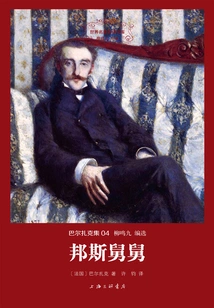
"Uncle Bangs" is Balzac's masterpiece and is known as the "highest peak of his art". Uncle Bangs lived in poverty and lacked understanding of real life, but he was full of sincere love for art. He loved collecting antiques throughout his life and did not hesitate to spend money for it. However, in reality, there are conspiracies everywhere. From the concierge to his nephew-in-law, from antique dealers to doctors to litigation attorneys, countless villains appear on the stage, all plotting to carve up Uncle Bangs's rare collection. Only his friend Schmuke gave him comfort and hope. Poor Bangs suffered a lot of mental torture and eventually died of poverty and illness. Through Uncle Bangs, Balzac vividly presents to us the greatness and nobility of mankind, as well as the humbleness, ugliness and filth of mankind.
"Uncle Bangs" is Balzac's masterpiece and is known as the "highest peak of his art". Uncle Bangs lived in poverty and lacked understanding of real life, but he was full of sincere love for art. He loved collecting antiques throughout his life and did not hesitate to spend money for it. However, in reality, there are conspiracies everywhere. From the concierge to his nephew-in-law, from antique dealers to doctors to litigation attorneys, countless villains appear on the stage, all plotting to carve up Uncle Bangs's rare collection. Only his friend Schmuke gave him comfort and hope. Poor Bangs suffered a lot of mental torture and eventually died of poverty and illness. Through Uncle Bangs, Balzac vividly presents to us the greatness and nobility of mankind, as well as the humbleness, ugliness and filth of mankind.
X
General Fictionx
H
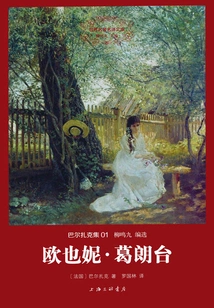
"Eugénie Grandet" is Balzac's most famous work and "one of the most outstanding pictures" in "The Human Comedy". The novel tells the story of a family destroyed by money. The innocent and beautiful Eugenie is the only daughter of the stingy and shrewd rich man Old Grandet. She falls in love with her penniless cousin Charles from Paris. For his sake, she does not hesitate to anger her money-loving father and spends all her private savings to help him go to India. As a result, the relationship between father and daughter broke down, and they lost their father and wasted their youth in the agonizing wait. In the end, what they waited for was a heartless man who made a fortune from human trafficking.
"Eugénie Grandet" is Balzac's most famous work and "one of the most outstanding pictures" in "The Human Comedy". The novel tells the story of a family destroyed by money. The innocent and beautiful Eugenie is the only daughter of the stingy and shrewd rich man Old Grandet. She falls in love with her penniless cousin Charles from Paris. For his sake, she does not hesitate to anger her money-loving father and spends all her private savings to help him go to India. As a result, the relationship between father and daughter broke down, and they lost their father and wasted their youth in the agonizing wait. In the end, what they waited for was a heartless man who made a fortune from human trafficking.
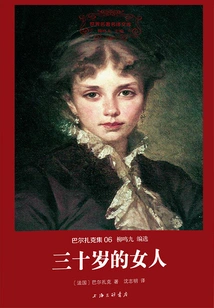
Thirty Year Old Woman
General Fiction三十岁的女人
H
"A Woman of Thirty" is an important work in Balzac's "Human Comedy". This book is actually a combination of six short stories published at different times. When included in "The Human Comedy", the author unified the names of the protagonists of the six stories and changed the overall title to "A Thirty-Year-Old Woman". In this book, for the first time, the author connects private customs with the era of characters' lives. The conflicts in private life and the conflicts in social life are integrated and complementary to each other. Love life, family life and public life are interdependent and harmonious with each other. In addition, this book also includes "The False Mistress".
"A Woman of Thirty" is an important work in Balzac's "Human Comedy". This book is actually a combination of six short stories published at different times. When included in "The Human Comedy", the author unified the names of the protagonists of the six stories and changed the overall title to "A Thirty-Year-Old Woman". In this book, for the first time, the author connects private customs with the era of characters' lives. The conflicts in private life and the conflicts in social life are integrated and complementary to each other. Love life, family life and public life are interdependent and harmonious with each other. In addition, this book also includes "The False Mistress".
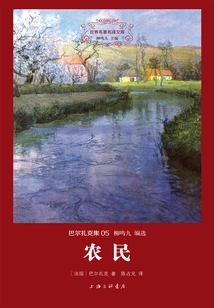
Farmer
General Fiction农民
(french) Balzac
"The Peasant" is Balzac's masterpiece. The novel describes the conflict between the land ownership of aristocratic large estates and the small land ownership of the bourgeoisie, and the peasants are in the middle of these two social forces, just like "a bug is caught between a hammer and an anvil." The loan shark businessmen Gaubertin and Li Gu, who represented the interests of the bourgeoisie, defeated General Mongonay, who represented the interests of the aristocratic large landowners. However, the peasants who were attracted by the loan shark businessmen and rich peasants to this cruel struggle gained nothing. They just fell into a new kind of slavery and met a more vicious master. Balzac here describes the poverty situation in the countryside after the bourgeois revolution under the double exploitation of landlords and bourgeoisie, the farmers' strong hatred for the exploiters, and the farmers' dependence on loan sharks determined by their economic status at the time.
"The Peasant" is Balzac's masterpiece. The novel describes the conflict between the land ownership of aristocratic large estates and the small land ownership of the bourgeoisie, and the peasants are in the middle of these two social forces, just like "a bug is caught between a hammer and an anvil." The loan shark businessmen Gaubertin and Li Gu, who represented the interests of the bourgeoisie, defeated General Mongonay, who represented the interests of the aristocratic large landowners. However, the peasants who were attracted by the loan shark businessmen and rich peasants to this cruel struggle gained nothing. They just fell into a new kind of slavery and met a more vicious master. Balzac here describes the poverty situation in the countryside after the bourgeois revolution under the double exploitation of landlords and bourgeoisie, the farmers' strong hatred for the exploiters, and the farmers' dependence on loan sharks determined by their economic status at the time.
R
General Fictionr
H
"Tess" is one of Hardy's important masterpieces. The novel takes the experiences of the heroine Tess as the main line, describing the conflict between the beautiful poetic image and the surrounding gloomy reality. It vividly describes the disintegration of the small-scale peasant economy after capitalism invaded the British countryside at the end of the 19th century and the painful process of individual farmers heading towards poverty and bankruptcy. Through the description of the double persecution suffered by a pure woman both mentally and physically, it reveals the rich and profound spiritual world of a woman, and boldly and ruthlessly exposes and accuses the laws, religion, ethics, marriage system and the essence of capitalism in capitalist society.
"Tess" is one of Hardy's important masterpieces. The novel takes the experiences of the heroine Tess as the main line, describing the conflict between the beautiful poetic image and the surrounding gloomy reality. It vividly describes the disintegration of the small-scale peasant economy after capitalism invaded the British countryside at the end of the 19th century and the painful process of individual farmers heading towards poverty and bankruptcy. Through the description of the double persecution suffered by a pure woman both mentally and physically, it reveals the rich and profound spiritual world of a woman, and boldly and ruthlessly exposes and accuses the laws, religion, ethics, marriage system and the essence of capitalism in capitalist society.