Library
Browse and search books
2,982 novels found
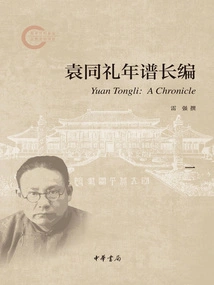
Yuan Tongli's Chronicle (1)
History袁同礼年谱长编(一)
Written By Lei Qiang
Yuan Tongli (1895-1965), also known as Shouhe, was the founder of modern libraries and museums in China. He was praised by academic circles as "the sacrificial wine of Chinese library science" and "the pioneer of modern Chinese bibliography". "Chronicle" uses newspapers, periodicals, official documents, books, as well as letters collected by the Yuan family and numerous archives at home and abroad to sort out the life and academic interactions of this "central figure" in the history of modern Chinese academics day by day. It presents in detail the grand process of China's academic modernization transformation and the foundation of modern libraries and museums. Dr. Lei Qiang has spent more than ten years collecting and sorting out a large number of historical materials in Chinese, English and French, examining the sources and disputing doubts one by one, adding detailed notes, and neatly comparing them to form this huge collection. Among them, more than 2,800 pieces of manuscripts and files have been compiled and disclosed for the first time, and have important cultural and historical data value. An index of names is also compiled for special inspection.
Yuan Tongli (1895-1965), also known as Shouhe, was the founder of modern libraries and museums in China. He was praised by academic circles as "the sacrificial wine of Chinese library science" and "the pioneer of modern Chinese bibliography". "Chronicle" uses newspapers, periodicals, official documents, books, as well as letters collected by the Yuan family and numerous archives at home and abroad to sort out the life and academic interactions of this "central figure" in the history of modern Chinese academics day by day. It presents in detail the grand process of China's academic modernization transformation and the foundation of modern libraries and museums. Dr. Lei Qiang has spent more than ten years collecting and sorting out a large number of historical materials in Chinese, English and French, examining the sources and disputing doubts one by one, adding detailed notes, and neatly comparing them to form this huge collection. Among them, more than 2,800 pieces of manuscripts and files have been compiled and disclosed for the first time, and have important cultural and historical data value. An index of names is also compiled for special inspection.
黑毡上的北魏皇帝(修订本)
Luo Xin
The emperors of the Northern Wei Dynasty were not only the emperors of the Chinese imperial state, but also the khans of the nomadic conquest groups in Inner Asia. Their historical activities were the collision, fusion and rebirth of multiple cultural traditions. The so-called "old capital system" of the Northern Wei Dynasty is clearly part of the Inner Asian tradition. This book starts from the Daibei factors in the Northern Wei emperor's enthronement ceremony, and extends it to the Heaven-sacrifice ceremony in the Northern Wei Dynasty, the power inheritance crisis in the early Liao Dynasty, the Tangzi's sacrifice to Heaven in the Qing Dynasty, etc. On the one hand, it observes the encounter, collision and variation between the Tuoba Xianbei political tradition and the Chinese tradition, and on the other hand, it examines the connection between the old Xianbei customs (the old capital system) and Inner Asia's political tradition. The inward-migrating Inner Asian people who played an important role in Chinese history were, on the one hand, deeply influenced by Chinese culture, and on the other hand, they inherited and adhered to some Inner Asian cultural traditions to a greater or lesser extent. Quite a few of these Inner Asian traditions have been forgotten or deformed in historical records, making them vague and difficult to identify. Therefore, cleaning up these remaining clues has become a task that can fully demonstrate the diversity and richness of history. There is undoubtedly huge room for rereading history from an Inner Asian perspective.
The emperors of the Northern Wei Dynasty were not only the emperors of the Chinese imperial state, but also the khans of the nomadic conquest groups in Inner Asia. Their historical activities were the collision, fusion and rebirth of multiple cultural traditions. The so-called "old capital system" of the Northern Wei Dynasty is clearly part of the Inner Asian tradition. This book starts from the Daibei factors in the Northern Wei emperor's enthronement ceremony, and extends it to the Heaven-sacrifice ceremony in the Northern Wei Dynasty, the power inheritance crisis in the early Liao Dynasty, the Tangzi's sacrifice to Heaven in the Qing Dynasty, etc. On the one hand, it observes the encounter, collision and variation between the Tuoba Xianbei political tradition and the Chinese tradition, and on the other hand, it examines the connection between the old Xianbei customs (the old capital system) and Inner Asia's political tradition. The inward-migrating Inner Asian people who played an important role in Chinese history were, on the one hand, deeply influenced by Chinese culture, and on the other hand, they inherited and adhered to some Inner Asian cultural traditions to a greater or lesser extent. Quite a few of these Inner Asian traditions have been forgotten or deformed in historical records, making them vague and difficult to identify. Therefore, cleaning up these remaining clues has become a task that can fully demonstrate the diversity and richness of history. There is undoubtedly huge room for rereading history from an Inner Asian perspective.
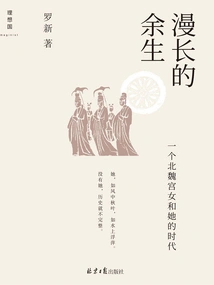
漫长的余生:一个北魏宫女和她的时代
Luo Xin
In 466 AD, Emperor Ming of the Song Dynasty, Liu Yu, and his nephew Liu Zixun, who proclaimed themselves emperor in Xunyang, stood side by side. The civil war spread to almost the entire Liu Song Dynasty, and then evolved into a war with the Northern Wei Dynasty. Wang Zhong'er, who was born into a middle-level bureaucratic family in the Southern Dynasties, was forced to get involved, and his family was ruined. Two years later, he was robbed and became an ordinary maid of Pingcheng Palace at the age of thirty. However, her fate accidentally came into contact with the "child is valued until mother dies" system, and she was accidentally involved in the whirlpool of power struggle. She became a key figure in raising two generations of emperors as a palace maid and a bhikshuni, and lived in the court of the Northern Wei Dynasty for fifty-six years. Professor Luo Xin used epitaphs and other historical materials to tell the story of Wang Zhonger's long and ups and downs life, and used her eyes to see the era in which she lived. He restored the emperor, concubines, relatives, courtiers, eunuchs and maids to specific people, and saw them facing each other. The joy, fear, arrogance, and despair of power... As the life story of Wang Zhonger unfolds, there is also the nearly eighty-year history of the Northern Wei Dynasty from Emperor Xianwen and Emperor Xiaowen to Emperor Xuanwu and Emperor Xiaoming. Of course, there are also many people swept by the stormy waves of the times. We pay attention to ordinary people in distant times because they are part of real history. Without them, history would be incomplete and unreal.
In 466 AD, Emperor Ming of the Song Dynasty, Liu Yu, and his nephew Liu Zixun, who proclaimed themselves emperor in Xunyang, stood side by side. The civil war spread to almost the entire Liu Song Dynasty, and then evolved into a war with the Northern Wei Dynasty. Wang Zhong'er, who was born into a middle-level bureaucratic family in the Southern Dynasties, was forced to get involved, and his family was ruined. Two years later, he was robbed and became an ordinary maid of Pingcheng Palace at the age of thirty. However, her fate accidentally came into contact with the "child is valued until mother dies" system, and she was accidentally involved in the whirlpool of power struggle. She became a key figure in raising two generations of emperors as a palace maid and a bhikshuni, and lived in the court of the Northern Wei Dynasty for fifty-six years. Professor Luo Xin used epitaphs and other historical materials to tell the story of Wang Zhonger's long and ups and downs life, and used her eyes to see the era in which she lived. He restored the emperor, concubines, relatives, courtiers, eunuchs and maids to specific people, and saw them facing each other. The joy, fear, arrogance, and despair of power... As the life story of Wang Zhonger unfolds, there is also the nearly eighty-year history of the Northern Wei Dynasty from Emperor Xianwen and Emperor Xiaowen to Emperor Xuanwu and Emperor Xiaoming. Of course, there are also many people swept by the stormy waves of the times. We pay attention to ordinary people in distant times because they are part of real history. Without them, history would be incomplete and unreal.
宋祁年谱长编
Wang Fuyuan
Song Qi (998-1061), also known as Zijing, also known as Xuanlang. A native of Yongqiu (now Qixian County, Henan) in Kaifeng in the Northern Song Dynasty. He became the Minister of the Ministry of Industry and paid homage to the Imperial Academy. There are works such as "New Tang Book" and "Jing Wen Ji" in existence. "Song Qi Chronicles Long Edition" adopts a chronological method with the goal of clarifying Song Qi's life and deeds, showing his reading, politics, friendship, literary creation and other activities. This book is compiled by year, listing Song Qi's life deeds, and doing some research. The relevant materials are attached, and its content is divided into three parts: preface, main text, and appendix.
Song Qi (998-1061), also known as Zijing, also known as Xuanlang. A native of Yongqiu (now Qixian County, Henan) in Kaifeng in the Northern Song Dynasty. He became the Minister of the Ministry of Industry and paid homage to the Imperial Academy. There are works such as "New Tang Book" and "Jing Wen Ji" in existence. "Song Qi Chronicles Long Edition" adopts a chronological method with the goal of clarifying Song Qi's life and deeds, showing his reading, politics, friendship, literary creation and other activities. This book is compiled by year, listing Song Qi's life deeds, and doing some research. The relevant materials are attached, and its content is divided into three parts: preface, main text, and appendix.
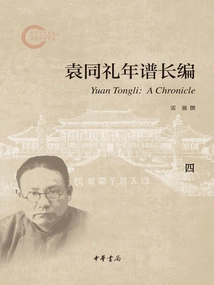
袁同礼年谱长编(四)
Written By Lei Qiang
Yuan Tongli (1895-1965), also known as Shouhe, was the founder of modern libraries and museums in China. He was praised by academic circles as "the sacrificial wine of Chinese library science" and "the pioneer of modern Chinese bibliography". "Chronicle" uses newspapers, periodicals, official documents, books, as well as letters collected by the Yuan family and numerous archives at home and abroad to sort out the life and academic interactions of this "central figure" in the history of modern Chinese academics day by day. It presents in detail the grand process of China's academic modernization transformation and the foundation of modern libraries and museums. Dr. Lei Qiang has spent more than ten years collecting and sorting out a large number of historical materials in Chinese, English and French, examining the sources and disputing doubts one by one, adding detailed notes, and neatly comparing them to form this huge collection. Among them, more than 2,800 pieces of manuscripts and files have been compiled and disclosed for the first time, and have important cultural and historical data value. An index of names is also compiled for special inspection.
Yuan Tongli (1895-1965), also known as Shouhe, was the founder of modern libraries and museums in China. He was praised by academic circles as "the sacrificial wine of Chinese library science" and "the pioneer of modern Chinese bibliography". "Chronicle" uses newspapers, periodicals, official documents, books, as well as letters collected by the Yuan family and numerous archives at home and abroad to sort out the life and academic interactions of this "central figure" in the history of modern Chinese academics day by day. It presents in detail the grand process of China's academic modernization transformation and the foundation of modern libraries and museums. Dr. Lei Qiang has spent more than ten years collecting and sorting out a large number of historical materials in Chinese, English and French, examining the sources and disputing doubts one by one, adding detailed notes, and neatly comparing them to form this huge collection. Among them, more than 2,800 pieces of manuscripts and files have been compiled and disclosed for the first time, and have important cultural and historical data value. An index of names is also compiled for special inspection.
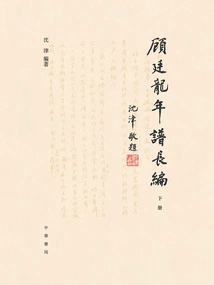
顾廷龙年谱长编(下册)
Compiled By Shen Jin
Gu Tinglong (1904-1998), courtesy name Qiqian, was born in Suzhou, Jiangsu. He has worked in the Library of Yanjing University in Peking and the Private Union Library in Shanghai. After the founding of the People's Republic of China, he served as the director of the Shanghai Library for a long time. He is a famous librarian, ancient book edition expert, paleographist and calligrapher in modern my country. The chronicle draws on a large number of historical materials such as diaries, letters, newspapers and periodicals, inscriptions and postscripts, and combines the memories of Mr. Gu's relatives, friends, and disciples to record in detail Mr. Gu Tinglong's academic studies, friendships, calligraphy creation, edition appreciation and other life contents. Mr. Shen Jin is a well-known edition scholar at home and abroad. He has long followed Mr. Gu Tinglong in the study of edition catalogues. He is familiar with Mr. Gu as a scholar and a person. He spent more than 20 years collecting, organizing, writing, and adding to this "Long Edition". The compilation of the chronology is very helpful for a deeper understanding of Mr. Gu Tinglong's lifelong learning and contributions. This book is also compiled with a name index to facilitate inspection.
Gu Tinglong (1904-1998), courtesy name Qiqian, was born in Suzhou, Jiangsu. He has worked in the Library of Yanjing University in Peking and the Private Union Library in Shanghai. After the founding of the People's Republic of China, he served as the director of the Shanghai Library for a long time. He is a famous librarian, ancient book edition expert, paleographist and calligrapher in modern my country. The chronicle draws on a large number of historical materials such as diaries, letters, newspapers and periodicals, inscriptions and postscripts, and combines the memories of Mr. Gu's relatives, friends, and disciples to record in detail Mr. Gu Tinglong's academic studies, friendships, calligraphy creation, edition appreciation and other life contents. Mr. Shen Jin is a well-known edition scholar at home and abroad. He has long followed Mr. Gu Tinglong in the study of edition catalogues. He is familiar with Mr. Gu as a scholar and a person. He spent more than 20 years collecting, organizing, writing, and adding to this "Long Edition". The compilation of the chronology is very helpful for a deeper understanding of Mr. Gu Tinglong's lifelong learning and contributions. This book is also compiled with a name index to facilitate inspection.
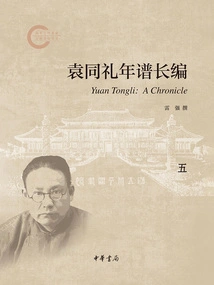
Yuan Tongli's Chronicle (5)
History袁同礼年谱长编(五)
Written By Lei Qiang
Yuan Tongli (1895-1965), also known as Shouhe, was the founder of modern libraries and museums in China. He was praised by academic circles as "the sacrificial wine of Chinese library science" and "the pioneer of modern Chinese bibliography". "Chronicle" uses newspapers, periodicals, official documents, books, as well as letters collected by the Yuan family and numerous archives at home and abroad to sort out the life and academic interactions of this "central figure" in the history of modern Chinese academics day by day. It presents in detail the grand process of China's academic modernization transformation and the foundation of modern libraries and museums. Dr. Lei Qiang has spent more than ten years collecting and sorting out a large number of historical materials in Chinese, English and French, examining the sources and disputing doubts one by one, adding detailed notes, and neatly comparing them to form this huge collection. Among them, more than 2,800 pieces of manuscripts and files have been compiled and disclosed for the first time, and have important cultural and historical data value. An index of names is also compiled for special inspection.
Yuan Tongli (1895-1965), also known as Shouhe, was the founder of modern libraries and museums in China. He was praised by academic circles as "the sacrificial wine of Chinese library science" and "the pioneer of modern Chinese bibliography". "Chronicle" uses newspapers, periodicals, official documents, books, as well as letters collected by the Yuan family and numerous archives at home and abroad to sort out the life and academic interactions of this "central figure" in the history of modern Chinese academics day by day. It presents in detail the grand process of China's academic modernization transformation and the foundation of modern libraries and museums. Dr. Lei Qiang has spent more than ten years collecting and sorting out a large number of historical materials in Chinese, English and French, examining the sources and disputing doubts one by one, adding detailed notes, and neatly comparing them to form this huge collection. Among them, more than 2,800 pieces of manuscripts and files have been compiled and disclosed for the first time, and have important cultural and historical data value. An index of names is also compiled for special inspection.
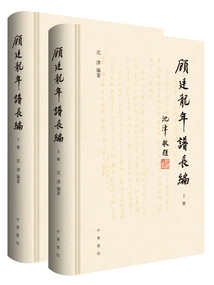
顾廷龙年谱长编(套装全二册)
Compiled By Shen Jin
Gu Tinglong (1904-1998), courtesy name Qiqian, was born in Suzhou, Jiangsu. He has worked in the Library of Yanjing University in Peking and the Private Union Library in Shanghai. After the founding of the People's Republic of China, he served as the director of the Shanghai Library for a long time. He is a famous librarian, ancient book edition expert, paleographist and calligrapher in modern my country. The chronicle draws on a large number of historical materials such as diaries, letters, newspapers and periodicals, inscriptions and postscripts, and combines the memories of Mr. Gu's relatives, friends, and disciples to record in detail Mr. Gu Tinglong's academic studies, friendships, calligraphy creation, edition appreciation and other life contents. Mr. Shen Jin is a well-known edition scholar at home and abroad. He has long followed Mr. Gu Tinglong in the study of edition catalogues. He is familiar with Mr. Gu as a scholar and a person. He spent more than 20 years collecting, organizing, writing, and adding to this "Long Edition". The compilation of the chronology is very helpful for a deeper understanding of Mr. Gu Tinglong's lifelong learning and contributions. This book is also compiled with a name index to facilitate inspection.
Gu Tinglong (1904-1998), courtesy name Qiqian, was born in Suzhou, Jiangsu. He has worked in the Library of Yanjing University in Peking and the Private Union Library in Shanghai. After the founding of the People's Republic of China, he served as the director of the Shanghai Library for a long time. He is a famous librarian, ancient book edition expert, paleographist and calligrapher in modern my country. The chronicle draws on a large number of historical materials such as diaries, letters, newspapers and periodicals, inscriptions and postscripts, and combines the memories of Mr. Gu's relatives, friends, and disciples to record in detail Mr. Gu Tinglong's academic studies, friendships, calligraphy creation, edition appreciation and other life contents. Mr. Shen Jin is a well-known edition scholar at home and abroad. He has long followed Mr. Gu Tinglong in the study of edition catalogues. He is familiar with Mr. Gu as a scholar and a person. He spent more than 20 years collecting, organizing, writing, and adding to this "Long Edition". The compilation of the chronology is very helpful for a deeper understanding of Mr. Gu Tinglong's lifelong learning and contributions. This book is also compiled with a name index to facilitate inspection.
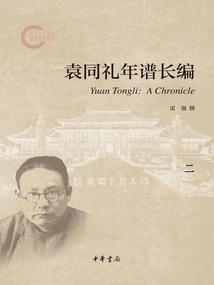
Yuan Tongli's Chronicle (2)
History袁同礼年谱长编(二)
Written By Lei Qiang
Yuan Tongli (1895-1965), also known as Shouhe, was the founder of modern libraries and museums in China. He was praised by academic circles as "the sacrificial wine of Chinese library science" and "the pioneer of modern Chinese bibliography". "Chronicle" uses newspapers, periodicals, official documents, books, as well as letters collected by the Yuan family and numerous archives at home and abroad to sort out the life and academic interactions of this "central figure" in the history of modern Chinese academics day by day. It presents in detail the grand process of China's academic modernization transformation and the foundation of modern libraries and museums. Dr. Lei Qiang has spent more than ten years collecting and sorting out a large number of historical materials in Chinese, English and French, examining the sources and disputing doubts one by one, adding detailed notes, and neatly comparing them to form this huge collection. Among them, more than 2,800 pieces of manuscripts and files have been compiled and disclosed for the first time, and have important cultural and historical data value. An index of names is also compiled for special inspection.
Yuan Tongli (1895-1965), also known as Shouhe, was the founder of modern libraries and museums in China. He was praised by academic circles as "the sacrificial wine of Chinese library science" and "the pioneer of modern Chinese bibliography". "Chronicle" uses newspapers, periodicals, official documents, books, as well as letters collected by the Yuan family and numerous archives at home and abroad to sort out the life and academic interactions of this "central figure" in the history of modern Chinese academics day by day. It presents in detail the grand process of China's academic modernization transformation and the foundation of modern libraries and museums. Dr. Lei Qiang has spent more than ten years collecting and sorting out a large number of historical materials in Chinese, English and French, examining the sources and disputing doubts one by one, adding detailed notes, and neatly comparing them to form this huge collection. Among them, more than 2,800 pieces of manuscripts and files have been compiled and disclosed for the first time, and have important cultural and historical data value. An index of names is also compiled for special inspection.
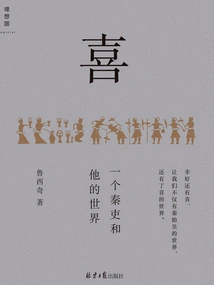
喜:一个秦吏和他的世界
Rusic
Happy, the owner of Qin Tomb No. 11 In Sleeping Tiger Land. He was born in the era of Qin Shi Huang, three years older than Qin Shi Huang Ying Zheng, died four years after Qin Shi Huang completed the great cause of unifying China, and died seven years earlier than Qin Shi Huang. He and Qin Shi Huang were contemporaries. He rose from the ranks of the people to the people, and then became a low-level official in the hometown of Chu State. He has parents, brothers, wife and children. His family continued smoothly into the Han Dynasty, and his social status and living conditions improved slightly. The author connects the scattered materials together, trying to piece together a joy of being a human being, and finding joy in a distant and unfamiliar world. Imagine that you are standing in the position of Xi, seeing the world he lives in through his eyes, and describing the imperial ruling machine that an ordinary person or the ruled directly faces: through the household registration system, the military merit system, the militarized arrangement of neighborhoods, and the integrated military and political administration. The system fixes each Guizhou capital at a specific position in the national control system, allowing them to serve in the army, receive titles for meritorious service, pay rent, and monitor each other. When necessary or advantageous, they report on fellow soldiers and neighbors. They also share life and death on the battlefield, forming a living community. At the same time, this book strives to present several aspects of a humble individual's life in the great historical process of Qin Shihuang's unification of China, several individual-centered silhouettes in the great era, and several individual particles that can only be discovered with great difficulty in the historical structure where the overall pattern is relatively stable but the micro-environment is constantly changing.
Happy, the owner of Qin Tomb No. 11 In Sleeping Tiger Land. He was born in the era of Qin Shi Huang, three years older than Qin Shi Huang Ying Zheng, died four years after Qin Shi Huang completed the great cause of unifying China, and died seven years earlier than Qin Shi Huang. He and Qin Shi Huang were contemporaries. He rose from the ranks of the people to the people, and then became a low-level official in the hometown of Chu State. He has parents, brothers, wife and children. His family continued smoothly into the Han Dynasty, and his social status and living conditions improved slightly. The author connects the scattered materials together, trying to piece together a joy of being a human being, and finding joy in a distant and unfamiliar world. Imagine that you are standing in the position of Xi, seeing the world he lives in through his eyes, and describing the imperial ruling machine that an ordinary person or the ruled directly faces: through the household registration system, the military merit system, the militarized arrangement of neighborhoods, and the integrated military and political administration. The system fixes each Guizhou capital at a specific position in the national control system, allowing them to serve in the army, receive titles for meritorious service, pay rent, and monitor each other. When necessary or advantageous, they report on fellow soldiers and neighbors. They also share life and death on the battlefield, forming a living community. At the same time, this book strives to present several aspects of a humble individual's life in the great historical process of Qin Shihuang's unification of China, several individual-centered silhouettes in the great era, and several individual particles that can only be discovered with great difficulty in the historical structure where the overall pattern is relatively stable but the micro-environment is constantly changing.
天朝的辉煌:开放与发展的历史
Jiangchengzi
The process of Sino-foreign cultural exchanges from the Shang and Zhou dynasties to the Qing Dynasty was discussed in detail. By analyzing early cultural contacts, exchanges in myths and legends, comparisons of civilizations in the Bronze Age, as well as the ritual and music system and the contention of a hundred schools of thought in the Pre-Qin period, it demonstrates the interaction between ancient China and the outside world at various historical stages. This book also deeply explores the unification of the Qin and Han dynasties and the opening of the Silk Road, the multiculturalism of the Wei, Jin, Southern and Northern Dynasties, and the literary exchanges and ideological collisions of the Ming and Qing dynasties. Through detailed historical materials and rich archaeological discoveries, it reveals the mutual influence and integration of Chinese and foreign cultures in technology, art, thought, religion, etc., And provides readers with an important perspective in understanding ancient cultural exchanges and dissemination.
The process of Sino-foreign cultural exchanges from the Shang and Zhou dynasties to the Qing Dynasty was discussed in detail. By analyzing early cultural contacts, exchanges in myths and legends, comparisons of civilizations in the Bronze Age, as well as the ritual and music system and the contention of a hundred schools of thought in the Pre-Qin period, it demonstrates the interaction between ancient China and the outside world at various historical stages. This book also deeply explores the unification of the Qin and Han dynasties and the opening of the Silk Road, the multiculturalism of the Wei, Jin, Southern and Northern Dynasties, and the literary exchanges and ideological collisions of the Ming and Qing dynasties. Through detailed historical materials and rich archaeological discoveries, it reveals the mutual influence and integration of Chinese and foreign cultures in technology, art, thought, religion, etc., And provides readers with an important perspective in understanding ancient cultural exchanges and dissemination.
历史的裂变:改变时局的重大时刻
Liu Shi'er
It takes readers on a gripping journey to explore the major uprisings and revolutionary events in Chinese history that changed the current situation. The book comprehensively introduces many important historical events and their far-reaching impacts from the late Qin Dynasty to the late Qing Dynasty to the establishment of the Republic of China. Through detailed description and analysis, this book reproduces the background, process and results of peasant uprisings and revolutionary movements in various historical periods. The book covers the Chen Sheng and Wu Guang Uprisings, the Red Eyebrow and Green Forest Uprisings, the Yellow Turban Uprising, the Qin and Yong Six County Refugee Uprisings, the Wang Lun Uprising, the Lin Shuangwen Uprising, the Sichuan-Chu White Lotus Uprising, the Taiping Heavenly Kingdom Uprising, the Nian Army Uprising, and the Revolution of 1911. These events not only profoundly affected the social situation at that time, but also laid the foundation for subsequent historical development. Through the detailed narration and analysis of these historical events, the historical events that changed the current situation demonstrate the social contradictions and forces of change at different stages in Chinese history, and reveal the laws and dynamics of historical development. Enter this historical world full of suspense and surprise, letting the dusty past radiate with fresh vitality. Revolutionaries, ordinary people, overseas Chinese, and women all played an important role in these great revolutions. They used practical actions to promote the transformation of Chinese society and opened a new chapter in China's modernization. The historical achievements of the Revolution of 1911 will forever be engraved on the monument of Chinese history, inspiring generations of Chinese people to work hard to achieve national rejuvenation and national prosperity.
It takes readers on a gripping journey to explore the major uprisings and revolutionary events in Chinese history that changed the current situation. The book comprehensively introduces many important historical events and their far-reaching impacts from the late Qin Dynasty to the late Qing Dynasty to the establishment of the Republic of China. Through detailed description and analysis, this book reproduces the background, process and results of peasant uprisings and revolutionary movements in various historical periods. The book covers the Chen Sheng and Wu Guang Uprisings, the Red Eyebrow and Green Forest Uprisings, the Yellow Turban Uprising, the Qin and Yong Six County Refugee Uprisings, the Wang Lun Uprising, the Lin Shuangwen Uprising, the Sichuan-Chu White Lotus Uprising, the Taiping Heavenly Kingdom Uprising, the Nian Army Uprising, and the Revolution of 1911. These events not only profoundly affected the social situation at that time, but also laid the foundation for subsequent historical development. Through the detailed narration and analysis of these historical events, the historical events that changed the current situation demonstrate the social contradictions and forces of change at different stages in Chinese history, and reveal the laws and dynamics of historical development. Enter this historical world full of suspense and surprise, letting the dusty past radiate with fresh vitality. Revolutionaries, ordinary people, overseas Chinese, and women all played an important role in these great revolutions. They used practical actions to promote the transformation of Chinese society and opened a new chapter in China's modernization. The historical achievements of the Revolution of 1911 will forever be engraved on the monument of Chinese history, inspiring generations of Chinese people to work hard to achieve national rejuvenation and national prosperity.
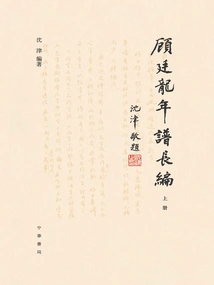
顾廷龙年谱长编(上册)
Compiled By Shen Jin
Gu Tinglong (1904-1998), courtesy name Qiqian, was born in Suzhou, Jiangsu. He has worked in the Library of Yanjing University in Peking and the Private Union Library in Shanghai. After the founding of the People's Republic of China, he served as the director of the Shanghai Library for a long time. He is a famous librarian, ancient book edition expert, paleographist and calligrapher in modern my country. The chronicle draws on a large number of historical materials such as diaries, letters, newspapers and periodicals, inscriptions and postscripts, and combines the memories of Mr. Gu's relatives, friends, and disciples to record in detail Mr. Gu Tinglong's academic studies, friendships, calligraphy creation, edition appreciation and other life contents. Mr. Shen Jin is a well-known edition scholar at home and abroad. He has long followed Mr. Gu Tinglong in the study of edition catalogues. He is familiar with Mr. Gu as a scholar and a person. He spent more than 20 years collecting, organizing, writing, and adding to this "Long Edition". The compilation of the chronology is very helpful for a deeper understanding of Mr. Gu Tinglong's lifelong learning and contributions. This book is also compiled with a name index to facilitate inspection.
Gu Tinglong (1904-1998), courtesy name Qiqian, was born in Suzhou, Jiangsu. He has worked in the Library of Yanjing University in Peking and the Private Union Library in Shanghai. After the founding of the People's Republic of China, he served as the director of the Shanghai Library for a long time. He is a famous librarian, ancient book edition expert, paleographist and calligrapher in modern my country. The chronicle draws on a large number of historical materials such as diaries, letters, newspapers and periodicals, inscriptions and postscripts, and combines the memories of Mr. Gu's relatives, friends, and disciples to record in detail Mr. Gu Tinglong's academic studies, friendships, calligraphy creation, edition appreciation and other life contents. Mr. Shen Jin is a well-known edition scholar at home and abroad. He has long followed Mr. Gu Tinglong in the study of edition catalogues. He is familiar with Mr. Gu as a scholar and a person. He spent more than 20 years collecting, organizing, writing, and adding to this "Long Edition". The compilation of the chronology is very helpful for a deeper understanding of Mr. Gu Tinglong's lifelong learning and contributions. This book is also compiled with a name index to facilitate inspection.
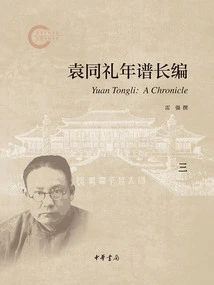
袁同礼年谱长编(三)
Written By Lei Qiang
Yuan Tongli (1895-1965), also known as Shouhe, was the founder of modern libraries and museums in China. He was praised by academic circles as "the sacrificial wine of Chinese library science" and "the pioneer of modern Chinese bibliography". "Chronicle" uses newspapers, periodicals, official documents, books, as well as letters collected by the Yuan family and numerous archives at home and abroad to sort out the life and academic interactions of this "central figure" in the history of modern Chinese academics day by day. It presents in detail the grand process of China's academic modernization transformation and the foundation of modern libraries and museums. Dr. Lei Qiang has spent more than ten years collecting and sorting out a large number of historical materials in Chinese, English and French, examining the sources and disputing doubts one by one, adding detailed notes, and neatly comparing them to form this huge collection. Among them, more than 2,800 pieces of manuscripts and files have been compiled and disclosed for the first time, and have important cultural and historical data value. An index of names is also compiled for special inspection.
Yuan Tongli (1895-1965), also known as Shouhe, was the founder of modern libraries and museums in China. He was praised by academic circles as "the sacrificial wine of Chinese library science" and "the pioneer of modern Chinese bibliography". "Chronicle" uses newspapers, periodicals, official documents, books, as well as letters collected by the Yuan family and numerous archives at home and abroad to sort out the life and academic interactions of this "central figure" in the history of modern Chinese academics day by day. It presents in detail the grand process of China's academic modernization transformation and the foundation of modern libraries and museums. Dr. Lei Qiang has spent more than ten years collecting and sorting out a large number of historical materials in Chinese, English and French, examining the sources and disputing doubts one by one, adding detailed notes, and neatly comparing them to form this huge collection. Among them, more than 2,800 pieces of manuscripts and files have been compiled and disclosed for the first time, and have important cultural and historical data value. An index of names is also compiled for special inspection.
朝代兴衰:分合交替的历史画卷
Chen Shanshan
A history book that details the rise and fall of Chinese dynasties. The whole book covers various important historical periods from the Xia Dynasty to the Qing Dynasty, and deeply discusses the establishment, development, prosperity and decline of each dynasty. Through detailed analysis of politics, economy, military, culture and other aspects, it shows a grand picture of Chinese history. The book not only describes famous historical events such as Dayu's flood control, Shang Tang's destruction of Xia, and Zhou Wu's defeat of Zhou, but also details important changes such as the San Francisco Rebellion, the Taiping Uprising, and the Reform Movement of 1898. The rise and fall of each dynasty is due to the ruler's decision-making errors, as well as the impact of natural disasters and foreign invasions. At the same time, the book also presents the social features and cultural achievements of each dynasty through specific examples and detailed descriptions, such as the flourishing style of the Tang Dynasty, the cultural prosperity of the Song Dynasty, and the maritime ban policy of the Ming Dynasty. Through in-depth analysis of historical events, this book reveals the laws of historical development and the rulers' methods of governing the country. The book is written fluently and has a clear structure. It is a historical work with both academic value and readability, providing readers with a comprehensive and vivid picture of Chinese history.
A history book that details the rise and fall of Chinese dynasties. The whole book covers various important historical periods from the Xia Dynasty to the Qing Dynasty, and deeply discusses the establishment, development, prosperity and decline of each dynasty. Through detailed analysis of politics, economy, military, culture and other aspects, it shows a grand picture of Chinese history. The book not only describes famous historical events such as Dayu's flood control, Shang Tang's destruction of Xia, and Zhou Wu's defeat of Zhou, but also details important changes such as the San Francisco Rebellion, the Taiping Uprising, and the Reform Movement of 1898. The rise and fall of each dynasty is due to the ruler's decision-making errors, as well as the impact of natural disasters and foreign invasions. At the same time, the book also presents the social features and cultural achievements of each dynasty through specific examples and detailed descriptions, such as the flourishing style of the Tang Dynasty, the cultural prosperity of the Song Dynasty, and the maritime ban policy of the Ming Dynasty. Through in-depth analysis of historical events, this book reveals the laws of historical development and the rulers' methods of governing the country. The book is written fluently and has a clear structure. It is a historical work with both academic value and readability, providing readers with a comprehensive and vivid picture of Chinese history.
权倾天下:历代帝王的传奇
Wang Er
A work that systematically introduces various important emperors in Chinese history. The book uses historical events as clues to deeply analyze the monarchs from the Xia Dynasty to the Qing Dynasty. Through detailed historical materials and vivid descriptions, it presents the outstanding achievements and far-reaching influence of Chinese emperors in governance, military expeditions, cultural construction, etc. The book begins with Xia Yu's flood control and tells how he established the Xia Dynasty by diverting floods and laying the early foundation of Chinese civilization. Then, the book describes historical events such as Shang Tang's destruction of Xia, King Wu of Zhou's defeat of Zhou, and Qin Shihuang's unification of the six countries, etc., Showing the talents and strategies of these emperors in unifying the country and consolidating their political power. The book also focuses on the entrepreneurship of Liu Bang, the founder of the Han Dynasty, and the conflict between Chu and Han, showing how he eventually became the founding emperor from a commoner. In addition, the book introduces in detail the Zhenguan rule of Emperor Taizong of the Tang Dynasty, Zhao Kuangyin of the Song Dynasty, and the Hongwu rule of Zhu Yuanzhang of the Ming Dynasty, etc., Presenting the outstanding contributions of these emperors in economic, cultural, military and other aspects. Chapters such as the literary and martial arts of Emperor Kangxi, the prosperity of Emperor Qianlong, and the unification and founding of the Qing Dynasty by Nurhaci, the emperor of the Qing Dynasty, depict the prosperity and transformation of the Qing Dynasty through delicate brushstrokes, and show the glorious achievements of the Qing Dynasty during the heyday of Kangxi and Qianlong. This book not only pays attention to the accuracy of historical facts, but also makes historical figures come to life and historical events fascinating through humorous language and story-telling narration.
A work that systematically introduces various important emperors in Chinese history. The book uses historical events as clues to deeply analyze the monarchs from the Xia Dynasty to the Qing Dynasty. Through detailed historical materials and vivid descriptions, it presents the outstanding achievements and far-reaching influence of Chinese emperors in governance, military expeditions, cultural construction, etc. The book begins with Xia Yu's flood control and tells how he established the Xia Dynasty by diverting floods and laying the early foundation of Chinese civilization. Then, the book describes historical events such as Shang Tang's destruction of Xia, King Wu of Zhou's defeat of Zhou, and Qin Shihuang's unification of the six countries, etc., Showing the talents and strategies of these emperors in unifying the country and consolidating their political power. The book also focuses on the entrepreneurship of Liu Bang, the founder of the Han Dynasty, and the conflict between Chu and Han, showing how he eventually became the founding emperor from a commoner. In addition, the book introduces in detail the Zhenguan rule of Emperor Taizong of the Tang Dynasty, Zhao Kuangyin of the Song Dynasty, and the Hongwu rule of Zhu Yuanzhang of the Ming Dynasty, etc., Presenting the outstanding contributions of these emperors in economic, cultural, military and other aspects. Chapters such as the literary and martial arts of Emperor Kangxi, the prosperity of Emperor Qianlong, and the unification and founding of the Qing Dynasty by Nurhaci, the emperor of the Qing Dynasty, depict the prosperity and transformation of the Qing Dynasty through delicate brushstrokes, and show the glorious achievements of the Qing Dynasty during the heyday of Kangxi and Qianlong. This book not only pays attention to the accuracy of historical facts, but also makes historical figures come to life and historical events fascinating through humorous language and story-telling narration.
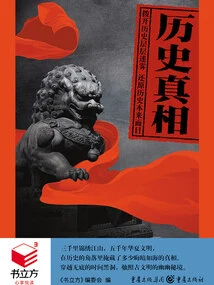
Historical Truth
History历史真相
Editor Of The Editorial Board Of "book Cube"
This book captures nearly fifty attractive and controversial figures and events from the long history of China. Using a professional perspective, popular and vivid text, supplemented by exquisite pictures, it leads readers out of the misunderstanding of "joking", clears away the fog, opens top-secret files, and understands the historical truth.
This book captures nearly fifty attractive and controversial figures and events from the long history of China. Using a professional perspective, popular and vivid text, supplemented by exquisite pictures, it leads readers out of the misunderstanding of "joking", clears away the fog, opens top-secret files, and understands the historical truth.
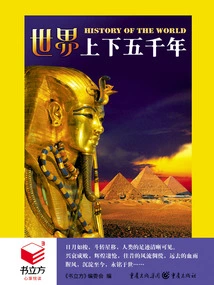
世界上下五千年
Editor Of The Editorial Board Of "book Cube"
This book focuses on those historical events that were influential and promoted historical development, including primitive society, ancient civilizations in Eurasia, primitive civilizations in Eurasia, the world outside Eurasia, the world after regional division, the rise, decline and success of the Western world, and the economic revival of Eastern countries. The focus is prominent and the theme is distinct.
This book focuses on those historical events that were influential and promoted historical development, including primitive society, ancient civilizations in Eurasia, primitive civilizations in Eurasia, the world outside Eurasia, the world after regional division, the rise, decline and success of the Western world, and the economic revival of Eastern countries. The focus is prominent and the theme is distinct.
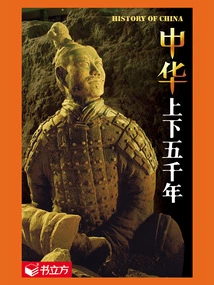
Five Thousand Years of China
History中华上下五千年
Editor Of The Editorial Board Of "book Cube"
As one of the four ancient civilizations in the world, China has a long history and civilization. In the course of five thousand years, the Chinese nation has experienced countless setbacks and ups and downs, and has also created countless brilliant achievements. Five thousand years of history itself is a huge treasure house from which we can draw wisdom and spiritual nourishment.
As one of the four ancient civilizations in the world, China has a long history and civilization. In the course of five thousand years, the Chinese nation has experienced countless setbacks and ups and downs, and has also created countless brilliant achievements. Five thousand years of history itself is a huge treasure house from which we can draw wisdom and spiritual nourishment.
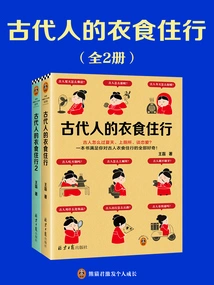
古代人的衣食住行(全2册)
Wang Lei
How did the ancients spend summer, go to the bathroom, and fall in love? One book to satisfy all your curiosity about the daily life of ancient people! Was going to the toilet a dangerous thing for ancient people? In ancient times, toilets were very simple. They were just digging a big pit in the open air. People used the toilet next to the pit. If they accidentally fell into the pit, they would drown if they didn't fall to death. Don't laugh, this kind of thing really happened in history... Were the ancients tired from work? In ancient times, "beating workers" mainly referred to officials and government servants. They work almost 6 days a week, from 6 am to 6 pm every day. Therefore, the ancient work system can be called the "666" work system. How did the ancients live at night? The night life of ancient civilians mainly consisted of chatting with their families by moonlight, telling neighborhood gossip or jokes, collectively referred to as "talking in the vernacular". As for "reading at night", that is the lifestyle of wealthy people. After all, lighting was too expensive in ancient times!
How did the ancients spend summer, go to the bathroom, and fall in love? One book to satisfy all your curiosity about the daily life of ancient people! Was going to the toilet a dangerous thing for ancient people? In ancient times, toilets were very simple. They were just digging a big pit in the open air. People used the toilet next to the pit. If they accidentally fell into the pit, they would drown if they didn't fall to death. Don't laugh, this kind of thing really happened in history... Were the ancients tired from work? In ancient times, "beating workers" mainly referred to officials and government servants. They work almost 6 days a week, from 6 am to 6 pm every day. Therefore, the ancient work system can be called the "666" work system. How did the ancients live at night? The night life of ancient civilians mainly consisted of chatting with their families by moonlight, telling neighborhood gossip or jokes, collectively referred to as "talking in the vernacular". As for "reading at night", that is the lifestyle of wealthy people. After all, lighting was too expensive in ancient times!
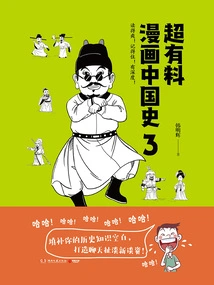
超有料漫画中国史3
Han Minghui
This book slowly opens the curtain of Chinese history for you through hilarious jokes and vivid hand-drawn cartoons. Behind the turbulent historical process, there are emperors, princes, civil servants and military generals with character, temperament and means. Their every move has shaped the wonderful five thousand years of history. I hope that after reading this book you will laugh out loud and have a preliminary understanding of the general context of Chinese history. This volume is the third volume in this series. It tells the history from the Five Dynasties and Ten Kingdoms to the Qing Dynasty, that is, China's transition from division to reunification.
This book slowly opens the curtain of Chinese history for you through hilarious jokes and vivid hand-drawn cartoons. Behind the turbulent historical process, there are emperors, princes, civil servants and military generals with character, temperament and means. Their every move has shaped the wonderful five thousand years of history. I hope that after reading this book you will laugh out loud and have a preliminary understanding of the general context of Chinese history. This volume is the third volume in this series. It tells the history from the Five Dynasties and Ten Kingdoms to the Qing Dynasty, that is, China's transition from division to reunification.
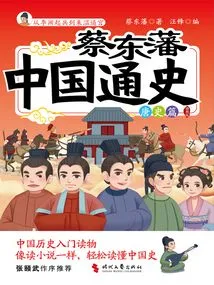
蔡东藩中国通史·唐史篇(插图版)
Written By Cai Dongfan And Compiled By Wang Feng
The History of the Tang Dynasty uses time as a clue to tell the story of the rise and fall of the Tang Dynasty. From the end of the Sui Dynasty, all the heroes in the world came together, and the Li family recruited troops and struggled to establish the Tang Dynasty. When the prosperous age came into being, all nations came to the dynasty, Chang'an was prosperous; women began to move to the stage of power; the upper class moved from luxury in life to ideological decadence... The book uses 76 stories to show the history of more than 200 years, showing the fate and changes of the times such as Tang Taizong, Tang Xuanzong, Li Bai, Yang Guifei and other representative figures.
The History of the Tang Dynasty uses time as a clue to tell the story of the rise and fall of the Tang Dynasty. From the end of the Sui Dynasty, all the heroes in the world came together, and the Li family recruited troops and struggled to establish the Tang Dynasty. When the prosperous age came into being, all nations came to the dynasty, Chang'an was prosperous; women began to move to the stage of power; the upper class moved from luxury in life to ideological decadence... The book uses 76 stories to show the history of more than 200 years, showing the fate and changes of the times such as Tang Taizong, Tang Xuanzong, Li Bai, Yang Guifei and other representative figures.
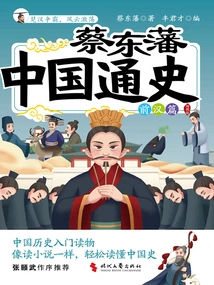
蔡东藩中国通史·前汉篇(插图版)
Written By Cai Dongfan And Edited By Feng Juncai
"Cai Dongfan's General History of China (Illustrated Edition)" has a total of 10 volumes. It is a general history educational historical book written with Chinese classic figures and events as the core. The complete set of books draws nearly a thousand exquisite Chinese-style illustrations based on story scenes, creating a relaxed and lively reading atmosphere for readers. It perfectly combines knowledge, interest and storytelling, allowing young readers to understand history and culture through interesting reading, stimulate learning interests, and lay a foundation for the subject. Through more than 70 stories and nearly 100 illustrations, the chapter on the Early Han Dynasty vividly tells the historical story of more than 200 years from the mystery of Qin Shihuang's life experience, the conflict between Chu and Han to the fall of the Western Han Dynasty. The content includes knowledge of literature, history, and philosophy, with a combination of events, pictures, explanations, and knowledge, a unified style, and rich materials; the language is vivid, the text is fluent and concise, and it is easy to understand.
"Cai Dongfan's General History of China (Illustrated Edition)" has a total of 10 volumes. It is a general history educational historical book written with Chinese classic figures and events as the core. The complete set of books draws nearly a thousand exquisite Chinese-style illustrations based on story scenes, creating a relaxed and lively reading atmosphere for readers. It perfectly combines knowledge, interest and storytelling, allowing young readers to understand history and culture through interesting reading, stimulate learning interests, and lay a foundation for the subject. Through more than 70 stories and nearly 100 illustrations, the chapter on the Early Han Dynasty vividly tells the historical story of more than 200 years from the mystery of Qin Shihuang's life experience, the conflict between Chu and Han to the fall of the Western Han Dynasty. The content includes knowledge of literature, history, and philosophy, with a combination of events, pictures, explanations, and knowledge, a unified style, and rich materials; the language is vivid, the text is fluent and concise, and it is easy to understand.
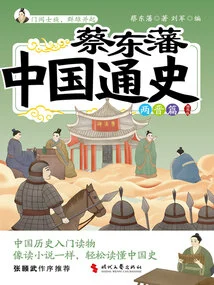
蔡东藩中国通史·两晋篇(插图版)
Written By Cai Dongfan And Edited By Liu Jun
"Cai Dongfan's General History of China (Illustrated Edition)" has a total of 10 volumes. It is a general history educational historical book written with Chinese classic figures and events as the core. The complete set of books draws nearly a thousand exquisite Chinese-style illustrations based on story scenes, creating a relaxed and lively reading atmosphere for readers. It perfectly combines knowledge, interest and storytelling, allowing young readers to understand history and culture through interesting reading, stimulate learning interests, and lay a foundation for the subject. "Cai Dongfan's General History of China: Two Jins (Illustrated Edition)" vividly tells the historical story from Sima's usurpation of Wei, Sima Yan's establishment of the Western Jin Dynasty to Liu Yu's usurpation of Jin through 96 stories and 100 illustrations. The content includes literature, history, and philosophy knowledge, with annotations and phonetic notes for rare words, a summary of idioms, and an introduction to the historical background of key figures and events. The material is rich, the interpretation is detailed, and the text is simple, smooth, and easy to understand.
"Cai Dongfan's General History of China (Illustrated Edition)" has a total of 10 volumes. It is a general history educational historical book written with Chinese classic figures and events as the core. The complete set of books draws nearly a thousand exquisite Chinese-style illustrations based on story scenes, creating a relaxed and lively reading atmosphere for readers. It perfectly combines knowledge, interest and storytelling, allowing young readers to understand history and culture through interesting reading, stimulate learning interests, and lay a foundation for the subject. "Cai Dongfan's General History of China: Two Jins (Illustrated Edition)" vividly tells the historical story from Sima's usurpation of Wei, Sima Yan's establishment of the Western Jin Dynasty to Liu Yu's usurpation of Jin through 96 stories and 100 illustrations. The content includes literature, history, and philosophy knowledge, with annotations and phonetic notes for rare words, a summary of idioms, and an introduction to the historical background of key figures and events. The material is rich, the interpretation is detailed, and the text is simple, smooth, and easy to understand.
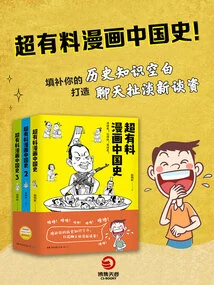
超有料漫画中国史(套装共3册)
Han Minghui
This book slowly opens the curtain of Chinese history for you through hilarious jokes and vivid hand-drawn cartoons. Behind the turbulent historical process, there are emperors, princes, civil servants and military generals with character, temperament and means. Their every move has shaped the wonderful five thousand years of history. I hope that after reading this book you will laugh out loud and have a preliminary understanding of the general context of Chinese history. How did King Gou Jian of Yue implement "family planning"? Why is Zhuge Liang said to be a "technology enthusiast"? Huan Xuan, a traitor in the Eastern Jin Dynasty who loved to write "a madman's diary", what did he write in his diary? Li Shimin valued Wei Zheng, but why did he smash his tombstone? If you lived in the Yuan Dynasty, which class among the four classes would you belong to? Empress Dowager Cixi and Emperor Guangxu died less than one day apart. What's the mystery behind it? ...
This book slowly opens the curtain of Chinese history for you through hilarious jokes and vivid hand-drawn cartoons. Behind the turbulent historical process, there are emperors, princes, civil servants and military generals with character, temperament and means. Their every move has shaped the wonderful five thousand years of history. I hope that after reading this book you will laugh out loud and have a preliminary understanding of the general context of Chinese history. How did King Gou Jian of Yue implement "family planning"? Why is Zhuge Liang said to be a "technology enthusiast"? Huan Xuan, a traitor in the Eastern Jin Dynasty who loved to write "a madman's diary", what did he write in his diary? Li Shimin valued Wei Zheng, but why did he smash his tombstone? If you lived in the Yuan Dynasty, which class among the four classes would you belong to? Empress Dowager Cixi and Emperor Guangxu died less than one day apart. What's the mystery behind it? ...
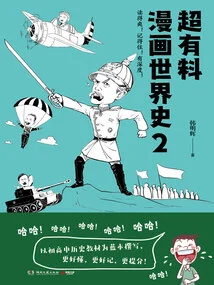
超有料漫画世界史2
Han Minghui
This book tells the history of the world since the Great Discovery, including the American Civil War, Japan's Meiji Restoration, the unification and rise of Germany, the bloody events of the two world wars, and the treacherous events of the Cold War between the United States and the Soviet Union... The complicated and complicated histories of various countries are presented through hilarious jokes and vivid hand-drawn cartoons. I hope that after reading this book, you will laugh out loud and have a preliminary understanding of the formation of today's world pattern.
This book tells the history of the world since the Great Discovery, including the American Civil War, Japan's Meiji Restoration, the unification and rise of Germany, the bloody events of the two world wars, and the treacherous events of the Cold War between the United States and the Soviet Union... The complicated and complicated histories of various countries are presented through hilarious jokes and vivid hand-drawn cartoons. I hope that after reading this book, you will laugh out loud and have a preliminary understanding of the formation of today's world pattern.
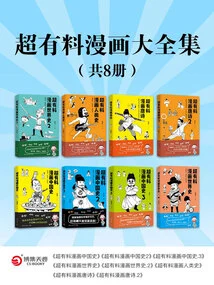
超有料漫画大全集(共8册)
Han Minghui
A complete set of super informative comics, including 3 volumes of Chinese history, 2 volumes of world history, 1 volume of human history, and 2 volumes of Tang poetry. Through the form of comics + illustrations, it reproduces the development process of Chinese and foreign history and the main context of human evolution, and reinterprets classic Tang poetry in an alternative way. The comics in the book are carefully drawn according to the storyline, and are accompanied by accurate, humorous and vivid illustrations and text, allowing readers to know and remember history in a relaxed and funny atmosphere. It can popularize historical knowledge for entry-level readers who are interested in learning history.
A complete set of super informative comics, including 3 volumes of Chinese history, 2 volumes of world history, 1 volume of human history, and 2 volumes of Tang poetry. Through the form of comics + illustrations, it reproduces the development process of Chinese and foreign history and the main context of human evolution, and reinterprets classic Tang poetry in an alternative way. The comics in the book are carefully drawn according to the storyline, and are accompanied by accurate, humorous and vivid illustrations and text, allowing readers to know and remember history in a relaxed and funny atmosphere. It can popularize historical knowledge for entry-level readers who are interested in learning history.
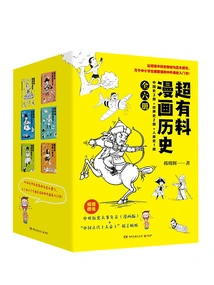
超有料漫画历史(全6册)
Han Minghui
This book is a set of comic history books, including 3 volumes of Chinese history, 2 volumes of world history, and 1 volume of human history. Through comics + illustrations, it reproduces the development process of Chinese and foreign history and the main thread of human evolution. The comics in the book are carefully drawn according to the storyline, and are accompanied by accurate, humorous and vivid illustrations and text, allowing readers to know and remember history in a relaxed and funny atmosphere. It can popularize historical knowledge for entry-level readers who are interested in learning history.
This book is a set of comic history books, including 3 volumes of Chinese history, 2 volumes of world history, and 1 volume of human history. Through comics + illustrations, it reproduces the development process of Chinese and foreign history and the main thread of human evolution. The comics in the book are carefully drawn according to the storyline, and are accompanied by accurate, humorous and vivid illustrations and text, allowing readers to know and remember history in a relaxed and funny atmosphere. It can popularize historical knowledge for entry-level readers who are interested in learning history.
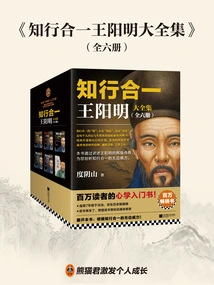
The Complete Collection of Wang Yangming's Unity of Knowledge and Action (six Volumes in Total)
History知行合一王阳明大全集(全六册)
Duyin Mountain
Duyinshan started from biographies, Four Sentences, family letters, and biography, and went deep into each layer, practicing and practicing every day, and sorted out the framework and context for understanding Wang Yangming for the vast number of mind-study enthusiasts. Biography: Wang Yangming's life is a collection of psychological cases! Four Sentences: These four sentences are not only the core of Yangming's Mind Learning, but also a gateway suitable for beginners. Letters from home: Wang Yangming's 12 family mottos and 24 family letters are interpreted word for word, word by word, thoroughly and clearly. Chuanxilu: "Zhuanxilu" is a collection of Wang Yangming's quotations and letters. It is a classic handed down that is indispensable for understanding the mind. In this book, Du Yinshan thoroughly interprets the concepts of "mind is reason", "the unity of knowledge and action" and "leading to conscience" in "Zhuan Xi Lu" through 108 interesting historical stories. 21-Day daily course on mental learning: refine 21 core new concepts and learn only one every day! Practice on things every day and develop the habit of thinking in 21 days!
Duyinshan started from biographies, Four Sentences, family letters, and biography, and went deep into each layer, practicing and practicing every day, and sorted out the framework and context for understanding Wang Yangming for the vast number of mind-study enthusiasts. Biography: Wang Yangming's life is a collection of psychological cases! Four Sentences: These four sentences are not only the core of Yangming's Mind Learning, but also a gateway suitable for beginners. Letters from home: Wang Yangming's 12 family mottos and 24 family letters are interpreted word for word, word by word, thoroughly and clearly. Chuanxilu: "Zhuanxilu" is a collection of Wang Yangming's quotations and letters. It is a classic handed down that is indispensable for understanding the mind. In this book, Du Yinshan thoroughly interprets the concepts of "mind is reason", "the unity of knowledge and action" and "leading to conscience" in "Zhuan Xi Lu" through 108 interesting historical stories. 21-Day daily course on mental learning: refine 21 core new concepts and learn only one every day! Practice on things every day and develop the habit of thinking in 21 days!
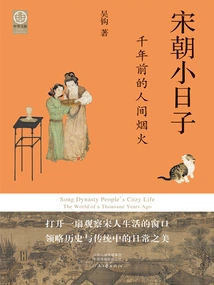
宋朝小日子:千年前的人间烟火
Wu Gou
This book focuses on the daily life of people in the Song Dynasty. It selects elegant, interesting and modern aspects of people's life in the Song Dynasty, and presents them with vivid language, scene-based descriptions and unique details. It also selects more than 50 pictures of Song Dynasty paintings and Song Dynasty utensils as illustrations. The author opens a window to closely observe the life of Song people, allowing us to appreciate the daily beauty contained in history and tradition, and to feel the beauty of living a small life.
This book focuses on the daily life of people in the Song Dynasty. It selects elegant, interesting and modern aspects of people's life in the Song Dynasty, and presents them with vivid language, scene-based descriptions and unique details. It also selects more than 50 pictures of Song Dynasty paintings and Song Dynasty utensils as illustrations. The author opens a window to closely observe the life of Song people, allowing us to appreciate the daily beauty contained in history and tradition, and to feel the beauty of living a small life.
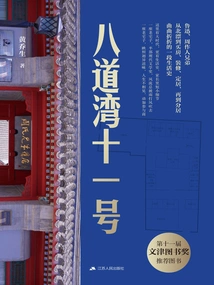
Badaowan No.11
History八道湾十一号
Huang Qiaosheng
This book is a comprehensive study of the fateful interaction between the three brothers Lu Xun, Zhou Zuoren, and Zhou Jianren and Badaowan No. 11. The author describes in detail the overall layout of the courtyard, the distribution of houses and the living conditions of the three brothers. The living environment and living conditions here have had a great impact on the creation and thinking of the Zhou brothers. Lu Xun created his masterpiece "The True Story of Ah Q" here, which won Lu Xun international reputation; Zhou Zuoren became an important theorist of the May Fourth Literary Revolution here and gained the reputation of a master of short essays; the three brothers ran a literary cooperative here and lived a happy life as brothers. Not only that, many cultural celebrities during the May Fourth period, such as Cai Yuanpei, Chen Duxiu, Hu Shi, Qian Xuantong, Liu Bannong, Shen Yanbing, etc., All had more or less interactions with the owners of Badaowan and influenced the course of Chinese history and culture.
This book is a comprehensive study of the fateful interaction between the three brothers Lu Xun, Zhou Zuoren, and Zhou Jianren and Badaowan No. 11. The author describes in detail the overall layout of the courtyard, the distribution of houses and the living conditions of the three brothers. The living environment and living conditions here have had a great impact on the creation and thinking of the Zhou brothers. Lu Xun created his masterpiece "The True Story of Ah Q" here, which won Lu Xun international reputation; Zhou Zuoren became an important theorist of the May Fourth Literary Revolution here and gained the reputation of a master of short essays; the three brothers ran a literary cooperative here and lived a happy life as brothers. Not only that, many cultural celebrities during the May Fourth period, such as Cai Yuanpei, Chen Duxiu, Hu Shi, Qian Xuantong, Liu Bannong, Shen Yanbing, etc., All had more or less interactions with the owners of Badaowan and influenced the course of Chinese history and culture.
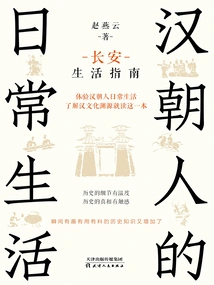
汉朝人的日常生活:长安生活指南
Zhao Yanyun
"Daily Life of Han Dynasty People - Chang'an Life Guide" introduces in detail the common sense of people's life in Chang'an, such as food customs, cultural life, commercial economy, etc., The tax system of Han Dynasty people, postal facilities, talent selection, etc. There was no mobile Internet in the Han Dynasty, but there were Tibetan hooks, Danqi, Liubo, and Yang... How did the Han Dynasty celebrate New Year's Day? Sticking to door gods, giving new year's money, staying vigil, watching the Spring Festival Gala... The laws of the Han Dynasty were very advanced. Single women were taxed, and the elderly received monthly benefits. What did the luxury cars and postal services of the Han Dynasty look like? The clothes of the Han Dynasty were very elegant, but the core was quite embarrassing? ... Will I be hungry if I travel to the Han Dynasty? Kebabs, hot pot, rice dumplings, etc. Are all available. If you live in the Han Dynasty and want to be a general, go to Longxi; if you want to be an official, go to Shandong; if you want to live a prosperous life, go to Luoyang Nanyang... If you live in the Han Dynasty, singles should pay attention, be careful of being levied a single tax...
"Daily Life of Han Dynasty People - Chang'an Life Guide" introduces in detail the common sense of people's life in Chang'an, such as food customs, cultural life, commercial economy, etc., The tax system of Han Dynasty people, postal facilities, talent selection, etc. There was no mobile Internet in the Han Dynasty, but there were Tibetan hooks, Danqi, Liubo, and Yang... How did the Han Dynasty celebrate New Year's Day? Sticking to door gods, giving new year's money, staying vigil, watching the Spring Festival Gala... The laws of the Han Dynasty were very advanced. Single women were taxed, and the elderly received monthly benefits. What did the luxury cars and postal services of the Han Dynasty look like? The clothes of the Han Dynasty were very elegant, but the core was quite embarrassing? ... Will I be hungry if I travel to the Han Dynasty? Kebabs, hot pot, rice dumplings, etc. Are all available. If you live in the Han Dynasty and want to be a general, go to Longxi; if you want to be an official, go to Shandong; if you want to live a prosperous life, go to Luoyang Nanyang... If you live in the Han Dynasty, singles should pay attention, be careful of being levied a single tax...
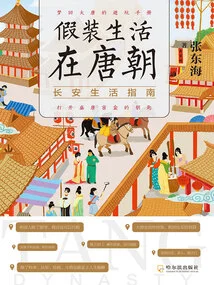
假装生活在唐朝:长安生活指南
Zhang Donghai
What did Chang'an in the Tang Dynasty look like? Taiji Palace, Daming Palace, Xingqing Palace... Where did the emperor live? How did the Tang Dynasty manage cities? How to live in Chang'an? Transforming outsiders and transforming insiders, who are the people of the Tang Dynasty? How do foreigners live in Chang'an? What was the fashion in Chang'an during the Tang Dynasty? What kind of entertainment did the Tang Dynasty have? What board games were popular in the Tang Dynasty? What games does Wu Zetian like? What were the traffic rules like in the Tang Dynasty? Can Tang Dynasty go to the market and play all night? How can foreigners file lawsuits in Chang'an? Can foreigners work as civil servants in Chang'an? What are the black techniques used in cheating in the imperial examinations in the Tang Dynasty? What kind of dishes does Zhuangyuanlang serve as a treat? What cold weapons were there in the Tang Dynasty? ... "Pretending to Live in the Tang Dynasty: Chang'an Life Guide" will take you back to the ancient international metropolis - Chang'an of the Tang Dynasty, and become a proud and fashionable Tang Dynasty person.
What did Chang'an in the Tang Dynasty look like? Taiji Palace, Daming Palace, Xingqing Palace... Where did the emperor live? How did the Tang Dynasty manage cities? How to live in Chang'an? Transforming outsiders and transforming insiders, who are the people of the Tang Dynasty? How do foreigners live in Chang'an? What was the fashion in Chang'an during the Tang Dynasty? What kind of entertainment did the Tang Dynasty have? What board games were popular in the Tang Dynasty? What games does Wu Zetian like? What were the traffic rules like in the Tang Dynasty? Can Tang Dynasty go to the market and play all night? How can foreigners file lawsuits in Chang'an? Can foreigners work as civil servants in Chang'an? What are the black techniques used in cheating in the imperial examinations in the Tang Dynasty? What kind of dishes does Zhuangyuanlang serve as a treat? What cold weapons were there in the Tang Dynasty? ... "Pretending to Live in the Tang Dynasty: Chang'an Life Guide" will take you back to the ancient international metropolis - Chang'an of the Tang Dynasty, and become a proud and fashionable Tang Dynasty person.
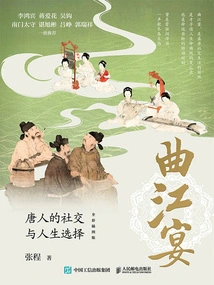
曲江宴:唐人的社交与人生选择
Zhang Cheng
By the Qujiang Pool, poetic gatherings were held one after another, recreating the spring outing scenes of celebrities such as Han Yu, Zhang Ji, and Bai Juyi in the Tang Dynasty. Poems that have been passed down through the ages bring people into a world full of poetry. What were the key social circles and turning points in Li Bai's life? How should he choose between pursuing an official career or pursuing a scholarly career? Du Fu's life was full of ups and downs. Who was in his circle of friends? How does he socialize upward through the different stages of youth, middle age, and old age? How did literary giants Liu Yuxi and Bai Juyi develop into a deep friendship that spans time and space from their first encounter in Yangzhou? When encountering low points in life, how do poets maintain a sense of relaxation and enterprising spirit, and never give up in the face of difficulties? Being born into an imperial family and being a relative of the emperor, are you destined to live a life of peace of mind? People in the Tang Dynasty are actually free to divorce? Is his view on marriage more avant-garde than imagined? Will Tangren delay retirement? Are they worried about personal pension issues? The book not only shows the achievements of celebrities in the Tang Dynasty, but also touches the depth of their emotions, making historical figures vivid and three-dimensional.
By the Qujiang Pool, poetic gatherings were held one after another, recreating the spring outing scenes of celebrities such as Han Yu, Zhang Ji, and Bai Juyi in the Tang Dynasty. Poems that have been passed down through the ages bring people into a world full of poetry. What were the key social circles and turning points in Li Bai's life? How should he choose between pursuing an official career or pursuing a scholarly career? Du Fu's life was full of ups and downs. Who was in his circle of friends? How does he socialize upward through the different stages of youth, middle age, and old age? How did literary giants Liu Yuxi and Bai Juyi develop into a deep friendship that spans time and space from their first encounter in Yangzhou? When encountering low points in life, how do poets maintain a sense of relaxation and enterprising spirit, and never give up in the face of difficulties? Being born into an imperial family and being a relative of the emperor, are you destined to live a life of peace of mind? People in the Tang Dynasty are actually free to divorce? Is his view on marriage more avant-garde than imagined? Will Tangren delay retirement? Are they worried about personal pension issues? The book not only shows the achievements of celebrities in the Tang Dynasty, but also touches the depth of their emotions, making historical figures vivid and three-dimensional.
写不完的纯粹:他们改变了晚清民国史
Pan Jingxian
This book gently wipes away the dust of time, and reproduces the pure people and pure things they did during the historical period of the late Qing Dynasty and the Republic of China in a concise and concise writing style. Revolutionaries, industrialists, thinkers, educators, writers, politicians, all kinds of families, "family" does not necessarily mean wrist; they make revolutions, engage in assassinations, engage in industry, build schools, run newspapers, write articles, their lives are endless, and they are "tossing" endlessly. The author's line drawing style is impartial, not praising or smearing, only outlining.
This book gently wipes away the dust of time, and reproduces the pure people and pure things they did during the historical period of the late Qing Dynasty and the Republic of China in a concise and concise writing style. Revolutionaries, industrialists, thinkers, educators, writers, politicians, all kinds of families, "family" does not necessarily mean wrist; they make revolutions, engage in assassinations, engage in industry, build schools, run newspapers, write articles, their lives are endless, and they are "tossing" endlessly. The author's line drawing style is impartial, not praising or smearing, only outlining.
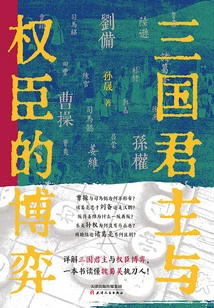
三国君主与权臣的博弈
Sun Sheng
Chinese history came to a crossroads during the Three Kingdoms era. The three forces represented by Cao Cao, Liu Bei, and Sun Quan represented the three trends of the world at that time. However, Cao Cao, Liu Bei, and Sun Quan were not the ones who controlled the world. The ones who really controlled the world were the swordsmen of the Three Kingdoms behind them. The sword-bearers refer to Zhuge Liang and Jiang Wei who were in charge of the Shu Kingdom, the three generations of the Cao family and the Sima clan in the Wei state, and Zhou Yu, Lu Xun, Zhuge Ke, Sun Jun and others in the Wu state. They directed the country, promoted generals and became prime ministers, and became the sword-holders of the times and the helmsmen of history. This book tells the story of the real controllers behind the power of the Liu, Cao, and Sun families.
Chinese history came to a crossroads during the Three Kingdoms era. The three forces represented by Cao Cao, Liu Bei, and Sun Quan represented the three trends of the world at that time. However, Cao Cao, Liu Bei, and Sun Quan were not the ones who controlled the world. The ones who really controlled the world were the swordsmen of the Three Kingdoms behind them. The sword-bearers refer to Zhuge Liang and Jiang Wei who were in charge of the Shu Kingdom, the three generations of the Cao family and the Sima clan in the Wei state, and Zhou Yu, Lu Xun, Zhuge Ke, Sun Jun and others in the Wu state. They directed the country, promoted generals and became prime ministers, and became the sword-holders of the times and the helmsmen of history. This book tells the story of the real controllers behind the power of the Liu, Cao, and Sun families.
大宋群星闪耀时(上册)
Chen Wangbei
A Northern Song Dynasty historical group drama! Here, you will see: Li Yu's growing up environment turned out to be so bloody; the Southern Han Dynasty, where the courtiers were all eunuchs, used elephant battles; Liu Yong became a "national sinner" because of a poem... Su Shi actually "cheated" in the exam? Wang Anshi and Sima Guang were once sworn friends, but eventually "turned friends into enemies"; who made the whistleblower report on the "Wutai Poetry Case"? Su Shi's demotion for forming a clique was not an unjust case; Zhou Bangyan's love rival turned out to be the emperor...
A Northern Song Dynasty historical group drama! Here, you will see: Li Yu's growing up environment turned out to be so bloody; the Southern Han Dynasty, where the courtiers were all eunuchs, used elephant battles; Liu Yong became a "national sinner" because of a poem... Su Shi actually "cheated" in the exam? Wang Anshi and Sima Guang were once sworn friends, but eventually "turned friends into enemies"; who made the whistleblower report on the "Wutai Poetry Case"? Su Shi's demotion for forming a clique was not an unjust case; Zhou Bangyan's love rival turned out to be the emperor...
大宋群星闪耀时(下册)
Chen Wangbei
A Northern Song Dynasty historical group drama! Here, you will see: Li Yu's growing up environment turned out to be so bloody; the Southern Han Dynasty, where the courtiers were all eunuchs, used elephant battles; Liu Yong became a "national sinner" because of a poem... Su Shi actually "cheated" in the exam? Wang Anshi and Sima Guang were once sworn friends, but eventually "turned friends into enemies"; who made the whistleblower report on the "Wutai Poetry Case"? Su Shi's demotion for forming a clique was not an unjust case; Zhou Bangyan's love rival turned out to be the emperor...
A Northern Song Dynasty historical group drama! Here, you will see: Li Yu's growing up environment turned out to be so bloody; the Southern Han Dynasty, where the courtiers were all eunuchs, used elephant battles; Liu Yong became a "national sinner" because of a poem... Su Shi actually "cheated" in the exam? Wang Anshi and Sima Guang were once sworn friends, but eventually "turned friends into enemies"; who made the whistleblower report on the "Wutai Poetry Case"? Su Shi's demotion for forming a clique was not an unjust case; Zhou Bangyan's love rival turned out to be the emperor...
大宋群星闪耀时(全集)
Chen Wangbei
A Northern Song Dynasty historical group drama! Here, you will see: Li Yu's growing up environment turned out to be so bloody; the Southern Han Dynasty, where the courtiers were all eunuchs, used elephant battles; Liu Yong became a "national sinner" because of a poem... Su Shi actually "cheated" in the exam? Wang Anshi and Sima Guang were once sworn friends, but eventually "turned friends into enemies"; who made the whistleblower report on the "Wutai Poetry Case"? Su Shi's demotion for forming a clique was not an unjust case; Zhou Bangyan's love rival turned out to be the emperor...
A Northern Song Dynasty historical group drama! Here, you will see: Li Yu's growing up environment turned out to be so bloody; the Southern Han Dynasty, where the courtiers were all eunuchs, used elephant battles; Liu Yong became a "national sinner" because of a poem... Su Shi actually "cheated" in the exam? Wang Anshi and Sima Guang were once sworn friends, but eventually "turned friends into enemies"; who made the whistleblower report on the "Wutai Poetry Case"? Su Shi's demotion for forming a clique was not an unjust case; Zhou Bangyan's love rival turned out to be the emperor...
建安末年:三分天下的精彩博弈
Holding The Hanging Jade
The last few years of the Jian'an era of Emperor Xian of the Han Dynasty can be said to be quite special. It inherited the Eastern Han Dynasty and initiated the Three Kingdoms. It was an important turning stage. During this period, Cao, Sun, and Liu gradually abandoned the central government of the Han Dynasty and embarked on the path of establishing their own political power alone, opening a new chapter in the Three Kingdoms era. This work begins with Cao Cao calling himself Duke of Wei and taking the first step of usurping the Han Dynasty, and ends with Cao Pi replacing the Han Dynasty. Various major events during the period, such as the Battle of Hefei, the Battle of Hanzhong, and the Battle of Jingzhou, etc., Have been analyzed in detail, striving to present the most detailed and authentic epic of the Three Kingdoms.
The last few years of the Jian'an era of Emperor Xian of the Han Dynasty can be said to be quite special. It inherited the Eastern Han Dynasty and initiated the Three Kingdoms. It was an important turning stage. During this period, Cao, Sun, and Liu gradually abandoned the central government of the Han Dynasty and embarked on the path of establishing their own political power alone, opening a new chapter in the Three Kingdoms era. This work begins with Cao Cao calling himself Duke of Wei and taking the first step of usurping the Han Dynasty, and ends with Cao Pi replacing the Han Dynasty. Various major events during the period, such as the Battle of Hefei, the Battle of Hanzhong, and the Battle of Jingzhou, etc., Have been analyzed in detail, striving to present the most detailed and authentic epic of the Three Kingdoms.
Zhu Yuanzhang and His Era
History朱元璋及其时代
Zong Chenghao
Thirty-one years after the founding of Hongwu, who is causing trouble for the empire? This is a historical mystery that has clues but remains unsolved. The book adheres to the author Zong Chenghao's consistent smooth and smooth writing style, from shallow to deep, and tells the story of Zhu Yuanzhang's power dilemma before and after the founding of the People's Republic of China, the political struggle on the eve of the Jingnan Incident, and the internal struggles of the civil servant group and other major historical events. In the author's writing, the power game between Emperor Hongwu and his ministers has a more humane interpretation.
Thirty-one years after the founding of Hongwu, who is causing trouble for the empire? This is a historical mystery that has clues but remains unsolved. The book adheres to the author Zong Chenghao's consistent smooth and smooth writing style, from shallow to deep, and tells the story of Zhu Yuanzhang's power dilemma before and after the founding of the People's Republic of China, the political struggle on the eve of the Jingnan Incident, and the internal struggles of the civil servant group and other major historical events. In the author's writing, the power game between Emperor Hongwu and his ministers has a more humane interpretation.
Egyptian Pharaoh Tutankhamun
History埃及法老图坦卡蒙
(uk)joyce Tyldesley
In this book, Egyptologist Joyce Tyldesley brings together ten unique perspectives for an in-depth exploration of the tomb of the Egyptian pharaoh Tutankhamun. This tomb is known to the world for its astonishing number of cultural relics. The author integrates archaeological evidence and data from the past century and uses the clues provided by the cultural relics to reconstruct the history of Tutankhamen's era and provide a detailed interpretation of the ancient Egyptian culture displayed in it. This book unravels many misunderstandings surrounding Tutankhamun and re-evaluates his life, death and immortal legacy, providing readers with a new perspective for a comprehensive and rational understanding of Tutankhamun.
In this book, Egyptologist Joyce Tyldesley brings together ten unique perspectives for an in-depth exploration of the tomb of the Egyptian pharaoh Tutankhamun. This tomb is known to the world for its astonishing number of cultural relics. The author integrates archaeological evidence and data from the past century and uses the clues provided by the cultural relics to reconstruct the history of Tutankhamen's era and provide a detailed interpretation of the ancient Egyptian culture displayed in it. This book unravels many misunderstandings surrounding Tutankhamun and re-evaluates his life, death and immortal legacy, providing readers with a new perspective for a comprehensive and rational understanding of Tutankhamun.
水浒人物之最
Ma Youyuan
"Water Margin", one of China's four famous novels, depicts the story of Liangshan heroes who resisted oppression and gathered in Liangshan for righteousness. This book uses "the best characters" as a clue to fully reveal the inside stories of the heroes in the Water Margin. It analyzes and comments on 26 Water Margin characters including Song Jiang, Lin Chong, Wu Song, and Lu Junyi in simple and clear writing. It objectively analyzes the psychology, behavior, and motivations of the characters hidden in the ups and downs of the plot, reveals the complex human nature behind "loyalty", and decodes the truth about the fate of the Liangshan heroes!
"Water Margin", one of China's four famous novels, depicts the story of Liangshan heroes who resisted oppression and gathered in Liangshan for righteousness. This book uses "the best characters" as a clue to fully reveal the inside stories of the heroes in the Water Margin. It analyzes and comments on 26 Water Margin characters including Song Jiang, Lin Chong, Wu Song, and Lu Junyi in simple and clear writing. It objectively analyzes the psychology, behavior, and motivations of the characters hidden in the ups and downs of the plot, reveals the complex human nature behind "loyalty", and decodes the truth about the fate of the Liangshan heroes!
Anshi Rebellion
History安史之乱
Shi Yuntao
In order to solve the mystery of the changes in the Tang Dynasty, we must first decipher the code of the Anshi Rebellion. In 755, a war that lasted for seven or eight years began. From the cracks in the empire to its collapse, who tolerates adultery and reaps the consequences? Who pushed the Tang Dynasty into the abyss? Who resisted internal and external troubles and endured hardships? Bloodshed and pain, adventure and contest, desire and fate, after the smoke dissipated, the aftermath of the war still rippled through Tang Dynasty society for a long time. This book interprets the causes and consequences of the Anshi Rebellion from a new perspective, and interprets the rise and decline of the Tang Dynasty.
In order to solve the mystery of the changes in the Tang Dynasty, we must first decipher the code of the Anshi Rebellion. In 755, a war that lasted for seven or eight years began. From the cracks in the empire to its collapse, who tolerates adultery and reaps the consequences? Who pushed the Tang Dynasty into the abyss? Who resisted internal and external troubles and endured hardships? Bloodshed and pain, adventure and contest, desire and fate, after the smoke dissipated, the aftermath of the war still rippled through Tang Dynasty society for a long time. This book interprets the causes and consequences of the Anshi Rebellion from a new perspective, and interprets the rise and decline of the Tang Dynasty.
Human History
History人类大历史
(uk) Ian Cefton (uk) Jeremy Black
Evolution, competition, transformation... How did we get to where we are today step by step? This book "highlights" every important turning point in human history from the perspectives of astronomy, biology, history, and geography, constructs a macro historical framework, and guides us to clearly understand the mysteries and truths of major events in six contexts, from the Big Bang to the creation of life, animals dominating the earth, humans dominating the world, human civilization, the rise of the West, and the modern world. By reading this book, we can build a bridge between the universe, life and civilization, clarify the "coordinates" of human beings in the universe, and find the meaning of our own existence in the grand narrative of history.
Evolution, competition, transformation... How did we get to where we are today step by step? This book "highlights" every important turning point in human history from the perspectives of astronomy, biology, history, and geography, constructs a macro historical framework, and guides us to clearly understand the mysteries and truths of major events in six contexts, from the Big Bang to the creation of life, animals dominating the earth, humans dominating the world, human civilization, the rise of the West, and the modern world. By reading this book, we can build a bridge between the universe, life and civilization, clarify the "coordinates" of human beings in the universe, and find the meaning of our own existence in the grand narrative of history.
虎变:晋国大族的兴衰
Liu Xun
"Yi Zhuan·Ge" says: "When a great man changes from tiger to tiger, his literary talent is also outstanding." If the Seven Heroes of the Warring States Period are compared to seven fierce tigers, then the three tigers among them, Zhao, Wei, and Han, all evolved from the Qing clan of the same name in the Spring and Autumn Period of Jin. This book makes full use of the rich materials from handed down documents and unearthed documents such as "Zuo Zhuan", focusing on the Jin State, the most powerful vassal state in the Spring and Autumn Period. Taking the politics of the Qing clan as the main line, it not only restores the magnificent historical events of the leadership team of Jin's ministers and the rise and fall of the Qing clan in chronological order, but also combs the brief evolution history of the ten Qing clans in Jin one by one, vividly and clearly showing the "tiger transformation" career of each Qing clan to turn the family into the country and the historical ending of success or failure.
"Yi Zhuan·Ge" says: "When a great man changes from tiger to tiger, his literary talent is also outstanding." If the Seven Heroes of the Warring States Period are compared to seven fierce tigers, then the three tigers among them, Zhao, Wei, and Han, all evolved from the Qing clan of the same name in the Spring and Autumn Period of Jin. This book makes full use of the rich materials from handed down documents and unearthed documents such as "Zuo Zhuan", focusing on the Jin State, the most powerful vassal state in the Spring and Autumn Period. Taking the politics of the Qing clan as the main line, it not only restores the magnificent historical events of the leadership team of Jin's ministers and the rise and fall of the Qing clan in chronological order, but also combs the brief evolution history of the ten Qing clans in Jin one by one, vividly and clearly showing the "tiger transformation" career of each Qing clan to turn the family into the country and the historical ending of success or failure.
挑战古人100天:搬家去南宋
Yunjia
Compared with the Northern Song Dynasty, what changes have taken place in the lives of people in the Southern Song Dynasty? What is the difference between Lin'an City and Bianjing City? What was the name of the bathhouse in the Southern Song Dynasty? Was there toilet paper in the Southern Song Dynasty? How many kinds of schools were there in the Southern Song Dynasty? Is there a lot of homework? How did workers in the Southern Song Dynasty take holidays? Adjust rest or not? How much did people in the Southern Song Dynasty love West Lake? In the deep historical background of the transition between the two Song Dynasties, lively and delicate words are used to tear open a gap, and get a glimpse of the various aspects of people's livelihood that always shimmer. Set off again and arrive at the true Jiangnan a thousand years ago.
Compared with the Northern Song Dynasty, what changes have taken place in the lives of people in the Southern Song Dynasty? What is the difference between Lin'an City and Bianjing City? What was the name of the bathhouse in the Southern Song Dynasty? Was there toilet paper in the Southern Song Dynasty? How many kinds of schools were there in the Southern Song Dynasty? Is there a lot of homework? How did workers in the Southern Song Dynasty take holidays? Adjust rest or not? How much did people in the Southern Song Dynasty love West Lake? In the deep historical background of the transition between the two Song Dynasties, lively and delicate words are used to tear open a gap, and get a glimpse of the various aspects of people's livelihood that always shimmer. Set off again and arrive at the true Jiangnan a thousand years ago.
Shanghai Beach·1843
History上海滩·1843
Bian Junjun
Shanghai, before 1843, was just an unknown city among many small counties in China. After the Opium War, it was discovered, and Westerners used ships and artillery to blast it into a new city that connected the east and west. Since then, Shanghai has become a bridgehead for Western civilization to enter China and a window for the ancient Chinese nation to face the world. However, is the rise of this city a humiliation? Is it progress? In 1843, the missionary John Medus founded the Mohai Library, and modern printing technology was introduced to China. Shanghai became the base for the spread of modern Western learning to the east. In 1845, the first concession in modern Chinese history, the British Concession, appeared on the Shanghai Bund. In 1847, the British Liru Bank entered the Shanghai concession. Since then, Shanghai has gradually become the financial center of Asia; 1854 In 1998, the Knife Society revolted, and Shanghai Customs was stolen by foreign powers. This became the beginning of foreign control of China's customs agencies... In 1843, Shanghai opened as a port, and the former beachfront became China's most Western and modern capital. Eastern and Western civilizations met and stirred up here, and the waves created by the collision changed the development history of this city and affected the entire modern history of China. It is a city that has witnessed the ups and downs of modern China!
Shanghai, before 1843, was just an unknown city among many small counties in China. After the Opium War, it was discovered, and Westerners used ships and artillery to blast it into a new city that connected the east and west. Since then, Shanghai has become a bridgehead for Western civilization to enter China and a window for the ancient Chinese nation to face the world. However, is the rise of this city a humiliation? Is it progress? In 1843, the missionary John Medus founded the Mohai Library, and modern printing technology was introduced to China. Shanghai became the base for the spread of modern Western learning to the east. In 1845, the first concession in modern Chinese history, the British Concession, appeared on the Shanghai Bund. In 1847, the British Liru Bank entered the Shanghai concession. Since then, Shanghai has gradually become the financial center of Asia; 1854 In 1998, the Knife Society revolted, and Shanghai Customs was stolen by foreign powers. This became the beginning of foreign control of China's customs agencies... In 1843, Shanghai opened as a port, and the former beachfront became China's most Western and modern capital. Eastern and Western civilizations met and stirred up here, and the waves created by the collision changed the development history of this city and affected the entire modern history of China. It is a city that has witnessed the ups and downs of modern China!
山河变:晚清的失序、冲突与衰亡
Yuan Canxing
A wonderful history describing the disorder, conflict and decline of the late Qing Dynasty! Well-known historian Yuan Canxing's new work! Analyze the secret psychology of various characters under the background of the great era, reveal the complex motivations in external operations and internal divisions, and reproduce the changes in China that have not happened in three thousand years! A unique perspective to peer into the internal and external troubles of the late Qing Dynasty! This book begins with the Western missionaries who broke into the gate of the Celestial Dynasty, opening the narrative from a subtle and unusual perspective. When the Qing Dynasty closed the door to the outside world and indulged in the dream of a great Celestial Empire, Westerners never stopped trying to enter the door of China. Through nine chapters: collision, rebels, self-improvement, reform, war, war, mutual protection, defeat, and revolution, the author deeply explores the complex motivations behind the great changes in the society in the late Qing Dynasty, showing little-known historical details. When the door is opened, mountains and rivers are shaken, and rivers and mountains undergo disasters. Where will the swaying empire go? Peeling away the cocoons and interlocking them, it deeply explores the little-known historical details behind the great social changes in the late Qing Dynasty. The author of this book, Yuan Canxing, is a young historical scholar and author who has made considerable achievements in the past two years. He is good at unraveling and interlocking narrative structures. His narrative language is gripping, and his writing style has been well received by readers. During the late Qing Dynasty, China faced the impact of the expansion of Western powers, crises caused by long-term accumulation of social problems, and serious government dysfunction. New and old problems converged, but the Qing Empire was like a tired old horse, unable to cope with its needs, stiff but not dead, barely able to survive. The great changes that resulted from countless small events eventually led to the collapse of the empire.
A wonderful history describing the disorder, conflict and decline of the late Qing Dynasty! Well-known historian Yuan Canxing's new work! Analyze the secret psychology of various characters under the background of the great era, reveal the complex motivations in external operations and internal divisions, and reproduce the changes in China that have not happened in three thousand years! A unique perspective to peer into the internal and external troubles of the late Qing Dynasty! This book begins with the Western missionaries who broke into the gate of the Celestial Dynasty, opening the narrative from a subtle and unusual perspective. When the Qing Dynasty closed the door to the outside world and indulged in the dream of a great Celestial Empire, Westerners never stopped trying to enter the door of China. Through nine chapters: collision, rebels, self-improvement, reform, war, war, mutual protection, defeat, and revolution, the author deeply explores the complex motivations behind the great changes in the society in the late Qing Dynasty, showing little-known historical details. When the door is opened, mountains and rivers are shaken, and rivers and mountains undergo disasters. Where will the swaying empire go? Peeling away the cocoons and interlocking them, it deeply explores the little-known historical details behind the great social changes in the late Qing Dynasty. The author of this book, Yuan Canxing, is a young historical scholar and author who has made considerable achievements in the past two years. He is good at unraveling and interlocking narrative structures. His narrative language is gripping, and his writing style has been well received by readers. During the late Qing Dynasty, China faced the impact of the expansion of Western powers, crises caused by long-term accumulation of social problems, and serious government dysfunction. New and old problems converged, but the Qing Empire was like a tired old horse, unable to cope with its needs, stiff but not dead, barely able to survive. The great changes that resulted from countless small events eventually led to the collapse of the empire.