Library
Browse and search books
2,037 novels found
Internet Literary Creation and Criticism
Literature网络文学创作与批评论
Callis Alba
This book contains a total of 12 research works on Internet literature criticism, including theoretical and practical examinations of Internet reality-themed writing, the inner motivation to stimulate Internet writers' spontaneous writing and self-discipline, the effectiveness principles of Internet literature criticism, the media context and subject construction of new literary and artistic group criticism, and the guidance and improvement of the quality of creation by theoretical criticism of Internet literature, etc.
This book contains a total of 12 research works on Internet literature criticism, including theoretical and practical examinations of Internet reality-themed writing, the inner motivation to stimulate Internet writers' spontaneous writing and self-discipline, the effectiveness principles of Internet literature criticism, the media context and subject construction of new literary and artistic group criticism, and the guidance and improvement of the quality of creation by theoretical criticism of Internet literature, etc.
网络文学的场域与本体
Callis Alba
This book contains a total of 19 online literature review works. He talked about how the "production field" of online literature should be centered on literature, the construction of an ethical ecology for the high-quality development of online literature, the market mechanism and the trend of online literature, the rule of law on the Internet as the cornerstone of the high-quality development of online literature and art, online literature and short videos: aesthetic expression in length strategies, etc.
This book contains a total of 19 online literature review works. He talked about how the "production field" of online literature should be centered on literature, the construction of an ethical ecology for the high-quality development of online literature, the market mechanism and the trend of online literature, the rule of law on the Internet as the cornerstone of the high-quality development of online literature and art, online literature and short videos: aesthetic expression in length strategies, etc.
网络文学的文化传统与时代精神
Callis Alba
This book contains a total of 21 online literature review works, including the realistic expressions and ideal concerns of popular literature and art, the historical consciousness and the spirit of the times in the changes in online literature themes, the need for online literature to enhance cultural responsibility, demonstrate cultural identity in the narrative of the times, and convey humanistic values through entertainment and education. The bottom line of online literature is the Chinese cultural tradition, etc.
This book contains a total of 21 online literature review works, including the realistic expressions and ideal concerns of popular literature and art, the historical consciousness and the spirit of the times in the changes in online literature themes, the need for online literature to enhance cultural responsibility, demonstrate cultural identity in the narrative of the times, and convey humanistic values through entertainment and education. The bottom line of online literature is the Chinese cultural tradition, etc.
网络文学发展综述
Callis Alba
This book contains a total of 11 online literature reviews, including observations on the development of online literature since the new era, a review of the development status of online literature in 2021, creating new cultural possibilities in the process of quality and classicization, showing the richness of people in an infinite world, diversifying genres and diversifying themes, and the rise of realistic themes to form new momentum, etc.
This book contains a total of 11 online literature reviews, including observations on the development of online literature since the new era, a review of the development status of online literature in 2021, creating new cultural possibilities in the process of quality and classicization, showing the richness of people in an infinite world, diversifying genres and diversifying themes, and the rise of realistic themes to form new momentum, etc.
网络文学作品专论(二)
Callis Alba
This book contains a total of 19 online literature reviews. The content includes "milestone" works in Internet reality-themed novels, highlighting the typicality of Internet reality-themed creations, expressing feelings about family and country in the hard-core "industrial flow", keenly sensing the turbulent currents of the times, and the triple construction of the "big heroine" theme consciousness, etc.
This book contains a total of 19 online literature reviews. The content includes "milestone" works in Internet reality-themed novels, highlighting the typicality of Internet reality-themed creations, expressing feelings about family and country in the hard-core "industrial flow", keenly sensing the turbulent currents of the times, and the triple construction of the "big heroine" theme consciousness, etc.
网络文学作品专论(一)
Callis Alba
This book includes a relatively comprehensive introduction and review of the author Lin Hai Tingtao's work "The Godfather of Champions", as well as a literary review of the author An Jing's Jiu Qiaoqi's work "I Repair Cultural Relics in the Red Mansion". The author conducted a relatively in-depth study of the two works and commented and analyzed them from different angles.
This book includes a relatively comprehensive introduction and review of the author Lin Hai Tingtao's work "The Godfather of Champions", as well as a literary review of the author An Jing's Jiu Qiaoqi's work "I Repair Cultural Relics in the Red Mansion". The author conducted a relatively in-depth study of the two works and commented and analyzed them from different angles.
纪实文学的文体惯性与创作自觉
Callis Alba
This book is a collection of 16 literary criticism works. The content includes non-fiction writing and analysis of the works of writers such as Liu Xinglong, Hu Donglin, Guo Haiyan, Wang Guoping, Bei Qiao, Chen Tao, and Shen Ruijin.
This book is a collection of 16 literary criticism works. The content includes non-fiction writing and analysis of the works of writers such as Liu Xinglong, Hu Donglin, Guo Haiyan, Wang Guoping, Bei Qiao, Chen Tao, and Shen Ruijin.
Arches: the Meaning of Muxin Style
Literature拱门:木心风格的意义
Q
Is the modern world we live in an era of diminished aesthetic ability? Mu Xin is a Chinese writer who takes the world spirit as his body. Chinese literature has acquired extremely rich cosmopolitan connotations in his style. There is a paradox. Mu Xin is an "exception" to our current literary state, but it is the "normal" in world aesthetics. ... There are various arches in the world, which either show the glory of the empire, celebrate victory, symbolize triumph, or support magnificent religious buildings, rising to the sacred apex with strong and elegant curves. Thought and art are balanced and stable due to the interaction of two counterforces, which are invisible arches: nation and world, East and West, modernity and classics, innovation and inheritance, irony in passion, androgynous imagination. Half of modern art is the fleeting present, and the other half is unchanging eternity, Baudelaire said. And Mu Xin has a saying: "Like half of an arch, I am in danger of falling; like the other half of an arch, you are in danger of falling; the two halves are closely connected to form an arch, and time flows through it like water. Earthquakes, tsunamis, and the arch remains motionless... You must know that your strength lies in me. , All because my strength lies in you." Mu Xin usually refuses to talk about himself, so Tong Ming's literary criticism collection "The Arch" can also be regarded as a "reflected collection of conversations between old friends" between Mu Xin and Tong Ming for nearly 30 years, which is extremely precious.
Is the modern world we live in an era of diminished aesthetic ability? Mu Xin is a Chinese writer who takes the world spirit as his body. Chinese literature has acquired extremely rich cosmopolitan connotations in his style. There is a paradox. Mu Xin is an "exception" to our current literary state, but it is the "normal" in world aesthetics. ... There are various arches in the world, which either show the glory of the empire, celebrate victory, symbolize triumph, or support magnificent religious buildings, rising to the sacred apex with strong and elegant curves. Thought and art are balanced and stable due to the interaction of two counterforces, which are invisible arches: nation and world, East and West, modernity and classics, innovation and inheritance, irony in passion, androgynous imagination. Half of modern art is the fleeting present, and the other half is unchanging eternity, Baudelaire said. And Mu Xin has a saying: "Like half of an arch, I am in danger of falling; like the other half of an arch, you are in danger of falling; the two halves are closely connected to form an arch, and time flows through it like water. Earthquakes, tsunamis, and the arch remains motionless... You must know that your strength lies in me. , All because my strength lies in you." Mu Xin usually refuses to talk about himself, so Tong Ming's literary criticism collection "The Arch" can also be regarded as a "reflected collection of conversations between old friends" between Mu Xin and Tong Ming for nearly 30 years, which is extremely precious.
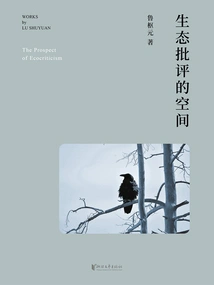
A Space for Ecocriticism
Literature生态批评的空间
Lu Shuyuan
"The Space of Ecocriticism" is a treatise on ecological cultural criticism by Lu Shuyuan. The time span is from the 1990s to the present. These more than thirty years are also the period when ecocriticism began to flourish worldwide. Lu Shuyuan attaches great importance to the combination of theory and practice, and has participated in the field investigation of Jinggang Mountains, Fanjing Mountains, Xiaoqinling Mountains, Daqing Mountains and the middle and lower reaches of the Yellow River by the Chinese Committee of UNESCO's "Man and the Biosphere Program". While exploring theory, he paid special attention to case studies, and made unique interpretations of the great ancient Chinese writers Tao Yuanming and Pu Songling from the perspective of ecocriticism. The two published monographs aroused strong repercussions in the reading circle.
"The Space of Ecocriticism" is a treatise on ecological cultural criticism by Lu Shuyuan. The time span is from the 1990s to the present. These more than thirty years are also the period when ecocriticism began to flourish worldwide. Lu Shuyuan attaches great importance to the combination of theory and practice, and has participated in the field investigation of Jinggang Mountains, Fanjing Mountains, Xiaoqinling Mountains, Daqing Mountains and the middle and lower reaches of the Yellow River by the Chinese Committee of UNESCO's "Man and the Biosphere Program". While exploring theory, he paid special attention to case studies, and made unique interpretations of the great ancient Chinese writers Tao Yuanming and Pu Songling from the perspective of ecocriticism. The two published monographs aroused strong repercussions in the reading circle.
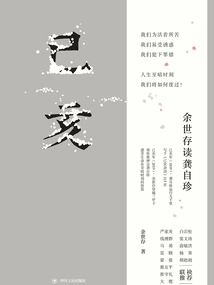
Jihai: Yu Shicun Reads Gong Zizhen
Literature己亥:余世存读龚自珍
Yu Shicun
In 1839 (the year of Jihai in the lunar calendar), Gong Zizhen, a civil servant in the Qing Dynasty, resigned from his official position, left the capital Beijing, returned south to his hometown, and then went north to pick up his family and return to his hometown. During this period, he traveled nine thousand miles, had two love affairs, saved countless dinners, and wrote 315 poems. This is a rare large-scale poem collection in the history of Chinese literature, "Miscellaneous Poems of Jihai". In 2019 (the year of Jihai in the lunar calendar), contemporary scholar Yu Shicun used elegant and unique modern Chinese to incarnate Gong Zizhen to give a lyrical monologue. Through a poetic interpretation of "Miscellaneous Poems of Jihai", he spliced and reproduced Gong Zizhen's spiritual map during the Jihai year. It includes not only Yu Shicun's comprehensive research and profound understanding of Gong Zizhen, but also Yu Shicun's own insights and passion for the world. Gong Zizhen's classical poetry and Yu Shicun's vernacular interpretation are ingeniously designed to intersect on the same page, as if two hearts were having a conversation across one hundred and eighty years of time and space. From this spiritual biography that transcends time and space, attentive readers can clearly see how Gong Zizhen, who embodies the culmination of traditional culture, reconciled with the world and himself in the most difficult state; and how contemporary scholar Yu Shicun used Gong Zizhen and the traditional cultural spirit he represented to gain clarity and get out of the dilemma of greasy middle age.
In 1839 (the year of Jihai in the lunar calendar), Gong Zizhen, a civil servant in the Qing Dynasty, resigned from his official position, left the capital Beijing, returned south to his hometown, and then went north to pick up his family and return to his hometown. During this period, he traveled nine thousand miles, had two love affairs, saved countless dinners, and wrote 315 poems. This is a rare large-scale poem collection in the history of Chinese literature, "Miscellaneous Poems of Jihai". In 2019 (the year of Jihai in the lunar calendar), contemporary scholar Yu Shicun used elegant and unique modern Chinese to incarnate Gong Zizhen to give a lyrical monologue. Through a poetic interpretation of "Miscellaneous Poems of Jihai", he spliced and reproduced Gong Zizhen's spiritual map during the Jihai year. It includes not only Yu Shicun's comprehensive research and profound understanding of Gong Zizhen, but also Yu Shicun's own insights and passion for the world. Gong Zizhen's classical poetry and Yu Shicun's vernacular interpretation are ingeniously designed to intersect on the same page, as if two hearts were having a conversation across one hundred and eighty years of time and space. From this spiritual biography that transcends time and space, attentive readers can clearly see how Gong Zizhen, who embodies the culmination of traditional culture, reconciled with the world and himself in the most difficult state; and how contemporary scholar Yu Shicun used Gong Zizhen and the traditional cultural spirit he represented to gain clarity and get out of the dilemma of greasy middle age.
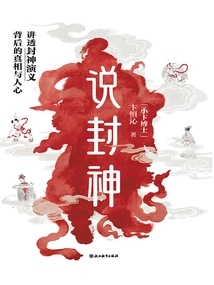
说封神:讲透《封神演义》背后的真相与人心
Bian Hengqin
"The Romance of the Gods" contains thousands of years of cultural genes. To understand "Feng Shen" is to understand the human heart. When gods fight, mortals suffer. Why did a mythical war begin in the late Yin and Shang Dynasties? What cultural knowledge is needed to understand "Fengshen"? What are the origins of gods, heroes and monsters? What is the power that makes a novel about gods and demons spread through the ages? Myths are never just stories about gods, but are also related to human hearts and the spiritual core of a civilization. Bian Hengqin, a Ph. D. From Peking University and a cultural scholar, has devoted himself to studying the textual research and using 40 questions to unravel the cocoons to tell you the historical truth, the genealogy of gods, and the origin of culture behind "Feng Shen", so that you can understand the cultural epic belonging to the Chinese people together.
"The Romance of the Gods" contains thousands of years of cultural genes. To understand "Feng Shen" is to understand the human heart. When gods fight, mortals suffer. Why did a mythical war begin in the late Yin and Shang Dynasties? What cultural knowledge is needed to understand "Fengshen"? What are the origins of gods, heroes and monsters? What is the power that makes a novel about gods and demons spread through the ages? Myths are never just stories about gods, but are also related to human hearts and the spiritual core of a civilization. Bian Hengqin, a Ph. D. From Peking University and a cultural scholar, has devoted himself to studying the textual research and using 40 questions to unravel the cocoons to tell you the historical truth, the genealogy of gods, and the origin of culture behind "Feng Shen", so that you can understand the cultural epic belonging to the Chinese people together.
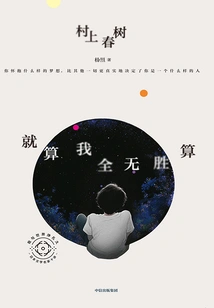
就算我全无胜算:村上春树(日本文学名家十讲07)
Yang Zhao
This book is the seventh volume in the series "My Long Struggle with the World: Ten Lectures on Japanese Literature by Yang Zhao", in which Yang Zhao talks about Haruki Murakami. There is a well in life, and one day we will fall into it. Falling into a well, confusion, disorder, and sadness. However, among the many people struggling in the well, Haruki Murakami created a kind of protagonist who always has a kind of strength: he has the courage to live resolutely and confidently. From Midori Kobayashi who "I can feel the so-called responsibility" in "Norwegian Wood", to Tamura who "want to be the strongest fifteen-year-old boy in the world" in "Kafka on the Shore", to Aomame and Tengo in "1Q84" who resolutely rescued themselves from nightmares... The same blood flows in their bodies. Even if they are destined to fall into a well, they will not give up the responsibility of living easily. No matter how unappealing the responsibility may seem. Haruki Murakami not only writes about our cowardice, but also the objects of courage we want to call upon.
This book is the seventh volume in the series "My Long Struggle with the World: Ten Lectures on Japanese Literature by Yang Zhao", in which Yang Zhao talks about Haruki Murakami. There is a well in life, and one day we will fall into it. Falling into a well, confusion, disorder, and sadness. However, among the many people struggling in the well, Haruki Murakami created a kind of protagonist who always has a kind of strength: he has the courage to live resolutely and confidently. From Midori Kobayashi who "I can feel the so-called responsibility" in "Norwegian Wood", to Tamura who "want to be the strongest fifteen-year-old boy in the world" in "Kafka on the Shore", to Aomame and Tengo in "1Q84" who resolutely rescued themselves from nightmares... The same blood flows in their bodies. Even if they are destined to fall into a well, they will not give up the responsibility of living easily. No matter how unappealing the responsibility may seem. Haruki Murakami not only writes about our cowardice, but also the objects of courage we want to call upon.
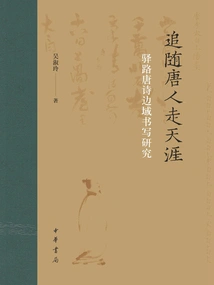
追随唐人走天涯:驿路唐诗边域书写研究
Wu Shuling
"Research on Borderland Writing of Yilu Tang Poetry" is the final result of a national social science project. Based on defining the connotation and writing scope of borderland, the book explores the content of borderland writing of Yilu Tang Poems towards Anxi, Anbei, Anton and Annan; it examines the coexistence of realism and imagination, the blending of history and reality, the contrast between inland and border areas, and the customs and customs in the borderland writing of Yilu Tang Poems. He believes that Yilu Tang poetry's border writing has the majestic and majestic beauty of scenery description, and that the literati's calligraphy and sword spirit brings a masculine beauty to the poetry; it is pointed out that the writing significance of Yilu Tang poetry lies in surpassing the border writing of the previous generation, helping the expansion and growth of Yilu poetry's subject types, and forming many geographical coordinates of border literature.
"Research on Borderland Writing of Yilu Tang Poetry" is the final result of a national social science project. Based on defining the connotation and writing scope of borderland, the book explores the content of borderland writing of Yilu Tang Poems towards Anxi, Anbei, Anton and Annan; it examines the coexistence of realism and imagination, the blending of history and reality, the contrast between inland and border areas, and the customs and customs in the borderland writing of Yilu Tang Poems. He believes that Yilu Tang poetry's border writing has the majestic and majestic beauty of scenery description, and that the literati's calligraphy and sword spirit brings a masculine beauty to the poetry; it is pointed out that the writing significance of Yilu Tang poetry lies in surpassing the border writing of the previous generation, helping the expansion and growth of Yilu poetry's subject types, and forming many geographical coordinates of border literature.
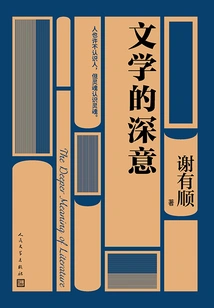
The Profound Meaning of Literature
Literature文学的深意
Xie Youshun
This book is a collection of literary essays by the famous critic Xie Youshun. He carefully selected literary research papers published in recent years to focus on displaying personal scientific research results and close observations and in-depth thinking on contemporary Chinese literature and contemporary Chinese culture. There are both macro-level discussions, which mainly reflect the grasp of trends and trends, and case analysis, including in-depth analysis of key works and author theory. Xie Youshun's literary criticism is clear and clear, with personal insights and theoretical support. At the same time, it always has strict logic of discussion. He never loses his book bag and rarely gets entangled in theory. He can always find the phenomena and roots of literary development and the evolution of writers' creations from the perspective of culture and the rhythm of social development, thereby giving writers a proper position and giving a measured evaluation of their works.
This book is a collection of literary essays by the famous critic Xie Youshun. He carefully selected literary research papers published in recent years to focus on displaying personal scientific research results and close observations and in-depth thinking on contemporary Chinese literature and contemporary Chinese culture. There are both macro-level discussions, which mainly reflect the grasp of trends and trends, and case analysis, including in-depth analysis of key works and author theory. Xie Youshun's literary criticism is clear and clear, with personal insights and theoretical support. At the same time, it always has strict logic of discussion. He never loses his book bag and rarely gets entangled in theory. He can always find the phenomena and roots of literary development and the evolution of writers' creations from the perspective of culture and the rhythm of social development, thereby giving writers a proper position and giving a measured evaluation of their works.
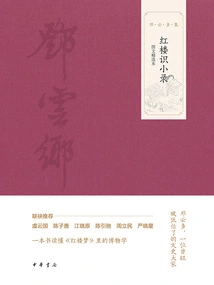
红楼识小录(图文精选本)
Deng Yunxiang
As the saying goes, "Who can interpret the flavor?" Many of the "flavors" in "A Dream of Red Mansions" come from small things. The famous red scholar Deng Yunxiang started from the small things in the book and used small things to understand the big things. He explained the difficult things and inexplicable things, covering various aspects such as economy, transportation, folk customs, products, etc., And built a unique museum to display the material world of "Dream of Red Mansions" in front of us in detail.
As the saying goes, "Who can interpret the flavor?" Many of the "flavors" in "A Dream of Red Mansions" come from small things. The famous red scholar Deng Yunxiang started from the small things in the book and used small things to understand the big things. He explained the difficult things and inexplicable things, covering various aspects such as economy, transportation, folk customs, products, etc., And built a unique museum to display the material world of "Dream of Red Mansions" in front of us in detail.
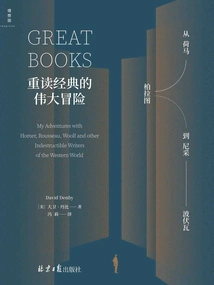
重读经典的伟大冒险
(us) David Danby
The middle-aged writer Danby, with the secret expectation of "solving the crisis", chose to return to the classroom at his alma mater, Columbia University, 30 years after graduation, to reread those great humanities classics. Homer, Plato, Aristotle, Shakespeare, Hegel, Nietzsche, Beauvoir, Woolf... Nearly 30 representative writers and their works in the Western humanities tradition appear one after another in his narrative, outlining a clear map for an overview of Western literature and thought, and a thorough reading of the history of Western civilization. In the process of re-reading classics, Danby gradually realized that "returning to pure reading" itself was helping him break through the fog woven by second-hand information, bringing peace to his body and mind, and guiding him to constantly search for and "try on" different selves; and participating in debates between teachers and students in class made him realize that classics are taking on new vitality through repeated re-reading, which not only contains the humanistic spirit passed down for thousands of years, but also reflects the thinking and judgment of the younger generation today. This life experiment of returning to school and re-reading classics is also a great adventure of re-understanding oneself.
The middle-aged writer Danby, with the secret expectation of "solving the crisis", chose to return to the classroom at his alma mater, Columbia University, 30 years after graduation, to reread those great humanities classics. Homer, Plato, Aristotle, Shakespeare, Hegel, Nietzsche, Beauvoir, Woolf... Nearly 30 representative writers and their works in the Western humanities tradition appear one after another in his narrative, outlining a clear map for an overview of Western literature and thought, and a thorough reading of the history of Western civilization. In the process of re-reading classics, Danby gradually realized that "returning to pure reading" itself was helping him break through the fog woven by second-hand information, bringing peace to his body and mind, and guiding him to constantly search for and "try on" different selves; and participating in debates between teachers and students in class made him realize that classics are taking on new vitality through repeated re-reading, which not only contains the humanistic spirit passed down for thousands of years, but also reflects the thinking and judgment of the younger generation today. This life experiment of returning to school and re-reading classics is also a great adventure of re-understanding oneself.
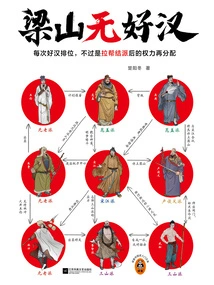
There Are No Heroes in Liangshan
Literature梁山无好汉
Chu Yangdong
Why couldn't Chai Jin enter the leadership of Liangshan? Why did Wu Yong switch from the Chao Gai faction to the Song Jiang faction? Why is Zhu Tong, who has mediocre martial arts skills, ranked ahead of Wu Song? Every time heroes are ranked, it's just a redistribution of power after forming cliques! The heroes of Liangshan are extremely righteous on the surface, but in fact there are many internal factions: the Elder Faction, the Songjiang Faction, the Sanshan Faction... Each faction has launched a fierce power struggle around the dominance of Liangshan. And Liangshan's six rankings are exactly the redistribution of power after forming cliques. For the first time, Wang Lun and other four heroes formed the original faction of Liangshan veterans and occupied the dominant position in Liangshan. The second time, Lin Chong went up the mountain and went through several twists and turns before sitting in fourth place. Liangshan is strong, but there are undercurrents. The third time, a group of seven people from the Birthday Gang went up the mountain. Lin Chonghuo merged with Wang Lun and elected Chao Gai as the leader, moving from isolation and helplessness to the center of power. ... For the sixth time, the real power game begins... A book to understand the power game behind the ranking of Liangshan heroes.
Why couldn't Chai Jin enter the leadership of Liangshan? Why did Wu Yong switch from the Chao Gai faction to the Song Jiang faction? Why is Zhu Tong, who has mediocre martial arts skills, ranked ahead of Wu Song? Every time heroes are ranked, it's just a redistribution of power after forming cliques! The heroes of Liangshan are extremely righteous on the surface, but in fact there are many internal factions: the Elder Faction, the Songjiang Faction, the Sanshan Faction... Each faction has launched a fierce power struggle around the dominance of Liangshan. And Liangshan's six rankings are exactly the redistribution of power after forming cliques. For the first time, Wang Lun and other four heroes formed the original faction of Liangshan veterans and occupied the dominant position in Liangshan. The second time, Lin Chong went up the mountain and went through several twists and turns before sitting in fourth place. Liangshan is strong, but there are undercurrents. The third time, a group of seven people from the Birthday Gang went up the mountain. Lin Chonghuo merged with Wang Lun and elected Chao Gai as the leader, moving from isolation and helplessness to the center of power. ... For the sixth time, the real power game begins... A book to understand the power game behind the ranking of Liangshan heroes.
主人公:蒋方舟重返文学群星闪耀时
Jiang Fangzhou
Jiang Fangzhou transformed into a "storyteller" and returned to the world of yesterday where literary stars shone. Walking between yesterday and today, the other side and here, Jiang Fangzhou uses words to recreate illusions, and based on massive literature research, resurrects the emotions, hearts, minds and life courses of 20 masters, turning the masters into our friends, while witnessing how the classics are intertwined with the times and their destiny, and finally born. Starting from the writer's internal perspective of "mind and experience", he re-reads and deciphers the classic codes and puts forward exclusive insights. Not only is the novel not false, it allows us to live in reality. When we borrow the "penetrating gaze" of literature to distinguish truth from falsehood and live in the truth, this is the "hero moment" that literature gives us.
Jiang Fangzhou transformed into a "storyteller" and returned to the world of yesterday where literary stars shone. Walking between yesterday and today, the other side and here, Jiang Fangzhou uses words to recreate illusions, and based on massive literature research, resurrects the emotions, hearts, minds and life courses of 20 masters, turning the masters into our friends, while witnessing how the classics are intertwined with the times and their destiny, and finally born. Starting from the writer's internal perspective of "mind and experience", he re-reads and deciphers the classic codes and puts forward exclusive insights. Not only is the novel not false, it allows us to live in reality. When we borrow the "penetrating gaze" of literature to distinguish truth from falsehood and live in the truth, this is the "hero moment" that literature gives us.
stone Language" Yin Tan
Literature《石语》脞谈
Liu Yanwen
This book is one of the series of "Qian Zhongshu Research Library". "Stone Language" is an account of a conversation Qian Zhongshu had with Chen Yan (Shi Yi) on the Lunar New Year's Eve in 1932. The content is a frank evaluation of the literature, character, temperament, and hobbies of some of the literary leaders and celebrities in the poetry world at that time. It also contains criticisms and criticisms of the morality of these scholars and literati. Due to various reasons, photocopying was not available until the end of the 20th century. Because Mr. Qian wrote the entire story in classical Chinese, and many years have passed, the literary leader and poetry master at that time is already very unfamiliar to ordinary readers today. For this reason, Hong Kong writer Lin Xingzhi suggested that Professor Liu Yanwen write "Stone Language", and thus the manuscript of this book was created.
This book is one of the series of "Qian Zhongshu Research Library". "Stone Language" is an account of a conversation Qian Zhongshu had with Chen Yan (Shi Yi) on the Lunar New Year's Eve in 1932. The content is a frank evaluation of the literature, character, temperament, and hobbies of some of the literary leaders and celebrities in the poetry world at that time. It also contains criticisms and criticisms of the morality of these scholars and literati. Due to various reasons, photocopying was not available until the end of the 20th century. Because Mr. Qian wrote the entire story in classical Chinese, and many years have passed, the literary leader and poetry master at that time is already very unfamiliar to ordinary readers today. For this reason, Hong Kong writer Lin Xingzhi suggested that Professor Liu Yanwen write "Stone Language", and thus the manuscript of this book was created.
红楼梦靖藏本辨伪
Gao Shuwei
After 1964, the 150 comments compiled by Mao Guoyao had a huge impact in the academic world, and have penetrated into the most core issues in the study of Red Mansions (the origin of the book and version of "Dream of Red Mansions", the relationship between Zhi Yanzhai and Ji Husou, the story after the 80th chapter, etc.). The author of this book has verified the 150 comments in the Jingzang version verbatim, supplemented by computer technology processing and analysis, as well as on-site visits and investigations. It has been confirmed that the so-called "Jingzang version" was deliberately forged, and the origin and impact of the forgery have been revealed. After the Jing Zang version was falsified, and stripped of its influence, the author re-researched important issues such as the relationship and identity of Zhi Yanzhai and Ji Husou, and the origin of the version of "Dream of Red Mansions", and came to different conclusions.
After 1964, the 150 comments compiled by Mao Guoyao had a huge impact in the academic world, and have penetrated into the most core issues in the study of Red Mansions (the origin of the book and version of "Dream of Red Mansions", the relationship between Zhi Yanzhai and Ji Husou, the story after the 80th chapter, etc.). The author of this book has verified the 150 comments in the Jingzang version verbatim, supplemented by computer technology processing and analysis, as well as on-site visits and investigations. It has been confirmed that the so-called "Jingzang version" was deliberately forged, and the origin and impact of the forgery have been revealed. After the Jing Zang version was falsified, and stripped of its influence, the author re-researched important issues such as the relationship and identity of Zhi Yanzhai and Ji Husou, and the origin of the version of "Dream of Red Mansions", and came to different conclusions.
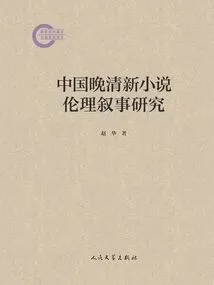
中国晚清新小说伦理叙事研究
Zhao Hua
In the context of the late Qing Dynasty, when the nation and the country were reborn through "change" in order to save the nation, the hierarchical pattern of traditional ethical culture could no longer inspire the Chinese people's enthusiasm for saving and strengthening the country. It was also contrary to the concepts of freedom, equality and the two-way nature of rights and obligations of modern civilization. Ethical narratives in novels of the late Qing Dynasty not only improved the status of novels, but also actively participated in the contemporary trend of ethical changes with the historical mission of "new people" and jointly promoted the development of China's ethical changes. However, in China's transformation from tradition to modernity, late novels and novels in the late Qing Dynasty show a mixture of new and old, both in narrative content and expression form. This book cuts into the world of late novels from an ethical perspective. On the one hand, we can understand the impact of ethical changes on novels. On the other hand, we can also understand how novelists use novels to express ethical demands, and how novels can be transformed into a driving force for ethical change through reading effects.
In the context of the late Qing Dynasty, when the nation and the country were reborn through "change" in order to save the nation, the hierarchical pattern of traditional ethical culture could no longer inspire the Chinese people's enthusiasm for saving and strengthening the country. It was also contrary to the concepts of freedom, equality and the two-way nature of rights and obligations of modern civilization. Ethical narratives in novels of the late Qing Dynasty not only improved the status of novels, but also actively participated in the contemporary trend of ethical changes with the historical mission of "new people" and jointly promoted the development of China's ethical changes. However, in China's transformation from tradition to modernity, late novels and novels in the late Qing Dynasty show a mixture of new and old, both in narrative content and expression form. This book cuts into the world of late novels from an ethical perspective. On the one hand, we can understand the impact of ethical changes on novels. On the other hand, we can also understand how novelists use novels to express ethical demands, and how novels can be transformed into a driving force for ethical change through reading effects.
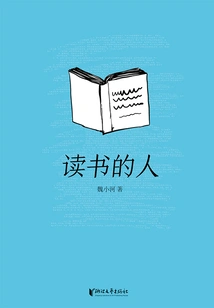
Person Who Reads
Literature读书的人
Wei Xiaohe
"The Reader" is the latest collection of works by Wei Xiaohe, a young book critic born in the 1990s. It is also a journey along with the book. This book is divided into four series: "Star Moments", "Possibilities of Multiple Worlds", "A Style of Chinese" and "Living Elsewhere", and contains a total of 34 articles. Starting from the cracked winter land to the fall of Xiao Hong, Zhang Ailing ushered in the prelude of the times in the cramped first half of her life. The entire starry moment was the life of an ordinary person; open a science fiction novel or a moral novel, touch the struggle of free will and love, the pull of leaving and staying, and feel the possibilities and possibilities of a diverse world. A kind of demeanor in the Chinese language; what readers need most is the enthusiasm to plunge into the world and the courage to change the world. At the end of the journey, we enter the world of wanderers - there are endless lists of travels, magical experiences deep into the hinterlands of Africa and Central Asia, and the empirical observations of British folk living in 8 square meters in Tokyo.
"The Reader" is the latest collection of works by Wei Xiaohe, a young book critic born in the 1990s. It is also a journey along with the book. This book is divided into four series: "Star Moments", "Possibilities of Multiple Worlds", "A Style of Chinese" and "Living Elsewhere", and contains a total of 34 articles. Starting from the cracked winter land to the fall of Xiao Hong, Zhang Ailing ushered in the prelude of the times in the cramped first half of her life. The entire starry moment was the life of an ordinary person; open a science fiction novel or a moral novel, touch the struggle of free will and love, the pull of leaving and staying, and feel the possibilities and possibilities of a diverse world. A kind of demeanor in the Chinese language; what readers need most is the enthusiasm to plunge into the world and the courage to change the world. At the end of the journey, we enter the world of wanderers - there are endless lists of travels, magical experiences deep into the hinterlands of Africa and Central Asia, and the empirical observations of British folk living in 8 square meters in Tokyo.
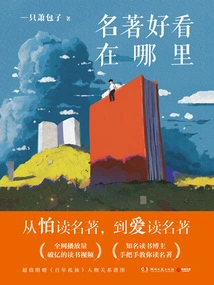
Where Are the Masterpieces?
Literature名著好看在哪里
A Xiao Baozi
From being afraid of reading classics to loving reading classics, this book will teach you how to get started with reading classics! The well-known reading blogger "Yiyi Xiaobaozi" with 4 million+ fans on the entire network will teach you how to read classics step by step! The series of reading programs has more than 200 million video views on the entire network, and the essence is condensed! The "One Hundred Years of Solitude" Interpretation, which has been viewed over 10 million times across the entire network, has been reorganized and detailed character appearances have been added, allowing you to understand "One Hundred Years of Solitude" in one night. The content is detailed and covers Chinese and foreign classics. This book provides a detailed interpretation of 8 Chinese and foreign classics, including "One Hundred Years of Solitude", "Love in the Time of Cholera", "The Count of Monte Cristo", "Don Quixote", "1984", "The Outsider", "White Deer Plain" and "The Three-Body Problem". Not only that, the author also carefully sorts out the reading methods and teaches readers how to read a book systematically. After reading it, everyone will become a reading expert. The writing style is humorous and full of details, starting the reading journey in a relaxed atmosphere. 1-Sentence summary + story line extraction + golden quotes + character appearance pictures + humorous cartoon illustrations. The author uses humorous language to explain the details of the classic and the historical background of the author's creation in detail, creating a relaxed reading environment. If you also have a "masterpiece" that you have put on the shelf, you might as well read this book first. It will definitely make you fall in love with the masterpiece easily!
From being afraid of reading classics to loving reading classics, this book will teach you how to get started with reading classics! The well-known reading blogger "Yiyi Xiaobaozi" with 4 million+ fans on the entire network will teach you how to read classics step by step! The series of reading programs has more than 200 million video views on the entire network, and the essence is condensed! The "One Hundred Years of Solitude" Interpretation, which has been viewed over 10 million times across the entire network, has been reorganized and detailed character appearances have been added, allowing you to understand "One Hundred Years of Solitude" in one night. The content is detailed and covers Chinese and foreign classics. This book provides a detailed interpretation of 8 Chinese and foreign classics, including "One Hundred Years of Solitude", "Love in the Time of Cholera", "The Count of Monte Cristo", "Don Quixote", "1984", "The Outsider", "White Deer Plain" and "The Three-Body Problem". Not only that, the author also carefully sorts out the reading methods and teaches readers how to read a book systematically. After reading it, everyone will become a reading expert. The writing style is humorous and full of details, starting the reading journey in a relaxed atmosphere. 1-Sentence summary + story line extraction + golden quotes + character appearance pictures + humorous cartoon illustrations. The author uses humorous language to explain the details of the classic and the historical background of the author's creation in detail, creating a relaxed reading environment. If you also have a "masterpiece" that you have put on the shelf, you might as well read this book first. It will definitely make you fall in love with the masterpiece easily!
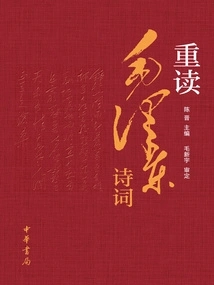
Rereading Mao Zedong's Poems
Literature重读毛泽东诗词
Editor-in-chief Chen Jin
"Rereading Mao Zedong's Poems" is edited by Chen Jin, president of the China Mao Zedong Poetry Research Association, and approved by Mao Xinyu. There are a total of 67 Mao Zedong's poems selected in the book, which is a new selection of 78 widely circulated editions of Mao Zedong's poems. As an important carrier of Mao Zedong Thought, Mao Zedong's poetry not only demonstrates a strong sense of responsibility for the times and a distinct spirit of the times, but also provides ideological support and spiritual strength for the realization of the Chinese dream of the great rejuvenation of the Chinese nation. In terms of appreciation materials, the original texts related to poetry have been comprehensively organized; in terms of poetry creation background, new theoretical research results have been combined to further enrich the historical and literary materials of poetry creation; in terms of self-note and self-explanation, the content of the author's first-person narrative has been reorganized (answers to reporters' questions, correspondence, corrections and errors, etc.), Striving to be well-founded and with reliable sources; in terms of poetry appreciation, Mao Zedong's poetry has been used as the main line to condense and explain the revolutionary development history of the Communist Party of China. In addition, three generations of domestic broadcasting and hosting experts, old, middle and young, have given their voices and recited Mao Zedong's poems with great enthusiasm, hoping that readers can more vividly experience the majestic and heroic connotations of Mao Zedong's poems.
"Rereading Mao Zedong's Poems" is edited by Chen Jin, president of the China Mao Zedong Poetry Research Association, and approved by Mao Xinyu. There are a total of 67 Mao Zedong's poems selected in the book, which is a new selection of 78 widely circulated editions of Mao Zedong's poems. As an important carrier of Mao Zedong Thought, Mao Zedong's poetry not only demonstrates a strong sense of responsibility for the times and a distinct spirit of the times, but also provides ideological support and spiritual strength for the realization of the Chinese dream of the great rejuvenation of the Chinese nation. In terms of appreciation materials, the original texts related to poetry have been comprehensively organized; in terms of poetry creation background, new theoretical research results have been combined to further enrich the historical and literary materials of poetry creation; in terms of self-note and self-explanation, the content of the author's first-person narrative has been reorganized (answers to reporters' questions, correspondence, corrections and errors, etc.), Striving to be well-founded and with reliable sources; in terms of poetry appreciation, Mao Zedong's poetry has been used as the main line to condense and explain the revolutionary development history of the Communist Party of China. In addition, three generations of domestic broadcasting and hosting experts, old, middle and young, have given their voices and recited Mao Zedong's poems with great enthusiasm, hoping that readers can more vividly experience the majestic and heroic connotations of Mao Zedong's poems.
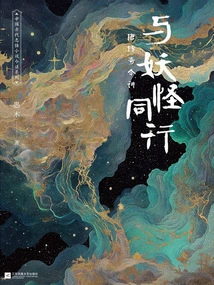
与妖怪同行:唐传奇今讲
Yumu
The source of inspiration for "Strange Stories from a Chinese Studio"! The first pinnacle of ancient Chinese fantasy novels! Classical Chinese short stories from the Tang and Song Dynasties are often called "legends". Legends of the Tang Dynasty are a symbol of the maturity of classical Chinese novels in ancient China. The images of fox girls, brothel girls, ladies of the house, and story prototypes of gifted men and beauties have influenced countless literary and artistic creations in later generations. For example, "The Story of Yingying" is the prototype of Wang Shifu's "The Story of Cui Yingying Waiting for the Moon in the West Chamber"; "The Story of Leaving the Soul" is the source of the familiar "A Chinese Ghost Story"; the idiom "Huangliang Yimeng" refers to the story of "The Legend of Pillow"; the idiom "Nanke Yimeng" refers to the story of "Nanke Prefecture Biography" The story model of "Sanzang Talking about Poetry in Muxian Temple" in "Journey to the West" has already appeared in Tang Dynasty legends; "The Assassin" directed by Hou Hsiao-hsien tells the story of "Nie Yinniang"; "The Biography of the Bearded Guest" was selected as a textbook, and the familiar red-whisker girl and famous general Li Jing...
The source of inspiration for "Strange Stories from a Chinese Studio"! The first pinnacle of ancient Chinese fantasy novels! Classical Chinese short stories from the Tang and Song Dynasties are often called "legends". Legends of the Tang Dynasty are a symbol of the maturity of classical Chinese novels in ancient China. The images of fox girls, brothel girls, ladies of the house, and story prototypes of gifted men and beauties have influenced countless literary and artistic creations in later generations. For example, "The Story of Yingying" is the prototype of Wang Shifu's "The Story of Cui Yingying Waiting for the Moon in the West Chamber"; "The Story of Leaving the Soul" is the source of the familiar "A Chinese Ghost Story"; the idiom "Huangliang Yimeng" refers to the story of "The Legend of Pillow"; the idiom "Nanke Yimeng" refers to the story of "Nanke Prefecture Biography" The story model of "Sanzang Talking about Poetry in Muxian Temple" in "Journey to the West" has already appeared in Tang Dynasty legends; "The Assassin" directed by Hou Hsiao-hsien tells the story of "Nie Yinniang"; "The Biography of the Bearded Guest" was selected as a textbook, and the familiar red-whisker girl and famous general Li Jing...
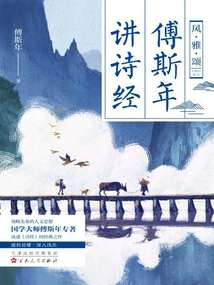
Fu Sinian Lectures on the Book of Songs
Literature傅斯年讲诗经
Fu Sinian
This is a class lecture given by Mr. Fu Sinian when he taught "The Book of Songs" at Sun Yat-sen University. This handout covers the research history, research methods, geography, artistry and other aspects of The Book of Songs. Mr. Fu put forward many unique insights in the lecture notes. Although it is an academic work, the content is easy to understand and explains the profound things in simple terms, which fully demonstrates Mr. Fu Sinian's profound foundation in Chinese studies and unique Western research ideas. The lecture notes integrate theoretical knowledge and the author's own thoughts. The breadth and depth of the understanding of the Book of Songs have always been praised by the world. It can be called a classic work of lecture notes on the Book of Songs. It is an important document for Chinese studies enthusiasts and a must-have classic for understanding the Book of Songs.
This is a class lecture given by Mr. Fu Sinian when he taught "The Book of Songs" at Sun Yat-sen University. This handout covers the research history, research methods, geography, artistry and other aspects of The Book of Songs. Mr. Fu put forward many unique insights in the lecture notes. Although it is an academic work, the content is easy to understand and explains the profound things in simple terms, which fully demonstrates Mr. Fu Sinian's profound foundation in Chinese studies and unique Western research ideas. The lecture notes integrate theoretical knowledge and the author's own thoughts. The breadth and depth of the understanding of the Book of Songs have always been praised by the world. It can be called a classic work of lecture notes on the Book of Songs. It is an important document for Chinese studies enthusiasts and a must-have classic for understanding the Book of Songs.
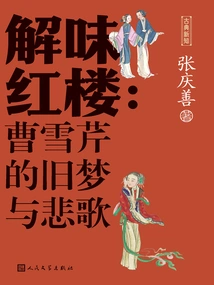
解味红楼:曹雪芹的旧梦与悲歌
Zhang Qingshan
This book is a collection of academic essays commenting on "A Dream of Red Mansions" from multiple perspectives. The book focuses on several themes such as characterization, plot setting, artistic techniques, etc. Each theme is explained in several articles. It also analyzes and explains some unresolved problems in the study of "A Dream of Red Mansions", such as the ending of the characters, the issue of continuation, etc., And puts forward reasonable speculations and conjectures. The author of this book is a well-known expert in the study of "Dream of Red Mansions". He writes short essays in his own handwriting. Compared with high-level sermons or cumbersome textual research, the writing style is more free and lively. At the same time, it also maintains a certain academic level, so that readers can appreciate "Dream of Red Mansions" from multiple perspectives and gain a more relaxed and enjoyable reading experience.
This book is a collection of academic essays commenting on "A Dream of Red Mansions" from multiple perspectives. The book focuses on several themes such as characterization, plot setting, artistic techniques, etc. Each theme is explained in several articles. It also analyzes and explains some unresolved problems in the study of "A Dream of Red Mansions", such as the ending of the characters, the issue of continuation, etc., And puts forward reasonable speculations and conjectures. The author of this book is a well-known expert in the study of "Dream of Red Mansions". He writes short essays in his own handwriting. Compared with high-level sermons or cumbersome textual research, the writing style is more free and lively. At the same time, it also maintains a certain academic level, so that readers can appreciate "Dream of Red Mansions" from multiple perspectives and gain a more relaxed and enjoyable reading experience.
批评的德性(剜烂苹果·锐批评文丛)
Wang Pengcheng
"The Virtue of Criticism" collects the representative works of the young critic Wang Pengcheng since he engaged in literary criticism. The young critic Wang Pengcheng admires Liu Yanhe's academic spirit and critical philosophy of being "selfless in matters of importance and not biased in favor of hatred", "reasonable and balanced, and words like a mirror". He pursues research and criticism with a "factual sense" and does his best to practice it. This is also what he calls "the virtue of criticism."
"The Virtue of Criticism" collects the representative works of the young critic Wang Pengcheng since he engaged in literary criticism. The young critic Wang Pengcheng admires Liu Yanhe's academic spirit and critical philosophy of being "selfless in matters of importance and not biased in favor of hatred", "reasonable and balanced, and words like a mirror". He pursues research and criticism with a "factual sense" and does his best to practice it. This is also what he calls "the virtue of criticism."
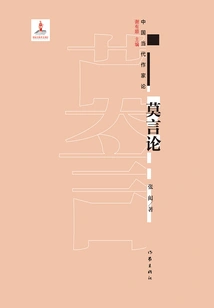
Don't Say Anything
Literature莫言论
Zhang Hong
This book is a literary critical biography about Mo Yan, a contemporary Chinese writer and the first Chinese Nobel Prize winner in literature. The work adopts text reading method, based on Mo Yan's works, and conducts a detailed, objective and clear sorting and analysis of Mo Yan's literary creation. From the macro-perspective of contemporary Chinese literature and world literature, the author deeply analyzes the characteristics of Mo Yan's rural world and literary geography, sensory experience and materialized world, ethical transgression and cultural criticism, language style and stylistic features, Mao accent narrative and sound poetics. It is a mature and solid critical biography. At the same time, the author explains his unique insights and perspectives on Mo Yan and the future of modern Chinese novel narrative.
This book is a literary critical biography about Mo Yan, a contemporary Chinese writer and the first Chinese Nobel Prize winner in literature. The work adopts text reading method, based on Mo Yan's works, and conducts a detailed, objective and clear sorting and analysis of Mo Yan's literary creation. From the macro-perspective of contemporary Chinese literature and world literature, the author deeply analyzes the characteristics of Mo Yan's rural world and literary geography, sensory experience and materialized world, ethical transgression and cultural criticism, language style and stylistic features, Mao accent narrative and sound poetics. It is a mature and solid critical biography. At the same time, the author explains his unique insights and perspectives on Mo Yan and the future of modern Chinese novel narrative.
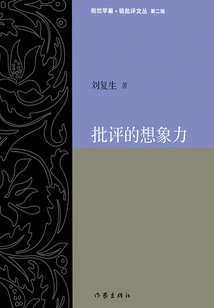
批评的想象力(剜烂苹果·锐批评文丛)
Liu Fusheng
"Critical Imagination" collects a series of papers published by the author in recent years, covering the study of contemporary literary history, literary criticism and cultural studies. It includes not only the discussion of contemporary literary criticism theory, but also the macro description of important literary and artistic creation phenomena and the in-depth analysis of the works of representative writers. The collection of essays focuses on observing and grasping the ideological logic and expressive strategies of literary and artistic creation from a social and historical perspective, trying to integrate history and aesthetics, and often directly points to major issues of contemporary ideological conditions and real culture through the analysis of literary and artistic creation. Many articles have produced important responses.
"Critical Imagination" collects a series of papers published by the author in recent years, covering the study of contemporary literary history, literary criticism and cultural studies. It includes not only the discussion of contemporary literary criticism theory, but also the macro description of important literary and artistic creation phenomena and the in-depth analysis of the works of representative writers. The collection of essays focuses on observing and grasping the ideological logic and expressive strategies of literary and artistic creation from a social and historical perspective, trying to integrate history and aesthetics, and often directly points to major issues of contemporary ideological conditions and real culture through the analysis of literary and artistic creation. Many articles have produced important responses.
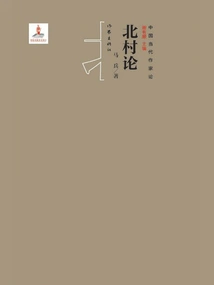
Beicun Theory
Literature北村论
Horse Soldiers
"The Theory of Beicun" is a standard, rigorous and vivid critical biography of contemporary writers. According to the inertia of logic and the expediency of discussion, the work conducts a careful textual reading and comparative analysis of Kitamura's literary works in chronological order. It not only briefly introduces Kitamura's personal growth path and the inevitability of literary creation, but also accurately grasps and sorts out his literary spirit and pursuit. The work unfolds in a roughly progressive context, relying on the work, treating Kitamura's previous and later creations as a whole, and trying to present the irreplaceable significance and value of his "godhead" writing in the literature of the new era and new century.
"The Theory of Beicun" is a standard, rigorous and vivid critical biography of contemporary writers. According to the inertia of logic and the expediency of discussion, the work conducts a careful textual reading and comparative analysis of Kitamura's literary works in chronological order. It not only briefly introduces Kitamura's personal growth path and the inevitability of literary creation, but also accurately grasps and sorts out his literary spirit and pursuit. The work unfolds in a roughly progressive context, relying on the work, treating Kitamura's previous and later creations as a whole, and trying to present the irreplaceable significance and value of his "godhead" writing in the literature of the new era and new century.
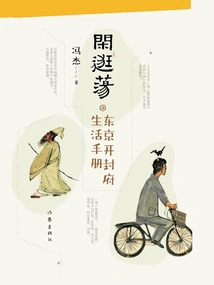
闲逛荡:东京开封府生活手册
Feng Jie
"Walking Around: A Handbook of Life in Kaifeng Mansion, Tokyo" begins with a nonsensical interpretation of "Along the River During the Qingming Festival". Feng Jie, a geek from the Central Plains, calculated carefully, responded to each other, opened up time, and traced the world. There is unexpected humor, unreasonable emotions, bizarre expressions, teasing with a hint of Zen, abruptness and far-fetchedness, unjust words, ridicule that does not harm others but only benefits oneself, and helplessness and compromise with life. It is not all good, but there is partial happiness. Although there is a lot of nonsense, there is occasional wisdom. Open this book, and the imaginative text and pictures will lead you into the fireworks world of the Song Dynasty. The ringing of bells and hooves of camels and donkeys is heard slowly, the shouts of traders and foot soldiers come one after another, the delicious smell of food in the shops along the street is steaming, and the fragrance of women's powder in the Song Dynasty floats. During the tour, the humorous pictures and texts take you back and forth in different time and space. The various scenes of the city, the warmth and warmth of the people, and the folk customs are different from each other but reflect each other's past and present.
"Walking Around: A Handbook of Life in Kaifeng Mansion, Tokyo" begins with a nonsensical interpretation of "Along the River During the Qingming Festival". Feng Jie, a geek from the Central Plains, calculated carefully, responded to each other, opened up time, and traced the world. There is unexpected humor, unreasonable emotions, bizarre expressions, teasing with a hint of Zen, abruptness and far-fetchedness, unjust words, ridicule that does not harm others but only benefits oneself, and helplessness and compromise with life. It is not all good, but there is partial happiness. Although there is a lot of nonsense, there is occasional wisdom. Open this book, and the imaginative text and pictures will lead you into the fireworks world of the Song Dynasty. The ringing of bells and hooves of camels and donkeys is heard slowly, the shouts of traders and foot soldiers come one after another, the delicious smell of food in the shops along the street is steaming, and the fragrance of women's powder in the Song Dynasty floats. During the tour, the humorous pictures and texts take you back and forth in different time and space. The various scenes of the city, the warmth and warmth of the people, and the folk customs are different from each other but reflect each other's past and present.
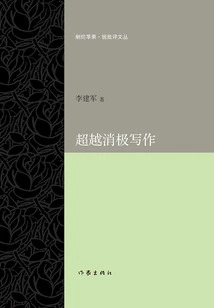
超越消极写作(剜烂苹果·锐批评文丛)
Li Jianjun
In order to fully implement the spirit of General Secretary Xi Jinping's important speech at the Symposium on Literary and Art Work, to effectively improve the pertinence, militancy and principle of contemporary literary criticism, and to create an atmosphere of truth-telling and truth-telling literary criticism, Writers Publishing House has launched the "Peeling Out Rotten Apples Sharp Criticism Series", which focuses on the study of bad phenomena, ideological trends and shortcomings of writers' works in contemporary Chinese literature, and focuses on displaying literary criticism works that dare to tell the truth, have strength, character, and dare to show their swords.
In order to fully implement the spirit of General Secretary Xi Jinping's important speech at the Symposium on Literary and Art Work, to effectively improve the pertinence, militancy and principle of contemporary literary criticism, and to create an atmosphere of truth-telling and truth-telling literary criticism, Writers Publishing House has launched the "Peeling Out Rotten Apples Sharp Criticism Series", which focuses on the study of bad phenomena, ideological trends and shortcomings of writers' works in contemporary Chinese literature, and focuses on displaying literary criticism works that dare to tell the truth, have strength, character, and dare to show their swords.
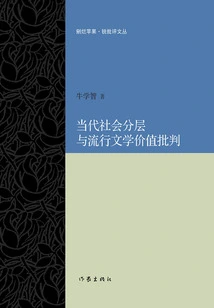
当代社会分层与流行文学价值批判(剜烂苹果·锐批评文丛)
Niu Xuezhi
In order to fully implement the spirit of General Secretary Xi Jinping's important speech at the Symposium on Literary and Art Work, to effectively improve the pertinence, militancy and principle of contemporary literary criticism, and to create an atmosphere of truth-telling and truth-telling literary criticism, Writers Publishing House has launched the "Peeling Out Rotten Apples Sharp Criticism Series", which focuses on the study of bad phenomena, ideological trends and shortcomings of writers' works in contemporary Chinese literature, and focuses on displaying literary criticism works that dare to tell the truth, have strength, character, and dare to show their swords.
In order to fully implement the spirit of General Secretary Xi Jinping's important speech at the Symposium on Literary and Art Work, to effectively improve the pertinence, militancy and principle of contemporary literary criticism, and to create an atmosphere of truth-telling and truth-telling literary criticism, Writers Publishing House has launched the "Peeling Out Rotten Apples Sharp Criticism Series", which focuses on the study of bad phenomena, ideological trends and shortcomings of writers' works in contemporary Chinese literature, and focuses on displaying literary criticism works that dare to tell the truth, have strength, character, and dare to show their swords.
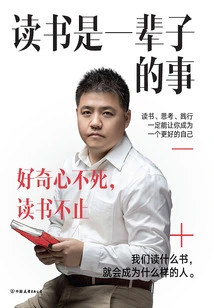
读书是一辈子的事(2024新版)
Fan Deng
Reading can shape a person's life: the books we read determine the kind of person we become. What to read? How to read? How to use reading to think and practice? For 10 consecutive years, Fan Deng has interpreted more than 500 good books in depth, and has accumulated more than 70 million book friends to continue learning. Fan Deng exclusively shares reading methods, speed reading secrets, book selection skills, deep thinking tips, self-improvement rules, and cognitive improvement essentials. He put forward the concept that "reading is a lifelong matter" and shared his method of selecting books, secrets of speed reading and tips for independent thinking. In addition, this book covers Fan Deng's key thoughts on self-understanding and how to grow, in order to explore inner talents, continue to improve, and advance through the personal growth path. It aims to help readers change their fixed thinking, face the clear future challenges through effective methods of science and psychology, and become a strong person with ultimate competitiveness.
Reading can shape a person's life: the books we read determine the kind of person we become. What to read? How to read? How to use reading to think and practice? For 10 consecutive years, Fan Deng has interpreted more than 500 good books in depth, and has accumulated more than 70 million book friends to continue learning. Fan Deng exclusively shares reading methods, speed reading secrets, book selection skills, deep thinking tips, self-improvement rules, and cognitive improvement essentials. He put forward the concept that "reading is a lifelong matter" and shared his method of selecting books, secrets of speed reading and tips for independent thinking. In addition, this book covers Fan Deng's key thoughts on self-understanding and how to grow, in order to explore inner talents, continue to improve, and advance through the personal growth path. It aims to help readers change their fixed thinking, face the clear future challenges through effective methods of science and psychology, and become a strong person with ultimate competitiveness.
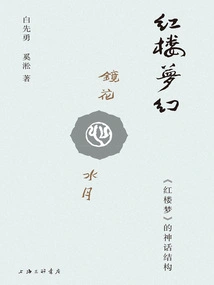
红楼梦幻:《红楼梦》的神话结构
Bai Xianyong Xi Song
The novelist Bai Xianyong and the artist Xi Song-one has experienced ups and downs in life and changes in his family and country; the other has been practicing Buddhism for decades and is well versed in Buddhist principles. A pair of old friends who have known each other for half a century join forces to talk about "A Dream of Red Mansions" and explore in depth the mysteries hidden in the classic masterpiece. A detailed interpretation of the story of the Red Mansions, from the nature of repaying kindness with the purple fairy grass, the truth about Baoyu becoming a monk, the love and death of Fengyue Baojian, the Grand View Garden and the matriarchal society, and the symbolic meaning of Taixu illusion, extending to the national collective subconscious, Confucianism, Buddhism and Taoism, Buddhism To learn connotative philosophy, the two teachers combined their many years of life experience and spiritual practice, combined with literary and aesthetic analysis, penetrated the surface text, analyzed the subtle images and metaphors in Red Mansions, and interpreted the characters and sentient beings from a unique perspective to reveal the main theme of Red Mansions. In the book, focusing on Yinglian, the first and last character to appear in "A Dream of Red Mansions", Xi Song uses his exquisite insights to put forward an unprecedented new interpretation, interpreting the great significance of Yinglian's "gray line" to the entire Red Mansions, and revealing the secret truth behind the text. In addition, this book also comes with a "Schematic diagram of the mythological structure of Dream of Red Mansions", which was drawn by teacher Xi Song himself. As the conversation between the two authors unfolds, the dense mythological structure at the top of "A Dream of Red Mansions" is gradually constructed step by step, brushing aside the bustling surface and delving into the hidden spiritual world of "a clear heart and a clear mind". This is a dialogue that "touches the soul", fully interpreting this great dream drama in the history of Chinese literature, and creating a dream-like Red Mansion stage.
The novelist Bai Xianyong and the artist Xi Song-one has experienced ups and downs in life and changes in his family and country; the other has been practicing Buddhism for decades and is well versed in Buddhist principles. A pair of old friends who have known each other for half a century join forces to talk about "A Dream of Red Mansions" and explore in depth the mysteries hidden in the classic masterpiece. A detailed interpretation of the story of the Red Mansions, from the nature of repaying kindness with the purple fairy grass, the truth about Baoyu becoming a monk, the love and death of Fengyue Baojian, the Grand View Garden and the matriarchal society, and the symbolic meaning of Taixu illusion, extending to the national collective subconscious, Confucianism, Buddhism and Taoism, Buddhism To learn connotative philosophy, the two teachers combined their many years of life experience and spiritual practice, combined with literary and aesthetic analysis, penetrated the surface text, analyzed the subtle images and metaphors in Red Mansions, and interpreted the characters and sentient beings from a unique perspective to reveal the main theme of Red Mansions. In the book, focusing on Yinglian, the first and last character to appear in "A Dream of Red Mansions", Xi Song uses his exquisite insights to put forward an unprecedented new interpretation, interpreting the great significance of Yinglian's "gray line" to the entire Red Mansions, and revealing the secret truth behind the text. In addition, this book also comes with a "Schematic diagram of the mythological structure of Dream of Red Mansions", which was drawn by teacher Xi Song himself. As the conversation between the two authors unfolds, the dense mythological structure at the top of "A Dream of Red Mansions" is gradually constructed step by step, brushing aside the bustling surface and delving into the hidden spiritual world of "a clear heart and a clear mind". This is a dialogue that "touches the soul", fully interpreting this great dream drama in the history of Chinese literature, and creating a dream-like Red Mansion stage.
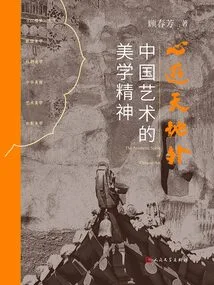
心游天地外:中国艺术的美学精神
Gu Chunfang
This is a popular book about Chinese aesthetics written by Peking University professor Gu Chunfang. The book is divided into five parts: the experience of beauty, life aesthetics in "A Dream of Red Mansions", opera aesthetics, Dunhuang art and aesthetic spirit, and poetry aesthetics. It not only provides an in-depth and simple analysis of the basic concepts of aesthetics, but also explains specific objects such as Dunhuang and "A Dream of Red Mansions". The language is easy to understand and has a certain enlightenment effect on understanding Chinese aesthetics. The author's other identity is the author of "My Heart Is in Dunhuang: Narrative of Fan Jinshi". She also tells the story behind the book to readers, which is more attractive.
This is a popular book about Chinese aesthetics written by Peking University professor Gu Chunfang. The book is divided into five parts: the experience of beauty, life aesthetics in "A Dream of Red Mansions", opera aesthetics, Dunhuang art and aesthetic spirit, and poetry aesthetics. It not only provides an in-depth and simple analysis of the basic concepts of aesthetics, but also explains specific objects such as Dunhuang and "A Dream of Red Mansions". The language is easy to understand and has a certain enlightenment effect on understanding Chinese aesthetics. The author's other identity is the author of "My Heart Is in Dunhuang: Narrative of Fan Jinshi". She also tells the story behind the book to readers, which is more attractive.
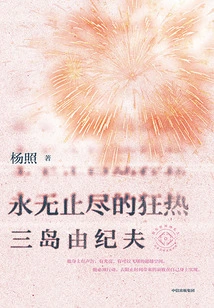
永无止尽的狂热:三岛由纪夫(日本文学名家十讲06)
Yang Zhao
19-year-old Mishima Yukio felt that he might die in the war at any time. There is no way of knowing whether I will be alive tomorrow, so I enjoy it wildly today. This absolute and pure passion continued to live in his body after the war, until the last day - November 25, 1970, when the 45-year-old Yukio Mishima transcribed the last part of "Sea of Fertility", "The Five Declines of Heavenly Beings", and the long million words were wrapped up in great tranquility. He then went to the Ground Self-Defense Force and committed seppuku. He believes that there is a kind of decent person who takes death seriously, and there is another kind of person who lives by himself, making his life darker and more boring. He also believed that before a person dies, he should always have light. "Mishima Yukio wrote until he was about to leave this world. He seemed to still embrace the world in his heart, but used his own hands to pull life away from this world. He did not commit suicide because he lost his enthusiasm for the world. On the contrary, he chose to die before he grew old because of his special enthusiasm for the world." - Yang Zhao.
19-year-old Mishima Yukio felt that he might die in the war at any time. There is no way of knowing whether I will be alive tomorrow, so I enjoy it wildly today. This absolute and pure passion continued to live in his body after the war, until the last day - November 25, 1970, when the 45-year-old Yukio Mishima transcribed the last part of "Sea of Fertility", "The Five Declines of Heavenly Beings", and the long million words were wrapped up in great tranquility. He then went to the Ground Self-Defense Force and committed seppuku. He believes that there is a kind of decent person who takes death seriously, and there is another kind of person who lives by himself, making his life darker and more boring. He also believed that before a person dies, he should always have light. "Mishima Yukio wrote until he was about to leave this world. He seemed to still embrace the world in his heart, but used his own hands to pull life away from this world. He did not commit suicide because he lost his enthusiasm for the world. On the contrary, he chose to die before he grew old because of his special enthusiasm for the world." - Yang Zhao.
中国历代女词人作品选析(上)
Dong Zhaoming
In the spring of 1946, I worked as a Chinese teacher in a primary school in my hometown. I was 19 years old. Under the influence of my close friends, I came into contact with a large number of classical poems. However, I found that most of them are works by male authors, and except for Li Qingzhao, Mrs. Wei, and Zhu Shuzhen, female authors rarely get the names of others. Since then, I have begun to collect the works of female poets of all ages in China. In the process of collecting, I gradually discovered that there are many talented female poets in the Chinese poetry world. So I came up with the idea of writing a "Selected Analysis of the Works of Chinese Female Poets of Past Dynasties". It wasn't until I retired in 1983 that I finally had the time to fulfill my wish. In the following nearly 20 years, although I was bedridden due to the sequelae of cerebral hemorrhage, in order to realize a dream that started in my youth, I continued to collect, organize, and write notes on women's poems. In order to become a gathering of famous ladies, they do not hesitate to lose their hair on their temples. Keeping this book alive will comfort me even if I die.
In the spring of 1946, I worked as a Chinese teacher in a primary school in my hometown. I was 19 years old. Under the influence of my close friends, I came into contact with a large number of classical poems. However, I found that most of them are works by male authors, and except for Li Qingzhao, Mrs. Wei, and Zhu Shuzhen, female authors rarely get the names of others. Since then, I have begun to collect the works of female poets of all ages in China. In the process of collecting, I gradually discovered that there are many talented female poets in the Chinese poetry world. So I came up with the idea of writing a "Selected Analysis of the Works of Chinese Female Poets of Past Dynasties". It wasn't until I retired in 1983 that I finally had the time to fulfill my wish. In the following nearly 20 years, although I was bedridden due to the sequelae of cerebral hemorrhage, in order to realize a dream that started in my youth, I continued to collect, organize, and write notes on women's poems. In order to become a gathering of famous ladies, they do not hesitate to lose their hair on their temples. Keeping this book alive will comfort me even if I die.
中国历代女词人作品选析(下)
Dong Zhaoming
In the spring of 1946, I worked as a Chinese teacher in a primary school in my hometown. I was 19 years old. Under the influence of my close friends, I came into contact with a large number of classical poems. However, I found that most of them are works by male authors, and except for Li Qingzhao, Mrs. Wei, and Zhu Shuzhen, female authors rarely get the names of others. Since then, I have begun to collect the works of female poets of all ages in China. In the process of collecting, I gradually discovered that there are many talented female poets in the Chinese poetry world. So I came up with the idea of writing a "Selected Analysis of the Works of Chinese Female Poets of Past Dynasties". It wasn't until I retired in 1983 that I finally had the time to fulfill my wish. In the following nearly 20 years, although I was bedridden due to the sequelae of cerebral hemorrhage, in order to realize a dream that started in my youth, I continued to collect, organize, and write notes on women's poems. In order to become a gathering of famous ladies, they do not hesitate to lose their hair on their temples. Keeping this book alive will comfort me even if I die.
In the spring of 1946, I worked as a Chinese teacher in a primary school in my hometown. I was 19 years old. Under the influence of my close friends, I came into contact with a large number of classical poems. However, I found that most of them are works by male authors, and except for Li Qingzhao, Mrs. Wei, and Zhu Shuzhen, female authors rarely get the names of others. Since then, I have begun to collect the works of female poets of all ages in China. In the process of collecting, I gradually discovered that there are many talented female poets in the Chinese poetry world. So I came up with the idea of writing a "Selected Analysis of the Works of Chinese Female Poets of Past Dynasties". It wasn't until I retired in 1983 that I finally had the time to fulfill my wish. In the following nearly 20 years, although I was bedridden due to the sequelae of cerebral hemorrhage, in order to realize a dream that started in my youth, I continued to collect, organize, and write notes on women's poems. In order to become a gathering of famous ladies, they do not hesitate to lose their hair on their temples. Keeping this book alive will comfort me even if I die.
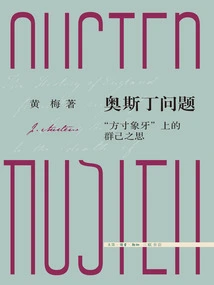
奥斯丁问题:“分寸象牙”上的群己之思
Huangmei
"Austen Questions" takes Austen's six important works as the main line, and discusses Austen's social care and art world from multiple angles through a combination of ideological criticism and literary analysis. The author takes the rise of individualism and the relationship between self, others and groups as the core issues in the transition from traditional British society to the era of profit-seeking industry and commerce at the turn of the 18th and 19th centuries. Through in-depth and detailed text analysis, he combines it with modern and contemporary Austen research and popular criticism in the West. In the dialogue, it is shown how Austen conveyed social phenomena and the spirit of the times in the lively secular life and art world he created, thought about the relationship between "morality" and happiness, and participated in the construction of new values of "thinking of others" in his own way. The whole book presents the unique understanding and interpretation of the "Austen Question" by an experienced Chinese scholar with his long-term reading experience, confusion and thinking.
"Austen Questions" takes Austen's six important works as the main line, and discusses Austen's social care and art world from multiple angles through a combination of ideological criticism and literary analysis. The author takes the rise of individualism and the relationship between self, others and groups as the core issues in the transition from traditional British society to the era of profit-seeking industry and commerce at the turn of the 18th and 19th centuries. Through in-depth and detailed text analysis, he combines it with modern and contemporary Austen research and popular criticism in the West. In the dialogue, it is shown how Austen conveyed social phenomena and the spirit of the times in the lively secular life and art world he created, thought about the relationship between "morality" and happiness, and participated in the construction of new values of "thinking of others" in his own way. The whole book presents the unique understanding and interpretation of the "Austen Question" by an experienced Chinese scholar with his long-term reading experience, confusion and thinking.
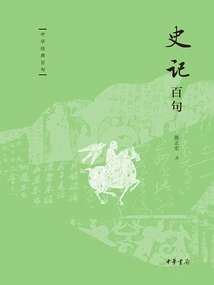
史记百句(中华经典百句)
Chen Zhenghong
The 130 chapters of "Historical Records" are not easy for ordinary readers to read directly. Based on the proofread version of "Historical Records" compiled by Zhonghua Book Company, Professor Chen Zhenghong of Fudan University selected famous quotes and quotes that have been widely quoted or praised by readers of all ages, and used vivid stories in the form of original text, translation, and analysis. And explanations in simple and easy-to-understand language, allowing readers to understand: what was the original context of Sima Qian's writing scenes; if they appear repeatedly in "Historical Records", how their meanings have changed; whether their ancient and modern meanings are different, and what are their unique values in modern times. The target readers of this book are students in the upper grades of primary schools and lower grades of middle schools. It is also suitable for readers with intermediate education levels as non-professional reading.
The 130 chapters of "Historical Records" are not easy for ordinary readers to read directly. Based on the proofread version of "Historical Records" compiled by Zhonghua Book Company, Professor Chen Zhenghong of Fudan University selected famous quotes and quotes that have been widely quoted or praised by readers of all ages, and used vivid stories in the form of original text, translation, and analysis. And explanations in simple and easy-to-understand language, allowing readers to understand: what was the original context of Sima Qian's writing scenes; if they appear repeatedly in "Historical Records", how their meanings have changed; whether their ancient and modern meanings are different, and what are their unique values in modern times. The target readers of this book are students in the upper grades of primary schools and lower grades of middle schools. It is also suitable for readers with intermediate education levels as non-professional reading.
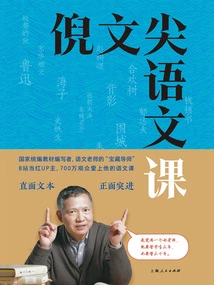
Ni Wenjian Chinese Class
Literature倪文尖语文课
Ni Wenjian
What is the relationship between "I" and my father in "Back View"? Who is the "murderer" who kills Mrs. Xianglin in "Blessing"? "Fortress Besieged" Who besieged whom? Have you really understood these classic works? Is there any way to read literature? Teacher Ni Wenjian, a famous teacher in the Chinese Department and who has participated in the top-level design of national Chinese education for many years, presents the fun and charm of reading through intensive reading and analysis of Chinese and foreign classics in the history of literature and well-known masterpieces in Chinese textbooks. This book is compiled into eleven classroom lecture notes and analysis of famous works, from "Kong Yiji", "Back View", "Albizia Julibrissin Tree" to "Smoke of Beijing" and "Besieged City". Each article has its own angles and techniques, practical exercises, with the text as the center, from beginning to end, from texture to structure, from the context of writing to the writer's stance, from the inside out. From the whole form to the external context... Read it thoroughly and enjoy it heartily; the second part selects thirteen poems and essays such as "Blessing", "Autumn in the Old Capital", "Moonlight over the Lotus Pond", "Oh, Fragrant Snow", etc. For side criticism. Hundreds of accompanying text annotations or reminders of key points, or questions to attract attention, guide readers to explore and think in a persuasive way. Go in and out of the text, go deep between the lines, and let teacher "Ni Dahong" lead you step by step to confront the text.
What is the relationship between "I" and my father in "Back View"? Who is the "murderer" who kills Mrs. Xianglin in "Blessing"? "Fortress Besieged" Who besieged whom? Have you really understood these classic works? Is there any way to read literature? Teacher Ni Wenjian, a famous teacher in the Chinese Department and who has participated in the top-level design of national Chinese education for many years, presents the fun and charm of reading through intensive reading and analysis of Chinese and foreign classics in the history of literature and well-known masterpieces in Chinese textbooks. This book is compiled into eleven classroom lecture notes and analysis of famous works, from "Kong Yiji", "Back View", "Albizia Julibrissin Tree" to "Smoke of Beijing" and "Besieged City". Each article has its own angles and techniques, practical exercises, with the text as the center, from beginning to end, from texture to structure, from the context of writing to the writer's stance, from the inside out. From the whole form to the external context... Read it thoroughly and enjoy it heartily; the second part selects thirteen poems and essays such as "Blessing", "Autumn in the Old Capital", "Moonlight over the Lotus Pond", "Oh, Fragrant Snow", etc. For side criticism. Hundreds of accompanying text annotations or reminders of key points, or questions to attract attention, guide readers to explore and think in a persuasive way. Go in and out of the text, go deep between the lines, and let teacher "Ni Dahong" lead you step by step to confront the text.
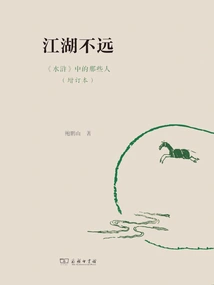
江湖不远:《水浒》中的那些人(增订本)
Bao Pengshan
This book is an affectionate interpretation of "Water Margin" by modern and contemporary literature researcher Bao Pengshan. The book connects the entire "Water Margin" with 70 articles, and also connects "Water Margin" with traditional Chinese literature, history, and thought. Bao Pengshan not only made an emotional interpretation of the character, temperament, and destiny of the 108 Water Margin heroes based on his own reading experience, but also combined the Chinese Confucianism, Buddhism, and Taoism and the knight-errant temperament in the deep spiritual level of the Chinese people to give a literary critic-like interpretation of the creative intention, characters, and plot conception of "Water Margin." The book is both interesting and academic, and combines sensibility and rationality. It is a rare analysis of "Water Margin". Since its publication in 2018, the book has been very popular among fans of Chinese classical novels. This time it is reprinted in our library. Based on the original book's 58 chapters and 160,000 words, 12 more chapters with nearly 70,000 words have been added for the readers' enjoyment.
This book is an affectionate interpretation of "Water Margin" by modern and contemporary literature researcher Bao Pengshan. The book connects the entire "Water Margin" with 70 articles, and also connects "Water Margin" with traditional Chinese literature, history, and thought. Bao Pengshan not only made an emotional interpretation of the character, temperament, and destiny of the 108 Water Margin heroes based on his own reading experience, but also combined the Chinese Confucianism, Buddhism, and Taoism and the knight-errant temperament in the deep spiritual level of the Chinese people to give a literary critic-like interpretation of the creative intention, characters, and plot conception of "Water Margin." The book is both interesting and academic, and combines sensibility and rationality. It is a rare analysis of "Water Margin". Since its publication in 2018, the book has been very popular among fans of Chinese classical novels. This time it is reprinted in our library. Based on the original book's 58 chapters and 160,000 words, 12 more chapters with nearly 70,000 words have been added for the readers' enjoyment.
王蒙小说文体研究(增订本)
Guo Baoliang
The book was published by Peking University Press in 2006 and included in the "Literature and Cultural Studies Series" edited by Tong Qingbing. As an important contemporary Chinese writer, Wang Meng has made great achievements in stylistic innovation. From his early stream-of-consciousness attempts to his recent attempts at poetry, philosophy, and prose in his novels, they all reflect a creator's creative mentality of seeking innovation and change, as well as his free and open creative concept. Based on a thorough reading of all Wang Meng's novels, this book accurately captures the changes and invariants in Wang Meng's novel creation, and summarizes the stylistic characteristics of Wang Meng's novels. By exploring the language, narrative personality, stylistic context, and the writer's cultural mentality, the book touches the inherent cultural spirit of the novel text, explores the writer's narrative personality, cultural orientation, and understanding of life and reality, reveals the academic implications and social and cultural context of the novel, and strives to present the significance and limitations of the stylistic innovation of Wang Meng's novels. After the first edition of the book, it was well received by the academic community and has been published in traditional Chinese. In this reprint, the author has revised the previous statement and added the research results of tracking Wang Meng in the past fifteen years.
The book was published by Peking University Press in 2006 and included in the "Literature and Cultural Studies Series" edited by Tong Qingbing. As an important contemporary Chinese writer, Wang Meng has made great achievements in stylistic innovation. From his early stream-of-consciousness attempts to his recent attempts at poetry, philosophy, and prose in his novels, they all reflect a creator's creative mentality of seeking innovation and change, as well as his free and open creative concept. Based on a thorough reading of all Wang Meng's novels, this book accurately captures the changes and invariants in Wang Meng's novel creation, and summarizes the stylistic characteristics of Wang Meng's novels. By exploring the language, narrative personality, stylistic context, and the writer's cultural mentality, the book touches the inherent cultural spirit of the novel text, explores the writer's narrative personality, cultural orientation, and understanding of life and reality, reveals the academic implications and social and cultural context of the novel, and strives to present the significance and limitations of the stylistic innovation of Wang Meng's novels. After the first edition of the book, it was well received by the academic community and has been published in traditional Chinese. In this reprint, the author has revised the previous statement and added the research results of tracking Wang Meng in the past fifteen years.
Zhang Taiyan's Oral Meaning
Literature章太炎口义
Yu Yunguo
This book is one of the "Zhang Taiyan Narrative Series", which aims to study, discover and organize Zhang Taiyan's academic thoughts, and compile and publish the popular results of Zhang Taiyan's research. Compiled and selected by Professor Yu Yunguo, a famous expert on Song history. Zhang Taiyan (January 12, 1869 - June 14, 1936), named Binglin, also named Meishu, was originally named Xuecheng. Later his name was changed to Jiang, and his nickname was Taiyan. He was a native of Yuhang, Zhejiang. He was a democratic revolutionary and thinker in the late Qing Dynasty and the early Republic of China, and a famous master of Pu Xue in modern China. His research scope covered primary school, history, philosophy, politics, etc., And he wrote many books. He also took teaching Chinese studies as his own responsibility and was known as a "learned revolutionist". Guoyi is a writing genre that emerged after the Song Dynasty, which is a student's transcript of the teacher's conversational lectures. Compared with high-level sermons, oral expressions are free and lively in form, eclectic in content, and often generate discussions on a certain issue. This book includes Zhang Taiyan's three works named after the Han Dynasty and 27 "Issues about the Han Dynasty". It is mainly based on Buddhist knowledge-only theory, and comprehensively compares it with Chinese Confucianism, Taoism, Yi, Xuanxuan, Neo-Confucianism, etc., Including classics, medicine, calendars, mathematics, music, literature, phonology, etc. Since the pre-Qin Dynasty. Historical events, etc., Are often involved, and have a specific status in Mr. Taiyan's abundant academic works; in the process, he also recounts the changes in academic thoughts, as a self-identification, so it has attracted much attention from scholars, and has been highly praised by Liang Qichao, Qian Mu, etc., And it is an important reference work for learning and researching Chinese traditional culture.
This book is one of the "Zhang Taiyan Narrative Series", which aims to study, discover and organize Zhang Taiyan's academic thoughts, and compile and publish the popular results of Zhang Taiyan's research. Compiled and selected by Professor Yu Yunguo, a famous expert on Song history. Zhang Taiyan (January 12, 1869 - June 14, 1936), named Binglin, also named Meishu, was originally named Xuecheng. Later his name was changed to Jiang, and his nickname was Taiyan. He was a native of Yuhang, Zhejiang. He was a democratic revolutionary and thinker in the late Qing Dynasty and the early Republic of China, and a famous master of Pu Xue in modern China. His research scope covered primary school, history, philosophy, politics, etc., And he wrote many books. He also took teaching Chinese studies as his own responsibility and was known as a "learned revolutionist". Guoyi is a writing genre that emerged after the Song Dynasty, which is a student's transcript of the teacher's conversational lectures. Compared with high-level sermons, oral expressions are free and lively in form, eclectic in content, and often generate discussions on a certain issue. This book includes Zhang Taiyan's three works named after the Han Dynasty and 27 "Issues about the Han Dynasty". It is mainly based on Buddhist knowledge-only theory, and comprehensively compares it with Chinese Confucianism, Taoism, Yi, Xuanxuan, Neo-Confucianism, etc., Including classics, medicine, calendars, mathematics, music, literature, phonology, etc. Since the pre-Qin Dynasty. Historical events, etc., Are often involved, and have a specific status in Mr. Taiyan's abundant academic works; in the process, he also recounts the changes in academic thoughts, as a self-identification, so it has attracted much attention from scholars, and has been highly praised by Liang Qichao, Qian Mu, etc., And it is an important reference work for learning and researching Chinese traditional culture.
《孟子》新解(全2册)
Fan Deng
Why are Mencius' thoughts still worth reading again and again today? "Mencius" is one of the "Four Books". It records the political, educational, philosophical, ethical and other ideological views and political activities of Mencius and his disciples. It is a basic classic of Confucianism. It has profoundly shaped the spiritual core of the Chinese people and has alerted and inspired countless promising people throughout the ages. "New Interpretation of "Mencius"" contains Dr. Fan Deng's word-for-word explanation and analysis of "Mencius". It combines different disciplines such as psychology, leadership, economics, management, and complex science to give a new interpretation of Mencius's teachings from a modern perspective, helping readers draw nutrients from the wisdom of sages, answer life's puzzles, and awaken their inner strength.
Why are Mencius' thoughts still worth reading again and again today? "Mencius" is one of the "Four Books". It records the political, educational, philosophical, ethical and other ideological views and political activities of Mencius and his disciples. It is a basic classic of Confucianism. It has profoundly shaped the spiritual core of the Chinese people and has alerted and inspired countless promising people throughout the ages. "New Interpretation of "Mencius"" contains Dr. Fan Deng's word-for-word explanation and analysis of "Mencius". It combines different disciplines such as psychology, leadership, economics, management, and complex science to give a new interpretation of Mencius's teachings from a modern perspective, helping readers draw nutrients from the wisdom of sages, answer life's puzzles, and awaken their inner strength.
德国的文学与艺术(外国文艺理论丛书)
(france) Madame De Steyr
"On Deutschland" (1810) is one of the classic works of European Romanticism. It is a summary of Mrs. De Steyr's own cultural thoughts after traveling in Germany during her later years of exile. "On Deutschland" is divided into four parts, and this book is the second part. It analyzes the characteristics of German literature and art in detail, comments on the character and tendencies of German writers, and examines the roots of Germany's unique metaphysical temperament. Classical writers such as Wieland, Klobstock, Winkelmann, Lessing, Herder, Goethe, Schiller and their representative works are all appreciated and evaluated in the book; representatives of German romantic literature, such as the Schlegel brothers, are even more enthusiastically praised by the author.
"On Deutschland" (1810) is one of the classic works of European Romanticism. It is a summary of Mrs. De Steyr's own cultural thoughts after traveling in Germany during her later years of exile. "On Deutschland" is divided into four parts, and this book is the second part. It analyzes the characteristics of German literature and art in detail, comments on the character and tendencies of German writers, and examines the roots of Germany's unique metaphysical temperament. Classical writers such as Wieland, Klobstock, Winkelmann, Lessing, Herder, Goethe, Schiller and their representative works are all appreciated and evaluated in the book; representatives of German romantic literature, such as the Schlegel brothers, are even more enthusiastically praised by the author.
红楼梦金瓶梅合璧赏读
Liu Xinwu
This book is written by the famous writer and red scholar Liu Xinwu. It is the culmination of 40 years of research and provides a new perspective on the two masterpieces of ancient Chinese novels - "A Dream of Red Mansions" and "Plum in the Golden Vase". 92 Major themes are compared and explained in detail, and the 360-degree panoramic display connects 200 years of literary time and space. Connect the inextricable connections between the two strange books and reveal the details, truth, inheritance and connection. Appreciation from the beginning brings brilliance together, exploring the subtleties through rigorous research, and reflecting reality with transparent insights. This is not only a re-examination of life values, but also an innovative experience in thinking. Guide readers to understand society, human nature, and themselves from classics.
This book is written by the famous writer and red scholar Liu Xinwu. It is the culmination of 40 years of research and provides a new perspective on the two masterpieces of ancient Chinese novels - "A Dream of Red Mansions" and "Plum in the Golden Vase". 92 Major themes are compared and explained in detail, and the 360-degree panoramic display connects 200 years of literary time and space. Connect the inextricable connections between the two strange books and reveal the details, truth, inheritance and connection. Appreciation from the beginning brings brilliance together, exploring the subtleties through rigorous research, and reflecting reality with transparent insights. This is not only a re-examination of life values, but also an innovative experience in thinking. Guide readers to understand society, human nature, and themselves from classics.