Library
Browse and search books
471 novels found
Petals of History
History历史的花瓣
Jointly Edited By Yao
Historical figures with outstanding contributions, major achievements and far-reaching influence in various fields in Chinese history have been selected and presented into categories such as emperors and generals, cultural celebrities, and scientific giants. Through the introduction of interesting anecdotes about historical figures from each dynasty, the customs of different historical periods of China are displayed.
Historical figures with outstanding contributions, major achievements and far-reaching influence in various fields in Chinese history have been selected and presented into categories such as emperors and generals, cultural celebrities, and scientific giants. Through the introduction of interesting anecdotes about historical figures from each dynasty, the customs of different historical periods of China are displayed.
Scraps from Big History
History大历史的边角料
Zhang Ming
Professor Zhang Ming's historical essays are mainly based on the history of the late Qing Dynasty and the Republic of China. He eclectically tells many details that are not noticed in the official history, focusing on exploring the things behind the stories. This volume focuses on stories, and its main contents include: the mystery of the Boxer Rebellion; the women's battle array of the Boxer Rebellion; the Boxer Rebellion: the changing historical memory; why the "Boxer Rebellion Prescription" reappeared; spectators at the end of the century; Wang Dian was remembered again; the secret of the Boxers is not a secret - historical notes, etc. You can truly feel Zhang Ming's unique style of telling history.
Professor Zhang Ming's historical essays are mainly based on the history of the late Qing Dynasty and the Republic of China. He eclectically tells many details that are not noticed in the official history, focusing on exploring the things behind the stories. This volume focuses on stories, and its main contents include: the mystery of the Boxer Rebellion; the women's battle array of the Boxer Rebellion; the Boxer Rebellion: the changing historical memory; why the "Boxer Rebellion Prescription" reappeared; spectators at the end of the century; Wang Dian was remembered again; the secret of the Boxers is not a secret - historical notes, etc. You can truly feel Zhang Ming's unique style of telling history.
History's Bad Temper
History历史的坏脾气
Zhang Ming
This book tells anecdotes about celebrities in the late Qing Dynasty and the Republic of China, and comments on some social phenomena, which is very helpful for readers to understand the modern history of China.
This book tells anecdotes about celebrities in the late Qing Dynasty and the Republic of China, and comments on some social phenomena, which is very helpful for readers to understand the modern history of China.
老北大(民国趣读)
"old Peking University" Editorial Team
"Interesting Readings about Old Peking University in the Republic of China" is a collection of texts recalling the old Peking University in those days. The authors are all great figures from the Republic of China, such as Feng Youlan, Liu Yuangong, Shen Yinmo, Zhou Zuoren, Uncle Gao Ping, Zhang Shenfu, Liang Shuming... These articles describe the history, principal, student resources, curriculum, teacher style, school environment, and on-campus and off-campus conditions of Peking University during the Republic of China from different aspects. Through these articles, we can see what kind of students were admitted to Peking University and what kind of talents stood on the podium in the classroom to preach and teach; these students and teachers, in that turbulent era, what they experienced, what they witnessed, and what they did; what kind of emotions they had, and what kind of life they had. Their descriptions are like vines covering the wall of memory, allowing us to better understand the past of Peking University and the reason why we came to Peking University. They once lived in the past of Peking University and spent the best time of their lives in that beautiful place.
"Interesting Readings about Old Peking University in the Republic of China" is a collection of texts recalling the old Peking University in those days. The authors are all great figures from the Republic of China, such as Feng Youlan, Liu Yuangong, Shen Yinmo, Zhou Zuoren, Uncle Gao Ping, Zhang Shenfu, Liang Shuming... These articles describe the history, principal, student resources, curriculum, teacher style, school environment, and on-campus and off-campus conditions of Peking University during the Republic of China from different aspects. Through these articles, we can see what kind of students were admitted to Peking University and what kind of talents stood on the podium in the classroom to preach and teach; these students and teachers, in that turbulent era, what they experienced, what they witnessed, and what they did; what kind of emotions they had, and what kind of life they had. Their descriptions are like vines covering the wall of memory, allowing us to better understand the past of Peking University and the reason why we came to Peking University. They once lived in the past of Peking University and spent the best time of their lives in that beautiful place.
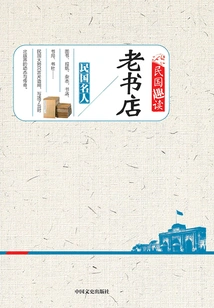
老书店(民国趣读)
"old Bookstore" Editorial Team
This book is one of the "Interesting Readings about the Republic of China" series. "Interesting Reading of Old Bookstores in the Republic of China" is a collection of texts recalling the dynamics of the publishing industry during the Republic of China. The authors are all great figures of the Republic of China, such as Zhang Xichen, Hu Yuzhi, Chen Zigu, Zhang Yuanshan, Zhang Naiqi, Zhang Henshui, etc. These great figures of the Republic of China told the relevant developments and important figures of those old bookstores, old bookstores, old book clubs, and old publications at that time... Snippets and a few sentences vividly reproduce the bygone past of the publishing industry during the Republic of China. Chewing these distinctive and dynamic words, the love and scenery are vivid in my mind, and that old time also seems gorgeous and glorious.
This book is one of the "Interesting Readings about the Republic of China" series. "Interesting Reading of Old Bookstores in the Republic of China" is a collection of texts recalling the dynamics of the publishing industry during the Republic of China. The authors are all great figures of the Republic of China, such as Zhang Xichen, Hu Yuzhi, Chen Zigu, Zhang Yuanshan, Zhang Naiqi, Zhang Henshui, etc. These great figures of the Republic of China told the relevant developments and important figures of those old bookstores, old bookstores, old book clubs, and old publications at that time... Snippets and a few sentences vividly reproduce the bygone past of the publishing industry during the Republic of China. Chewing these distinctive and dynamic words, the love and scenery are vivid in my mind, and that old time also seems gorgeous and glorious.
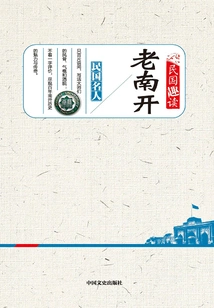
老南开(民国趣读)
"old Nankai" Editorial Team
This book is part of the "Republic of China Interesting Reading" series, which is a series of books carefully created by China Literature and History Publishing House to popularize the CPPCC's cultural and historical materials and publicize the CPPCC's cultural and historical work. This is one of a series of books, a collection of texts recalling Nankai University during the Republic of China. The authors are all great figures from the Republic of China, such as Hu Shi, Chen Shengshen, Wang Duanxun, Dai Jiaxiang, Wu Dayou, etc. These great figures from the Republic of China told anecdotes about the classes, the demeanor of famous teachers, and club activities at Nankai University during the Republic of China... The fragments of essays and a few words vividly reproduced the bygone past on the old Nankai campus.
This book is part of the "Republic of China Interesting Reading" series, which is a series of books carefully created by China Literature and History Publishing House to popularize the CPPCC's cultural and historical materials and publicize the CPPCC's cultural and historical work. This is one of a series of books, a collection of texts recalling Nankai University during the Republic of China. The authors are all great figures from the Republic of China, such as Hu Shi, Chen Shengshen, Wang Duanxun, Dai Jiaxiang, Wu Dayou, etc. These great figures from the Republic of China told anecdotes about the classes, the demeanor of famous teachers, and club activities at Nankai University during the Republic of China... The fragments of essays and a few words vividly reproduced the bygone past on the old Nankai campus.
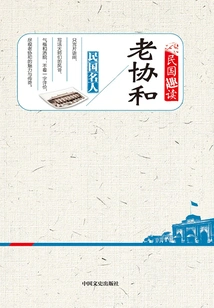
老协和(民国趣读)
Editorial Team Of "old Concord"
This book is a collection of texts recalling the Union Medical College during the Republic of China. The authors are all great figures of the Republic of China, such as Deng Jiadong, Wu Jieping, Ye Gongshao, Rong Dushan, Wang Xiuying, etc. These great people from the Republic of China told about the library, medical records room, famous teachers and doctors, student life, school spirit and school disciplines of the old Union Medical College at that time... Snippets and a few words vividly reproduce the bygone past of the old Union Medical College during the Republic of China. Chewing these distinctive and dynamic words, the love and scenery are vivid in my mind, and that old time also seems gorgeous and glorious.
This book is a collection of texts recalling the Union Medical College during the Republic of China. The authors are all great figures of the Republic of China, such as Deng Jiadong, Wu Jieping, Ye Gongshao, Rong Dushan, Wang Xiuying, etc. These great people from the Republic of China told about the library, medical records room, famous teachers and doctors, student life, school spirit and school disciplines of the old Union Medical College at that time... Snippets and a few words vividly reproduce the bygone past of the old Union Medical College during the Republic of China. Chewing these distinctive and dynamic words, the love and scenery are vivid in my mind, and that old time also seems gorgeous and glorious.
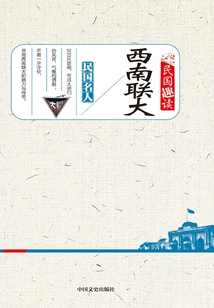
西南联大(民国趣读)
"southwestern Associated University" Editorial Team
This is a collection of texts recalling the days of Southwest Associated University. The authors are all great figures from the Republic of China, such as Feng Youlan, Wang Zengqi, Li Jianwu, Wen Yiduo, Wang Jingshan, He Liankui, Zhu Guangya, etc. These great figures from the Republic of China told about anecdotes about the classroom, the demeanor of famous teachers, and club activities during the eight years of Southwest Associated University... Snippets and a few sentences vividly reproduced the bygone past on the campus of Southwest Associated University. Chewing these distinctive and dynamic words, the love and scenery between them can be vividly remembered, and the time in college also seems gorgeous and glorious.
This is a collection of texts recalling the days of Southwest Associated University. The authors are all great figures from the Republic of China, such as Feng Youlan, Wang Zengqi, Li Jianwu, Wen Yiduo, Wang Jingshan, He Liankui, Zhu Guangya, etc. These great figures from the Republic of China told about anecdotes about the classroom, the demeanor of famous teachers, and club activities during the eight years of Southwest Associated University... Snippets and a few sentences vividly reproduced the bygone past on the campus of Southwest Associated University. Chewing these distinctive and dynamic words, the love and scenery between them can be vividly remembered, and the time in college also seems gorgeous and glorious.
谜案北京②:皇城根儿下的传说
Editorial Board Of "mystery Beijing"
Legends are the silhouette of human history. Beijing's legends, like folklore everywhere, are developed and evolved based on historical facts. The difference is that as the ancient capital of several dynasties, Beijing's legends are not only filled with a strong royal atmosphere, but also full of the wisdom and hard work of the common people living under the roots of the imperial city.
Legends are the silhouette of human history. Beijing's legends, like folklore everywhere, are developed and evolved based on historical facts. The difference is that as the ancient capital of several dynasties, Beijing's legends are not only filled with a strong royal atmosphere, but also full of the wisdom and hard work of the common people living under the roots of the imperial city.
谜案北京①:帝王家的那点事儿
Editorial Board Of "mystery Beijing"
"Mystery in Beijing ①: Things about the Imperial Family" is the first book in the "Mystery in Beijing" series. This book collects the things about the emperor's family that spread in Beijing during the Ming and Qing Dynasties from three aspects: the secret history of the emperor, anecdotes about the harem, and the tombs and ancestral halls. It is presented to readers in a way that appeals to both refined and popular tastes. The article transforms the rumors into vivid and novel stories in the form of curiosity and exploration, allowing readers to have a clear understanding of the city of Beijing and the many mysteries of the emperor's family in a "pleasant reading" atmosphere, while also pleasing the body and mind, achieving a good reading effect.
"Mystery in Beijing ①: Things about the Imperial Family" is the first book in the "Mystery in Beijing" series. This book collects the things about the emperor's family that spread in Beijing during the Ming and Qing Dynasties from three aspects: the secret history of the emperor, anecdotes about the harem, and the tombs and ancestral halls. It is presented to readers in a way that appeals to both refined and popular tastes. The article transforms the rumors into vivid and novel stories in the form of curiosity and exploration, allowing readers to have a clear understanding of the city of Beijing and the many mysteries of the emperor's family in a "pleasant reading" atmosphere, while also pleasing the body and mind, achieving a good reading effect.
有人说:二十四史
Release The Abstention And Anger
"Someone Said" uses "Twenty-Four Histories" as historical material, and there are 12 stories in the book. The story is written from the perspective of characters in some historical events, and the stories they have experienced are viewed from their perspective. For example, "The Story of Qin Wuyang" looks at Jing Ke's assassination of King Qin from the perspective of Qin Wuyang; "The Story of Tu Anjia" looks at the orphans of the Zhao family from the perspective of Tu Anjia; and "The Story of Zhao Zhen" uses Zhao Zhen's perspective to restore the true history behind the bizarre legend of "a civet cat for a prince", etc. The description from a new perspective forms a new perspective in serious historical materials that is in sharp contrast with the traditional view of history, activating readers to think new about their inherent thoughts.
"Someone Said" uses "Twenty-Four Histories" as historical material, and there are 12 stories in the book. The story is written from the perspective of characters in some historical events, and the stories they have experienced are viewed from their perspective. For example, "The Story of Qin Wuyang" looks at Jing Ke's assassination of King Qin from the perspective of Qin Wuyang; "The Story of Tu Anjia" looks at the orphans of the Zhao family from the perspective of Tu Anjia; and "The Story of Zhao Zhen" uses Zhao Zhen's perspective to restore the true history behind the bizarre legend of "a civet cat for a prince", etc. The description from a new perspective forms a new perspective in serious historical materials that is in sharp contrast with the traditional view of history, activating readers to think new about their inherent thoughts.
人鉴:《资治通鉴》的通识智慧
Luo Yinghuan
This book tells about successful cases in "Zi Zhi Tong Jian" and captures the wisdom of success from "Zi Zhi Tong Jian" so that readers can personally feel the success and wisdom of the ancients.
This book tells about successful cases in "Zi Zhi Tong Jian" and captures the wisdom of success from "Zi Zhi Tong Jian" so that readers can personally feel the success and wisdom of the ancients.
再说戊戌变法
Zhang Ming
This book strives to re-examine the Reform Movement of 1898 from the perspective of the social structure and political pattern of the late Qing Dynasty. There are three focuses: first, the dual structure of imperial and empress politics at that time; second, Manchu politics; and third, what went wrong with the implementation of the reform and what was its significance. The author takes a new approach and tells the impact of many factors such as the "politics of idlers under the banner", the political habits of Shilin, and the "patch tradition" of Qing Dynasty politics on the Reform Movement of 1898. He also has a unique interpretation of the performance of the Queen Mother and the Westernizationists, the deformation of political operations in the process of learning from the West, and the common people's perception of the reform.
This book strives to re-examine the Reform Movement of 1898 from the perspective of the social structure and political pattern of the late Qing Dynasty. There are three focuses: first, the dual structure of imperial and empress politics at that time; second, Manchu politics; and third, what went wrong with the implementation of the reform and what was its significance. The author takes a new approach and tells the impact of many factors such as the "politics of idlers under the banner", the political habits of Shilin, and the "patch tradition" of Qing Dynasty politics on the Reform Movement of 1898. He also has a unique interpretation of the performance of the Queen Mother and the Westernizationists, the deformation of political operations in the process of learning from the West, and the common people's perception of the reform.
Straightforward Monologue
History直截了当的独白
Zhang Ming
This book is a collection of historical essays. He puts forward his own views on some historical mysteries and controversial historical theories in the late Qing Dynasty.
This book is a collection of historical essays. He puts forward his own views on some historical mysteries and controversial historical theories in the late Qing Dynasty.
History, Irregularities
History历史,不规矩
Zhang Ming
"History, Irregular" is the latest work of the famous scholar Professor Zhang Ming. This historical and cultural essay is written in a sharp style, and every historical site and anecdote is filled with knowledge. This book is rich in content and covers a wide range of topics, ranging from the Three Kingdoms, Jin, Southern and Northern Dynasties, to the Republic of China. The historical figures and historical events are rich and colorful. The author uses relaxed and humorous language, penetrating analysis, and many little-known details to present the colorful past events in front of readers in a new way, painting a different kind of historical picture for us, showing the interest of "personalized history" and "detailed history".
"History, Irregular" is the latest work of the famous scholar Professor Zhang Ming. This historical and cultural essay is written in a sharp style, and every historical site and anecdote is filled with knowledge. This book is rich in content and covers a wide range of topics, ranging from the Three Kingdoms, Jin, Southern and Northern Dynasties, to the Republic of China. The historical figures and historical events are rich and colorful. The author uses relaxed and humorous language, penetrating analysis, and many little-known details to present the colorful past events in front of readers in a new way, painting a different kind of historical picture for us, showing the interest of "personalized history" and "detailed history".
Li Guowen Reads History
History李国文读史
Li Guowen
This book contains 50 historical essays by Li Guowen. From the Qin and Han Dynasties to the Ming and Qing Dynasties, from official history to unofficial history, from big themes to small figures, from emperors and generals to the three religions and nine streams, there are all involved. His works are unique and remarkable, integrating literary talents, historical depth, and essay sharpness. Some critics believe that "he is one of the contemporary essayists who best unifies knowledge, temperament, and opinions, and is quite similar to the French writer Montaigne."
This book contains 50 historical essays by Li Guowen. From the Qin and Han Dynasties to the Ming and Qing Dynasties, from official history to unofficial history, from big themes to small figures, from emperors and generals to the three religions and nine streams, there are all involved. His works are unique and remarkable, integrating literary talents, historical depth, and essay sharpness. Some critics believe that "he is one of the contemporary essayists who best unifies knowledge, temperament, and opinions, and is quite similar to the French writer Montaigne."
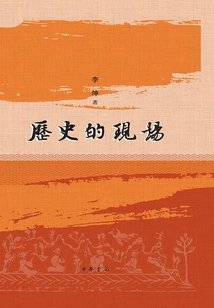
Historical Scene
History历史的现场
Li Kun
This book is a historical essay. The selected subject matter is a more in-depth interpretation of familiar content to explore the truth hidden under the smoke of history. At the same time, from the perspective of big history, the same type of things are connected in series. By comparison, you will find many interesting things. The Wei and Jin Dynasties were romantic and talked about mysteries. It was a rare period of freedom in history. What is the reason for this freedom? Why did Su Dongpo, Xin Qiji, and Lu You all have difficult ambitions, but they left monuments in the history of literature...\U003Cbr\u003EWhat can truly serve as a mark of the Chinese people, a symbol that will be passed down forever in our blood, and make future generations proud of it? If you read history, you might be able to tell something.
This book is a historical essay. The selected subject matter is a more in-depth interpretation of familiar content to explore the truth hidden under the smoke of history. At the same time, from the perspective of big history, the same type of things are connected in series. By comparison, you will find many interesting things. The Wei and Jin Dynasties were romantic and talked about mysteries. It was a rare period of freedom in history. What is the reason for this freedom? Why did Su Dongpo, Xin Qiji, and Lu You all have difficult ambitions, but they left monuments in the history of literature...\U003Cbr\u003EWhat can truly serve as a mark of the Chinese people, a symbol that will be passed down forever in our blood, and make future generations proud of it? If you read history, you might be able to tell something.
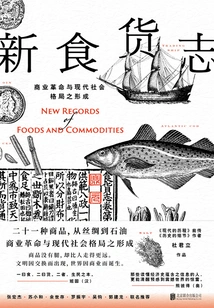
New Food Magazine
History新食货志
Du Junli
Those who understand the information contained in economic history can better foresee the thunder that will shake the world. History popularization writer Du Junli's new work focuses on 21 kinds of food and commodities, from silk to oil, tracing the global commercial revolution and the formation of the modern world social pattern. Goods have no legs, but they can travel farther than people. Civilization emerged because of exchange, and the world was born because of commerce. In the making of the modern world, commodities became the primary medium and catalyst, with trade creating a global era. The results of commercialization and globalization are astounding. Behind every major event that affects and changes the world is the huge push of the business revolution. With the help of mobile commodities, different ethnic groups, different civilizations, and different concepts collided and communicated, and finally formed today's modern culture and social pattern...
Those who understand the information contained in economic history can better foresee the thunder that will shake the world. History popularization writer Du Junli's new work focuses on 21 kinds of food and commodities, from silk to oil, tracing the global commercial revolution and the formation of the modern world social pattern. Goods have no legs, but they can travel farther than people. Civilization emerged because of exchange, and the world was born because of commerce. In the making of the modern world, commodities became the primary medium and catalyst, with trade creating a global era. The results of commercialization and globalization are astounding. Behind every major event that affects and changes the world is the huge push of the business revolution. With the help of mobile commodities, different ethnic groups, different civilizations, and different concepts collided and communicated, and finally formed today's modern culture and social pattern...
灯塔工的值班室
(france) François Ahtogo
This book is an interview record with François Achtogo, a representative figure of the French "New Historiography". Akhtogo was deeply influenced by historians and anthropologists such as Vernan, Reinhard Kozelek, and Lévi-Strauss, and introduced historical anthropology into his own research. In the book, Akhtogo recalls his personal experience and discusses the positioning of historians, understanding of time and memory, judgment of presentism, thinking about the other, and the application of historical anthropology in research in a simple and easy-to-understand manner. In the interview, Akhtogo also talked about his criticism of contemporary French historians, analyzed cutting-edge issues in contemporary French historiography, and made many thought-provoking discussions on issues such as time and the evolution of time concepts, contemporary history, the connection between presentism and ancient history. "The Lighthouse Worker's Duty Room" fully restores the relaxed and pleasant conversation scene, allowing readers to experience the flexible thinking and profound thoughts of historians on the spot, and comprehensively displays the style of the leading figures in contemporary historical thinking.
This book is an interview record with François Achtogo, a representative figure of the French "New Historiography". Akhtogo was deeply influenced by historians and anthropologists such as Vernan, Reinhard Kozelek, and Lévi-Strauss, and introduced historical anthropology into his own research. In the book, Akhtogo recalls his personal experience and discusses the positioning of historians, understanding of time and memory, judgment of presentism, thinking about the other, and the application of historical anthropology in research in a simple and easy-to-understand manner. In the interview, Akhtogo also talked about his criticism of contemporary French historians, analyzed cutting-edge issues in contemporary French historiography, and made many thought-provoking discussions on issues such as time and the evolution of time concepts, contemporary history, the connection between presentism and ancient history. "The Lighthouse Worker's Duty Room" fully restores the relaxed and pleasant conversation scene, allowing readers to experience the flexible thinking and profound thoughts of historians on the spot, and comprehensively displays the style of the leading figures in contemporary historical thinking.
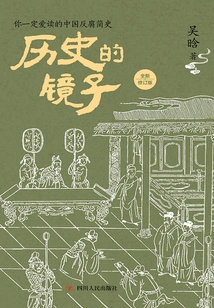
历史的镜子(全新修订版)
Wu Han
In ancient times, students studied hard for ten years, but after they got the diploma, they married a concubine for themselves; officials said they were honest and honest, but in private they spent wantonly and indulged in prostitutes; famous Confucians claimed to be indifferent to fame and fortune, but when they entered the officialdom The latter two sides flatter each other, worshiping the superior and suppressing the inferior... History is a mirror. It can not only reflect the rise and fall of dynasties and the change of dynasties, but also reflect the thoughts of people at that time, social customs, and the complex human nature hidden under the bright appearance. "Mirror of History" tells us in detail the causes, manifestations, effects of corruption and thoughts on anti-corruption in history from the perspectives of traditional Chinese ethics and social atmosphere.
In ancient times, students studied hard for ten years, but after they got the diploma, they married a concubine for themselves; officials said they were honest and honest, but in private they spent wantonly and indulged in prostitutes; famous Confucians claimed to be indifferent to fame and fortune, but when they entered the officialdom The latter two sides flatter each other, worshiping the superior and suppressing the inferior... History is a mirror. It can not only reflect the rise and fall of dynasties and the change of dynasties, but also reflect the thoughts of people at that time, social customs, and the complex human nature hidden under the bright appearance. "Mirror of History" tells us in detail the causes, manifestations, effects of corruption and thoughts on anti-corruption in history from the perspectives of traditional Chinese ethics and social atmosphere.
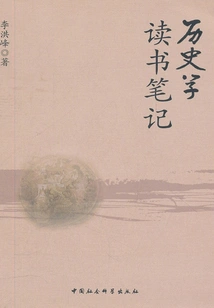
History Reading Notes
History历史学读书笔记
Li Hongfeng
This book is a collection of excerpts from the viewpoints and relatively beautiful sentences of 50 historical figures from ancient times to modern times. The content excerpted by the author mainly comes from the Chinese Translation of World Academic Masterpieces Series of the Commercial Press.
This book is a collection of excerpts from the viewpoints and relatively beautiful sentences of 50 historical figures from ancient times to modern times. The content excerpted by the author mainly comes from the Chinese Translation of World Academic Masterpieces Series of the Commercial Press.
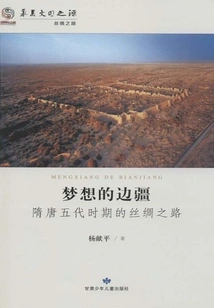
The Frontier of Dreams
History梦想的边疆
Yang Xianping
"China's Ancient Silk Road" consists of six volumes. The complete set of manuscripts is arranged in chronological order, describing the origin of the Silk Road in the Pre-Qin Dynasty, the official opening of the Silk Road in the Han Dynasty, the development of the Silk Road in the Three Kingdoms, Jin Dynasty, Southern and Northern Dynasties, the prosperity of the Silk Road in the Sui and Tang Dynasties, the unique landscapes on the "Silk Road" formed by the diverse backgrounds of the Five Dynasties, Song, Liao, Jin and Xixia dynasties, the expansion of the Silk Road in the Yuan Dynasty, the Ming Dynasty water The management of the Silk Road in the Qing Dynasty, the decline of the Silk Road in the Qing Dynasty, and the revival and prospects of the Silk Road in the modern humanistic sense are reproduced in a panoramic manner. Taking the humanistic landscape in historical changes as the historical background and narrative subject, the study and narration of the ancient Silk Road are carried out holistically and comprehensively. It is a cultural reading that integrates academic, intellectual and interesting aspects. This book is a sub-volume of "The Frontier of Dreams (Silk Road during the Sui, Tang and Five Dynasties)" in the series. It is edited by Yang Xianping and describes the prosperity of the Silk Road during the Sui and Tang Dynasties.
"China's Ancient Silk Road" consists of six volumes. The complete set of manuscripts is arranged in chronological order, describing the origin of the Silk Road in the Pre-Qin Dynasty, the official opening of the Silk Road in the Han Dynasty, the development of the Silk Road in the Three Kingdoms, Jin Dynasty, Southern and Northern Dynasties, the prosperity of the Silk Road in the Sui and Tang Dynasties, the unique landscapes on the "Silk Road" formed by the diverse backgrounds of the Five Dynasties, Song, Liao, Jin and Xixia dynasties, the expansion of the Silk Road in the Yuan Dynasty, the Ming Dynasty water The management of the Silk Road in the Qing Dynasty, the decline of the Silk Road in the Qing Dynasty, and the revival and prospects of the Silk Road in the modern humanistic sense are reproduced in a panoramic manner. Taking the humanistic landscape in historical changes as the historical background and narrative subject, the study and narration of the ancient Silk Road are carried out holistically and comprehensively. It is a cultural reading that integrates academic, intellectual and interesting aspects. This book is a sub-volume of "The Frontier of Dreams (Silk Road during the Sui, Tang and Five Dynasties)" in the series. It is edited by Yang Xianping and describes the prosperity of the Silk Road during the Sui and Tang Dynasties.
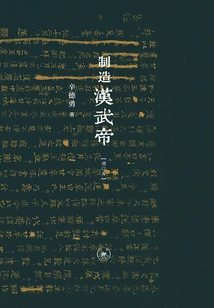
制造汉武帝(增订版)
Xin Deyong
This book questions the historical conclusion that Emperor Wu of the Han Dynasty took a major political turn in his later years. Starting from the perspective of historical origin research and new historiography, this article discusses how "Zizhi Tongjian" written by Sima Guang shaped the political image of Emperor Wu of the Han Dynasty in his later years. It points out that there are serious problems with the historical materials "Hanwu Stories" on which it is based. It believes that Emperor Wu of the Han Dynasty did not change his political line as expected by Sima Guang in his later years, and points out that "Tongjian" cannot be used as a general historical material for studying the history of the Qin and Han Dynasties. The research on "Making Emperor Wu of the Han Dynasty" is subversive. The author starts from the era when the historical materials were written and the author's intention, meticulously and in-depth, and fundamentally denies the existence of the political line change of Emperor Wu of the Han Dynasty in his later years. The author's conclusion promotes the in-depth study of ancient Chinese political history, and the author's method reminds the importance of careful research of historical materials in historical research. After the publication of this book, it has received widespread attention from the academic community, with both recognition and discussion. It is rare for an academic work today to receive such a warm response. This update adds a responsive article by the author, "A Narrative of the Practice of Witchcraft by the Crown Prince of Emperor Wu of the Han Dynasty" and a postscript to the updated edition.
This book questions the historical conclusion that Emperor Wu of the Han Dynasty took a major political turn in his later years. Starting from the perspective of historical origin research and new historiography, this article discusses how "Zizhi Tongjian" written by Sima Guang shaped the political image of Emperor Wu of the Han Dynasty in his later years. It points out that there are serious problems with the historical materials "Hanwu Stories" on which it is based. It believes that Emperor Wu of the Han Dynasty did not change his political line as expected by Sima Guang in his later years, and points out that "Tongjian" cannot be used as a general historical material for studying the history of the Qin and Han Dynasties. The research on "Making Emperor Wu of the Han Dynasty" is subversive. The author starts from the era when the historical materials were written and the author's intention, meticulously and in-depth, and fundamentally denies the existence of the political line change of Emperor Wu of the Han Dynasty in his later years. The author's conclusion promotes the in-depth study of ancient Chinese political history, and the author's method reminds the importance of careful research of historical materials in historical research. After the publication of this book, it has received widespread attention from the academic community, with both recognition and discussion. It is rare for an academic work today to receive such a warm response. This update adds a responsive article by the author, "A Narrative of the Practice of Witchcraft by the Crown Prince of Emperor Wu of the Han Dynasty" and a postscript to the updated edition.
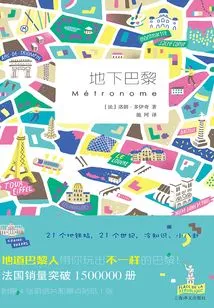
Underground Paris
History地下巴黎
(france) Laurent Deutsch
The bridge named Pont Neuf is the oldest bridge on the Seine. The Bastille has imprisoned the great writers Voltaire and Sir Sade. The first stock exchange in Paris was born on a bridge. The source of Paris is not the Ile de la Cité in the center of the city, but the city of Nanterre. Sleeping under the Eiffel Tower are the Gallic soldiers who fought against Caesar's army 2,000 years ago. All these historical gossips that you would never expect are gathered together in this atypical travel brochure. The author Laurent Deutsch takes you on the subway, wanders through the alleys, and discovers a unique Paris. 21 Subway stations, 21 centuries, travel through ancient and modern Paris!
The bridge named Pont Neuf is the oldest bridge on the Seine. The Bastille has imprisoned the great writers Voltaire and Sir Sade. The first stock exchange in Paris was born on a bridge. The source of Paris is not the Ile de la Cité in the center of the city, but the city of Nanterre. Sleeping under the Eiffel Tower are the Gallic soldiers who fought against Caesar's army 2,000 years ago. All these historical gossips that you would never expect are gathered together in this atypical travel brochure. The author Laurent Deutsch takes you on the subway, wanders through the alleys, and discovers a unique Paris. 21 Subway stations, 21 centuries, travel through ancient and modern Paris!
宽容(译文经典)
Fanglong
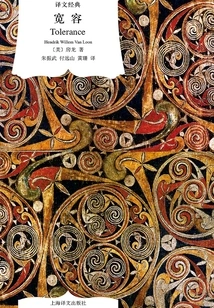
"Tolerance" is a popular history book that has been best-selling for nearly a hundred years. The author Fang Long uses his profound humanistic care and the spirit of advocating freedom of thought to analyze the arduous process that mankind has gone through in seeking the right to think, and outlines a magnificent history of human ideological liberation. With the help of Van Loon's extremely famous "eye of tolerance", let us rediscover and gain a deeper understanding of the tortuous development history of politics, religion, culture, and society over thousands of years and the long process of human beings seeking their own liberation.
"Tolerance" is a popular history book that has been best-selling for nearly a hundred years. The author Fang Long uses his profound humanistic care and the spirit of advocating freedom of thought to analyze the arduous process that mankind has gone through in seeking the right to think, and outlines a magnificent history of human ideological liberation. With the help of Van Loon's extremely famous "eye of tolerance", let us rediscover and gain a deeper understanding of the tortuous development history of politics, religion, culture, and society over thousands of years and the long process of human beings seeking their own liberation.
大家小书:论三国人物
Fang Shiming
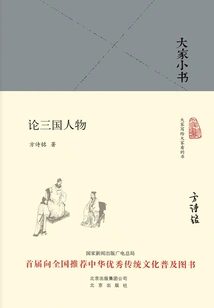
Based on the existing historical materials, the author carefully researched and wrote a number of essays or notes with characters as the center and essays as the form. They were collected into a volume and became the main body of "On Characters of the Three Kingdoms", trying to restore the true colors of many characters of the Three Kingdoms. The book focuses on more than 20 core figures, whose performance or personnel relationships serve as clues, and are discussed in short articles, totaling 70 articles. Most of the protagonists are famous figures well-known to women and children. The author combines narratives and discussions with concise and concise words, making full use of the advantages of the "loose theory" form. He not only uses rich and solid historical materials, but also does not make the words complicated and just right.
Based on the existing historical materials, the author carefully researched and wrote a number of essays or notes with characters as the center and essays as the form. They were collected into a volume and became the main body of "On Characters of the Three Kingdoms", trying to restore the true colors of many characters of the Three Kingdoms. The book focuses on more than 20 core figures, whose performance or personnel relationships serve as clues, and are discussed in short articles, totaling 70 articles. Most of the protagonists are famous figures well-known to women and children. The author combines narratives and discussions with concise and concise words, making full use of the advantages of the "loose theory" form. He not only uses rich and solid historical materials, but also does not make the words complicated and just right.
Chaoyang Quest
History朝阳探秘
Huang Shiming
This is a collection of 60 articles about the history and culture of Chaoyang published in the "Liaoshen Evening News" column of "Liaoshen Evening News" from June 19, 2013 to January 23, 2014, totaling 250,000 words. The article introduces Chaoyang's historical evolution, development overview, and fossil stories, archaeological achievements, historical allusions, folklore, beautiful scenery, customs and customs about Chaoyang from a new perspective and vivid writing style. The article uses first-hand information from the place where the incident occurred, focuses on exploring and revealing the secrets, and uses easy-to-understand language to explain Chaoyang's magical past and the mysteries that are still debated today.
This is a collection of 60 articles about the history and culture of Chaoyang published in the "Liaoshen Evening News" column of "Liaoshen Evening News" from June 19, 2013 to January 23, 2014, totaling 250,000 words. The article introduces Chaoyang's historical evolution, development overview, and fossil stories, archaeological achievements, historical allusions, folklore, beautiful scenery, customs and customs about Chaoyang from a new perspective and vivid writing style. The article uses first-hand information from the place where the incident occurred, focuses on exploring and revealing the secrets, and uses easy-to-understand language to explain Chaoyang's magical past and the mysteries that are still debated today.
故宫的古物之美
Zhu Yong
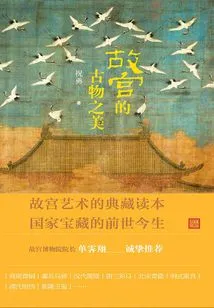
The Forbidden City is the largest and best-preserved ancient palace complex in the world, covering an area of 720,000 square meters. The area of the Forbidden City is four times that of the Louvre in France, more than ten times that of the Palace of Versailles, nine times that of the Winter Palace in St. Petersburg, Russia, and ten times that of Buckingham Palace in the United Kingdom. The Forbidden City is not only grand in scale, but more importantly, rich in history. It has served as the working place and living area of 24 emperors. It collects more than 1.8 Million fine art and cultural relics. The cultural essays written by the famous scholar Zhu Yong about the cultural relics in the Forbidden City show us the history and culture behind the cultural relics in the Forbidden City.
The Forbidden City is the largest and best-preserved ancient palace complex in the world, covering an area of 720,000 square meters. The area of the Forbidden City is four times that of the Louvre in France, more than ten times that of the Palace of Versailles, nine times that of the Winter Palace in St. Petersburg, Russia, and ten times that of Buckingham Palace in the United Kingdom. The Forbidden City is not only grand in scale, but more importantly, rich in history. It has served as the working place and living area of 24 emperors. It collects more than 1.8 Million fine art and cultural relics. The cultural essays written by the famous scholar Zhu Yong about the cultural relics in the Forbidden City show us the history and culture behind the cultural relics in the Forbidden City.
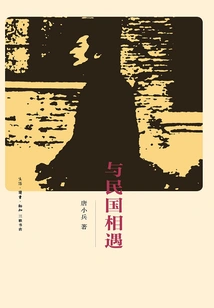
与民国相遇
Tang Xiaobing
This book is a collection of short essays derived from historical materials of the Republic of China. The content covers all aspects of social life in the Republic of China: politics, academia, and literary circles. The articles are short, concise, vivid, and highly readable. The author divulges from marginal historical materials, which is informative and interesting, cute and believable. It can supplement the readers' imagined picture of the Republic of China from the details.
This book is a collection of short essays derived from historical materials of the Republic of China. The content covers all aspects of social life in the Republic of China: politics, academia, and literary circles. The articles are short, concise, vivid, and highly readable. The author divulges from marginal historical materials, which is informative and interesting, cute and believable. It can supplement the readers' imagined picture of the Republic of China from the details.
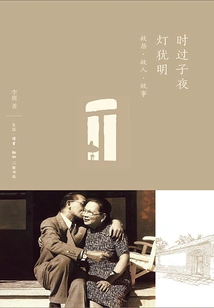
时过子夜灯犹明:故居·故人·故事
Li Lu
A former residence is not just a house where a famous person lived, but also the crystallization of architectural art, past memories of family and country, and personality charm. The author has been searching for the former residences of famous people in Beijing, Shanghai, Taipei, Jiangnan and other places for several years. Through on-the-spot investigations, historical materials, interviews with descendants and people who have experienced it, he describes the bricks, doors, windows, decorations, and the life taste and taste that are rich in era and personality behind them; looking back at the special dance of "home" Taiwan, the unknown fragility and tenderness of "celebrities"; using the old house as a medium to communicate spiritually with former owners such as Soong Ching Ling, Lao She, Mao Dun, Mei Lanfang, Tian Han, etc., The author blends architectural art, past events of home and country with the old life of the former owner, and then reflects the changes of the times.
A former residence is not just a house where a famous person lived, but also the crystallization of architectural art, past memories of family and country, and personality charm. The author has been searching for the former residences of famous people in Beijing, Shanghai, Taipei, Jiangnan and other places for several years. Through on-the-spot investigations, historical materials, interviews with descendants and people who have experienced it, he describes the bricks, doors, windows, decorations, and the life taste and taste that are rich in era and personality behind them; looking back at the special dance of "home" Taiwan, the unknown fragility and tenderness of "celebrities"; using the old house as a medium to communicate spiritually with former owners such as Soong Ching Ling, Lao She, Mao Dun, Mei Lanfang, Tian Han, etc., The author blends architectural art, past events of home and country with the old life of the former owner, and then reflects the changes of the times.
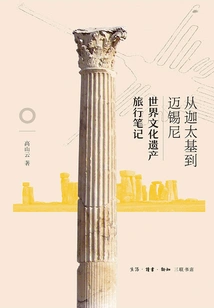
从迦太基到迈锡尼:世界文化遗产旅行笔记
Alpine Clouds
The 53 world cultural heritage sites included in the book include cultural scenic spots, archaeological sites, ancient cities and towns, palaces and castles, religious relics, and industrial heritage, from the Veseli Valley to the Island of Malta, from the ruins of Carthage to the ancient city of Pompeii, from the Tauber River to the From Rothenburg to the University City of Coimbra, from the Istanbul Mosque to Ajanta and the Airola Caves Temple, it not only shows the current status of each cultural heritage, but also tells their history, allusions, etc., And includes a tour guide at the back. Therefore, it is not only a travelogue, tracing the historical past and expressing true feelings; it is also a reference book for those who love traveling and want to gain something during their travels.
The 53 world cultural heritage sites included in the book include cultural scenic spots, archaeological sites, ancient cities and towns, palaces and castles, religious relics, and industrial heritage, from the Veseli Valley to the Island of Malta, from the ruins of Carthage to the ancient city of Pompeii, from the Tauber River to the From Rothenburg to the University City of Coimbra, from the Istanbul Mosque to Ajanta and the Airola Caves Temple, it not only shows the current status of each cultural heritage, but also tells their history, allusions, etc., And includes a tour guide at the back. Therefore, it is not only a travelogue, tracing the historical past and expressing true feelings; it is also a reference book for those who love traveling and want to gain something during their travels.
历史与人:重新思考普遍性问题
Sun Ge
It was compiled and revised based on a series of lectures by the famous scholar Sun Ge. It collects the author's new work progress and breakthroughs in the study of intellectual history in recent years. The book contains three interrelated chapters. The first chapter re-discusses the "universality issue" from an epistemological perspective. It believes that the knowledge practice method corresponding to the new universality is not to abstract the discussion, but to further open up differences and establish connections at the concrete level by deepening the discussion of concreteness and particularity. Chapter 2 deals with the debate in Japan's postwar intellectual circles surrounding the book "History of the Showa" written by Marxist historians, and touches on the issue of how historical writing deals with people. The third chapter discusses Mizoguchi Yuzo's research philosophy on the history of Chinese thought, grasps Mizoguchi's discussion of "nature", "heart", and "public and private", and points out Mizoguchi's unique ability to grasp the dynamics of Chinese history.
It was compiled and revised based on a series of lectures by the famous scholar Sun Ge. It collects the author's new work progress and breakthroughs in the study of intellectual history in recent years. The book contains three interrelated chapters. The first chapter re-discusses the "universality issue" from an epistemological perspective. It believes that the knowledge practice method corresponding to the new universality is not to abstract the discussion, but to further open up differences and establish connections at the concrete level by deepening the discussion of concreteness and particularity. Chapter 2 deals with the debate in Japan's postwar intellectual circles surrounding the book "History of the Showa" written by Marxist historians, and touches on the issue of how historical writing deals with people. The third chapter discusses Mizoguchi Yuzo's research philosophy on the history of Chinese thought, grasps Mizoguchi's discussion of "nature", "heart", and "public and private", and points out Mizoguchi's unique ability to grasp the dynamics of Chinese history.
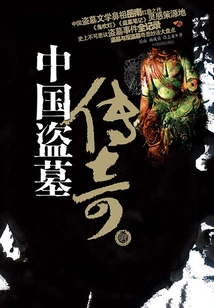
Chinese Tomb Robbing Legend
History中国盗墓传奇
Yue Nan Shang Chengyong Xu Zhilong
What magical function does the Luoyang shovel in the hands of the tomb robbers have? What are the must-have items for a tomb robber? Which tomb robbers have appeared in the history of tomb robbing in China? Are there any tombs in Beimang Mountain that have not been robbed yet? In order to prevent the invasion of tomb robbers, what strange tricks have been used by wealthy officials in the past dynasties? What kind of unique skills does the brave tomb robber have that allows him to pass through the underground maze with many traps? There are mysteries within mysteries, and there are cases within cases. Generations of officials, thieves, and private thieves have shown their magical powers. The tombs of emperors, generals, and prime ministers are in danger of being destroyed. The game between anti-tomb robbing and tomb robbing has lasted for thousands of years, but in the end, they have never been able to escape the historical vicious circle where the devil is as high as the devil. Crazy tomb robbers are everywhere, the magnificent ancient tomb civilization has been eroded, bizarre tomb robbing incidents, thrilling fights between you and me, and wonderful Chinese tomb robbing legends have begun.
What magical function does the Luoyang shovel in the hands of the tomb robbers have? What are the must-have items for a tomb robber? Which tomb robbers have appeared in the history of tomb robbing in China? Are there any tombs in Beimang Mountain that have not been robbed yet? In order to prevent the invasion of tomb robbers, what strange tricks have been used by wealthy officials in the past dynasties? What kind of unique skills does the brave tomb robber have that allows him to pass through the underground maze with many traps? There are mysteries within mysteries, and there are cases within cases. Generations of officials, thieves, and private thieves have shown their magical powers. The tombs of emperors, generals, and prime ministers are in danger of being destroyed. The game between anti-tomb robbing and tomb robbing has lasted for thousands of years, but in the end, they have never been able to escape the historical vicious circle where the devil is as high as the devil. Crazy tomb robbers are everywhere, the magnificent ancient tomb civilization has been eroded, bizarre tomb robbing incidents, thrilling fights between you and me, and wonderful Chinese tomb robbing legends have begun.
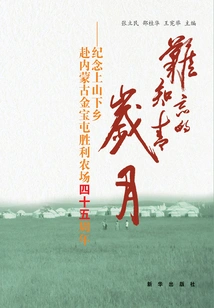
难忘的知青岁月
Zhang Limin Shao Guihua Wang Xianju
To commemorate the forty-fifth anniversary of educated youth going to the mountains and countryside to go to Shengli Farm in Jinbaotun, Inner Mongolia, this book is dedicated to the farm leaders, poor and lower-middle peasants, demobilized soldiers, former field workers and educated youth friends who have fought side by side and shared the same boat through thick and thin!
To commemorate the forty-fifth anniversary of educated youth going to the mountains and countryside to go to Shengli Farm in Jinbaotun, Inner Mongolia, this book is dedicated to the farm leaders, poor and lower-middle peasants, demobilized soldiers, former field workers and educated youth friends who have fought side by side and shared the same boat through thick and thin!
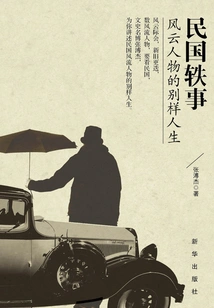
民国轶事:风云人物的别样人生
Zhang Pujie
This book is divided into four parts: 1. How much do you know about famous people; 2. A basket of anecdotes; 3. Listening to both will make you enlightened, but believing in others will make you dark; 4. Return to the bridge and return to the bridge. This book focuses on describing the different choices made by some influential figures in the Republic of China in the face of national justice and life and death, resulting in different life destinies, as well as the different evaluations of them by later generations. Restore the historical truth and show another side of historical figures.
This book is divided into four parts: 1. How much do you know about famous people; 2. A basket of anecdotes; 3. Listening to both will make you enlightened, but believing in others will make you dark; 4. Return to the bridge and return to the bridge. This book focuses on describing the different choices made by some influential figures in the Republic of China in the face of national justice and life and death, resulting in different life destinies, as well as the different evaluations of them by later generations. Restore the historical truth and show another side of historical figures.
Man's Sky
History男人的天空
Travel Around
This book creatively selects 42 historical figures for analysis, integrates philosophy and real life, connects nature, characters, political thoughts, and social organizations, unifies the way of heaven and humanity, resurrects real historical figures, and vividly expresses his views and thinking on politics, society, and characters. When interpreting his fortunate and unfortunate encounters, the descriptions are rich and profound, accurate and in place.
This book creatively selects 42 historical figures for analysis, integrates philosophy and real life, connects nature, characters, political thoughts, and social organizations, unifies the way of heaven and humanity, resurrects real historical figures, and vividly expresses his views and thinking on politics, society, and characters. When interpreting his fortunate and unfortunate encounters, the descriptions are rich and profound, accurate and in place.
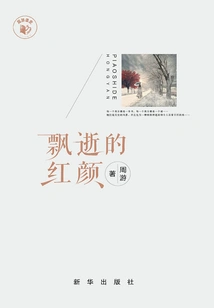
The Passing Beauty
History飘逝的红颜
Travel Around
The author analyzes and interprets more than 20 representative or influential women in various periods of our country's history. Some of them are beauties and some are ugly; some are virtuous and some are evil; some are talented and some are stupid... But they all have performed legendary lives. Some of them have shown open-mindedness, profound insights and extraordinary abilities in politics; some have shown superhuman spirituality and overflowing talents in the fields of literature and art; some have shown adaptable wisdom, strong perseverance and pure character in social life.
The author analyzes and interprets more than 20 representative or influential women in various periods of our country's history. Some of them are beauties and some are ugly; some are virtuous and some are evil; some are talented and some are stupid... But they all have performed legendary lives. Some of them have shown open-mindedness, profound insights and extraordinary abilities in politics; some have shown superhuman spirituality and overflowing talents in the fields of literature and art; some have shown adaptable wisdom, strong perseverance and pure character in social life.
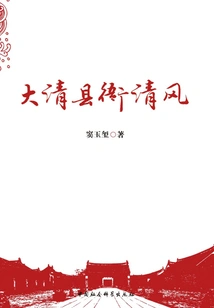
大清县衙清风
Dou Yuxi
This book is named "Qingfeng in Daqing County Government". As for the name of the book, there are two attributives in front of the word "Qingfeng", one is to determine the time, and the other is to determine the level. The original meaning of "qingfeng" is refreshing and cool wind, but it is often used to symbolize a kind of beautiful weathering, noble character, etc. As a result, the natural wind has become socialized and moralized. Qingfeng is preceded by "county government", which means that the content of this book is mainly at the level of county government. "County government" used to be synonymous with first-level political power. In my country's long feudal society, county-level government was the lowest level of the feudal political power structure. Although the official level was low, it was the foundation of the feudal empire building. The chief official in the county government --The county magistrates, although they are in the seventh rank, have considerable rights. They are commonly known as "parental officials". They are closest to the people and bring the most direct joys and sorrows to the people. The people's feelings towards the county government represent their feelings towards the country. Therefore, in a sense, the county magistrates have the role of "carrying the boat" and "causing the boat" for the entire country.
This book is named "Qingfeng in Daqing County Government". As for the name of the book, there are two attributives in front of the word "Qingfeng", one is to determine the time, and the other is to determine the level. The original meaning of "qingfeng" is refreshing and cool wind, but it is often used to symbolize a kind of beautiful weathering, noble character, etc. As a result, the natural wind has become socialized and moralized. Qingfeng is preceded by "county government", which means that the content of this book is mainly at the level of county government. "County government" used to be synonymous with first-level political power. In my country's long feudal society, county-level government was the lowest level of the feudal political power structure. Although the official level was low, it was the foundation of the feudal empire building. The chief official in the county government --The county magistrates, although they are in the seventh rank, have considerable rights. They are commonly known as "parental officials". They are closest to the people and bring the most direct joys and sorrows to the people. The people's feelings towards the county government represent their feelings towards the country. Therefore, in a sense, the county magistrates have the role of "carrying the boat" and "causing the boat" for the entire country.
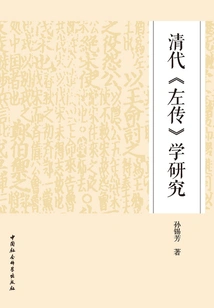
清代《左传》学研究
Sun Xifang
Starting from the perspective of combining historical clues and logical clues, this book combs the study of Zuozhuan in the Qing Dynasty using a comprehensive and case-based approach. It roughly reveals the development process of Zuozhuan study from its revival in the early Qing Dynasty to the rise of Zuozhuan textual criticism, which mainly uses exegetical textual research methods, and then to its gradual transformation into modern times driven by the Jinwen School and the Guokusui School. It reflects the obvious stage characteristics and major achievements of Zuozhuan study in the Qing Dynasty.
Starting from the perspective of combining historical clues and logical clues, this book combs the study of Zuozhuan in the Qing Dynasty using a comprehensive and case-based approach. It roughly reveals the development process of Zuozhuan study from its revival in the early Qing Dynasty to the rise of Zuozhuan textual criticism, which mainly uses exegetical textual research methods, and then to its gradual transformation into modern times driven by the Jinwen School and the Guokusui School. It reflects the obvious stage characteristics and major achievements of Zuozhuan study in the Qing Dynasty.
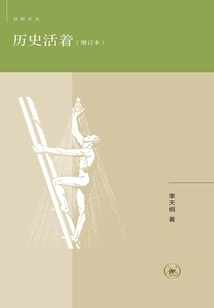
历史活着(增订本)
Li Tiangang
This book contains 51 book reviews and column articles published by Professor Li Tiangang in the media in the past two decades. This updated edition adds 28 new works based on the first edition (2011 edition by Shanghai Bookstore Press). The book has about 160,000 words, and the content mostly involves the modern history of China. The author has a profound knowledge of culture and history, the writing is meaningful and philosophical, the historical facts and anecdotes are readily available, and the articles are easy to understand and fascinating. Look at corrupt officials from He Shen, look at diplomacy from Li Hongzhang, look at democracy from Yuan Shikai... There is no heavy and cold grand narrative in the book, but a comprehensive and vivid history scene by scene.
This book contains 51 book reviews and column articles published by Professor Li Tiangang in the media in the past two decades. This updated edition adds 28 new works based on the first edition (2011 edition by Shanghai Bookstore Press). The book has about 160,000 words, and the content mostly involves the modern history of China. The author has a profound knowledge of culture and history, the writing is meaningful and philosophical, the historical facts and anecdotes are readily available, and the articles are easy to understand and fascinating. Look at corrupt officials from He Shen, look at diplomacy from Li Hongzhang, look at democracy from Yuan Shikai... There is no heavy and cold grand narrative in the book, but a comprehensive and vivid history scene by scene.
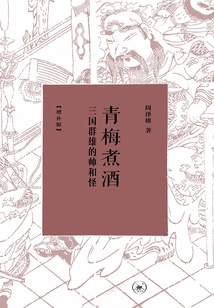
青梅煮酒:三国群雄的帅和怪
Zhou Zexiong
This is a historical essay that provides an in-depth analysis of the personality and psychology of the heroes of the Three Kingdoms. The whole book takes a completely opposite position to Luo Guanzhong. It outlines, narrates, analyzes and comments on the main figures of the Three Kingdoms with relatively detailed historical materials, and brings the heroic characters and heroic psychology of the heroic century that happened 1,700 years ago to modern people at a close distance. Whether readers of the novel "Romance of the Three Kingdoms" or viewers of the TV series of the same name, they will get a new feeling from this book; it will prompt people to reflect on history, society, life, and themselves, and gain wisdom through interesting reading.
This is a historical essay that provides an in-depth analysis of the personality and psychology of the heroes of the Three Kingdoms. The whole book takes a completely opposite position to Luo Guanzhong. It outlines, narrates, analyzes and comments on the main figures of the Three Kingdoms with relatively detailed historical materials, and brings the heroic characters and heroic psychology of the heroic century that happened 1,700 years ago to modern people at a close distance. Whether readers of the novel "Romance of the Three Kingdoms" or viewers of the TV series of the same name, they will get a new feeling from this book; it will prompt people to reflect on history, society, life, and themselves, and gain wisdom through interesting reading.
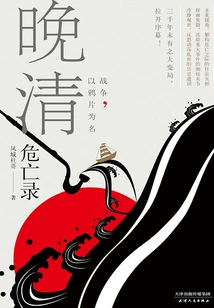
晚清危亡录:战争,以鸦片为名
Fengcheng Du Ge
This book is the first in the series "Records of the Crisis of the Late Qing Dynasty" by Fengcheng Du Ge, a new "popular history" writer. The author narrates the history before and after the Opium War in the late Qing Dynasty in a ridiculing tone, with humorous language and smooth flow. Taking 1757 (the 22nd year of Qianlong's reign) as a starting point, the British merchant ship captain Hong Renhui went to Beijing to file a petition as an entry point to reveal the underlying reasons for the outbreak of the Opium War step by step. Taking the war process line and main events as aspects and character expressions as points, the process of the Opium War is three-dimensionally narrated. After the war, it focuses on explaining the impact of the "Treaty of Nanjing" and related treaties on modern China, revealing the underlying reasons for the trend of China's modern history and inspiring readers to think.
This book is the first in the series "Records of the Crisis of the Late Qing Dynasty" by Fengcheng Du Ge, a new "popular history" writer. The author narrates the history before and after the Opium War in the late Qing Dynasty in a ridiculing tone, with humorous language and smooth flow. Taking 1757 (the 22nd year of Qianlong's reign) as a starting point, the British merchant ship captain Hong Renhui went to Beijing to file a petition as an entry point to reveal the underlying reasons for the outbreak of the Opium War step by step. Taking the war process line and main events as aspects and character expressions as points, the process of the Opium War is three-dimensionally narrated. After the war, it focuses on explaining the impact of the "Treaty of Nanjing" and related treaties on modern China, revealing the underlying reasons for the trend of China's modern history and inspiring readers to think.
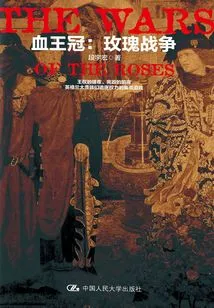
血王冠:玫瑰战争
Duan Yuhong
The works of the War of the Roses in the Chinese world are suitable for readers who grew up with a Chinese cultural background! Source of inspiration for "A Song of Ice and Fire" ("Game of Thrones"), important material library for Shakespeare's historical dramas; jointly recommended by the Elephant Guild, National Humanities and History, Phoenix Weekly, NetEase History, and Tencent History!
The works of the War of the Roses in the Chinese world are suitable for readers who grew up with a Chinese cultural background! Source of inspiration for "A Song of Ice and Fire" ("Game of Thrones"), important material library for Shakespeare's historical dramas; jointly recommended by the Elephant Guild, National Humanities and History, Phoenix Weekly, NetEase History, and Tencent History!
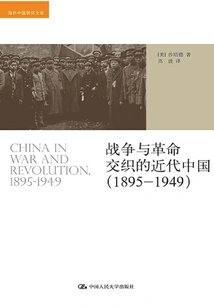
战争与革命交织的近代中国(1895-1949)
(us) Sharped
In 1895, the Qing Dynasty was defeated by Japan, which triggered an explosive response within China, and radical changes began one after another. In a more general sense, this was also the beginning of great changes and revolution in China in the next half century. Against the background of wars and revolutions inside and outside the country, various classes in China are constantly trying to change the political system, transform society and culture, with the goal of reshaping the nation and saving it from danger. "Modern China: War and Revolution Intertwined (1895-1949)" provides a panoramic narrative of this turning point and great change. Using time as the longitude, the theme as the latitude, narrative history as the backbone, and combining the perspectives and methods of political science, sociology, and cultural studies, it elaborates on all aspects of this half-century transformation, showing us the complex and painful birth process of modern China. "Modern China: Intertwined with War and Revolution (1895-1949)" fully absorbs the results of more than half a century of research on modern Chinese history around the world, pays attention to the balance between general history and special research, and can be regarded as a comprehensive achievement in writing modern Chinese history in the new century.
In 1895, the Qing Dynasty was defeated by Japan, which triggered an explosive response within China, and radical changes began one after another. In a more general sense, this was also the beginning of great changes and revolution in China in the next half century. Against the background of wars and revolutions inside and outside the country, various classes in China are constantly trying to change the political system, transform society and culture, with the goal of reshaping the nation and saving it from danger. "Modern China: War and Revolution Intertwined (1895-1949)" provides a panoramic narrative of this turning point and great change. Using time as the longitude, the theme as the latitude, narrative history as the backbone, and combining the perspectives and methods of political science, sociology, and cultural studies, it elaborates on all aspects of this half-century transformation, showing us the complex and painful birth process of modern China. "Modern China: Intertwined with War and Revolution (1895-1949)" fully absorbs the results of more than half a century of research on modern Chinese history around the world, pays attention to the balance between general history and special research, and can be regarded as a comprehensive achievement in writing modern Chinese history in the new century.
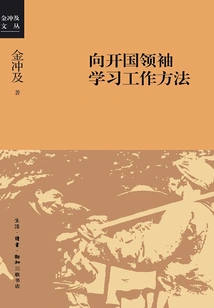
向开国领袖学习工作方法
Jin Chongji
During the period of China's revolution and construction, leaders such as Mao Zedong, Zhou Enlai, Zhu De, Liu Shaoqi, Chen Yun, and Deng Xiaoping accumulated valuable working methods in practical work and played important roles in different periods. The value of these working methods has not lost its effect due to the passage of time and changes in conditions. Today we should fully explore it, inherit it, use it and develop it under the new historical conditions to speed up the process of promoting the great rejuvenation of the Chinese nation. Learning is also a better way to inherit the fine traditions of the older generation of proletarian revolutionaries, so that they can play a greater role in our practical work. Under the current situation, this is a high-quality reading book for national conditions education for our country's cadres.
During the period of China's revolution and construction, leaders such as Mao Zedong, Zhou Enlai, Zhu De, Liu Shaoqi, Chen Yun, and Deng Xiaoping accumulated valuable working methods in practical work and played important roles in different periods. The value of these working methods has not lost its effect due to the passage of time and changes in conditions. Today we should fully explore it, inherit it, use it and develop it under the new historical conditions to speed up the process of promoting the great rejuvenation of the Chinese nation. Learning is also a better way to inherit the fine traditions of the older generation of proletarian revolutionaries, so that they can play a greater role in our practical work. Under the current situation, this is a high-quality reading book for national conditions education for our country's cadres.
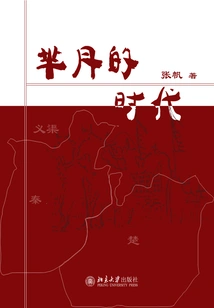
Miyue's Era
History芈月的时代
Zhang Fan
The TV series "The Legend of Mi Yue" tells the extremely tortuous and legendary life story of Mi Yue, the first female politician in Chinese history. The name "Mi Yue" is only based on the remaining "Mi Yue" on the terracotta warriors and horses and the "Mi Yue" of Princess Qin Huiwen on the tube tiles of Afang Palace. Mi Bazi, the "Empress Dowager Xuan of the Great Qin Dynasty" who came from Tao Wen, was a well-known real historical figure during the Warring States Period. She dominated the Qin State, known as the "Land of Tigers and Wolves", for decades, and single-handedly supported the prosperity and development of the Qin State. Xiang Huihuang. Later, King Yingzheng of Qin unified the six countries. It cannot be said that this great grandmother did not contribute. Although most of the love and intrigue between the children on the screen are fictional, the whole play has a profound understanding of the historical period in which Mi Bazi lived and the political and military conditions of that period. The restoration is still very careful. Heroes emerge in troubled times, Mi Bazi is in the Warring States Period, when various vassal states, forces, and classes are undergoing tremendous changes. Let's take a look at this great era that gave birth to the female politician Mi Bazi!
The TV series "The Legend of Mi Yue" tells the extremely tortuous and legendary life story of Mi Yue, the first female politician in Chinese history. The name "Mi Yue" is only based on the remaining "Mi Yue" on the terracotta warriors and horses and the "Mi Yue" of Princess Qin Huiwen on the tube tiles of Afang Palace. Mi Bazi, the "Empress Dowager Xuan of the Great Qin Dynasty" who came from Tao Wen, was a well-known real historical figure during the Warring States Period. She dominated the Qin State, known as the "Land of Tigers and Wolves", for decades, and single-handedly supported the prosperity and development of the Qin State. Xiang Huihuang. Later, King Yingzheng of Qin unified the six countries. It cannot be said that this great grandmother did not contribute. Although most of the love and intrigue between the children on the screen are fictional, the whole play has a profound understanding of the historical period in which Mi Bazi lived and the political and military conditions of that period. The restoration is still very careful. Heroes emerge in troubled times, Mi Bazi is in the Warring States Period, when various vassal states, forces, and classes are undergoing tremendous changes. Let's take a look at this great era that gave birth to the female politician Mi Bazi!
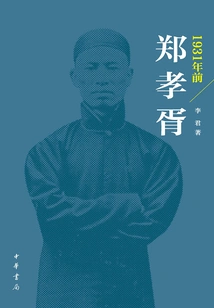
Zheng Xiaoxu Before 1931
History1931年前郑孝胥
Li Jun
The characteristics of this book are: first, it basically grasps the character's life story and behavioral logic before 1931, which reflects Zheng's "reason for existence" and "reason for change" to a certain extent; second, it narrates events in chronological order, which can not only form an independent chapter, but also refer to the previous and later chapters. The writing style is concise, smooth and easy to read. It is particularly worth mentioning that in \
The characteristics of this book are: first, it basically grasps the character's life story and behavioral logic before 1931, which reflects Zheng's "reason for existence" and "reason for change" to a certain extent; second, it narrates events in chronological order, which can not only form an independent chapter, but also refer to the previous and later chapters. The writing style is concise, smooth and easy to read. It is particularly worth mentioning that in \
守望传统的价值:陈来二十年访谈录
Chen Lai
This book is a collection of ideological essays by Mr. Chen Lai, dean of the Institute of Chinese Studies at Tsinghua University. From 1994 to 2018, classic fragments were selected from more than 20 years of explanatory texts on traditional culture and presented to readers. Mr. Chen Lai not only outlined the cultural characteristics of more than 20 years, but also made a creative elucidation of traditional culture, showing the power of reflection and criticism between the lines. From these thoughtful articles, we can get a glimpse of the academic inheritance of centuries-old traditional culture, the development of the traditional culture revival movement, the direction and pattern of traditional culture research, etc. Through interviews and other forms, this book vividly demonstrates Mr. Chen's unremitting exploration of traditional culture over the past twenty years, the ideological context of the revitalization of traditional culture, and the trend of traditional culture research in the past forty years of reform and opening up.
This book is a collection of ideological essays by Mr. Chen Lai, dean of the Institute of Chinese Studies at Tsinghua University. From 1994 to 2018, classic fragments were selected from more than 20 years of explanatory texts on traditional culture and presented to readers. Mr. Chen Lai not only outlined the cultural characteristics of more than 20 years, but also made a creative elucidation of traditional culture, showing the power of reflection and criticism between the lines. From these thoughtful articles, we can get a glimpse of the academic inheritance of centuries-old traditional culture, the development of the traditional culture revival movement, the direction and pattern of traditional culture research, etc. Through interviews and other forms, this book vividly demonstrates Mr. Chen's unremitting exploration of traditional culture over the past twenty years, the ideological context of the revitalization of traditional culture, and the trend of traditional culture research in the past forty years of reform and opening up.
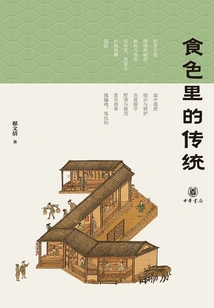
Tradition in Food and Color
History食色里的传统
Xi Wenqian
Food and drink, men and women, human beings have great desires, which can be summed up in one word: "food and sex". This book starts from the daily life of the ancients and details topics such as diet, clothing, travel, vegetation, seasons, and various operas. The vast world can be seen in a drop of water, including the relationship between heaven and man, imagination of time and space, religious beliefs, ethics, thinking habits, governance concepts, health concepts, seasonal folk customs, aesthetic fashions, entertainment and leisure, etc. The writing style is fresh and natural, and the ending is both "believable" and "cute".
Food and drink, men and women, human beings have great desires, which can be summed up in one word: "food and sex". This book starts from the daily life of the ancients and details topics such as diet, clothing, travel, vegetation, seasons, and various operas. The vast world can be seen in a drop of water, including the relationship between heaven and man, imagination of time and space, religious beliefs, ethics, thinking habits, governance concepts, health concepts, seasonal folk customs, aesthetic fashions, entertainment and leisure, etc. The writing style is fresh and natural, and the ending is both "believable" and "cute".