Library
Browse and search books
3,417 novels found
N
N
N
Tongjian Chronicles (6)
History通鉴纪事本末(六)
(song Dynasty) Written By Yuan Shu And Edited By Yang Jilin
The forty-two volumes of "Tongjian Chronicles" were written by Yuan Shu in the Southern Song Dynasty. This book selects major historical events from "Zi Zhi Tong Jian", records the beginning and end of each historical event in detail, and creates its own title. It records 239 important historical events in the history of more than 1,300 years from the Warring States Period to the Five Dynasties. It is also appended with 66 events, totaling 305 historical events. It is the first chronicle-style history book in my country, creating a precedent for the "event-oriented" history book.
The forty-two volumes of "Tongjian Chronicles" were written by Yuan Shu in the Southern Song Dynasty. This book selects major historical events from "Zi Zhi Tong Jian", records the beginning and end of each historical event in detail, and creates its own title. It records 239 important historical events in the history of more than 1,300 years from the Warring States Period to the Five Dynasties. It is also appended with 66 events, totaling 305 historical events. It is the first chronicle-style history book in my country, creating a precedent for the "event-oriented" history book.
Rewriting the History of the Late Ming Dynasty 3: Struggle between the Imperial Court and the Party
History重写晚明史3:朝廷与党争
Fan Shuzhi
Professor Fan Shuzhi, a famous scholar of Ming history, uses five volumes of more than two million words of pictures and texts, using a broad vision of global history and vivid details to vividly depict the ups and downs of the late Ming Dynasty. This set of books, with two-color layout of pictures and text, is the first time that the complete version of "Rewriting the History of the Late Ming Dynasty" has been introduced to readers. Mr. Fan Shuzhi starts from the change of cabinet in the mid-Jiajing period, and ends with the regretful remnants of Wumei Village in the early Qing Dynasty who "endured life and death for more than twenty years." Using detailed historical materials and the profound insights of historians, he narrates this heart-stirring history of the late Ming Dynasty to readers.
Professor Fan Shuzhi, a famous scholar of Ming history, uses five volumes of more than two million words of pictures and texts, using a broad vision of global history and vivid details to vividly depict the ups and downs of the late Ming Dynasty. This set of books, with two-color layout of pictures and text, is the first time that the complete version of "Rewriting the History of the Late Ming Dynasty" has been introduced to readers. Mr. Fan Shuzhi starts from the change of cabinet in the mid-Jiajing period, and ends with the regretful remnants of Wumei Village in the early Qing Dynasty who "endured life and death for more than twenty years." Using detailed historical materials and the profound insights of historians, he narrates this heart-stirring history of the late Ming Dynasty to readers.
N
重写晚明史1:晚明大变局
Fan Shuzhi
Professor Fan Shuzhi, a famous scholar of Ming history, uses five volumes of more than two million words of pictures and texts, using a broad vision of global history and vivid details to vividly depict the ups and downs of the late Ming Dynasty. This set of books, with two-color layout of pictures and text, is the first time that the complete version of "Rewriting the History of the Late Ming Dynasty" has been introduced to readers. Mr. Fan Shuzhi starts from the change of cabinet in the mid-Jiajing period, and ends with the regretful remnants of Wumei Village in the early Qing Dynasty who "endured life and death for more than twenty years." Using detailed historical materials and the profound insights of historians, he narrates this heart-stirring history of the late Ming Dynasty to readers.
Professor Fan Shuzhi, a famous scholar of Ming history, uses five volumes of more than two million words of pictures and texts, using a broad vision of global history and vivid details to vividly depict the ups and downs of the late Ming Dynasty. This set of books, with two-color layout of pictures and text, is the first time that the complete version of "Rewriting the History of the Late Ming Dynasty" has been introduced to readers. Mr. Fan Shuzhi starts from the change of cabinet in the mid-Jiajing period, and ends with the regretful remnants of Wumei Village in the early Qing Dynasty who "endured life and death for more than twenty years." Using detailed historical materials and the profound insights of historians, he narrates this heart-stirring history of the late Ming Dynasty to readers.
重写晚明史5:王朝的末路
Fan Shuzhi
Professor Fan Shuzhi, a famous scholar of Ming history, uses five volumes of more than two million words of pictures and texts, using a broad vision of global history and vivid details to vividly depict the ups and downs of the late Ming Dynasty. This set of books, with two-color layout of pictures and text, is the first time that the complete version of "Rewriting the History of the Late Ming Dynasty" has been introduced to readers. Mr. Fan Shuzhi starts from the change of cabinet in the mid-Jiajing period, and ends with the regretful remnants of Wumei Village in the early Qing Dynasty who "endured life and death for more than twenty years." Using detailed historical materials and the profound insights of historians, he narrates this heart-stirring history of the late Ming Dynasty to readers.
Professor Fan Shuzhi, a famous scholar of Ming history, uses five volumes of more than two million words of pictures and texts, using a broad vision of global history and vivid details to vividly depict the ups and downs of the late Ming Dynasty. This set of books, with two-color layout of pictures and text, is the first time that the complete version of "Rewriting the History of the Late Ming Dynasty" has been introduced to readers. Mr. Fan Shuzhi starts from the change of cabinet in the mid-Jiajing period, and ends with the regretful remnants of Wumei Village in the early Qing Dynasty who "endured life and death for more than twenty years." Using detailed historical materials and the profound insights of historians, he narrates this heart-stirring history of the late Ming Dynasty to readers.
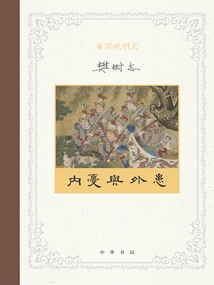
重写晚明史4:内忧与外患
Fan Shuzhi
Professor Fan Shuzhi, a famous scholar of Ming history, uses five volumes of more than two million words of pictures and texts, using a broad vision of global history and vivid details to vividly depict the ups and downs of the late Ming Dynasty. This set of books, with two-color layout of pictures and text, is the first time that the complete version of "Rewriting the History of the Late Ming Dynasty" has been introduced to readers. Mr. Fan Shuzhi starts from the change of cabinet in the mid-Jiajing period, and ends with the regretful remnants of Wumei Village in the early Qing Dynasty who "endured life and death for more than twenty years." Using detailed historical materials and the profound insights of historians, he narrates this heart-stirring history of the late Ming Dynasty to readers.
Professor Fan Shuzhi, a famous scholar of Ming history, uses five volumes of more than two million words of pictures and texts, using a broad vision of global history and vivid details to vividly depict the ups and downs of the late Ming Dynasty. This set of books, with two-color layout of pictures and text, is the first time that the complete version of "Rewriting the History of the Late Ming Dynasty" has been introduced to readers. Mr. Fan Shuzhi starts from the change of cabinet in the mid-Jiajing period, and ends with the regretful remnants of Wumei Village in the early Qing Dynasty who "endured life and death for more than twenty years." Using detailed historical materials and the profound insights of historians, he narrates this heart-stirring history of the late Ming Dynasty to readers.
重写晚明史(套装全五册)
Fan Shuzhi
Professor Fan Shuzhi, a famous scholar of Ming history, uses five volumes of more than two million words of pictures and texts, using a broad vision of global history and vivid details to vividly depict the ups and downs of the late Ming Dynasty. This set of books, with two-color layout of pictures and text, is the first time that the complete version of "Rewriting the History of the Late Ming Dynasty" has been introduced to readers. Mr. Fan Shuzhi starts from the change of cabinet in the mid-Jiajing period, and ends with the regretful remnants of Wumei Village in the early Qing Dynasty who "endured life and death for more than twenty years." Using detailed historical materials and the profound insights of historians, he narrates this heart-stirring history of the late Ming Dynasty to readers.
Professor Fan Shuzhi, a famous scholar of Ming history, uses five volumes of more than two million words of pictures and texts, using a broad vision of global history and vivid details to vividly depict the ups and downs of the late Ming Dynasty. This set of books, with two-color layout of pictures and text, is the first time that the complete version of "Rewriting the History of the Late Ming Dynasty" has been introduced to readers. Mr. Fan Shuzhi starts from the change of cabinet in the mid-Jiajing period, and ends with the regretful remnants of Wumei Village in the early Qing Dynasty who "endured life and death for more than twenty years." Using detailed historical materials and the profound insights of historians, he narrates this heart-stirring history of the late Ming Dynasty to readers.
Tongjian Chronicles (1)
History通鉴纪事本末(一)
(song Dynasty) Written By Yuan Shu And Edited By Yang Jilin
The forty-two volumes of "Tongjian Chronicles" were written by Yuan Shu in the Southern Song Dynasty. This book selects major historical events from "Zi Zhi Tong Jian", records the beginning and end of each historical event in detail, and creates its own title. It records 239 important historical events in the history of more than 1,300 years from the Warring States Period to the Five Dynasties. It is also appended with 66 events, totaling 305 historical events. It is the first chronicle-style history book in my country, creating a precedent for the "event-oriented" history book.
The forty-two volumes of "Tongjian Chronicles" were written by Yuan Shu in the Southern Song Dynasty. This book selects major historical events from "Zi Zhi Tong Jian", records the beginning and end of each historical event in detail, and creates its own title. It records 239 important historical events in the history of more than 1,300 years from the Warring States Period to the Five Dynasties. It is also appended with 66 events, totaling 305 historical events. It is the first chronicle-style history book in my country, creating a precedent for the "event-oriented" history book.
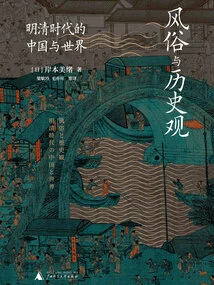
风俗与历史观:明清时代的中国与世界
(japan) Mio Kishimoto
The articles included in this book are divided into five parts. The first part is related to the "Era Division Theory"; the second part selects daily "customs"; the third part focuses on the dramatic changes in the late Ming and early Qing dynasties, discussing issues of national consciousness and order; the fourth part is a legal history essay related to ownership and trial; the fifth part is a methodological article centered on the study of Chinese history in Japan. These articles may seem scattered, but from the perspective of the author's academic life, they are like branches and leaves growing on a tree trunk, with the same root and concern flowing through them: to understand the social phenomena of the Ming and Qing dynasties based on the thinking of people at that time, and to place the changes in these social phenomena from a broad perspective and grasp them from the perspective of comparative history.
The articles included in this book are divided into five parts. The first part is related to the "Era Division Theory"; the second part selects daily "customs"; the third part focuses on the dramatic changes in the late Ming and early Qing dynasties, discussing issues of national consciousness and order; the fourth part is a legal history essay related to ownership and trial; the fifth part is a methodological article centered on the study of Chinese history in Japan. These articles may seem scattered, but from the perspective of the author's academic life, they are like branches and leaves growing on a tree trunk, with the same root and concern flowing through them: to understand the social phenomena of the Ming and Qing dynasties based on the thinking of people at that time, and to place the changes in these social phenomena from a broad perspective and grasp them from the perspective of comparative history.
通鉴纪事本末(八)
(song Dynasty) Written By Yuan Shu And Edited By Yang Jilin
The forty-two volumes of "Tongjian Chronicles" were written by Yuan Shu in the Southern Song Dynasty. This book selects major historical events from "Zi Zhi Tong Jian", records the beginning and end of each historical event in detail, and creates its own title. It records 239 important historical events in the history of more than 1,300 years from the Warring States Period to the Five Dynasties. It is also appended with 66 events, totaling 305 historical events. It is the first chronicle-style history book in my country, creating a precedent for the "event-oriented" history book.
The forty-two volumes of "Tongjian Chronicles" were written by Yuan Shu in the Southern Song Dynasty. This book selects major historical events from "Zi Zhi Tong Jian", records the beginning and end of each historical event in detail, and creates its own title. It records 239 important historical events in the history of more than 1,300 years from the Warring States Period to the Five Dynasties. It is also appended with 66 events, totaling 305 historical events. It is the first chronicle-style history book in my country, creating a precedent for the "event-oriented" history book.
N
N
Tongjian Chronicles (part 7)
History通鉴纪事本末(七)
(song Dynasty) Written By Yuan Shu And Edited By Yang Jilin
The forty-two volumes of "Tongjian Chronicles" were written by Yuan Shu in the Southern Song Dynasty. This book selects major historical events from "Zi Zhi Tong Jian", records the beginning and end of each historical event in detail, and creates its own title. It records 239 important historical events in the history of more than 1,300 years from the Warring States Period to the Five Dynasties. It is also appended with 66 events, totaling 305 historical events. It is the first chronicle-style history book in my country, creating a precedent for the "event-oriented" history book.
The forty-two volumes of "Tongjian Chronicles" were written by Yuan Shu in the Southern Song Dynasty. This book selects major historical events from "Zi Zhi Tong Jian", records the beginning and end of each historical event in detail, and creates its own title. It records 239 important historical events in the history of more than 1,300 years from the Warring States Period to the Five Dynasties. It is also appended with 66 events, totaling 305 historical events. It is the first chronicle-style history book in my country, creating a precedent for the "event-oriented" history book.
重写晚明史2:新政与盛世
Fan Shuzhi
Professor Fan Shuzhi, a famous scholar of Ming history, uses five volumes of more than two million words of pictures and texts, using a broad vision of global history and vivid details to vividly depict the ups and downs of the late Ming Dynasty. This set of books, with two-color layout of pictures and text, is the first time that the complete version of "Rewriting the History of the Late Ming Dynasty" has been introduced to readers. Mr. Fan Shuzhi starts from the change of cabinet in the mid-Jiajing period, and ends with the regretful remnants of Wumei Village in the early Qing Dynasty who "endured life and death for more than twenty years." Using detailed historical materials and the profound insights of historians, he narrates this heart-stirring history of the late Ming Dynasty to readers.
Professor Fan Shuzhi, a famous scholar of Ming history, uses five volumes of more than two million words of pictures and texts, using a broad vision of global history and vivid details to vividly depict the ups and downs of the late Ming Dynasty. This set of books, with two-color layout of pictures and text, is the first time that the complete version of "Rewriting the History of the Late Ming Dynasty" has been introduced to readers. Mr. Fan Shuzhi starts from the change of cabinet in the mid-Jiajing period, and ends with the regretful remnants of Wumei Village in the early Qing Dynasty who "endured life and death for more than twenty years." Using detailed historical materials and the profound insights of historians, he narrates this heart-stirring history of the late Ming Dynasty to readers.
Three Kingdoms, Two Jins, Southern and Northern Dynasties: Four Hundred Years of Turmoil and Strife
History三国两晋南北朝:动荡纷争四百年
Gong Shuduo Editor-in-chief Liu Delin
The oriole in the leaves, the silent thatched cottage, the former lord and the old minister are missing. Wang Xie's house Yan, Qin Huai's restaurant, the waves swept away all the heroes. The old man has passed away, and the new man has returned. The barbarian cavalry galloped away, the foreign races raced, and the earth was divided, each one claiming the upper hand. Peace suddenly appears, chaos breaks out again, and pedestrians are left in despair. However, division does not mean only turmoil and darkness. His broad sleeves are graceful, he is broad-minded and proud, and his demeanor as a celebrity is envied by future generations. His Jian'an style, Yuefu folk songs, and articles created a new trend. The south is gradually wilting, the north wind is strong, and the turbulent tide of the times will eventually find its exit in history.
The oriole in the leaves, the silent thatched cottage, the former lord and the old minister are missing. Wang Xie's house Yan, Qin Huai's restaurant, the waves swept away all the heroes. The old man has passed away, and the new man has returned. The barbarian cavalry galloped away, the foreign races raced, and the earth was divided, each one claiming the upper hand. Peace suddenly appears, chaos breaks out again, and pedestrians are left in despair. However, division does not mean only turmoil and darkness. His broad sleeves are graceful, he is broad-minded and proud, and his demeanor as a celebrity is envied by future generations. His Jian'an style, Yuefu folk songs, and articles created a new trend. The south is gradually wilting, the north wind is strong, and the turbulent tide of the times will eventually find its exit in history.
传说时代夏、商、西周:追寻祖先的足迹
Gong Shuduo Editor-in-chief Liu Delin
The ashes in the cave were scattered all over the sky, and the shadows cast by the firelight on the four walls were faintly visible. Interpreting the legend of Fuxi and Shennong seems to be able to imagine the hardships of the ancestors' survival. Xia Jie was unruly, so he made a mockery of the people and replaced him. "The mysterious bird of destiny descends and gives birth to Shang." Pan Geng moved to Yin, and the capital city that wandered around now has a fixed place. In the Yin and Shang dynasties, I brushed off the dust on the oracle bones, and the simple words with simple strokes have been with China for thousands of years. King Wen ruled Qi, and everything was harmonious. There are two out of three parts of the world, and it only takes a few hundred years. The Zhou Dynasty was restored, and saints appeared on behalf of the people. King Wen was restrained and performed the "Book of Changes", King Wu defeated Zhou, and "The Oath of Shepherd" has been passed down for a long time.
The ashes in the cave were scattered all over the sky, and the shadows cast by the firelight on the four walls were faintly visible. Interpreting the legend of Fuxi and Shennong seems to be able to imagine the hardships of the ancestors' survival. Xia Jie was unruly, so he made a mockery of the people and replaced him. "The mysterious bird of destiny descends and gives birth to Shang." Pan Geng moved to Yin, and the capital city that wandered around now has a fixed place. In the Yin and Shang dynasties, I brushed off the dust on the oracle bones, and the simple words with simple strokes have been with China for thousands of years. King Wen ruled Qi, and everything was harmonious. There are two out of three parts of the world, and it only takes a few hundred years. The Zhou Dynasty was restored, and saints appeared on behalf of the people. King Wen was restrained and performed the "Book of Changes", King Wu defeated Zhou, and "The Oath of Shepherd" has been passed down for a long time.
The Dusk of the Southern Song Dynasty: the Era of Song Guangzong and Song Ningzong (updated Edition)
History南宋行暮:宋光宗宋宁宗时代(增订本)
Yu Yunguo
This book selects the two emperors Guangzong and Ningzong of the Song Dynasty, who were in the period of rule and decline in the Southern Song Dynasty, as the research subjects. It profoundly reveals the political and social problems in the middle period of the Southern Song Dynasty from the farce of inner Zen, the Qingyuan party ban, foreign wars, and the dictatorship of power ministers. It also analyzes the process and reasons of the involuntary decline of the Southern Song Dynasty in the Guang and Ning dynasties. This book believes that the reversal of the historical trend of the Southern Song Dynasty took shape in the Guang and Ning eras. The collapse of the imperial power of the Southern Song Dynasty and the dictatorship of power ministers began in this period. The paper money credit trend that broke out in the early years of Jiading marked that the social economy of the Southern Song Dynasty fell into a state of comprehensive imbalance. Dilemma, the defeat of the Kaixi Northern Expedition and the defeat of the Jiading Campaign foreshadowed the defeat of the Southern Song Dynasty in the upcoming Song-Mongolian War, and the precursor of the official academicization of Neo-Confucianism in the Jiading period reflected the urgency of the ruling class to seek help from new ruling ideas in the face of social crises.
This book selects the two emperors Guangzong and Ningzong of the Song Dynasty, who were in the period of rule and decline in the Southern Song Dynasty, as the research subjects. It profoundly reveals the political and social problems in the middle period of the Southern Song Dynasty from the farce of inner Zen, the Qingyuan party ban, foreign wars, and the dictatorship of power ministers. It also analyzes the process and reasons of the involuntary decline of the Southern Song Dynasty in the Guang and Ning dynasties. This book believes that the reversal of the historical trend of the Southern Song Dynasty took shape in the Guang and Ning eras. The collapse of the imperial power of the Southern Song Dynasty and the dictatorship of power ministers began in this period. The paper money credit trend that broke out in the early years of Jiading marked that the social economy of the Southern Song Dynasty fell into a state of comprehensive imbalance. Dilemma, the defeat of the Kaixi Northern Expedition and the defeat of the Jiading Campaign foreshadowed the defeat of the Southern Song Dynasty in the upcoming Song-Mongolian War, and the precursor of the official academicization of Neo-Confucianism in the Jiading period reflected the urgency of the ruling class to seek help from new ruling ideas in the face of social crises.
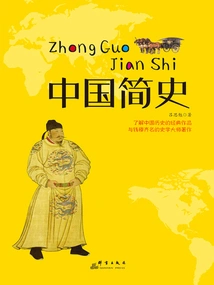
A Brief History of China
History中国简史
Lu Simian
"A Brief History of China" is divided into six chapters: introduction, ancient history, medieval history, modern history, modern history, and conclusion. It uses concise and smooth words to describe China's historical trends, institutional evolution, and cultural development from ancient times to the 1930s. In terms of form, it has changed from long sermons, and the articles are short and concise, easy to read and understand, and not boring at all; in terms of content, it is not only clear and organized, but also contains many novel and original insights. It can be said to be Lu Simian's popular general history of China.
"A Brief History of China" is divided into six chapters: introduction, ancient history, medieval history, modern history, modern history, and conclusion. It uses concise and smooth words to describe China's historical trends, institutional evolution, and cultural development from ancient times to the 1930s. In terms of form, it has changed from long sermons, and the articles are short and concise, easy to read and understand, and not boring at all; in terms of content, it is not only clear and organized, but also contains many novel and original insights. It can be said to be Lu Simian's popular general history of China.
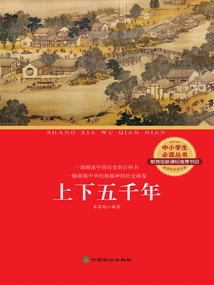
Five Thousand Years Ahead and Down (a Must-read Series for Primary and Secondary School Students)
History上下五千年(中小学生必读丛书)
Compiled By Lu Simian
"Up and Down Five Thousand Years" covers professional knowledge including history, geography, etc. The author describes China's historical development, institutional reform, and cultural inheritance and progress from ancient times to the 1930s through easy-to-understand words. It involves politics, institutions, economy, society, culture, ethnicity, religion and many other fields. It has novel ideas, profound insights and detailed content. It can be called an encyclopedia of Chinese history.
"Up and Down Five Thousand Years" covers professional knowledge including history, geography, etc. The author describes China's historical development, institutional reform, and cultural inheritance and progress from ancient times to the 1930s through easy-to-understand words. It involves politics, institutions, economy, society, culture, ethnicity, religion and many other fields. It has novel ideas, profound insights and detailed content. It can be called an encyclopedia of Chinese history.
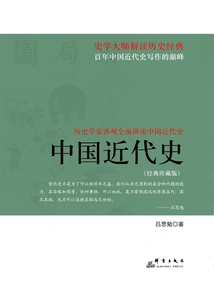
Modern History of China
History中国近代史
Lu Simian
Lu Simian is a modern Chinese historian who has made contributions to the construction of the general history of China and also pioneered the writing of modern history. This book starts from the social characteristics of the early Qing Dynasty and continues to the end of the Anti-Japanese War. It covers all the events, characters, institutions and regulations in modern history in detail. It is a classic for readers to understand the modern history of China. I often recommend Mr. Lu Simian Chengzhi, Mr. Chen Yuan Yuan, Mr. Chen Yinke and Mr. Qian Mubin as the four predecessors of history who have broad theoretical fields, rich narratives, and can write deeply.
Lu Simian is a modern Chinese historian who has made contributions to the construction of the general history of China and also pioneered the writing of modern history. This book starts from the social characteristics of the early Qing Dynasty and continues to the end of the Anti-Japanese War. It covers all the events, characters, institutions and regulations in modern history in detail. It is a classic for readers to understand the modern history of China. I often recommend Mr. Lu Simian Chengzhi, Mr. Chen Yuan Yuan, Mr. Chen Yinke and Mr. Qian Mubin as the four predecessors of history who have broad theoretical fields, rich narratives, and can write deeply.
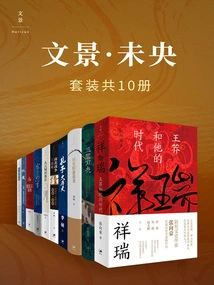
文景·未央(套装共10册)
Zhang Xiangrong, Li Shuo, Wu Zhengwei, Wu Zhengqiang, Etc.
What is good historical writing? How does good historical writing achieve Wenjing? Weiyang is committed to collecting original Chinese historical non-fiction works, breaking down regions and time periods, presenting interdisciplinary and multi-perspective historical writing, and working with fellow enthusiasts to explore more possibilities of local historical writing, recalling time, and reading the future.
What is good historical writing? How does good historical writing achieve Wenjing? Weiyang is committed to collecting original Chinese historical non-fiction works, breaking down regions and time periods, presenting interdisciplinary and multi-perspective historical writing, and working with fellow enthusiasts to explore more possibilities of local historical writing, recalling time, and reading the future.
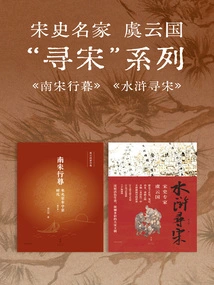
宋史名家虞云国“寻宋”系列:南宋行暮+水浒寻宋
Yu Yunguo
"The Twilight of the Southern Song Dynasty: The Era of Song Guangzong and Song Ningzong (Updated Edition)" selects the two emperors of Song Guangzong and Song Ningzong who transitioned from rule to decline in the Southern Song Dynasty as the research subjects. It profoundly reveals the political and social issues in the middle period of the Southern Song Dynasty from the farce of inner Zen, the Qingyuan party ban, foreign wars, and the dictatorship of power ministers. It also analyzes the process and reasons why the Southern Song Dynasty in the Guang and Ning dynasties involuntarily declined. In the book "Water Margin in Search of the Song Dynasty", Professor Yu Yunguo takes a different approach, relying on his decades of research results on Song history to interpret "Water Margin" in a comprehensive and comprehensive way. In the "Reading Chapter" at the beginning of the book, Professor Yu summarizes various reading methods of "Water Margin", giving people enlightenment from multiple perspectives. He also examines and points out a number of historical and geographical errors in "Water Margin", which is eye-catching and also allows people to objectively understand the writing process of "Water Margin" from one aspect.
"The Twilight of the Southern Song Dynasty: The Era of Song Guangzong and Song Ningzong (Updated Edition)" selects the two emperors of Song Guangzong and Song Ningzong who transitioned from rule to decline in the Southern Song Dynasty as the research subjects. It profoundly reveals the political and social issues in the middle period of the Southern Song Dynasty from the farce of inner Zen, the Qingyuan party ban, foreign wars, and the dictatorship of power ministers. It also analyzes the process and reasons why the Southern Song Dynasty in the Guang and Ning dynasties involuntarily declined. In the book "Water Margin in Search of the Song Dynasty", Professor Yu Yunguo takes a different approach, relying on his decades of research results on Song history to interpret "Water Margin" in a comprehensive and comprehensive way. In the "Reading Chapter" at the beginning of the book, Professor Yu summarizes various reading methods of "Water Margin", giving people enlightenment from multiple perspectives. He also examines and points out a number of historical and geographical errors in "Water Margin", which is eye-catching and also allows people to objectively understand the writing process of "Water Margin" from one aspect.
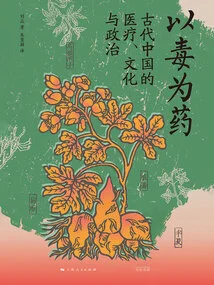
以毒为药:古代中国的医疗、文化与政治
Liu Yan
This book studies how doctors, religious figures, court officials and lay scholar-bureaucrats used poisonous drugs to treat stubborn diseases and strengthen the body during the formative period of Chinese medicine from the 3rd to 9th centuries. By focusing on how the concept of "poison" in Chinese led healers to adopt various methods to transform dangerous poisons into panaceas, the author clearly reveals the important position of poisons in traditional Chinese medicine and medieval society. This book tells the story of medical disputes and political events involving poisons from the late Han Dynasty to the early Tang Dynasty, demonstrating that "poison" was crucial to how people perceived their bodies and body politics at that time. The author also examines the vast array of toxic minerals, plants, and animal products in classical Chinese medicine, including the highly toxic "King of Medicines" Aconite and the once-popular Five Stone Powder, showing how powerful medicines work on the body and how this effect shaped knowledge about medicines and the diseases they treated. The book also explores ancient Chinese understandings of health and how the body interacted with toxic drugs, reminding us to pay attention to the materiality of drug flows, whose true meaning and utility are not reducible to a fixed core, but vary depending on specific technological interventions, sociopolitical conditions, and individual bodily experiences.
This book studies how doctors, religious figures, court officials and lay scholar-bureaucrats used poisonous drugs to treat stubborn diseases and strengthen the body during the formative period of Chinese medicine from the 3rd to 9th centuries. By focusing on how the concept of "poison" in Chinese led healers to adopt various methods to transform dangerous poisons into panaceas, the author clearly reveals the important position of poisons in traditional Chinese medicine and medieval society. This book tells the story of medical disputes and political events involving poisons from the late Han Dynasty to the early Tang Dynasty, demonstrating that "poison" was crucial to how people perceived their bodies and body politics at that time. The author also examines the vast array of toxic minerals, plants, and animal products in classical Chinese medicine, including the highly toxic "King of Medicines" Aconite and the once-popular Five Stone Powder, showing how powerful medicines work on the body and how this effect shaped knowledge about medicines and the diseases they treated. The book also explores ancient Chinese understandings of health and how the body interacted with toxic drugs, reminding us to pay attention to the materiality of drug flows, whose true meaning and utility are not reducible to a fixed core, but vary depending on specific technological interventions, sociopolitical conditions, and individual bodily experiences.
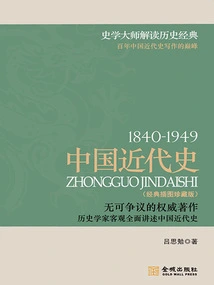
1840-1949:中国近代史
Lu Simian
Lu Simian is a modern Chinese historian who has made contributions to the construction of the general history of China and also pioneered the writing of modern history. This book starts from the social characteristics of the early Qing Dynasty and continues to the end of the Anti-Japanese War. It covers all the events, characters, institutions and regulations in modern history in detail. It is a classic for readers to understand the modern history of China. I often recommend Mr. Lu Simian Chengzhi, Mr. Chen Yuan Yuan, Mr. Chen Yinke and Mr. Qian Mubin as the four predecessors of history who have broad theoretical fields, rich narratives, and can write deeply.
Lu Simian is a modern Chinese historian who has made contributions to the construction of the general history of China and also pioneered the writing of modern history. This book starts from the social characteristics of the early Qing Dynasty and continues to the end of the Anti-Japanese War. It covers all the events, characters, institutions and regulations in modern history in detail. It is a classic for readers to understand the modern history of China. I often recommend Mr. Lu Simian Chengzhi, Mr. Chen Yuan Yuan, Mr. Chen Yinke and Mr. Qian Mubin as the four predecessors of history who have broad theoretical fields, rich narratives, and can write deeply.
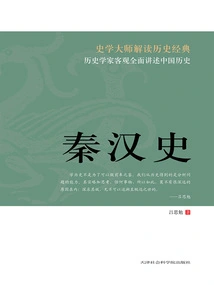
秦汉史
Lu Simian
"History of the Qin and Han Dynasties" is the second work of Mr. Lu Simian's Chinese chronological history series. It was published by Shanghai Kaiming Bookstore in 1947. In 1983, it was edited by Mr. Yang Kuan and Lu Yiren and published by Shanghai Ancient Books Publishing House as one of the "Historical Treatises of Lu Simian". For the "History of Qin and Han" published this time, we have re-edited it based on the first edition of Kaiming Bookstore. In order to facilitate readers' reading, we have changed the original traditional Chinese from vertical to horizontal simplified, and changed the two-line annotations in the original book into single-line italic annotations. Other than the obvious errors and irregular usages, no other changes have been made. The author's notes in the original book are excerpts made by the author for research. The text is very brief and marked with corresponding page numbers. It is now attached to the text with under-page notes for readers' reference.
"History of the Qin and Han Dynasties" is the second work of Mr. Lu Simian's Chinese chronological history series. It was published by Shanghai Kaiming Bookstore in 1947. In 1983, it was edited by Mr. Yang Kuan and Lu Yiren and published by Shanghai Ancient Books Publishing House as one of the "Historical Treatises of Lu Simian". For the "History of Qin and Han" published this time, we have re-edited it based on the first edition of Kaiming Bookstore. In order to facilitate readers' reading, we have changed the original traditional Chinese from vertical to horizontal simplified, and changed the two-line annotations in the original book into single-line italic annotations. Other than the obvious errors and irregular usages, no other changes have been made. The author's notes in the original book are excerpts made by the author for research. The text is very brief and marked with corresponding page numbers. It is now attached to the text with under-page notes for readers' reference.
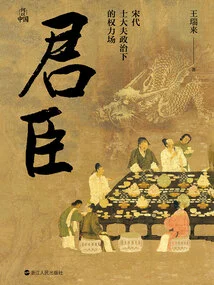
君臣:宋代士大夫政治下的权力场(何以中国丛书)
Wang Ruilai
This book is an investigation of the balance between macro and micro power in traditional Chinese society. Taking the Zhenzong Dynasty of the Northern Song Dynasty as a cross-section, it completes an overall observation of the issue of imperial power in Chinese history. The five prime ministers of the Zhenzong Dynasty described in the book almost cover the basic types of prime ministers in ancient China. The institutional foundation and power structure laid by the Zhenzong Dynasty profoundly affected the political trend of subsequent Chinese history. The spiritual genes formed by the politics of scholar-bureaucrats in the Song Dynasty still influence Chinese intellectuals today. The text of this book is popular and elegant, the argument is rigorous, the information is informative, and the descriptions are vivid. It discusses the relationship between monarch and ministers in detail, analyzes the battle of wits in the power arena brilliantly, and provides a comprehensive overview of the imperial power issues in Chinese history. With the improvement of the administrative system, the imperial power gradually moved toward symbolization. This trend was unprecedented. It was evaluated by Japanese scholars as subverting the "monarchy and dictatorship theory" popular in academic circles. It is a rare historical work that can be appreciated by both refined and popular people.
This book is an investigation of the balance between macro and micro power in traditional Chinese society. Taking the Zhenzong Dynasty of the Northern Song Dynasty as a cross-section, it completes an overall observation of the issue of imperial power in Chinese history. The five prime ministers of the Zhenzong Dynasty described in the book almost cover the basic types of prime ministers in ancient China. The institutional foundation and power structure laid by the Zhenzong Dynasty profoundly affected the political trend of subsequent Chinese history. The spiritual genes formed by the politics of scholar-bureaucrats in the Song Dynasty still influence Chinese intellectuals today. The text of this book is popular and elegant, the argument is rigorous, the information is informative, and the descriptions are vivid. It discusses the relationship between monarch and ministers in detail, analyzes the battle of wits in the power arena brilliantly, and provides a comprehensive overview of the imperial power issues in Chinese history. With the improvement of the administrative system, the imperial power gradually moved toward symbolization. This trend was unprecedented. It was evaluated by Japanese scholars as subverting the "monarchy and dictatorship theory" popular in academic circles. It is a rare historical work that can be appreciated by both refined and popular people.
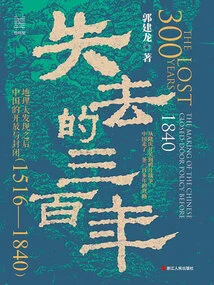
失去的三百年:地理大发现之后中国的开放与封闭(1516—1840)(经纬度丛书)
Guo Jianlong
Let you understand China's opening up and failure in the three hundred years from the late Ming Dynasty to the late Qing Dynasty. China has also had the opportunity to learn from the West and open up to the world. Whether it is technology, business, capital or institutions, China has had the urge to learn. China has opened up to the outside world more than once in its history, but if lessons are not learned, any opening up to the outside world will eventually return to the original point of closure after drawing a circle. The content described in this book is not to praise the greatness of ancient dynasties, but to explore China's objective gains and losses in the more than three hundred years from the geographical discovery to the outbreak of the Opium War. Let people understand that China is not inherently closed. It had a large-scale opening up hundreds of years ago and introduced all the most advanced Western technology and knowledge at that time. However, due to the nature of the feudal centralized regime, Chinese society forgot everything it had learned and returned to a traditional closed society.
Let you understand China's opening up and failure in the three hundred years from the late Ming Dynasty to the late Qing Dynasty. China has also had the opportunity to learn from the West and open up to the world. Whether it is technology, business, capital or institutions, China has had the urge to learn. China has opened up to the outside world more than once in its history, but if lessons are not learned, any opening up to the outside world will eventually return to the original point of closure after drawing a circle. The content described in this book is not to praise the greatness of ancient dynasties, but to explore China's objective gains and losses in the more than three hundred years from the geographical discovery to the outbreak of the Opium War. Let people understand that China is not inherently closed. It had a large-scale opening up hundreds of years ago and introduced all the most advanced Western technology and knowledge at that time. However, due to the nature of the feudal centralized regime, Chinese society forgot everything it had learned and returned to a traditional closed society.
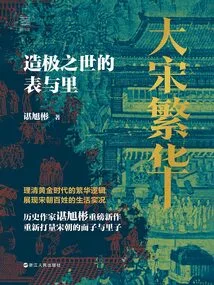
大宋繁华:造极之世的表与里(经纬度丛书)
Chen Xubin
Where did the population boom of the Song Dynasty come from? Where did the huge wealth of the imperial court go? Clarify the prosperous logic of the golden age and show the real life of people in the Song Dynasty. Historical writer Chen Xubin's new work re-examines the face and dignity of the Song Dynasty. This book is divided into three parts. The first part analyzes the reasons for the increase in the total amount of social wealth in the Song Dynasty; the second part describes the methods used by the Song Dynasty government in different periods and how the people moved around to survive; the third part explains the reasons why the increased wealth in the two Song Dynasties failed to be converted into reproductive capital. Chen Xubin's writing breaks the top-down orthodox historical view of most current Song history books, focusing on the lower-class groups who have no voice in history, presenting their real and cruel living conditions, revealing the "prosperous" nature of the two Song Dynasties, which "90 million poor and weak people supported 10 million food tax groups", subverting the image of the so-called golden age of classical China, and it is of great enlightenment for a comprehensive understanding of the dynastic system of the two Song Dynasties.
Where did the population boom of the Song Dynasty come from? Where did the huge wealth of the imperial court go? Clarify the prosperous logic of the golden age and show the real life of people in the Song Dynasty. Historical writer Chen Xubin's new work re-examines the face and dignity of the Song Dynasty. This book is divided into three parts. The first part analyzes the reasons for the increase in the total amount of social wealth in the Song Dynasty; the second part describes the methods used by the Song Dynasty government in different periods and how the people moved around to survive; the third part explains the reasons why the increased wealth in the two Song Dynasties failed to be converted into reproductive capital. Chen Xubin's writing breaks the top-down orthodox historical view of most current Song history books, focusing on the lower-class groups who have no voice in history, presenting their real and cruel living conditions, revealing the "prosperous" nature of the two Song Dynasties, which "90 million poor and weak people supported 10 million food tax groups", subverting the image of the so-called golden age of classical China, and it is of great enlightenment for a comprehensive understanding of the dynastic system of the two Song Dynasties.
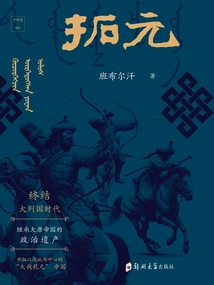
Tuoyuan
History拓元
Bambur Khan
When the Tang Dynasty declined and perished, many national governments that had originally submitted to Tian Khan began to expand their ambitions. The Central Plains regime in the Han Dynasty was divided into the Five Dynasties and Ten Kingdoms. Although partial unification was achieved through the Song Dynasty, it was difficult to restore the political territory of the prosperous Tang Dynasty. Outside of the Central Plains, the political powers in the grasslands, Western Regions, and Liaodong regions each competed for dominance, and even reversed their efforts to grant titles to the monarchs of the Central Plains. This environment continued until the Mongols settled in the Central Plains, re-conquered the four directions, and established a large empire centered on the Han Dynasty. The book is divided into eight chapters. Starting from the origin of the Mongolian people, it briefly introduces the political environment of the world at that time and the development and growth of the Mongolian people. It focuses on the creation, development and stability of the Mongol Empire of Genghis Khan and his descendants and the Yuan Empire of Kublai Khan.
When the Tang Dynasty declined and perished, many national governments that had originally submitted to Tian Khan began to expand their ambitions. The Central Plains regime in the Han Dynasty was divided into the Five Dynasties and Ten Kingdoms. Although partial unification was achieved through the Song Dynasty, it was difficult to restore the political territory of the prosperous Tang Dynasty. Outside of the Central Plains, the political powers in the grasslands, Western Regions, and Liaodong regions each competed for dominance, and even reversed their efforts to grant titles to the monarchs of the Central Plains. This environment continued until the Mongols settled in the Central Plains, re-conquered the four directions, and established a large empire centered on the Han Dynasty. The book is divided into eight chapters. Starting from the origin of the Mongolian people, it briefly introduces the political environment of the world at that time and the development and growth of the Mongolian people. It focuses on the creation, development and stability of the Mongol Empire of Genghis Khan and his descendants and the Yuan Empire of Kublai Khan.
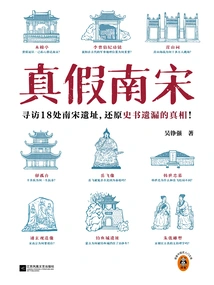
真假南宋
Wu Zhengqiang
This book explains in detail eighteen historical relics of the Southern Song Dynasty, and combines the author's experience of visiting historical relics, the current status of the historical relics, and the historical events that occurred here. It introduces readers to the history of the Southern Song Dynasty that is different from the history books through four major themes: "Wars between the Song and Jin Dynasties", "Wars within the Southern Song Dynasty", "Power struggles between Neo-Confucianists and powerful ministers" and "Destruction of the Southern Song Dynasty".
This book explains in detail eighteen historical relics of the Southern Song Dynasty, and combines the author's experience of visiting historical relics, the current status of the historical relics, and the historical events that occurred here. It introduces readers to the history of the Southern Song Dynasty that is different from the history books through four major themes: "Wars between the Song and Jin Dynasties", "Wars within the Southern Song Dynasty", "Power struggles between Neo-Confucianists and powerful ministers" and "Destruction of the Southern Song Dynasty".
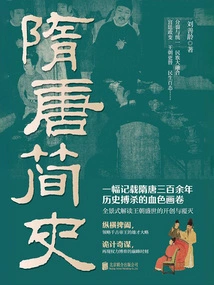
隋唐简史
Liu Shanling
In the past two thousand years, China has experienced long periods of unification and centuries of continuous division. The two hundred years of unification and prosperity of the Sui and Tang Dynasties occurred after the long-term division of the Wei and Jin Dynasties. In the era of division, there were many heroes who wanted to regain Jin Mau. Why did the final success fall on the slightly less coquettish Emperor Wen of the Sui Dynasty and Taizong of the Tang Dynasty? People in the Sui and Tang Dynasties invented the world's earliest kaleidoscope, and the civilization of the Sui and Tang Dynasties was as colorful as a kaleidoscope, reaching the pinnacle of Chinese history. The Sui and Tang Dynasties were an era of unity and openness, as well as a romantic and legendary era. The culture of the Sui and Tang Dynasties inherited the essence of China and embraced all rivers. However, behind the prosperity of the Tang Dynasty, there was a crisis hidden after all. After reaching the peak, it would naturally go downhill...
In the past two thousand years, China has experienced long periods of unification and centuries of continuous division. The two hundred years of unification and prosperity of the Sui and Tang Dynasties occurred after the long-term division of the Wei and Jin Dynasties. In the era of division, there were many heroes who wanted to regain Jin Mau. Why did the final success fall on the slightly less coquettish Emperor Wen of the Sui Dynasty and Taizong of the Tang Dynasty? People in the Sui and Tang Dynasties invented the world's earliest kaleidoscope, and the civilization of the Sui and Tang Dynasties was as colorful as a kaleidoscope, reaching the pinnacle of Chinese history. The Sui and Tang Dynasties were an era of unity and openness, as well as a romantic and legendary era. The culture of the Sui and Tang Dynasties inherited the essence of China and embraced all rivers. However, behind the prosperity of the Tang Dynasty, there was a crisis hidden after all. After reaching the peak, it would naturally go downhill...
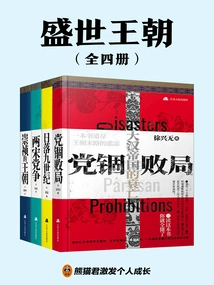
盛世王朝(全四册)
Xu Xingwu Xia Weizhong Zhao Yi
How did the four great dynasties of Han, Tang, Song and Ming gradually decline and even perish? The NTU professor's masterpiece of popular history, The Twilight of the Empire! "The Defeat of the Party" The Han Dynasty was one of the longest-lived dynasties in the history of our country. However, the stubborn diseases of the dynasty such as the dictatorship of foreign relatives, eunuchs and the rise of clans jointly destroyed this powerful empire. "Sunset of the Ninth Century" The Tang Empire survived for another 144 years after experiencing the "Anshi Rebellion". But after the chaos, it declined rapidly. The Tang Empire, which was truly disintegrated from within, directly affected the political system of later generations. "Party Struggle between the Two Song Dynasties" depicts the helpless, incompetent and idle mentality of the Song people from the last days of the Song Dynasty, and explores the internal causes of the decline of the Song Dynasty. "The Dynasty of Chongzhen" Compared with his ancestors, Chongzhen can be regarded as a conscientious and wise king. But why did the relationship between monarch and ministers get worse and worse during the Chongzhen dynasty, leading to a breakdown? Let's take a look at the brutal tug-of-war between the emperors of the Ming Empire and the civil servant group.
How did the four great dynasties of Han, Tang, Song and Ming gradually decline and even perish? The NTU professor's masterpiece of popular history, The Twilight of the Empire! "The Defeat of the Party" The Han Dynasty was one of the longest-lived dynasties in the history of our country. However, the stubborn diseases of the dynasty such as the dictatorship of foreign relatives, eunuchs and the rise of clans jointly destroyed this powerful empire. "Sunset of the Ninth Century" The Tang Empire survived for another 144 years after experiencing the "Anshi Rebellion". But after the chaos, it declined rapidly. The Tang Empire, which was truly disintegrated from within, directly affected the political system of later generations. "Party Struggle between the Two Song Dynasties" depicts the helpless, incompetent and idle mentality of the Song people from the last days of the Song Dynasty, and explores the internal causes of the decline of the Song Dynasty. "The Dynasty of Chongzhen" Compared with his ancestors, Chongzhen can be regarded as a conscientious and wise king. But why did the relationship between monarch and ministers get worse and worse during the Chongzhen dynasty, leading to a breakdown? Let's take a look at the brutal tug-of-war between the emperors of the Ming Empire and the civil servant group.
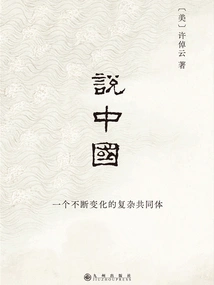
说中国:一个不断变化的复杂共同体(2024版)
Xu Zhuoyun
How did China become China? Is its identity based on blood, national boundaries, or culture? Swords and swords cut boundaries, but food and clothing flowed between each other; Confucianism, Buddhism, and Taoism were mixed; nationalities merged... How did these originally scattered and complex cultures gradually converge and shape a country called "China\u002F Huaxia"? In the future, can this community still attract the descendants of the original members and continue to be recognized as belonging physically and mentally? The famous historian Xu Zhuoyun started from the Neolithic Age to the eve of the end of the Qing Dynasty, describing how the complex community of "Chinese China" continued to evolve. The book does not lay out details or cumbersome arguments. It adopts a broad historical perspective and selects the key points in politics, economy, society, and culture of each era to outline the appearance of each era. In the era of globalization, if you can examine your own ethnic identity principles, you will not be easily hijacked by the arrogance of intolerant ethnic groups and lose your way.
How did China become China? Is its identity based on blood, national boundaries, or culture? Swords and swords cut boundaries, but food and clothing flowed between each other; Confucianism, Buddhism, and Taoism were mixed; nationalities merged... How did these originally scattered and complex cultures gradually converge and shape a country called "China\u002F Huaxia"? In the future, can this community still attract the descendants of the original members and continue to be recognized as belonging physically and mentally? The famous historian Xu Zhuoyun started from the Neolithic Age to the eve of the end of the Qing Dynasty, describing how the complex community of "Chinese China" continued to evolve. The book does not lay out details or cumbersome arguments. It adopts a broad historical perspective and selects the key points in politics, economy, society, and culture of each era to outline the appearance of each era. In the era of globalization, if you can examine your own ethnic identity principles, you will not be easily hijacked by the arrogance of intolerant ethnic groups and lose your way.
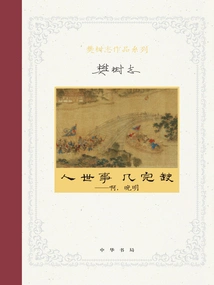
Things in This World Are Incomplete: Ah, the Late Ming Dynasty (fan Shuzhi's Series of Works)
History人世事,几完缺:啊,晚明(樊树志作品系列)
Fan Shuzhi
This book contains thirteen important articles on the history of the late Ming Dynasty written by the famous historian Professor Fan Shuzhi in the past ten years. It not only interprets the important historical events and social phenomena of the late Ming Dynasty, such as the Korean War during the Wanli period, the Prison of the Six Gentlemen, the Wei Zhongxian worship movement, and the literati marriage. Society, etc., And also analyzed the official career and mental journey of famous literati and officials in the late Ming Dynasty, such as Xu Jie, Zhang Juzheng, Wen Zhenmeng, Zheng Yan, Ni Yuanlu, Wu Yingji, Huang Daozhou, Liu Zongzhou, Wu Weiye, etc. These themes cover almost all important aspects of the late Ming Dynasty history. The book is equipped with more than 60 pictures, including portraits, calligraphy and painting works, classic books and shadows, archive materials and other historical relics, etc., In order to vividly restore historical scenes, with pictures and texts complementing each other. It is an excellent reading book for studying the history of the late Ming Dynasty and even the history of the Ming Dynasty. "Everything in the world is in short supply" is selected from "Congratulations to the Bridegroom: Feelings During the Illness" written by Wumeicun in the Qing Dynasty. It best represents the emotional state of mind of the elderly scholar Professor Fan who has been studying the history of the late Ming Dynasty for decades.
This book contains thirteen important articles on the history of the late Ming Dynasty written by the famous historian Professor Fan Shuzhi in the past ten years. It not only interprets the important historical events and social phenomena of the late Ming Dynasty, such as the Korean War during the Wanli period, the Prison of the Six Gentlemen, the Wei Zhongxian worship movement, and the literati marriage. Society, etc., And also analyzed the official career and mental journey of famous literati and officials in the late Ming Dynasty, such as Xu Jie, Zhang Juzheng, Wen Zhenmeng, Zheng Yan, Ni Yuanlu, Wu Yingji, Huang Daozhou, Liu Zongzhou, Wu Weiye, etc. These themes cover almost all important aspects of the late Ming Dynasty history. The book is equipped with more than 60 pictures, including portraits, calligraphy and painting works, classic books and shadows, archive materials and other historical relics, etc., In order to vividly restore historical scenes, with pictures and texts complementing each other. It is an excellent reading book for studying the history of the late Ming Dynasty and even the history of the Ming Dynasty. "Everything in the world is in short supply" is selected from "Congratulations to the Bridegroom: Feelings During the Illness" written by Wumeicun in the Qing Dynasty. It best represents the emotional state of mind of the elderly scholar Professor Fan who has been studying the history of the late Ming Dynasty for decades.
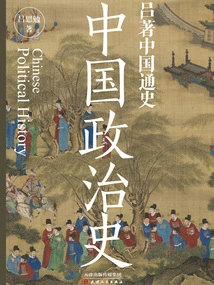
吕著中国通史:中国政治史
Lu Simian
This is an introductory book on Chinese politics, history and culture. Mr. Lu Simian is a modern Chinese historian and master of Chinese studies. He, Chen Yinke, Qian Mu, and Chen Yuan are also known as the "Four Great Historians". He carefully wrote a general history of China in the 1930s, telling the changes in political history in historical order. It is an excellent introductory book that allows you to quickly understand the history of China. The style is quite special and is obviously different from the teacher's other general history works. This book draws on a wide range of materials, is interesting and easy to read, and vividly presents Chinese history and politics with warmth and attitude. It not only conforms to the curriculum context of the textbook, but also extends the content of the textbook to the end, and consolidates historical understanding. It is a rare classic reading for learning Chinese history, politics and traditional culture.
This is an introductory book on Chinese politics, history and culture. Mr. Lu Simian is a modern Chinese historian and master of Chinese studies. He, Chen Yinke, Qian Mu, and Chen Yuan are also known as the "Four Great Historians". He carefully wrote a general history of China in the 1930s, telling the changes in political history in historical order. It is an excellent introductory book that allows you to quickly understand the history of China. The style is quite special and is obviously different from the teacher's other general history works. This book draws on a wide range of materials, is interesting and easy to read, and vividly presents Chinese history and politics with warmth and attitude. It not only conforms to the curriculum context of the textbook, but also extends the content of the textbook to the end, and consolidates historical understanding. It is a rare classic reading for learning Chinese history, politics and traditional culture.
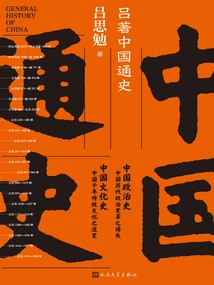
吕著中国通史
Lu Simian
This book is a general history book specially written for college students by the famous historian Lu Simian. Regarding this book, the author once said: "I hope that people who read it will have a little knowledge of important cultural phenomena in Chinese history, so they know the reasons for the current situation, can make predictions about the future, and thus can provide some inspiration for our actions." The whole book is divided into two parts, the upper part is "Chinese Cultural History", and the lower part is "Chinese Social History". This book was aimed at the learning needs of liberal arts students at Shanghai University at that time and did not adopt the general history style. The book is divided into two volumes. The first volume systematically describes the development of social and economic systems, political systems, and cultural academics in categories. The second volume describes the changes in political history in an orderly manner and in chronological order.
This book is a general history book specially written for college students by the famous historian Lu Simian. Regarding this book, the author once said: "I hope that people who read it will have a little knowledge of important cultural phenomena in Chinese history, so they know the reasons for the current situation, can make predictions about the future, and thus can provide some inspiration for our actions." The whole book is divided into two parts, the upper part is "Chinese Cultural History", and the lower part is "Chinese Social History". This book was aimed at the learning needs of liberal arts students at Shanghai University at that time and did not adopt the general history style. The book is divided into two volumes. The first volume systematically describes the development of social and economic systems, political systems, and cultural academics in categories. The second volume describes the changes in political history in an orderly manner and in chronological order.
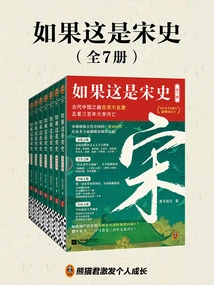
如果这是宋史(全7册)
Gao Tianliuyun
I was furious when I saw it. Why did such a powerful Song Dynasty humiliate itself and sue for peace for three hundred years? This is a vernacular history of the Song Dynasty, which completely describes the history of more than 300 years from the founding of the country by Zhao Kuangyin during the Five Dynasties period to the demise of the Southern Song Dynasty. Focusing on the eighteen emperors of the Song Dynasty, it shows a series of events such as internal fighting in the palace and foreign conquests in the Song Dynasty; it describes in detail the power struggle among the emperors, relatives, and powerful ministers, the policies of the Song Dynasty in the past dynasties, and the details of the wars with Xia, Liao, and Jin. The whole book covers the rise, fall, changes and historical mysteries of the Song Dynasty over three hundred years, and vividly shows the romantic figures of the Song Dynasty.
I was furious when I saw it. Why did such a powerful Song Dynasty humiliate itself and sue for peace for three hundred years? This is a vernacular history of the Song Dynasty, which completely describes the history of more than 300 years from the founding of the country by Zhao Kuangyin during the Five Dynasties period to the demise of the Southern Song Dynasty. Focusing on the eighteen emperors of the Song Dynasty, it shows a series of events such as internal fighting in the palace and foreign conquests in the Song Dynasty; it describes in detail the power struggle among the emperors, relatives, and powerful ministers, the policies of the Song Dynasty in the past dynasties, and the details of the wars with Xia, Liao, and Jin. The whole book covers the rise, fall, changes and historical mysteries of the Song Dynasty over three hundred years, and vividly shows the romantic figures of the Song Dynasty.
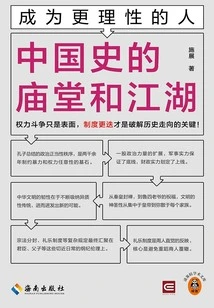
成为更理性的人:中国史的庙堂和江湖
Cast
The power struggle is only superficial, and system change is the key to deciphering the direction of history! Underneath the stories of emperors and generals, there are hidden the creation, changes, practice and collapse of countless systems. These systems are the carrier of the wisdom of the Chinese nation and guide the direction of Chinese history. The system has been implemented in all aspects of Chinese history, and even the seemingly unfettered knights and refugees cannot completely escape the constraints of the system. Whether it is Liangshan Heroes or the Taiping Heavenly Kingdom, they are all imitations of the existing system. Only by understanding the system can we understand the operating logic of Chinese history.
The power struggle is only superficial, and system change is the key to deciphering the direction of history! Underneath the stories of emperors and generals, there are hidden the creation, changes, practice and collapse of countless systems. These systems are the carrier of the wisdom of the Chinese nation and guide the direction of Chinese history. The system has been implemented in all aspects of Chinese history, and even the seemingly unfettered knights and refugees cannot completely escape the constraints of the system. Whether it is Liangshan Heroes or the Taiping Heavenly Kingdom, they are all imitations of the existing system. Only by understanding the system can we understand the operating logic of Chinese history.
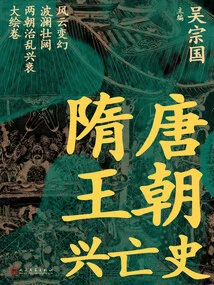
隋唐王朝兴亡史
Editor-in-chief Wu Zongguo
This book is a history of the rise and fall of the Sui and Tang dynasties. From the time when Yang Jian replaced the Northern Zhou Dynasty and established the Sui Dynasty to when Huang Chao occupied Chang'an, the Tang Dynasty was over. Using the emperors of the Sui and Tang dynasties as narrative clues, it involves the major historical events, regulations, systems, and war decisions of more than 300 years from the establishment of the Sui Dynasty to the Tang Dynasty through its heyday, resurgence, decline, and overthrow, showing the unparalleled atmosphere here. The book has a solid historical background and focuses on analysis. While showing the magnificent historical process of the Sui and Tang Dynasties, it also contains specific and subtle details, allowing readers to feel the heroic demeanor of the Sui and Tang Dynasties. It is both general knowledge and storytelling. It is also a good general knowledge of the Sui and Tang Dynasties.
This book is a history of the rise and fall of the Sui and Tang dynasties. From the time when Yang Jian replaced the Northern Zhou Dynasty and established the Sui Dynasty to when Huang Chao occupied Chang'an, the Tang Dynasty was over. Using the emperors of the Sui and Tang dynasties as narrative clues, it involves the major historical events, regulations, systems, and war decisions of more than 300 years from the establishment of the Sui Dynasty to the Tang Dynasty through its heyday, resurgence, decline, and overthrow, showing the unparalleled atmosphere here. The book has a solid historical background and focuses on analysis. While showing the magnificent historical process of the Sui and Tang Dynasties, it also contains specific and subtle details, allowing readers to feel the heroic demeanor of the Sui and Tang Dynasties. It is both general knowledge and storytelling. It is also a good general knowledge of the Sui and Tang Dynasties.
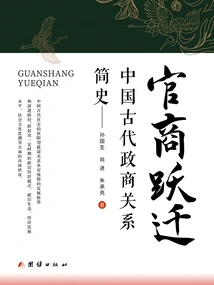
官商跃迁:中国古代政商关系简史
Sun Guosheng Shang Jin Zhu Chengliang
"The Transition between Government and Business: A Brief History of Political and Business Relations in Ancient China" is a book that deeply analyzes the changes in political and business relations in ancient China. From a unique perspective, it narrates the historical evolution of political and business relations in ancient China, covering politics, economy, culture and other fields from ancient times to modern times. Using vivid language and rich cases, it presents readers with a full picture of the transformation of political and business relations in ancient China. This book not only helps readers understand Chinese history and culture, but also provides readers with useful inspiration in business decisions and social interactions. Through in-depth analysis of the historical changes and current situation of political and business relations, readers can better understand the economic and political phenomena of contemporary ancient Chinese society, and thus better respond to various challenges and opportunities.
"The Transition between Government and Business: A Brief History of Political and Business Relations in Ancient China" is a book that deeply analyzes the changes in political and business relations in ancient China. From a unique perspective, it narrates the historical evolution of political and business relations in ancient China, covering politics, economy, culture and other fields from ancient times to modern times. Using vivid language and rich cases, it presents readers with a full picture of the transformation of political and business relations in ancient China. This book not only helps readers understand Chinese history and culture, but also provides readers with useful inspiration in business decisions and social interactions. Through in-depth analysis of the historical changes and current situation of political and business relations, readers can better understand the economic and political phenomena of contemporary ancient Chinese society, and thus better respond to various challenges and opportunities.
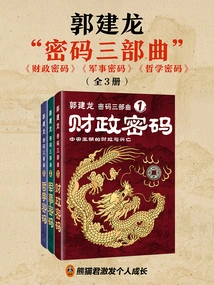
郭建龙“密码三部曲”(全3册)
Guo Jianlong
Historical writer Guo Jianlong's "Code Trilogy" interprets the rise and fall of ancient Chinese dynasties from financial, military and philosophical perspectives! "Financial Code" uses the gains and losses of the fiscal systems of past dynasties to explore the internal causes of dynasty changes! "Military Code" uses geography and war as its context to look at the success or failure of each dynasty's military strategy! "Philosophy Code" searches for the ruling logic of ancient Chinese dynasties in the context of political philosophy! Yu Minhong, Liu Suli, Yu Shicun, Yang Bin, Shi Zhan, Luo Zhenyu, Li Shuo, Zhang Mingyang highly recommend! "The Fiscal Code" explains the relationship between the rise and fall of ancient Chinese dynasties and finance from three aspects: land system, currency monopoly, and government-owned industries. The whole book uses the three cycles of the evolution of the central dynasty's financial system as the division criteria. The first cycle covers the Qin, Han, Wei, Jin and Southern Dynasties, taking the official industries established by Emperor Wu of the Han Dynasty, Wang Mang's financial monopoly, and the land and household registration system in the Wei and Jin Dynasties as clues; the second cycle covers the Northern Wei, Northern Zhou, Sui, Tang and Song Dynasties, starting with the land reform of the Northern Wei Dynasty, and discusses The land equalization system ended with the great collapse caused by the financial reforms of the Song Dynasty; the third cycle is the Liao, Jin, Yuan, Ming and Qing dynasties, starting from the experimental fiscal policies of the Yuan Dynasty government, then discussing the conservative finance of the Ming and Qing dynasties, and ending with the efforts of fiscal modernization and its inertia in the late Qing Dynasty. The book "Military Code" provides a detailed analysis of the military geography of ancient China, analyzing the most critical geographical elements in the wars of past dynasties and how these elements played a role in the wars. Through on-the-spot investigation and citation of historical materials, the most typical wars and military actions of each era are selected, and the movement of strategic locations from Guanzhong to the Yangtze River Basin and border areas is illustrated, which is also accompanied by the unification, division and expansion of dynasties. It analyzes the military logic behind major wars and its impact on the rise and fall of previous dynasties. "The Philosophical Code" starts from the Western Han Dynasty and describes the evolution of thought after the arrival of the era of great unification. By explaining the ins and outs of the development of philosophy, readers can clearly see how and why Chinese philosophy evolved, and understand the mystery of the interaction between politics and philosophy. The political philosophy of the Central Dynasty can be regarded as the history of ideological formatting and counter-formatting. This book divides it into two major cycles: the first cycle started with Confucianism in the Western Han Dynasty, passed through the "rebellion" of metaphysics in the Wei, Jin, Southern and Northern Dynasties, and the birth of Buddhism, until the three religions coexisted and competed with each other in the Sui and Tang Dynasties; the second cycle lasted from the Song Dynasty to the late Qing Dynasty, including the establishment of the Taoist system in the Song Dynasty, the ideological control of Neo-Confucianism, the birth and reflection of the Ming Dynasty's philosophy of mind, and the rise and development of practical science in the Qing Dynasty.
Historical writer Guo Jianlong's "Code Trilogy" interprets the rise and fall of ancient Chinese dynasties from financial, military and philosophical perspectives! "Financial Code" uses the gains and losses of the fiscal systems of past dynasties to explore the internal causes of dynasty changes! "Military Code" uses geography and war as its context to look at the success or failure of each dynasty's military strategy! "Philosophy Code" searches for the ruling logic of ancient Chinese dynasties in the context of political philosophy! Yu Minhong, Liu Suli, Yu Shicun, Yang Bin, Shi Zhan, Luo Zhenyu, Li Shuo, Zhang Mingyang highly recommend! "The Fiscal Code" explains the relationship between the rise and fall of ancient Chinese dynasties and finance from three aspects: land system, currency monopoly, and government-owned industries. The whole book uses the three cycles of the evolution of the central dynasty's financial system as the division criteria. The first cycle covers the Qin, Han, Wei, Jin and Southern Dynasties, taking the official industries established by Emperor Wu of the Han Dynasty, Wang Mang's financial monopoly, and the land and household registration system in the Wei and Jin Dynasties as clues; the second cycle covers the Northern Wei, Northern Zhou, Sui, Tang and Song Dynasties, starting with the land reform of the Northern Wei Dynasty, and discusses The land equalization system ended with the great collapse caused by the financial reforms of the Song Dynasty; the third cycle is the Liao, Jin, Yuan, Ming and Qing dynasties, starting from the experimental fiscal policies of the Yuan Dynasty government, then discussing the conservative finance of the Ming and Qing dynasties, and ending with the efforts of fiscal modernization and its inertia in the late Qing Dynasty. The book "Military Code" provides a detailed analysis of the military geography of ancient China, analyzing the most critical geographical elements in the wars of past dynasties and how these elements played a role in the wars. Through on-the-spot investigation and citation of historical materials, the most typical wars and military actions of each era are selected, and the movement of strategic locations from Guanzhong to the Yangtze River Basin and border areas is illustrated, which is also accompanied by the unification, division and expansion of dynasties. It analyzes the military logic behind major wars and its impact on the rise and fall of previous dynasties. "The Philosophical Code" starts from the Western Han Dynasty and describes the evolution of thought after the arrival of the era of great unification. By explaining the ins and outs of the development of philosophy, readers can clearly see how and why Chinese philosophy evolved, and understand the mystery of the interaction between politics and philosophy. The political philosophy of the Central Dynasty can be regarded as the history of ideological formatting and counter-formatting. This book divides it into two major cycles: the first cycle started with Confucianism in the Western Han Dynasty, passed through the "rebellion" of metaphysics in the Wei, Jin, Southern and Northern Dynasties, and the birth of Buddhism, until the three religions coexisted and competed with each other in the Sui and Tang Dynasties; the second cycle lasted from the Song Dynasty to the late Qing Dynasty, including the establishment of the Taoist system in the Song Dynasty, the ideological control of Neo-Confucianism, the birth and reflection of the Ming Dynasty's philosophy of mind, and the rise and development of practical science in the Qing Dynasty.
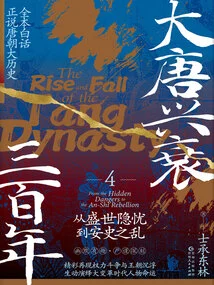
大唐兴衰三百年4:从盛世隐忧到安史之乱
Shi Chengdonglin
Based on official official history and classic history books (Old Book of Tang, New Book of Tang, Notes on the Entrepreneurship and Daily Life of the Tang Dynasty, Zizhi Tongjian, etc.), With time as the longitude and key figures and events that influence the historical process as the latitude, it adopts humorous narrative methods to panoramically display the lives of the twenty-one emperors of the Tang Dynasty, as well as their ministers, generals, scholars and commoners, and involves the interpretation and evaluation of the political and economic system of the Tang Dynasty. It is a work that speaks the great history of the Tang Dynasty in vernacular.
Based on official official history and classic history books (Old Book of Tang, New Book of Tang, Notes on the Entrepreneurship and Daily Life of the Tang Dynasty, Zizhi Tongjian, etc.), With time as the longitude and key figures and events that influence the historical process as the latitude, it adopts humorous narrative methods to panoramically display the lives of the twenty-one emperors of the Tang Dynasty, as well as their ministers, generals, scholars and commoners, and involves the interpretation and evaluation of the political and economic system of the Tang Dynasty. It is a work that speaks the great history of the Tang Dynasty in vernacular.
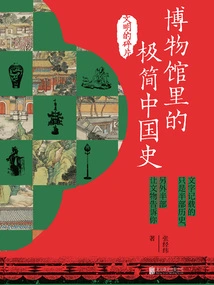
博物馆里的极简中国史:文明的碎片
Zhang Jingwei
This book is Zhang Jingwei, an anthropologist in the museum, a major new work after "A Minimalist History of China in the Museum". The book is divided into twelve chapters, continuing the basic pattern of the previous work's twelve cultural relics telling history. Among them are common cultural relics such as bronzes, pottery, porcelain, silk paintings, and brick paintings that are never lacking in museums, as well as special cultural relics such as incense burners, bronze mirrors, ornamental stones, and cultural relics. Each chapter is divided into six sections. The first section tells the story related to the cultural relic; the second section completes the phenomenological description of the cultural relic; the third section enters the historical space and integrates material culture and the context of the times; the fourth section attempts a structural analysis of the cultural relic from a higher dimension; the fifth section opens a dialogue between artworks and art history; and the last section reveals the cultural metaphor that cultural relics symbolize as a representation of the times. The book contains a total of more than 200 high-definition pictures of cultural relics, covering almost every museum collection category such as bronze, ceramics, calligraphy and painting, crafts, and architecture. Take readers to follow the cultural relics and re-enter history.
This book is Zhang Jingwei, an anthropologist in the museum, a major new work after "A Minimalist History of China in the Museum". The book is divided into twelve chapters, continuing the basic pattern of the previous work's twelve cultural relics telling history. Among them are common cultural relics such as bronzes, pottery, porcelain, silk paintings, and brick paintings that are never lacking in museums, as well as special cultural relics such as incense burners, bronze mirrors, ornamental stones, and cultural relics. Each chapter is divided into six sections. The first section tells the story related to the cultural relic; the second section completes the phenomenological description of the cultural relic; the third section enters the historical space and integrates material culture and the context of the times; the fourth section attempts a structural analysis of the cultural relic from a higher dimension; the fifth section opens a dialogue between artworks and art history; and the last section reveals the cultural metaphor that cultural relics symbolize as a representation of the times. The book contains a total of more than 200 high-definition pictures of cultural relics, covering almost every museum collection category such as bronze, ceramics, calligraphy and painting, crafts, and architecture. Take readers to follow the cultural relics and re-enter history.
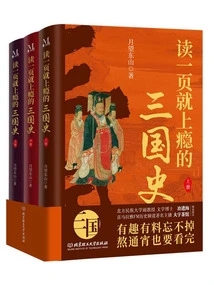
A History of the Three Kingdoms That Will Make You Addicted after Reading One Page (all 3 Volumes)
History读一页就上瘾的三国史(全3册)
The Moon Looks At Dongshan
"A History of the Three Kingdoms that will make you addicted after reading one page" is a set of popular books about the history of the Three Kingdoms, with a total of 3 volumes. This series of books was written from the time Liu Bei became emperor (221) to the return of the Three Kingdoms to Jin (280), a total of 60 years. The Three Kingdoms competed for hegemony, and heroes emerged in large numbers. This was an era in which the world was truly won by strength and strategy. This book takes the historical background of the Three Kingdoms era as the main line, and uses the novel's writing style to show the emergence of heroes in the Three Kingdoms period and the struggle and fall of countless heroes. The book provides a comprehensive introduction to important figures and events during the Three Kingdoms period. Through the description of the lives and deeds of these figures, readers can have a deeper understanding of the personalities, thoughts and actions of these historical figures, as well as the roles they played in the historical process. In this work, the author carefully carves out every detail, strives to restore the true historical scenes of the Three Kingdoms, and vividly depicts the heroic figures and complicated historical events during the Three Kingdoms period.
"A History of the Three Kingdoms that will make you addicted after reading one page" is a set of popular books about the history of the Three Kingdoms, with a total of 3 volumes. This series of books was written from the time Liu Bei became emperor (221) to the return of the Three Kingdoms to Jin (280), a total of 60 years. The Three Kingdoms competed for hegemony, and heroes emerged in large numbers. This was an era in which the world was truly won by strength and strategy. This book takes the historical background of the Three Kingdoms era as the main line, and uses the novel's writing style to show the emergence of heroes in the Three Kingdoms period and the struggle and fall of countless heroes. The book provides a comprehensive introduction to important figures and events during the Three Kingdoms period. Through the description of the lives and deeds of these figures, readers can have a deeper understanding of the personalities, thoughts and actions of these historical figures, as well as the roles they played in the historical process. In this work, the author carefully carves out every detail, strives to restore the true historical scenes of the Three Kingdoms, and vividly depicts the heroic figures and complicated historical events during the Three Kingdoms period.
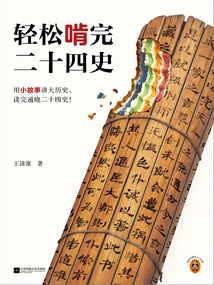
轻松啃完二十四史
Wang Qinghuai
Use short stories to tell big history, and you will understand the Twenty-Four Histories after reading it! The Twenty-Four Histories start from the Huangdi period to the 17th year of Chongzhen in the Ming Dynasty, with a total of 3213 volumes and about 40 million words. Even if ordinary people want to read it, they are unable to finish it or cannot understand it. This series selects the best works of the Twenty-Four Histories and uses modern language to tell important historical figures and events, helping you to master the Twenty-Four Histories without even realizing it! This book is the first volume of "Historical Records". The Yellow Emperor was actually an inventor: the son invented the chariot and developed the "car" series based on the chariot. He also relied on the chariot to defeat Emperor Yan, the co-lord of the world, and was known as the new co-lord of China - the Yellow Emperor. The hero of King Zhao Wuling was short of breath: the main father's palace was captured by Gongzi Cheng. King Zhao Wuling could only dig three feet into the ground to find the remaining food until he starved to death three months later. Shang Yang's reform turned into self-destruction: Shang Jun fled to the border crossing and wanted to stay in a hotel. He once suggested that a document must be provided to stay in the hotel. At this time, he did not have an identity certificate. He was self-destructive! Open this book and you will know the Twenty-Four Histories without realizing it!
Use short stories to tell big history, and you will understand the Twenty-Four Histories after reading it! The Twenty-Four Histories start from the Huangdi period to the 17th year of Chongzhen in the Ming Dynasty, with a total of 3213 volumes and about 40 million words. Even if ordinary people want to read it, they are unable to finish it or cannot understand it. This series selects the best works of the Twenty-Four Histories and uses modern language to tell important historical figures and events, helping you to master the Twenty-Four Histories without even realizing it! This book is the first volume of "Historical Records". The Yellow Emperor was actually an inventor: the son invented the chariot and developed the "car" series based on the chariot. He also relied on the chariot to defeat Emperor Yan, the co-lord of the world, and was known as the new co-lord of China - the Yellow Emperor. The hero of King Zhao Wuling was short of breath: the main father's palace was captured by Gongzi Cheng. King Zhao Wuling could only dig three feet into the ground to find the remaining food until he starved to death three months later. Shang Yang's reform turned into self-destruction: Shang Jun fled to the border crossing and wanted to stay in a hotel. He once suggested that a document must be provided to stay in the hotel. At this time, he did not have an identity certificate. He was self-destructive! Open this book and you will know the Twenty-Four Histories without realizing it!
宅中图大:朱元璋与南京营造
Yang Guoqing
The construction of Nanjing City in the early Ming Dynasty used the architectural form of "wall" to interpret the legal order of the capital as "the land within the country" and reflected Zhu Yuanzhang's ideological process of pursuing "the big picture in the house" in order to realize the traditional sense of "living in the center and planning all directions" in the founding capital of the Ming Dynasty. This book systematically sorts out the issues of establishing and establishing the capital in the early Ming Dynasty from the aspects of concept, planning, system, and construction. It especially explains in detail the relationship between the two capital systems and the establishment and abolition of the central capital, urban layout and building levels, and the two urban constructions of Nanjing and "the land within the country." By interpreting the Nanjing city wall brick inscriptions, it not only clarifies the relevant historical facts of the city wall construction, but also reveals the labor organization form and the operating status of the grassroots society in the early Ming Dynasty.
The construction of Nanjing City in the early Ming Dynasty used the architectural form of "wall" to interpret the legal order of the capital as "the land within the country" and reflected Zhu Yuanzhang's ideological process of pursuing "the big picture in the house" in order to realize the traditional sense of "living in the center and planning all directions" in the founding capital of the Ming Dynasty. This book systematically sorts out the issues of establishing and establishing the capital in the early Ming Dynasty from the aspects of concept, planning, system, and construction. It especially explains in detail the relationship between the two capital systems and the establishment and abolition of the central capital, urban layout and building levels, and the two urban constructions of Nanjing and "the land within the country." By interpreting the Nanjing city wall brick inscriptions, it not only clarifies the relevant historical facts of the city wall construction, but also reveals the labor organization form and the operating status of the grassroots society in the early Ming Dynasty.