Library
Browse and search books
3,417 novels found
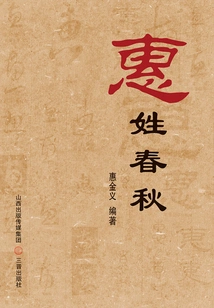
Hui's Surname is Chunqiu
History惠姓春秋
Hui Jinyi
400 years ago, the Spaniard Mendoza finished writing "History of the Chinese Empire" and lamented that "Chinese society is a miracle in the world" and lamented that "unification has always been China's leading factor." After comparing the histories of various countries, Hegel said: "Only the Chinese Empire, through which the Yellow River and the Yangtze River flowed, was the only lasting country in the world." Chinese and foreign historians thought together that in the world outside China, there were great feudal empires in history, but they were never reunited after they were divided. However, China must be divided for a long time, and it must be united for a long time. "Unite" has always been the main theme. Why is this? The answers are varied, among which the fact that the Chinese clan's ideological system of clan rules is generally consistent with the ideological system maintained by the state is an important reason. The Chinese nation is the earliest nation in the world to have surnames. Its origins can be traced back to the ancient matrilineal clan society. After a long period of development, the culture it contains is extensive and profound, with some dross and more essence.
400 years ago, the Spaniard Mendoza finished writing "History of the Chinese Empire" and lamented that "Chinese society is a miracle in the world" and lamented that "unification has always been China's leading factor." After comparing the histories of various countries, Hegel said: "Only the Chinese Empire, through which the Yellow River and the Yangtze River flowed, was the only lasting country in the world." Chinese and foreign historians thought together that in the world outside China, there were great feudal empires in history, but they were never reunited after they were divided. However, China must be divided for a long time, and it must be united for a long time. "Unite" has always been the main theme. Why is this? The answers are varied, among which the fact that the Chinese clan's ideological system of clan rules is generally consistent with the ideological system maintained by the state is an important reason. The Chinese nation is the earliest nation in the world to have surnames. Its origins can be traced back to the ancient matrilineal clan society. After a long period of development, the culture it contains is extensive and profound, with some dross and more essence.
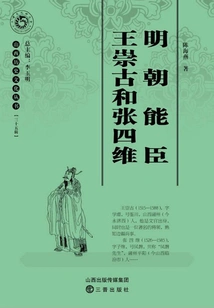
明朝能臣王崇古和张四维
Li Yuming
In the history of the Ming Dynasty, it is worth mentioning that Shanxi merchants, Shanxi merchants in their heyday, had footprints all over the Great Wall and north and south of the Yangtze River, which greatly promoted the prosperity and development of the commodity economy in feudal society.
In the history of the Ming Dynasty, it is worth mentioning that Shanxi merchants, Shanxi merchants in their heyday, had footprints all over the Great Wall and north and south of the Yangtze River, which greatly promoted the prosperity and development of the commodity economy in feudal society.
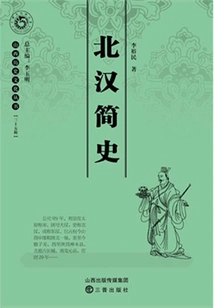
北汉简史
Li Yuming
The relationship between the Northern Han Dynasty and the Later Han Dynasty is like the relationship between the Yongli regime of the Southern Ming Dynasty and the Ming Dynasty. It is the continuation of the Central Plains regime on a smaller scale. To understand its history, we must start with the Later Han Dynasty.
The relationship between the Northern Han Dynasty and the Later Han Dynasty is like the relationship between the Yongli regime of the Southern Ming Dynasty and the Ming Dynasty. It is the continuation of the Central Plains regime on a smaller scale. To understand its history, we must start with the Later Han Dynasty.
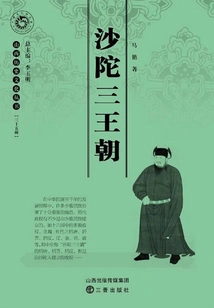
Shatuo Three Dynasties
History沙陀三王朝
Li Yuming
The Later Tang Dynasty, the Later Jin Dynasty, and the Later Han Dynasty, known as the "Three Shatuo Dynasties" in Chinese history, were all political regimes established by the Shatuo people. Based in the strategically important Shanxi Province, the Shatuo people dominated the political arena of the late Tang Dynasty and the Five Dynasties, and performed the rise and fall of the three dynasties, which cannot but be amazing.
The Later Tang Dynasty, the Later Jin Dynasty, and the Later Han Dynasty, known as the "Three Shatuo Dynasties" in Chinese history, were all political regimes established by the Shatuo people. Based in the strategically important Shanxi Province, the Shatuo people dominated the political arena of the late Tang Dynasty and the Five Dynasties, and performed the rise and fall of the three dynasties, which cannot but be amazing.
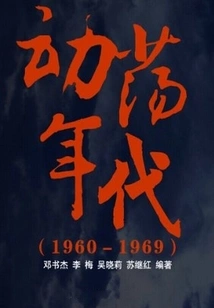
动荡年代(1960-1969)
Deng Shujie Li Mei Wu Xiaoli Su Jihong
This book tells the story of the major events in the development of China's modern history from 1960 to 1969. It records the decision of the Shanghai Conference of the Central Committee of the Communist Party of China to continue the "Great Leap Forward" and put forward the four modernization goals, the formal establishment of the Tibet Autonomous Region, the People's Liberation Army's participation in aiding Vietnam in the anti-American struggle, the "Cultural Revolution", the February Protest and other historical events.
This book tells the story of the major events in the development of China's modern history from 1960 to 1969. It records the decision of the Shanghai Conference of the Central Committee of the Communist Party of China to continue the "Great Leap Forward" and put forward the four modernization goals, the formal establishment of the Tibet Autonomous Region, the People's Liberation Army's participation in aiding Vietnam in the anti-American struggle, the "Cultural Revolution", the February Protest and other historical events.
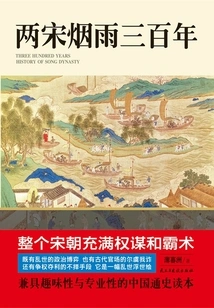
两宋烟雨三百年
Pak Mui Chau
This manuscript tells the past and present life of Zhao Kuangyin, the founding emperor of the Song Dynasty. He was born as a general, joined the army with a weak title, suffered several setbacks in troubled times, and finally established himself as the king, wearing a yellow robe, ending the chaos and disputes of the Five Dynasties. This manuscript is full of intrigues and hegemony, including the political games of troubled times, the intrigues of ancient official circles, and the unscrupulous means of fighting for power. It completely displays the political scene and world situation of the Five Dynasties and the early Song Dynasty, as well as the rise and fall of dynasties, and the game of interests of rulers. It is an ukiyo-e of troubled times.
This manuscript tells the past and present life of Zhao Kuangyin, the founding emperor of the Song Dynasty. He was born as a general, joined the army with a weak title, suffered several setbacks in troubled times, and finally established himself as the king, wearing a yellow robe, ending the chaos and disputes of the Five Dynasties. This manuscript is full of intrigues and hegemony, including the political games of troubled times, the intrigues of ancient official circles, and the unscrupulous means of fighting for power. It completely displays the political scene and world situation of the Five Dynasties and the early Song Dynasty, as well as the rise and fall of dynasties, and the game of interests of rulers. It is an ukiyo-e of troubled times.
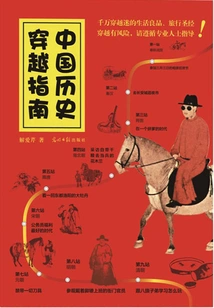
中国历史穿越指南
Xie Aiqin
A unique journey through history. A rich and interesting popular book on historical knowledge. The author is like a "special tour guide" of a "time travel agency", using a relaxed style of writing and interesting knowledge to lead readers to "travel" to the dynasties of ancient China. In those long-gone worlds, he visits the scenes of historical events, meets his favorite historical celebrities, experiences the customs of the past, and even wanders in the small streets of ancient big cities to have a virtual time of delicious food on the tip of the tongue. In a fresh form, the book presents the readers with knowledge about the political systems, humanities and customs, clothing and fashion, leisure and entertainment with different characteristics of the past dynasties one by one.
A unique journey through history. A rich and interesting popular book on historical knowledge. The author is like a "special tour guide" of a "time travel agency", using a relaxed style of writing and interesting knowledge to lead readers to "travel" to the dynasties of ancient China. In those long-gone worlds, he visits the scenes of historical events, meets his favorite historical celebrities, experiences the customs of the past, and even wanders in the small streets of ancient big cities to have a virtual time of delicious food on the tip of the tongue. In a fresh form, the book presents the readers with knowledge about the political systems, humanities and customs, clothing and fashion, leisure and entertainment with different characteristics of the past dynasties one by one.
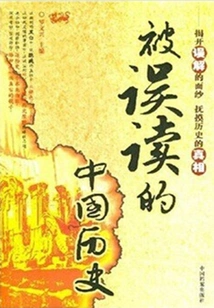
被误读的中国历史
Luo Wenxing
Lift the veil of misunderstanding and touch the truth of history. From the reversed black and white, from the hidden truth, from the brown pictures, from the chaotic and intertwined facts, from the dusty memories, trace the original appearance of history. Wash away the brilliance, peel off the whitewash, and return history to its true colors. In-depth research and objective evaluation give the world a true mirror. The purpose of "Misunderstood Chinese History" is to allow people to truly understand the past of mankind, and at the same time conduct scientific exploration of it in the spirit of new historical facts, so as to clear away the layers of fog and restore the true face of history; it is to enable readers to distinguish what is hearsay and what has been confounded, so as to form an objective and fair understanding and judgment of the historical truth. If we want to truly understand the past of mankind, how many historical truths in space have been hidden in the vast history books that have been passed down to this day? How many right and wrong have been reversed and confused? Please take a look at the misunderstood history of China!
Lift the veil of misunderstanding and touch the truth of history. From the reversed black and white, from the hidden truth, from the brown pictures, from the chaotic and intertwined facts, from the dusty memories, trace the original appearance of history. Wash away the brilliance, peel off the whitewash, and return history to its true colors. In-depth research and objective evaluation give the world a true mirror. The purpose of "Misunderstood Chinese History" is to allow people to truly understand the past of mankind, and at the same time conduct scientific exploration of it in the spirit of new historical facts, so as to clear away the layers of fog and restore the true face of history; it is to enable readers to distinguish what is hearsay and what has been confounded, so as to form an objective and fair understanding and judgment of the historical truth. If we want to truly understand the past of mankind, how many historical truths in space have been hidden in the vast history books that have been passed down to this day? How many right and wrong have been reversed and confused? Please take a look at the misunderstood history of China!
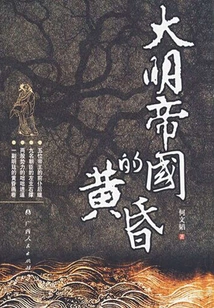
Dusk of the Ming Empire
History大明帝国的黄昏
He Wentao
The decline of the Ming Dynasty began with the Wanli Emperor, ended with the Chongzhen Emperor, and continued with the four Southern Ming Emperors. During the twilight period of nearly eighty years, the Ming Empire rushed towards the cliff like a giant with its head cut off. If in the twilight period of the empire, someone, even just one, did one thing right and achieved results, the Ming Empire would definitely be different, and history would be different. But history cannot be assumed. Instead of sighing with regret, we are chewing on the old saying "Everything depends on man-made things"! If you want to know how the Ming Empire went "crazy", how it went to the cliff and the road of no return, and how the Ming Empire spent its twilight period, this book will help you decipher this little-known historical secret.
The decline of the Ming Dynasty began with the Wanli Emperor, ended with the Chongzhen Emperor, and continued with the four Southern Ming Emperors. During the twilight period of nearly eighty years, the Ming Empire rushed towards the cliff like a giant with its head cut off. If in the twilight period of the empire, someone, even just one, did one thing right and achieved results, the Ming Empire would definitely be different, and history would be different. But history cannot be assumed. Instead of sighing with regret, we are chewing on the old saying "Everything depends on man-made things"! If you want to know how the Ming Empire went "crazy", how it went to the cliff and the road of no return, and how the Ming Empire spent its twilight period, this book will help you decipher this little-known historical secret.
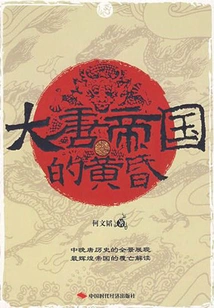
Dusk of the Tang Empire
History大唐帝国的黄昏
He Wentao
After the Anshi Rebellion, a group of Tang people stepped onto the stage of history. There are emperors, civil servants, eunuchs, and warlords here. The emperor has the ambition to revive the empire, the civil servants have the desire to revive the dynasty, the eunuchs have the desire to be slaves, and the warlords have the desire to be patriotic and loyal to the emperor. It is a pity that the emperor's ambitions were not realized, the sincerity of the civil servants was not fulfilled, the eunuchs' emotions were not released, and the warlords' wishes were not implemented. So, everything went to the opposite direction naturally.
After the Anshi Rebellion, a group of Tang people stepped onto the stage of history. There are emperors, civil servants, eunuchs, and warlords here. The emperor has the ambition to revive the empire, the civil servants have the desire to revive the dynasty, the eunuchs have the desire to be slaves, and the warlords have the desire to be patriotic and loyal to the emperor. It is a pity that the emperor's ambitions were not realized, the sincerity of the civil servants was not fulfilled, the eunuchs' emotions were not released, and the warlords' wishes were not implemented. So, everything went to the opposite direction naturally.
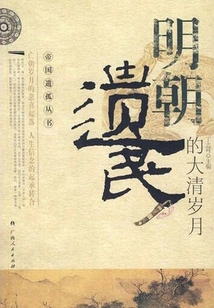
明朝遗民的大清岁月
Ding Zhike
Historically, every change of the old and new dynasties will cause violent social turmoil and the reorganization of political forces. There are those who worship the new dynasty as "the destiny of the old"; there are those who die loyally to the old dynasty; there are also those who hide in the remaining mountains and rivers and refuse to cooperate. They carry "righteous indignation", "responsibility" and "construction" on their heads, and at the same time they also have the expectation of returning from the old dynasty in their hearts, but what they wait for is always tears in the dust. They are a group of the most pitiful orphans of the empire. The survivors who were abandoned by the old dynasty and did not integrate into the new dynasty.
Historically, every change of the old and new dynasties will cause violent social turmoil and the reorganization of political forces. There are those who worship the new dynasty as "the destiny of the old"; there are those who die loyally to the old dynasty; there are also those who hide in the remaining mountains and rivers and refuse to cooperate. They carry "righteous indignation", "responsibility" and "construction" on their heads, and at the same time they also have the expectation of returning from the old dynasty in their hearts, but what they wait for is always tears in the dust. They are a group of the most pitiful orphans of the empire. The survivors who were abandoned by the old dynasty and did not integrate into the new dynasty.
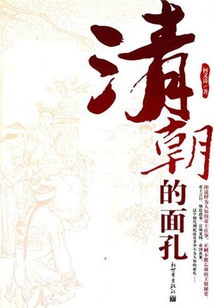
The Face of the Qing Dynasty
History清朝的面孔
He Wentao
The Qing Dynasty was the last dynasty in China's feudal society. This book lists the little-known historical events of the Shunzhi, Yongzheng, Kangxi, Qianlong and other emperors of the Qing Dynasty. From officialdom to the words and deeds of emperors, from imperial tidbits to court affairs, the author reinterprets and comments on the representative events of the Qing Dynasty from a scientific and historical perspective.
The Qing Dynasty was the last dynasty in China's feudal society. This book lists the little-known historical events of the Shunzhi, Yongzheng, Kangxi, Qianlong and other emperors of the Qing Dynasty. From officialdom to the words and deeds of emperors, from imperial tidbits to court affairs, the author reinterprets and comments on the representative events of the Qing Dynasty from a scientific and historical perspective.
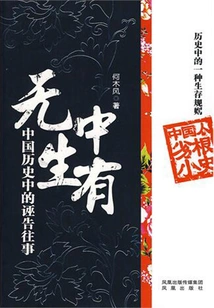
无中生有:中国历史中的诬告往事
He Mufeng
Looking through the Twenty-Four Histories, the faces of false accusations and frame-ups and the bloody reality make people shudder. Needless to say, those villains often rely on making something out of nothing to survive. Even some people who have left a good name in official history also have records of falsely accusing others. Of course, there is no groundless accusation in this world. The reason why the accuser committed this despicable act is. It's because there are benefits hidden in it. Such interests include wealth and glory, and sometimes life and death. This book analyzes the facts and trials of famous false accusation and frame-up cases in history, and explores the thoughts and hearts behind the cases. The ins and outs of each case can be unearthed into a thought-provoking truth or phenomenon. Most of the major cases in Chinese history were cases of false accusations. This book sorts out these cases of false accusations and serves as a window into the world of China. It is of practical significance for Ying Xin to review them.
Looking through the Twenty-Four Histories, the faces of false accusations and frame-ups and the bloody reality make people shudder. Needless to say, those villains often rely on making something out of nothing to survive. Even some people who have left a good name in official history also have records of falsely accusing others. Of course, there is no groundless accusation in this world. The reason why the accuser committed this despicable act is. It's because there are benefits hidden in it. Such interests include wealth and glory, and sometimes life and death. This book analyzes the facts and trials of famous false accusation and frame-up cases in history, and explores the thoughts and hearts behind the cases. The ins and outs of each case can be unearthed into a thought-provoking truth or phenomenon. Most of the major cases in Chinese history were cases of false accusations. This book sorts out these cases of false accusations and serves as a window into the world of China. It is of practical significance for Ying Xin to review them.
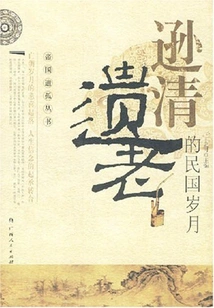
逊清遗老的民国岁月
Ding Zhike
The main content of "The Years of the Republic of China": In history, every change of the old and new dynasties will cause violent social turmoil and the reorganization of political forces. There are those who worship the new dynasty as "the destiny of the old"; They carry "righteous indignation", "responsibility" and "construction" on their heads, and at the same time they also have expectations of returning from the old dynasty in their hearts, but what they wait for is always tears in the dust. They are a group of the most pitiful orphans of the empire. The survivors who were abandoned by the old dynasty and did not integrate into the new dynasty.
The main content of "The Years of the Republic of China": In history, every change of the old and new dynasties will cause violent social turmoil and the reorganization of political forces. There are those who worship the new dynasty as "the destiny of the old"; They carry "righteous indignation", "responsibility" and "construction" on their heads, and at the same time they also have expectations of returning from the old dynasty in their hearts, but what they wait for is always tears in the dust. They are a group of the most pitiful orphans of the empire. The survivors who were abandoned by the old dynasty and did not integrate into the new dynasty.
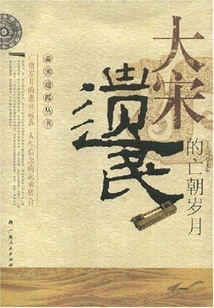
大宋遗民的亡朝岁月
Ding Zhike
Historically, every change of the old and new dynasties will cause violent social turmoil and the reorganization of political forces. There are those who worship the new dynasty as "the destiny of the old"; there are those who die loyally to the old dynasty; there are also those who hide in the remaining mountains and rivers and refuse to cooperate. They carry "righteous indignation", "responsibility" and "construction" on their heads, and at the same time they also have the expectation of returning from the old dynasty in their hearts, but what they wait for is always tears in the dust. They are a group of the most pitiful orphans of the empire. The survivors who were abandoned by the old dynasty and did not integrate into the new dynasty.
Historically, every change of the old and new dynasties will cause violent social turmoil and the reorganization of political forces. There are those who worship the new dynasty as "the destiny of the old"; there are those who die loyally to the old dynasty; there are also those who hide in the remaining mountains and rivers and refuse to cooperate. They carry "righteous indignation", "responsibility" and "construction" on their heads, and at the same time they also have the expectation of returning from the old dynasty in their hearts, but what they wait for is always tears in the dust. They are a group of the most pitiful orphans of the empire. The survivors who were abandoned by the old dynasty and did not integrate into the new dynasty.
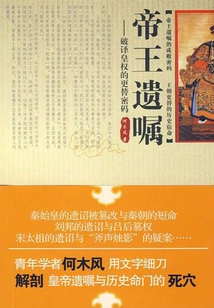
帝王遗嘱:破解皇权的更替密码
He Mufeng
The transfer of imperial power is quite complicated to do, but quite simple to say. This is what we are talking about today, because the imperial era has long passed and no one has the ability to do it again. The edicts selected in this book are all political testaments of very famous emperors in Chinese history. They are those "go masters". Either the founding emperor, the leader of the ZTE, the hero of troubled times, or the emperor of peace. Their reasonable or unreasonable planning of the country behind them directly caused the occurrence of many famous historical events in Chinese history.
The transfer of imperial power is quite complicated to do, but quite simple to say. This is what we are talking about today, because the imperial era has long passed and no one has the ability to do it again. The edicts selected in this book are all political testaments of very famous emperors in Chinese history. They are those "go masters". Either the founding emperor, the leader of the ZTE, the hero of troubled times, or the emperor of peace. Their reasonable or unreasonable planning of the country behind them directly caused the occurrence of many famous historical events in Chinese history.
毛泽东和“三国”
Sheng Xunchang
Mao Zedong loved reading "The Romance of the Three Kingdoms" and "The Chronicles of the Three Kingdoms" when he was a teenager. He said: \
Mao Zedong loved reading "The Romance of the Three Kingdoms" and "The Chronicles of the Three Kingdoms" when he was a teenager. He said: \
盛世中国:秦汉卷
Li Zichi
The Great Wall (named the first of the "New Seven Wonders of the World" in Lisbon, the capital of Portugal, in July 2007) stands majestically on the northern border. It is as tall as a dangerous peak and winding like a giant dragon. It starts from Liaodong in the east and borders Tao in the west. It has a solemn image and majestic momentum. It forms a strong and tall fence, which isolates the dust of hunting and billowing smoke, the cold wave and the shadow of swords from outside the country...
The Great Wall (named the first of the "New Seven Wonders of the World" in Lisbon, the capital of Portugal, in July 2007) stands majestically on the northern border. It is as tall as a dangerous peak and winding like a giant dragon. It starts from Liaodong in the east and borders Tao in the west. It has a solemn image and majestic momentum. It forms a strong and tall fence, which isolates the dust of hunting and billowing smoke, the cold wave and the shadow of swords from outside the country...
太平天国十四年
Sheng Xunchang
The main content of "Micro History Series of the Late Qing Dynasty: The Fourteenth Year of the Taiping Rebellion" includes: three dishonest young people, God and his children in the "little paradise", the gold field tree flag, the relief sculpture of a Taiping Utopia, the unrest in Yong'an City, several battlefields in the south and north of the Yangtze River, hanging crosses The Heavenly King and his brothers are dancing, the situation around Tianjing is tense, the Taiping Heavenly Kingdom is not at peace, there is killing and killing in Tianjing, the Kingdom of Heaven has not braked, and is still struggling, heading towards the half-walled Kingdom of Heaven in the dusk and sunset, the disillusionment of the glorious "little paradise", the end of the war, and the continuation after the fall of Tianjing, etc.
The main content of "Micro History Series of the Late Qing Dynasty: The Fourteenth Year of the Taiping Rebellion" includes: three dishonest young people, God and his children in the "little paradise", the gold field tree flag, the relief sculpture of a Taiping Utopia, the unrest in Yong'an City, several battlefields in the south and north of the Yangtze River, hanging crosses The Heavenly King and his brothers are dancing, the situation around Tianjing is tense, the Taiping Heavenly Kingdom is not at peace, there is killing and killing in Tianjing, the Kingdom of Heaven has not braked, and is still struggling, heading towards the half-walled Kingdom of Heaven in the dusk and sunset, the disillusionment of the glorious "little paradise", the end of the war, and the continuation after the fall of Tianjing, etc.
镰刀锤子话风云
Sheng Xunchang
This book takes the historical process of the 1980s as the cultural background, and the content involves the anecdotes of the older generation of proletarian revolutionaries. It is simple, innocent, and the spirit can be seen in the details.
This book takes the historical process of the 1980s as the cultural background, and the content involves the anecdotes of the older generation of proletarian revolutionaries. It is simple, innocent, and the spirit can be seen in the details.
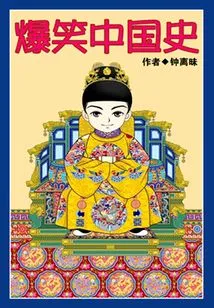
Hilarious Chinese History
History爆笑中国史
Zhong Limei
A book that will make you burst into laughter. Internet celebrity Mala interprets some legendary things in Chinese history!
A book that will make you burst into laughter. Internet celebrity Mala interprets some legendary things in Chinese history!
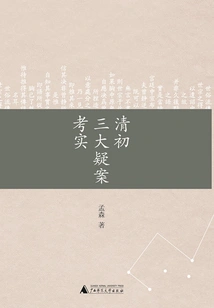
清初三大疑案考实
Monson
This book is composed of three parts: "Research on the Empress Dowager's Marriage", "Research on Shizu's Reunion as a Family", and "Research on Shizong's Succession to the Great Unification". With the rigor of a historian, Mr. Meng Sen has carefully researched the three major mysteries that have been widely circulated among the people: "the Queen Mother's marriage", "Shunzhi's becoming a monk" and "Yongzheng's accession to the throne". He peels away the many mysteries wrapped in the archives and historical materials of past dynasties and seeks for the historical truth, which is very interesting.
This book is composed of three parts: "Research on the Empress Dowager's Marriage", "Research on Shizu's Reunion as a Family", and "Research on Shizong's Succession to the Great Unification". With the rigor of a historian, Mr. Meng Sen has carefully researched the three major mysteries that have been widely circulated among the people: "the Queen Mother's marriage", "Shunzhi's becoming a monk" and "Yongzheng's accession to the throne". He peels away the many mysteries wrapped in the archives and historical materials of past dynasties and seeks for the historical truth, which is very interesting.
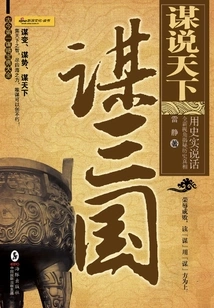
谋说天下·谋三国
K
In the course of China's five thousand years of history, the Three Kingdoms is a unique episode and a period of turbulent waters. Before and after the Three Kingdoms, China was ruled by the Tu ethnic class. Only the Three Kingdoms was a period in which common people stepped onto the stage of history and tried to establish a new social order. History has gone far, but life has never left. The war wisdom of strategizing a thousand years ago is still valid in today's workplace competition. The moonlight that once illuminated Chibi still lingers in the night outside the window. Is Zhuge Liang the originator of idealists? How cute is Cao Cao? What kind of sanity does Guo Jia have that even history writers can't believe? Why did Gu Yong's silence touch Sun Quan more than Zhang Zhao's harsh words? What is Sima Yi's true identity? How is the life of a wise man refined? This is what this book wants to do by carefully dissecting the history of the Three Kingdoms and selecting the shining pearls condensed with the wisdom and blood of the people of the Three Kingdoms to add a beam of light to your and my life path.
In the course of China's five thousand years of history, the Three Kingdoms is a unique episode and a period of turbulent waters. Before and after the Three Kingdoms, China was ruled by the Tu ethnic class. Only the Three Kingdoms was a period in which common people stepped onto the stage of history and tried to establish a new social order. History has gone far, but life has never left. The war wisdom of strategizing a thousand years ago is still valid in today's workplace competition. The moonlight that once illuminated Chibi still lingers in the night outside the window. Is Zhuge Liang the originator of idealists? How cute is Cao Cao? What kind of sanity does Guo Jia have that even history writers can't believe? Why did Gu Yong's silence touch Sun Quan more than Zhang Zhao's harsh words? What is Sima Yi's true identity? How is the life of a wise man refined? This is what this book wants to do by carefully dissecting the history of the Three Kingdoms and selecting the shining pearls condensed with the wisdom and blood of the people of the Three Kingdoms to add a beam of light to your and my life path.
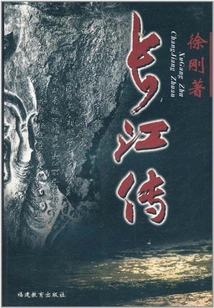
Legend of the Yangtze River
History长江传
Xu Gang
A beautiful, poignant and touching biography about the Yangtze River. The author traces the initial form of the ancient Yangtze River that flowed from east to west hundreds of millions of years ago, from the prelude of the wandering water to the end of rushing into the sea. Just like Xu Gang's previous style, sometimes it opens and closes, ups and downs; sometimes it is meticulous and penetrating. It integrates geography, history, characters, and culture, faces history and reality, and depicts full of sorrows on the background of the earth, teaching people to meditate in all directions. The book contains both detailed descriptions of the Yangtze River's century-old floods and creative blueprints for a Green China. The unique context permeates the lines. The consideration of the integrity of the earth gives the author an unforgettable warning: We are walking on a road of no return that is getting closer and closer to material wealth and farther and farther away from the rivers and the earth.
A beautiful, poignant and touching biography about the Yangtze River. The author traces the initial form of the ancient Yangtze River that flowed from east to west hundreds of millions of years ago, from the prelude of the wandering water to the end of rushing into the sea. Just like Xu Gang's previous style, sometimes it opens and closes, ups and downs; sometimes it is meticulous and penetrating. It integrates geography, history, characters, and culture, faces history and reality, and depicts full of sorrows on the background of the earth, teaching people to meditate in all directions. The book contains both detailed descriptions of the Yangtze River's century-old floods and creative blueprints for a Green China. The unique context permeates the lines. The consideration of the integrity of the earth gives the author an unforgettable warning: We are walking on a road of no return that is getting closer and closer to material wealth and farther and farther away from the rivers and the earth.
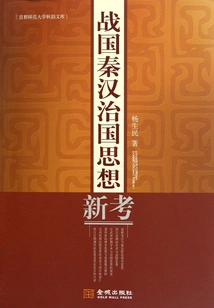
战国秦汉治国思想新考
Yang Shengmin
"A New Examination of the Thoughts on State Governance in the Warring States, Qin and Han Dynasties" written by Yang Shengmin is a monograph that systematically studies the thoughts on state governance in the Warring States, Qin and Han Dynasties. It examines the successes and failures in governing the country with the ideological and cultural schools of the Warring States, Qin and Han Dynasties. Historically, the Western Zhou Dynasty used rituals to govern the country. At the end of the Spring and Autumn Period, school thought and school culture emerged, which can be seen in the records of Taoism, Confucianism, and military strategists. During the Warring States Period, some countries began to use school ideas to guide their governance, such as the "ruling by law" in Wei and Qin. In the early years of the Western Han Dynasty, the ruling class governed the country based on Taoist Huang Laowei's ideas, but it included Legalist ideas. Afterwards, the Han Dynasty used Fa, Taoism, and Confucianism to guide the governance of the country. In addition to the three schools of law, Taoism and Confucianism, Yin-Yang thought, Dong Zhongshu's theory of human induction and prophecy thought also played one or another role in the social history of the Warring States, Qin and Han Dynasties. "A New Examination of the Governance Thoughts of the Warring States, Qin and Han Dynasties" also discusses this impact and puts forward new insights into Dong Zhongshu's evaluation.
"A New Examination of the Thoughts on State Governance in the Warring States, Qin and Han Dynasties" written by Yang Shengmin is a monograph that systematically studies the thoughts on state governance in the Warring States, Qin and Han Dynasties. It examines the successes and failures in governing the country with the ideological and cultural schools of the Warring States, Qin and Han Dynasties. Historically, the Western Zhou Dynasty used rituals to govern the country. At the end of the Spring and Autumn Period, school thought and school culture emerged, which can be seen in the records of Taoism, Confucianism, and military strategists. During the Warring States Period, some countries began to use school ideas to guide their governance, such as the "ruling by law" in Wei and Qin. In the early years of the Western Han Dynasty, the ruling class governed the country based on Taoist Huang Laowei's ideas, but it included Legalist ideas. Afterwards, the Han Dynasty used Fa, Taoism, and Confucianism to guide the governance of the country. In addition to the three schools of law, Taoism and Confucianism, Yin-Yang thought, Dong Zhongshu's theory of human induction and prophecy thought also played one or another role in the social history of the Warring States, Qin and Han Dynasties. "A New Examination of the Governance Thoughts of the Warring States, Qin and Han Dynasties" also discusses this impact and puts forward new insights into Dong Zhongshu's evaluation.
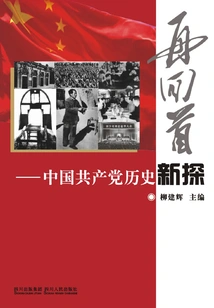
再回首:中国共产党历史新探
L
This book is a popular reading on the history of the Communist Party of China. It is the latest masterpiece of professors from the Party History Teaching and Research Section of the Central Party School. This manuscript contains a total of 11 articles, which select key and difficult issues in the history of the Communist Party of China since the founding of the Party in chronological order. It restores the true appearance of historical events in a realistic and realistic manner, allowing readers to deepen their understanding of the Party's history.
This book is a popular reading on the history of the Communist Party of China. It is the latest masterpiece of professors from the Party History Teaching and Research Section of the Central Party School. This manuscript contains a total of 11 articles, which select key and difficult issues in the history of the Communist Party of China since the founding of the Party in chronological order. It restores the true appearance of historical events in a realistic and realistic manner, allowing readers to deepen their understanding of the Party's history.
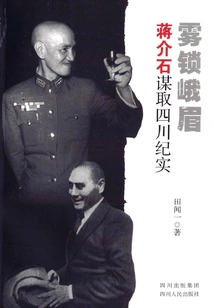
雾锁峨眉:蒋介石谋取四川纪实
Tian Wenyi
In 1935, the Red Army marched north through Sichuan to fight against Japan. A part of the Red Army suddenly made a roundabout attack on Chengdu, the capital of Sichuan Province. Liu Xiang, the "King of Sichuan" who had experienced the power of the Red Army, panicked and had to ask Chiang Kai-shek, who held the power of the central government, for support. Chiang Kai-shek took the opportunity to intervene in Sichuan: he set up an officer training group in Mount Emei to poach Liu Xiang's "legs". At the same time, he stationed the Central Staff Corps in Chongqing. From then on, the two sides launched a thrilling overt and covert struggle. When the Japanese imperialists launched a full-scale war of aggression against China and the nation's survival was at stake, Liu Xiang, who had a sense of national justice, gave up everything and resolutely led hundreds of thousands of troops out of Sichuan to fight. For a time, "no army can be formed without a river", passionate and tragic.
In 1935, the Red Army marched north through Sichuan to fight against Japan. A part of the Red Army suddenly made a roundabout attack on Chengdu, the capital of Sichuan Province. Liu Xiang, the "King of Sichuan" who had experienced the power of the Red Army, panicked and had to ask Chiang Kai-shek, who held the power of the central government, for support. Chiang Kai-shek took the opportunity to intervene in Sichuan: he set up an officer training group in Mount Emei to poach Liu Xiang's "legs". At the same time, he stationed the Central Staff Corps in Chongqing. From then on, the two sides launched a thrilling overt and covert struggle. When the Japanese imperialists launched a full-scale war of aggression against China and the nation's survival was at stake, Liu Xiang, who had a sense of national justice, gave up everything and resolutely led hundreds of thousands of troops out of Sichuan to fight. For a time, "no army can be formed without a river", passionate and tragic.
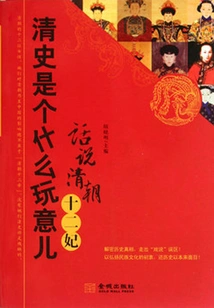
清史是个什么玩意儿:话说清朝十二妃
Sui Xiaoming
This book selects twelve women whose influence on the Qing Dynasty and even China was no less important than that of the "Twelve Emperors of the Qing Dynasty". By telling their stories, everyone can accurately and quickly understand the concubines of the Qing Dynasty, especially their difficulties and limitations in their own era.
This book selects twelve women whose influence on the Qing Dynasty and even China was no less important than that of the "Twelve Emperors of the Qing Dynasty". By telling their stories, everyone can accurately and quickly understand the concubines of the Qing Dynasty, especially their difficulties and limitations in their own era.
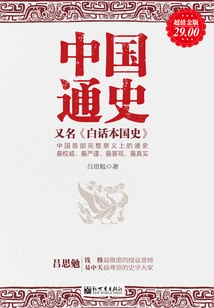
General History of China
History中国通史
Lu Simian
"Reading history makes you wise", this is a famous saying of the 17th century British philosopher Francis Bacon. To read history is to read the truth of history, to understand the laws of historical development, and then to participate in the development of history rationally. The "General History of China" (originally known as "The History of the Country in Vernacular") written by the master historian Lu Simian (1884-1957) can be regarded as a masterpiece of history that competes with Qian Mu's "Outline of National History". So far, it is still the most authoritative and complete general history of China.
"Reading history makes you wise", this is a famous saying of the 17th century British philosopher Francis Bacon. To read history is to read the truth of history, to understand the laws of historical development, and then to participate in the development of history rationally. The "General History of China" (originally known as "The History of the Country in Vernacular") written by the master historian Lu Simian (1884-1957) can be regarded as a masterpiece of history that competes with Qian Mu's "Outline of National History". So far, it is still the most authoritative and complete general history of China.
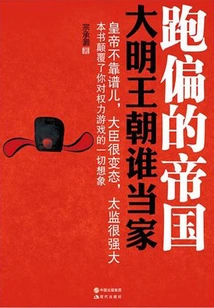
跑偏的帝国:大明王朝谁当家
Zong Chenghao
How did Daming go astray? The emperor is unreliable, the ministers are perverted, and the eunuchs are very powerful! Completely subverts all your imagination of the Game of Thrones!--"";;"";......--;,,;--;,;"" The most terrible eunuch's interference in politics even became a system and was recognized by the court. This is an empire gone awry. It makes all the impossible imaginations about the relationship between monarch and ministers come true, subverting people's general understanding of the power operation of ancient Chinese dynasties.
How did Daming go astray? The emperor is unreliable, the ministers are perverted, and the eunuchs are very powerful! Completely subverts all your imagination of the Game of Thrones!--"";;"";......--;,,;--;,;"" The most terrible eunuch's interference in politics even became a system and was recognized by the court. This is an empire gone awry. It makes all the impossible imaginations about the relationship between monarch and ministers come true, subverting people's general understanding of the power operation of ancient Chinese dynasties.
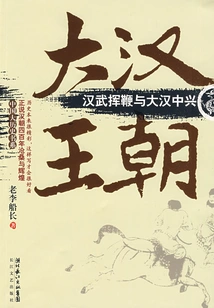
Han Dynasty
History大汉王朝
Captain Li
All events in this book are strictly based on historical records and I do not dare to make them up. Sometimes I have some opinions of my own. History is one story after another. Every era has colorful stories, and each story contains a different history. The four-hundred-year history of the Han Dynasty contains countless stories, carrying the vicissitudes and glory of the Han Dynasty. Looking back at the Han Dynasty, we are moved and surprised by the historical stories and people. It seems far away, but in fact it is very close. Because history is alive. "The Han Dynasty: The Whip of Han Wu and the Resurgence of the Han Dynasty" begins with the accession of Emperor Wu of the Han Dynasty to the end of the era of Emperor Wu of the Han Dynasty. It includes Emperor Wu's accession to the throne - Changmensuo Gillian - the emergence of Wei Qing and Huo Qubing - the passage to the Western Regions - the northern attack on the Huns - the resurgence of the Han Dynasty and other major events. It is narrated in an all-round way with time as the axis. Various influential figures are interspersed during it, fully recreating that magnificent and thrilling historical era. Unique insights and endless climaxes!
All events in this book are strictly based on historical records and I do not dare to make them up. Sometimes I have some opinions of my own. History is one story after another. Every era has colorful stories, and each story contains a different history. The four-hundred-year history of the Han Dynasty contains countless stories, carrying the vicissitudes and glory of the Han Dynasty. Looking back at the Han Dynasty, we are moved and surprised by the historical stories and people. It seems far away, but in fact it is very close. Because history is alive. "The Han Dynasty: The Whip of Han Wu and the Resurgence of the Han Dynasty" begins with the accession of Emperor Wu of the Han Dynasty to the end of the era of Emperor Wu of the Han Dynasty. It includes Emperor Wu's accession to the throne - Changmensuo Gillian - the emergence of Wei Qing and Huo Qubing - the passage to the Western Regions - the northern attack on the Huns - the resurgence of the Han Dynasty and other major events. It is narrated in an all-round way with time as the axis. Various influential figures are interspersed during it, fully recreating that magnificent and thrilling historical era. Unique insights and endless climaxes!
Outline of Chinese History
History中国史纲
Zhang Yinlin Lu Simian Jiang Tingfu
This book is full of citations, vertical and horizontal, and explains the theme with rich literary and historical materials and free writing style.
This book is full of citations, vertical and horizontal, and explains the theme with rich literary and historical materials and free writing style.
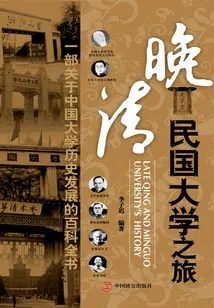
晚清民国大学之旅
Li Zichi
This book recalls the entire process of Chinese universities in the late Qing Dynasty and the Republic of China, including the universities, university teachers, and college students at that time, including those heroic figures, those thrilling scenes, those famous movements, and those extraordinary events. Events, those difficult, tortuous, complicated and long school-running processes, those campus vignettes that are either happy, interesting or touching, those thoughts and words that are deafening and empty, those campuses with beautiful landscapes, exquisite buildings and loud books. You can also regard it as an encyclopedia about Chinese universities before 1949; a "folk version", a "popular version" and a "story version" of the development history of China's modern and modern universities; the spiritual home of the Chinese nation; and a pilgrimage for the older generation of intellectuals. Because that is our soul, our root!
This book recalls the entire process of Chinese universities in the late Qing Dynasty and the Republic of China, including the universities, university teachers, and college students at that time, including those heroic figures, those thrilling scenes, those famous movements, and those extraordinary events. Events, those difficult, tortuous, complicated and long school-running processes, those campus vignettes that are either happy, interesting or touching, those thoughts and words that are deafening and empty, those campuses with beautiful landscapes, exquisite buildings and loud books. You can also regard it as an encyclopedia about Chinese universities before 1949; a "folk version", a "popular version" and a "story version" of the development history of China's modern and modern universities; the spiritual home of the Chinese nation; and a pilgrimage for the older generation of intellectuals. Because that is our soul, our root!
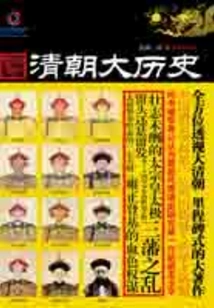
清朝大历史
Monson
This book is the culmination of Mr. Meng Sen's research on Qing history. It is also a representative and foundational work on research on Qing history issues.
This book is the culmination of Mr. Meng Sen's research on Qing history. It is also a representative and foundational work on research on Qing history issues.
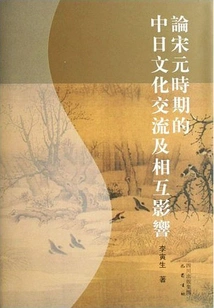
论宋元时期的中日文化交流及相互影响
Li Yinsheng
China and Japan are close neighbors separated by a narrow strip of water. Since ancient times, the two peoples have had close ties and mutual influence in the political, economic and cultural fields. As early as the Chinese history book "Moshu", there are records about Japan. In Japanese history books, there are countless records about China. In terms of geographical situation, in ancient society, China has always been the closest big country to Japan and relatively advanced in all aspects. Therefore, Japan regards China as a model for its own nation to learn from.
China and Japan are close neighbors separated by a narrow strip of water. Since ancient times, the two peoples have had close ties and mutual influence in the political, economic and cultural fields. As early as the Chinese history book "Moshu", there are records about Japan. In Japanese history books, there are countless records about China. In terms of geographical situation, in ancient society, China has always been the closest big country to Japan and relatively advanced in all aspects. Therefore, Japan regards China as a model for its own nation to learn from.
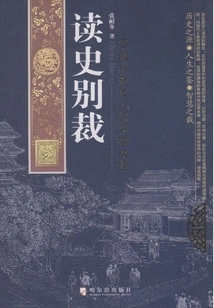
读史别裁:中国历史文化的关键话题
Zhang Naidong
History is the stage for the activities of ancient people, and culture is the tradition accumulated in it. Taking history as a guide, we can see the rise and fall. History and culture are the genetic genes of spirit and thought and have a profound impact on modern people. Finding its origins in the vast sea of classics and revealing the core of the traditional Chinese world is unique. The author of "Reading History: Key Topics in Chinese History and Culture" uses modern rational thinking to understand some typical examples in history. For some historical stories that are familiar to people but unknown to people, the book carefully breaks them down and analyzes them step by step. It proposes multiple possibilities for the way out or the outcome of the story, and then uses the elimination method to draw the conclusion presented by history itself, and analyzes the reason why it can only be this result. The principles discussed in the book are all great principles regarding the value system. But it is not based on empty reasoning, but based on a large number of detailed descriptions.
History is the stage for the activities of ancient people, and culture is the tradition accumulated in it. Taking history as a guide, we can see the rise and fall. History and culture are the genetic genes of spirit and thought and have a profound impact on modern people. Finding its origins in the vast sea of classics and revealing the core of the traditional Chinese world is unique. The author of "Reading History: Key Topics in Chinese History and Culture" uses modern rational thinking to understand some typical examples in history. For some historical stories that are familiar to people but unknown to people, the book carefully breaks them down and analyzes them step by step. It proposes multiple possibilities for the way out or the outcome of the story, and then uses the elimination method to draw the conclusion presented by history itself, and analyzes the reason why it can only be this result. The principles discussed in the book are all great principles regarding the value system. But it is not based on empty reasoning, but based on a large number of detailed descriptions.
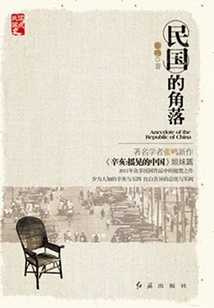
民国的角落:嬉笑怒骂民国人,闲言碎语大历史
Zhang Ming
Teacher Zhang Ming's cultural essays about the history of the Republic of China vividly outline and vividly display the major and minor figures and various anecdotes in the history of the Republic of China from an alternative perspective and with a light touch. This book is a different kind of variation on Xinhai and May Fourth, warlord affairs, democracy and elections, leading readers to reflect on the impact of Chinese feudal culture and Western culture on Chinese history, Chinese people, and even the current society.
Teacher Zhang Ming's cultural essays about the history of the Republic of China vividly outline and vividly display the major and minor figures and various anecdotes in the history of the Republic of China from an alternative perspective and with a light touch. This book is a different kind of variation on Xinhai and May Fourth, warlord affairs, democracy and elections, leading readers to reflect on the impact of Chinese feudal culture and Western culture on Chinese history, Chinese people, and even the current society.
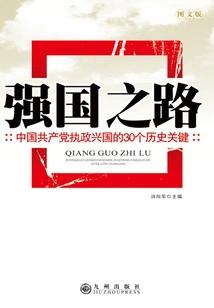
强国之路:中国共产党执政兴国的30个历史关键
Hong Xianghua
Since modern times, the Chinese nation has faced two major historical tasks: one is to seek national independence and people's liberation, and the other is to realize the prosperity of the country and the common prosperity of the people. Since taking power in 1949, the Communist Party of China has led the people, with an enterprising spirit and magnificent innovative practices, to continuously explore and answer major theoretical and practical questions such as what socialism is, how to build socialism, what kind of party to build, how to build the party, what kind of development to achieve, how to develop, and other major theoretical and practical issues. Today, a socialist China that faces modernization, the world, and the future stands tall in the east of the world.
Since modern times, the Chinese nation has faced two major historical tasks: one is to seek national independence and people's liberation, and the other is to realize the prosperity of the country and the common prosperity of the people. Since taking power in 1949, the Communist Party of China has led the people, with an enterprising spirit and magnificent innovative practices, to continuously explore and answer major theoretical and practical questions such as what socialism is, how to build socialism, what kind of party to build, how to build the party, what kind of development to achieve, how to develop, and other major theoretical and practical issues. Today, a socialist China that faces modernization, the world, and the future stands tall in the east of the world.
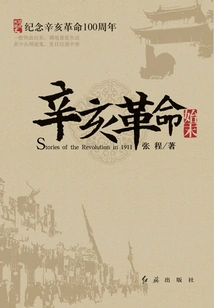
辛亥革命始末
I
"The Beginning and End of the Revolution of 1911" takes the Revolution of 1911 as the core event and tells the story of Chinese history and social changes from 1908 to 1912. The book begins when Emperor Xuantong ascends the throne and ends when the Nanjing Provisional Government moves north. This period was a period of intense social turmoil in China, with complicated characters and events. This book vividly and popularly describes this serious and profound history, absorbs and uses the latest information discovered and mastered by the current historians, grasps the main events, and tells this thrilling revolutionary chapter in chronological order, interspersed with introductions of important figures, and dotted with interesting historical details.
"The Beginning and End of the Revolution of 1911" takes the Revolution of 1911 as the core event and tells the story of Chinese history and social changes from 1908 to 1912. The book begins when Emperor Xuantong ascends the throne and ends when the Nanjing Provisional Government moves north. This period was a period of intense social turmoil in China, with complicated characters and events. This book vividly and popularly describes this serious and profound history, absorbs and uses the latest information discovered and mastered by the current historians, grasps the main events, and tells this thrilling revolutionary chapter in chronological order, interspersed with introductions of important figures, and dotted with interesting historical details.
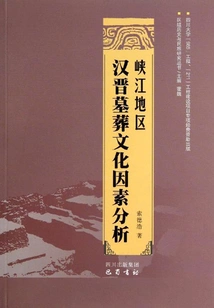
峡江地区汉晋墓葬文化因素分析
Soderho
"Analysis of Cultural Factors of Han-Jin Tombs in the Xiajiang Area" was revised and published by Suo Dehao on the basis of his master's thesis. It has gone through several years and repeatedly added a lot of information. It is a valuable reference work for today's study of tomb archeology and related historical backgrounds in the Yangtze River Basin since the Han-Jin Dynasties.
"Analysis of Cultural Factors of Han-Jin Tombs in the Xiajiang Area" was revised and published by Suo Dehao on the basis of his master's thesis. It has gone through several years and repeatedly added a lot of information. It is a valuable reference work for today's study of tomb archeology and related historical backgrounds in the Yangtze River Basin since the Han-Jin Dynasties.
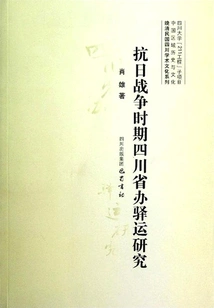
抗日战争时期四川省办驿运研究
Xiao Xiong
Xiao Xiong, the author of "Sichuan Academic Culture Series in the Late Qing Dynasty and the Republic of China: Research on Sichuan Province's Post Transportation during the Anti-Japanese War", reconstructed the historical facts of Sichuan Province's post transportation during the war based on detailed historical materials, and put forward many unique insights into the inheritance and development of traditional transportation methods during the "wartime post transportation" sponsored by the National Government, the characteristics, status of Sichuan Province's post transportation, and its contribution to the war of resistance. He also pointed out realistically that although there were many problems in the actual operation of Sichuan Province's wartime postal transportation, after all, when transportation was difficult during wartime, it undertook a large number of military supplies and civilian transportation tasks. It undoubtedly became an effective means to break the Japanese military's strategic blockade and had very important historical significance.
Xiao Xiong, the author of "Sichuan Academic Culture Series in the Late Qing Dynasty and the Republic of China: Research on Sichuan Province's Post Transportation during the Anti-Japanese War", reconstructed the historical facts of Sichuan Province's post transportation during the war based on detailed historical materials, and put forward many unique insights into the inheritance and development of traditional transportation methods during the "wartime post transportation" sponsored by the National Government, the characteristics, status of Sichuan Province's post transportation, and its contribution to the war of resistance. He also pointed out realistically that although there were many problems in the actual operation of Sichuan Province's wartime postal transportation, after all, when transportation was difficult during wartime, it undertook a large number of military supplies and civilian transportation tasks. It undoubtedly became an effective means to break the Japanese military's strategic blockade and had very important historical significance.
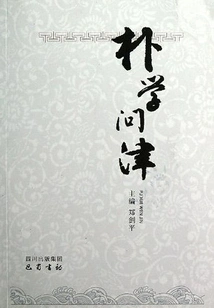
Pu Xuewenjin
History朴学问津
Zheng Jianping
The selected papers in "Pu Xue Wen Jin" edited by Zheng Jianping involve literature language, folk language, modern Chinese, vocabulary exegesis, and grammar and cultural research. They are the results of graduate students and the culmination of the diligent guidance of instructors. The style respects the original appearance without making any major changes. There is some childishness in it, but it is also an experience we have gone through together. So I don't make any shallow assumptions and dare to show off to the Fang family.
The selected papers in "Pu Xue Wen Jin" edited by Zheng Jianping involve literature language, folk language, modern Chinese, vocabulary exegesis, and grammar and cultural research. They are the results of graduate students and the culmination of the diligent guidance of instructors. The style respects the original appearance without making any major changes. There is some childishness in it, but it is also an experience we have gone through together. So I don't make any shallow assumptions and dare to show off to the Fang family.
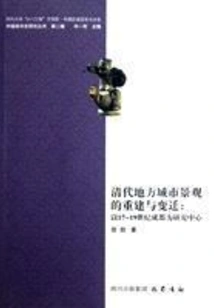
清代地方城市景观的重建与变迁
Tian Kai
The research of this article is based on the theme of reflecting the reconstruction and development of local urban landscape in the Qing Dynasty after the turmoil in the late Ming and early Qing Dynasties. This article will focus on the reconstruction of Chengdu's landscape in the Qing Dynasty, and build a...
The research of this article is based on the theme of reflecting the reconstruction and development of local urban landscape in the Qing Dynasty after the turmoil in the late Ming and early Qing Dynasties. This article will focus on the reconstruction of Chengdu's landscape in the Qing Dynasty, and build a...
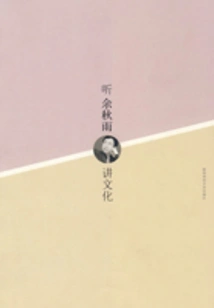
听余秋雨讲文化
Li Ming
The uniqueness of Yu Qiuyu is that he breaks the shackles of traditional prose and creates new cultural prose that combines meaning and thought. He uses landscapes, scenery and regional history to seek the huge connotation and implication of Chinese culture, as well as the composition of personality and the true meaning of life.
The uniqueness of Yu Qiuyu is that he breaks the shackles of traditional prose and creates new cultural prose that combines meaning and thought. He uses landscapes, scenery and regional history to seek the huge connotation and implication of Chinese culture, as well as the composition of personality and the true meaning of life.
听黄仁宇讲中国历史
Ni Duan
Mr. Huang Renyu can be said to be a major anomaly in the field of history in the past century. His "big view of history" "introduces the concept of macroscopic and broadened horizons into the study of Chinese history", allowing him to examine Chinese history from a far-sighted perspective and has a profound influence in the field of history.
Mr. Huang Renyu can be said to be a major anomaly in the field of history in the past century. His "big view of history" "introduces the concept of macroscopic and broadened horizons into the study of Chinese history", allowing him to examine Chinese history from a far-sighted perspective and has a profound influence in the field of history.
历代帝王之死
The Bright Moon Is In The Sky
Although the cause of death of many emperors is unknown and has become an unsolved case in history, many clues can be found. In the final analysis, they are still closely related to the supreme power. All the most beautiful human emotions, such as family affection, friendship, love, etc., Disappear under the control of power. The tragic death of many emperors still makes me shudder when I read it...
Although the cause of death of many emperors is unknown and has become an unsolved case in history, many clues can be found. In the final analysis, they are still closely related to the supreme power. All the most beautiful human emotions, such as family affection, friendship, love, etc., Disappear under the control of power. The tragic death of many emperors still makes me shudder when I read it...
红色账簿:全景展示中共革命史中的货币战争(1921~1927)
Ma Xianglin
How did the weak opposition party defeat the ruling party that controlled the country's resources? How can a team that does not receive salaries defeat the regular army with high benefits? Interpret red history from a new perspective, secret information is released for the first time, subverting your view of revolution! The book uses the perspective of wealth and economy to provide a documentary narration of our party's revolutionary process from 1921 to 1927, showing the twists and turns of real currency and war.
How did the weak opposition party defeat the ruling party that controlled the country's resources? How can a team that does not receive salaries defeat the regular army with high benefits? Interpret red history from a new perspective, secret information is released for the first time, subverting your view of revolution! The book uses the perspective of wealth and economy to provide a documentary narration of our party's revolutionary process from 1921 to 1927, showing the twists and turns of real currency and war.
资治通鉴·菁华(中小学生必读丛书)
Sima Guangzhu And Wen Pei's Translation
A pillow book that Mao Zedong read 17 times! A masterpiece of history that interprets the gains and losses of history, and discusses the chaos, rise and fall of the past thousands of years! Understand the changes and rotations of feudal dynasties, and taste the intersection and changes of influential figures!
A pillow book that Mao Zedong read 17 times! A masterpiece of history that interprets the gains and losses of history, and discusses the chaos, rise and fall of the past thousands of years! Understand the changes and rotations of feudal dynasties, and taste the intersection and changes of influential figures!
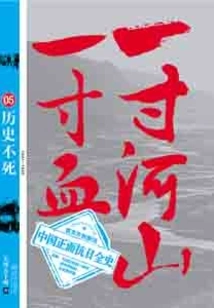
一寸河山一寸血5
Guanhe Fifty States
This book tells the full history of China's frontal resistance to Japan from a brand-new perspective. It is also the history closest to New China. It was an era of comprehensive turmoil and transformation in social structure, ideology and economy. New China came from there, and we live in New China. The reason why we are what we are now is inseparable from that era. Understanding it helps us understand our own era. This book takes the Huanggutun Incident and the September 18th Incident as its starting point and the fall of Northeast China as its starting point to reproduce the influential figures and wonderful past events in the historical context of the fourteen-year Anti-Japanese War. This book is like a magnificent picture scroll. The author uses a humorous, profound, exciting or tragic style to take you closer to Zhang Zuolin, Chiang Kai-shek, and Wang Jingwei, and appreciate the armor and flowers, friendship and intrigue, tears and laughter, joy and sorrow they once had. This volume is the fifth volume, which mainly tells the history of the counterattack stage of the Anti-Japanese War from 1938 to 1941.
This book tells the full history of China's frontal resistance to Japan from a brand-new perspective. It is also the history closest to New China. It was an era of comprehensive turmoil and transformation in social structure, ideology and economy. New China came from there, and we live in New China. The reason why we are what we are now is inseparable from that era. Understanding it helps us understand our own era. This book takes the Huanggutun Incident and the September 18th Incident as its starting point and the fall of Northeast China as its starting point to reproduce the influential figures and wonderful past events in the historical context of the fourteen-year Anti-Japanese War. This book is like a magnificent picture scroll. The author uses a humorous, profound, exciting or tragic style to take you closer to Zhang Zuolin, Chiang Kai-shek, and Wang Jingwei, and appreciate the armor and flowers, friendship and intrigue, tears and laughter, joy and sorrow they once had. This volume is the fifth volume, which mainly tells the history of the counterattack stage of the Anti-Japanese War from 1938 to 1941.