Library
Browse and search books
513 novels found
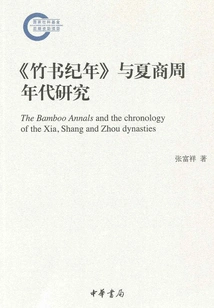
《竹书纪年》与夏商周年代研究
Zhang Fuxiang
This manuscript starts from the current and ancient versions of the "Bamboo Book Annals" that have been circulated to this day, combs the dissemination process of the two versions, discusses the writing, original appearance and mutual relationship between the two, puts forward the view that the current version was formed in the Kaiyuan Dynasty of the Tang Dynasty, and affirms the value of the current version in restoring the ancient version. Then the chronology of the Western Zhou, Shang, and Xia in the "Bamboo Chronicles" was deduced one by one, and the revised chronology of the Xia, Shang, and Western Zhou Dynasties in the "Bamboo Chronicles" was compiled. At the same time, some conclusions about the results of the Xia, Shang, and Zhou dating projects were questioned. In the appendix, there were special discussions on the interpretation of the Li Gui inscription, the astronomical records in Guoyu, and the bronze calendar.
This manuscript starts from the current and ancient versions of the "Bamboo Book Annals" that have been circulated to this day, combs the dissemination process of the two versions, discusses the writing, original appearance and mutual relationship between the two, puts forward the view that the current version was formed in the Kaiyuan Dynasty of the Tang Dynasty, and affirms the value of the current version in restoring the ancient version. Then the chronology of the Western Zhou, Shang, and Xia in the "Bamboo Chronicles" was deduced one by one, and the revised chronology of the Xia, Shang, and Western Zhou Dynasties in the "Bamboo Chronicles" was compiled. At the same time, some conclusions about the results of the Xia, Shang, and Zhou dating projects were questioned. In the appendix, there were special discussions on the interpretation of the Li Gui inscription, the astronomical records in Guoyu, and the bronze calendar.
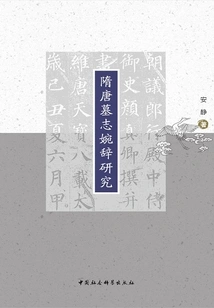
隋唐墓志婉辞研究
Quiet
The stone carving corpus "has to move from traditional epigraphy to systematic scientific research, and the tasks to be completed are very heavy." This book attempts to make a comprehensive discussion to a certain extent in the context of detailed research on epitaphs. For example, comparing the words used in epitaphs in the Southern and Northern Dynasties, we summarized 93 euphemisms for death in epitaphs in the Sui and Tang Dynasties, and 35 new euphemisms appeared in epitaphs in the Tang Dynasty. In addition, using bisyllabic word data from Sui and Tang epitaphs, the first examples of 21 words in related dictionaries were advanced, and 14 missing meanings and four types of word examples were supplemented. At the same time, by focusing on women's epitaphs in the Sui and Tang Dynasties, which accounted for a quarter of the total epitaphs in the Sui and Tang Dynasties, this paper preliminarily explains the differences in the terminology of women's epitaphs in the Middle Ages and the beginning of modern times. In addition, adapting to the characteristics of Chinese discourse, for the first time using unearthed documents as corpus, four factors for the cohesion of medieval epitaph discourse were summarized. The research in this book explores the value of epitaph corpus by integrating various elements of language. In terms of content, the euphemisms reflect the changes in etiquette and customs such as weddings and funerals, as well as the structure of judgment terms; it contributes to the improvement of related reference books; it involves the Tang Dynasty documents contained in the epitaph text, the words quoted from the epitaph, etc., And it also expands the perspective of the study of the epitaph material itself.
The stone carving corpus "has to move from traditional epigraphy to systematic scientific research, and the tasks to be completed are very heavy." This book attempts to make a comprehensive discussion to a certain extent in the context of detailed research on epitaphs. For example, comparing the words used in epitaphs in the Southern and Northern Dynasties, we summarized 93 euphemisms for death in epitaphs in the Sui and Tang Dynasties, and 35 new euphemisms appeared in epitaphs in the Tang Dynasty. In addition, using bisyllabic word data from Sui and Tang epitaphs, the first examples of 21 words in related dictionaries were advanced, and 14 missing meanings and four types of word examples were supplemented. At the same time, by focusing on women's epitaphs in the Sui and Tang Dynasties, which accounted for a quarter of the total epitaphs in the Sui and Tang Dynasties, this paper preliminarily explains the differences in the terminology of women's epitaphs in the Middle Ages and the beginning of modern times. In addition, adapting to the characteristics of Chinese discourse, for the first time using unearthed documents as corpus, four factors for the cohesion of medieval epitaph discourse were summarized. The research in this book explores the value of epitaph corpus by integrating various elements of language. In terms of content, the euphemisms reflect the changes in etiquette and customs such as weddings and funerals, as well as the structure of judgment terms; it contributes to the improvement of related reference books; it involves the Tang Dynasty documents contained in the epitaph text, the words quoted from the epitaph, etc., And it also expands the perspective of the study of the epitaph material itself.
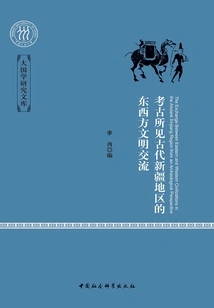
Archaeological Evidence of Exchanges between Eastern and Western Civilizations in Ancient Xinjiang
History考古所见古代新疆地区的东西方文明交流
Li Xiao
Archaeological research results in the past century have shown that although ancient Xinjiang (or the Western Regions) was a peripheral area of major Asian and European civilizations, its unique geographical location made it a gathering place for exchanges between Eastern and Western civilizations. After the collision and integration of major Asian and European civilizations and the local civilizations of the Western Regions, a diverse cultural landscape was created and the unique development of this place was created. This book contains 13 papers related to archaeological research in Xinjiang, aiming to demonstrate Xinjiang's status as a bridge of exchange and communication between the East and the West, and to deepen the world's understanding of the multicultural culture of ancient Xinjiang. All countries in the world have different civilizations and have their own strengths. Only through equal exchanges and openness and tolerance can we promote the progress of human civilization and the peaceful development of the world.
Archaeological research results in the past century have shown that although ancient Xinjiang (or the Western Regions) was a peripheral area of major Asian and European civilizations, its unique geographical location made it a gathering place for exchanges between Eastern and Western civilizations. After the collision and integration of major Asian and European civilizations and the local civilizations of the Western Regions, a diverse cultural landscape was created and the unique development of this place was created. This book contains 13 papers related to archaeological research in Xinjiang, aiming to demonstrate Xinjiang's status as a bridge of exchange and communication between the East and the West, and to deepen the world's understanding of the multicultural culture of ancient Xinjiang. All countries in the world have different civilizations and have their own strengths. Only through equal exchanges and openness and tolerance can we promote the progress of human civilization and the peaceful development of the world.
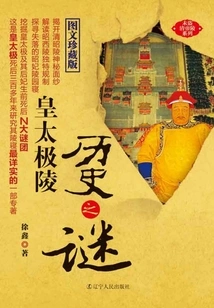
皇太极陵历史之谜
Xu Xin
As the founder of the Qing Empire, Huang Taiji's wisdom and experience left a deep impression on future generations. Corresponding to Huang Taiji's great life, his bizarre death is also eye-catching, especially the unique location and regulations of the mausoleum, which has always been amazing. This book is based on official history and Qing palace archives, uses on-the-spot investigation, and combines the research results of today's historical academic circles to tell you the little-known secrets about Huang Taiji, Empress Xiaozhuang Wen and their mausoleum through popular and skillful writing. The book is equipped with many precious historical pictures, which will not only give you a visual shock, but also expand your imagination.
As the founder of the Qing Empire, Huang Taiji's wisdom and experience left a deep impression on future generations. Corresponding to Huang Taiji's great life, his bizarre death is also eye-catching, especially the unique location and regulations of the mausoleum, which has always been amazing. This book is based on official history and Qing palace archives, uses on-the-spot investigation, and combines the research results of today's historical academic circles to tell you the little-known secrets about Huang Taiji, Empress Xiaozhuang Wen and their mausoleum through popular and skillful writing. The book is equipped with many precious historical pictures, which will not only give you a visual shock, but also expand your imagination.
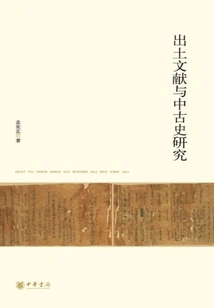
出土文献与中古史研究
Meng Xianshi
"Research on Unearthed Documents and Medieval History" is the latest monograph by Professor Meng Xianshi of the School of Chinese Studies at Renmin University of China. This book uses unearthed materials such as Dunhuang documents, Turpan documents and epitaphs of the Tang Dynasty, combined with the basic classics of the Tang Dynasty, to explore the major political events and ethnic groups of the Tang Dynasty. It also conducts innovative special research on the local politics, economy and social culture of Dunhuang and Turpan in the Tang Dynasty, as well as important political figures in the Tang Dynasty such as King Wu Li Ke, Princess Anle, and Shangguan Yi.
"Research on Unearthed Documents and Medieval History" is the latest monograph by Professor Meng Xianshi of the School of Chinese Studies at Renmin University of China. This book uses unearthed materials such as Dunhuang documents, Turpan documents and epitaphs of the Tang Dynasty, combined with the basic classics of the Tang Dynasty, to explore the major political events and ethnic groups of the Tang Dynasty. It also conducts innovative special research on the local politics, economy and social culture of Dunhuang and Turpan in the Tang Dynasty, as well as important political figures in the Tang Dynasty such as King Wu Li Ke, Princess Anle, and Shangguan Yi.
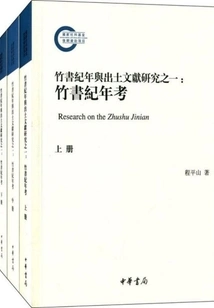
《竹书纪年》与出土文献研究之一:《竹书纪年》考(全三册)
Cheng Pingshan
The "Bamboo Book Annals" published by Jizhong records the history of the Five Emperors of Xia, Shang and Zhou and is regarded as the first chronological general history of ancient China. "Bamboo Chronicles" is a monograph that studies the unearthing, arrangement, correction, version, spread, authenticity, nature and value of "Bamboo Chronicles". This book is the database of "Bamboo Chronicles" and is a comprehensive study of "Bamboo Chronicles". The author summarizes the research history of "Bamboo Chronicles" since the Jin Dynasty, discusses the structure and value of the ancient "Bamboo Chronicles", and reveals the source and pseudo-myth of the current "Bamboo Chronicles".
The "Bamboo Book Annals" published by Jizhong records the history of the Five Emperors of Xia, Shang and Zhou and is regarded as the first chronological general history of ancient China. "Bamboo Chronicles" is a monograph that studies the unearthing, arrangement, correction, version, spread, authenticity, nature and value of "Bamboo Chronicles". This book is the database of "Bamboo Chronicles" and is a comprehensive study of "Bamboo Chronicles". The author summarizes the research history of "Bamboo Chronicles" since the Jin Dynasty, discusses the structure and value of the ancient "Bamboo Chronicles", and reveals the source and pseudo-myth of the current "Bamboo Chronicles".
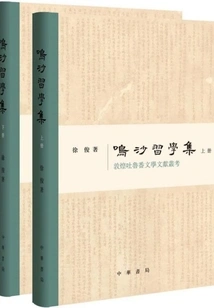
鸣沙习学集(全二册)
Xu Jun
"Mingsha Xi Xue Ji", written by Xu Jun, contains more than 30 essays, notes, and book reviews, the main body of which is related to Dunhuang and Turpan literature. The whole book is organized according to essays, notes, book reviews and appendices, and is roughly divided into four categories: pre-Tang poetry, Tang and Five Dynasties poetry, lyrics, and academic history. The categories are basically ordered by writing time or publication order, and some slightly comprehensive ones are placed at the end of the category. The author recounts his academic experience in the past thirty years: "Around 1986, I started to get in touch with Dunhuang because I was responsible for editing Mr. Chen Shangjun's "Supplement to the Complete Poems of the Tang Dynasty" (including the revised version of Mr. Wang Chongmin and others' "Complete Edition of the Complete Poems of the Tang Dynasty"). Write a document and try to research and catalog Dunhuang poetry. By 1991, the survey and proofreading of Dunhuang poetry manuscripts were basically completed; in 1995, the first draft of "A Study of Dunhuang Poetry Collection Fragments" was completed and included in Zhonghua Book Company. The publication plan is to be officially published in June 2000... I have read and reviewed Mr. Wang Chongmin's "Dunhuang Songs and Lyrics", Mr. Ren Bandang's "Dunhuang Songs and Lyrics", and Mr. Rao Zongyi's "Dunhuang Songs". Therefore, the author has been working diligently on the fertile academic soil of Dunhuang and Turpan literature for thirty years; and the compilation of this collection of essays can be said to be a great academic harvest. With the discovery of new materials and the application of information technology, the author tried to preserve its original appearance and slightly corrected the paper, which shows the author's academic rigor.
"Mingsha Xi Xue Ji", written by Xu Jun, contains more than 30 essays, notes, and book reviews, the main body of which is related to Dunhuang and Turpan literature. The whole book is organized according to essays, notes, book reviews and appendices, and is roughly divided into four categories: pre-Tang poetry, Tang and Five Dynasties poetry, lyrics, and academic history. The categories are basically ordered by writing time or publication order, and some slightly comprehensive ones are placed at the end of the category. The author recounts his academic experience in the past thirty years: "Around 1986, I started to get in touch with Dunhuang because I was responsible for editing Mr. Chen Shangjun's "Supplement to the Complete Poems of the Tang Dynasty" (including the revised version of Mr. Wang Chongmin and others' "Complete Edition of the Complete Poems of the Tang Dynasty"). Write a document and try to research and catalog Dunhuang poetry. By 1991, the survey and proofreading of Dunhuang poetry manuscripts were basically completed; in 1995, the first draft of "A Study of Dunhuang Poetry Collection Fragments" was completed and included in Zhonghua Book Company. The publication plan is to be officially published in June 2000... I have read and reviewed Mr. Wang Chongmin's "Dunhuang Songs and Lyrics", Mr. Ren Bandang's "Dunhuang Songs and Lyrics", and Mr. Rao Zongyi's "Dunhuang Songs". Therefore, the author has been working diligently on the fertile academic soil of Dunhuang and Turpan literature for thirty years; and the compilation of this collection of essays can be said to be a great academic harvest. With the discovery of new materials and the application of information technology, the author tried to preserve its original appearance and slightly corrected the paper, which shows the author's academic rigor.
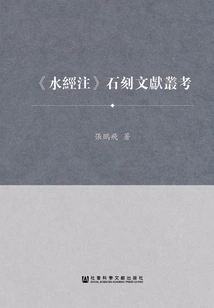
《水经注》石刻文献丛考
Zhang Pengfei
Based on Shi Zhecun's "Shui Jing Zhu Stele Records", this book selects more than 230 stone carving documents contained in "Shui Jing Zhu". Based on the content and use of the stone carvings, it is divided into ten categories: mausoleums, ancestral temples, cities, rivers, water conservancy, historic sites, roads and bridges, scripture circles, Buddhism, Taoism, gods and monsters, and history. It is researched one by one and combined with newly unearthed archaeological documents. As a result, based on the descriptions of epigraphic documents of the past dynasties such as Ouyang Xiu's "Collection of Ancient Records", Zhao Mingcheng's "Epigraphic Records", Hong Shi's "Li Shi", Chen Si's "Bao Ke Congbian" and other epigraphic documents as an outline, the empirical literature research method is the main research method, and various research methods such as ancient Chinese literature, history, epigraphy, and historical geography are used to examine each stone carving.
Based on Shi Zhecun's "Shui Jing Zhu Stele Records", this book selects more than 230 stone carving documents contained in "Shui Jing Zhu". Based on the content and use of the stone carvings, it is divided into ten categories: mausoleums, ancestral temples, cities, rivers, water conservancy, historic sites, roads and bridges, scripture circles, Buddhism, Taoism, gods and monsters, and history. It is researched one by one and combined with newly unearthed archaeological documents. As a result, based on the descriptions of epigraphic documents of the past dynasties such as Ouyang Xiu's "Collection of Ancient Records", Zhao Mingcheng's "Epigraphic Records", Hong Shi's "Li Shi", Chen Si's "Bao Ke Congbian" and other epigraphic documents as an outline, the empirical literature research method is the main research method, and various research methods such as ancient Chinese literature, history, epigraphy, and historical geography are used to examine each stone carving.
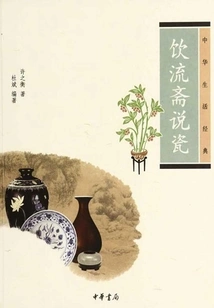
饮流斋说瓷(中华生活经典)
Xu Zhiheng
Xu Zhiheng's family name was Yin Liu Zhai, and he called himself the master of Yin Liu Zhai, so his book "Shuo Porcelain" was titled "Yin Liu Zhai Shuo Porcelain". This book is a monograph on the history of Chinese ceramics based on summarizing previous knowledge and personal experiences. The author used methods such as classification and comparison to collect information from the Expo and describe in an orderly manner. He collected a large number of scientific and common names for ancient ceramics and preserved many historical terms and antique terminology for future generations, which are still used in the field of museums and cultural relics at home and abroad. There are ten volumes in the book, which are in order: overview, kiln, glaze, color, flower painting, style identification, bottles and jars, cups and plates, miscellaneous utensils, defects and counterfeiting. Each chapter discusses the historical changes vertically and the types of designs and colors horizontally. It traces back to its origins and advances layer by layer to analyze the details. It is the basis for beginners and a must-read book for porcelain scholars.
Xu Zhiheng's family name was Yin Liu Zhai, and he called himself the master of Yin Liu Zhai, so his book "Shuo Porcelain" was titled "Yin Liu Zhai Shuo Porcelain". This book is a monograph on the history of Chinese ceramics based on summarizing previous knowledge and personal experiences. The author used methods such as classification and comparison to collect information from the Expo and describe in an orderly manner. He collected a large number of scientific and common names for ancient ceramics and preserved many historical terms and antique terminology for future generations, which are still used in the field of museums and cultural relics at home and abroad. There are ten volumes in the book, which are in order: overview, kiln, glaze, color, flower painting, style identification, bottles and jars, cups and plates, miscellaneous utensils, defects and counterfeiting. Each chapter discusses the historical changes vertically and the types of designs and colors horizontally. It traces back to its origins and advances layer by layer to analyze the details. It is the basis for beginners and a must-read book for porcelain scholars.
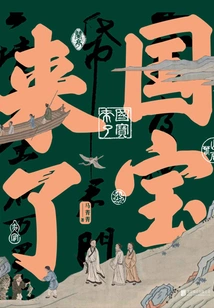
国宝来了
Ma Jingjing
Each national treasure is full of strong emotions. They are still cute despite their age. The 2020 brand new work of Ma Jingjing, an ink artist and author of the award-winning Chinese Good Book "Landscapes, Talking about Painting" series, is twenty-one national treasures and a spiritual history of the Chinese people. Show adults the insider's knowledge and give children first-class humanistic enlightenment.
Each national treasure is full of strong emotions. They are still cute despite their age. The 2020 brand new work of Ma Jingjing, an ink artist and author of the award-winning Chinese Good Book "Landscapes, Talking about Painting" series, is twenty-one national treasures and a spiritual history of the Chinese people. Show adults the insider's knowledge and give children first-class humanistic enlightenment.
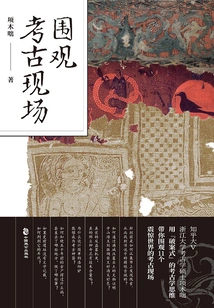
围观考古现场
Xiang Mudu
Before opening this book, please think about a question: What kind of science is archeology? Digging graves to find antiques? Going over mountains and ridges to see rock walls? Traveling across mountains and rivers to visit the ruins? ...--Absolutely not! The real skill of archeology lies in how to use a small amount of information to analyze a large number of conclusions. How did Stein find clues from a few wooden boards purchased at the market to find the legendary ancient city of Jingjue? How to know what the ancient corpses 5,000 years ago ate, what diseases they had, and even where they went and what they did? How can we prove through the cultural relics unearthed from Han tombs in the city that Liu Sheng, Prince Jing of Zhongshan, was indeed a drinker and a womanizer? Is the real anti-grave robbing agency really that magical and technical? Why can the simple-designed "Luoyang Shovel" become an archaeological artifact? How to determine the age of a prehistoric site without written records? ... This book uses "case-solving" archaeological thinking to take you around 11 archaeological sites that shocked the world. However, the author of this book does not intend to merely popularize knowledge about those archaeological sites, but is committed to discussing with readers how to use archaeological thinking and vision to view cultural relics and look at archeology; how to discover new historical research materials, solve historical problems, and confirm or overturn existing conclusions in history books through thinking and practice like an archaeologist; how to integrate various knowledge and common sense to solve complex academic problems.
Before opening this book, please think about a question: What kind of science is archeology? Digging graves to find antiques? Going over mountains and ridges to see rock walls? Traveling across mountains and rivers to visit the ruins? ...--Absolutely not! The real skill of archeology lies in how to use a small amount of information to analyze a large number of conclusions. How did Stein find clues from a few wooden boards purchased at the market to find the legendary ancient city of Jingjue? How to know what the ancient corpses 5,000 years ago ate, what diseases they had, and even where they went and what they did? How can we prove through the cultural relics unearthed from Han tombs in the city that Liu Sheng, Prince Jing of Zhongshan, was indeed a drinker and a womanizer? Is the real anti-grave robbing agency really that magical and technical? Why can the simple-designed "Luoyang Shovel" become an archaeological artifact? How to determine the age of a prehistoric site without written records? ... This book uses "case-solving" archaeological thinking to take you around 11 archaeological sites that shocked the world. However, the author of this book does not intend to merely popularize knowledge about those archaeological sites, but is committed to discussing with readers how to use archaeological thinking and vision to view cultural relics and look at archeology; how to discover new historical research materials, solve historical problems, and confirm or overturn existing conclusions in history books through thinking and practice like an archaeologist; how to integrate various knowledge and common sense to solve complex academic problems.
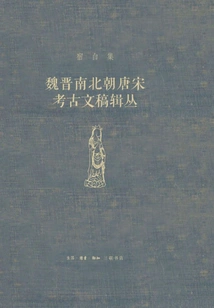
魏晋南北朝唐宋考古文稿辑丛
Su Bai
Mr. Su Bai is a master who creates paradigms and establishes systems in the Chinese archaeological community. This "Collection of Archaeological Manuscripts of the Wei, Jin, Southern and Northern Dynasties, Tang and Song Dynasties" contains thirty-nine articles by Mr. Su. It is a representative work of archeology in the historical period and presents Mr. Su Bai's full and careful thinking on the archeology of this historical period. The book scientifically organizes typical archaeological materials from the Wei, Jin, Southern and Northern Dynasties, Tang and Song Dynasties from multiple perspectives, including the evolution and development of ancient cities, changes in tomb forms, and the layout of temple ruins - from the "overlapping cities of ancient and modern times" Chang'an and Luoyang, to the rise and fall of the Zhang family in the Liao Tombs in Xuanhua, to the silver vase at the Jokhang Temple in Tibet, the vaults at Longxing Temple in Qingzhou, the murals at Yongle Palace in Shanxi, and even the jade insect cook at Horyuji Temple in Nara, Japan. Mr. Su Bai used a consistent method of mutual verification between archaeological practice and history and documents to build a clear system of classification and periodization for a large number of scattered archaeological materials, and put forward many weighty views, especially the advent of the concept and method of "urban archeology", which influenced and guided a large number of subsequent archaeologists.
Mr. Su Bai is a master who creates paradigms and establishes systems in the Chinese archaeological community. This "Collection of Archaeological Manuscripts of the Wei, Jin, Southern and Northern Dynasties, Tang and Song Dynasties" contains thirty-nine articles by Mr. Su. It is a representative work of archeology in the historical period and presents Mr. Su Bai's full and careful thinking on the archeology of this historical period. The book scientifically organizes typical archaeological materials from the Wei, Jin, Southern and Northern Dynasties, Tang and Song Dynasties from multiple perspectives, including the evolution and development of ancient cities, changes in tomb forms, and the layout of temple ruins - from the "overlapping cities of ancient and modern times" Chang'an and Luoyang, to the rise and fall of the Zhang family in the Liao Tombs in Xuanhua, to the silver vase at the Jokhang Temple in Tibet, the vaults at Longxing Temple in Qingzhou, the murals at Yongle Palace in Shanxi, and even the jade insect cook at Horyuji Temple in Nara, Japan. Mr. Su Bai used a consistent method of mutual verification between archaeological practice and history and documents to build a clear system of classification and periodization for a large number of scattered archaeological materials, and put forward many weighty views, especially the advent of the concept and method of "urban archeology", which influenced and guided a large number of subsequent archaeologists.
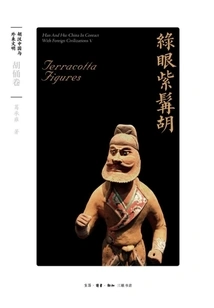
绿眼紫髯胡:胡俑卷
Ge Chengyong
This book is an art volume of "Hu-Han China and Foreign Civilizations". It focuses on the topic of "Tang Style Hu Customs and Silk Road Art" and selects current academic cutting-edge topics. According to the clues of the spread of cultural heritage, it carefully examines the precious cultural relics unearthed by recent archaeological excavations to interpret the visual mentality and image patterns of "human treasures" and show another kind of unparalleled cultural heritage. The well-known history of ancient art, from the origin of the Six Horses of the Zhaoling Mausoleum to Turkic customs to the origin of the Tang Ling Stone Man from the steppe nomads, from the Hellenistic art on Queen Zhenshun's stone coffin to the "drunken Fu Fu" Greek god of wine in China, from the Eurasian bathing ruins to the Randen Huji stone carvings, all confirm that the development peak of Chinese culture is closely connected with foreign civilizations. A group of articles collected in the book have caused great repercussions at home and abroad and attracted attention from all walks of life. Their breakthrough exploration has further promoted in-depth research on classic art.
This book is an art volume of "Hu-Han China and Foreign Civilizations". It focuses on the topic of "Tang Style Hu Customs and Silk Road Art" and selects current academic cutting-edge topics. According to the clues of the spread of cultural heritage, it carefully examines the precious cultural relics unearthed by recent archaeological excavations to interpret the visual mentality and image patterns of "human treasures" and show another kind of unparalleled cultural heritage. The well-known history of ancient art, from the origin of the Six Horses of the Zhaoling Mausoleum to Turkic customs to the origin of the Tang Ling Stone Man from the steppe nomads, from the Hellenistic art on Queen Zhenshun's stone coffin to the "drunken Fu Fu" Greek god of wine in China, from the Eurasian bathing ruins to the Randen Huji stone carvings, all confirm that the development peak of Chinese culture is closely connected with foreign civilizations. A group of articles collected in the book have caused great repercussions at home and abroad and attracted attention from all walks of life. Their breakthrough exploration has further promoted in-depth research on classic art.
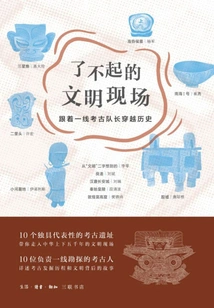
了不起的文明现场:跟着一线考古队长穿越历史
Li Ling Liu Bin Xu Hong Et Al.
"Five thousand years" has long been engraved in the genes of every Chinese, and archeology allows us to see another China that is similar but different from the China recorded in ancient books and documents. It may be difficult to say which of the two is more "real", but what is certain is that the Chinese civilization landscape we can see, thanks to the help of archeology, has become particularly wonderful and magnificent. Archaeological discoveries in the 20th century have greatly enriched our understanding of Chinese history and changed the world's basic view of Chinese civilization. The book selects ten representative archaeological sites from the major archaeological discoveries in China - the ancient city of Liangzhu in the Neolithic Age, the Erlitou ruins that can be called the earliest "China", the Yin Ruins in Anyang in the late Shang Dynasty, Sanxingdui in Guanghan that clears the fog of ancient Shu, Xiaohe Cemetery that witnesses the exchanges between Chinese and Western civilizations, the Mausoleum of the First Emperor of Qin, the Tomb of Haihun Hou in the Han Dynasty, Chang'an City in the Han and Tang Dynasties, the Nanhai No. 1 Shipwreck in the Song Dynasty, and the Mogao Grottoes in Dunhuang, respectively. Ten archaeologists responsible for front-line exploration-Liu Bin, Xu Hong, Tang Jigen, Gao Dalun, Idilis Abduresuler, Duan Qingbo, Yang Jun, Liu Rui, Cui Yong, and Fan Jinshi-unveil the veil of archaeological exploration for the public from the perspective of those who have experienced it, leading readers to the site of five thousand years of Chinese civilization, telling the excavation experience, cutting-edge progress and the stories behind civilization of China's ten major archaeological discoveries. Each scene is like a "time capsule", showing the social life and cultural features of China at various stages, providing historical information independent of documents, and giving us another perspective on observing Chinese civilization. The book is richly illustrated and text-based. It combines the location diagrams, plan sections and unearthed important cultural relics in the archaeological report as much as possible to restore the original situation of the site for readers. It also provides background knowledge, discovery process, extended reading, museum exhibits and other information. It transforms the professional archaeological reports and academic research into knowledge readings for ordinary readers, which can be read by readers who are interested in history and archeology, as well as those who intend to visit the site museum.
"Five thousand years" has long been engraved in the genes of every Chinese, and archeology allows us to see another China that is similar but different from the China recorded in ancient books and documents. It may be difficult to say which of the two is more "real", but what is certain is that the Chinese civilization landscape we can see, thanks to the help of archeology, has become particularly wonderful and magnificent. Archaeological discoveries in the 20th century have greatly enriched our understanding of Chinese history and changed the world's basic view of Chinese civilization. The book selects ten representative archaeological sites from the major archaeological discoveries in China - the ancient city of Liangzhu in the Neolithic Age, the Erlitou ruins that can be called the earliest "China", the Yin Ruins in Anyang in the late Shang Dynasty, Sanxingdui in Guanghan that clears the fog of ancient Shu, Xiaohe Cemetery that witnesses the exchanges between Chinese and Western civilizations, the Mausoleum of the First Emperor of Qin, the Tomb of Haihun Hou in the Han Dynasty, Chang'an City in the Han and Tang Dynasties, the Nanhai No. 1 Shipwreck in the Song Dynasty, and the Mogao Grottoes in Dunhuang, respectively. Ten archaeologists responsible for front-line exploration-Liu Bin, Xu Hong, Tang Jigen, Gao Dalun, Idilis Abduresuler, Duan Qingbo, Yang Jun, Liu Rui, Cui Yong, and Fan Jinshi-unveil the veil of archaeological exploration for the public from the perspective of those who have experienced it, leading readers to the site of five thousand years of Chinese civilization, telling the excavation experience, cutting-edge progress and the stories behind civilization of China's ten major archaeological discoveries. Each scene is like a "time capsule", showing the social life and cultural features of China at various stages, providing historical information independent of documents, and giving us another perspective on observing Chinese civilization. The book is richly illustrated and text-based. It combines the location diagrams, plan sections and unearthed important cultural relics in the archaeological report as much as possible to restore the original situation of the site for readers. It also provides background knowledge, discovery process, extended reading, museum exhibits and other information. It transforms the professional archaeological reports and academic research into knowledge readings for ordinary readers, which can be read by readers who are interested in history and archeology, as well as those who intend to visit the site museum.
长沙走马楼三国竹简研究
Shen Gang
From the perspective of economic and social history, this book makes a relatively systematic investigation of some of the published bamboo slips in the Wu bamboo slips of the Three Kingdoms in Changsha's Zoumalou. Specifically, it includes three aspects: first, by sorting out household registration, master and assistant registration, official and civilian defection registration and other issues as well as rural officials, it reveals the grassroots administrative system such as population control, handicraft industry management, and the activities of grassroots subordinates in Linxiang during this period; second, it analyzes the government's control of money, cloth, and leather. Wait for the collection time of property, restore the form of accounts, and further discuss issues such as the fiscal and tax collection system, process, and nature of taxation; third, through the positioning of several social identities such as public servants, scholars, private servants, postmen, and guests that appear in Wu bamboo slips, point out their changes relative to the Qin and Han Dynasties. Through the above work, the changes in the grassroots management model and social class in Changsha area during Sun Wu's early period are relatively comprehensively demonstrated, which provides help for a deep understanding of early medieval Chinese society.
From the perspective of economic and social history, this book makes a relatively systematic investigation of some of the published bamboo slips in the Wu bamboo slips of the Three Kingdoms in Changsha's Zoumalou. Specifically, it includes three aspects: first, by sorting out household registration, master and assistant registration, official and civilian defection registration and other issues as well as rural officials, it reveals the grassroots administrative system such as population control, handicraft industry management, and the activities of grassroots subordinates in Linxiang during this period; second, it analyzes the government's control of money, cloth, and leather. Wait for the collection time of property, restore the form of accounts, and further discuss issues such as the fiscal and tax collection system, process, and nature of taxation; third, through the positioning of several social identities such as public servants, scholars, private servants, postmen, and guests that appear in Wu bamboo slips, point out their changes relative to the Qin and Han Dynasties. Through the above work, the changes in the grassroots management model and social class in Changsha area during Sun Wu's early period are relatively comprehensively demonstrated, which provides help for a deep understanding of early medieval Chinese society.
汉代诸侯王墓研究
Liu Zunzhi
Based on the comprehensive collection and systematic combing of the discovered and excavated tomb materials of the princes and kings of the Han Dynasty, this book uses archaeological, historical and other research theories and methods to conduct a comprehensive and detailed study on the distribution of tombs of the princes and kings of the two Han Dynasties, the form and relative position of the joint burials, the shape of the tombs and funerary objects, the buildings outside the tombs and related issues, the funeral system and its characteristics embodied in the tombs of the princes and kings of the Han Dynasty, etc., And draws more useful conclusions. Regarding the tombs of princes and kings of the Eastern Han Dynasty, which have been relatively weak in academic research in the past, through the study of archaeological and documentary materials, we comprehensively analyze their basic content, funeral system and characteristics, development, evolution and decline process, etc. Through research, the content, connotation and development and evolution rules of the tombs of princes and kings in the Han Dynasty have been basically revealed, which provides an important reference for a multi-faceted and more comprehensive understanding of the tomb system of princes and kings in the Han Dynasty, the reasons for its development and evolution, and related social contents. It also provides a relatively in-depth understanding of its role and status.
Based on the comprehensive collection and systematic combing of the discovered and excavated tomb materials of the princes and kings of the Han Dynasty, this book uses archaeological, historical and other research theories and methods to conduct a comprehensive and detailed study on the distribution of tombs of the princes and kings of the two Han Dynasties, the form and relative position of the joint burials, the shape of the tombs and funerary objects, the buildings outside the tombs and related issues, the funeral system and its characteristics embodied in the tombs of the princes and kings of the Han Dynasty, etc., And draws more useful conclusions. Regarding the tombs of princes and kings of the Eastern Han Dynasty, which have been relatively weak in academic research in the past, through the study of archaeological and documentary materials, we comprehensively analyze their basic content, funeral system and characteristics, development, evolution and decline process, etc. Through research, the content, connotation and development and evolution rules of the tombs of princes and kings in the Han Dynasty have been basically revealed, which provides an important reference for a multi-faceted and more comprehensive understanding of the tomb system of princes and kings in the Han Dynasty, the reasons for its development and evolution, and related social contents. It also provides a relatively in-depth understanding of its role and status.
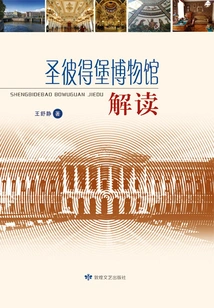
圣彼得堡博物馆解读
Wang Shujing
This book mainly introduces the history of the St. Petersburg Museum.
This book mainly introduces the history of the St. Petersburg Museum.
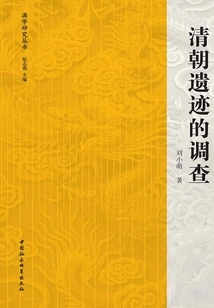
清朝遗迹的调查
Liu Xiaomeng
The author has been engaged in research on Qing history and Manchu history for a long time, and has always attached great importance to the combination of documentary research and field investigation. In the twenty years from 2001 to 2019, he conducted more than 80 investigations of historical sites of the Qing Dynasty. This book contains 15 investigation reports, which are the first batch of results. The content includes the Eight Banner garrison relics in various places, the present and past of the local Manchus, the historical sites of the "San Francisco", the border ethnic culture, as well as the inspection of battlefields, passes, government offices, guild halls, temples, ancient towns, and inns. The report pays attention to collecting information such as inscriptions, historical records, family trees, photos and oral materials, and attaches great importance to recording the historical memories and expressions of ethnic identity and ethnic relations of the interviewees. It aims to advance relevant research while providing a new window for understanding the history, nation, region, and culture of the Qing Dynasty.
The author has been engaged in research on Qing history and Manchu history for a long time, and has always attached great importance to the combination of documentary research and field investigation. In the twenty years from 2001 to 2019, he conducted more than 80 investigations of historical sites of the Qing Dynasty. This book contains 15 investigation reports, which are the first batch of results. The content includes the Eight Banner garrison relics in various places, the present and past of the local Manchus, the historical sites of the "San Francisco", the border ethnic culture, as well as the inspection of battlefields, passes, government offices, guild halls, temples, ancient towns, and inns. The report pays attention to collecting information such as inscriptions, historical records, family trees, photos and oral materials, and attaches great importance to recording the historical memories and expressions of ethnic identity and ethnic relations of the interviewees. It aims to advance relevant research while providing a new window for understanding the history, nation, region, and culture of the Qing Dynasty.
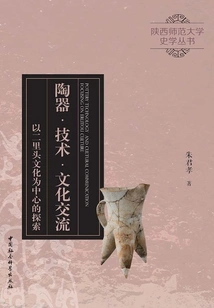
陶器·技术·文化交流:以二里头文化为中心的探索
Zhu Junxiao
This book mainly discusses three aspects: the origin of Erlitou Culture pottery and bronze ware, the production technology of Erlitou Culture pottery, and the exchanges between Erlitou Culture and surrounding cultures. Research on the origin of pottery based on chemical composition analysis and physical structure analysis reveals the internal organizational structure of the settlement and the relationship between settlements and between regions. Based on experimental analysis and empirical observation, the whole process investigation and horizontal comparison of the Erlitou Culture pottery production process revealed the technical characteristics of the Erlitou Culture pottery. The analysis of the foreign cultural factors seen in the Erlitou ruins and culture explores the driving force behind the formation of the Erlitou culture and the Xia Dynasty state. Macroscopic and microscopic analysis of the remains and relics, combined with scientific dating data, can be used to determine that the Erlitou Culture was divided into the Xia and Shang periods during the March and Fourth Periods.
This book mainly discusses three aspects: the origin of Erlitou Culture pottery and bronze ware, the production technology of Erlitou Culture pottery, and the exchanges between Erlitou Culture and surrounding cultures. Research on the origin of pottery based on chemical composition analysis and physical structure analysis reveals the internal organizational structure of the settlement and the relationship between settlements and between regions. Based on experimental analysis and empirical observation, the whole process investigation and horizontal comparison of the Erlitou Culture pottery production process revealed the technical characteristics of the Erlitou Culture pottery. The analysis of the foreign cultural factors seen in the Erlitou ruins and culture explores the driving force behind the formation of the Erlitou culture and the Xia Dynasty state. Macroscopic and microscopic analysis of the remains and relics, combined with scientific dating data, can be used to determine that the Erlitou Culture was divided into the Xia and Shang periods during the March and Fourth Periods.
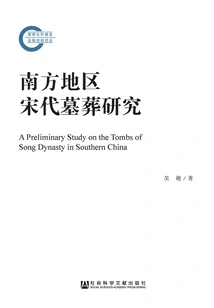
南方地区宋代墓葬研究
Wu Jing
This book explores the reasons for the formation of the characteristics of the Song Dynasty tombs in the south through historical data; discusses the group differences of the Song tombs in the south, the burial period of the tomb owners, unearthed jades, dating methods, as well as issues such as thick burials and thin burials, migration of burial customs, and tomb protection in the Song Dynasty; it summarizes the Song and Jin Dynasties The differences between the tombs in the north and the south during this period and the reasons for their formation were discussed, and the influence of Han burial customs on the Jurchen aristocrats of the Jin Dynasty was discussed. The Southern Song tombs were compared with the tombs of the previous and later periods, and it was pointed out that the Southern Song tombs played an important inheritance role in the development of southern burial customs from the Tang Dynasty to the Yuan Dynasty.
This book explores the reasons for the formation of the characteristics of the Song Dynasty tombs in the south through historical data; discusses the group differences of the Song tombs in the south, the burial period of the tomb owners, unearthed jades, dating methods, as well as issues such as thick burials and thin burials, migration of burial customs, and tomb protection in the Song Dynasty; it summarizes the Song and Jin Dynasties The differences between the tombs in the north and the south during this period and the reasons for their formation were discussed, and the influence of Han burial customs on the Jurchen aristocrats of the Jin Dynasty was discussed. The Southern Song tombs were compared with the tombs of the previous and later periods, and it was pointed out that the Southern Song tombs played an important inheritance role in the development of southern burial customs from the Tang Dynasty to the Yuan Dynasty.
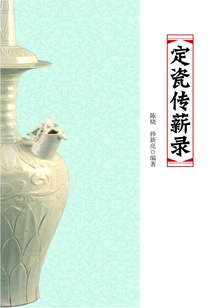
Dingci Biography
History定瓷传薪录
Compiled By Chen Xiao And Sun Xinliang
Ding porcelain is the only white porcelain among the five famous kilns of the Song Dynasty. It was produced by Ding kiln. Dingzhou, Hebei Province is the origin of Ding porcelain. It is the place where ancient Ding porcelain gathers together and new Ding porcelain products gather. Its charm is attracting more and more people's attention and enthusiasm for "Taobao". The Ding porcelain plum vase with a small mouth, short neck, plump shoulders and thin bottom is tall and pretty; the Ding porcelain child pillow lying on the couch with the child's back as a pillow symbolizes the early birth of a child; the Ding porcelain dragon head pure vase with a tower-like shape and a lotus on the belly and a dragon head on the shoulder is slender and elegant, as powerful as a rainbow. This book attempts to use the perspective of Dingzhou Ding porcelain collectors, the aesthetics of Ding porcelain artists, and the carvings of Ding porcelain craftsmen, through two series of products, antique Ding porcelain and new Ding porcelain products, interspersed with the wonderful folk collection legends of Ding porcelain, from the shape, quality, workmanship, charm, and charm of Ding porcelain. In terms of age, collection and inheritance, innovation, revival, etc., We popularize knowledge about Ding porcelain, interpret the beauty of Ding porcelain art, and appreciate the artistic charm, practicality and collection value of Ding porcelain with the readers, appreciate the millennium charm of Ding porcelain, and feel the breadth and depth of Ding porcelain culture.
Ding porcelain is the only white porcelain among the five famous kilns of the Song Dynasty. It was produced by Ding kiln. Dingzhou, Hebei Province is the origin of Ding porcelain. It is the place where ancient Ding porcelain gathers together and new Ding porcelain products gather. Its charm is attracting more and more people's attention and enthusiasm for "Taobao". The Ding porcelain plum vase with a small mouth, short neck, plump shoulders and thin bottom is tall and pretty; the Ding porcelain child pillow lying on the couch with the child's back as a pillow symbolizes the early birth of a child; the Ding porcelain dragon head pure vase with a tower-like shape and a lotus on the belly and a dragon head on the shoulder is slender and elegant, as powerful as a rainbow. This book attempts to use the perspective of Dingzhou Ding porcelain collectors, the aesthetics of Ding porcelain artists, and the carvings of Ding porcelain craftsmen, through two series of products, antique Ding porcelain and new Ding porcelain products, interspersed with the wonderful folk collection legends of Ding porcelain, from the shape, quality, workmanship, charm, and charm of Ding porcelain. In terms of age, collection and inheritance, innovation, revival, etc., We popularize knowledge about Ding porcelain, interpret the beauty of Ding porcelain art, and appreciate the artistic charm, practicality and collection value of Ding porcelain with the readers, appreciate the millennium charm of Ding porcelain, and feel the breadth and depth of Ding porcelain culture.
西安大遗址周边空间环境保护与营建研究
Lu Lin
"Research on the Protection and Construction of the Spatial Environment around the Great Relics in Xi'an" takes the spatial environment around the great relics in the ancient capital of Xi'an as the research object. On the basis of summarizing and revealing the current status of the protection and utilization of the great relics in Xi'an, it explores the ways to construct the "historic heritage area" system and spatial division. Through the discussion of the social functional dimension, the ecological dimension and the spatial dimension, it analyzes the transitional relationship between the great relics in Xi'an and urban development, and based on this, it proposes four suitable patterns of the spatial environment around the great relics. The author conducted an in-depth analysis of the importance and related factors of protection and development around large heritage sites, and proposed work paths that can be further explored. Its relevant conclusions provide a reference planning model for the urban fringe heritage areas currently threatened by the expansion of new areas and the surrounding heritage areas within the main urban area facing urban renewal.
"Research on the Protection and Construction of the Spatial Environment around the Great Relics in Xi'an" takes the spatial environment around the great relics in the ancient capital of Xi'an as the research object. On the basis of summarizing and revealing the current status of the protection and utilization of the great relics in Xi'an, it explores the ways to construct the "historic heritage area" system and spatial division. Through the discussion of the social functional dimension, the ecological dimension and the spatial dimension, it analyzes the transitional relationship between the great relics in Xi'an and urban development, and based on this, it proposes four suitable patterns of the spatial environment around the great relics. The author conducted an in-depth analysis of the importance and related factors of protection and development around large heritage sites, and proposed work paths that can be further explored. Its relevant conclusions provide a reference planning model for the urban fringe heritage areas currently threatened by the expansion of new areas and the surrounding heritage areas within the main urban area facing urban renewal.
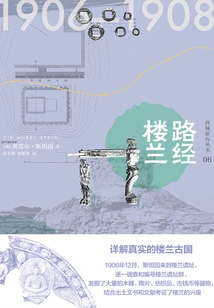
西域游历丛书06:路经楼兰(知新)
(uk) Aurel Stein
From 1900 to 1901, 1906 to 1908, and 1913 to 1916, Aurel Stein, a British Hungarian, successively went to my country's Xinjiang and Hexi regions to conduct archaeological expeditions and published archaeological reports on these three expeditions: "Ancient Hotan - A Detailed Report on Archaeological Excavations in Xinjiang, China", "Archaeological Map of the Western Regions", and "Archaeological Map of the Heart of Asia". These three works are Stein's masterpieces. They comprehensively describe the ruins and relics of the Han and Tang Dynasties in Xinjiang, my country, as well as the treasures of the Dunhuang Grottoes and the Buddhist art of the Thousand Buddha Caves. They reveal the mystery of the ancient civilization in the region and the exchange and integration of Chinese and Western civilizations. The Travels in the Western Regions series integrates the archaeological data of Stein's three expeditions to western China and integrates and revise the above-mentioned archaeological reports so that the public can more easily understand the process and results. There are 15 volumes in the series. This volume is from "Illustrated Archaeological Records of the Western Regions": In December 1906, Stein came to the Loulan ruins, investigated and numbered the Loulan ruins one by one, and unearthed a large number of wood carvings, pottery pieces, textiles, ancient coins and other artifacts. He combined the large number of unearthed documents and documents to verify the rise and fall of Loulan.
From 1900 to 1901, 1906 to 1908, and 1913 to 1916, Aurel Stein, a British Hungarian, successively went to my country's Xinjiang and Hexi regions to conduct archaeological expeditions and published archaeological reports on these three expeditions: "Ancient Hotan - A Detailed Report on Archaeological Excavations in Xinjiang, China", "Archaeological Map of the Western Regions", and "Archaeological Map of the Heart of Asia". These three works are Stein's masterpieces. They comprehensively describe the ruins and relics of the Han and Tang Dynasties in Xinjiang, my country, as well as the treasures of the Dunhuang Grottoes and the Buddhist art of the Thousand Buddha Caves. They reveal the mystery of the ancient civilization in the region and the exchange and integration of Chinese and Western civilizations. The Travels in the Western Regions series integrates the archaeological data of Stein's three expeditions to western China and integrates and revise the above-mentioned archaeological reports so that the public can more easily understand the process and results. There are 15 volumes in the series. This volume is from "Illustrated Archaeological Records of the Western Regions": In December 1906, Stein came to the Loulan ruins, investigated and numbered the Loulan ruins one by one, and unearthed a large number of wood carvings, pottery pieces, textiles, ancient coins and other artifacts. He combined the large number of unearthed documents and documents to verify the rise and fall of Loulan.
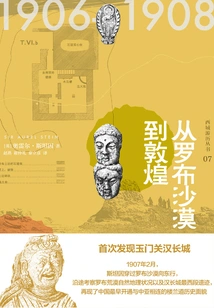
西域游历丛书07:从罗布沙漠到敦煌(知新)
(uk) Aurel Stein
From 1900 to 1901, 1906 to 1908, and 1913 to 1916, Aurel Stein, a British Hungarian, successively went to my country's Xinjiang and Hexi regions to conduct archaeological expeditions and published archaeological reports on these three expeditions: "Ancient Hotan - A Detailed Report on Archaeological Excavations in Xinjiang, China", "Archaeological Map of the Western Regions", and "Archaeological Map of the Heart of Asia". These three works are Stein's masterpieces. They comprehensively describe the ruins and relics of the Han and Tang Dynasties in Xinjiang, my country, as well as the treasures of the Dunhuang Grottoes and the Buddhist art of the Thousand Buddha Caves. They reveal the mystery of the ancient civilization in the region and the exchange and integration of Chinese and Western civilizations. The Travels in the Western Regions series integrates the archaeological data of Stein's three expeditions to western China and integrates and revise the above-mentioned archaeological reports so that the public can more easily understand the process and results. There are 15 volumes in the series. This volume is from "Illustrated Archeology of the Western Regions": In February 1907, Stein traveled eastward through the Lobu Desert. Along the way, he inspected the natural geographical conditions of the Lobu Desert that separates the Tarim Basin from the Shule River and the remains of the westernmost section of the Great Wall of the Han Dynasty, recreating the historical appearance of China's earliest Loulan Road connecting to Central Asia.
From 1900 to 1901, 1906 to 1908, and 1913 to 1916, Aurel Stein, a British Hungarian, successively went to my country's Xinjiang and Hexi regions to conduct archaeological expeditions and published archaeological reports on these three expeditions: "Ancient Hotan - A Detailed Report on Archaeological Excavations in Xinjiang, China", "Archaeological Map of the Western Regions", and "Archaeological Map of the Heart of Asia". These three works are Stein's masterpieces. They comprehensively describe the ruins and relics of the Han and Tang Dynasties in Xinjiang, my country, as well as the treasures of the Dunhuang Grottoes and the Buddhist art of the Thousand Buddha Caves. They reveal the mystery of the ancient civilization in the region and the exchange and integration of Chinese and Western civilizations. The Travels in the Western Regions series integrates the archaeological data of Stein's three expeditions to western China and integrates and revise the above-mentioned archaeological reports so that the public can more easily understand the process and results. There are 15 volumes in the series. This volume is from "Illustrated Archeology of the Western Regions": In February 1907, Stein traveled eastward through the Lobu Desert. Along the way, he inspected the natural geographical conditions of the Lobu Desert that separates the Tarim Basin from the Shule River and the remains of the westernmost section of the Great Wall of the Han Dynasty, recreating the historical appearance of China's earliest Loulan Road connecting to Central Asia.
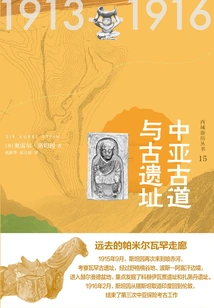
Western Region Travel Series 15: Ancient Roads and Ancient Sites in Central Asia (new Knowledge)
History西域游历丛书15:中亚古道与古遗址(知新)
(uk) Aurel Stein
From 1900 to 1901, 1906 to 1908, and 1913 to 1916, Aurel Stein, a British Hungarian, successively went to my country's Xinjiang and Hexi regions to conduct archaeological expeditions and published archaeological reports on these three expeditions: "Ancient Hotan - A Detailed Report on Archaeological Excavations in Xinjiang, China", "Archaeological Map of the Western Regions", and "Archaeological Map of the Heart of Asia". These three works are Stein's masterpieces. They comprehensively describe the ruins and relics of the Han and Tang Dynasties in Xinjiang, my country, as well as the treasures of the Dunhuang Grottoes and the Buddhist art of the Thousand Buddha Caves. They reveal the mystery of the ancient civilization in the region and the exchange and integration of Chinese and Western civilizations. The Travels in the Western Regions series integrates the archaeological data of Stein's three expeditions to western China and integrates and revise the above-mentioned archaeological reports so that the public can more easily understand the process and results. There are 15 volumes in the series. This volume is from the "Archaeological Map of the Heart of Asia": In September 1915, Stein came to the Penchi River again to inspect the ancient Wakhan ruins. He passed through the Shuganan Valley, the Persian-Afghanistan border, and entered the Helmand Basin. He focused on the excavation of the Koch Iwaja and Zahedan ruins. In February 1916, Stein returned to London from Sistan via India, completing his third Central Asian expedition archaeological work.
From 1900 to 1901, 1906 to 1908, and 1913 to 1916, Aurel Stein, a British Hungarian, successively went to my country's Xinjiang and Hexi regions to conduct archaeological expeditions and published archaeological reports on these three expeditions: "Ancient Hotan - A Detailed Report on Archaeological Excavations in Xinjiang, China", "Archaeological Map of the Western Regions", and "Archaeological Map of the Heart of Asia". These three works are Stein's masterpieces. They comprehensively describe the ruins and relics of the Han and Tang Dynasties in Xinjiang, my country, as well as the treasures of the Dunhuang Grottoes and the Buddhist art of the Thousand Buddha Caves. They reveal the mystery of the ancient civilization in the region and the exchange and integration of Chinese and Western civilizations. The Travels in the Western Regions series integrates the archaeological data of Stein's three expeditions to western China and integrates and revise the above-mentioned archaeological reports so that the public can more easily understand the process and results. There are 15 volumes in the series. This volume is from the "Archaeological Map of the Heart of Asia": In September 1915, Stein came to the Penchi River again to inspect the ancient Wakhan ruins. He passed through the Shuganan Valley, the Persian-Afghanistan border, and entered the Helmand Basin. He focused on the excavation of the Koch Iwaja and Zahedan ruins. In February 1916, Stein returned to London from Sistan via India, completing his third Central Asian expedition archaeological work.
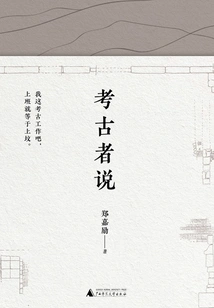
Archaeologists Say
History考古者说
Zheng Jiali
This book is revised based on the book "The Other Side of Archeology" published by our agency in 2016. The new book deletes the text that is relatively alien to archaeological work and adds a large number of thematic and professional articles. After the revision, the book is divided into four parts, namely: Looking for Tombs, Talking about Stones, Reading the City, and Investigating Objects. The two parts, "Looking for Tombs" and "Yu Shi", are based on additions, deletions and revisions of the contents of the two parts of the original book "Shiyu" and "Books from Tombs"; the first part "Reading the City" is a completely new content, mainly focusing on urban archeology in Zhejiang; the first part "Looking for Things" is based on the content of the original book "Observing Things", which is still mainly about what is seen, heard and felt during archaeological travels or personal daily life.
This book is revised based on the book "The Other Side of Archeology" published by our agency in 2016. The new book deletes the text that is relatively alien to archaeological work and adds a large number of thematic and professional articles. After the revision, the book is divided into four parts, namely: Looking for Tombs, Talking about Stones, Reading the City, and Investigating Objects. The two parts, "Looking for Tombs" and "Yu Shi", are based on additions, deletions and revisions of the contents of the two parts of the original book "Shiyu" and "Books from Tombs"; the first part "Reading the City" is a completely new content, mainly focusing on urban archeology in Zhejiang; the first part "Looking for Things" is based on the content of the original book "Observing Things", which is still mainly about what is seen, heard and felt during archaeological travels or personal daily life.
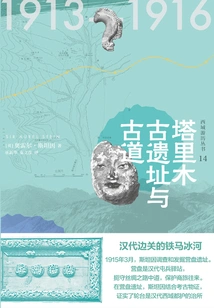
西域游历丛书14:塔里木古遗址与古道(知新)
(uk) Aurel Stein
From 1900 to 1901, 1906 to 1908, and 1913 to 1916, Aurel Stein, a British Hungarian, successively went to my country's Xinjiang and Hexi regions to conduct archaeological expeditions and published archaeological reports on these three expeditions: "Ancient Hotan - A Detailed Report on Archaeological Excavations in Xinjiang, China", "Archaeological Map of the Western Regions", and "Archaeological Map of the Heart of Asia". These three works are Stein's masterpieces. They comprehensively describe the ruins and relics of the Han and Tang Dynasties in Xinjiang, my country, as well as the treasures of the Dunhuang Grottoes and the Buddhist art of the Thousand Buddha Caves. They reveal the mystery of the ancient civilization in the region and the exchange and integration of Chinese and Western civilizations. The Travels in the Western Regions series integrates the archaeological data of Stein's three expeditions to western China and integrates and revise the above-mentioned archaeological reports so that the public can more easily understand the process and results. There are 15 volumes in the series. This volume comes from "Archaeological Records of the Heart of Asia": In March 1915, Stein investigated and excavated the Yingpan ruins. Yingpan was a military station in the Han Dynasty, guarding the middle route of the Silk Road and protecting business travel. At the Yingpan site, Stein combined with archaeological evidence to prove that Luntai was the seat of the Western Region Protectorate in the Han Dynasty.
From 1900 to 1901, 1906 to 1908, and 1913 to 1916, Aurel Stein, a British Hungarian, successively went to my country's Xinjiang and Hexi regions to conduct archaeological expeditions and published archaeological reports on these three expeditions: "Ancient Hotan - A Detailed Report on Archaeological Excavations in Xinjiang, China", "Archaeological Map of the Western Regions", and "Archaeological Map of the Heart of Asia". These three works are Stein's masterpieces. They comprehensively describe the ruins and relics of the Han and Tang Dynasties in Xinjiang, my country, as well as the treasures of the Dunhuang Grottoes and the Buddhist art of the Thousand Buddha Caves. They reveal the mystery of the ancient civilization in the region and the exchange and integration of Chinese and Western civilizations. The Travels in the Western Regions series integrates the archaeological data of Stein's three expeditions to western China and integrates and revise the above-mentioned archaeological reports so that the public can more easily understand the process and results. There are 15 volumes in the series. This volume comes from "Archaeological Records of the Heart of Asia": In March 1915, Stein investigated and excavated the Yingpan ruins. Yingpan was a military station in the Han Dynasty, guarding the middle route of the Silk Road and protecting business travel. At the Yingpan site, Stein combined with archaeological evidence to prove that Luntai was the seat of the Western Region Protectorate in the Han Dynasty.
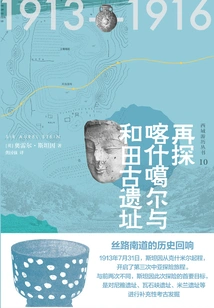
Western Region Travel Series 10: Re-exploring the Ancient Ruins of Kashgar and Hotan (new Knowledge)
History西域游历丛书10:再探喀什噶尔与和田古遗址(知新)
(uk) Aurel Stein
From 1900 to 1901, 1906 to 1908, and 1913 to 1916, Aurel Stein, a British Hungarian, successively went to my country's Xinjiang and Hexi regions to conduct archaeological expeditions and published archaeological reports on these three expeditions: "Ancient Hotan - A Detailed Report on Archaeological Excavations in Xinjiang, China", "Archaeological Map of the Western Regions", and "Archaeological Map of the Heart of Asia". These three works are Stein's masterpieces. They comprehensively describe the ruins and relics of the Han and Tang Dynasties in Xinjiang, my country, as well as the treasures of the Dunhuang Grottoes and the Buddhist art of the Thousand Buddha Caves. They reveal the mystery of the ancient civilization in the region and the exchange and integration of Chinese and Western civilizations. The Travels in the Western Regions series integrates the archaeological data of Stein's three expeditions to western China and integrates and revise the above-mentioned archaeological reports so that the public can more easily understand the process and results. There are 15 volumes in the series. This volume is from "Archaeological Records of the Heart of Asia": On July 31, 1913, Stein set off from Kashmir and embarked on his third expedition to Central Asia. Different from the previous two times, Stein's primary goal of this expedition is to conduct supplementary archaeological excavations at the Niya ruins, Washixia ruins, Milan ruins, etc.
From 1900 to 1901, 1906 to 1908, and 1913 to 1916, Aurel Stein, a British Hungarian, successively went to my country's Xinjiang and Hexi regions to conduct archaeological expeditions and published archaeological reports on these three expeditions: "Ancient Hotan - A Detailed Report on Archaeological Excavations in Xinjiang, China", "Archaeological Map of the Western Regions", and "Archaeological Map of the Heart of Asia". These three works are Stein's masterpieces. They comprehensively describe the ruins and relics of the Han and Tang Dynasties in Xinjiang, my country, as well as the treasures of the Dunhuang Grottoes and the Buddhist art of the Thousand Buddha Caves. They reveal the mystery of the ancient civilization in the region and the exchange and integration of Chinese and Western civilizations. The Travels in the Western Regions series integrates the archaeological data of Stein's three expeditions to western China and integrates and revise the above-mentioned archaeological reports so that the public can more easily understand the process and results. There are 15 volumes in the series. This volume is from "Archaeological Records of the Heart of Asia": On July 31, 1913, Stein set off from Kashmir and embarked on his third expedition to Central Asia. Different from the previous two times, Stein's primary goal of this expedition is to conduct supplementary archaeological excavations at the Niya ruins, Washixia ruins, Milan ruins, etc.
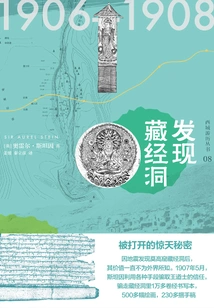
西域游历丛书08:发现藏经洞(知新)
(uk) Aurel Stein
From 1900 to 1901, 1906 to 1908, and 1913 to 1916, Aurel Stein, a British Hungarian, successively went to my country's Xinjiang and Hexi regions to conduct archaeological expeditions and published archaeological reports on these three expeditions: "Ancient Hotan - A Detailed Report on Archaeological Excavations in Xinjiang, China", "Archaeological Map of the Western Regions", and "Archaeological Map of the Heart of Asia". These three works are Stein's masterpieces. They comprehensively describe the ruins and relics of the Han and Tang Dynasties in Xinjiang, my country, as well as the treasures of the Dunhuang Grottoes and the Buddhist art of the Thousand Buddha Caves. They reveal the mystery of the ancient civilization in the region and the exchange and integration of Chinese and Western civilizations. The Travels in the Western Regions series integrates the archaeological data of Stein's three expeditions to western China and integrates and revise the above-mentioned archaeological reports so that the public can more easily understand the process and results. There are 15 volumes in the series. This volume is from "Illustrated Archeology of the Western Regions": After the Mogao Grottoes scripture cave was discovered due to an earthquake, its value has not been known to the outside world. In May 1907, Stein used various means to defraud Taoist Wang's trust and defrauded more than 10,000 volumes of scriptures, more than 500 paintings, and more than 230 bundles of manuscripts from the Sutra Cave.
From 1900 to 1901, 1906 to 1908, and 1913 to 1916, Aurel Stein, a British Hungarian, successively went to my country's Xinjiang and Hexi regions to conduct archaeological expeditions and published archaeological reports on these three expeditions: "Ancient Hotan - A Detailed Report on Archaeological Excavations in Xinjiang, China", "Archaeological Map of the Western Regions", and "Archaeological Map of the Heart of Asia". These three works are Stein's masterpieces. They comprehensively describe the ruins and relics of the Han and Tang Dynasties in Xinjiang, my country, as well as the treasures of the Dunhuang Grottoes and the Buddhist art of the Thousand Buddha Caves. They reveal the mystery of the ancient civilization in the region and the exchange and integration of Chinese and Western civilizations. The Travels in the Western Regions series integrates the archaeological data of Stein's three expeditions to western China and integrates and revise the above-mentioned archaeological reports so that the public can more easily understand the process and results. There are 15 volumes in the series. This volume is from "Illustrated Archeology of the Western Regions": After the Mogao Grottoes scripture cave was discovered due to an earthquake, its value has not been known to the outside world. In May 1907, Stein used various means to defraud Taoist Wang's trust and defrauded more than 10,000 volumes of scriptures, more than 500 paintings, and more than 230 bundles of manuscripts from the Sutra Cave.
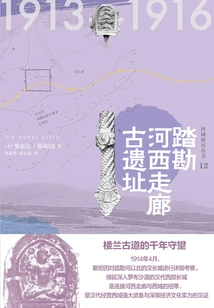
Western Region Travel Series 12: Exploring the Ancient Sites of the Hexi Corridor (new Knowledge)
History西域游历丛书12:踏勘河西走廊古遗址(知新)
(uk) Aurel Stein
From 1900 to 1901, 1906 to 1908, and 1913 to 1916, Aurel Stein, a British Hungarian, successively went to my country's Xinjiang and Hexi regions to conduct archaeological expeditions and published archaeological reports on these three expeditions: "Ancient Hotan - A Detailed Report on Archaeological Excavations in Xinjiang, China", "Archaeological Map of the Western Regions", and "Archaeological Map of the Heart of Asia". These three works are Stein's masterpieces. They comprehensively describe the ruins and relics of the Han and Tang Dynasties in Xinjiang, my country, as well as the treasures of the Dunhuang Grottoes and the Buddhist art of the Thousand Buddha Caves. They reveal the mystery of the ancient civilization in the region and the exchange and integration of Chinese and Western civilizations. The Travels in the Western Regions series integrates the archaeological data of Stein's three expeditions to western China and integrates and revise the above-mentioned archaeological reports so that the public can more easily understand the process and results. There are 15 volumes in the series. This volume comes from "Archaeological Records of the Heart of Asia": In April 1914, Stein conducted a detailed inspection of the Han Dynasty Great Wall north of the Shule River. The Western Great Wall of the Han Dynasty, which stretches deep into the Luobu Desert, is the link connecting the Hexi Corridor and the Western Regions. It is a testimony to the strong military equipment and profound economic and cultural strength of the Han Dynasty in managing the Western Regions.
From 1900 to 1901, 1906 to 1908, and 1913 to 1916, Aurel Stein, a British Hungarian, successively went to my country's Xinjiang and Hexi regions to conduct archaeological expeditions and published archaeological reports on these three expeditions: "Ancient Hotan - A Detailed Report on Archaeological Excavations in Xinjiang, China", "Archaeological Map of the Western Regions", and "Archaeological Map of the Heart of Asia". These three works are Stein's masterpieces. They comprehensively describe the ruins and relics of the Han and Tang Dynasties in Xinjiang, my country, as well as the treasures of the Dunhuang Grottoes and the Buddhist art of the Thousand Buddha Caves. They reveal the mystery of the ancient civilization in the region and the exchange and integration of Chinese and Western civilizations. The Travels in the Western Regions series integrates the archaeological data of Stein's three expeditions to western China and integrates and revise the above-mentioned archaeological reports so that the public can more easily understand the process and results. There are 15 volumes in the series. This volume comes from "Archaeological Records of the Heart of Asia": In April 1914, Stein conducted a detailed inspection of the Han Dynasty Great Wall north of the Shule River. The Western Great Wall of the Han Dynasty, which stretches deep into the Luobu Desert, is the link connecting the Hexi Corridor and the Western Regions. It is a testimony to the strong military equipment and profound economic and cultural strength of the Han Dynasty in managing the Western Regions.
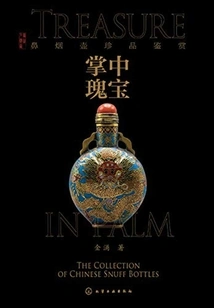
掌中瑰宝鼻烟壶珍品鉴赏
Jin Yong
Chinese snuff bottles are small, exquisite, beautiful and cute, reflecting the rich connotations of Chinese history, culture and customs. This book is divided into porcelain, glass, agate, jade, metal, organic materials, interior paintings, etc., And appreciates more than 400 rare snuff bottles in seven categories one by one. The snuff bottles in the book are beautifully shaped and colorful, which is pleasing to the eye and unforgettable after reading. For some of the treasures, you can scan the QR code with your mobile phone to watch the video, and enjoy a 360-degree view of the rare high-quality snuff bottles amid the melodious guqin music.
Chinese snuff bottles are small, exquisite, beautiful and cute, reflecting the rich connotations of Chinese history, culture and customs. This book is divided into porcelain, glass, agate, jade, metal, organic materials, interior paintings, etc., And appreciates more than 400 rare snuff bottles in seven categories one by one. The snuff bottles in the book are beautifully shaped and colorful, which is pleasing to the eye and unforgettable after reading. For some of the treasures, you can scan the QR code with your mobile phone to watch the video, and enjoy a 360-degree view of the rare high-quality snuff bottles amid the melodious guqin music.
新疆考古论文集
Chen Ge
This collection includes a total of 38 papers, which can be divided into three parts. The first part is a review, with three articles in total. They discuss Xinjiang's ancient transportation routes and the 20th century archaeological research overview in more detail, as well as briefly introduce the overview of Xinjiang's ancient remains. The second part is about the prehistoric period, with a total of 25 articles, which can be divided into three groups. The first group is the discussion and research on certain issues; the second group is the special research and discussion on several archaeological cultures; the third group is academic debates with others on certain issues. The third part covers the historical period, with a total of 10 articles, which can be divided into two groups. The first group is about the historical and geographical research on some ancient city sites and roads; the second group is about some research on the silver coins of the Chagatai Khanate, the popularity of Buddhism in Xinjiang and Xinjiang cave tombs. These new perspectives, concepts and opinions have greatly changed the research status of Xinjiang's prehistoric period and brought it into a new stage. It has deepened people's understanding of the prehistoric period in Xinjiang since the 20th century, and also has a relatively clear concept of the prehistoric period in Xinjiang, and its content has also been enriched a lot. With the continuous deepening of the research, a series of new views, concepts and opinions have been put forward, and the concept of the Bronze Age in Xinjiang has been re-proposed, which dates from about 2000 BC to 1000 BC. The concept of the Early Iron Age in Xinjiang has been proposed, which dates from about 1000 BC. To BC; discovered, confirmed, proposed and named Chawuhugokou Culture, the first archaeological culture in Xinjiang, and conducted research on the classification of cultural types; confirmed, proposed and named Yanbulak Culture and Subeixi Culture, making the research depth of Xinjiang archeology far greater than before.
This collection includes a total of 38 papers, which can be divided into three parts. The first part is a review, with three articles in total. They discuss Xinjiang's ancient transportation routes and the 20th century archaeological research overview in more detail, as well as briefly introduce the overview of Xinjiang's ancient remains. The second part is about the prehistoric period, with a total of 25 articles, which can be divided into three groups. The first group is the discussion and research on certain issues; the second group is the special research and discussion on several archaeological cultures; the third group is academic debates with others on certain issues. The third part covers the historical period, with a total of 10 articles, which can be divided into two groups. The first group is about the historical and geographical research on some ancient city sites and roads; the second group is about some research on the silver coins of the Chagatai Khanate, the popularity of Buddhism in Xinjiang and Xinjiang cave tombs. These new perspectives, concepts and opinions have greatly changed the research status of Xinjiang's prehistoric period and brought it into a new stage. It has deepened people's understanding of the prehistoric period in Xinjiang since the 20th century, and also has a relatively clear concept of the prehistoric period in Xinjiang, and its content has also been enriched a lot. With the continuous deepening of the research, a series of new views, concepts and opinions have been put forward, and the concept of the Bronze Age in Xinjiang has been re-proposed, which dates from about 2000 BC to 1000 BC. The concept of the Early Iron Age in Xinjiang has been proposed, which dates from about 1000 BC. To BC; discovered, confirmed, proposed and named Chawuhugokou Culture, the first archaeological culture in Xinjiang, and conducted research on the classification of cultural types; confirmed, proposed and named Yanbulak Culture and Subeixi Culture, making the research depth of Xinjiang archeology far greater than before.
明月出天山:新疆天山走廊的考古与历史
Relax
The Tianshan Mountains in Xinjiang are rich in history and culture and are one of the important birthplaces of ancient Western Region civilization. The Tianshan Corridor, which stretches thousands of miles, is an important passage connecting inland China and Central Asia, and is also an important hub of the Overland Silk Road. This book intends to use the historical relics and relics along the Tianshan Mountains in Xinjiang, especially the results of archaeological discoveries and historical research in Xinjiang in the past thirty years, to elaborate on the important position and role of the Tianshan Mountains in ancient Sino-Western cultural exchanges, and to establish a biography of the Tianshan Mountains. The Tianshan Corridor is the intersection of agricultural civilization and nomadic civilization. The special geographical environment and natural conditions have given birth to a unique form of civilization, making it the stage for many ancient ethnic activities in history.
The Tianshan Mountains in Xinjiang are rich in history and culture and are one of the important birthplaces of ancient Western Region civilization. The Tianshan Corridor, which stretches thousands of miles, is an important passage connecting inland China and Central Asia, and is also an important hub of the Overland Silk Road. This book intends to use the historical relics and relics along the Tianshan Mountains in Xinjiang, especially the results of archaeological discoveries and historical research in Xinjiang in the past thirty years, to elaborate on the important position and role of the Tianshan Mountains in ancient Sino-Western cultural exchanges, and to establish a biography of the Tianshan Mountains. The Tianshan Corridor is the intersection of agricultural civilization and nomadic civilization. The special geographical environment and natural conditions have given birth to a unique form of civilization, making it the stage for many ancient ethnic activities in history.
走近清华简(增补版)
Liu Guozhong
In 2008, Tsinghua University collected a batch of bamboo slips from the Warring States Period, commonly known as Tsinghua Bamboo Slips, through donations from alumni. Since the Tsinghua Slips are a group of bamboo slips that mainly focus on classics and history, and involve the core content of Chinese traditional culture, they have attracted widespread attention from scholars at home and abroad and the general public since the day they were collected. This book is the first popular academic work on Tsinghua Bamboo Slips. Through a comprehensive introduction to all aspects of Tsinghua Slips, readers can better understand China's history and culture and appreciate the unique charm of Tsinghua Slips.
In 2008, Tsinghua University collected a batch of bamboo slips from the Warring States Period, commonly known as Tsinghua Bamboo Slips, through donations from alumni. Since the Tsinghua Slips are a group of bamboo slips that mainly focus on classics and history, and involve the core content of Chinese traditional culture, they have attracted widespread attention from scholars at home and abroad and the general public since the day they were collected. This book is the first popular academic work on Tsinghua Bamboo Slips. Through a comprehensive introduction to all aspects of Tsinghua Slips, readers can better understand China's history and culture and appreciate the unique charm of Tsinghua Slips.
敦煌科仪文书校释
Zhang Jin Guo Hongling Meng Dongli
Dunhuang ritual documents were copied by people in the Sui and Tang dynasties. Although they are fragments of the Dunhuang documents, they include ritual norms for fasting and Jiao activities, classic inheritance rituals, etc. Based on proofreading documents, this book provides detailed annotations on characters and vocabulary, paying particular attention to the explanation of proper nouns and nominal objects. It also sorts out the relationship between these documents and handed down documents, and discusses the situations reflected in them in the lives of Dunhuang people during the Sui and Tang Dynasties and the political status of the Dunhuang region in the Tang Dynasty.
Dunhuang ritual documents were copied by people in the Sui and Tang dynasties. Although they are fragments of the Dunhuang documents, they include ritual norms for fasting and Jiao activities, classic inheritance rituals, etc. Based on proofreading documents, this book provides detailed annotations on characters and vocabulary, paying particular attention to the explanation of proper nouns and nominal objects. It also sorts out the relationship between these documents and handed down documents, and discusses the situations reflected in them in the lives of Dunhuang people during the Sui and Tang Dynasties and the political status of the Dunhuang region in the Tang Dynasty.
Art Archeology (part 1)
History艺术考古(上)
Xing Chunru
Although "History of Chinese Art" is not the first art encyclopedia published in my country, it is currently the most comprehensive and largest in the country. The book contains 3 million words and more than 3,000 pictures. Arranged according to volume content, there are 66 volumes including painting, calligraphy, architecture, sculpture, music, dance, literature, drama, film and television, arts and crafts, folk art, and art collections. It can be said that this encyclopedia is another bold and successful attempt in my country's publishing industry.
Although "History of Chinese Art" is not the first art encyclopedia published in my country, it is currently the most comprehensive and largest in the country. The book contains 3 million words and more than 3,000 pictures. Arranged according to volume content, there are 66 volumes including painting, calligraphy, architecture, sculpture, music, dance, literature, drama, film and television, arts and crafts, folk art, and art collections. It can be said that this encyclopedia is another bold and successful attempt in my country's publishing industry.
Art Archeology (part 2)
History艺术考古(下)
Xing Chunru
Although "History of Chinese Art" is not the first art encyclopedia published in my country, it is currently the most comprehensive and largest in the country. The book contains 3 million words and more than 3,000 pictures. Arranged according to volume content, there are 67 volumes including painting, calligraphy, architecture, sculpture, music, dance, literature, drama, film and television, arts and crafts, folk art, and art collections. It can be said that this encyclopedia is another bold and successful attempt in my country's publishing industry.
Although "History of Chinese Art" is not the first art encyclopedia published in my country, it is currently the most comprehensive and largest in the country. The book contains 3 million words and more than 3,000 pictures. Arranged according to volume content, there are 67 volumes including painting, calligraphy, architecture, sculpture, music, dance, literature, drama, film and television, arts and crafts, folk art, and art collections. It can be said that this encyclopedia is another bold and successful attempt in my country's publishing industry.
Chinese Wooden Sailing Ship
History中国木帆船
He Guowei
In this book, Professor He Guowei systematically organizes and summarizes his thoughts and experiences on studying the history of ancient Chinese ships for decades. It is the first time in China to give a more systematic explanation of Chinese wooden sailing ships in terms of ship shape, navigation performance, structural strength, tools, repair techniques, and the excavation and restoration, protection and research of ancient sunken ships. The publication of this book can fill the gap in this field in China.
In this book, Professor He Guowei systematically organizes and summarizes his thoughts and experiences on studying the history of ancient Chinese ships for decades. It is the first time in China to give a more systematic explanation of Chinese wooden sailing ships in terms of ship shape, navigation performance, structural strength, tools, repair techniques, and the excavation and restoration, protection and research of ancient sunken ships. The publication of this book can fill the gap in this field in China.
History of Sailing
History帆船史
Yang Yang
This book aims to promote sailing culture and maritime culture. It gives a concise and concise description of the characteristics, development process, famous sailing achievements and maritime battles of sailing ships in various regions of the world, as well as related famous figures. In the spirit of seeking truth and pragmatism, this book eliminates the false and retains the true about some doubtful points in history, and seeks the truth. Because only by drawing lessons from real historical events can we "use the past for the present" and find the right direction for future development. Learning from others' strengths, making up for one's own weaknesses, and carrying them forward is the only way to defeat your competitors. This was particularly evident in the development of ships, shipping, and navies. Compared with similar books at home and abroad, the content of this book is relatively comprehensive and systematic. The book introduces the development of sailing and navigation in Eastern countries in more detail. This book introduces the "Maritime Silk Road", "Zheng He's voyages to the West" and "the great navigation achievements of the Austronesian people", which are rarely mentioned in Western books.
This book aims to promote sailing culture and maritime culture. It gives a concise and concise description of the characteristics, development process, famous sailing achievements and maritime battles of sailing ships in various regions of the world, as well as related famous figures. In the spirit of seeking truth and pragmatism, this book eliminates the false and retains the true about some doubtful points in history, and seeks the truth. Because only by drawing lessons from real historical events can we "use the past for the present" and find the right direction for future development. Learning from others' strengths, making up for one's own weaknesses, and carrying them forward is the only way to defeat your competitors. This was particularly evident in the development of ships, shipping, and navies. Compared with similar books at home and abroad, the content of this book is relatively comprehensive and systematic. The book introduces the development of sailing and navigation in Eastern countries in more detail. This book introduces the "Maritime Silk Road", "Zheng He's voyages to the West" and "the great navigation achievements of the Austronesian people", which are rarely mentioned in Western books.
Steamship History
History轮船史
Yang Yang
This book is another ship history book after "The History of Sailing Ships" written by Professor Yang Chang, a famous scholar of the history of science and technology in my country and an academician of the Chinese Academy of Sciences. Professor Yang Yang has been engaged in ship production, education and research for a long time. At the same time, with his truth-seeking and pragmatic spirit, he is committed to the research of Chinese and foreign ship history. This book briefly describes the development process of steam ships, iron ships, mail ships, merchant ships, fishing ships, yachts, military ships, engineering ships and other ships in a concise writing style, hoping that readers can spend the least time to acquire rich knowledge about ships and oceans, and enable readers to not only know what is happening, but also why they are so. This is a popular science book with strong scientific nature.
This book is another ship history book after "The History of Sailing Ships" written by Professor Yang Chang, a famous scholar of the history of science and technology in my country and an academician of the Chinese Academy of Sciences. Professor Yang Yang has been engaged in ship production, education and research for a long time. At the same time, with his truth-seeking and pragmatic spirit, he is committed to the research of Chinese and foreign ship history. This book briefly describes the development process of steam ships, iron ships, mail ships, merchant ships, fishing ships, yachts, military ships, engineering ships and other ships in a concise writing style, hoping that readers can spend the least time to acquire rich knowledge about ships and oceans, and enable readers to not only know what is happening, but also why they are so. This is a popular science book with strong scientific nature.
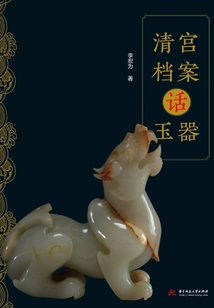
清宫档案话玉器
Li Hongwei
The archival materials in this book come from the Qing Dynasty archives held in the First Historical Archives of China, which was formerly the Archives of the Palace Museum in Peiping established in 1925 and specializes in the storage of central state agencies and royal archives of the Ming and Qing dynasties. The author has worked in the No. 1 Historical Archives of China for nearly 40 years and has accumulated rich experience in archive research and management. In his spare time, he combined his hobby of jade collection to systematically collect and collect historical materials about the jade archives of the Qianlong Dynasty. In 2013, he published the 700,000-word monograph "Qianlong and Jade" (volumes 1 and 2). This book is currently the most comprehensive, systematic and comprehensive study of the palace jade of the Qianlong Dynasty. The author's new work "Jade in Qing Palace Archives" condenses the essence of "Qianlong and Jade" and writes a 10,000-word "Foreword" for the book. He corrects the various rumors, rumors and legends about Qianlong's jade in society and in the market, and even the unreasonable opinions about Emperor Qianlong, based on archival historical materials. The text of this book is concise and smooth. It covers the production, types, sources, and origins of jade articles in the Qianlong Dynasty, as well as Emperor Qianlong's understanding of jade articles. It is an essential reference book for jade and antique collectors and enthusiasts, and is also an essential professional reference book for jade researchers.
The archival materials in this book come from the Qing Dynasty archives held in the First Historical Archives of China, which was formerly the Archives of the Palace Museum in Peiping established in 1925 and specializes in the storage of central state agencies and royal archives of the Ming and Qing dynasties. The author has worked in the No. 1 Historical Archives of China for nearly 40 years and has accumulated rich experience in archive research and management. In his spare time, he combined his hobby of jade collection to systematically collect and collect historical materials about the jade archives of the Qianlong Dynasty. In 2013, he published the 700,000-word monograph "Qianlong and Jade" (volumes 1 and 2). This book is currently the most comprehensive, systematic and comprehensive study of the palace jade of the Qianlong Dynasty. The author's new work "Jade in Qing Palace Archives" condenses the essence of "Qianlong and Jade" and writes a 10,000-word "Foreword" for the book. He corrects the various rumors, rumors and legends about Qianlong's jade in society and in the market, and even the unreasonable opinions about Emperor Qianlong, based on archival historical materials. The text of this book is concise and smooth. It covers the production, types, sources, and origins of jade articles in the Qianlong Dynasty, as well as Emperor Qianlong's understanding of jade articles. It is an essential reference book for jade and antique collectors and enthusiasts, and is also an essential professional reference book for jade researchers.
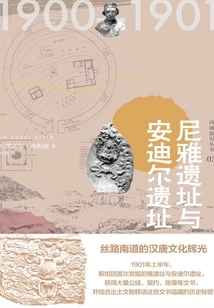
西域游历丛书03:尼雅遗址与安迪尔遗址(知新)
(uk) Orel Stein
From 1900 to 1901, 1906 to 1908, and 1913 to 1916, Aurel Stein, a British Hungarian, successively went to my country's Xinjiang and Hexi regions to conduct archaeological expeditions and published archaeological reports on these three expeditions: "Ancient Hotan - A Detailed Report on Archaeological Excavations in Xinjiang, China", "Archaeological Map of the Western Regions", and "Archaeological Map of the Heart of Asia". These three works are Stein's masterpieces. They comprehensively describe the ruins and relics of the Han and Tang Dynasties in Xinjiang, my country, as well as the treasures of the Dunhuang Grottoes and the Buddhist art of the Thousand Buddha Caves. They reveal the mystery of the ancient civilization in the region and the exchange and integration of Chinese and Western civilizations. The Travels in the Western Regions series integrates the archaeological data of Stein's three expeditions to western China and integrates and revise the above-mentioned archaeological reports so that the public can more easily understand the process and results. There are 15 volumes in the series. This volume is from "Ancient Hotan - A Detailed Report on Archaeological Excavations in Xinjiang, China": In the first half of 1901, Stein excavated the Niya and Andil ruins for the first time and obtained a large number of documents in Khalur, Chinese and Brahmi, and combined the unearthed cultural relics to interpret the historical secrets contained in these documents.
From 1900 to 1901, 1906 to 1908, and 1913 to 1916, Aurel Stein, a British Hungarian, successively went to my country's Xinjiang and Hexi regions to conduct archaeological expeditions and published archaeological reports on these three expeditions: "Ancient Hotan - A Detailed Report on Archaeological Excavations in Xinjiang, China", "Archaeological Map of the Western Regions", and "Archaeological Map of the Heart of Asia". These three works are Stein's masterpieces. They comprehensively describe the ruins and relics of the Han and Tang Dynasties in Xinjiang, my country, as well as the treasures of the Dunhuang Grottoes and the Buddhist art of the Thousand Buddha Caves. They reveal the mystery of the ancient civilization in the region and the exchange and integration of Chinese and Western civilizations. The Travels in the Western Regions series integrates the archaeological data of Stein's three expeditions to western China and integrates and revise the above-mentioned archaeological reports so that the public can more easily understand the process and results. There are 15 volumes in the series. This volume is from "Ancient Hotan - A Detailed Report on Archaeological Excavations in Xinjiang, China": In the first half of 1901, Stein excavated the Niya and Andil ruins for the first time and obtained a large number of documents in Khalur, Chinese and Brahmi, and combined the unearthed cultural relics to interpret the historical secrets contained in these documents.
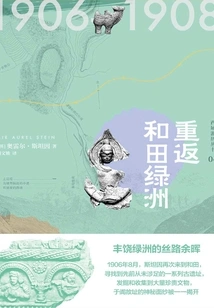
西域游历丛书04:重返和田绿洲(知新)
(uk) Orel Stein
From 1900 to 1901, 1906 to 1908, and 1913 to 1916, Aurel Stein, a British Hungarian, successively went to my country's Xinjiang and Hexi regions to conduct archaeological expeditions and published archaeological reports on these three expeditions: "Ancient Hotan - A Detailed Report on Archaeological Excavations in Xinjiang, China", "Archaeological Map of the Western Regions", and "Archaeological Map of the Heart of Asia". These three works are Stein's masterpieces. They comprehensively describe the ruins and relics of the Han and Tang Dynasties in Xinjiang, my country, as well as the treasures of the Dunhuang Grottoes and the Buddhist art of the Thousand Buddha Caves. They reveal the mystery of the ancient civilization in the region and the exchange and integration of Chinese and Western civilizations. The Travels in the Western Regions series integrates the archaeological data of Stein's three expeditions to western China and integrates and revise the above-mentioned archaeological reports so that the public can more easily understand the process and results. There are 15 volumes in the series. This volume is from "Illustrated Archeology of the Western Regions": In August 1906, Stein came to Hotan again and found a series of ancient ruins that he had never set foot in before. He excavated and collected a large number of precious cultural relics, and the mysterious veil of the former Khotan site was unveiled one by one.
From 1900 to 1901, 1906 to 1908, and 1913 to 1916, Aurel Stein, a British Hungarian, successively went to my country's Xinjiang and Hexi regions to conduct archaeological expeditions and published archaeological reports on these three expeditions: "Ancient Hotan - A Detailed Report on Archaeological Excavations in Xinjiang, China", "Archaeological Map of the Western Regions", and "Archaeological Map of the Heart of Asia". These three works are Stein's masterpieces. They comprehensively describe the ruins and relics of the Han and Tang Dynasties in Xinjiang, my country, as well as the treasures of the Dunhuang Grottoes and the Buddhist art of the Thousand Buddha Caves. They reveal the mystery of the ancient civilization in the region and the exchange and integration of Chinese and Western civilizations. The Travels in the Western Regions series integrates the archaeological data of Stein's three expeditions to western China and integrates and revise the above-mentioned archaeological reports so that the public can more easily understand the process and results. There are 15 volumes in the series. This volume is from "Illustrated Archeology of the Western Regions": In August 1906, Stein came to Hotan again and found a series of ancient ruins that he had never set foot in before. He excavated and collected a large number of precious cultural relics, and the mysterious veil of the former Khotan site was unveiled one by one.
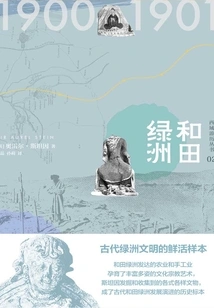
西域游历丛书02:和田绿洲(知新)
(uk) Orel Stein
From 1900 to 1901, 1906 to 1908, and 1913 to 1916, Aurel Stein, a British Hungarian, successively went to my country's Xinjiang and Hexi regions to conduct archaeological expeditions and published archaeological reports on these three expeditions: "Ancient Hotan - A Detailed Report on Archaeological Excavations in Xinjiang, China", "Archaeological Map of the Western Regions", and "Archaeological Map of the Heart of Asia". These three works are Stein's masterpieces. They comprehensively describe the ruins and relics of the Han and Tang Dynasties in Xinjiang, my country, as well as the treasures of the Dunhuang Grottoes and the Buddhist art of the Thousand Buddha Caves. They reveal the mystery of the ancient civilization in the region and the exchange and integration of Chinese and Western civilizations. The Travels in the Western Regions series integrates the archaeological data of Stein's three expeditions to western China and integrates and revise the above-mentioned archaeological reports so that the public can more easily understand the process and results. There are 15 volumes in the series. This volume is from "Ancient Hotan - A Detailed Report on Archaeological Excavations in Xinjiang, China": The developed agriculture and handicraft industry in the Hotan Oasis gave birth to rich and colorful culture, religion and art. The various cultural relics excavated and collected by Stein have become historical specimens of the development and evolution of the ancient Hotan Oasis.
From 1900 to 1901, 1906 to 1908, and 1913 to 1916, Aurel Stein, a British Hungarian, successively went to my country's Xinjiang and Hexi regions to conduct archaeological expeditions and published archaeological reports on these three expeditions: "Ancient Hotan - A Detailed Report on Archaeological Excavations in Xinjiang, China", "Archaeological Map of the Western Regions", and "Archaeological Map of the Heart of Asia". These three works are Stein's masterpieces. They comprehensively describe the ruins and relics of the Han and Tang Dynasties in Xinjiang, my country, as well as the treasures of the Dunhuang Grottoes and the Buddhist art of the Thousand Buddha Caves. They reveal the mystery of the ancient civilization in the region and the exchange and integration of Chinese and Western civilizations. The Travels in the Western Regions series integrates the archaeological data of Stein's three expeditions to western China and integrates and revise the above-mentioned archaeological reports so that the public can more easily understand the process and results. There are 15 volumes in the series. This volume is from "Ancient Hotan - A Detailed Report on Archaeological Excavations in Xinjiang, China": The developed agriculture and handicraft industry in the Hotan Oasis gave birth to rich and colorful culture, religion and art. The various cultural relics excavated and collected by Stein have become historical specimens of the development and evolution of the ancient Hotan Oasis.
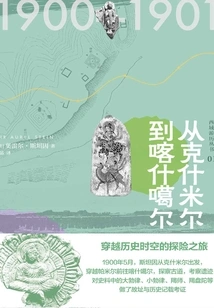
西域游历丛书01:从克什米尔到喀什噶尔(知新)
(uk) Orel Stein
From 1900 to 1901, 1906 to 1908, and 1913 to 1916, Aurel Stein, a British Hungarian, successively went to my country's Xinjiang and Hexi regions to conduct archaeological expeditions and published archaeological reports on these three expeditions: "Ancient Hotan - A Detailed Report on Archaeological Excavations in Xinjiang, China", "Archaeological Map of the Western Regions", and "Archaeological Map of the Heart of Asia". These three works are Stein's masterpieces. They comprehensively describe the ruins and relics of the Han and Tang Dynasties in Xinjiang, my country, as well as the treasures of the Dunhuang Grottoes and the Buddhist art of the Thousand Buddha Caves. They reveal the mystery of the ancient civilization in the region and the exchange and integration of Chinese and Western civilizations. The Travels in the Western Regions series integrates the archaeological data of Stein's three expeditions to western China and integrates and revise the above-mentioned archaeological reports so that the public can more easily understand the process and results. There are 15 volumes in the series. This volume is from "Ancient Hotan - A Detailed Report on Archaeological Excavations in Xinjiang, China": In May 1900, Stein set out from Kashmir and crossed the Pamirs to Kashgar. He explored ancient roads and relics, and made research on the historical sites and historical records of Da Bolu, Xiao Bolu, Jie Shi, Jiepan Tuo, etc. In historical materials.
From 1900 to 1901, 1906 to 1908, and 1913 to 1916, Aurel Stein, a British Hungarian, successively went to my country's Xinjiang and Hexi regions to conduct archaeological expeditions and published archaeological reports on these three expeditions: "Ancient Hotan - A Detailed Report on Archaeological Excavations in Xinjiang, China", "Archaeological Map of the Western Regions", and "Archaeological Map of the Heart of Asia". These three works are Stein's masterpieces. They comprehensively describe the ruins and relics of the Han and Tang Dynasties in Xinjiang, my country, as well as the treasures of the Dunhuang Grottoes and the Buddhist art of the Thousand Buddha Caves. They reveal the mystery of the ancient civilization in the region and the exchange and integration of Chinese and Western civilizations. The Travels in the Western Regions series integrates the archaeological data of Stein's three expeditions to western China and integrates and revise the above-mentioned archaeological reports so that the public can more easily understand the process and results. There are 15 volumes in the series. This volume is from "Ancient Hotan - A Detailed Report on Archaeological Excavations in Xinjiang, China": In May 1900, Stein set out from Kashmir and crossed the Pamirs to Kashgar. He explored ancient roads and relics, and made research on the historical sites and historical records of Da Bolu, Xiao Bolu, Jie Shi, Jiepan Tuo, etc. In historical materials.
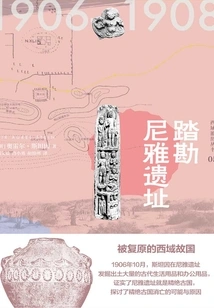
西域游历丛书05:踏勘尼雅遗址(知新)
(uk) Orel Stein
From 1900 to 1901, 1906 to 1908, and 1913 to 1916, Aurel Stein, a British Hungarian, successively went to my country's Xinjiang and Hexi regions to conduct archaeological expeditions and published archaeological reports on these three expeditions: "Ancient Hotan - A Detailed Report on Archaeological Excavations in Xinjiang, China", "Archaeological Map of the Western Regions", and "Archaeological Map of the Heart of Asia". These three works are Stein's masterpieces. They comprehensively describe the ruins and relics of the Han and Tang Dynasties in Xinjiang, my country, as well as the treasures of the Dunhuang Grottoes and the Buddhist art of the Thousand Buddha Caves. They reveal the mystery of the ancient civilization in the region and the exchange and integration of Chinese and Western civilizations. The Travels in the Western Regions series integrates the archaeological data of Stein's three expeditions to western China and integrates and revise the above-mentioned archaeological reports so that the public can more easily understand the process and results. There are 15 volumes in the series. This volume is from "Archaeological Records of the Western Regions": In October 1906, Stein unearthed a large number of ancient daily necessities and office supplies at the Niya ruins. He accidentally unearthed documents in Khalur script, which confirmed that the Niya ruins were the ancient country of Jingjue and explored the possibility and reasons for the demise of the ancient country of Jingjue.
From 1900 to 1901, 1906 to 1908, and 1913 to 1916, Aurel Stein, a British Hungarian, successively went to my country's Xinjiang and Hexi regions to conduct archaeological expeditions and published archaeological reports on these three expeditions: "Ancient Hotan - A Detailed Report on Archaeological Excavations in Xinjiang, China", "Archaeological Map of the Western Regions", and "Archaeological Map of the Heart of Asia". These three works are Stein's masterpieces. They comprehensively describe the ruins and relics of the Han and Tang Dynasties in Xinjiang, my country, as well as the treasures of the Dunhuang Grottoes and the Buddhist art of the Thousand Buddha Caves. They reveal the mystery of the ancient civilization in the region and the exchange and integration of Chinese and Western civilizations. The Travels in the Western Regions series integrates the archaeological data of Stein's three expeditions to western China and integrates and revise the above-mentioned archaeological reports so that the public can more easily understand the process and results. There are 15 volumes in the series. This volume is from "Archaeological Records of the Western Regions": In October 1906, Stein unearthed a large number of ancient daily necessities and office supplies at the Niya ruins. He accidentally unearthed documents in Khalur script, which confirmed that the Niya ruins were the ancient country of Jingjue and explored the possibility and reasons for the demise of the ancient country of Jingjue.
广西钱币研究集萃(2019)
Guangxi Numismatic Society
This book is the latest research result of the Guangxi Numismatic Society. It covers the modern numismatic history of Guangxi, including the issuance, manufacturing process, and related systems of coins. It includes four parts: first, exchanges at national academic annual conferences, or relevant academic papers published in publications such as "Chinese Coin"; second, the research results of some experts, scholars or coin enthusiasts on actual coins; third, Guangxi's historical currency archeology and new folk discoveries; fourth, Guangxi's numismatic news. In addition, it also includes relevant research on the numismatic history and culture of Southeast Asia.
This book is the latest research result of the Guangxi Numismatic Society. It covers the modern numismatic history of Guangxi, including the issuance, manufacturing process, and related systems of coins. It includes four parts: first, exchanges at national academic annual conferences, or relevant academic papers published in publications such as "Chinese Coin"; second, the research results of some experts, scholars or coin enthusiasts on actual coins; third, Guangxi's historical currency archeology and new folk discoveries; fourth, Guangxi's numismatic news. In addition, it also includes relevant research on the numismatic history and culture of Southeast Asia.
中国文明起源新探
Su Bingqi
As one of the leading figures in Chinese archeology, Su Bingqi's main academic contributions are concentrated in three books. In addition to "Selected Archaeological Essays by Su Bingqi" and "Chinese·Chinese·Descendants of the Dragon", "New Explorations on the Origin of Chinese Civilization" was his last monograph during his lifetime. It is his review and experience in the process of exploring the origins of Chinese culture, Chinese civilization and Chinese tradition. It is also a book that is the culmination of a lifetime of academic research, and is also a popular read for the intellectual public who are interested in archeology. The book contains the main academic achievements of Mr. Su Bingqi's life, such as the theory of China's six major cultural regions, influential academic theories such as "ancient culture, ancient cities and ancient countries", "trilogy of origins of ancient Chinese countries" and "three types of development models"; as well as the global Chinese archeology proposed in the early 1990s. It still has guiding significance for today's archaeological research.
As one of the leading figures in Chinese archeology, Su Bingqi's main academic contributions are concentrated in three books. In addition to "Selected Archaeological Essays by Su Bingqi" and "Chinese·Chinese·Descendants of the Dragon", "New Explorations on the Origin of Chinese Civilization" was his last monograph during his lifetime. It is his review and experience in the process of exploring the origins of Chinese culture, Chinese civilization and Chinese tradition. It is also a book that is the culmination of a lifetime of academic research, and is also a popular read for the intellectual public who are interested in archeology. The book contains the main academic achievements of Mr. Su Bingqi's life, such as the theory of China's six major cultural regions, influential academic theories such as "ancient culture, ancient cities and ancient countries", "trilogy of origins of ancient Chinese countries" and "three types of development models"; as well as the global Chinese archeology proposed in the early 1990s. It still has guiding significance for today's archaeological research.
鸡冠壶:历史考古札记
Liu Wei
Liu Wei, male, born in 1979, is from Liaoyang, Liaoning Province. He is an associate professor at the School of Archeology and Museology of Peking University and the Chinese Archeology Research Center. He is mainly engaged in teaching and researching archeology during the Song and Yuan Dynasties. Published a monograph "Archaeological Research on Tombs of the Liao Dynasty" and nearly 30 papers such as "The Layout of Imperial Tombs in the Song Dynasty and the Theory of Five-syllable Surnames", "The Form and Planning of the Cities Founded by the Mongolian and Yuan Dynasties", and "Song and Yuan Trade Ceramics from Shipwrecks on the Southeast Coast of China and Southeast Asia".
Liu Wei, male, born in 1979, is from Liaoyang, Liaoning Province. He is an associate professor at the School of Archeology and Museology of Peking University and the Chinese Archeology Research Center. He is mainly engaged in teaching and researching archeology during the Song and Yuan Dynasties. Published a monograph "Archaeological Research on Tombs of the Liao Dynasty" and nearly 30 papers such as "The Layout of Imperial Tombs in the Song Dynasty and the Theory of Five-syllable Surnames", "The Form and Planning of the Cities Founded by the Mongolian and Yuan Dynasties", and "Song and Yuan Trade Ceramics from Shipwrecks on the Southeast Coast of China and Southeast Asia".