Library
Browse and search books
471 novels found
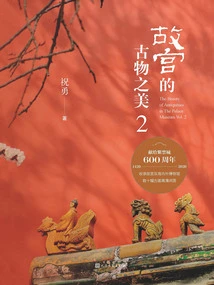
故宫的古物之美2
Zhu Yong
"The Beauty of Antiquities in the Forbidden City 2" is another "Beauty of the Forbidden City" launched by Zhu Yong after "The Beauty of Antiquities in the Forbidden City". It is not an academic work of art history, but a spiritual journey to find the roots. It may let us know how these ancient works of art were born, and what kind of ups and downs they experienced before arriving in front of us. Facing those long-lasting ink marks, both you and I will feel our hearts beat. In addition to marveling at the amazing techniques of ancient artists, I also think of the stories behind those pages, and the people and things that appeared and disappeared in the Forbidden City emerge.
"The Beauty of Antiquities in the Forbidden City 2" is another "Beauty of the Forbidden City" launched by Zhu Yong after "The Beauty of Antiquities in the Forbidden City". It is not an academic work of art history, but a spiritual journey to find the roots. It may let us know how these ancient works of art were born, and what kind of ups and downs they experienced before arriving in front of us. Facing those long-lasting ink marks, both you and I will feel our hearts beat. In addition to marveling at the amazing techniques of ancient artists, I also think of the stories behind those pages, and the people and things that appeared and disappeared in the Forbidden City emerge.
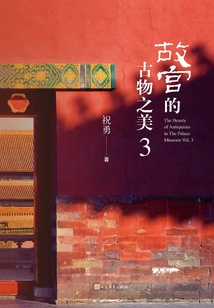
故宫的古物之美3
Zhu Yong
Zhu Yong, a researcher at the Palace Museum, used seven articles to tell the stories of seven famous paintings collected by the Palace Museum. Zhu Yong's prose is unique, combining academic theory and narrative, with special emphasis on the restoration of historical scenes. This book also collects dozens of high-definition paintings from the Palace Museum and other museums at home and abroad, which are attached to the book. The entire book will be printed in four colors on art paper, striving to make this book a "beautiful thing".
Zhu Yong, a researcher at the Palace Museum, used seven articles to tell the stories of seven famous paintings collected by the Palace Museum. Zhu Yong's prose is unique, combining academic theory and narrative, with special emphasis on the restoration of historical scenes. This book also collects dozens of high-definition paintings from the Palace Museum and other museums at home and abroad, which are attached to the book. The entire book will be printed in four colors on art paper, striving to make this book a "beautiful thing".
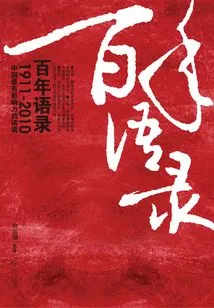
Centenary Quotations
History百年语录
Bai Yunzeng
After 100 years of tremendous changes, what words will remain in people's hearts forever? This book selects sentences that speak directly to people's hearts or hit the nail on the head from 1911 to 2010, and connects the development and changes of Chinese society in the past 100 years. Through fresh and vivid language, everyone can see rich and colorful details in the history of the rise and fall of chaos, and see a more specific and personalized historical picture; so that everyone can better understand the social genes of historical development and better understand the changes in history.
After 100 years of tremendous changes, what words will remain in people's hearts forever? This book selects sentences that speak directly to people's hearts or hit the nail on the head from 1911 to 2010, and connects the development and changes of Chinese society in the past 100 years. Through fresh and vivid language, everyone can see rich and colorful details in the history of the rise and fall of chaos, and see a more specific and personalized historical picture; so that everyone can better understand the social genes of historical development and better understand the changes in history.
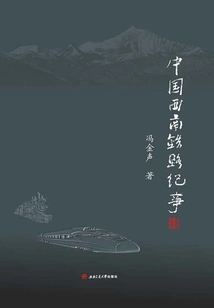
中国西南铁路纪事
Feng Jinsheng
This book takes the origin and development of the Southwest Railway as the main line, telling the development process of the Southwest Railway construction from before and after the First Opium War to the founding of New China, as well as the historical stories that occurred during the current high-speed rail construction period. The story told in this book reflects the construction process of China's railways in modern times. It is also a microcosm of the Chinese people's pursuit of the "Chinese Dream" and their struggle to revitalize China. The stories in this book include both historical research and touching folklore; it is not only a popular reading about the historical facts of the construction and development of the Southwest Railway, but also a rare teaching material for historical and traditional education.
This book takes the origin and development of the Southwest Railway as the main line, telling the development process of the Southwest Railway construction from before and after the First Opium War to the founding of New China, as well as the historical stories that occurred during the current high-speed rail construction period. The story told in this book reflects the construction process of China's railways in modern times. It is also a microcosm of the Chinese people's pursuit of the "Chinese Dream" and their struggle to revitalize China. The stories in this book include both historical research and touching folklore; it is not only a popular reading about the historical facts of the construction and development of the Southwest Railway, but also a rare teaching material for historical and traditional education.
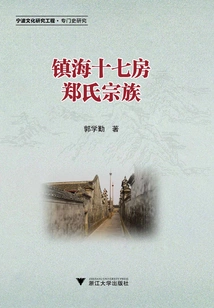
镇海十七房郑氏宗族
Guo Xueqin
This book mainly reviews the origin, development and prosperity of the Zheng family in Zhenhai Shiqifang. It focuses on the four important development stages of the Zheng family in Shiqifang, outstanding figures of the past dynasties, family business gangs, residential buildings, historical relics, charity culture, etc., And objectively and fairly evaluates its historical contribution, social status and positive historical impact.
This book mainly reviews the origin, development and prosperity of the Zheng family in Zhenhai Shiqifang. It focuses on the four important development stages of the Zheng family in Shiqifang, outstanding figures of the past dynasties, family business gangs, residential buildings, historical relics, charity culture, etc., And objectively and fairly evaluates its historical contribution, social status and positive historical impact.
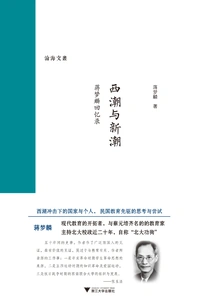
西潮与新潮:蒋梦麟回忆录
Jiang Menglin
This book records China's century-old history from 1842 to 1941. The first half of it was "personally heard" by the author, and the second half was "personally experienced" by the author. The author took advantage of his "leisure" while hiding from air raids during the Anti-Japanese War, and wrote such an "autobiography" in an empty space without lights, tables and chairs, using the pencil and hard-sided notebook he carried with him. This book is regarded by the author as "a bit like an autobiography, a bit like a memoir, and a bit like modern history."
This book records China's century-old history from 1842 to 1941. The first half of it was "personally heard" by the author, and the second half was "personally experienced" by the author. The author took advantage of his "leisure" while hiding from air raids during the Anti-Japanese War, and wrote such an "autobiography" in an empty space without lights, tables and chairs, using the pencil and hard-sided notebook he carried with him. This book is regarded by the author as "a bit like an autobiography, a bit like a memoir, and a bit like modern history."
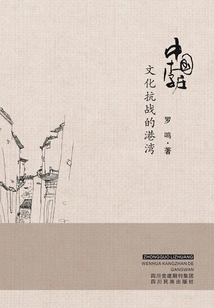
中国李庄文化抗战的港湾
Luo Ming
This book is mainly documentary and describes Lizhuang, China, a harbor of cultural resistance through events, characters, and stories. The book integrates ideological, informative, readable, story-telling and dissemination features. It shows the heroic scene of Lizhuang Culture's Anti-Japanese War from multiple perspectives, multiple levels and all-round, and plays a decisive role in inheriting the lifeline of Chinese culture.
This book is mainly documentary and describes Lizhuang, China, a harbor of cultural resistance through events, characters, and stories. The book integrates ideological, informative, readable, story-telling and dissemination features. It shows the heroic scene of Lizhuang Culture's Anti-Japanese War from multiple perspectives, multiple levels and all-round, and plays a decisive role in inheriting the lifeline of Chinese culture.
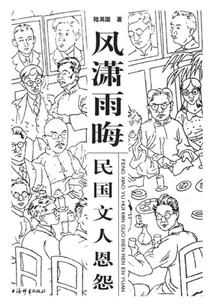
风潇雨晦:民国文人恩怨
Lu Qiguo
This book contains a total of twenty-five articles, using a documentary style to describe the historical events that happened to many famous literati during the Republic of China. The author of this book has long reviewed archival materials, as well as the chronologies, diaries, memoirs, etc. Of the parties involved, combing through them to unearth real and little-known content. Many of the articles have never been published, and some have been disclosed for the first time. For example, the grievance between Yan Xiu, a scholar, and Yuan Shikai, the first president of the Republic of China, was the result of the author of this book finding historical materials from the rarely circulated "Yan Xiu Chronicle" and writing it. Through the grudge story between Yan Xiu and Yuan Shikai, readers can learn about the beginning of education in the Republic of China and why there were so many famous schools and masters in the Republic of China. Others, such as the grievances between Yang Du and Sun Yat-sen, the grievances between Hu Shi and many of his students and friends, etc., Can all reflect the frank temperament and social hot spots of the literati during the Republic of China. Even the grievances and grievances that happened to Liang Qichao, Lu Xun, Yu Dafu, Xu Zhimo, Qu Qiubai, Shi Pingmei and others can still make people feel a kind of positive energy when reading it today. This book has detailed historical materials, rigorous narrative and strong readability.
This book contains a total of twenty-five articles, using a documentary style to describe the historical events that happened to many famous literati during the Republic of China. The author of this book has long reviewed archival materials, as well as the chronologies, diaries, memoirs, etc. Of the parties involved, combing through them to unearth real and little-known content. Many of the articles have never been published, and some have been disclosed for the first time. For example, the grievance between Yan Xiu, a scholar, and Yuan Shikai, the first president of the Republic of China, was the result of the author of this book finding historical materials from the rarely circulated "Yan Xiu Chronicle" and writing it. Through the grudge story between Yan Xiu and Yuan Shikai, readers can learn about the beginning of education in the Republic of China and why there were so many famous schools and masters in the Republic of China. Others, such as the grievances between Yang Du and Sun Yat-sen, the grievances between Hu Shi and many of his students and friends, etc., Can all reflect the frank temperament and social hot spots of the literati during the Republic of China. Even the grievances and grievances that happened to Liang Qichao, Lu Xun, Yu Dafu, Xu Zhimo, Qu Qiubai, Shi Pingmei and others can still make people feel a kind of positive energy when reading it today. This book has detailed historical materials, rigorous narrative and strong readability.
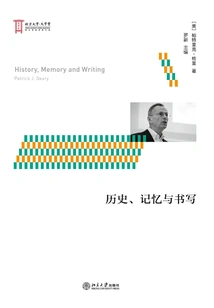
History, Memory and Writing
History历史、记忆与书写
(us)patrick Gerry
This book is a collection of essays by Patrick Gerry, an outstanding expert on European medieval history. The collected essays cover the main aspects of his academic career in the past half century, involving many important fields such as ethnic consciousness, social change, cultural structure, historical memory, nationalism, and the historical application of genetic technology. This book aims to introduce Gerry's research to Chinese readers, not only to see how he raised questions, organized materials and gave explanations when facing the distant past, but more importantly, to see how he understood the relationship between the past and the present, history and the future, how he responded to the historical anxieties of current society, and how he fulfilled the moral responsibility of a historian as a public intellectual.
This book is a collection of essays by Patrick Gerry, an outstanding expert on European medieval history. The collected essays cover the main aspects of his academic career in the past half century, involving many important fields such as ethnic consciousness, social change, cultural structure, historical memory, nationalism, and the historical application of genetic technology. This book aims to introduce Gerry's research to Chinese readers, not only to see how he raised questions, organized materials and gave explanations when facing the distant past, but more importantly, to see how he understood the relationship between the past and the present, history and the future, how he responded to the historical anxieties of current society, and how he fulfilled the moral responsibility of a historian as a public intellectual.
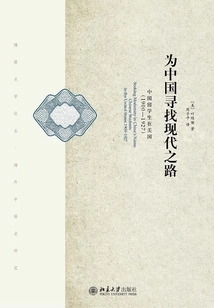
Finding a Modern Path for China: Chinese Students in the United States (1900-1927) (second Edition)
History为中国寻找现代之路:中国留学生在美国(1900—1927)(第二版)
(us) Ye Weili
This book focuses on Chinese students studying in the United States in the first thirty years of the 20th century. It examines the experiences and choices of Chinese students studying in the United States during this period, and provides a perspective on the ideological and social practice trajectories of several generations of Chinese students studying in the United States as they seek a path to modernity for China. It not only focuses on the history of education and the history of Sino-US cultural relations, but also focuses on how the "modern" Chinese who evolved from the intersection and collision of the two cultures organized international student associations and responded to the domestic constitutional movement; repositioned the relationship between the intellectual class and the country; faced racial discrimination; dealt with marriage and love issues; "modern" amateur life, etc., Especially the experiences and thoughts of female international students that few people pay attention to. The argument is based on a large amount of first-hand information, making history vivid and perceptible. This reprint adds a long article "Stories of Four Seniors Who Study Abroad" as an appendix, which is emotionally and logically written and helps us better understand the life experiences and mental journeys of Meng Zhi, Zhang Yuanshan, Zou Bingwen, Pan Guangdan and even that generation of students studying in the United States.
This book focuses on Chinese students studying in the United States in the first thirty years of the 20th century. It examines the experiences and choices of Chinese students studying in the United States during this period, and provides a perspective on the ideological and social practice trajectories of several generations of Chinese students studying in the United States as they seek a path to modernity for China. It not only focuses on the history of education and the history of Sino-US cultural relations, but also focuses on how the "modern" Chinese who evolved from the intersection and collision of the two cultures organized international student associations and responded to the domestic constitutional movement; repositioned the relationship between the intellectual class and the country; faced racial discrimination; dealt with marriage and love issues; "modern" amateur life, etc., Especially the experiences and thoughts of female international students that few people pay attention to. The argument is based on a large amount of first-hand information, making history vivid and perceptible. This reprint adds a long article "Stories of Four Seniors Who Study Abroad" as an appendix, which is emotionally and logically written and helps us better understand the life experiences and mental journeys of Meng Zhi, Zhang Yuanshan, Zou Bingwen, Pan Guangdan and even that generation of students studying in the United States.
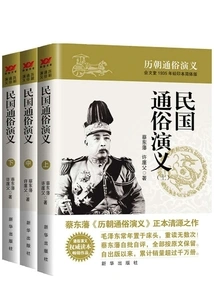
民国通俗演义(上中下)
Cai Dongfan Xu Genfu
Chinese history, from the time of Xia Yu to the Manchu Qing Dynasty, has gone through several revolutions and surname changes, and it cannot be separated from the scope of one emperor. The emperors who started their own business may have been wise and fair, but passed down to their descendants, most of them were confused and tyrannical to the people. The people suffered so much that they took desperate risks and gathered together to cause chaos. Therefore, through the generations, there will always be rises and falls. There is no banquet in the world that never goes away, and there is no imperial family that never goes away. In the past hundred years, people at home and abroad have been studying politics, and they all say that the imperial system is really bad, and if they want to end it once and for all, they can't do it unless the imperial system is overthrown and replaced by people's livelihood. So Sun Yat-sen, Li Yuanhong, and Yuan Shikai came out to take the initiative, regaining everything from the 267-year-old Qing Dynasty, and sweeping away the 4,600-year-old emperor system. The forty million compatriots said that the Republic of China was the beginning of the Republic of China, which shocked the past and present. From then on, in broad daylight, there is no dust in the summer, and everyone can enjoy peace.
Chinese history, from the time of Xia Yu to the Manchu Qing Dynasty, has gone through several revolutions and surname changes, and it cannot be separated from the scope of one emperor. The emperors who started their own business may have been wise and fair, but passed down to their descendants, most of them were confused and tyrannical to the people. The people suffered so much that they took desperate risks and gathered together to cause chaos. Therefore, through the generations, there will always be rises and falls. There is no banquet in the world that never goes away, and there is no imperial family that never goes away. In the past hundred years, people at home and abroad have been studying politics, and they all say that the imperial system is really bad, and if they want to end it once and for all, they can't do it unless the imperial system is overthrown and replaced by people's livelihood. So Sun Yat-sen, Li Yuanhong, and Yuan Shikai came out to take the initiative, regaining everything from the 267-year-old Qing Dynasty, and sweeping away the 4,600-year-old emperor system. The forty million compatriots said that the Republic of China was the beginning of the Republic of China, which shocked the past and present. From then on, in broad daylight, there is no dust in the summer, and everyone can enjoy peace.
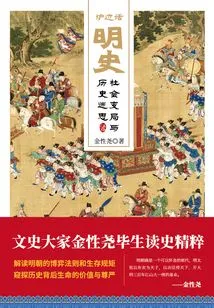
炉边话明史:社会变局与历史迷思
Jin Xingyao
Jin Xingyao, a great literary and historian, was familiar with the history of the Ming Dynasty in addition to annotating poems, and was well versed in the anecdotes of the Ming Dynasty. This work is a collection of his essays on the history of the Ming Dynasty, including reading historical notes, chatting about cultural anecdotes, interpreting historical myths, stories behind major historical events, and commenting on famous historical figures. "Fireside Chats on the History of the Ming Dynasty: Social Changes and Historical Myths" is different from general historical works. It is not a chronicle or a big history, but is compiled from some small anecdotes extracted from the sea of history. Jin Xingyao had profound skills and could explain things in simple terms. When commenting on history, people and affairs, he combined literature and history and often had unique opinions.
Jin Xingyao, a great literary and historian, was familiar with the history of the Ming Dynasty in addition to annotating poems, and was well versed in the anecdotes of the Ming Dynasty. This work is a collection of his essays on the history of the Ming Dynasty, including reading historical notes, chatting about cultural anecdotes, interpreting historical myths, stories behind major historical events, and commenting on famous historical figures. "Fireside Chats on the History of the Ming Dynasty: Social Changes and Historical Myths" is different from general historical works. It is not a chronicle or a big history, but is compiled from some small anecdotes extracted from the sea of history. Jin Xingyao had profound skills and could explain things in simple terms. When commenting on history, people and affairs, he combined literature and history and often had unique opinions.
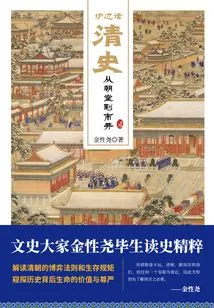
炉边话清史:从朝堂到市井
Jin Xingyao
Jin Xingyao, a great literary and historical figure, read the history of the Qing Dynasty thoroughly while annotating poems, and was well versed in the anecdotes of the Qing Dynasty. This work is a collection of his essays on Qing history, including reading historical notes, chatting about cultural anecdotes, interpreting historical myths, stories behind major historical events, and commenting on famous historical figures. "Fireside Talk on Qing History: From the Court to the Marketplace" is different from other historical works. It is not a chronicle or a big history, but a collection of small anecdotes from the sea of history and compiled together. Jin Xingyao had profound skills and could explain things in simple terms. When commenting on history, people and affairs, he combined literature and history and often had unique opinions.
Jin Xingyao, a great literary and historical figure, read the history of the Qing Dynasty thoroughly while annotating poems, and was well versed in the anecdotes of the Qing Dynasty. This work is a collection of his essays on Qing history, including reading historical notes, chatting about cultural anecdotes, interpreting historical myths, stories behind major historical events, and commenting on famous historical figures. "Fireside Talk on Qing History: From the Court to the Marketplace" is different from other historical works. It is not a chronicle or a big history, but a collection of small anecdotes from the sea of history and compiled together. Jin Xingyao had profound skills and could explain things in simple terms. When commenting on history, people and affairs, he combined literature and history and often had unique opinions.
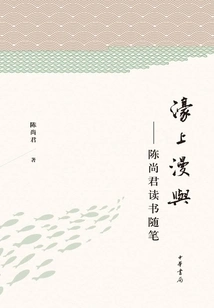
濠上漫与:陈尚君读书随笔
Chen Shangjun
This book collects 56 academic essays by Professor Chen Shangjun in recent years, basically sorted by the time of the content involved. It started with the three legendary women Dugu sisters from the Northern Dynasties to the Sui Dynasty, and gradually included Tang Dynasty figures such as Tang Taizong, Li Linfu, and Gao Lishi. It includes some discoveries and thoughts in the process of reorganizing the entire Tang poetry. Returning to the Song Dynasty, we discuss why the Song version is valuable, pay attention to the compilation of "Zizhi Tongjian", and discuss Sima Guang's historical concepts and team. From the Qing Dynasty to the Republic of China, in addition to analyzing the tampering of documents in Sikuquanshu, it also lists Guo Songtao, Yan Fu, Tang Wenzhi, Zhang Yuanji, Xiong Xiling, Zhang Taiyan and many other figures one by one, which shows the wide scope of reading. As the era becomes more recent, I will describe my interactions with predecessors such as Zhu Dongrun, Cheng Qianfan, and Fu Xuancong, my exchanges with fellow scholars, my support and care for students, as well as some academic work I participated in and my review of some books related to the Tang and Song Dynasties.
This book collects 56 academic essays by Professor Chen Shangjun in recent years, basically sorted by the time of the content involved. It started with the three legendary women Dugu sisters from the Northern Dynasties to the Sui Dynasty, and gradually included Tang Dynasty figures such as Tang Taizong, Li Linfu, and Gao Lishi. It includes some discoveries and thoughts in the process of reorganizing the entire Tang poetry. Returning to the Song Dynasty, we discuss why the Song version is valuable, pay attention to the compilation of "Zizhi Tongjian", and discuss Sima Guang's historical concepts and team. From the Qing Dynasty to the Republic of China, in addition to analyzing the tampering of documents in Sikuquanshu, it also lists Guo Songtao, Yan Fu, Tang Wenzhi, Zhang Yuanji, Xiong Xiling, Zhang Taiyan and many other figures one by one, which shows the wide scope of reading. As the era becomes more recent, I will describe my interactions with predecessors such as Zhu Dongrun, Cheng Qianfan, and Fu Xuancong, my exchanges with fellow scholars, my support and care for students, as well as some academic work I participated in and my review of some books related to the Tang and Song Dynasties.
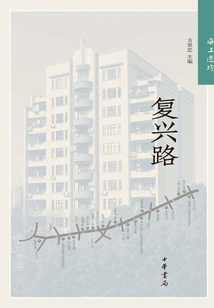
海上遗珍:复兴路
Editor-in-chief Fang Shizhong
"Fuxing Road" is the third volume of the "Sea Treasures" series (the first volume is "Wukang Road" and the second volume is "Hengshan Road"). It continues the consistent style of the series. This volume contains articles written by famous scholars and writers about Fuxing Middle Road (built in 1914, formerly known as Fahua Road and Lafayette Road) and Fuxing West Road (built in 1914, formerly known as Fahua Road and Lafayette Road). The articles on outstanding historical buildings and historical and cultural celebrities on Bai Saizhong Road include accurate research on the historical evolution of the buildings, vivid descriptions of anecdotes, affectionate memories of the cultural celebrities who once lived here, and faithful records of the lives of the residents who currently live here. Through the details, you can feel the changes of the times. At the same time, a number of exquisite pictures are selected, including pictures with historical information, as well as today's style, comparison between ancient and modern times, text and pictures, and strive to make the historical picture displayed in front of readers vivid. Feel the changes of the times through the minutiae.
"Fuxing Road" is the third volume of the "Sea Treasures" series (the first volume is "Wukang Road" and the second volume is "Hengshan Road"). It continues the consistent style of the series. This volume contains articles written by famous scholars and writers about Fuxing Middle Road (built in 1914, formerly known as Fahua Road and Lafayette Road) and Fuxing West Road (built in 1914, formerly known as Fahua Road and Lafayette Road). The articles on outstanding historical buildings and historical and cultural celebrities on Bai Saizhong Road include accurate research on the historical evolution of the buildings, vivid descriptions of anecdotes, affectionate memories of the cultural celebrities who once lived here, and faithful records of the lives of the residents who currently live here. Through the details, you can feel the changes of the times. At the same time, a number of exquisite pictures are selected, including pictures with historical information, as well as today's style, comparison between ancient and modern times, text and pictures, and strive to make the historical picture displayed in front of readers vivid. Feel the changes of the times through the minutiae.
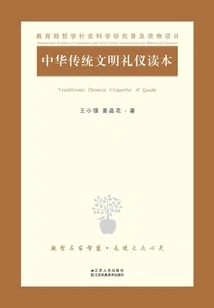
中华传统文明礼仪读本
Wang Xiaoxi Jiang Jinghua
China is known as a country of etiquette, and its civilized etiquette has been passed down to this day. In this book, Professor Wang Xiaoxi provides a general introduction and introduction to traditional Chinese civilization and etiquette from both major and minor aspects. In a large aspect, this book starts from the origin of civilized etiquette, starting from the classics, and introduces "Zhou Rites", "Rituals", "Book of Rites", "Family Rites", "Disciple Rules", "Yan Family Instructions", "Qian Family Instructions", etc. Along the time axis; in small aspects, Wang Professor Xiaoxi introduced the etiquette in interpersonal communication, including sincerity, respect, filial piety, respect for elders, elegant speech, appearance, clothing, reception, and banquets. He also focused on the crown ceremony, family ceremony, wedding, funeral, etc. In daily life. This book is both small and large. It is both popular and academic, and is very helpful for us to understand traditional Chinese civilization and etiquette.
China is known as a country of etiquette, and its civilized etiquette has been passed down to this day. In this book, Professor Wang Xiaoxi provides a general introduction and introduction to traditional Chinese civilization and etiquette from both major and minor aspects. In a large aspect, this book starts from the origin of civilized etiquette, starting from the classics, and introduces "Zhou Rites", "Rituals", "Book of Rites", "Family Rites", "Disciple Rules", "Yan Family Instructions", "Qian Family Instructions", etc. Along the time axis; in small aspects, Wang Professor Xiaoxi introduced the etiquette in interpersonal communication, including sincerity, respect, filial piety, respect for elders, elegant speech, appearance, clothing, reception, and banquets. He also focused on the crown ceremony, family ceremony, wedding, funeral, etc. In daily life. This book is both small and large. It is both popular and academic, and is very helpful for us to understand traditional Chinese civilization and etiquette.
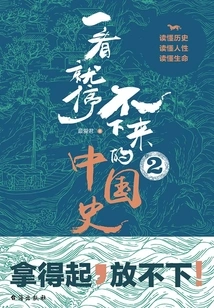
一看就停不下来的中国史2
Favorite You
History is not lonely, but an existence full of warmth. This book uses characters as its warp and era as its weft. It uses a delicate writing style to weave a web of historical facts to tell you a different Chinese history. Whether it is the darkness of history, the profound insight into human nature, or the reflection on reality, it can bring you the pleasure of reading. My Favorite Treasure cherishes every person, every thing, and every area narrated, and every step of the way is written with understanding and sympathy. Emperors and generals, literati, lone heroes, outcasts of the times, everyone is a mirror of the times. Reading history means reading people's hearts, reading the present, and reading the future.
History is not lonely, but an existence full of warmth. This book uses characters as its warp and era as its weft. It uses a delicate writing style to weave a web of historical facts to tell you a different Chinese history. Whether it is the darkness of history, the profound insight into human nature, or the reflection on reality, it can bring you the pleasure of reading. My Favorite Treasure cherishes every person, every thing, and every area narrated, and every step of the way is written with understanding and sympathy. Emperors and generals, literati, lone heroes, outcasts of the times, everyone is a mirror of the times. Reading history means reading people's hearts, reading the present, and reading the future.
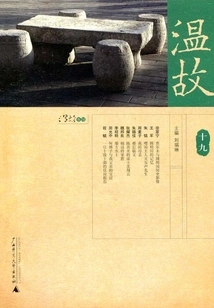
Review the Past (19)
History温故(十九)
Editor-in-chief Liu Ruilin
"Reviewing the Past" is a kind of historical and cultural reading material published one after another. Reminiscing and examining the past from today's perspective, and providing a reference for current survival and future development, is the so-called "reviewing the past to learn the new." The content generally includes the following three aspects: recalling the past living conditions of mankind, examining and reflecting on history, and reviewing historical and cultural relics and legacy texts.
"Reviewing the Past" is a kind of historical and cultural reading material published one after another. Reminiscing and examining the past from today's perspective, and providing a reference for current survival and future development, is the so-called "reviewing the past to learn the new." The content generally includes the following three aspects: recalling the past living conditions of mankind, examining and reflecting on history, and reviewing historical and cultural relics and legacy texts.
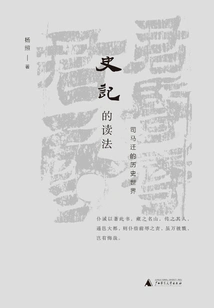
史记的读法:司马迁的历史世界
Yang Zhao
This book is a compilation of the ideal word-of-mouth program "Ancient and Modern: One Hundred Lectures on Yang Zhao's Historical Records". The author disrupts the original order of chapters in "Historical Records", uses "historical reading" to restore the social background of the time, explains the causes of major events, and uses "literary reading" to get closer to Sima Qian's perspective, attitude and philosophy, and brings the classic into today's time and space. He started with "Taishigong's Preface" and "Report to Ren An" to interpret Sima Qian's personal experiences, and then analyzed the history of the early Han Dynasty from chapters such as "The Chronicles of Xiang Yu", "The Chronicles of Gaozu", and "The Chronicles of Empress Lu", showing Sima Qian's sharp observation of the political operations of the early Han Dynasty. In the concept of multiple time dimensions, the "tables" and "books" in "Historical Records" can highlight Sima Qian's breakthrough creativity, and in the layout of the chronicles and biographies, we can also find who Sima Qian believed was a model worthy of being recorded in the history books, and what values were the driving force for him to devote all his energy to writing "Historical Records".
This book is a compilation of the ideal word-of-mouth program "Ancient and Modern: One Hundred Lectures on Yang Zhao's Historical Records". The author disrupts the original order of chapters in "Historical Records", uses "historical reading" to restore the social background of the time, explains the causes of major events, and uses "literary reading" to get closer to Sima Qian's perspective, attitude and philosophy, and brings the classic into today's time and space. He started with "Taishigong's Preface" and "Report to Ren An" to interpret Sima Qian's personal experiences, and then analyzed the history of the early Han Dynasty from chapters such as "The Chronicles of Xiang Yu", "The Chronicles of Gaozu", and "The Chronicles of Empress Lu", showing Sima Qian's sharp observation of the political operations of the early Han Dynasty. In the concept of multiple time dimensions, the "tables" and "books" in "Historical Records" can highlight Sima Qian's breakthrough creativity, and in the layout of the chronicles and biographies, we can also find who Sima Qian believed was a model worthy of being recorded in the history books, and what values were the driving force for him to devote all his energy to writing "Historical Records".
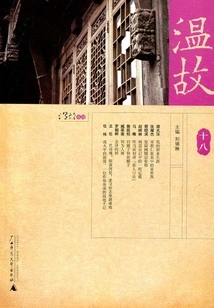
Review the Past (18)
History温故(十八)
Editor-in-chief Liu Ruilin
"Reviewing the Past" is a kind of historical and cultural reading material published one after another. Reminiscing and examining the past from today's perspective, and providing a reference for current survival and future development, is the so-called "reviewing the past to learn the new." The content generally includes the following three aspects: recalling the past living conditions of mankind, examining and reflecting on history, and reviewing historical and cultural relics and legacy texts.
"Reviewing the Past" is a kind of historical and cultural reading material published one after another. Reminiscing and examining the past from today's perspective, and providing a reference for current survival and future development, is the so-called "reviewing the past to learn the new." The content generally includes the following three aspects: recalling the past living conditions of mankind, examining and reflecting on history, and reviewing historical and cultural relics and legacy texts.
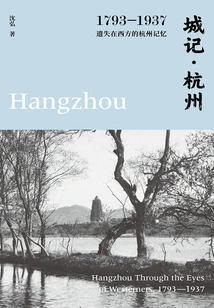
城记·杭州:1793—1937,遗失在西方的杭州记忆
Shen Hong
More than 140 years ago, the British Macartney Mission left Beijing and headed south along the Grand Canal to Hangzhou. The painter William Alexander who accompanied the delegation lingered and recorded the scenery and customs of Hangzhou with his brush. Since then, Western painters have come to Hangzhou to depict the beautiful Oriental Venice. Since the beginning of the 19th century, British and American missionaries have landed in China. They have lived in China for many years and have formed an indissoluble bond with Hangzhou. They have recorded the scenery and living beings in Hangzhou with their cameras. Many of the scenic spots have disappeared. These photos provide precious historical data for us to reconstruct and restore cultural relics and historic sites today. There are also the American female poets Gilliland and his wife, and Marzhi and his wife, who came to Hangzhou for their honeymoon. They left behind the most beautiful poems, diaries and the most romantic memories. This book is not only the memory of Hangzhou lost in the West, but also the touching stories of ordinary British, Americans and China in the past century and a half.
More than 140 years ago, the British Macartney Mission left Beijing and headed south along the Grand Canal to Hangzhou. The painter William Alexander who accompanied the delegation lingered and recorded the scenery and customs of Hangzhou with his brush. Since then, Western painters have come to Hangzhou to depict the beautiful Oriental Venice. Since the beginning of the 19th century, British and American missionaries have landed in China. They have lived in China for many years and have formed an indissoluble bond with Hangzhou. They have recorded the scenery and living beings in Hangzhou with their cameras. Many of the scenic spots have disappeared. These photos provide precious historical data for us to reconstruct and restore cultural relics and historic sites today. There are also the American female poets Gilliland and his wife, and Marzhi and his wife, who came to Hangzhou for their honeymoon. They left behind the most beautiful poems, diaries and the most romantic memories. This book is not only the memory of Hangzhou lost in the West, but also the touching stories of ordinary British, Americans and China in the past century and a half.
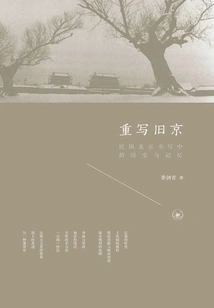
重写旧京:民国北京书写中的历史与记忆(话题书系)
Ji Jianqing
Beijing is a city with a long history. Especially at the time of farewell to the imperial system and the establishment of folk gardens, historical relics carrying the consciousness of ancient civilization can be seen everywhere. As for how to treat, process and place these "history and memories" so that they can be continuously integrated into the modern life of "modern" China, relevant discussions and disputes ran through the entire Republic of China and even the early founding of the Republic. In the interaction of "writing" on a large number of classics, poetry, architecture, urban planning, nation-state and other issues, the author faced various forms of materials, analyzed them piece by piece, and peeled off cocoons. He not only structurally presented the gradually disappearing atmosphere of the ancient capital Beijing, but also made an attempt to advance the theory of modernity. It is an example of localized thinking on "history and memory."
Beijing is a city with a long history. Especially at the time of farewell to the imperial system and the establishment of folk gardens, historical relics carrying the consciousness of ancient civilization can be seen everywhere. As for how to treat, process and place these "history and memories" so that they can be continuously integrated into the modern life of "modern" China, relevant discussions and disputes ran through the entire Republic of China and even the early founding of the Republic. In the interaction of "writing" on a large number of classics, poetry, architecture, urban planning, nation-state and other issues, the author faced various forms of materials, analyzed them piece by piece, and peeled off cocoons. He not only structurally presented the gradually disappearing atmosphere of the ancient capital Beijing, but also made an attempt to advance the theory of modernity. It is an example of localized thinking on "history and memory."
The Final Splendor
History最后的风华绝代
Wei Junying
This book contains more than 30 literary and historical essays written by the author in recent years, which are based on history and culture and integrated into contemporary life. Now it has been sorted and re-edited, and illustrated with pictures.
This book contains more than 30 literary and historical essays written by the author in recent years, which are based on history and culture and integrated into contemporary life. Now it has been sorted and re-edited, and illustrated with pictures.
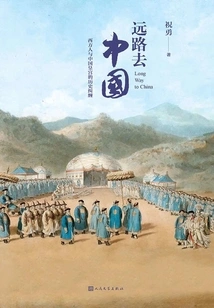
Going the Long Way to China: Westerners' Historical Entanglement with the Chinese Imperial Palace
History远路去中国:西方人与中国皇宫的历史纠缠
Zhu Yong
From Marco Polo, Matteo Ricci, Macartney, Lenovo to Locke, the eyes of these Westerners who came to China with various purposes reflect the Western understanding of Chinese culture and the entanglement of Eastern and Western history and culture. At the same time, it also reflects the changes in Chinese government and history from one aspect, that is, several distinctive nodes in Chinese history, especially in modern history.
From Marco Polo, Matteo Ricci, Macartney, Lenovo to Locke, the eyes of these Westerners who came to China with various purposes reflect the Western understanding of Chinese culture and the entanglement of Eastern and Western history and culture. At the same time, it also reflects the changes in Chinese government and history from one aspect, that is, several distinctive nodes in Chinese history, especially in modern history.
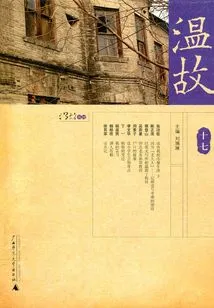
Review the Past (seventeen)
History温故(十七)
Editor-in-chief Liu Ruilin
"Reviewing the Past" is a kind of historical and cultural reading material published one after another. Reminiscing and examining the past from today's perspective, and providing a reference for current survival and future development, is the so-called "reviewing the past to learn the new." The content generally includes the following three aspects: recalling the past living conditions of mankind; examining and reflecting on history; and reviewing historical and cultural relics and legacy texts.
"Reviewing the Past" is a kind of historical and cultural reading material published one after another. Reminiscing and examining the past from today's perspective, and providing a reference for current survival and future development, is the so-called "reviewing the past to learn the new." The content generally includes the following three aspects: recalling the past living conditions of mankind; examining and reflecting on history; and reviewing historical and cultural relics and legacy texts.
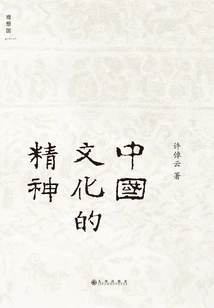
中国文化的精神
Xu Zhuoyun
Chinese people attach great importance to diversity and harmony in their daily lives in terms of diet, medicine, and housing. They seek uniformity but avoid deviation, and strive for neutrality but not excess. Various concepts can still be seen in the thoughts and behaviors of Chinese people. The beautiful and noble spirit and true humanity of generations of Chinese people are mostly not found in the Four Books, Five Classics and Twenty-Four Histories, but in the streets and alleys, in the mountains and countryside, where they talk on the street and talk about mulberry and hemp... From the creation of the world to the heroes of the world, from the affairs of men and women to the phenomenon of monsters, they cover a wide range and represent the likes, dislikes, praises and criticisms of ordinary Chinese people. Their view of history is a set of evaluation systems that connect these stories together.
Chinese people attach great importance to diversity and harmony in their daily lives in terms of diet, medicine, and housing. They seek uniformity but avoid deviation, and strive for neutrality but not excess. Various concepts can still be seen in the thoughts and behaviors of Chinese people. The beautiful and noble spirit and true humanity of generations of Chinese people are mostly not found in the Four Books, Five Classics and Twenty-Four Histories, but in the streets and alleys, in the mountains and countryside, where they talk on the street and talk about mulberry and hemp... From the creation of the world to the heroes of the world, from the affairs of men and women to the phenomenon of monsters, they cover a wide range and represent the likes, dislikes, praises and criticisms of ordinary Chinese people. Their view of history is a set of evaluation systems that connect these stories together.
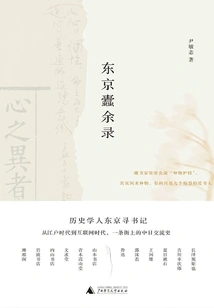
东京蠹余录
Yin Minzhi
Jimbocho, Chiyoda-ku, Tokyo, Japan, is the largest ancient bookstore street in the world. Since the Meiji period, there have been many bookstores here and the literary style has flourished. Since the late Qing Dynasty, a large number of Chinese people have come to Jimbocho to buy books. Among them are wealthy ministers of the Qing Dynasty and cash-strapped overseas students. They buy rare ancient books and new books. The author of this book has also traveled east to study in recent years. During his studies, he visited various bookstores in Tokyo and combined field investigation with the accumulation of historical materials to write this book. This book is both an interview with secretaries and a history of bookstores. It covers thirteen ancient bookstores, from Bunkudo Bookstore in the late Edo period to Mitsuwa Shobo in the Heisei era. It spans a century and a half and features various characters including scholars, booksellers, politicians, and writers. Lu Xun, Guo Moruo, Wang Guowei, Iwanami Shigeo, Uchiyama Zenzo, Yoshikawa Kojiro... Their stories unfold against the background of these ancient bookstores.
Jimbocho, Chiyoda-ku, Tokyo, Japan, is the largest ancient bookstore street in the world. Since the Meiji period, there have been many bookstores here and the literary style has flourished. Since the late Qing Dynasty, a large number of Chinese people have come to Jimbocho to buy books. Among them are wealthy ministers of the Qing Dynasty and cash-strapped overseas students. They buy rare ancient books and new books. The author of this book has also traveled east to study in recent years. During his studies, he visited various bookstores in Tokyo and combined field investigation with the accumulation of historical materials to write this book. This book is both an interview with secretaries and a history of bookstores. It covers thirteen ancient bookstores, from Bunkudo Bookstore in the late Edo period to Mitsuwa Shobo in the Heisei era. It spans a century and a half and features various characters including scholars, booksellers, politicians, and writers. Lu Xun, Guo Moruo, Wang Guowei, Iwanami Shigeo, Uchiyama Zenzo, Yoshikawa Kojiro... Their stories unfold against the background of these ancient bookstores.
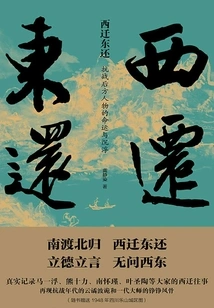
Move West and Return East
History西迁东还
Gong Jingran
This book tells the story of Chinese intellectuals and national elites who moved westward to the rear of Sichuan during the Anti-Japanese War of the Republic of China, including Ma Yifu, Xiong Shili, Ye Shengtao, Zhu Dongrun, Nan Huaijin, Ling Shuhua, He Changqun, Fan Xudong, etc. They either founded education, wrote books, or revived industry, etc., Leaving important historical marks in Sichuan and Sichuan. The author conducted detailed exploration and research on the fate of these historical figures by consulting archives and conducting on-site visits. He rationally sorted out the personnel entanglements buried deep in history and reproduced their ups and downs in the war. When the fate of an individual meets the rise and fall of a country, and when the rich history merges with personal honor and disgrace, the author's poetic words are like the echo of the times, calling us to return to the historical scene and feel the fate and complex life situations in the great era.
This book tells the story of Chinese intellectuals and national elites who moved westward to the rear of Sichuan during the Anti-Japanese War of the Republic of China, including Ma Yifu, Xiong Shili, Ye Shengtao, Zhu Dongrun, Nan Huaijin, Ling Shuhua, He Changqun, Fan Xudong, etc. They either founded education, wrote books, or revived industry, etc., Leaving important historical marks in Sichuan and Sichuan. The author conducted detailed exploration and research on the fate of these historical figures by consulting archives and conducting on-site visits. He rationally sorted out the personnel entanglements buried deep in history and reproduced their ups and downs in the war. When the fate of an individual meets the rise and fall of a country, and when the rich history merges with personal honor and disgrace, the author's poetic words are like the echo of the times, calling us to return to the historical scene and feel the fate and complex life situations in the great era.
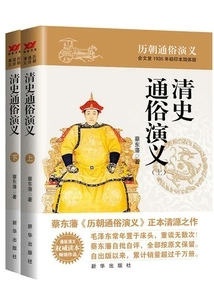
清史通俗演义(上下)
Cai Dongfan
As far back as the Zhao and Song Dynasties, after the Jin State was destroyed, the surviving Jurchen clan fled to the northeast and hid on the seashore. Taking the meaning of "residents under Changbai Mountain", they named themselves the "Aixinjueluo Clan" and established the Manchukuo Kingdom, so the whole family was renamed "Manchu". After hundreds of years and several generations, a man emerged from the clan who was both wise and courageous and outstanding. So another 268 years of Qing Dynasty history was rehearsed. The Qing Dynasty unified the Central Plains, and the general path lasted for thousands of years and stretched endlessly, becoming one with the sky. Unexpectedly, the foreign ships have strong guns and powerful guns, and they repeatedly invade the country. The great power of the Qing Dynasty had to cede territory today and pay indemnity tomorrow. The Qing Dynasty's monarchs and ministers were so tired that they only focused on one thing and the other, and the country's power gradually declined. Unexpectedly, before the external troubles were over, internal worries arose again. Wuchang launched an attack, and the provinces responded, overthrowing the Qing Dynasty.
As far back as the Zhao and Song Dynasties, after the Jin State was destroyed, the surviving Jurchen clan fled to the northeast and hid on the seashore. Taking the meaning of "residents under Changbai Mountain", they named themselves the "Aixinjueluo Clan" and established the Manchukuo Kingdom, so the whole family was renamed "Manchu". After hundreds of years and several generations, a man emerged from the clan who was both wise and courageous and outstanding. So another 268 years of Qing Dynasty history was rehearsed. The Qing Dynasty unified the Central Plains, and the general path lasted for thousands of years and stretched endlessly, becoming one with the sky. Unexpectedly, the foreign ships have strong guns and powerful guns, and they repeatedly invade the country. The great power of the Qing Dynasty had to cede territory today and pay indemnity tomorrow. The Qing Dynasty's monarchs and ministers were so tired that they only focused on one thing and the other, and the country's power gradually declined. Unexpectedly, before the external troubles were over, internal worries arose again. Wuchang launched an attack, and the provinces responded, overthrowing the Qing Dynasty.
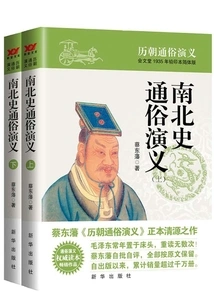
南北史通俗演义(上下)
Cai Dongfan
After the Han and Jin Dynasties, foreigners gradually came to China and lived in the interior. Subsequently, the Five Hus and Sixteen Kingdoms rose and fell one after another. Later, the weak preyed on the strong, swallowed each other up, moved around, and combined the sixteen kingdoms into one big country, called the Northern Wei Dynasty. Later, internal strife broke out again in the Northern Wei Dynasty. The east was divided and the west was divided, and there was no time to take care of Jiangnan, so Jiangnan was still preserved. When the Eastern Wei Dynasty was changed to the Northern Qi Dynasty and the Western Wei Dynasty was changed to the Northern Zhou Dynasty, the Western Territory was divided into three parts. The Zhou Dynasty was the strongest, Qi was the second, and Jiangnan was the weakest. The tripartite war lasted for several years. Qi was merged with the Zhou Dynasty, but only two-tenths of Jiangnan remained, almost all belonging to the Northern Zhou Dynasty. A great prime minister, Yang Jian, was chosen. He usurped the Zhou Dynasty and re-annexed the south of the Yangtze River. He accepted Zhou Chan and destroyed the Chen family, and actually unified the Central Plains and merged the north and the south.
After the Han and Jin Dynasties, foreigners gradually came to China and lived in the interior. Subsequently, the Five Hus and Sixteen Kingdoms rose and fell one after another. Later, the weak preyed on the strong, swallowed each other up, moved around, and combined the sixteen kingdoms into one big country, called the Northern Wei Dynasty. Later, internal strife broke out again in the Northern Wei Dynasty. The east was divided and the west was divided, and there was no time to take care of Jiangnan, so Jiangnan was still preserved. When the Eastern Wei Dynasty was changed to the Northern Qi Dynasty and the Western Wei Dynasty was changed to the Northern Zhou Dynasty, the Western Territory was divided into three parts. The Zhou Dynasty was the strongest, Qi was the second, and Jiangnan was the weakest. The tripartite war lasted for several years. Qi was merged with the Zhou Dynasty, but only two-tenths of Jiangnan remained, almost all belonging to the Northern Zhou Dynasty. A great prime minister, Yang Jian, was chosen. He usurped the Zhou Dynasty and re-annexed the south of the Yangtze River. He accepted Zhou Chan and destroyed the Chen family, and actually unified the Central Plains and merged the north and the south.
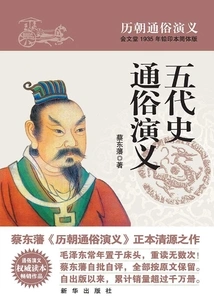
五代史通俗演义
Cai Dongfan
A long period of rule will lead to chaos, a long period of unity will lead to division. As time goes by, the legacy of the ancestors will gradually be exhausted, so the chaos will become increasingly fierce. Three or five heroes will take advantage of the chaos to cause trouble, either by ordering the emperor or claiming the land as the king. In this chaotic and divided situation, there were various states during the Eastern Zhou Dynasty, there were Three Kingdoms during the Later Han Dynasty, there were the Southern and Northern Dynasties after the Eastern Jin Dynasty, and there were the Five Dynasties after the Late Tang Dynasty. The Five Dynasties lasted for fifty-three years, with eight surnames and thirteen emperors, and the country's name was changed five times, namely Liang, Tang, Jin, Han, and Zhou. Because these kingdoms had already been named by previous dynasties, historians added a later character to each, calling them Later Liang, Later Tang, Later Jin, Later Han, and Later Zhou. In addition, there were countries that were either combined or separated from the Five Dynasties, but were not affiliated with each other. They were called the Ten Kingdoms, namely Wu, Chu, Fujian, Southern Tang, Former Shu, Later Shu, Southern Han, Northern Han, Wuyue, and Jingnan.
A long period of rule will lead to chaos, a long period of unity will lead to division. As time goes by, the legacy of the ancestors will gradually be exhausted, so the chaos will become increasingly fierce. Three or five heroes will take advantage of the chaos to cause trouble, either by ordering the emperor or claiming the land as the king. In this chaotic and divided situation, there were various states during the Eastern Zhou Dynasty, there were Three Kingdoms during the Later Han Dynasty, there were the Southern and Northern Dynasties after the Eastern Jin Dynasty, and there were the Five Dynasties after the Late Tang Dynasty. The Five Dynasties lasted for fifty-three years, with eight surnames and thirteen emperors, and the country's name was changed five times, namely Liang, Tang, Jin, Han, and Zhou. Because these kingdoms had already been named by previous dynasties, historians added a later character to each, calling them Later Liang, Later Tang, Later Jin, Later Han, and Later Zhou. In addition, there were countries that were either combined or separated from the Five Dynasties, but were not affiliated with each other. They were called the Ten Kingdoms, namely Wu, Chu, Fujian, Southern Tang, Former Shu, Later Shu, Southern Han, Northern Han, Wuyue, and Jingnan.
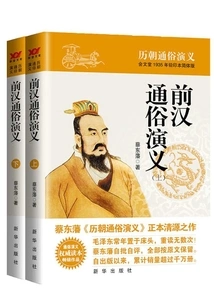
前汉通俗演义(上下)
Cai Dongfan
The Eastern Zhou Dynasty gradually declined, the Western Qin Dynasty rose, and the seven heroes of the Warring States Period attacked and killed each other. King Qin Yingzheng relied on his ancestral foundation to gather millions of strong men in Guanzhong, intimidated and deceived, and devoured the six kingdoms one by one, and took the territory of Kyushu as his own. Ying Zheng believed that his virtue was equal to that of the Three Emperors and that he had more merit than the Five Emperors, so he combined one character from each of the names of the Three Emperors and the Five Emperors into one word and called himself emperor. The four words "emperor's autocratic rule" are the main purpose that covers the entire book. The Qin Dynasty and the Han Dynasty followed it, which is related to the original Qin and Han Dynasties, and there is no big difference. The Qin Dynasty lasted for only fifteen years after Hu Hai and Ziying for three generations. It is narrated according to the events, only a few chapters, and does not make up a volume. Moreover, although it is called a dynasty, only tyranny is heard but no peace is seen. It is actually the transitional era from Zhou to Han, so it is listed before Han Dynasty to briefly describe its deeds. During the two hundred years before the Han Dynasty, there were favored women, relatives, Fangzhen, barbarians, eunuchs, eunuchs, and powerful traitors. They were all the causes of chaos in the country from ancient to modern times.
The Eastern Zhou Dynasty gradually declined, the Western Qin Dynasty rose, and the seven heroes of the Warring States Period attacked and killed each other. King Qin Yingzheng relied on his ancestral foundation to gather millions of strong men in Guanzhong, intimidated and deceived, and devoured the six kingdoms one by one, and took the territory of Kyushu as his own. Ying Zheng believed that his virtue was equal to that of the Three Emperors and that he had more merit than the Five Emperors, so he combined one character from each of the names of the Three Emperors and the Five Emperors into one word and called himself emperor. The four words "emperor's autocratic rule" are the main purpose that covers the entire book. The Qin Dynasty and the Han Dynasty followed it, which is related to the original Qin and Han Dynasties, and there is no big difference. The Qin Dynasty lasted for only fifteen years after Hu Hai and Ziying for three generations. It is narrated according to the events, only a few chapters, and does not make up a volume. Moreover, although it is called a dynasty, only tyranny is heard but no peace is seen. It is actually the transitional era from Zhou to Han, so it is listed before Han Dynasty to briefly describe its deeds. During the two hundred years before the Han Dynasty, there were favored women, relatives, Fangzhen, barbarians, eunuchs, eunuchs, and powerful traitors. They were all the causes of chaos in the country from ancient to modern times.
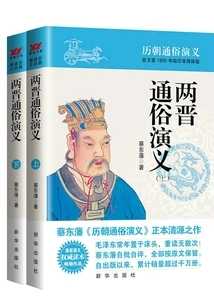
两晋通俗演义(上下)
Cai Dongfan
In the one hundred and fifty-six years of the Eastern and Western Jin Dynasties, except for the more than 20 years since the founding of the Jin Dynasty, there was no day of trouble or invasion. If there was no internal strife, there would be external aggression. Foreign aggression has always been the most severe, and it has never been more severe than the two Jins, the Five Hus and the Sixteen Kingdoms. They rise and fall suddenly, and there is no end. If the husband's internal affairs are in disrepair, internal strife will inevitably arise; if internal restraint arises, external aggression will take advantage of it. Insects grow on decaying wood, and ants invade the walls. This has been the case since ancient times, but it is particularly noticeable in Jin Dynasty. The Eastern and Western Jin Dynasties seemed to be always facing foreign aggression, but after all, they were like snipers and clams, and only fishermen existed. The land of Shenzhou is sinking, the bronze camels are thorny, the two masters are captured, and they are drinking in Di Ting. It is nothing more than internal affairs that are not in line, so this is the reason. Fortunately, in the battle of Feishui, Fu Qin was defeated and half of the country was saved. The monarchs and ministers of the Eastern Jin Dynasty became arrogant after a slight victory. Arrogance led to laziness, and there was no improvement. So they usurped each other, and disasters arose one after another, eventually leading to the destruction of the country. The downfall of the Jin Dynasty was not entirely caused by foreign aggression: bad ethics and seeking revenge among flesh and blood were the first disasters for the country's downfall; the loss of faith and the feud between the powerful and powerful were the second disasters for the country's downfall.
In the one hundred and fifty-six years of the Eastern and Western Jin Dynasties, except for the more than 20 years since the founding of the Jin Dynasty, there was no day of trouble or invasion. If there was no internal strife, there would be external aggression. Foreign aggression has always been the most severe, and it has never been more severe than the two Jins, the Five Hus and the Sixteen Kingdoms. They rise and fall suddenly, and there is no end. If the husband's internal affairs are in disrepair, internal strife will inevitably arise; if internal restraint arises, external aggression will take advantage of it. Insects grow on decaying wood, and ants invade the walls. This has been the case since ancient times, but it is particularly noticeable in Jin Dynasty. The Eastern and Western Jin Dynasties seemed to be always facing foreign aggression, but after all, they were like snipers and clams, and only fishermen existed. The land of Shenzhou is sinking, the bronze camels are thorny, the two masters are captured, and they are drinking in Di Ting. It is nothing more than internal affairs that are not in line, so this is the reason. Fortunately, in the battle of Feishui, Fu Qin was defeated and half of the country was saved. The monarchs and ministers of the Eastern Jin Dynasty became arrogant after a slight victory. Arrogance led to laziness, and there was no improvement. So they usurped each other, and disasters arose one after another, eventually leading to the destruction of the country. The downfall of the Jin Dynasty was not entirely caused by foreign aggression: bad ethics and seeking revenge among flesh and blood were the first disasters for the country's downfall; the loss of faith and the feud between the powerful and powerful were the second disasters for the country's downfall.
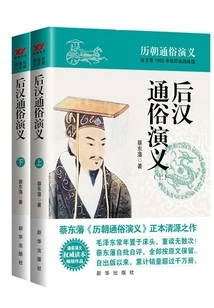
后汉通俗演义(上下)
Cai Dongfan
The Han dynasty is divided by historians into two periods, called the Early Han and the Later Han, also known as the Eastern and Western Han. This is because during the 400 years of the Han Dynasty, Wang Mang usurped the country and usurped the throne for 18 years. Therefore, the period before Wang Mang was called the Former Han, and the period after Wang Mang was called the Later Han. "The Romance of the Former Han Dynasty" has hundreds of chapters, starting from the first emperor of Qin and ending with Wang Mang's usurpation of the country; this part is connected with the previous part, starting with Wang Mang and ending with the Three Kingdoms. "The Romance of the Former Han Dynasty" is attached to the Qin Dynasty, and "The Romance of the Later Han Dynasty" is attached to the Three Kingdoms. They are relatively opposite, but they are also unique creations. If we want to talk about the rise and fall of the Later Han Dynasty, it is more complicated than that of the Early Han Dynasty: Wang Mang usurped the country, and the trouble was caused by the Queen of the Yuan Dynasty, and the harm caused by his relatives. Guangwu Zhongxing, punishing the past and ignoring the future, took over the power personally and tried to prevent his relatives from intervening in the government; the Ming Emperor was particularly paternal, and the Zhang Emperor was impressive in his early administration; after he was emperor, the country's affairs deteriorated day by day, and relatives and eunuchs fought, and eventually they all died together. The power of the country was in the hands of the state pastors, and the heroes fought for hegemony, and the weak and the strong were able to eat each other, so there were three kingdoms.
The Han dynasty is divided by historians into two periods, called the Early Han and the Later Han, also known as the Eastern and Western Han. This is because during the 400 years of the Han Dynasty, Wang Mang usurped the country and usurped the throne for 18 years. Therefore, the period before Wang Mang was called the Former Han, and the period after Wang Mang was called the Later Han. "The Romance of the Former Han Dynasty" has hundreds of chapters, starting from the first emperor of Qin and ending with Wang Mang's usurpation of the country; this part is connected with the previous part, starting with Wang Mang and ending with the Three Kingdoms. "The Romance of the Former Han Dynasty" is attached to the Qin Dynasty, and "The Romance of the Later Han Dynasty" is attached to the Three Kingdoms. They are relatively opposite, but they are also unique creations. If we want to talk about the rise and fall of the Later Han Dynasty, it is more complicated than that of the Early Han Dynasty: Wang Mang usurped the country, and the trouble was caused by the Queen of the Yuan Dynasty, and the harm caused by his relatives. Guangwu Zhongxing, punishing the past and ignoring the future, took over the power personally and tried to prevent his relatives from intervening in the government; the Ming Emperor was particularly paternal, and the Zhang Emperor was impressive in his early administration; after he was emperor, the country's affairs deteriorated day by day, and relatives and eunuchs fought, and eventually they all died together. The power of the country was in the hands of the state pastors, and the heroes fought for hegemony, and the weak and the strong were able to eat each other, so there were three kingdoms.
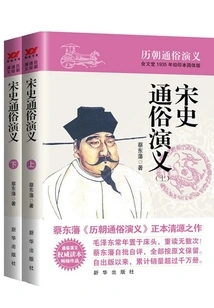
宋史通俗演义(上下)
Cai Dongfan
Chen Qiao changed and wore a yellow robe. Zhao Kuangyin, who was guarding the whole palace, actually took over the throne of Zhou Dynasty and became the emperor himself. However, the emperor had an eye for it, which caused the three kingdoms of Liao, Jin, and Yuan to rise up in the north one after another and cause frequent border troubles. The Northern Song Dynasty suppressed its troops too much and lacked good generals. The main idea was to recover the sixteen states of Yan and Yun. Who knew that even the two emperors were captured by others. In the Southern Song Dynasty, there was a lack of expertise in appointing talents and a lack of good prime ministers. A few generals appeared, but they were framed by the traitorous ministers in many ways. On the Fengbo Pavilion, a prison of injustice was formed, and on the bank of the West Lake, riding a donkey back, everyone was disheartened and sat listening to defeat. Later, even the last piece of the Zhao family's bones and blood was left alone overseas, and the cliffs were destroyed, and the emperor's son perished. There was no choice but to put an end to the 320 years of Zhao and Song Dynasty.
Chen Qiao changed and wore a yellow robe. Zhao Kuangyin, who was guarding the whole palace, actually took over the throne of Zhou Dynasty and became the emperor himself. However, the emperor had an eye for it, which caused the three kingdoms of Liao, Jin, and Yuan to rise up in the north one after another and cause frequent border troubles. The Northern Song Dynasty suppressed its troops too much and lacked good generals. The main idea was to recover the sixteen states of Yan and Yun. Who knew that even the two emperors were captured by others. In the Southern Song Dynasty, there was a lack of expertise in appointing talents and a lack of good prime ministers. A few generals appeared, but they were framed by the traitorous ministers in many ways. On the Fengbo Pavilion, a prison of injustice was formed, and on the bank of the West Lake, riding a donkey back, everyone was disheartened and sat listening to defeat. Later, even the last piece of the Zhao family's bones and blood was left alone overseas, and the cliffs were destroyed, and the emperor's son perished. There was no choice but to put an end to the 320 years of Zhao and Song Dynasty.
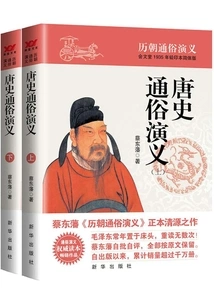
唐史通俗演义(上下)
Cai Dongfan
At the founding of the Tang Dynasty, all the heroes were drawn up, and the 293 states in the sea were conquered. All the Dongyi, Nanman, Xirong, and Beidi paid tribute every year and came to court every year. This is really a fact of the Tang Dynasty. It is not a false talk of the Tang Dynasty, it is a name of the Tang Dynasty. From then on, it was rumored overseas, and we Chinese often boast about it, and it is still used today. I once remembered that the predecessors left a joke and talked about it: Han Jingxue, Jin Qing Tan, Tang Wugui, Song Nashin, Qing Sloppy. What is the meaning of the three characters "Tang Turtle"? During the reigns of Taizong and Gaozong, the Tang Dynasty was at its peak, and things were already murky in the palace. Taizong raped his younger brother-in-law, and Empress Wu was widely seen. Later, Empress Wei relied on her favor, Zhongzong ordered the chips, Yuhuan washed the children, Lushan grabbed the breasts, the green headscarf became the family law, and the tortoise and the tortoise were not uncommon...
At the founding of the Tang Dynasty, all the heroes were drawn up, and the 293 states in the sea were conquered. All the Dongyi, Nanman, Xirong, and Beidi paid tribute every year and came to court every year. This is really a fact of the Tang Dynasty. It is not a false talk of the Tang Dynasty, it is a name of the Tang Dynasty. From then on, it was rumored overseas, and we Chinese often boast about it, and it is still used today. I once remembered that the predecessors left a joke and talked about it: Han Jingxue, Jin Qing Tan, Tang Wugui, Song Nashin, Qing Sloppy. What is the meaning of the three characters "Tang Turtle"? During the reigns of Taizong and Gaozong, the Tang Dynasty was at its peak, and things were already murky in the palace. Taizong raped his younger brother-in-law, and Empress Wu was widely seen. Later, Empress Wei relied on her favor, Zhongzong ordered the chips, Yuhuan washed the children, Lushan grabbed the breasts, the green headscarf became the family law, and the tortoise and the tortoise were not uncommon...
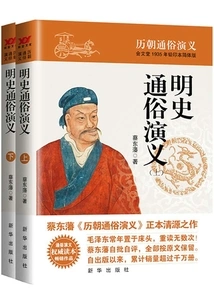
明史通俗演义(上下)
Cai Dongfan
Zhu Yuanzhang, Taizu of the Ming Dynasty, rose to the occasion. Within a few years, he expelled the Yuan Emperor and unified China. There were 12 successive emperors, and each of the 17 emperors lasted for 270 years and six years. During this period, there was a huge reason for the rise, prosperity, decline and death. The sages have a saying: "When a gentleman's Tao disappears, and a villain's Tao disappears, a country will prosper; when a gentleman's Tao disappears, and a villain's Tao grows, a country will decline." Although this sentence is ancient and modern, it is always a common saying and cannot be used as a conclusive proof of the rise and fall of a generation. The Ming Dynasty rose to decline and fell from prosperity, but it followed the same five mistakes as the Yuan Dynasty: the first disadvantage was fratricide, the second disadvantage was the succession of eunuchs, the third disadvantage was rampant traitors, the fourth disadvantage was the palace's reliance on favors, and the fifth disadvantage was rogue bandits causing harm to the people. In addition, there were domestic party disputes, powerful foreign enemies, and the chaos became more and more fierce. It barely supported it for hundreds of years, and finally suffered a complete defeat. The splendid country created and managed by Mingzu was handed over to the Manchus. It is also sad and miserable to say the least.
Zhu Yuanzhang, Taizu of the Ming Dynasty, rose to the occasion. Within a few years, he expelled the Yuan Emperor and unified China. There were 12 successive emperors, and each of the 17 emperors lasted for 270 years and six years. During this period, there was a huge reason for the rise, prosperity, decline and death. The sages have a saying: "When a gentleman's Tao disappears, and a villain's Tao disappears, a country will prosper; when a gentleman's Tao disappears, and a villain's Tao grows, a country will decline." Although this sentence is ancient and modern, it is always a common saying and cannot be used as a conclusive proof of the rise and fall of a generation. The Ming Dynasty rose to decline and fell from prosperity, but it followed the same five mistakes as the Yuan Dynasty: the first disadvantage was fratricide, the second disadvantage was the succession of eunuchs, the third disadvantage was rampant traitors, the fourth disadvantage was the palace's reliance on favors, and the fifth disadvantage was rogue bandits causing harm to the people. In addition, there were domestic party disputes, powerful foreign enemies, and the chaos became more and more fierce. It barely supported it for hundreds of years, and finally suffered a complete defeat. The splendid country created and managed by Mingzu was handed over to the Manchus. It is also sad and miserable to say the least.
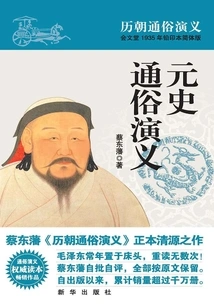
元史通俗演义
Cai Dongfan
The history of China has been inherited by the Han people. During this period, ethnic minorities may have invaded the Central Plains, and they have waxed and waned, coming and going. Although the Wuhu, Khitan, and Jurchen cavalry were so powerful, they could not unify China in the end. The Mongol origin was originally the Shiwei branch of the Tang Dynasty. They lived in northern China, made a living by hunting, and formed their own tribe. He first served under the leadership of the Jin State, and until Temujin was born, he unified all Mongolian tribes and developed his power. The Mongolian cavalry then conquered Europe in the west, and soon went south, destroying the Jin Dynasty and invading the Song Dynasty. The Southern Song Dynasty was destroyed, and the Central Plains was conquered by the Mongol Khan. One emperor and one courtier actually served as the emperor of China for eighty-nine years. This is really a pioneering work in history! Little did they know that the Mongolian people had a cruel temperament, treated the people harshly, and the world was tired, which actually aroused countless popular uprisings, and one Zhu Yuanzhang was chosen, and he just took away all the people in the Yuan Dynasty. Some said it was destiny, and some said it was man-made. The boy was also confused, so he had to discuss history and perform a "Romance of the Yuan Dynasty" based on the facts of the rise and fall of Mongolia.
The history of China has been inherited by the Han people. During this period, ethnic minorities may have invaded the Central Plains, and they have waxed and waned, coming and going. Although the Wuhu, Khitan, and Jurchen cavalry were so powerful, they could not unify China in the end. The Mongol origin was originally the Shiwei branch of the Tang Dynasty. They lived in northern China, made a living by hunting, and formed their own tribe. He first served under the leadership of the Jin State, and until Temujin was born, he unified all Mongolian tribes and developed his power. The Mongolian cavalry then conquered Europe in the west, and soon went south, destroying the Jin Dynasty and invading the Song Dynasty. The Southern Song Dynasty was destroyed, and the Central Plains was conquered by the Mongol Khan. One emperor and one courtier actually served as the emperor of China for eighty-nine years. This is really a pioneering work in history! Little did they know that the Mongolian people had a cruel temperament, treated the people harshly, and the world was tired, which actually aroused countless popular uprisings, and one Zhu Yuanzhang was chosen, and he just took away all the people in the Yuan Dynasty. Some said it was destiny, and some said it was man-made. The boy was also confused, so he had to discuss history and perform a "Romance of the Yuan Dynasty" based on the facts of the rise and fall of Mongolia.
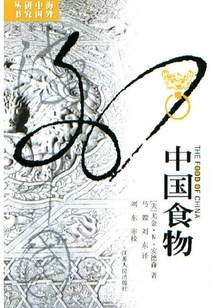
Chinese Food
History中国食物
(u. S.) Eugene N. Anderson
This is a wide-ranging and fascinating historical and ethnographic work on Chinese food. Starting from ancient history, the author shows how food has occupied a central position in China's official policies, religious rituals, and physical health from the beginning, and then follows the clues of time to contemporary China, describing the regional diversity of Chinese food culture in a rich, fascinating, and thought-provoking way.
This is a wide-ranging and fascinating historical and ethnographic work on Chinese food. Starting from ancient history, the author shows how food has occupied a central position in China's official policies, religious rituals, and physical health from the beginning, and then follows the clues of time to contemporary China, describing the regional diversity of Chinese food culture in a rich, fascinating, and thought-provoking way.
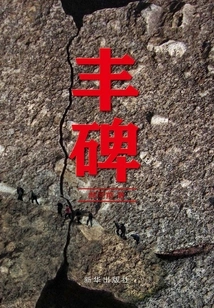
Monument
History丰碑
Hao Tongqian
In the 1950s, a generation of great men proposed the idea of "the south has more water and the north has less water. Can we borrow some water from the south to give it to the north?" Since then, the blueprint for the South-to-North Water Diversion Project spanning half of China has spanned half a century.
In the 1950s, a generation of great men proposed the idea of "the south has more water and the north has less water. Can we borrow some water from the south to give it to the north?" Since then, the blueprint for the South-to-North Water Diversion Project spanning half of China has spanned half a century.
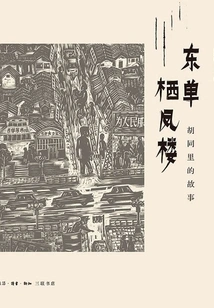
东单栖凤楼:胡同里的故事
Rui Fabin
This book is written by a printmaker born in the 1960s. He uses black and white woodcuts to tell the story of hutong life from the 1960s to the early 1980s. It records the ordinary people and ordinary things that happened in the Fenglou Hutong in Dongdanqi, which is now changed, from an extraordinary perspective. It allows people to recall the past and cherish what we have today. This book mainly consists of 50 prints created by the author, accompanied by narrative text.
This book is written by a printmaker born in the 1960s. He uses black and white woodcuts to tell the story of hutong life from the 1960s to the early 1980s. It records the ordinary people and ordinary things that happened in the Fenglou Hutong in Dongdanqi, which is now changed, from an extraordinary perspective. It allows people to recall the past and cherish what we have today. This book mainly consists of 50 prints created by the author, accompanied by narrative text.
中国人:品中国历史人物
Wang Chonglu
This book goes into the inner world of representative Chinese people in various historical periods. Passion and rationality are intertwined, and history and reality are integrated. It tastes their unique lives, explores their mental journeys in critical periods of history, society, country, and individuals, and restores the bumpy road that generations of Chinese have gone through ups and downs year after year, and stepped out of trouble step by step. Focus on the present and look back on the past, and use the past to learn from the present. It is the great history of the Chinese people in one's mind, and it is also an apocalypse that generations of Chinese people have given to today's people. It is a beautiful text for readers to understand the Chinese people's life path, and it is also a literary work of extremely high taste; it is not only informative, interesting, and literary, but also has high reading value, appreciation value, and reference value.
This book goes into the inner world of representative Chinese people in various historical periods. Passion and rationality are intertwined, and history and reality are integrated. It tastes their unique lives, explores their mental journeys in critical periods of history, society, country, and individuals, and restores the bumpy road that generations of Chinese have gone through ups and downs year after year, and stepped out of trouble step by step. Focus on the present and look back on the past, and use the past to learn from the present. It is the great history of the Chinese people in one's mind, and it is also an apocalypse that generations of Chinese people have given to today's people. It is a beautiful text for readers to understand the Chinese people's life path, and it is also a literary work of extremely high taste; it is not only informative, interesting, and literary, but also has high reading value, appreciation value, and reference value.
Tolerant
History宽容
Fanglong
This is a popular history book that describes the development of human thought and has been best-selling for nearly a hundred years. It is Fang Long's most famous work. Starting from the standpoint of humanism, Fang Long searched for the deep roots behind the conflicts between different religious sects, revealed scenes of tragedies caused by stubbornness, and outlined a magnificent history of human ideological liberation. The author focuses on the most essential issues of human survival and development, challenges human ignorance and prejudice, and popularizes knowledge and truth into common sense in simple and easy-to-understand terms. People benefit a lot from his wise words and insights.
This is a popular history book that describes the development of human thought and has been best-selling for nearly a hundred years. It is Fang Long's most famous work. Starting from the standpoint of humanism, Fang Long searched for the deep roots behind the conflicts between different religious sects, revealed scenes of tragedies caused by stubbornness, and outlined a magnificent history of human ideological liberation. The author focuses on the most essential issues of human survival and development, challenges human ignorance and prejudice, and popularizes knowledge and truth into common sense in simple and easy-to-understand terms. People benefit a lot from his wise words and insights.
Counselors Are Everywhere
History谋士纵横
Qin Shiyong
The Spring and Autumn Period and the Warring States Period were an era of unprecedented ideological liberation under great changes, and an era when heroes emerged in large numbers. If the overlords of the Spring and Autumn and Warring States periods were all great heroes, then the outstanding politicians who helped these overlords govern the country were sages. If you understand these overlords, especially these politicians, you will also understand the entire Spring and Autumn and Warring States era. Through the description of Guan Zhong, Shang Yang, Li Si, Baili Xi and other characters, this book reveals the heroic stories of those who turned their backhand into clouds and turned their hands into rain.
The Spring and Autumn Period and the Warring States Period were an era of unprecedented ideological liberation under great changes, and an era when heroes emerged in large numbers. If the overlords of the Spring and Autumn and Warring States periods were all great heroes, then the outstanding politicians who helped these overlords govern the country were sages. If you understand these overlords, especially these politicians, you will also understand the entire Spring and Autumn and Warring States era. Through the description of Guan Zhong, Shang Yang, Li Si, Baili Xi and other characters, this book reveals the heroic stories of those who turned their backhand into clouds and turned their hands into rain.
Q
Historyq
G
"Notes of Yuewei Thatched Cottage" includes five parts: "Luanyang Xiaoxialu", "This is What I Hear", "Huaixi Magazine", "Guwan Listens to It" and "Luanyang Continued Records". The style is quiet and elegant, simple and concise. Whether it is writing about people or narratives, there is not much ink, but a rough outline, to the point, but it is very organized and expressive. His disciple Sheng Shiyan also summarized this: "The narrative is cut and cut, running through the reflection belt, like the clouds and water, and it is completely different from the secret of heaven." As Lu Xun said, "The legislation is very strict, and when it comes to its essence, it is about advocating quality and following the Jin and Song Dynasties."
"Notes of Yuewei Thatched Cottage" includes five parts: "Luanyang Xiaoxialu", "This is What I Hear", "Huaixi Magazine", "Guwan Listens to It" and "Luanyang Continued Records". The style is quiet and elegant, simple and concise. Whether it is writing about people or narratives, there is not much ink, but a rough outline, to the point, but it is very organized and expressive. His disciple Sheng Shiyan also summarized this: "The narrative is cut and cut, running through the reflection belt, like the clouds and water, and it is completely different from the secret of heaven." As Lu Xun said, "The legislation is very strict, and when it comes to its essence, it is about advocating quality and following the Jin and Song Dynasties."
Historical Narration
History历史的叙述方式
Mao Haijian
This book is a collection of Professor Mao Haijian's academic essays and speeches in recent years. It is roughly divided into four parts, including travel notes (Siberian Railway, Zhangku Avenue, Lake Baikal, Manzhouli, Vietnam) combined with historical observation and thinking, modern Sino-foreign exchanges and relations The key moments and changes in the relationship (the Macartney Mission, the Sino-Japanese game after the Sino-Japanese War, the role of Macau during the Qianlong period), the ambiguity of Kang Youwei's thoughts, reflections on the ideological revolution of the late Qing Dynasty and the Revolution of 1911, reflections on historical research and recalling old friends and stories, etc. Accompanying the camel bells from Zhangjiakou to Kulun, traveling along the Trans-Siberian Railway, on-site exploration makes the charm of history more full. From Macartney and Xie Qinggao to Liu Xuexun and Qingkuan, the Qing envoys to Japan, why has time not smoothed the gap between knowledge and cognition? From the Sino-Japanese War to the Russo-Japanese War, China, Japan, and Russia competed for interests and power in Northeast Asia without interruption. What was the main line of the subsequent World War II and the Korean War? History is not far behind. The ideological revolution and changes in the late Qing Dynasty did not happen overnight. In addition to the radical reformers and the opposition new scholars, there were other promoters. One hundred years after the Revolution of 1911, we must put aside historical stereotypes and understand the causes and consequences of the Revolution of 1911, the rise and fall of various forces in the revolution, the differences between ideas and reality, and the wanderings of history. What kind of reflection should be done? The memory of teachers, the expectations for students, the memories of life-long friendships, and the support of fellow students are all about thinking that lasts longer than life.
This book is a collection of Professor Mao Haijian's academic essays and speeches in recent years. It is roughly divided into four parts, including travel notes (Siberian Railway, Zhangku Avenue, Lake Baikal, Manzhouli, Vietnam) combined with historical observation and thinking, modern Sino-foreign exchanges and relations The key moments and changes in the relationship (the Macartney Mission, the Sino-Japanese game after the Sino-Japanese War, the role of Macau during the Qianlong period), the ambiguity of Kang Youwei's thoughts, reflections on the ideological revolution of the late Qing Dynasty and the Revolution of 1911, reflections on historical research and recalling old friends and stories, etc. Accompanying the camel bells from Zhangjiakou to Kulun, traveling along the Trans-Siberian Railway, on-site exploration makes the charm of history more full. From Macartney and Xie Qinggao to Liu Xuexun and Qingkuan, the Qing envoys to Japan, why has time not smoothed the gap between knowledge and cognition? From the Sino-Japanese War to the Russo-Japanese War, China, Japan, and Russia competed for interests and power in Northeast Asia without interruption. What was the main line of the subsequent World War II and the Korean War? History is not far behind. The ideological revolution and changes in the late Qing Dynasty did not happen overnight. In addition to the radical reformers and the opposition new scholars, there were other promoters. One hundred years after the Revolution of 1911, we must put aside historical stereotypes and understand the causes and consequences of the Revolution of 1911, the rise and fall of various forces in the revolution, the differences between ideas and reality, and the wanderings of history. What kind of reflection should be done? The memory of teachers, the expectations for students, the memories of life-long friendships, and the support of fellow students are all about thinking that lasts longer than life.
有所不为的反叛者:批判、怀疑与想象力
Luo Xin
Professor Luo Xin has written many academic essays "related to professional reflection" in recent years, reflecting his reflection and understanding of history, historiography and historical work. These are similar to how he walked out of his study to measure history, discover China, and understand the world in his own footsteps. One purpose is to pursue the depth of history and try to discover and tell different historical stories. This book uses a series of cases to discuss issues such as the virtues of historians, the use and reflection of historical materials, the diversity of historical narratives and the reasons behind them, historical memory and forgetting, how to transcend nationalist historiography, the origin legends and myths of ancient nations, the imaginative space of historical research, the fluctuations in the western border of Chinese civilization, and the internal and external importance of empires. It questions traditional historical discourse in a historian's way and demonstrates a healthy attitude and method of viewing and interpreting history.
Professor Luo Xin has written many academic essays "related to professional reflection" in recent years, reflecting his reflection and understanding of history, historiography and historical work. These are similar to how he walked out of his study to measure history, discover China, and understand the world in his own footsteps. One purpose is to pursue the depth of history and try to discover and tell different historical stories. This book uses a series of cases to discuss issues such as the virtues of historians, the use and reflection of historical materials, the diversity of historical narratives and the reasons behind them, historical memory and forgetting, how to transcend nationalist historiography, the origin legends and myths of ancient nations, the imaginative space of historical research, the fluctuations in the western border of Chinese civilization, and the internal and external importance of empires. It questions traditional historical discourse in a historian's way and demonstrates a healthy attitude and method of viewing and interpreting history.
浮世悲欢
Jian Xiong
This book focuses on the lives and interactions of scholars in the south of the Yangtze River during the Ming and Qing Dynasties. Based on the records of the Ming and Qing note novels such as "Banqiao Miscellaneous Notes", the book must be well-founded and "replicate" the daily life of the Ming and Qing Dynasties. It is a reproduction of the daily life of the Ming and Qing Dynasties. The author said: "Most of the scholars and Meishu in this little book have long been sealed in dusty old papers. They are just supporting roles in history, even just 'Shizi A' and 'Meishu B', and some have not even left their names. But at the critical moment of history, they also showed the power of human nature. Perhaps they are the writers of the 'historical truth'."
This book focuses on the lives and interactions of scholars in the south of the Yangtze River during the Ming and Qing Dynasties. Based on the records of the Ming and Qing note novels such as "Banqiao Miscellaneous Notes", the book must be well-founded and "replicate" the daily life of the Ming and Qing Dynasties. It is a reproduction of the daily life of the Ming and Qing Dynasties. The author said: "Most of the scholars and Meishu in this little book have long been sealed in dusty old papers. They are just supporting roles in history, even just 'Shizi A' and 'Meishu B', and some have not even left their names. But at the critical moment of history, they also showed the power of human nature. Perhaps they are the writers of the 'historical truth'."
Chinese People's Wisdom
History中国人的智慧
Guo Qiyong
The history of Chinese philosophy is an important think tank for the Chinese people. The Hundred Schools of Thought, Zen Buddhism, and Neo-Confucianism of the Song and Ming Dynasties are the main ideological traditions of China. This book takes this as the center to discuss "Chinese people's wisdom". The main representative figures involved include: Confucius, Laozi, Mozi, Sun Tzu, Mencius, Zhuangzi, Hui Shi, Gongsun Long, Xunzi, Shang Yang, Han Fei, Wang Bi, Ji Kang, Huineng, Mazu, Zhu Xi, Wang Yangming, etc. Starting from understanding the classics, we will discuss ideological cases and experience the sages' problem awareness, questioning and thinking methods, ability to analyze and solve problems, and methods of coping with theoretical and practical dilemmas. Discover rich wisdom in life, ethics, ecology, management and other aspects, and then get closer to the spiritual world of ancient great philosophers.
The history of Chinese philosophy is an important think tank for the Chinese people. The Hundred Schools of Thought, Zen Buddhism, and Neo-Confucianism of the Song and Ming Dynasties are the main ideological traditions of China. This book takes this as the center to discuss "Chinese people's wisdom". The main representative figures involved include: Confucius, Laozi, Mozi, Sun Tzu, Mencius, Zhuangzi, Hui Shi, Gongsun Long, Xunzi, Shang Yang, Han Fei, Wang Bi, Ji Kang, Huineng, Mazu, Zhu Xi, Wang Yangming, etc. Starting from understanding the classics, we will discuss ideological cases and experience the sages' problem awareness, questioning and thinking methods, ability to analyze and solve problems, and methods of coping with theoretical and practical dilemmas. Discover rich wisdom in life, ethics, ecology, management and other aspects, and then get closer to the spiritual world of ancient great philosophers.