Library
Browse and search books
3,417 novels found
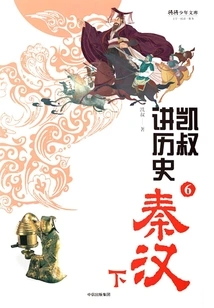
凯叔讲历史6:秦汉(下)
Uncle Kai
The content comes from the popular audio program "Uncle Kai Tells History" purchased by 100,000+ users. 116 Historical stories connect the long history from Xia Dynasty to Jin Dynasty, and 116 cultural relics assist in telling the story.
The content comes from the popular audio program "Uncle Kai Tells History" purchased by 100,000+ users. 116 Historical stories connect the long history from Xia Dynasty to Jin Dynasty, and 116 cultural relics assist in telling the story.
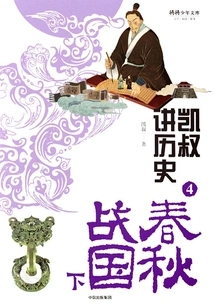
凯叔讲历史4:春秋战国(下)
Uncle Kai
The content comes from the popular audio program "Uncle Kai Tells History" purchased by 100,000+ users. 116 Historical stories connect the long history from Xia Dynasty to Jin Dynasty, and 116 cultural relics assist in telling the story.
The content comes from the popular audio program "Uncle Kai Tells History" purchased by 100,000+ users. 116 Historical stories connect the long history from Xia Dynasty to Jin Dynasty, and 116 cultural relics assist in telling the story.
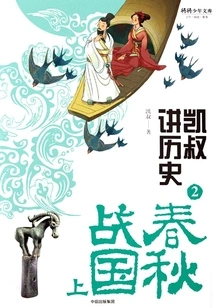
凯叔讲历史2:春秋战国(上)
Uncle Kai
The content comes from the popular audio program "Uncle Kai Tells History" purchased by 100,000+ users. 116 Historical stories connect the long history from Xia Dynasty to Jin Dynasty, and 116 cultural relics assist in telling the story.
The content comes from the popular audio program "Uncle Kai Tells History" purchased by 100,000+ users. 116 Historical stories connect the long history from Xia Dynasty to Jin Dynasty, and 116 cultural relics assist in telling the story.
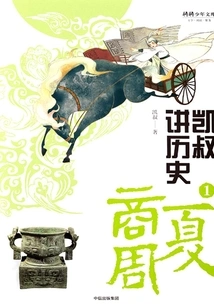
凯叔讲历史1:夏商周
Uncle Kai
The content comes from the popular audio program "Uncle Kai Tells History" purchased by 100,000+ users. 116 Historical stories connect the long history from Xia Dynasty to Jin Dynasty, and 116 cultural relics assist in telling the story.
The content comes from the popular audio program "Uncle Kai Tells History" purchased by 100,000+ users. 116 Historical stories connect the long history from Xia Dynasty to Jin Dynasty, and 116 cultural relics assist in telling the story.
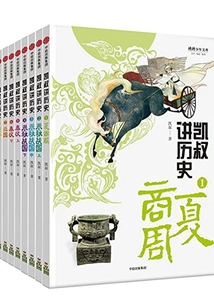
“凯叔讲历史”系列·第一辑(套装全8册)
Uncle Kai
The content comes from the popular audio program "Uncle Kai Tells History" purchased by 100,000+ users. 116 Historical stories connect the long history from Xia Dynasty to Jin Dynasty, and 116 cultural relics assist in telling the story.
The content comes from the popular audio program "Uncle Kai Tells History" purchased by 100,000+ users. 116 Historical stories connect the long history from Xia Dynasty to Jin Dynasty, and 116 cultural relics assist in telling the story.
战天京(修订增补版)
Tan Boniu
He Caitou, Feng Tang, Zhang Ming and others highly recommend it! The masterpiece of the famous historian Tan Boniu vividly reproduces the military and political celebrities of the late Qing Dynasty represented by Zeng Guofan, Li Hongzhang, and Zuo Zongtang. It is an unprecedented commentary on the figures of the late Qing Dynasty! Based on a full grasp of historical data, this book is organized around a major political and military event in China in the late Qing Dynasty - the decisive battle between the Qing Dynasty and the Taiping Heavenly Kingdom - the "Battle of Tianjing". It uses strict logic to carefully clarify many misunderstandings in this period of history, giving people a sense of clearing up the clouds and seeing the sun. The author adopts a "sympathetic understanding" attitude toward historical figures, uses his profound historical knowledge and novelist-like imagination to describe the choices and actions of late Qing celebrities such as Zeng Guofan, Zuo Zongtang, Li Hongzhang, and the Empress Dowager Cixi in the general situation. He restores the "emotion and reason" in historical events, and also presents the historical figures' wisdom in dealing with things and the way to advance in life.
He Caitou, Feng Tang, Zhang Ming and others highly recommend it! The masterpiece of the famous historian Tan Boniu vividly reproduces the military and political celebrities of the late Qing Dynasty represented by Zeng Guofan, Li Hongzhang, and Zuo Zongtang. It is an unprecedented commentary on the figures of the late Qing Dynasty! Based on a full grasp of historical data, this book is organized around a major political and military event in China in the late Qing Dynasty - the decisive battle between the Qing Dynasty and the Taiping Heavenly Kingdom - the "Battle of Tianjing". It uses strict logic to carefully clarify many misunderstandings in this period of history, giving people a sense of clearing up the clouds and seeing the sun. The author adopts a "sympathetic understanding" attitude toward historical figures, uses his profound historical knowledge and novelist-like imagination to describe the choices and actions of late Qing celebrities such as Zeng Guofan, Zuo Zongtang, Li Hongzhang, and the Empress Dowager Cixi in the general situation. He restores the "emotion and reason" in historical events, and also presents the historical figures' wisdom in dealing with things and the way to advance in life.
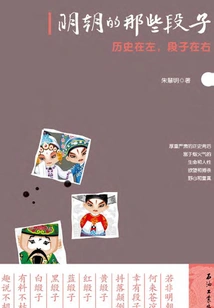
明朝的那些段子
Zhu Huiming
The genre of "History on the Left, Duanzi on the Right: Duanzi in the Ming Dynasty" is an imitation of and tribute to the traditional Chinese "Quotation Style". The simplicity, richness, freedom and flexibility of "Quotation style" deeply attracted me. Its "fragmentation" characteristics are quite similar to the now popular Weibo; in fact, the "joke style" is full of clicks, which also has the meaning of giving a wake-up call and teaching others. I hope these paragraphs can leave some blank space for readers and inspire their imagination. The pursuit of a complete, closed system or discussion is not my goal, and indeed it is beyond my ability. "
The genre of "History on the Left, Duanzi on the Right: Duanzi in the Ming Dynasty" is an imitation of and tribute to the traditional Chinese "Quotation Style". The simplicity, richness, freedom and flexibility of "Quotation style" deeply attracted me. Its "fragmentation" characteristics are quite similar to the now popular Weibo; in fact, the "joke style" is full of clicks, which also has the meaning of giving a wake-up call and teaching others. I hope these paragraphs can leave some blank space for readers and inspire their imagination. The pursuit of a complete, closed system or discussion is not my goal, and indeed it is beyond my ability. "
Modern History of China
History中国近代史
Jiang Tingfu
Does Lin Zexu, who destroyed opium in Humen, really advocate reform? The Opium War was such a disastrous defeat, why didn't the Chinese immediately reform like the Japanese? How biased is our understanding of Li Hongzhang, who signed various treaties that undermined his power and humiliated his country? Why is the Sino-Japanese War of 1894-1894 a war that should have been avoided? This book will give you the answers one by one. The historical framework and chronological history system constructed by this book once led the trend of modern history research and were praised by later researchers. It is called the pioneering work of modern Chinese history research. Jiang Tingfu believed that the military defeat in the Opium War was not the fatal injury to the nation. It was the failure to understand the reason for the defeat after the defeat that was the fatal injury to the nation. As every Chinese, we should understand this true original history, the truth about the Taiping Heavenly Kingdom, why the treaty ports were opened, the failure of the Beiyang Navy, etc. How did these humiliations arise in the process of modernization? In fact, many of the pain may have been brought by us Chinese ourselves.
Does Lin Zexu, who destroyed opium in Humen, really advocate reform? The Opium War was such a disastrous defeat, why didn't the Chinese immediately reform like the Japanese? How biased is our understanding of Li Hongzhang, who signed various treaties that undermined his power and humiliated his country? Why is the Sino-Japanese War of 1894-1894 a war that should have been avoided? This book will give you the answers one by one. The historical framework and chronological history system constructed by this book once led the trend of modern history research and were praised by later researchers. It is called the pioneering work of modern Chinese history research. Jiang Tingfu believed that the military defeat in the Opium War was not the fatal injury to the nation. It was the failure to understand the reason for the defeat after the defeat that was the fatal injury to the nation. As every Chinese, we should understand this true original history, the truth about the Taiping Heavenly Kingdom, why the treaty ports were opened, the failure of the Beiyang Navy, etc. How did these humiliations arise in the process of modernization? In fact, many of the pain may have been brought by us Chinese ourselves.
复兴之路展品100个故事
Lu Zhangshen
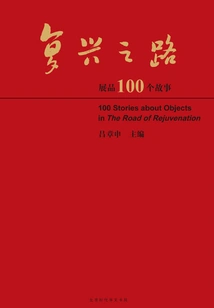
This book can be called the essence of the "Road to Renaissance" exhibition. By selecting typical cultural relics that represent typical historical events, it restores the ins and outs of its historical development and symbolic meanings. Like the exhibition, it aims to become a vivid teaching material for cadres and the masses, especially young people, to educate cadres and the masses, especially young people, about modern history and love for the party, patriotism and socialism, so as to promote the Chinese spirit and unite China's strength. In the form of pictures and texts, the book reviews the Chinese people of all walks of life who have fallen into the abyss of semi-colonial and semi-feudal society for more than 100 years since the Opium War in 1840. They have risen up against humiliation and suffering and made various explorations to achieve national rejuvenation. In particular, the glorious history of the Communist Party of China leading people of all ethnic groups to strive for national independence and liberation, the country's prosperity and people's happiness, and highlights the grand theme of the road to rejuvenation.
This book can be called the essence of the "Road to Renaissance" exhibition. By selecting typical cultural relics that represent typical historical events, it restores the ins and outs of its historical development and symbolic meanings. Like the exhibition, it aims to become a vivid teaching material for cadres and the masses, especially young people, to educate cadres and the masses, especially young people, about modern history and love for the party, patriotism and socialism, so as to promote the Chinese spirit and unite China's strength. In the form of pictures and texts, the book reviews the Chinese people of all walks of life who have fallen into the abyss of semi-colonial and semi-feudal society for more than 100 years since the Opium War in 1840. They have risen up against humiliation and suffering and made various explorations to achieve national rejuvenation. In particular, the glorious history of the Communist Party of China leading people of all ethnic groups to strive for national independence and liberation, the country's prosperity and people's happiness, and highlights the grand theme of the road to rejuvenation.
秦谜:重新发现秦始皇
Li Kaiyuan
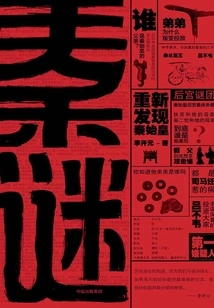
This is a top-level historical reasoning work that solves the mystery of Qin Shihuang. Qin Shihuang's short 49-year life was full of mist. Qin Shihuang's father is Lu Buwei? What kind of dual identity does Lord Changping have? How did Qin Shihuang's cousin become the last king of Chu? Why did Qin Shihuang's harem collectively lose its capacity? Is Qin Shihuang the scapegoat for cheating Confucians for thousands of years? Li Kaiyuan, Sherlock Holmes in the field of history, returned to the historical site of Qin to salvage historical fragments based on field surveys, unearthed cultural relics and excavations of tombs. He combined the perspectives of history, archaeology, medicine and law, and used criminal investigation techniques such as hanging wire tracking and mixed shuffling to boldly speculate and carefully verify. He resurrected the history of Qin that had been seriously misunderstood, restored Qin Shihuang who was demonized by history, and deeply deciphered the truth about the lost history of Qin. "Qin Mystery: Rediscovering Qin Shihuang" collects all the strange cases of Qin Shihuang over the past two thousand years, starting from the perspective that everyone is curious about, trying to use gossip to decipher the secrets hidden deep in history, and giving a new and reasonable answer to the controversial topic in the historians. Professor Li Kaiyuan will let you know the truth that is not recorded in history books.
This is a top-level historical reasoning work that solves the mystery of Qin Shihuang. Qin Shihuang's short 49-year life was full of mist. Qin Shihuang's father is Lu Buwei? What kind of dual identity does Lord Changping have? How did Qin Shihuang's cousin become the last king of Chu? Why did Qin Shihuang's harem collectively lose its capacity? Is Qin Shihuang the scapegoat for cheating Confucians for thousands of years? Li Kaiyuan, Sherlock Holmes in the field of history, returned to the historical site of Qin to salvage historical fragments based on field surveys, unearthed cultural relics and excavations of tombs. He combined the perspectives of history, archaeology, medicine and law, and used criminal investigation techniques such as hanging wire tracking and mixed shuffling to boldly speculate and carefully verify. He resurrected the history of Qin that had been seriously misunderstood, restored Qin Shihuang who was demonized by history, and deeply deciphered the truth about the lost history of Qin. "Qin Mystery: Rediscovering Qin Shihuang" collects all the strange cases of Qin Shihuang over the past two thousand years, starting from the perspective that everyone is curious about, trying to use gossip to decipher the secrets hidden deep in history, and giving a new and reasonable answer to the controversial topic in the historians. Professor Li Kaiyuan will let you know the truth that is not recorded in history books.
Modern History of China
History中国近代史
Lu Simian
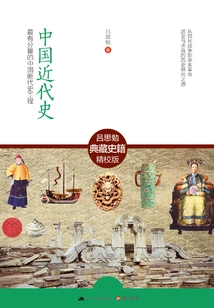
"Modern History of China" is divided into five parts, including lecture notes on modern Chinese history, prehistory of modern China, an overview of the history of China in the past century, a supplement to the cultural history of modern China, and the Russo-Japanese War. The content of the first three parts is basically the same, and they are all compiled from the author's lecture notes on the same content in different periods; the last two parts are further in-depth explanations of the previous part in certain fields. It explains the century-old history of modern China from multiple angles and is of far-reaching significance.
"Modern History of China" is divided into five parts, including lecture notes on modern Chinese history, prehistory of modern China, an overview of the history of China in the past century, a supplement to the cultural history of modern China, and the Russo-Japanese War. The content of the first three parts is basically the same, and they are all compiled from the author's lecture notes on the same content in different periods; the last two parts are further in-depth explanations of the previous part in certain fields. It explains the century-old history of modern China from multiple angles and is of far-reaching significance.
安徽通史·清代卷(下)
Tang Qixue Shi Liye
This book mainly consists of chapters on Anhui in the early Qing Dynasty, the establishment of Anhui Province, and the formation and prosperity of the Tongcheng School.
This book mainly consists of chapters on Anhui in the early Qing Dynasty, the establishment of Anhui Province, and the formation and prosperity of the Tongcheng School.
安徽通史·清代卷(上)
Tang Qixue Shi Liye
This book mainly consists of chapters on Anhui in the early Qing Dynasty, the establishment of Anhui Province, and the formation and prosperity of the Tongcheng School.
This book mainly consists of chapters on Anhui in the early Qing Dynasty, the establishment of Anhui Province, and the formation and prosperity of the Tongcheng School.
安徽通史·民国卷(下)
Compilation Committee Of "general History Of Anhui"
This book is the first volume of "General History of Anhui". It systematically introduces Anhui's history, economy, culture, and historical materials research during the Paleolithic Age, Neolithic Age, Xia and Shang Dynasties, Western Zhou Dynasty, Spring and Autumn Period, and Warring States Period. This book adheres to Marxist dialectical materialism and historical materialism as its guiding ideology, seeking truth from facts and truly and essentially reflecting the history of Anhui's pre-Qin period. This book has a high role in promoting the study of Anhui history.
This book is the first volume of "General History of Anhui". It systematically introduces Anhui's history, economy, culture, and historical materials research during the Paleolithic Age, Neolithic Age, Xia and Shang Dynasties, Western Zhou Dynasty, Spring and Autumn Period, and Warring States Period. This book adheres to Marxist dialectical materialism and historical materialism as its guiding ideology, seeking truth from facts and truly and essentially reflecting the history of Anhui's pre-Qin period. This book has a high role in promoting the study of Anhui history.
中国NGO口述史(第2辑)
King's Name
Chinese NGO entrepreneurs are a group of citizens who use their dreams to change society and write history with their actions. Many of them are now old and some have even passed away. The dreams they once had and the actions they took are the most vital and pioneering history of Chinese civil society. They are the entrepreneurial history of Chinese NGOs presented by individual citizens as the main body. How to record and display this period of history that remains in the memory of the person concerned? This is where the true value and mission of oral history research lies.
Chinese NGO entrepreneurs are a group of citizens who use their dreams to change society and write history with their actions. Many of them are now old and some have even passed away. The dreams they once had and the actions they took are the most vital and pioneering history of Chinese civil society. They are the entrepreneurial history of Chinese NGOs presented by individual citizens as the main body. How to record and display this period of history that remains in the memory of the person concerned? This is where the true value and mission of oral history research lies.
Heirs
History继承者们
Chu Meng
The history at that time was a history of emperors who ruled the world. Since "the family belongs to the world", the topic of "successor" has naturally been talked about by commentators in the past dynasties. These "successors" can be described as diverse, such as Emperor Wen of the Han Dynasty and Emperor Taizong of the Tang Dynasty, who will be famous throughout the ages; people like the Second Emperor of the Qin Dynasty and Emperor Yang of the Sui Dynasty will be infamous for thousands of years; and there are still some who have been basically forgotten by history, but digging out what they did is enough to shock the best novelists and screenwriters. Here, Ma Boyong will tell you the story of the two successors to the subjugation of the country, and they turned out to be the originators of Song poetry; Wang Sheng will tell you what Xiang Yu, the overlord of Chu, is like in his heart, "Listen when I tell you, thinking about back then..."; Mr. Zhang Jiawei will enumerate the European successors for you. Right and wrong; and Uncle Jon will, as always, sting Song Taizong with his playful and scolding words; in addition, there are "Adou who cannot be helped", "Idiot Taisho Emperor" and the Gao family of the Northern Qi Dynasty who are so handsome that they have no friends but are seriously mentally ill... If you want to wear the crown, you must bear its weight, and it is really hard to be the successor!
The history at that time was a history of emperors who ruled the world. Since "the family belongs to the world", the topic of "successor" has naturally been talked about by commentators in the past dynasties. These "successors" can be described as diverse, such as Emperor Wen of the Han Dynasty and Emperor Taizong of the Tang Dynasty, who will be famous throughout the ages; people like the Second Emperor of the Qin Dynasty and Emperor Yang of the Sui Dynasty will be infamous for thousands of years; and there are still some who have been basically forgotten by history, but digging out what they did is enough to shock the best novelists and screenwriters. Here, Ma Boyong will tell you the story of the two successors to the subjugation of the country, and they turned out to be the originators of Song poetry; Wang Sheng will tell you what Xiang Yu, the overlord of Chu, is like in his heart, "Listen when I tell you, thinking about back then..."; Mr. Zhang Jiawei will enumerate the European successors for you. Right and wrong; and Uncle Jon will, as always, sting Song Taizong with his playful and scolding words; in addition, there are "Adou who cannot be helped", "Idiot Taisho Emperor" and the Gao family of the Northern Qi Dynasty who are so handsome that they have no friends but are seriously mentally ill... If you want to wear the crown, you must bear its weight, and it is really hard to be the successor!
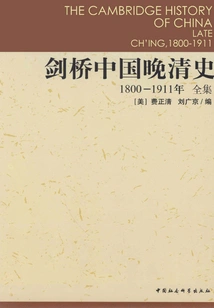
剑桥中国晚清史(1800-1911年)(全集)
U
B
B
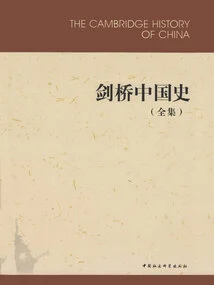
剑桥中国史(全集)
(us) Fairbank (uk) Cui Ruide, Etc.
The "Cambridge History of China" series consists of 16 volumes. Each volume is edited by well-known foreign scholars. Each chapter in the volume is also written by well-researched experts. It pays attention to absorbing the research results of scholars from various countries, reflecting the level and trends of foreign Chinese history research. 11 Volumes have been published. Including: "Cambridge History of China's Qin and Han Dynasties (221 BC to AD 220)" "Cambridge History of China's Sui and Tang Dynasties (589-906)" "Cambridge History of China's Liaoxi, Xia, Jin and Yuan Dynasties (907-1368) )" "Cambridge History of the Ming Dynasty in China (1368-1644) (Volume 1)" "Cambridge History of the Ming Dynasty in China (1368-1644) (Volume 2)" "Cambridge History of the Late Qing Dynasty in China (1800-19) 11 years) (Volume 1 and 2)" "Cambridge History of the Republic of China (1912-1949) (Volume 1)" "Cambridge History of the Republic of China (1912-1949) (Volume 2)" "Cambridge History of the People's Republic of China (Volume 1)" History of the People's Republic of China: The Rise of Revolutionary China (1949-1965) (Volume 1)" "Cambridge History of the People's Republic of China: Revolution Within the Chinese Revolution (1966-1982) (Volume 2)".
The "Cambridge History of China" series consists of 16 volumes. Each volume is edited by well-known foreign scholars. Each chapter in the volume is also written by well-researched experts. It pays attention to absorbing the research results of scholars from various countries, reflecting the level and trends of foreign Chinese history research. 11 Volumes have been published. Including: "Cambridge History of China's Qin and Han Dynasties (221 BC to AD 220)" "Cambridge History of China's Sui and Tang Dynasties (589-906)" "Cambridge History of China's Liaoxi, Xia, Jin and Yuan Dynasties (907-1368) )" "Cambridge History of the Ming Dynasty in China (1368-1644) (Volume 1)" "Cambridge History of the Ming Dynasty in China (1368-1644) (Volume 2)" "Cambridge History of the Late Qing Dynasty in China (1800-19) 11 years) (Volume 1 and 2)" "Cambridge History of the Republic of China (1912-1949) (Volume 1)" "Cambridge History of the Republic of China (1912-1949) (Volume 2)" "Cambridge History of the People's Republic of China (Volume 1)" History of the People's Republic of China: The Rise of Revolutionary China (1949-1965) (Volume 1)" "Cambridge History of the People's Republic of China: Revolution Within the Chinese Revolution (1966-1982) (Volume 2)".
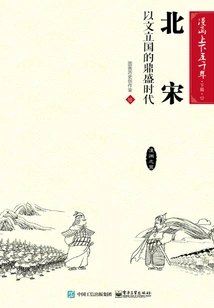
漫画上下五千年·下篇·北宋:以文立国的鼎盛时代
Picture History Studio
The book covers the 5,000-year history of Chinese civilization from ancient times to the Opium War, and is compiled in the order of dynasties and events. The knowledge is clear and well-organized, making it easier and faster to read. This series of books not only displays historical stories in comics, but also introduces the historical background of the stories and related historical common sense in short and concise words, so that young readers can gain rich historical knowledge in the process of reading.
The book covers the 5,000-year history of Chinese civilization from ancient times to the Opium War, and is compiled in the order of dynasties and events. The knowledge is clear and well-organized, making it easier and faster to read. This series of books not only displays historical stories in comics, but also introduces the historical background of the stories and related historical common sense in short and concise words, so that young readers can gain rich historical knowledge in the process of reading.
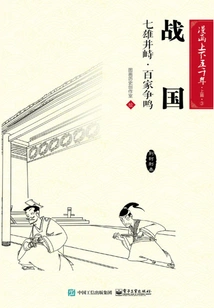
漫画上下五千年·上篇·战国:七雄并峙·百家争鸣
Picture History Studio
The book covers the 5,000-year history of Chinese civilization from ancient times to the Opium War, and is compiled in the order of dynasties and events. The knowledge is clear and well-organized, making it easier and faster to read. This series of books not only displays historical stories in comics, but also introduces the historical background of the stories and related historical common sense in short and concise words, so that young readers can gain rich historical knowledge in the process of reading.
The book covers the 5,000-year history of Chinese civilization from ancient times to the Opium War, and is compiled in the order of dynasties and events. The knowledge is clear and well-organized, making it easier and faster to read. This series of books not only displays historical stories in comics, but also introduces the historical background of the stories and related historical common sense in short and concise words, so that young readers can gain rich historical knowledge in the process of reading.
Five Thousand Years of Comics·part 1·han Dynasty: a Powerful Dynasty That Overwhelms All Barbarians
History漫画上下五千年·上篇·汉朝:万夷慑服的强大王朝
Picture History Studio
The book covers the 5,000-year history of Chinese civilization from ancient times to the Opium War, and is compiled in the order of dynasties and events. The knowledge is clear and well-organized, making it easier and faster to read. This series of books not only displays historical stories in comics, but also introduces the historical background of the stories and related historical common sense in short and concise words, so that young readers can gain rich historical knowledge in the process of reading.
The book covers the 5,000-year history of Chinese civilization from ancient times to the Opium War, and is compiled in the order of dynasties and events. The knowledge is clear and well-organized, making it easier and faster to read. This series of books not only displays historical stories in comics, but also introduces the historical background of the stories and related historical common sense in short and concise words, so that young readers can gain rich historical knowledge in the process of reading.
漫画上下五千年·上篇·远古到夏商周:传说中的那些人和事
Picture History Studio
The book covers the 5,000-year history of Chinese civilization from ancient times to the Opium War, and is compiled in the order of dynasties and events. The knowledge is clear and well-organized, making it easier and faster to read. This series of books not only displays historical stories in comics, but also introduces the historical background of the stories and related historical common sense in short and concise words, so that young readers can gain rich historical knowledge in the process of reading.
The book covers the 5,000-year history of Chinese civilization from ancient times to the Opium War, and is compiled in the order of dynasties and events. The knowledge is clear and well-organized, making it easier and faster to read. This series of books not only displays historical stories in comics, but also introduces the historical background of the stories and related historical common sense in short and concise words, so that young readers can gain rich historical knowledge in the process of reading.
漫画上下五千年·上篇·三国:浪花淘尽英雄
Picture History Studio
The book covers the 5,000-year history of Chinese civilization from ancient times to the Opium War, and is compiled in the order of dynasties and events. The knowledge is clear and well-organized, making it easier and faster to read. This series of books not only displays historical stories in comics, but also introduces the historical background of the stories and related historical common sense in short and concise words, so that young readers can gain rich historical knowledge in the process of reading.
The book covers the 5,000-year history of Chinese civilization from ancient times to the Opium War, and is compiled in the order of dynasties and events. The knowledge is clear and well-organized, making it easier and faster to read. This series of books not only displays historical stories in comics, but also introduces the historical background of the stories and related historical common sense in short and concise words, so that young readers can gain rich historical knowledge in the process of reading.
漫画上下五千年·上篇·秦朝:江山一统的短命帝国
Picture History Studio
The book covers the 5,000-year history of Chinese civilization from ancient times to the Opium War, and is compiled in the order of dynasties and events. The knowledge is clear and well-organized, making it easier and faster to read. This series of books not only displays historical stories in comics, but also introduces the historical background of the stories and related historical common sense in short and concise words, so that young readers can gain rich historical knowledge in the process of reading.
The book covers the 5,000-year history of Chinese civilization from ancient times to the Opium War, and is compiled in the order of dynasties and events. The knowledge is clear and well-organized, making it easier and faster to read. This series of books not only displays historical stories in comics, but also introduces the historical background of the stories and related historical common sense in short and concise words, so that young readers can gain rich historical knowledge in the process of reading.
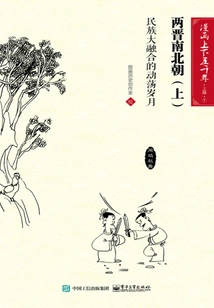
漫画上下五千年·上篇·两晋南北朝·上:民族大融合的动荡岁月
Picture History Studio
The book covers the 5,000-year history of Chinese civilization from ancient times to the Opium War, and is compiled in the order of dynasties and events. The knowledge is clear and well-organized, making it easier and faster to read. This series of books not only displays historical stories in comics, but also introduces the historical background of the stories and related historical common sense in short and concise words, so that young readers can gain rich historical knowledge in the process of reading.
The book covers the 5,000-year history of Chinese civilization from ancient times to the Opium War, and is compiled in the order of dynasties and events. The knowledge is clear and well-organized, making it easier and faster to read. This series of books not only displays historical stories in comics, but also introduces the historical background of the stories and related historical common sense in short and concise words, so that young readers can gain rich historical knowledge in the process of reading.
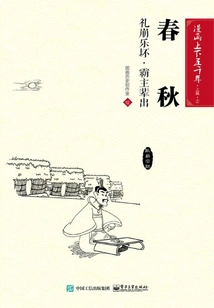
漫画上下五千年·上篇·春秋:礼崩乐坏·霸主辈出
Picture History Studio
The book covers the 5,000-year history of Chinese civilization from ancient times to the Opium War, and is compiled in the order of dynasties and events. The knowledge is clear and well-organized, making it easier and faster to read. This series of books not only displays historical stories in comics, but also introduces the historical background of the stories and related historical common sense in short and concise words, so that young readers can gain rich historical knowledge in the process of reading.
The book covers the 5,000-year history of Chinese civilization from ancient times to the Opium War, and is compiled in the order of dynasties and events. The knowledge is clear and well-organized, making it easier and faster to read. This series of books not only displays historical stories in comics, but also introduces the historical background of the stories and related historical common sense in short and concise words, so that young readers can gain rich historical knowledge in the process of reading.
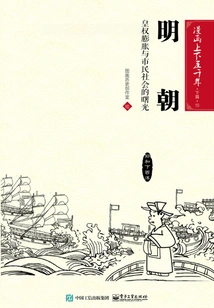
漫画上下五千年·下篇·明朝:皇权膨胀与市民社会的曙光
Picture History Studio
The book covers the 5,000-year history of Chinese civilization from ancient times to the Opium War, and is compiled in the order of dynasties and events. The knowledge is clear and well-organized, making it easier and faster to read. This series of books not only displays historical stories in comics, but also introduces the historical background of the stories and related historical common sense in short and concise words, so that young readers can gain rich historical knowledge in the process of reading.
The book covers the 5,000-year history of Chinese civilization from ancient times to the Opium War, and is compiled in the order of dynasties and events. The knowledge is clear and well-organized, making it easier and faster to read. This series of books not only displays historical stories in comics, but also introduces the historical background of the stories and related historical common sense in short and concise words, so that young readers can gain rich historical knowledge in the process of reading.
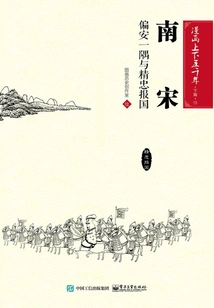
漫画上下五千年·下篇·南宋:偏安一隅与精忠报国
Picture History Studio
The book covers the 5,000-year history of Chinese civilization from ancient times to the Opium War, and is compiled in the order of dynasties and events. The knowledge is clear and well-organized, making it easier and faster to read. This series of books not only displays historical stories in comics, but also introduces the historical background of the stories and related historical common sense in short and concise words, so that young readers can gain rich historical knowledge in the process of reading.
The book covers the 5,000-year history of Chinese civilization from ancient times to the Opium War, and is compiled in the order of dynasties and events. The knowledge is clear and well-organized, making it easier and faster to read. This series of books not only displays historical stories in comics, but also introduces the historical background of the stories and related historical common sense in short and concise words, so that young readers can gain rich historical knowledge in the process of reading.
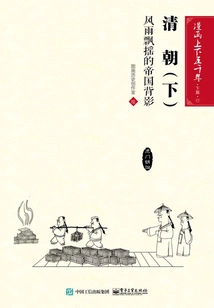
漫画上下五千年·下篇·清朝·下:风雨飘摇的帝国背影
Picture History Studio
The book covers the 5,000-year history of Chinese civilization from ancient times to the Opium War, and is compiled in the order of dynasties and events. The knowledge is clear and well-organized, making it easier and faster to read. This series of books not only displays historical stories in comics, but also introduces the historical background of the stories and related historical common sense in short and concise words, so that young readers can gain rich historical knowledge in the process of reading.
The book covers the 5,000-year history of Chinese civilization from ancient times to the Opium War, and is compiled in the order of dynasties and events. The knowledge is clear and well-organized, making it easier and faster to read. This series of books not only displays historical stories in comics, but also introduces the historical background of the stories and related historical common sense in short and concise words, so that young readers can gain rich historical knowledge in the process of reading.
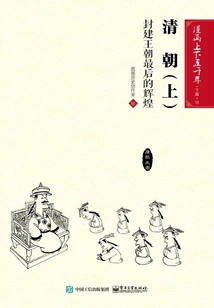
Comics: Five Thousand Years·part Two·qing Dynasty·part One: the Last Glory of the Feudal Dynasty
History漫画上下五千年·下篇·清朝·上:封建王朝最后的辉煌
Picture History Studio
The book covers the 5,000-year history of Chinese civilization from ancient times to the Opium War, and is compiled in the order of dynasties and events. The knowledge is clear and well-organized, making it easier and faster to read. This series of books not only displays historical stories in comics, but also introduces the historical background of the stories and related historical common sense in short and concise words, so that young readers can gain rich historical knowledge in the process of reading.
The book covers the 5,000-year history of Chinese civilization from ancient times to the Opium War, and is compiled in the order of dynasties and events. The knowledge is clear and well-organized, making it easier and faster to read. This series of books not only displays historical stories in comics, but also introduces the historical background of the stories and related historical common sense in short and concise words, so that young readers can gain rich historical knowledge in the process of reading.
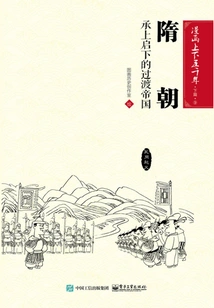
漫画上下五千年·下篇·隋朝:承上启下的过渡帝国
Picture History Studio
The book covers the 5,000-year history of Chinese civilization from ancient times to the Opium War, and is compiled in the order of dynasties and events. The knowledge is clear and well-organized, making it easier and faster to read. This series of books not only displays historical stories in comics, but also introduces the historical background of the stories and related historical common sense in short and concise words, so that young readers can gain rich historical knowledge in the process of reading.
The book covers the 5,000-year history of Chinese civilization from ancient times to the Opium War, and is compiled in the order of dynasties and events. The knowledge is clear and well-organized, making it easier and faster to read. This series of books not only displays historical stories in comics, but also introduces the historical background of the stories and related historical common sense in short and concise words, so that young readers can gain rich historical knowledge in the process of reading.
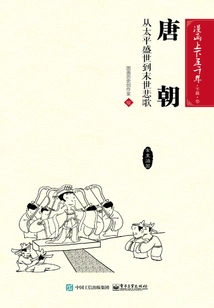
漫画上下五千年·下篇·唐朝:从太平盛世到末世悲歌
Picture History Studio
The book covers the 5,000-year history of Chinese civilization from ancient times to the Opium War, and is compiled in the order of dynasties and events. The knowledge is clear and well-organized, making it easier and faster to read. This series of books not only displays historical stories in comics, but also introduces the historical background of the stories and related historical common sense in short and concise words, so that young readers can gain rich historical knowledge in the process of reading.
The book covers the 5,000-year history of Chinese civilization from ancient times to the Opium War, and is compiled in the order of dynasties and events. The knowledge is clear and well-organized, making it easier and faster to read. This series of books not only displays historical stories in comics, but also introduces the historical background of the stories and related historical common sense in short and concise words, so that young readers can gain rich historical knowledge in the process of reading.
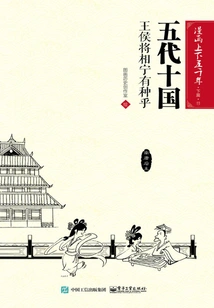
漫画上下五千年·下篇·五代十国:王侯将相宁有种乎
Picture History Studio
The book covers the 5,000-year history of Chinese civilization from ancient times to the Opium War, and is compiled in the order of dynasties and events. The knowledge is clear and well-organized, making it easier and faster to read. This series of books not only displays historical stories in comics, but also introduces the historical background of the stories and related historical common sense in short and concise words, so that young readers can gain rich historical knowledge in the process of reading.
The book covers the 5,000-year history of Chinese civilization from ancient times to the Opium War, and is compiled in the order of dynasties and events. The knowledge is clear and well-organized, making it easier and faster to read. This series of books not only displays historical stories in comics, but also introduces the historical background of the stories and related historical common sense in short and concise words, so that young readers can gain rich historical knowledge in the process of reading.
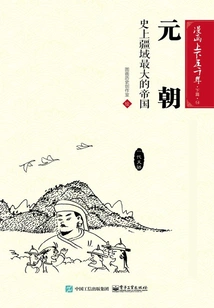
漫画上下五千年·下篇·元朝:史上疆域最大的帝国
Picture History Studio
The book covers the 5,000-year history of Chinese civilization from ancient times to the Opium War, and is compiled in the order of dynasties and events. The knowledge is clear and well-organized, making it easier and faster to read. This series of books not only displays historical stories in comics, but also introduces the historical background of the stories and related historical common sense in short and concise words, so that young readers can gain rich historical knowledge in the process of reading.
The book covers the 5,000-year history of Chinese civilization from ancient times to the Opium War, and is compiled in the order of dynasties and events. The knowledge is clear and well-organized, making it easier and faster to read. This series of books not only displays historical stories in comics, but also introduces the historical background of the stories and related historical common sense in short and concise words, so that young readers can gain rich historical knowledge in the process of reading.
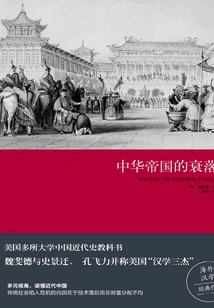
中华帝国的衰落
N
Professor Wei Feide, one of the "Three Masters of American Sinology", has a classic work on modern Chinese history! A detailed analysis of the process by which the Chinese Empire gradually established order, became powerful, fell into trouble, and established order again. "The Decline of the Chinese Empire" is a modern Chinese history textbook adopted by many universities in the United States. The text is concise and smooth, and the content is easy to understand. The manuscript is different from the chronological narrative of traditional general history. It starts from the three groups of farmers, gentry, and merchants who constitute the main structure of traditional society, and analyzes in detail the process of how the Chinese empire established order step by step, became strong, fell into trouble, and established order again. In terms of the historical periodization of modern Chinese history, Wei Feide adopts the views of North American sinologists. The narrative content not only includes the history after the Opium War, but also goes back to the late Ming Dynasty, making the work very "family-speaking" characteristics.
Professor Wei Feide, one of the "Three Masters of American Sinology", has a classic work on modern Chinese history! A detailed analysis of the process by which the Chinese Empire gradually established order, became powerful, fell into trouble, and established order again. "The Decline of the Chinese Empire" is a modern Chinese history textbook adopted by many universities in the United States. The text is concise and smooth, and the content is easy to understand. The manuscript is different from the chronological narrative of traditional general history. It starts from the three groups of farmers, gentry, and merchants who constitute the main structure of traditional society, and analyzes in detail the process of how the Chinese empire established order step by step, became strong, fell into trouble, and established order again. In terms of the historical periodization of modern Chinese history, Wei Feide adopts the views of North American sinologists. The narrative content not only includes the history after the Opium War, but also goes back to the late Ming Dynasty, making the work very "family-speaking" characteristics.
近代中国启蒙运动史
What To Do
This book was written in February and March of 1937, and was completed in May and June. After the "July 7th Incident", the author went to Yan'an and taught at the Northern Shaanxi Public School, and the manuscript stayed in Shanghai. With the recommendation of Zhang Zhongli, the manuscript was officially published by Life Bookstore in December of the same year, and was released to the third edition in February of the following year. This publication is based on the third edition.
This book was written in February and March of 1937, and was completed in May and June. After the "July 7th Incident", the author went to Yan'an and taught at the Northern Shaanxi Public School, and the manuscript stayed in Shanghai. With the recommendation of Zhang Zhongli, the manuscript was officially published by Life Bookstore in December of the same year, and was released to the third edition in February of the following year. This publication is based on the third edition.
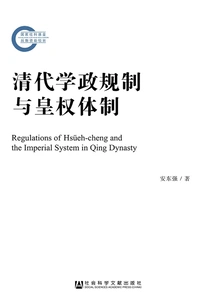
清代学政规制与皇权体制
An Dongqiang
Rules and regulations have always been the key to understanding Chinese history. The Qing Dynasty's Dian system was the culmination of the dynastic systems of the past, and in response to the great changes in modern times, it initiated major changes in political system, education, society and other systems and concepts, and its process and influence continue to this day. This book takes the academic and administrative system of the Qing Dynasty as the starting point, and examines the official history of academic and administrative affairs within the overall structure of the Qing Dynasty's official system. By exploring the relationship between the rise and fall of academic and administrative status, regulatory adjustments, and the establishment of the imperial power system in the Qing Dynasty, this book discovers and understands the different conceptions of ancient and modern political structures and concepts.
Rules and regulations have always been the key to understanding Chinese history. The Qing Dynasty's Dian system was the culmination of the dynastic systems of the past, and in response to the great changes in modern times, it initiated major changes in political system, education, society and other systems and concepts, and its process and influence continue to this day. This book takes the academic and administrative system of the Qing Dynasty as the starting point, and examines the official history of academic and administrative affairs within the overall structure of the Qing Dynasty's official system. By exploring the relationship between the rise and fall of academic and administrative status, regulatory adjustments, and the establishment of the imperial power system in the Qing Dynasty, this book discovers and understands the different conceptions of ancient and modern political structures and concepts.
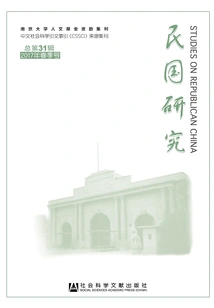
民国研究(2017年春季号\u002F总第31辑)
Editor-in-chief Zhu Qingbao
"Republic of China Studies" is an academic special issue sponsored by the Research Center for the History of the Republic of China at Nanjing University, a key research base in the humanities and social sciences of the Ministry of Education. It mainly publishes research articles on relevant historical facts and theories about the Republic of China period (1912-1949). It is now a CSSCI source publication. The "Culture and Society", "Politics", and "Urban and Regional History" columns in this volume (the 31st volume) are more distinctive. The relevant papers can be used as reference for academic circles, and other articles are also of considerable academic value.
"Republic of China Studies" is an academic special issue sponsored by the Research Center for the History of the Republic of China at Nanjing University, a key research base in the humanities and social sciences of the Ministry of Education. It mainly publishes research articles on relevant historical facts and theories about the Republic of China period (1912-1949). It is now a CSSCI source publication. The "Culture and Society", "Politics", and "Urban and Regional History" columns in this volume (the 31st volume) are more distinctive. The relevant papers can be used as reference for academic circles, and other articles are also of considerable academic value.
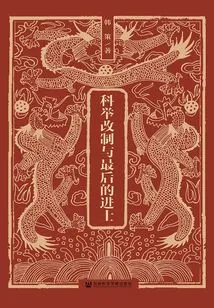
科举改制与最后的进士
Han Ce
Based on previous research, this book uses a large number of old and new historical materials such as archives, imperial examination records, diaries, letters, poetry collections, newspapers and periodicals, and proposes an overall research idea on the "two lines" of imperial examination reform, namely the reform of the imperial examination and the opening of the Jinshi Hall. First, it deeply explores the evolution, debate and decision-making process of the imperial examination reform. Then it examines the advantages and disadvantages of the imperial examination reform in the actual operation of the Guimao and Jiachen examinations and the new academic education of Jinshi. It then discusses the progress and legacy of the Jinshi groups in Guimao and Jiachen in the era of abolition of the imperial examination, preparation for the establishment of a constitution, and the dramatic changes from the monarchy to the republic.
Based on previous research, this book uses a large number of old and new historical materials such as archives, imperial examination records, diaries, letters, poetry collections, newspapers and periodicals, and proposes an overall research idea on the "two lines" of imperial examination reform, namely the reform of the imperial examination and the opening of the Jinshi Hall. First, it deeply explores the evolution, debate and decision-making process of the imperial examination reform. Then it examines the advantages and disadvantages of the imperial examination reform in the actual operation of the Guimao and Jiachen examinations and the new academic education of Jinshi. It then discusses the progress and legacy of the Jinshi groups in Guimao and Jiachen in the era of abolition of the imperial examination, preparation for the establishment of a constitution, and the dramatic changes from the monarchy to the republic.
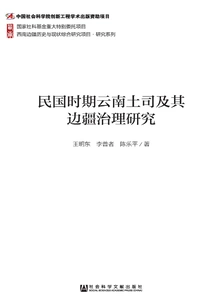
民国时期云南土司及其边疆治理研究
Wang Mingdong Li Puzhe Chen Leping
The chieftain system originated from the restraint policy of the Han Dynasty, originated in the Yuan Dynasty, was completed in the Ming Dynasty, and declined in the Qing Dynasty. During the Republic of China, there were still more than a hundred chieftain families in Yunnan's Zhongwei border, Nujiang basin, Tenglong border, Pusi border, and Hema border. The chieftains firmly controlled the local governance. They formed a complex relationship of confrontation, dialogue, and cooperation with the central government of the Republic of China, and they became the "Tu emperors" who dominated the local areas. With the liberation of Yunnan in 1950, the remaining chieftain system in Yunnan came to an end. Based on limited information, this book discusses and studies the chieftain system in the ethnic minority inhabited areas on the border of Yunnan during the Republic of China.
The chieftain system originated from the restraint policy of the Han Dynasty, originated in the Yuan Dynasty, was completed in the Ming Dynasty, and declined in the Qing Dynasty. During the Republic of China, there were still more than a hundred chieftain families in Yunnan's Zhongwei border, Nujiang basin, Tenglong border, Pusi border, and Hema border. The chieftains firmly controlled the local governance. They formed a complex relationship of confrontation, dialogue, and cooperation with the central government of the Republic of China, and they became the "Tu emperors" who dominated the local areas. With the liberation of Yunnan in 1950, the remaining chieftain system in Yunnan came to an end. Based on limited information, this book discusses and studies the chieftain system in the ethnic minority inhabited areas on the border of Yunnan during the Republic of China.
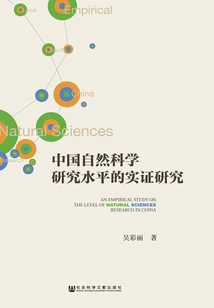
中国自然科学研究水平的实证研究
Wu Caili
This book first puts forward the theory and method of social definition of the level of natural science research, explains the relationship between "quality" and "quantity" of scientific research evaluation, introduces the main indicators representing the "quality" and "quantity" of scientific research level, as well as the theory and indicators of national natural science research level evaluation; secondly, it introduces The status of my country's natural science research was quantitatively analyzed using scientometric methods and various software as an aid. Finally, it was compared with the world's major developed countries, and countermeasures and suggestions were put forward to improve the level of my country's natural science research.
This book first puts forward the theory and method of social definition of the level of natural science research, explains the relationship between "quality" and "quantity" of scientific research evaluation, introduces the main indicators representing the "quality" and "quantity" of scientific research level, as well as the theory and indicators of national natural science research level evaluation; secondly, it introduces The status of my country's natural science research was quantitatively analyzed using scientometric methods and various software as an aid. Finally, it was compared with the world's major developed countries, and countermeasures and suggestions were put forward to improve the level of my country's natural science research.
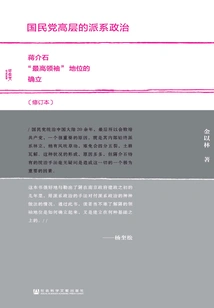
国民党高层的派系政治(修订本):蒋介石“最高领袖”地位的确立
Jin Yilin
This book focuses on the evolution of China's political situation in 1931, examining the rise and fall of power among the top three factions in the party, namely Chiang, Wang, and Hu, in the intra-party struggle after the reorganization of the Kuomintang. In particular, through Chiang Kai-shek's resignation and resurgence, it explores the complex process of separation and reunification among the three men and the reasons why Chiang Kai-shek finally obtained the status of the "supreme leader" within the party. This is used to explain the development of previous conflicts within the Kuomintang.
This book focuses on the evolution of China's political situation in 1931, examining the rise and fall of power among the top three factions in the party, namely Chiang, Wang, and Hu, in the intra-party struggle after the reorganization of the Kuomintang. In particular, through Chiang Kai-shek's resignation and resurgence, it explores the complex process of separation and reunification among the three men and the reasons why Chiang Kai-shek finally obtained the status of the "supreme leader" within the party. This is used to explain the development of previous conflicts within the Kuomintang.
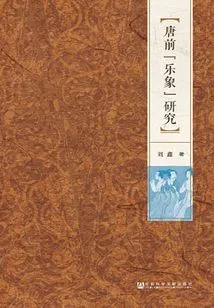
唐前“乐象”研究
Liu Xin
This book mainly studies the issue of "Lexiang" in the context of Confucian culture before the Tang Dynasty. "Lexiang" was a cultural phenomenon in the pre-Qin Dynasty. It was based on the extensive practice of rituals and music in the Zhou Dynasty. It was a large-scale comprehensive artistic image integrating poetry, music and dance. "Lexiang" expresses abstract etiquette and joy with the help of music poems, songs, and dances. The composition of "Music Image" is: harmony with cultural significance, poetry as a musical section, and grand dance. Symbolism is the most fundamental attribute of "Lexiang". The function of "Le Xiang" is divided into two aspects: internal and external. On the one hand, it is the external religious, political, religious, moral and ethical functions; on the other hand, it is internal, that is, the shaping function and aesthetic function of personal psyche.
This book mainly studies the issue of "Lexiang" in the context of Confucian culture before the Tang Dynasty. "Lexiang" was a cultural phenomenon in the pre-Qin Dynasty. It was based on the extensive practice of rituals and music in the Zhou Dynasty. It was a large-scale comprehensive artistic image integrating poetry, music and dance. "Lexiang" expresses abstract etiquette and joy with the help of music poems, songs, and dances. The composition of "Music Image" is: harmony with cultural significance, poetry as a musical section, and grand dance. Symbolism is the most fundamental attribute of "Lexiang". The function of "Le Xiang" is divided into two aspects: internal and external. On the one hand, it is the external religious, political, religious, moral and ethical functions; on the other hand, it is internal, that is, the shaping function and aesthetic function of personal psyche.
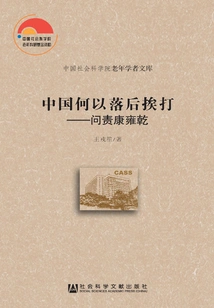
中国何以落后挨打:问责康雍乾
Wang Rongsheng
During the Kangxi, Yongzong and Qianlong periods of the Qing Dynasty, many positive policies were implemented and made important contributions to the development of the Chinese nation. However, from this time onwards, the Qing emperors and their ministers were in a closed state for a long time and were ignorant of the modern international environment and diplomatic methods that had already formed in the world. As a result, when China was involved in the international community, it took appropriate measures but failed to respond appropriately, which became the beginning of modern China's lagging behind the West. By horizontally comparing China and the West during the Kangxi, Yongzong and Qianlong periods, the author describes in detail the reasons why China fell behind the West in modern times.
During the Kangxi, Yongzong and Qianlong periods of the Qing Dynasty, many positive policies were implemented and made important contributions to the development of the Chinese nation. However, from this time onwards, the Qing emperors and their ministers were in a closed state for a long time and were ignorant of the modern international environment and diplomatic methods that had already formed in the world. As a result, when China was involved in the international community, it took appropriate measures but failed to respond appropriately, which became the beginning of modern China's lagging behind the West. By horizontally comparing China and the West during the Kangxi, Yongzong and Qianlong periods, the author describes in detail the reasons why China fell behind the West in modern times.
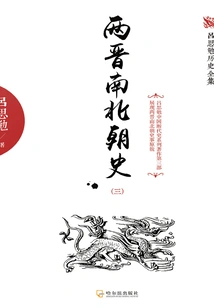
两晋南北朝史(三)
Lu Simian
"History of the Two Jin and Southern and Northern Dynasties" edited by Lu Simian consists of four volumes, which focuses on the political situation of the two Jin Dynasties, the changes of dynasties in the Southern and Northern Dynasties, as well as the social organization, people's life, culture, academic and religion during this period. Lu Gong used his rigorous spirit, professional writing style, and noble sentiments to narrate the history of the Jin, Southern and Northern Dynasties, and quoted from other sources to complete the story in one go. The taste makes people think deeply. It is no exaggeration to call it a masterpiece and a masterpiece in the history of the times.
"History of the Two Jin and Southern and Northern Dynasties" edited by Lu Simian consists of four volumes, which focuses on the political situation of the two Jin Dynasties, the changes of dynasties in the Southern and Northern Dynasties, as well as the social organization, people's life, culture, academic and religion during this period. Lu Gong used his rigorous spirit, professional writing style, and noble sentiments to narrate the history of the Jin, Southern and Northern Dynasties, and quoted from other sources to complete the story in one go. The taste makes people think deeply. It is no exaggeration to call it a masterpiece and a masterpiece in the history of the times.
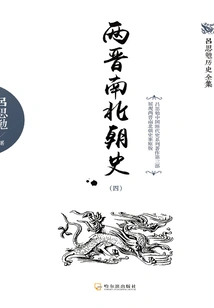
两晋南北朝史(四)
Lu Simian
"History of the Two Jin and Southern and Northern Dynasties" edited by Lu Simian consists of four volumes, which focuses on the political situation of the two Jin Dynasties, the changes of dynasties in the Southern and Northern Dynasties, as well as the social organization, people's life, culture, academic and religion during this period. Lu Gong used his rigorous spirit, professional writing style, and noble sentiments to narrate the history of the Jin, Southern and Northern Dynasties, and quoted from other sources to complete the story in one go. The taste makes people think deeply. It is no exaggeration to call it a masterpiece and a masterpiece in the history of the times.
"History of the Two Jin and Southern and Northern Dynasties" edited by Lu Simian consists of four volumes, which focuses on the political situation of the two Jin Dynasties, the changes of dynasties in the Southern and Northern Dynasties, as well as the social organization, people's life, culture, academic and religion during this period. Lu Gong used his rigorous spirit, professional writing style, and noble sentiments to narrate the history of the Jin, Southern and Northern Dynasties, and quoted from other sources to complete the story in one go. The taste makes people think deeply. It is no exaggeration to call it a masterpiece and a masterpiece in the history of the times.
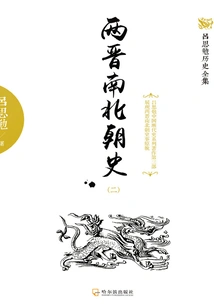
两晋南北朝史(二)
Lu Simian
"History of the Two Jin and Southern and Northern Dynasties" edited by Lu Simian consists of four volumes, which focuses on the political situation of the two Jin Dynasties, the changes of dynasties in the Southern and Northern Dynasties, as well as the social organization, people's life, culture, academic and religion during this period. Lu Gong used his rigorous spirit, professional writing style, and noble sentiments to narrate the history of the Jin, Southern and Northern Dynasties, and quoted from other sources to complete the story in one go. The taste makes people think deeply. It is no exaggeration to call it a masterpiece and a masterpiece in the history of the times.
"History of the Two Jin and Southern and Northern Dynasties" edited by Lu Simian consists of four volumes, which focuses on the political situation of the two Jin Dynasties, the changes of dynasties in the Southern and Northern Dynasties, as well as the social organization, people's life, culture, academic and religion during this period. Lu Gong used his rigorous spirit, professional writing style, and noble sentiments to narrate the history of the Jin, Southern and Northern Dynasties, and quoted from other sources to complete the story in one go. The taste makes people think deeply. It is no exaggeration to call it a masterpiece and a masterpiece in the history of the times.
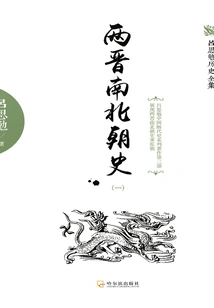
两晋南北朝史(一)
Lu Simian
"History of the Two Jin and Southern and Northern Dynasties" edited by Lu Simian consists of four volumes, which focuses on the political situation of the two Jin Dynasties, the changes of dynasties in the Southern and Northern Dynasties, as well as the social organization, people's life, culture, academic and religion during this period. Lu Gong used his rigorous spirit, professional writing style, and noble sentiments to narrate the history of the Jin, Southern and Northern Dynasties, and quoted from other sources to complete the story in one go. The taste makes people think deeply. It is no exaggeration to call it a masterpiece and a masterpiece in the history of the times.
"History of the Two Jin and Southern and Northern Dynasties" edited by Lu Simian consists of four volumes, which focuses on the political situation of the two Jin Dynasties, the changes of dynasties in the Southern and Northern Dynasties, as well as the social organization, people's life, culture, academic and religion during this period. Lu Gong used his rigorous spirit, professional writing style, and noble sentiments to narrate the history of the Jin, Southern and Northern Dynasties, and quoted from other sources to complete the story in one go. The taste makes people think deeply. It is no exaggeration to call it a masterpiece and a masterpiece in the history of the times.
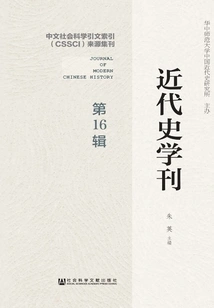
近代史学刊(第16辑)
Zhu Ying
"Journal of Modern History" is an academic journal in the field of modern Chinese history sponsored by the Institute of Modern Chinese History of Central China Normal University. This book is the 16th series of the Journal of Modern History. It is divided into five sections: "Modern Chinese University and Society", "Modern Chinese Religious and Social History", "Special Research", "Academic Review" and "Book Review". The content covers various aspects of politics, economy, society, culture and other aspects of the late Qing Dynasty and the Republic of China. It includes re-discussions of previous studies and new explorations based on historical materials, including many innovations and breakthroughs.
"Journal of Modern History" is an academic journal in the field of modern Chinese history sponsored by the Institute of Modern Chinese History of Central China Normal University. This book is the 16th series of the Journal of Modern History. It is divided into five sections: "Modern Chinese University and Society", "Modern Chinese Religious and Social History", "Special Research", "Academic Review" and "Book Review". The content covers various aspects of politics, economy, society, culture and other aspects of the late Qing Dynasty and the Republic of China. It includes re-discussions of previous studies and new explorations based on historical materials, including many innovations and breakthroughs.